

Accurature Medicine Leverages AI and Pyramid Model to Enable Large-Scale, Cost-Effective Alzheimer's Disease Screening
In late July, a queue formed at the Meilong Subdistrict Community Health Center in Minhang District, Shanghai. What made it somewhat unusual was that everyone in line was an elderly person over the age of 60.
“It’s not complicated. You just look at the pictures and describe them, and that’s it.” An elderly man asked his “partner,” who had just completed the test, and received this response. Meanwhile, the queue advanced by roughly one step every three minutes.
“This is part of our community’s Alzheimer’s disease screening initiative. We initially assumed that screening the 68,000 residents aged 60 and above in our community would be extremely time-consuming. However, the process took far less time than expected, and the elderly participants were quite receptive,” said Jin Liang, Deputy Director of the Meilong Subdistrict Community Health Center.
VCBeat further learned that in this project, a precision medicine company—CONLIGHT MEDICAL—provided technical support.
Positioned in the fields of precision diagnosis and precision medication for neurological disorders, CONLIGHT MEDICAL has not only become the first enterprise in China to offer pharmacogenetic testing for neurological conditions but has also conducted dozens of clinical research projects in related areas. The company holds nearly 100 intellectual property rights and various patents, serving more than 1,000 medical institutions and over one million users and patients across China.
As early as 2019, CONLIGHT MEDICAL began to focus on the auxiliary diagnosis and early screening of neurological disorders, with Alzheimer’s disease screening and intervention being its first chosen niche sector. The reasons behind this are not difficult to surmise—
China has the largest number of Alzheimer's disease patients in the world.
According to the "China Alzheimer's Disease Report 2021," jointly released by the National Center for Chronic and Non-communicable Disease Control and Prevention of the Chinese Center for Disease Control and Prevention, the School of Public Health at Fudan University, Shanghai Ruijin Hospital, and other institutions, there were more than 13 million prevalent cases of Alzheimer's disease and other dementias in China in 2019. The incidence rate of Alzheimer's disease and other dementias across various provinces and municipalities nationwide ranged from 56.47 to 207.08 per 100,000 population.
“From 1963 to 1976, China experienced a baby boom. Starting in 2023, nearly 25 million people will reach retirement age each year. With deepening population aging, the continuous increase in the elderly population, and the long-term insidious nature of Alzheimer’s disease, the number of Alzheimer’s cases in China is expected to rise,” stated Zheng Wentao, Deputy Director of the Institute of Aging Phenomics at the Shanghai Human Phenome Institute.“If the current trend continues, it is projected that there will be more than 30 million elderly patients within 15 years.”
What chain reactions will be triggered by the rise in patient numbers? The economic burden caused by disease will inevitably be felt first.
According to statistics,In 2019, the average cost of care for a patient with Alzheimer’s disease was RMB 120,000, and the total societal cost exceeded RMB 1 trillion. Based on normal inflation projections, the societal cost is expected to surpass RMB 12 trillion by 2050.This figure far exceeds that of cancer and cardiovascular diseases, making it the leading source of societal disease costs in China.
Moreover, the rising prevalence of Alzheimer’s disease may trigger a series of social issues. For instance, patients with severe cognitive impairment face an increased likelihood of falls, carrying a significantly high risk of fatal outcomes from outdoor falls. For the patients themselves, they endure long-term suffering from memory decline or even loss, hearing impairment, and cognitive dysfunction, resulting in profound physical and psychological distress.
Early prevention and treatment of Alzheimer’s disease are imperative and urgent. Although Alzheimer’s disease cannot be cured with current technological means, early intervention can delay its progression. Furthermore, an increase in the average age of onset for age-related diseases implies a relative reduction in the total number of affected individuals.
In recent years, the government has attached great importance to the harms and prevention of Alzheimer’s disease, issuing a series of policies to promote screening and intervention efforts for the condition.
For instance, the “Outline of the ‘Healthy China 2030’ Plan” issued by the State Council in 2019 called for “strengthening effective interventions for Alzheimer’s disease and other conditions.” In 2020, the National Health Commission released the “Work Plan for Exploring Specialized Services in the Prevention and Treatment of Alzheimer’s Disease,” proposing the “Two 80% Targets”: raising public awareness of Alzheimer’s prevention and treatment knowledge to 80% and increasing the rate of cognitive function screening among older adults in communities (villages) to 80% by 2022.
The vigorous policy push has undoubtedly elevated the prevention and control of Alzheimer’s disease to unprecedented heights. Regrettably, however, there has been a lack of screening and intervention solutions in the market that are fully tailored for large-scale community implementation.
Regarding the screening and intervention for high-risk Alzheimer's disease populations in China at the current stage,What Is the Most Important?
The answer is undoubtedly precision, convenience, and lower cost.Among these, “precision” is easy to understand, as it is the primary purpose of screening—accurately identifying at-risk populations for intervention; “convenience” and cost issues directly address the efficiency and accessibility of widespread adoption. The more user-friendly and lower-cost the solution, the easier it is to replicate and scale.
However, mainstream screening methods in the market cannot fully meet the primary needs for screening high-risk Alzheimer’s disease populations in China at the current stage.
Among them,Scale-based assessment is the most common method for screening Alzheimer’s disease; however, its results are not only subject to bias due to limitations in participants’ comprehension of the questions, but also suffer from prolonged duration and low efficiency.(The reason is that, for illiterate elderly participants, the assessors need to explain each question individually, thereby prolonging the testing time)and other issues.
In the clinical guidelines for Alzheimer's disease,Diagnostic techniques such as PET-CT and combined assays of Tau protein and Aβ protein in cerebrospinal fluid and blood are considered the primary methods for confirming a diagnosis of Alzheimer’s disease (AD). However, due to limitations in detection accuracy, accessibility, patient acceptance, and cost, these techniques are not suitable for early-stage screening of AD.
For example, PET-CT is currently recognized within the industry as the gold standard for diagnosing Alzheimer’s disease (AD); however, in China, only a limited number of tertiary hospitals and research institutions are capable of performing this procedure. Furthermore, the high cost of such technologies renders them unaffordable for primary healthcare facilities, and their widespread adoption would constitute an inefficient use of diagnostic resources.
Furthermore, according to Dr. Yang Dake, Technical Director at CONLIGHT MEDICAL, in fact,In addition to the aforementioned testing technologies, the current market also offers new digital biomarker-based approaches—such as electroencephalography (EEG), voice interaction, and visual assessment—for Alzheimer’s disease screening.However, these technical approaches currently only support the assessment of cognitive decline and cannot be directly linked to Alzheimer’s disease (AD) itself. Furthermore, their practical application is hindered by operational complexity, low acceptance among target populations, and an inability to scale for mass deployment.
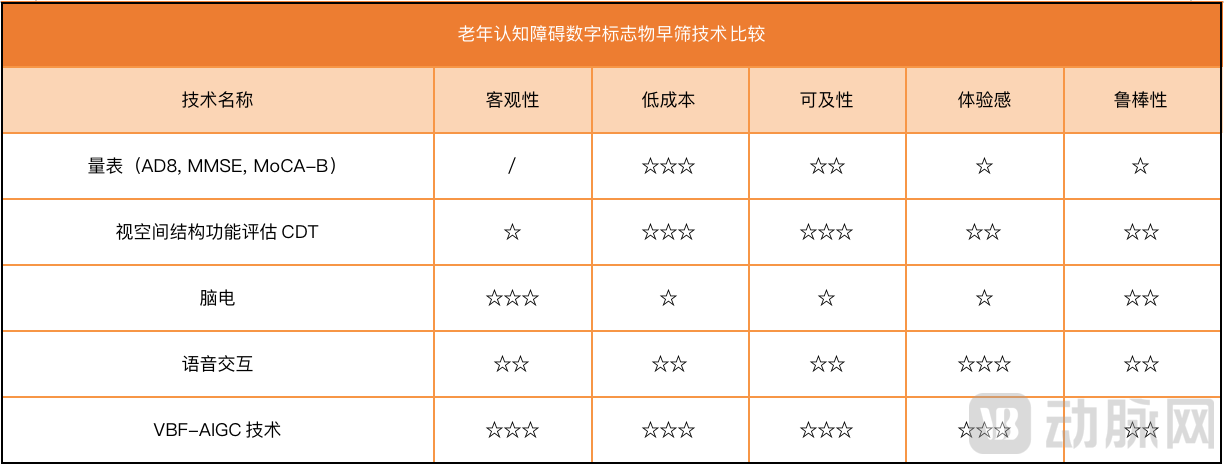
(VBF-AIGC Technology: Voiceprint Generative AI Screening Technology Based on Brain Cognitive Feedback Pathways)
Robustness: The reliability of a system in different environments, especially harsh ones)
In response, after gaining an in-depth understanding of market demands, CONLIGHT MEDICAL began to develop a highly distinctive comprehensive screening protocol for individuals at high risk of Alzheimer’s disease.
The most distinctive feature of the CONLIGHT MEDICAL protocol is its stratified approach.The primary objective of stratification is to achieve precise targeting of populations with varying risk levels and to align with health economics principles.
According to He Xuan, founder and CEO of CONLIGHT MEDICAL,The incidence of Alzheimer’s disease follows a “pyramid” structure, progressing from the large population with subjective cognitive decline (SCD) to mild cognitive impairment (MCI), then to prodromal Alzheimer’s disease (pAD), with Alzheimer’s disease representing the final stage.
“This is a progressive process that worsens layer by layer,” stated He Jiong. “Therefore, screening needs vary across different layers; screening methods should be matched to the specific requirements of each stage rather than applying a one-size-fits-all approach. In this way, a stratified screening model better aligns with the current status of Alzheimer’s disease prevention and control in China, both in terms of screening accuracy and economic cost burden.”
Accordingly,CONLIGHT MEDICAL has established its own stratified screening model for high-risk Alzheimer’s disease populations. Compared with conventional blood-based screening methods, the CONLIGHT MEDICAL model can reduce total societal costs by 33.6%.(CONLIGHT MEDICAL calculated this based on data from the cooperative project with the Meilong Community in Minhang District.)
Specifically,For the large population at risk of cognitive decline, which constitutes the first step of the screening protocol, CONLIGHT MEDICAL employs the VBF-AIGC detection technology for screening.
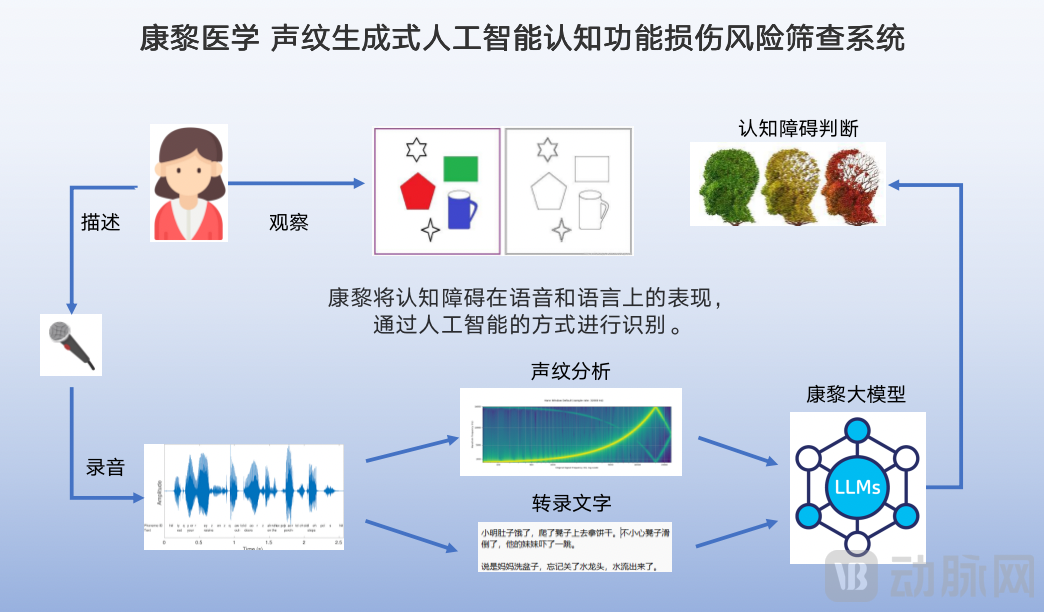
Based on over 2,000 clinical cases and integrated with large language models, CONLIGHT MEDICAL has developed a generative AI voiceprint-based screening system for cognitive impairment risk via brain-cognitive feedback pathways, achieving an AUC of 0.93.
Subsequently,Individuals identified as high-risk during initial screening will proceed to the advanced screening phase. CONLIGHT MEDICAL will employ blood-based testing technologies most aligned with current advances in brain science, such as biomarker assays for plasma Tau protein, glial fibrillary acidic protein (GFAP), and APOE genotyping. Algorithms will be used to determine whether subjects are at high risk for Alzheimer’s disease or are already affected by it.
In other words, CONLIGHT MEDICAL confirms whether a patient is at high risk for Alzheimer’s disease only through digital biomarker screening in the initial screening phase and neurobiological biomarker testing in the refined screening phase. This approach not only aligns with the objective pathogenesis of Alzheimer’s disease but also adheres to the diagnostic criteria outlined in current clinical guidelines.
In addition,CONLIGHT MEDICAL’s comprehensive screening solution has also achieved technological breakthroughs across multiple dimensions.
First, during the initial screening phase, Dr. Yang Dake, Technical Director at CONLIGHT MEDICAL, revealed that currently, CONLIGHT MEDICAL is the only company in China applying brain-cognitive feedback pathways, large language models, and deep learning-based voiceprint feature extraction technology to early screening for Alzheimer's disease. AlthoughIn July this year, Harvard published a relevant paper, but with a relatively small sample size. In contrast, CONLIGHT MEDICAL had already accumulated over 2,000 clinical cases prior to “modeling,” and subsequent data accumulation will continue to facilitate iterative improvements of its models. Therefore, CONLIGHT MEDICAL holds a first-mover advantage.
Moreover,Although voiceprint, eye-tracking, and even gait analysis can currently be used for cognitive function screening, eye-tracking and gait analysis require additional time for market education (such as training healthcare professionals and providing science popularization to the elderly) and involve relatively “cumbersome” procedures (for example, gait analysis requires healthcare staff to guide patients in wearing the devices, while eye-tracking necessitates instructing subjects on how to use the equipment).Voiceprint-based detection only requires the subject to describe a standard image they are viewing. This approach is highly operable, involves negligible learning costs, and takes merely 2–3 minutes to complete, thereby significantly enhancing screening efficiency.
Moreover, the large language models and related deep learning technologies employed by CONLIGHT MEDICAL can automatically analyze subjects’ speech based on Alzheimer’s disease–related acoustic features to generate screening reports. This approach not only significantly reduces the labor costs associated with screening and improves efficiency but also minimizes interference from human factors compared with traditional scale-based assessments, thereby yielding more objective test results.
Furthermore, the deployment cost of the screening model based on this technological pathway is also relatively low.Quoting He Xuan, founder and CEO of CONLIGHT MEDICAL, and Dr. Yang, its head of technology: “Our costs are primarily incurred in the initial model development and algorithms; thereafter, as the screened population expands, our costs will decrease.”
Not only that,During the precision screening phase following initial screening, CONLIGHT MEDICAL also employs artificial intelligence-based multi-omics technology to provide precise auxiliary diagnosis for individuals at high risk of Alzheimer’s disease.
Specifically, this method integrates biomarker panel testing based on a single-molecule immunoassay platform, genetic risk assessment, psychological and cognitive evaluation, and the collection of clinical information from subjects. By leveraging CONLIGHT MEDICAL’s proprietary artificial intelligence algorithm models for integrated inference, it determines the subject’s risk of amyloid deposition and the severity of cognitive impairment, thereby assessing the risk of Alzheimer’s disease and identifying the corresponding disease stage.
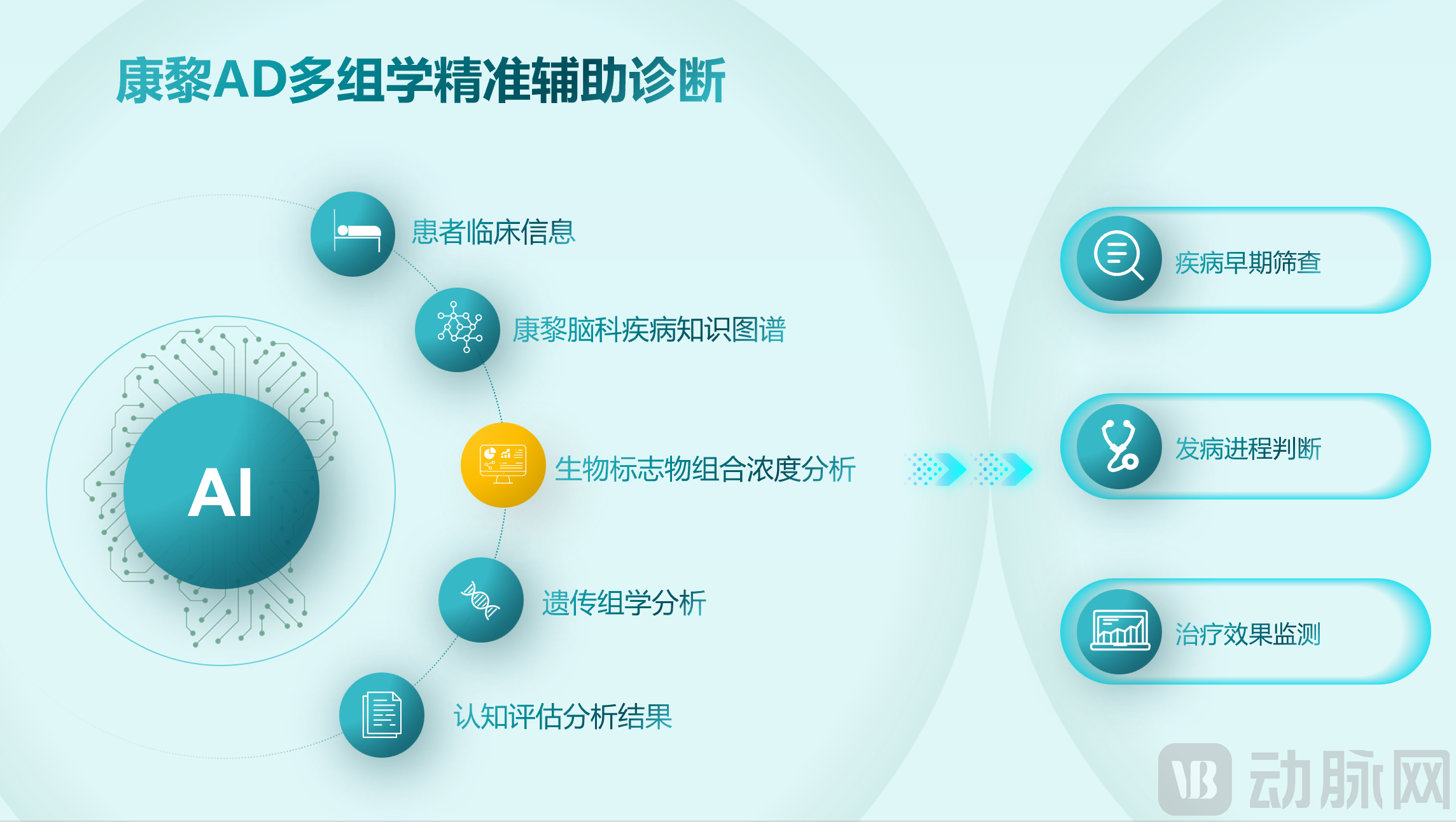
According to Dr. Yang Dake, the algorithmic model was trained and validated on over 3,000 multicenter clinical samples. Currently, its sensitivity and specificity, when compared against the gold standard of PET-CT, both exceed 90%, with an accuracy rate surpassing 85% in assessing patients with early- and mid-stage Alzheimer’s disease.
In the future, CONLIGHT MEDICAL will vigorously promote multi-omics testing, primarily based on blood biomarkers, as a clinically available, low-cost, high-precision, convenient, and minimally invasive method for the definitive diagnosis of Alzheimer’s disease, thereby alleviating the current clinical challenges of scarce PET-CT resources and low patient acceptance of cerebrospinal fluid extraction.
Without a subsequent intervention plan, screening becomes meaningless.
CONLIGHT MEDICAL also understands this principle. While building its screening system, it is doing its best to assist partners in establishing an ecosystem for intervention, prevention, and treatment.Consistent with its screening system, CONLIGHT MEDICAL’s intervention system also adopts a stratified approach to meet the intervention needs of populations at different risk levels.
Specifically, the subsequent “location” of medical consultation and treatment modalities vary depending on the different risk “alerts” for each subject.Patients with a lower risk level, who exhibit no obvious symptoms or only mild symptoms, may opt for lifestyle modifications, home-based rehabilitation, age-friendly communities, rehabilitation centers, or internet hospital platforms for mild interventional treatment.
For patients with higher risk levels or those already diagnosed with Alzheimer’s disease, CONLIGHT MEDICAL also recommends referral to tertiary hospitals or specialized outpatient clinics at well-known large Grade 3A hospitals in China.
Taking Meilong Subdistrict as an example, the Community Health Center has invited psychiatry specialists to establish specialized clinics. Individuals identified during screening as having cognitive impairment or being at potential risk for Alzheimer’s disease are referred to these specialized clinics. For cases where diagnosis is challenging, patients are transferred via the medical consortium to Minhang District Central Hospital for further comprehensive examinations. Subsequently, medication management for these patients can be ensured through the community-based specialized clinics.
As for the intervention methods,For patient interventions across different levels, digital therapeutics, dietary therapy, traditional Chinese medicine, and a recent batch of newly approved innovative drugs have injected new vitality into the management of cognitive impairment and even Alzheimer’s disease. In the future, CONLIGHT MEDICAL will collaborate with various industry stakeholders, aiming to effectively delay the progression of AD through more diverse intervention strategies.
In reality, the comprehensive prevention and control of Alzheimer’s disease is a massive undertaking that requires the participation of multiple stakeholders and demands systematic, standardized, and regulated construction and implementation. This effort necessitates the involvement of payers, such as long-term care insurance and commercial health insurance, to alleviate the financial burden on families. It also requires the participation of precision diagnostics companies like CONLIGHT MEDICAL to enhance the accessibility and cost-effectiveness of large-scale screening while improving its accuracy. Furthermore, it calls for innovative pharmaceutical companies to continue delivering breakthroughs in Alzheimer’s treatment, as well as strong governmental promotion and active public cooperation. Although the road ahead remains long, a glimmer of hope has emerged through the united efforts of all parties involved.