

Bangqi Bio Secures Tens of Millions of RMB in Series A+ Financing to Advance Autoimmune & Allergy Diagnostics
VCBeat has learned that Suzhou Bangqi Biotechnology Co., Ltd. (hereinafter referred to as “Bangqi Biotech”) recently announced the completion of its tens-of-millions-of-yuan Series A+ financing round, jointly invested by Qifu Capital and existing shareholder Jieli Fund. This new round of financing was rapidly closed following Bangqi Biotech’s Series A round led by Dunxing Capital, reflecting strong interest from the capital market in the autoimmune and allergy diagnostics sector, as well as high confidence in Bangqi Biotech’s strategic layout, product direction, and team. The proceeds from this round will primarily be used to expand the market for Bangqi Biotech’s certified immunoblotting platform products and to advance the registration of its multiplex liquid-phase immunofluorescence platform products.
In China, immunoblotting accounts for a significant proportion of autoantibody testing methodologies. Although other methodologies have competed intensely for decades, they have failed to capture a larger market share during the distribution phase due to factors such as established operational habits, limited pricing margins, and slow turnaround times for itemized testing within large panels (a characteristic of multiplex assays). International giants in autoimmune diagnostics from Europe and the United States played a pivotal role in establishing the autoimmune testing sector in China, an achievement worthy of recognition. However, for various reasons, their products and services have gradually become unable to meet clinical demands, thereby compelling domestic enterprises to achieve rapid overtaking. Consequently, China has swiftly embarked on the path of upgrading its autoimmune testing methodologies.
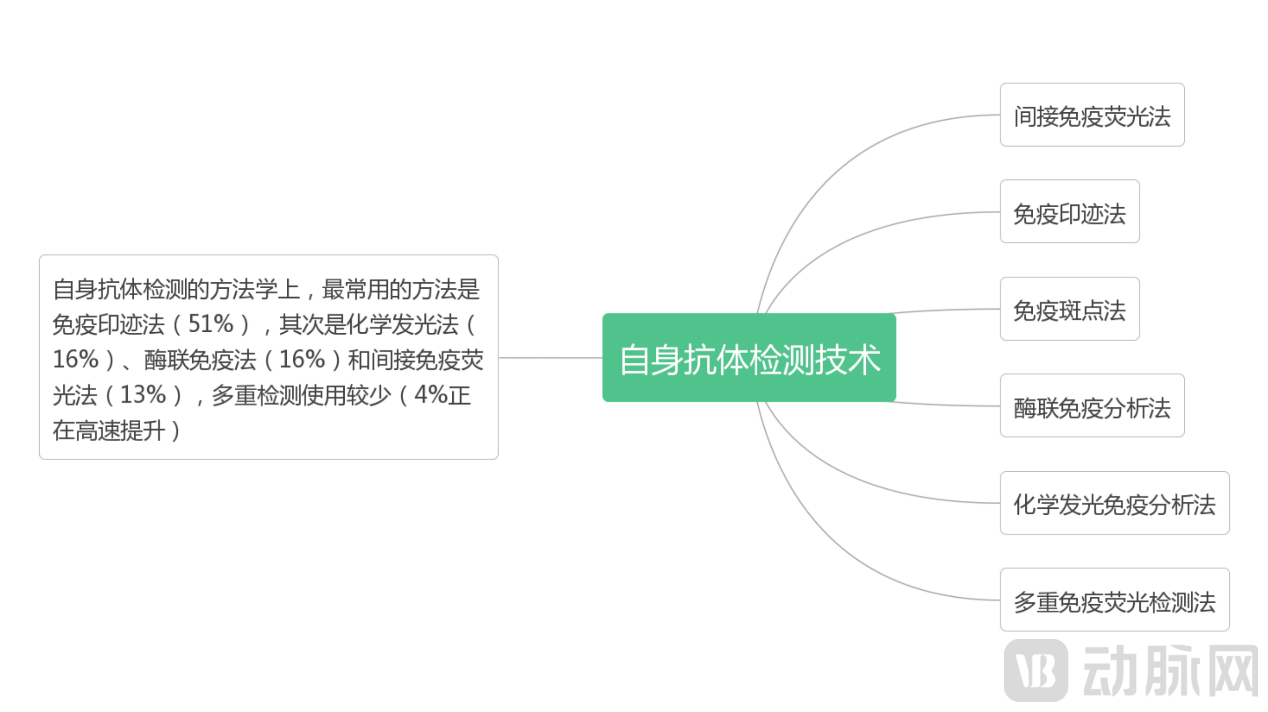
Data from the National Rheumatology Data Center on external quality assessment enrollment indicates that the substitution of domestic products for imports is proceeding steadily, having entered a critical phase characterized by the replacement of imported instruments among core key accounts. For instance, the Department of Rheumatology and Immunology at Peking Union Medical College Hospital has taken the lead in adopting domestic instrument platforms, leveraging its extensive clinical expertise to provide significant opportunities for the development of domestic manufacturers. Other leading hospitals are gradually adapting to a hybrid model combining domestic and imported systems, with some institutions already employing fully domestic diagnostic platforms while maintaining high standards in diagnosis and treatment. Driven by continuous corporate competition and improvement, coupled with customer support, domestic products are poised to rapidly achieve superiority and methodological advancements.
The diagnosis of allergic diseases includes medical history taking, in vitro diagnostics, and in vivo tests, among which in vitro diagnostics play an important role. The advantages and disadvantages of each detection method are shown in the table below.
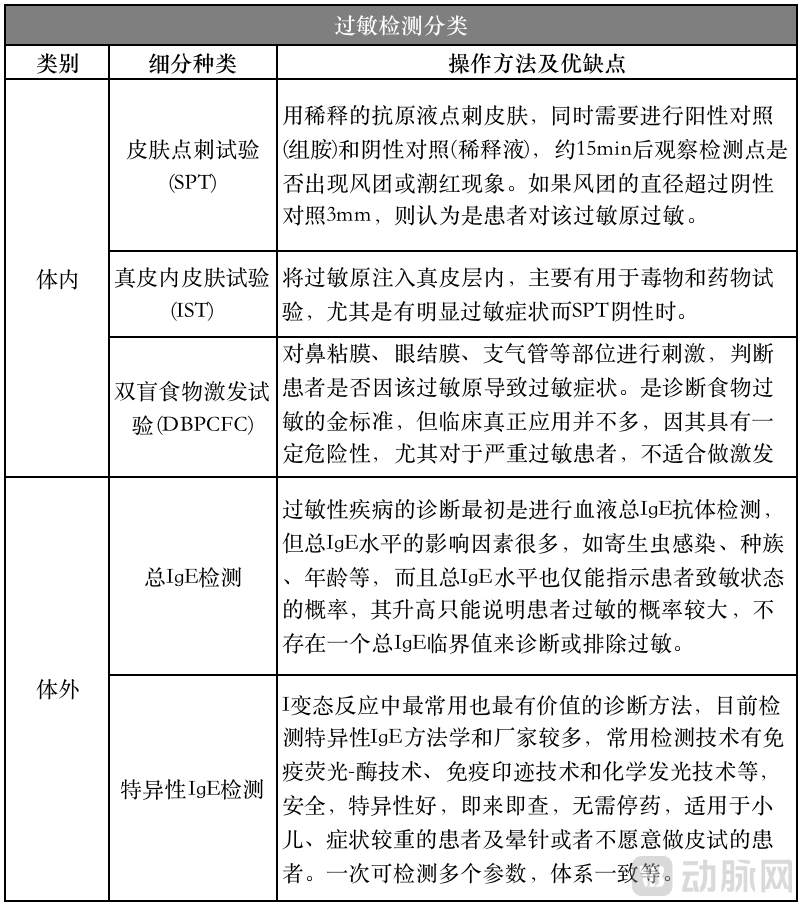
After years of development, in vitro diagnostic technologies for allergies have gradually shifted toward quantitative testing, with domestic enterprises experiencing rapid growth.
Given the characteristics of autoimmune and allergy testing—including multiplex assays, complex operational procedures, and high technical barriers—Suzhou Bangqi Biotechnology Co., Ltd. established its commercial strategy from inception to focus on mainstream methodological approaches, deploy a diversified portfolio of testing platforms, and gradually expand into other multiplex testing segments. The company also adopted a business model centered on the in-house development of both instruments and reagents. Bangqi Biotechnology’s immunoblotting platform now offers a comprehensive range of instruments and a robust reagent product line for autoimmune and allergy diagnostics, with products rapidly obtaining regulatory approvals and being launched into the market.
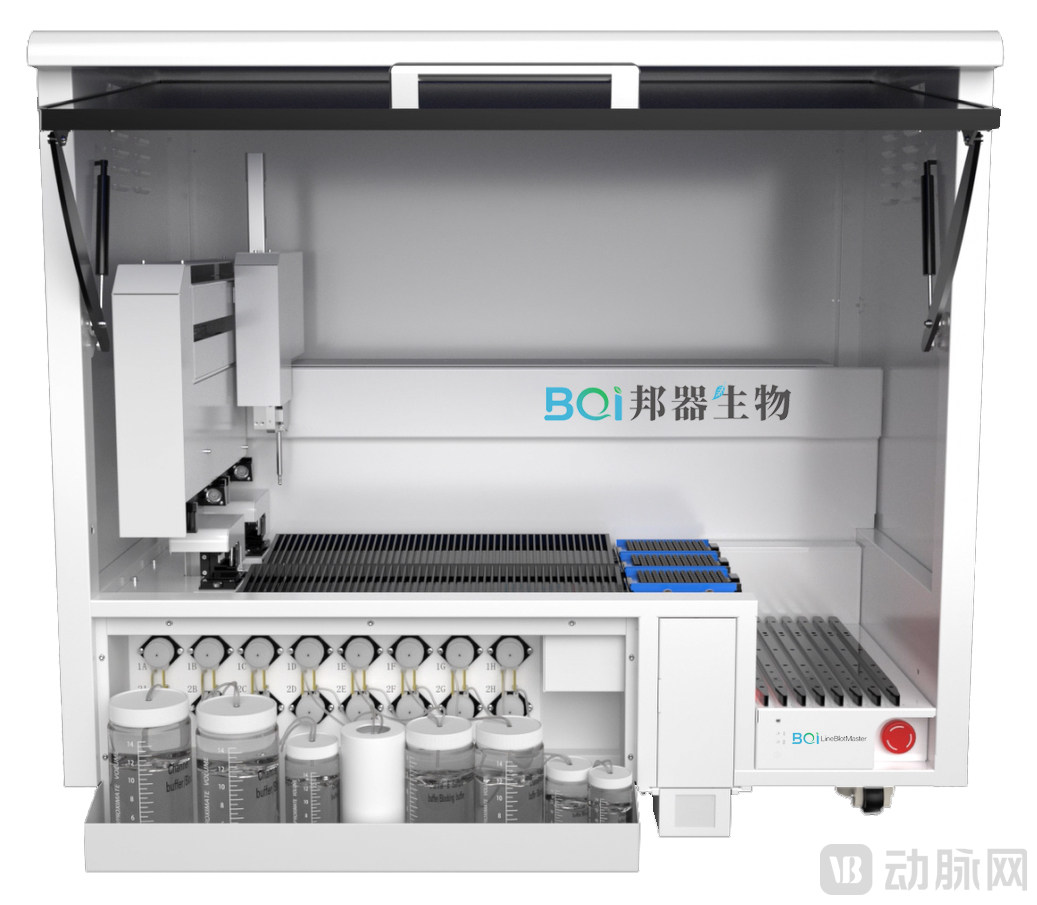
BQ-BM100 Fully Automated Immunoblotting System
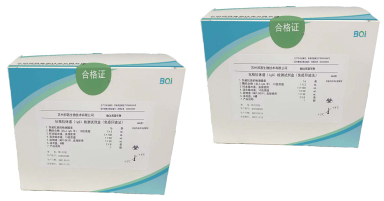
Autoimmune & Allergen Diagnostic Reagents
Bangqi’s immunoblotting platform addresses the clinical demands for automation, short turnaround times, high throughput, and high precision, while maintaining established clinical operational and report-reading practices. It reduces the clinical testing turnaround time from 3–7 days to under 1.5 hours, enabling fully automated testing from primary tube loading to report generation, along with fully quantitative analysis. The platform can simultaneously generate more than 5,000 test results. Bangqi Biotechnology’s immunoblotting platform products have successively obtained regulatory approvals since late 2022, and the company has already established and covered marketing networks in multiple provinces.
The Bangqi team has successfully launched the next-generation multiplex liquid-phase immunofluorescence detection platform through continuous R&D and exploration.
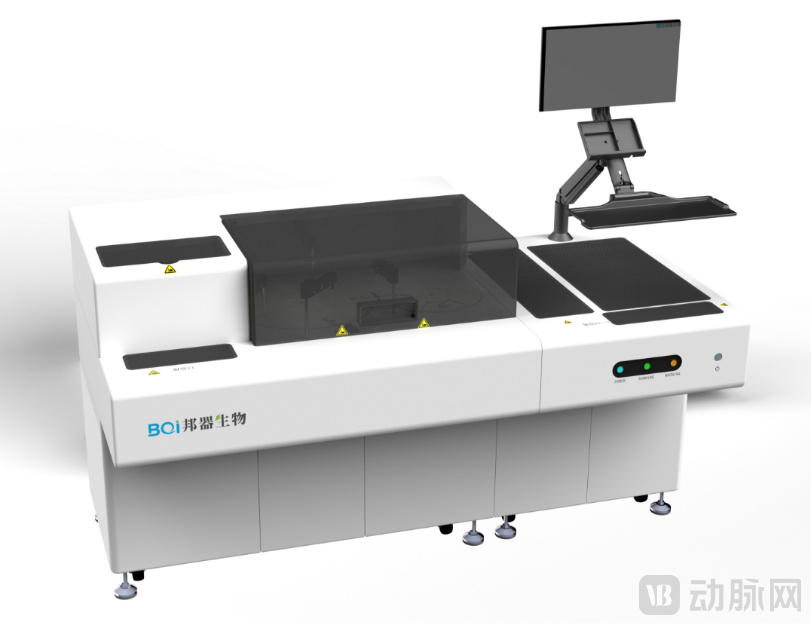
BQ-TF6000 Fully Automated Multiplex Immunofluorescence Analyzer
Multiplex liquid-phase immunofluorescence technology enables the simultaneous detection of dozens of biomarkers within a single reaction system. It requires only one set of reagents and consumables to perform multi-analyte testing with flexible marker combinations, while offering advantages such as rapid turnaround, high automation, high throughput, a wide linear range, and excellent reproducibility. While delivering performance comparable to chemiluminescence immunoassays (CLIA), this technology provides higher detection throughput and lower overall costs. Amidst the growing demand for autoimmune and allergy testing, and against the backdrop of healthcare cost containment, medical system reforms, and centralized procurement in China, multiplex liquid-phase immunofluorescence technology aligns with the development trends of clinical laboratory medicine in the country. The successful launch of Suzhou Bangqi Biotechnology Co., Ltd.’s multiplex liquid-phase immunofluorescence detection platform will accelerate the company’s growth, gradually strengthen its core competitiveness, and position it as a leading enterprise in the domestic multiplex testing sector.
Tao Rui, founder of Suzhou Bangqi Biotechnology Co., Ltd., expressed his gratitude to Qi Fu Capital and existing shareholders for their choice and trust in the company. After decades of rapid development, China’s in vitro diagnostics (IVD) market has seen severe homogenization across most segments, with diminishing returns in the traditional chemiluminescence immunoassay market. By targeting high-barrier blue-ocean markets and distinctive niche segments, and adopting a business model integrating self-developed instruments and reagents, Suzhou Bangqi Biotechnology has established a solid foundation for its growth.
Bangqi Biotechnology will continue to adhere to its business strategy of grounding itself in mainstream diagnostic methodologies, deploying multi-methodology testing platforms, and gradually expanding into other multiplex testing fields. Upholding a steady and incremental approach to commercial expansion, the company is committed to launching products that lead industry development and meet market demands in a compliant, safe, efficient, and stable manner. We strive for survival through quality and promote development through innovation.
Lan Hongming of Qi Fu Capital stated that Suzhou Bangqi Biotechnology Co., Ltd. is a project highly favored by our team. With the acceleration of domestic substitution and the continuous enrichment of therapeutic options, the autoimmune and allergy diagnostics market is experiencing rapid growth, with an increasingly pronounced trend in the iteration of testing technologies. There is strong clinical demand for rapid, high-throughput, fully quantitative, and fully automated diagnostic products. Bangqi Biotechnology’s products are highly distinctive and align with the development direction and needs of China’s in vitro diagnostics industry. We are delighted to collaborate with Mr. Tao and the company’s professional and efficient team as shareholders of Bangqi Biotechnology. We are confident in Bangqi’s development prospects and honored to accompany the company on its growth journey.
Chen Yun from JieLi Fund stated, “We participated in Bangqi Biotechnology’s Series A financing and made additional investments in this round. Bangqi’s strategy of establishing itself on mainstream detection methodologies, deploying a multi-methodology detection platform, and pursuing the commercial direction of domestic substitution aligns with current industry development trends and continuously addresses market pain points. We are highly optimistic about Bangqi Biotechnology’s core team, represented by Mr. Tao. We hope that under Mr. Tao’s leadership, Bangqi Biotechnology will achieve rapid growth in the autoimmune and allergy diagnostics market, progressively implement its corporate strategy along the company’s development timeline, solidify its foundational business, and expand into new frontiers.”
Qifu Capital, established in 2013, is a professional fund management firm specializing in private equity investment. It primarily manages early-stage venture capital funds and industry-specific funds, committed to investing in new industries driven by emerging technologies. The firm focuses on two core areas: the digital economy and advanced manufacturing centered on new materials. It has built competitive advantages in niche sectors such as next-generation information technology, advanced manufacturing, and life sciences. Currently, Qifu Capital oversees assets under management exceeding RMB 7 billion and has invested in more than 300 companies. Adhering to the investment philosophy and strategies of trend-based investing, value investing, and systematic investing, Qifu Capital remains dedicated to deepening its expertise in specific industries and sectors.
Relay Fund was established in 2009 as a venture capital firm dedicated to investing in technology startups. The fund is capitalized by the Venture Capital Guidance Fund of the Ministry of Science and Technology, the CICC Qiyuan National Emerging Industry Venture Capital Guidance Fund, the Shanghai Venture Capital Guidance Fund, the Sci-Tech Innovation Investment Fund of Funds, and market-oriented investors. It focuses primarily on new materials, healthcare, intelligent manufacturing, and services. Relay Fund currently manages six funds with a total scale exceeding RMB 1.6 billion. Since its inception, it has invested in nearly 150 early- to mid-stage technology startups, supporting their growth journey.