

Frontier Vision and Holistic Insight: The Core Advantages of Scientist-Led Startups
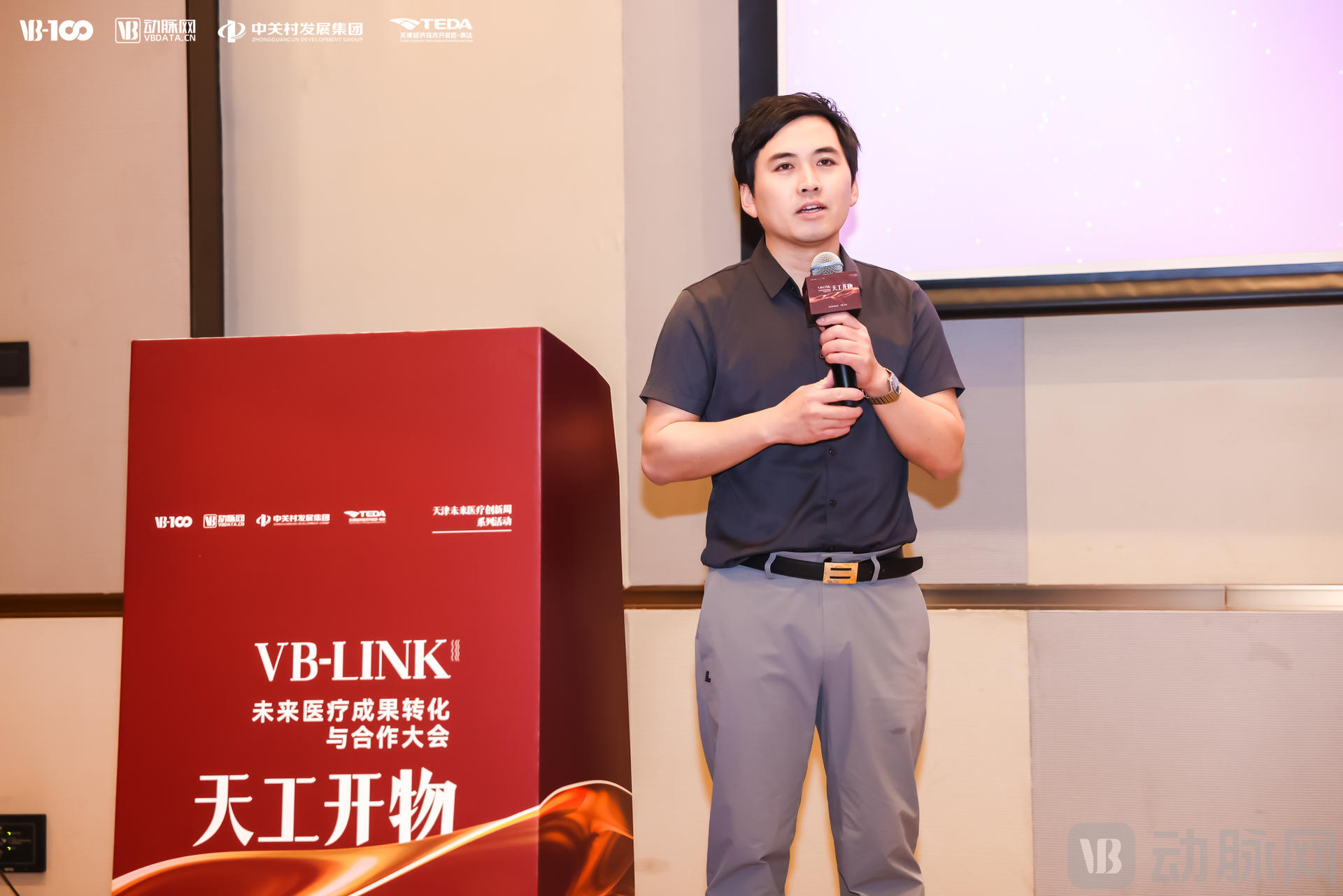
On June 29, 2023, at the Young Scientists’ Translational Innovation Summit held at the InterContinental Hotel in Yujiapu, Binhai New Area, Tianjin, Wang Yingqi, CEO of Topview Medical, delivered a keynote speech titled “Frontier Perspectives and Comprehensive Understanding: Core Advantages of Scientist-Founded Enterprises.”
Wang Yingqi, CEO of Topcare Medical, centered his presentation on “Scientist Entrepreneurship,” which was divided into three parts: Frontier Vision, Product Definition, and Academic-Research Interaction.
First, Wang Yingqi introducedAdvantages and Disadvantages of Entrepreneurship by Industry Professionals and ScientistsIndustrial talent tends to follow relatively fixed entrepreneurial models. With their in-depth understanding of the industry, market, and products, their ventures resemble a finite game played within established rules, where success hinges on maximizing efficiency and minimizing errors. In contrast, scientist-led entrepreneurship is more akin to an infinite game that can break existing rules. Levering broad technical horizons, keen sensitivity to frontier developments, and interdisciplinary insights, scientists are capable of disrupting traditional technologies and business models. While this approach carries higher risks, it also offers the potential for greater rewards. Wang Yingqi emphasizes that scientists’ advantages lie in their ability to rapidly capture technological advancements within their fields, assess technology maturity, forecast emerging trends, and demonstrate greater willingness to experiment with new technologies.
Secondly, Wang Yingqi discussedThe Importance of Product Definition for Scientists in EntrepreneurshipScientists should focus on innovation and overwhelming competitive advantages in product definition, rather than simply identifying benchmark products and optimizing parameters. They need to demonstrate novelty and innovation, while balancing ideas with deadlines, novelty with reliability, and vertical integration with supply chain management during the productization process. Wang Yingqi cited TopEye Medical as an example, illustrating how their innovative approach in product definition—applying technologies from other fields to ophthalmic products—has yielded a competitive edge.
Finally, Wang Yingqi discussedCollisions and Collaborations Between Scientists and Industry ProfessionalsThey noted that numerous challenges arise during the integration process, such as balancing novel ideas with practical execution, weighing novelty against reliability, and striking a balance between vertical integration and supply chain development. Wang Yingqi pointed out that leveraging respective strengths to achieve an effective equilibrium is key to corporate success. After six years of refinement, TopRay Medical has established a product development process characterized by precise identification, efficient validation, and decisive decision-making, thereby achieving its current successes.
Transcript of the Speech
Good afternoon, distinguished investors and scientists. I am Wang Yingqi, CEO of Topcare Medical. Strictly speaking, I do not consider myself a young scientist; rather, I am a professional manager with limited experience who has been supporting young scientists in their entrepreneurial journeys. I graduated from the Department of Biological Engineering at Tsinghua University. During my graduate studies, I engaged in entrepreneurship, making me a serial entrepreneur. After experiencing numerous failures, I joined PINS Medical, an outstanding startup affiliated with Tsinghua University, where I worked on projects and learned the entire process from R&D and regulatory registration to market promotion. In late 2016, by chance, I met Professor Huo Li, now the Chief Scientist of Topcare Medical, and we resolved to build Topcare together. Over the past six years of accompanying scientists in their entrepreneurial endeavors, my understanding of scientist-led startups has evolved: from initially believing that scientists were omnipotent, to recognizing their limitations, and finally arriving at a more rational and balanced perspective on scientist entrepreneurship.
Our topic today is “Scientists as Entrepreneurs,” a subject that has garnered significant attention in recent years. Many argue that there is a divide—an invisible wall—between scientists and entrepreneurs. Drawing on my own experiences, I will deconstruct this barrier to elucidate the key differences between ventures founded by scientists and typical startups. This presentation is divided into three parts: Frontier Perspectives, Product Definition, and The Intersection of Academia and Industry.
1Frontier Perspectives
Before discussing entrepreneurship by scientists, let us first address entrepreneurship by industry professionals. Entrepreneurship by scientists accounts for a relatively small proportion and represents a comparatively new business model. The advantages of entrepreneurship by industry professionals are self-evident: such individuals possess extensive familiarity with the industry, its upstream and downstream sectors, the market, products, and competitors. All market segments, rules, supply chain dynamics, competitors, and competing products are well-defined; thus, one can draw upon past experience to guide decision-making and execution. Therefore,Entrepreneurship by Industry Talent Is More Like a Finite Game. Finite games require players to deliver flawless performance on standardized-answer exams, much like the National College Entrance Examination (Gaokao), where every question has a correct solution; answering all questions correctly virtually guarantees admission to the most prestigious universities and status as a winner. This is the entrepreneurial model for industry professionals. Startups centered around such industry talent typically exhibit similar characteristics. Entrepreneurs with an industry background tend to be more pragmatic, efficient, and risk-averse. However, their pursuit of the optimal solution within constrained rules is actuallyLocal Optimum Solution, but beyond the confines of limited rules, there are more new opportunities and emerging trends that traditional industry professionals, who rely on existing experience and familiar pathways, may fail to capture in a timely manner.
Meanwhile, this is also what we refer to as the entrepreneurial advantage of scientists.Scientist entrepreneurship is more akin to an infinite game., with no established rules, it is possible for scientists in the field of electronic information to embark on entrepreneurial ventures in healthcare, while materials scientists may launch startups in medical aesthetics. Everything remains uncertain; scientists harbor no boundaries or obstacles in their minds, allowing them to explore a broader landscape in search of global optimal solutions, although such efforts may mostly end in failure.
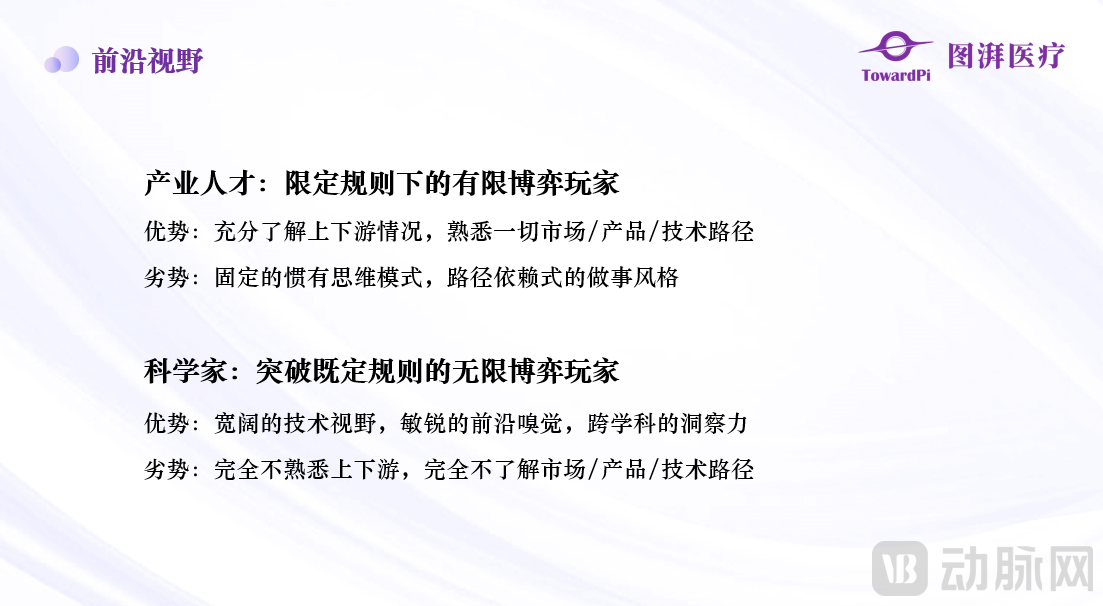
Scientists Have Three Major Advantages in Entrepreneurship:
1. Scientists Possess a Broad Technological Horizon. We all know that even master’s and doctoral students read hundreds of academic papers during their research, each with its own complete logic of innovation. While reading these papers, we observe numerous researchers contemplating issues relevant to their fields and learning from their approaches to domain-specificHistory of Technological DevelopmentandOutlook for the Future. Through this extensive reading and practical experience, these graduate students will develop a very good and broadTechnical VisionThis holds true for master’s and doctoral graduates, and even more so for scientists with two to three decades of professional experience. These scientists possess a broad technological horizon and are not overly constrained or limited by industry-specific experience.
2. Scientists possess a keen sense of the frontier. Scientists, of course, have another critically important mission: publishing papers. It is arduous for scientists to publish highly influential papers. During group meetings, scientists repeatedly discuss and scrutinize others’ findings, track the latest advances, and consider whether they can build upon existing work.Application Innovation, whether it is possible to apply achievements from another field to one’s own domain and achieve breakthroughs in problem-solving. Scientists dedicate themselves day after day to innovation; therefore, they are highly attuned to nascent technological advances that emerge from subtle beginnings. This keen sensitivity is not possessed by industry professionals, or rather, it is unique to the scientific community.
3. Scientists' Interdisciplinary Insight Capabilities. Virtually all scientists possess an interdisciplinary perspective; no scientist focusing on materials science reads only literature within the materials field, nor does one specializing in life sciences confine their reading to life sciences publications. This is because the majority of today’s top-tier research outcomes are largelyForged through interdisciplinary collisionIndeed, scientists develop strong interdisciplinary insights over the course of their long careers, which constitutes a unique advantage for them.
The strengths of scientists are precisely the weaknesses of industry professionals, and conversely, the strengths of industry professionals are precisely the weaknesses of scientists.Scientists are completely unfamiliar with the upstream and downstream segments of the industry, as well as with products and technological pathways. We often hold a misconception: that scientists excel in technology; in fact,Scientists excel not in technology in the narrow sense, but in technological vision.. In most cases, engineers handle the technical implementation, while what scientists provide is actuallyTechnologyVision, Technical Judgment, and Technical Pathways. Therefore, having scientists on the team does not equate to possessing technology, nor does it guarantee the development of high-quality products; experienced engineers are equally important.
The advantages of scientists founding startups have been repeatedly mentioned. First, scientists canRapidly Capture Technological Advances in the Field, an essential quality for every scientist; without keen observational skills, it is impossible to engage in top-tier scientific research over the long term. Second, scientists canAssessing Technology Maturity, in contrast, industry professionals often hold a somewhat negative view of new technologies. They believe that translating technological achievements from the laboratory to industrial applications consumes considerable time and incurs substantial costs and sacrifices. This is not difficult to understand; apart from senior scientists, most people are unable to accurately assess which frontier technologies are at the optimal stage for mature commercialization. Third, scientists canForecasting the Development Trends of New Technologies. This is also valuable experience accumulated by scientists over their long careers, from observing new findings to their application. Fourth, scientistsMore willing to adopt new technologies.An examination of teams within the industry that are respectively scientist-centric and industry-centric reveals that teams led by scientists are more willing to invest in emerging technologies, despite the heightened risks involved in this process.
Tupai Medical is a company specializing in ophthalmic equipment, with our product line primarily consisting ofHigh-End Ophthalmic Equipment and Instruments, there are diagnostic devices (such as OCT and ultra-widefield fundus cameras) as well as therapeutic devices (ophthalmic microscopes, femtosecond lasers, etc.). Taking our own products as an example, driven by our Chief Scientist, Professor Huo Li, Tupai is the first company to apply VCSEL lasers (previously widely used in the field of optical communications) to commercial ophthalmic OCT products. We have developed the “Beiming·Kun” 400,000 A-scan/s full-field swept-source OCT and promoted the inclusion of ultra-widefield OCTA functionality into clinical diagnostic guidelines for ophthalmology. As another example, Tupai is also the first company to apply 4K endoscopy technology to the field of ophthalmic surgery, thereby creating the only ophthalmic surgical microscope in the industry capable of real-time 4K-3D digital display. From just these two examples, it is evident that we haveCross-domain, cross-disciplinary, and cross-professional technologiesintegrated into our established ophthalmology product portfolio, enablingInnovative Breakthroughs, so Tuopai follows this logic. Although these initiatives are ultimately driven, implemented, and evaluated by engineers, their origins are closely tied to our team of scientists.
2Product Definition
Everyone is familiar with product definition, so we will not break it down in detail here. Technical specifications focus more on what we can do, while product definition focuses more on what is clinically needed. As a side note, accurately identifying clinical needs is highly complex and cannot rely solely on the opinion of a single Principal Investigator (PI); it requires comprehensive evaluation. Many companies, especially early-stage startups founded by scientists, tend to assign product definition responsibilities to a single physician or an experienced Product Manager (PM) from the industry. This approach actually squanders their own advantages. The PM team should beCross-Functional Teamrather than individuals, and we believe that scientists must be part of the PM team to leverage their unique scientific advantages.
Let’s begin by discussing how industrial talent product managers (PMs) approach product definition. First,Identify BenchmarksIdentifying a clear benchmark product is the first step for all industry professionals transitioning into product management (PM). Once a benchmark product is identified, there are two strategic approaches: the first is to offer superior performance at the same price point; the second is to offer identical specifications at a lower price. Both approaches are straightforward, involving direct comparisons of specifications, pricing, and market positioning, with execution following a step-by-step process. While this method is simple and logically clear, it does not yield breakthrough results. Companies adopting this strategy can only gradually erode their competitors’ market share, which reflects the competitive logic and ecosystem prevalent among most enterprises in the market. In contrast, scientist-founded startups operate entirely differently. Product definition by scientists differs from that by industry professionals. Scientists are compelled to develop technologies and specifications that others cannot replicate, driven by a mindset ingrained over decades of scientific training—the imperative to create products or technologies that are unique and unparalleled. Furthermore, scientists mustAchieve an overwhelming advantage, this mindset was applied by scientists to product development, with their minds fully focused on creatingDimensional Reduction Strikeeffect, creating products with an overwhelming competitive advantage. Neither of these two product definition models is inherently superior or inferior; both are effective. However, the former model (product definition by industry-experienced product managers) isLow Risk, Low Return, the subsequent model (the scientist's product definition) isHigh Risk, High Reward, I am more inclined to combine the two product definition models to leverage their respective strengths and mitigate weaknesses, although this is extremely challenging in practice.
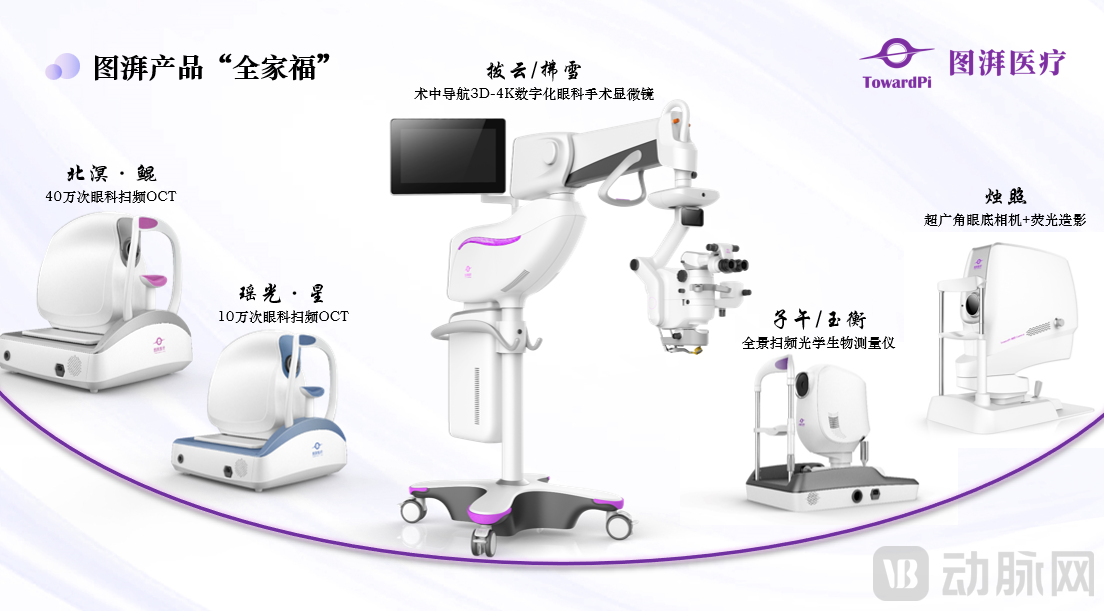
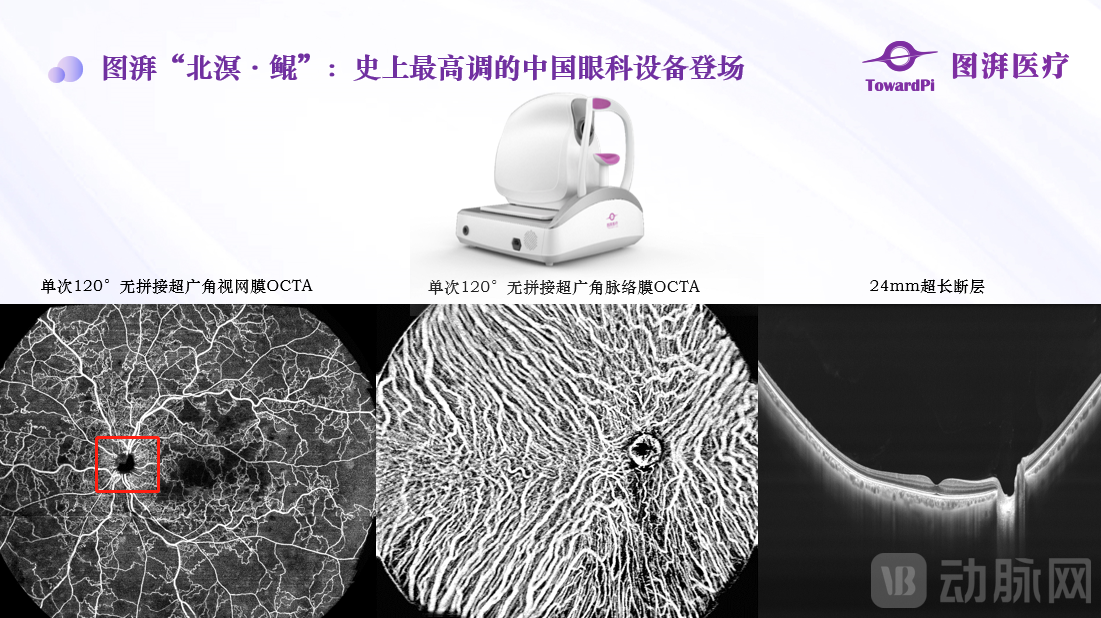
For Topcon, there is no need to elaborate on the details of its four existing products: OCT, biometer, microscope, and wide-field camera. Taking the “Beiming” OCT as an example, let us discuss how our scientists defined the clinical functions of this product. As shown in the figure below, it features single-shot 120° seamless ultra-widefield retinal OCTA, single-shot 120° seamless ultra-widefield choroidal OCTA, and a 24 mm ultra-long tomography range. Before this product was launched in the second half of 2021, the maximum single-shot blood flow area achievable by similar imported products was limited to the size indicated by the red box in the figure below. The competitive focus of these imported products was “stitching,” optimizing algorithms and functions to assemble multiple images into a large, visually appealing blood flow map. Topcon’s approach to solving this problem was straightforward: while other companies sought advantages through “stitching,” Topcon aimed to capture a complete blood flow (OCTA) image in a single scan within ten seconds. However, while this sounds simple, it was extremely difficult to achieve in practice. It required increasing the scanning speed by nearly an order of magnitude, making us the first company globally to commercialize an OCT product with a scanning speed of 400,000 A-scans per second. With increased speed, achieving greater imaging depth became even more challenging. To realize a larger imaging range without image folding, it was necessary to more than double the imaging depth. To this end, we independently developed key components such as data acquisition cards and photodiodes (PDs), increasing the sampling rate several-fold while maintaining the signal-to-noise ratio. Furthermore, it was essential to match data processing speeds and image compression rates, resulting in a substantial workload. We attempted to apply all relevant cross-disciplinary technologies from the optoelectronics field to this product and independently developed numerous core supporting components, yielding highly impressive final results.
“Beiming” can achieve an ultra-wide field of blood flow imaging measuring 24 mm × 20 mm and an ultra-long tomographic scan of 24 mm in a single acquisition. We launched this product in May 2021, with official sales commencing in September. Despite its “astronomical” price tag of nearly RMB 3 million, sales growth has remained robust. Over the two years since its adoption, the device has helped leading ophthalmic research teams publish dozens of high-impact SCI papers, demonstrating the significant advantages brought by innovative products. As suggested by its name, “Beiming·Kun,” it is the first ophthalmic medical device named using Chinese cultural elements. This illustrates that when scientists embark on entrepreneurship and product development, their innovation in product definition is comprehensive, extending even to the naming.
3Academic-Research Collision
The first one isEver-Novel Ideas vs. Imperative Deadlinesbalance between the two. New ideas are excellent, but running a business incurs costs, including labor and time. It is impossible to innovate and iterate indefinitely, nor can a company withstand endless trial and error; deadlines are essential. This highlights the need to strike a balance between generating ideas and meeting deadlines.
The second isNovelty and Reliabilitybalance between them. Many novel or innovative concepts will encounter various problems and difficulties when translated into products in the future; these are issues that scientists tend to overlook but that enterprises must address. It is evident that trade-offs, evaluations, and compromises play a crucial role in the productization process.
The third isVertical Integration and Reliance on Mature Supply Chainsbalance between them. This has also become a hot topic recently, with companies claiming to possess core technologies and core components. Industry professionals are generally reluctant to accept or consider such claims unreasonable. From their perspective, strong supply chain integration capabilities are crucial. In other words, identifying the optimal suppliers in each niche segment of the upstream industry, negotiating the best terms—including pricing, lead times, inspection standards, primary and secondary suppliers, etc.—constitutes a complete supply chain system. However, this is not enough for scientists, as they aim to create something new, and existing supply chains may not meet their technical requirements. Therefore, scientists need to develop new technologies themselves and explore cross-disciplinary collaborations with new suppliers. This is what we call “vertical integration.” This model carries both high risks and high rewards. A few major strategic missteps can burden operational efficiency due to high costs; but if successful, it will provide significant momentum to the company’s product technology.
Of course, the conversation extends beyond just these three points. The process of integration between industry talent and scientists is bound to involve many stories and clashes. If both sides can leverage each other’s strengths to achieve an effective balance, enterprises can achieve leapfrog development and create truly groundbreaking products.
4Presentation Summary
For Topview, six years of refinement have yielded a three-step product decision-making process: Precise Identification, Efficient Validation, and Decisive Decision-Making.
Precise Identification: It refers to identifying opportunities among numerous cutting-edge technologies at the academic frontier, determining which technologies are worth pursuing for translation and which should be placed on a watchlist for continued observation.
Efficient Validation: Innovation inevitably involves trial and error, which comes with costs. However, for startups, material and labor costs are always secondary; the greatest cost is always time. Therefore, corporate trial-and-error processes must have defined time limits. So-called efficient validation means conducting as many trials as possible within the specified timeframe; the more iterations performed, the closer one gets to the truth. This also applies to TopEye’s product innovation and development. While errors far outnumber successes, we can promptly identify mistakes and quickly mitigate losses, thereby finding the right path.
Decisive Decision-Making: Do not hesitate when making decisions. For enterprises, hesitation drags down the overall operational efficiency of the company. Final decisions must be decisive; even if a few erroneous decisions are incorporated into final execution, it is not a major concern. Flaws do not obscure the merits. When developing innovative products, there is no need to strive for perfection in every aspect.