

China's First Digital Therapeutics Company, BrainMotion Aurora, Files for Hong Kong IPO

BrainAurora
Cognitive Rehabilitation Cloud Platform Provider
On August 8, 2023, China’s digital therapeutics (DTx) industry reached a milestone as Zhejiang BrainAurora Medical Technology Co., Ltd. (“66Brain,” hereinafter referred to as “BrainAurora”) formally submitted its draft prospectus to the Hong Kong Stock Exchange on that day, positioning itself to potentially become the first listed company in China’s DTx sector. This development undoubtedly serves as a significant boost to the DTx industry, which is currently experiencing a temporary downturn. VCBeat (WeChat ID: Vcbeat) promptly provided an analysis of the draft prospectus.
As the owner of the renowned “66 Brain” brand, BrainAurora is regarded as a pioneer and leader in China’s digital therapeutics industry for cognitive impairment. The draft prospectus also mentions that BrainAurora is the first company in China to combine brain science with advanced artificial intelligence technologies to develop medical-grade digital therapeutic products for cognitive impairment.
This assessment is not an exaggeration—although digital therapeutics is an emerging industry, BrainAurora has been deeply engaged in this field for over a decade.
In 2012, when digital therapeutics were still in the conceptual stage globally, the newly established BrainAurora had already begun product development.In September 2018, BrainAurora’s “Brain Function Information Management Platform Software System (66 Brain)” obtained the Class II medical device registration certificate from the NMPA, making it one of the earliest digital therapeutics to receive certification in China.。
In May 2019, BrainAurora published the clinical trial results of this digital therapeutic in *Alzheimer’s & Dementia*, a peer-reviewed journal authoritative in the field of cognitive impairment clinical research. The paper is regarded as the first globally to confirm, through evidence-based data from randomized controlled trials, the efficacy of digital therapeutics for non-dementia vascular cognitive impairment.
In 2020, the FDA granted emergency authorization for several digital therapeutics to enter the market due to the COVID-19 pandemic. This milestone was widely regarded as a pivotal moment for the digital therapeutics industry, attracting significant attention. However, BrainAurora has made even greater strides compared to its U.S. counterparts—In June 2020, it expanded the indications for cognitive impairment in its Class II medical device registration certificate to eight categories, encompassing the screening, assessment, rehabilitation, and data analysis of vascular cognitive impairment, Alzheimer’s disease, aphasia, depression, schizophrenia, sleep disorders, attention-deficit/hyperactivity disorder (ADHD), and autism spectrum disorder.
At this point, “Liu Liu Nao” has become a digital therapeutic that combines clinical experience in brain science with deep neural network algorithms, providing clinical assessment and intervention for various cognitive impairments caused by vascular diseases, neurodegenerative diseases, psychological disorders, and developmental defects in children.
Virtual human technology and AI technology are the core technologies of this product. In particular, the AI technology employed is trained on extensive data comprising patient parameters, clinical assessments, diagnoses, and information collected during patient engagement in training tasks of varying difficulty levels, thereby offering advantages in assessment efficiency and therapeutic efficacy.
In terms of assessing efficiency, virtual human technology can communicate with and conduct medical evaluations for a large number of patients simultaneously, thereby significantly improving evaluation efficiency. AI technology enables physicians to perform assessments and interventions in a highly simplified, user-friendly manner, promoting their acceptance and adoption in primary healthcare institutions.
In terms of efficacy, the AI deep neural network algorithm used for task recommendation can dynamically identify and recommend the most suitable training from millions of combinations derived from over 300 training modules, thereby providing adaptive and personalized training for patients. Compared with traditional pharmacological treatments, these training programs can more effectively enhance patients’ cognitive functions.
Even at that time, digital therapeutics had not yet attracted widespread attention in China. It was not until 2021, a year later, that digital therapeutics entered the public spotlight in the country, with BrainAurora, which rose to prominence through its “66Brain” platform, becoming a benchmark enterprise in the field.
Currently, BrainAurora has established an extensive pipeline of digital therapeutic products for cognitive impairment, covering the assessment and intervention of a wide range of cognitive disorders induced by vascular diseases, neurodegenerative diseases, psychiatric disorders, childhood developmental deficits, and other conditions. Among these, the aforementionedEight indications spanning four categories of cognitive impairment have completed product registration and achieved commercialization; an additional 21 indications for cognitive impairment are currently under development.。
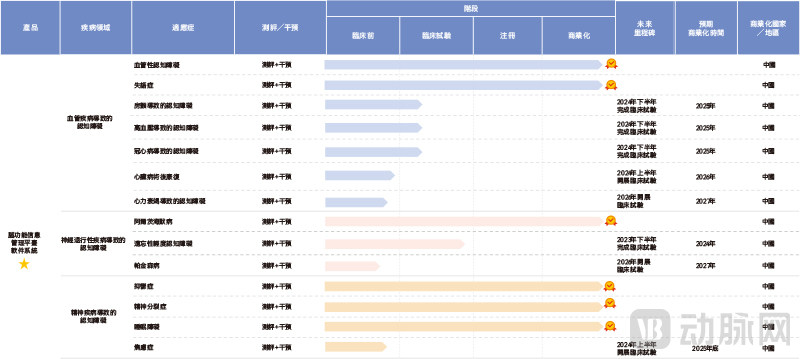
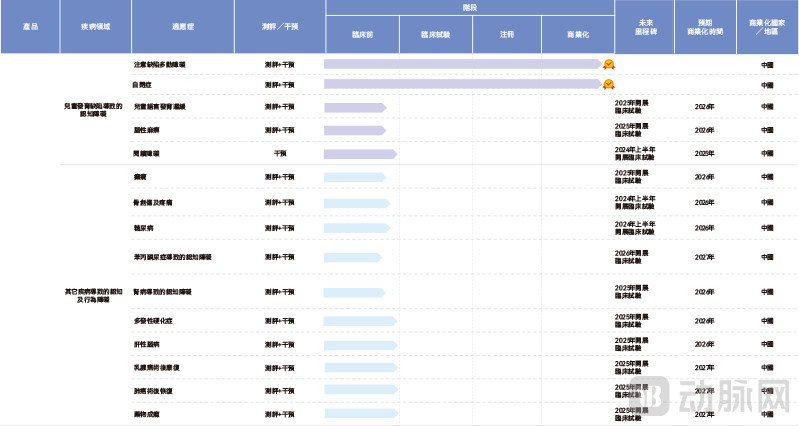
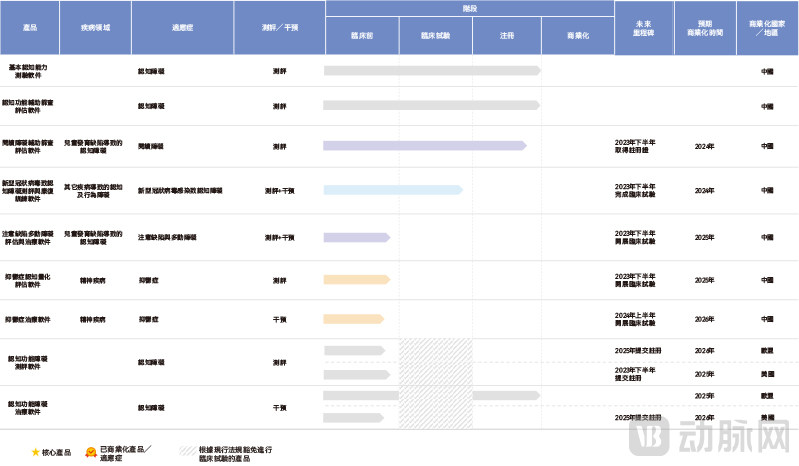
BrainAurora’s Current Product Pipeline (Image Source: Prospectus)
In addition to the “Liu Liu Nao” digital therapeutic, which has already obtained a medical device registration certificate, BrainAurora has developed a series of products targeting cognitive impairment based on this achievement. Among them, the Basic Cognitive Ability Test Software and the Cognitive Function Auxiliary Screening and Assessment Software obtained Class II medical device registration certificates in October and December 2022, respectively, while several other software products are at various stages of development.
It is worth mentioning that,BrainAurora has embarked on its globalization journey, with plans to launch its cognitive impairment assessment software and cognitive impairment treatment software in the European Union and the United States, respectively., demonstrating its commitment to globalization.
Since its founding in 2012, BrainAurora has remained committed to the field of cognitive impairment for eleven years, largely driven by the vast market potential in this area.
Overall, the etiologies of cognitive impairment mainly fall into four categories: vascular diseases, neurodegenerative diseases, psychiatric disorders, and developmental defects in children. According to the prospectus filed for application, the global prevalence of these four major types of cognitive impairment has increased from 1.5743 billion in 2018 to 1.7031 billion in 2022; the number is projected to reach as high as 1.8064 billion in 2025 and further rise to 1.9913 billion by 2030, representing a compound annual growth rate (CAGR) of 2.0%.
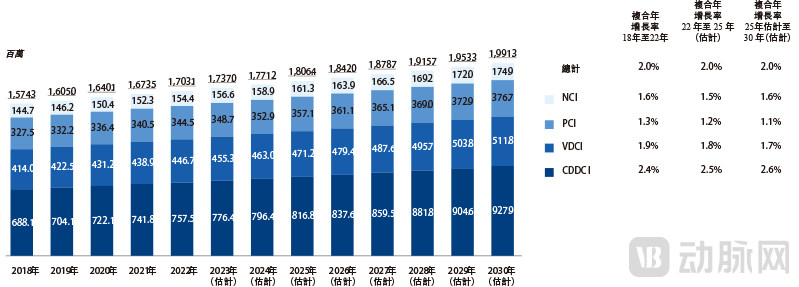
Prevalence of the Four Major Types of Cognitive Impairment Worldwide (Image Source: Prospectus)
Among these, patients with cognitive disorders in China account for a significant proportion. According to disclosed data, the prevalence of the four major types of cognitive disorders in China increased from 314.1 million in 2018 to 339.6 million in 2022; it is projected to reach 358.3 million by 2025 and further rise to 390.1 million by 2030, representing a compound annual growth rate (CAGR) of 1.7%.
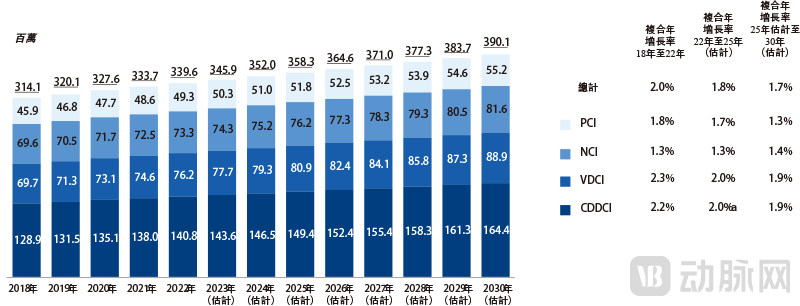
Prevalence of Four Major Types of Cognitive Impairment in China (Image from the Prospectus)
However, there is currently no ideal therapeutic regimen for cognitive impairment, and traditional pharmacological therapies cannot guarantee efficacy in addressing cognitive deficits associated with these conditions. In contrast, digital therapeutics for cognitive impairment are grounded in brain science, leveraging neuroplasticity to exercise and continuously reinforce brain function. This is achieved through adaptive interventions across multiple cognitive domains—including memory, reasoning, planning, and attention—thereby effectively improving patients’ cognitive function.
Given the accelerating global aging trend, it is widely believed that the digital therapeutics market for cognitive impairment has substantial room for future growth. According to the draft prospectus, the global market size for digital therapeutics targeting cognitive impairment reached USD 2.1 billion in 2022, is projected to increase to USD 4.2 billion by 2025, and will reach USD 7 billion by 2030, with compound annual growth rates (CAGRs) of 25.5% and 10.7%, respectively.
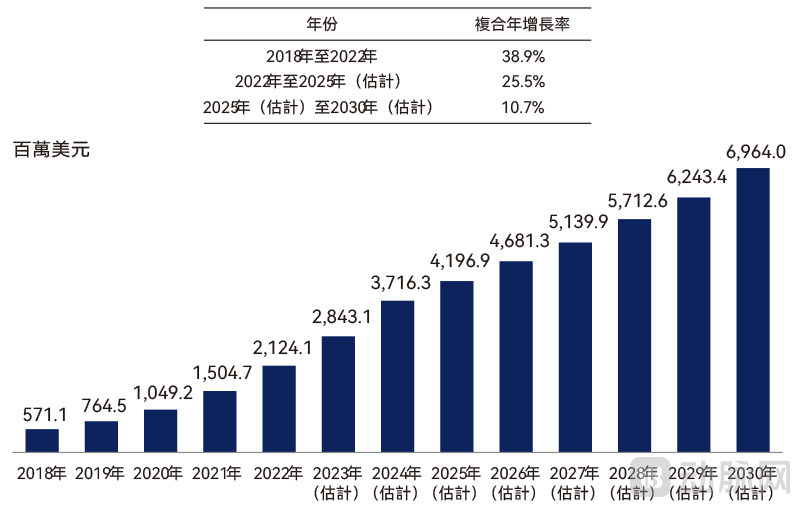
Global Market Size of Digital Therapeutics for Cognitive Impairment (Image Source: Prospectus)
The growth potential in China may be more optimistic. According to the draft prospectus,In 2022, the market size of digital therapeutics for cognitive impairment in China reached RMB 149.4 million, is projected to increase to RMB 1.9522 billion by 2025, and will reach RMB 9.5682 billion by 2030, with compound annual growth rates (CAGRs) of 135.5% and 37.4%, respectively.
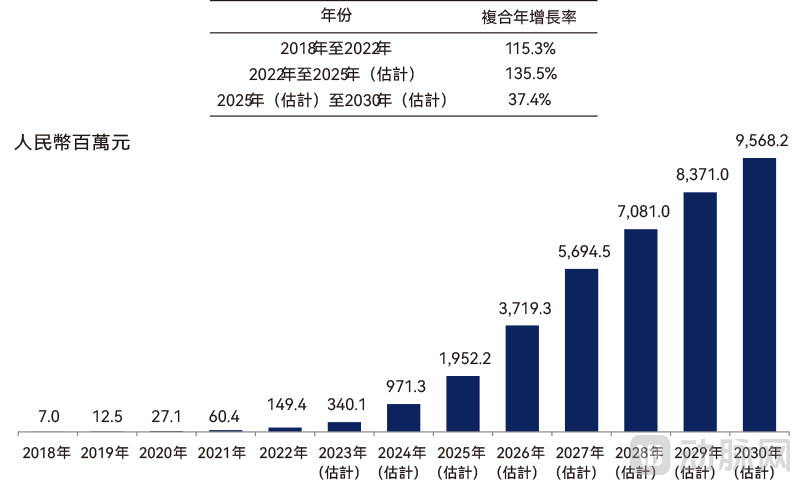
Market Size of Digital Therapeutics for Cognitive Impairment in China (Image Source: Prospectus)
In recent years, China has placed increasing emphasis on the prevention and control of cognitive impairment. The “Healthy China 2030” Planning Outline, released in 2019, called for “strengthening effective interventions for Alzheimer’s disease and other dementias.” In 2022, the National Health Commission, together with 14 other departments, jointly issued the “14th Five-Year Plan for Healthy Aging,” which proposes to formulate the “National Action Plan for Responding to Alzheimer’s Disease” and establish a comprehensive prevention and control mechanism featuring early screening, early diagnosis, and early intervention for Alzheimer’s disease.
However, China faces a severe shortage of medical resources for cognitive disorders, necessitating large-scale, catch-up investments in the future.
At the “Launch Meeting of the Specialized Capacity Building Project for Cognitive Disorders,” organized by the National Health Commission’s Center for Capacity Building and Continuing Education in Beijing in 2021, it was stated that China aims to establish more than 2,000 cognitive centers at various levels within five years and train 2,500–5,000 specialized professionals for these centers. With neurology departments as the core, in collaboration with psychiatry, rehabilitation, geriatrics, cardiology, endocrinology, pediatrics, obstetrics and gynecology, and other relevant departments, as well as corresponding specialized hospitals, a multi-tiered system for the prevention and intervention of cognitive disorders will be established and improved, ensuring effective coordination among hospitals, communities, families, and patients.
This has also made the field of digital therapeutics for cognitive impairment exceptionally vibrant, establishing it as a major category within digital therapeutics. According to the prospectus filed for the IPO, approximately 25 companies in China have obtained 30 medical device registration certificates for digital therapeutic products targeting cognitive impairment, while at least 15 such products from around 15 other companies are currently undergoing clinical trials.
Leveraging years of focused expertise, BrainAurora has established a significant competitive advantage in this field. In September 2020, BrainAurora assisted Beijing Chaoyang Hospital in establishing a Cognitive Training Center, recognized as China’s first cognitive training center to adopt digital therapeutics. To date, more than 50 hospitals have established cognitive centers with its support, including numerous “National Medical Centers” across various specialties.
As disclosed in the draft prospectus,The National Health Commission has partnered with BrainAurora to help more than 2,100 public hospitals establish cognitive centers over the next five years., which will strongly promote the development of China’s digital therapeutics market for cognitive impairment over the next five years.
Meanwhile, BrainAurora has been actively promoting the development of China’s digital therapeutics industry for cognitive impairment in recent years and has participated in the drafting of the first four expert consensus statements on cognitive impairment in China. Notably, in March 2023, BrainAurora contributed to the release of the “Chinese Expert Consensus on Digital Therapeutics for Cognitive Disorders (2023),” which systematically defined digital therapeutics for cognitive impairment in China for the first time.
Furthermore, BrainAurora has participated in as many as seven national-level R&D projects under China’s 13th and 14th Five-Year Plans. In terms of intellectual property, BrainAurora has achieved remarkable results, holding 50 registered trademarks, 21 granted patents, and 66 registered software copyrights in China, while having filed 27 patent applications domestically and 8 patent applications pending approval overseas.
Based on this long-term focus and the establishment of competitive barriers, BrainAurora has become a favorite in the capital markets. According to the disclosure in the draft prospectus,BrainAurora has completed six rounds of financing since its inception, with a cumulative total of approximately RMB 532 million. Notably, between 2020 and 2022, the company closed three funding rounds, each exceeding RMB 100 million.。
| Time | Round | Investor | Financing Amount |
| 2015.3 | Angel Round | Shanghai Feima Lv, Zhongwei Growth | RMB 5.12 million |
| 2016.6 | Series A | IMMENSE VANTAGE Limited、Explorer Three Limited | $4 million |
| 2020.12 | Series B | Tianjin Qihao Bahao, IMMENSE VANTAGE Limited, Hainan Hecheng, Individual Investors | 167 million yuan |
| 2021.12 | Series B+ | Shenzhen Fengrui, Tianjin Kangsheng, Tianjin Tianjian, Hainan Hecheng, Individual Investors | RMB 148 million |
| 2022.3 | Series C | Anji Shundian, Tianjin Chengye, Individual Investors | RMB 138 million |
| 2023.2 | Series C+ | Tianjin Chengye | RMB 45.5 million |
BrainAurora's Historical Financing Rounds (Information from the Prospectus)
The draft prospectus discloses BrainAurora’s revenue performance in recent years, marking the first public disclosure of commercialization outcomes in China’s digital therapeutics industry and drawing significant attention.
Like most digital therapeutics companies, BrainAurora’s digital therapeutics business model primarily consists of two approaches: B2B and B2C.
2H primarily generates revenue by providing cognitive assessment and intervention services to hospitals, which pay fees based on the number of in-hospital uses per patient and the prices specified in the provincial medical insurance reimbursement catalogs. According to the draft prospectus, BrainAurora’s digital therapeutics have currently been included in the provincial medical insurance reimbursement catalogs of 30 provinces.
2C charges a subscription fee to patients who purchase its cognitive training products directly outside of hospital settings.
In addition, a portion of BrainAurora’s revenue is derived from the technical and operational support services provided for research projects conducted by universities, hospitals, and research institutions.
According to the draft prospectus, BrainAurora has experienced rapid revenue growth in recent years—its revenue amounted to only RMB 2.299 million in 2021, butIn 2022, its revenue surged by nearly fivefold., with revenue reaching 11.291 million yuan,Reportedly alsoThe Champion in Commercialization Revenue of Medical-Grade Digital Therapeutics for Cognitive Impairment in the Chinese Market That Year。
In 2023, its revenue continued to demonstrate robust growth.Revenue in the first quarter alone reached RMB 10.564 million, nearly equivalent to the full-year revenue level of 2022. If the growth rate observed in the first three months continues throughout 2023, full-year revenue is projected to increase by nearly fourfold compared to 2022.。
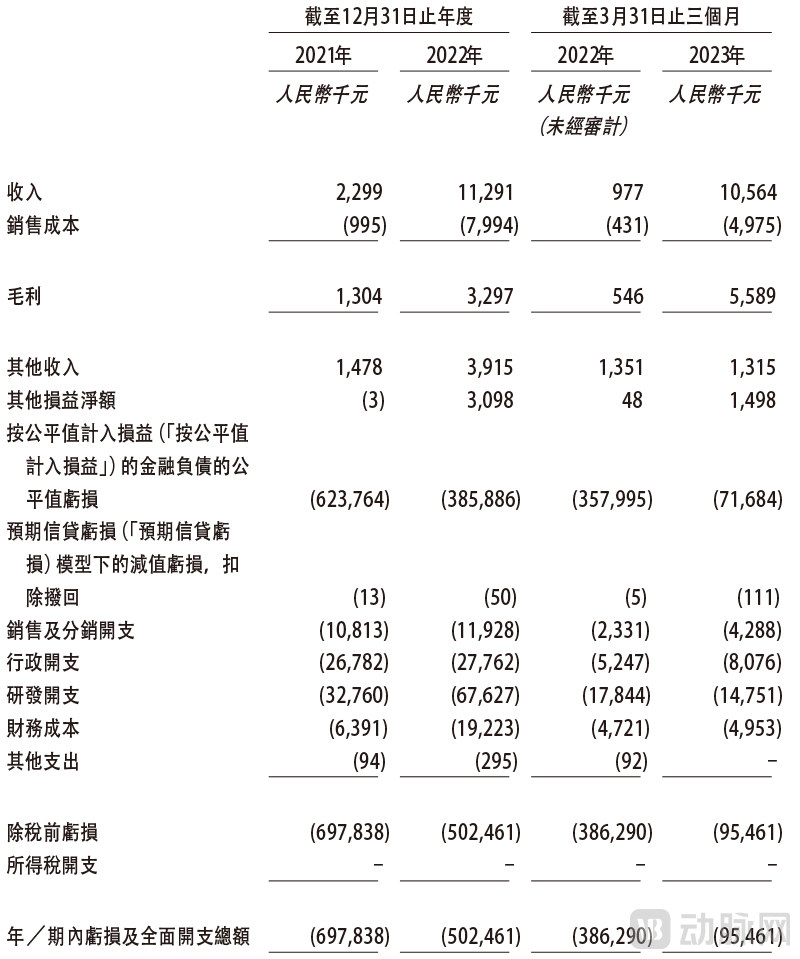
BrainAurora Financial Statements (Image from the Prospectus)
In terms of revenue composition, hospital-based cognitive assessment and intervention services under the 2H business segment accounted for a significant proportion. In 2021 and 2022, this segment’s share of total revenue reached 42.1% and 36.1%, respectively, and further climbed to 51.3% in the first quarter of 2023.
In contrast, the proportion of revenue from out-of-hospital cognitive training in the B2C segment is significantly lower. In 2021 and 2022, revenue from out-of-hospital cognitive training accounted for only 10.4% and 9.7% of total revenue, respectively, and this figure stood at just 7.3% in the first quarter of 2023.
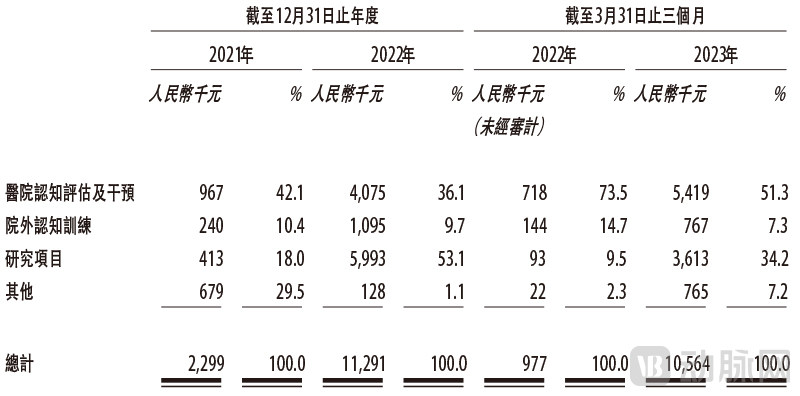
BrainAurora's Revenue by Business Segment (Image from the Prospectus)
Whether in the B2C or B2B sector, data shows that the usage of BrainAurora’s digital therapeutics is also growing rapidly.The number of in-hospital service utilizations surged from 19,000 in Q1 2022 to 72,000 in Q1 2023, while the number of patients for out-of-hospital services increased significantly from 900 to 2,220 over the same period.. The product has gained recognition, which in turn has driven continuous revenue growth—undoubtedly an encouraging piece of good news.
In addition to revenue from digital therapeutics, research project services—providing data analytics and system development for universities, hospitals, and research institutions—also accounted for a significant proportion of total revenue. Notably, in 2022, this segment represented as much as 53.1% of total revenue, surpassing the combined income from the company’s core digital therapeutics business. However, in the first quarter of 2023, the share of revenue from this segment dropped sharply, highlighting the instability of this income stream.
Generally, while many companies experience a significant increase in revenue, their cost of sales rises in tandem, or even at a faster rate, leading to widened losses. However, according to the draft prospectus, BrainAurora’s cost of sales actually decreased as its revenue increased.
In terms of the sales costs for hospital-based cognitive assessment and intervention, the figure stood at RMB 3.389 million in 2022. However, in the first quarter of 2023, despite revenues approaching the full-year total of 2022, sales costs decreased to RMB 2.914 million. If this trend can be sustained, it would undoubtedly be positive news; the cost advantages following the large-scale adoption of digital therapeutics may be a contributing factor.
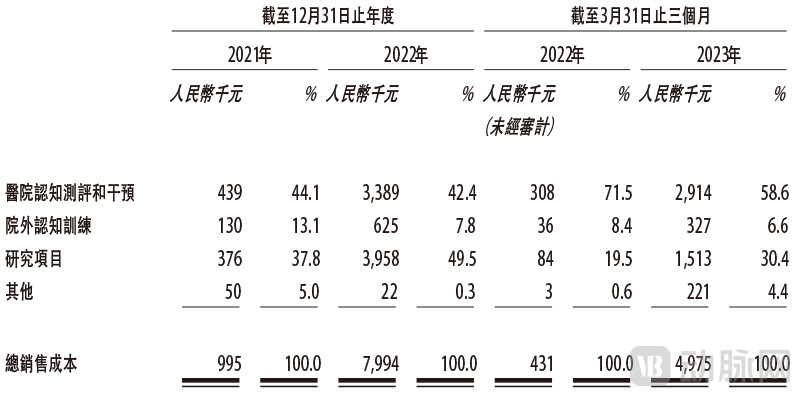
BrainAurora’s Cost of Sales by Business Segment (Image Source: Prospectus)
Based on this, although BrainAurora remains unprofitable, its losses are narrowing significantly.
In the first half of 2023, digital therapeutics faced several pieces of negative news, plunging the industry into a temporary downturn. Nevertheless, it is an undeniable fact that the clinical role and recognition of digital therapeutics have been steadily growing. Today, BrainAurora’s submission of its draft prospectus to the Hong Kong Stock Exchange has undoubtedly injected a strong dose of confidence into the sector, leaving the entire digital therapeutics industry eagerly anticipating this development.
Can BrainAurora become the first publicly listed digital therapeutics company in China, writing its own legend? Will other digital therapeutics companies be encouraged by this and follow suit? More importantly, how will the digital therapeutics industry be affected? VCBeat will also closely monitor subsequent developments.