

Fasedienol (PH94B): First Positive Phase III Trial for Social Anxiety Disorder in 15 Years – Can It Ignite the Market?

VistaGen
Biopharmaceutical R&D Developer
The CNS field has seen significant progress this year. Fasedienol (PH94B), a drug for social anxiety disorder, has recently garnered substantial attention after meeting its primary endpoint in the Phase III PALISADE-2 clinical trial involving adult patients with social anxiety disorder (SAD). The stock price of VistaGen, the company developing this product, has surged for several consecutive days.
VistaGen stated that the data disclosed in this announcement“the first positive Phase III study” of SAD research therapy in the United States in 15 years,What’s even more appealing is its administration method: “microdose intranasal delivery,” meaning a single nasal inhalation takes effect rapidly within 15 minutes. This offers unparalleled convenience for patients with social anxiety disorder (SAD) who have poor adherence.
“What many people commonly refer to as ‘social phobia’ is actually social anxiety. SAD, however, is a genuine medical condition that requires standardized scales for diagnosis and is associated with pathological responses. Medication for social anxiety disorder is a highly serious medical product.”Dr. Bie Xi, Vice President of Investment at BlueRun Ventures, told VCBeat New Medicine.
Drugs with established efficacy for SAD that are commonly used in clinical practice include selective serotonin reuptake inhibitor (SSRI) antidepressants and benzodiazepines. However, both antidepressants and off-label benzodiazepines have known side effects and safety concerns. Currently, there is no FDA-approved, rapid-acting, as-needed therapy for SAD. In fact, SAD, like other central nervous system (CNS) disorders such as depression, represents a challenging therapeutic area; multiple biotechnology companies, including VistaGen, have experienced clinical trial failures in this field.
Approximately 5%-10% of the global population suffers from SAD, with the majority not receiving effective treatment. Following the release of positive results for a social anxiety disorder medication, its stock price surged, reflecting genuine market demand as evidenced by the enthusiasm from capital markets.
While the mechanism of action of fasedienol is indeed innovative, neither the primary nor the secondary endpoints in the PALISADE-2 trial included biomarkers; instead, the data were derived from patient-reported outcome measures.
In the field of CNS disorders this year, breakthrough progress with the new ALS drug Qalsody and the new AD drug Donanemab has been achieved based on the use of biomarkers for disease diagnosis or prediction of therapeutic efficacy.
Can a “Social Anxiety Drug” Without Biomarkers Drive an Explosion in the Related Market?
Are the Clinical Trials of Fasedienol, a Drug for Social Anxiety Disorder, Reliable?
Fasedienol (PH94B) is the flagship product of VistaGen, a well-established biotech company. Founded in 1998, VistaGen has long struggled with mediocre performance, reporting total revenue of only $227,300 last year. The company once faced delisting risks after its stock price traded below $1 for more than two consecutive months. However, positive developments across multiple pipeline programs this year have successfully revitalized VistaGen. In particular, the encouraging top-line data from the PALISADE-2 Phase III clinical trial of Fasedienol for the treatment of social anxiety disorder (SAD) have propelled VistaGen’s stock to soaring heights.
VistaGen stated that its pipeline product, designed to transform the treatment of patients with anxiety, depression, and other CNS disorders, may offer a faster onset of action and fewer side effects and safety concerns compared with current therapies. Fasedienol, acquired by VistaGen from Pherin Pharmaceuticals in 2018, is also its most clinically advanced candidate.
Fasedienol is a gamma-aminobutyric acid type A (GABA-A) receptor modulator. Unlike all currently available anxiolytic drugs, Fasedienol acts by activating peripheral nasal chemosensory neurons, enabling rapid onset of action within 10–15 minutes. It triggers neural circuits in the brain that inhibit fear and anxiety, rather than binding to neuronal receptors in the central nervous system (CNS). This mechanism limits molecular transport into the circulatory system and minimizes potential systemic exposure, thereby eliminating the need for systemic absorption and avoiding the side effects and safety concerns associated with benzodiazepines.
In July last year, the Phase III PALISADE-1 trial results for Fasedienol showed that it failed to meet its primary endpoint, with no significant difference in the change from baseline in Subjective Units of Distress Scale (SUDS) scores compared to placebo, which also led to a severe setback in its stock price. The PALISADE-2 trial resumed enrollment in March this year and achieved interim results five months later.
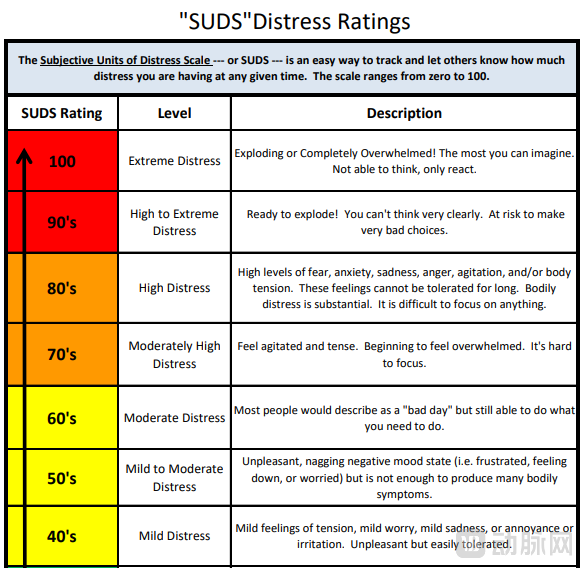
Subjective Units of Distress Scale (SUDS)
However, the successful PALISADE-2 trial ultimately enrolled 141 participants, far fewer than the planned 324 and even fewer than the 209 enrolled in PALISADE-1. Furthermore, although the primary and secondary endpoints set for PALISADE-2 were unchanged from those in PALISADE-1, the primary endpoint of PALISADE-2 (change in mean SUDS score) demonstrated improvement compared with the placebo group (-13.8 vs. -8.0; P=0.015), and the secondary endpoint response rate (assessed by the CGI-I scale) was higher than that in the placebo group (40.6% vs. 18.6%; P=0.003), defined as the proportion of patients with a very much or much reduced level of anxiety.
It has been pointed out that the SUDS and CGI-I scales focus on patients’ current subjective experiences, with the severity of anxiety distress rated almost entirely by the patients themselves; consequently, psychotropic medications tested in such trials face greater challenges from placebo effects.
It is also worth noting that the PALISADE-2 trial involved a single dose, and VistaGen will conduct another Phase III trial with multiple doses. The company stated that it expects to submit a New Drug Application (NDA) to the FDA in 2025.
How Large Is the SAD Market?
The future trajectory of fasedienol, a drug for social anxiety disorder (SAD), remains uncertain. However, it is well established that SAD is a severe anxiety disorder characterized by persistent and intense fear of social or performance-related situations. In China’s diagnostic classification system for mental disorders, SAD falls under the category of neuroses. In contrast, under the U.S. DSM-IV diagnostic classification system, SAD is classified as an anxiety disorder.
Social Anxiety Disorder (SAD) typically onset between the ages of 17 and 30, primarily during adolescence and early adulthood, with approximately 80% of individuals never receiving treatment. SAD often follows a chronic course, and a longer duration of illness is associated with a poorer prognosis. Epidemiological data from the United States, Canada, and Germany indicate that the lifetime prevalence of SAD ranges from 10% to 13%.According to statistics, 23.7 million people in the United States are affected by SAD, while the number in China is at least 11.3 million.
Currently, the treatment of social anxiety disorder primarily consists of psychotherapy and pharmacotherapy. The medications used fall into three categories: anxiolytics, antidepressants, and beta-blockers.
Antidepressants, specifically selective serotonin reuptake inhibitors (SSRIs), are typically the first-line pharmacological treatment. These agents primarily exert their antidepressant effects by inhibiting the reuptake of serotonin (5-HT) at presynaptic serotonergic nerve terminals, thereby increasing synaptic 5-HT concentrations and enhancing monoaminergic neurotransmission. The most commonly used agents currently are paroxetine (Paxil) and sertraline (Zoloft).
In addition to SSRIs, serotonin-norepinephrine reuptake inhibitors (SNRIs) may also be selected for the treatment of social anxiety disorder, with venlafaxine (Effexor XR) as a representative medication.
However, a drawback of both SSRIs and SNRIs is that they may take several weeks or even months to become effective.For patients with SAD, these medications do not take effect immediately to suppress the onset of acute symptoms.
Anti-anxiety medications are another option for physicians treating social anxiety disorder (SAD). These drugs can rapidly alleviate anxiety symptoms but are generally recommended as a short-term solution. Benzodiazepines are a common class of anti-anxiety medications, including alprazolam (Xanax) and clonazepam (Klonopin). However, in 2020, the U.S. Food and Drug Administration (FDA) strengthened regulations on benzodiazepines. This action was taken because the use of these medications can lead to physical dependence, and withdrawal can be life-threatening. Combining them with alcohol, opioids, or other substances may result in death.
Beta-blockers can also provide therapeutic benefits for patients with social anxiety disorder (SAD). These medications primarily target the physiological symptoms of SAD, such as sweating, trembling, and tachycardia. They work by blocking the stimulatory effects of adrenaline, thereby mitigating the physical manifestations of anxiety. However, physicians typically prescribe these drugs only in specific situations, such as when a patient must deliver a speech, and do not recommend them for ongoing, long-term treatment.
It is evident that patients with SAD indeed lack targeted pharmacological treatments. Shawn Singh, CEO of VistaGen, estimates that,If Fasedienol is approved for market launch, it will benefit more than 25 million patients in the United States.
However, pharmacotherapy for social anxiety disorder remains a niche area in new drug development, with no such products currently available in China.Currently, the prevalence of anxiety disorders in China has reached as high as 4.98%, with approximately 80 million patients.However, a domestic investor focused on the CNS sector stated that the market size for SAD, as a subtype of anxiety disorders, is currently difficult to estimate in China due to low disease recognition and treatment rates.Studies indicate that the recognition rate for anxiety and depression among the general population is only about 20%. In general hospitals, psychiatrists in comprehensive psychological departments achieve a recognition rate of merely 40%–50%, while even specialized psychiatrists or clinical psychologists may only reach a recognition rate of 70%–80%. The unmet clinical needs for SAD remain to be further clarified.
SAD Reflects Challenges in CNS Drug Development; Biomarker Research May Unlock New Market Opportunities
In addition to VistaGen, other biotech companies are also engaged in the development of SAD therapeutics; these companies have adopted innovative approaches with mechanisms of action distinct from those of VistaGen.
Ananda ScientificAnanda is a biopharmaceutical company focused on the research and development of cannabidiol (CBD)-based therapeutics. Numerous studies have demonstrated that CBD medications exhibit significant efficacy in alleviating anxiety. Leveraging this foundation, Ananda developed Nantheia™ A1002N5S, a novel drug candidate for social anxiety disorder (SAD), incorporating formulation innovations through its proprietary Liquid Structure™ delivery technology to enhance both therapeutic efficacy and stability. In March 2023, Ananda announced that the first patient had been enrolled in the clinical trial for this drug.
As with other CNS disorders, clinical failure has become the norm for SAD. Prior to VistaGen’s announcement of successful clinical trials for Fasedienol,Vanda Pharmaceuticals and BionomicsAdverse events in the SAD clinical trial have even impacted the conduct of VistaGen’s PALISADE-2 clinical trial.
Vanda Pharmaceuticals’ product, VQW-765, is a partial agonist of the α7 nicotinic acetylcholine receptor (α7-nAChR). In December 2022, Vanda announced Phase II clinical data for VQW-765. Industry observers noted elements of equivocation in the presentation. The report stated that participants receiving VQW-765 exhibited “numerically lower stress levels” compared to those receiving placebo when challenged with the standardized Trier Social Stress Test (TSST). This ambiguous phrasing drew skepticism from the industry and was characterized by some as a clinical trial failure. Related follow-up clinical trials are ongoing.
In December 2022, Bionomics stated more bluntly that its candidate drug, BNC210, failed to meet the primary endpoint in a Phase II clinical trial for the treatment of acute social anxiety disorder (SAD). BNC210 is a negative allosteric modulator of the α7 nicotinic acetylcholine receptor. Although the clinical results were not optimistic, Errol De Souza, Executive Chairman of Bionomics, indicated that the mechanism of action of BNC210 remains promising and that the company will evaluate next steps for the further development of the drug in treating SAD.
The clinical failure of SAD reflects the issues and challenges that the entire CNS field needs to confront.Dr. Bieze noted, “The etiologies of many diseases in the central nervous system (CNS) remain unclear, often involving multiple targets and complex mechanisms. Even when targets are identified, overcoming the blood-brain barrier for drug delivery remains highly challenging, unlike the more straightforward targeting seen in oncology therapeutics.” Furthermore, the use of unreliable animal models for efficacy assessment in preclinical studies, along with patient heterogeneity, can lead to failures in demonstrating efficacy during late-stage clinical trials.
Of greater concern is the diagnosis of central nervous system (CNS) diseases. The use of rating scales as diagnostic criteria for CNS diseases introduces subjectivity that can affect clinical trial outcomes. Meanwhile, the placebo effect, a prominent feature in CNS drug development, increases the difficulty of developing such drugs and leads to significant bias and uncertainty in evaluating therapeutic efficacy.According to incomplete statistics, the placebo effect can be as high as 70% in clinical trials of antipsychotic drugs,If rating scales are used as diagnostic criteria, it will introduce greater uncertainty into the development of CNS drugs.Research on other standards, particularly on biomarkers, is of particular importance.
Currently, biomarker-based disease diagnosis or prediction of drug efficacy has indeed cleared some obstacles for the R&D of new CNS drugs. Clinical trials for Alzheimer’s disease have adopted amyloid-beta (Aβ) and clinical rating scales as dual endpoints, driving Eli LillyDonanemab: A New Drug for Alzheimer's Diseaseof positive clinical outcomes. Approved this year, theNew ALS Drug Qalsody, marking the first consensus within the industry that neurofilament light chain (NfL) protein can serve as a surrogate marker in ALS clinical trials to reasonably predict the clinical efficacy of therapeutic agents.
However, research on biomarkers is no easy task, and it is indeed difficult to identify alternative diagnostic criteria.“Currently, apart from rating scales, there are no better methods available for the assessment of CNS diseases. In the foreseeable future, it is unlikely that alternative primary standards will emerge; however, supplementary criteria are more likely to be developed.。”Dr. Bao Yanghuan, founder of Pubaisi Bio, told VCBeat New Medicine,“Biomarkers reflecting therapeutic efficacy are a key research focus in the CNS field,”“Although it cannot yet serve as a standard for clinical diagnosis, it can play an auxiliary role in predicting therapeutic efficacy and guide drug development.” It is reported that Pubaisi’s key priorities this year are focused on biomarker discovery, the construction of omics databases, and the development of non-human primate models.
Progress has been made in the industry regarding research on biomarkers for central nervous system (CNS) diseases. In China, Soochow Pharmaceuticals successfully identified a novel biomarker, DGM4 (Denovo Genomic Marker 4), for its investigational new drug DB104 (Liafensine) in the treatment of depression, laying a solid foundation for the next pivotal clinical trials of DB104. Abroad, ALTO Neuroscience has leveraged AI-discovered biomarkers to determine which patients with depression or post-traumatic stress disorder (PTSD) respond best to current treatments, and has identified disease subtypes that are not readily discernible using traditional clinical tools alone.
From last year to this year, the CNS sector has seen a flourishing landscape, yet biomarker-based CNS drug development still faces significant challenges.