

2023 CPEO Kicks Off: Dual-Track Synergy Reshapes China's Health Industry
On August 10, 2023, the 16th Westpu Conference—China Health Industry (International) Ecological Conference—grandly opened in Boao, Hainan. The theme of this year’s conference was “Dual-Element Synergy and Industrial Reshaping: Ushering in a New Era of Personal Health Responsibility.”
As early as 2019, the principle that “individuals are the primary persons responsible for their own health” was enshrined in the Law of the People’s Republic of China on Basic Medical and Health Care and the Promotion of Health. The three-year pandemic undoubtedly accelerated the dissemination and implementation of this law, prompting Chinese citizens to place greater emphasis on the health status and hygiene practices of themselves and their families, thereby hastening the upgrading of health-related demands.
“The three-year pandemic has fostered a comprehensive and profound understanding among the entire population that ‘individuals are the primary stakeholders responsible for their own health.’ This represents significant social progress and has propelled China into a new era of personal accountability for health.”At the opening ceremony of the China Health Industry Conference, Wu Han, Chairman of Sinohealth Technology and Conference Chair, stated that the incremental demand unleashed by the widespread awareness of individual health responsibility, coupled with China’s already well-established R&D, production, and supply chain on the supply side of the health industry, as well as the resonance generated by the new round of healthcare reform policies, will propel China’s health industry intoDual Synergistic Development of the Serious Healthcare Industry and the Consumer Healthcare Industry、A New Phase in Meeting the Health Security Needs of Citizens Across Their Entire Life Cycle, Driving the Reshaping of China’s Health Industry Landscape.
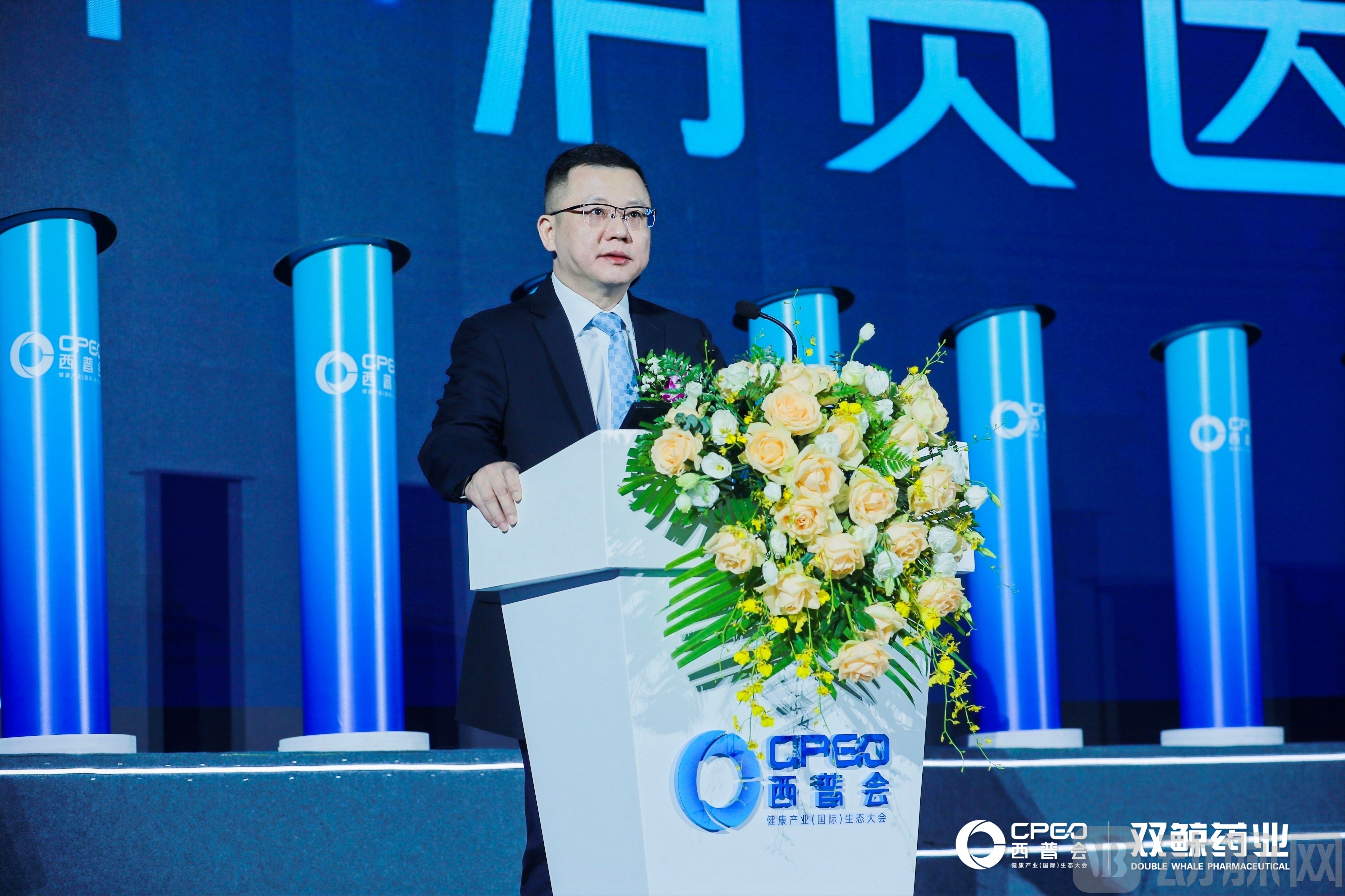 Wu Han, Chairman of Zhongkang Technology
The serious medical industry refers to an industrial cluster focused on disease treatment, where patients rely on physicians’ decision-making, the national basic medical insurance fund serves as the primary payer, and public healthcare institutions act as the main service providers. The consumer healthcare industry refers to an industrial cluster aimed at improving health status and quality of life, characterized by consumer-driven decision-making and out-of-pocket payment. In the process of dual synergy between serious medicine and consumer healthcare and the subsequent reshaping of the industry, fundamental transformations will occur in its structure, business models, and value chains. This will gradually establish a comprehensive closed-loop system centered on patient value, integrating treatment with prevention and disease diagnosis with health management, thereby achieving whole-lifecycle health management.
At the Xipu Conference, Wu Han revealed that, according to the predictive model of Sinohealth Industry Research Institute, byBy 2030, the scale of China’s serious medical industry will reach RMB 9.6 trillion, with an average annual growth rate of 5.8%.The proportion of the health industry has decreased toApproximately 60%. Driven by demand, the consumer healthcare industry chain will gradually mature.Projected toBy 2030, the consumer healthcare industry is projected to reach a scale of RMB 6.4 trillion, with an average annual growth rate of 9.8%, accounting for 40% of the health industry.
Serious Healthcare Remains the Core Pillar of China’s Health Industry
“The serious healthcare industry is the cornerstone of the health industry.”Wu Han believes that it will remain the core pillar of the health industry for a considerable period of time.
According to the "Statistical Bulletin on National Economic and Social Development in 2022" released by the National Bureau of Statistics, there were a total of 1.033 million medical and health institutions across China at the end of 2022, including 12,000 public hospitals, 980,000 primary healthcare institutions, and 13,000 specialized public health institutions. Among the latter, there were 3,385 Centers for Disease Control and Prevention (CDCs) and 2,796 Health Inspection Institutes (Centers). The total number of patient visits throughout the year reached as high as 8.4 billion. In terms of pharmaceutical sales, data from Sinohealth CMH also showed that the drug sales volume in tiered hospitals nationwide reached RMB 1.2145 trillion in 2022, accounting for a significant share of 63.6%.
The aforementioned data also underscores the unquestionable core position of the serious healthcare industry, represented by China’s public medical system. Furthermore, as life expectancy continues to rise and population aging deepens, the public medical system bears an unshirkable responsibility for meeting the nation’s basic healthcare needs.Its primary payer—the national health insurance fund—will also continue to increase its financial commitments.
Wu Han stated that as the capacity for social financing within total health expenditure continues to strengthen, out-of-pocket spending will gradually decrease, with projections indicating a decline to approximately 23% by 2030, while the scale of revenue and expenditure of the basic medical insurance fund continues to expand.Estimated toTotal healthcare insurance expenditure will exceed 4 trillion yuan by 2030.
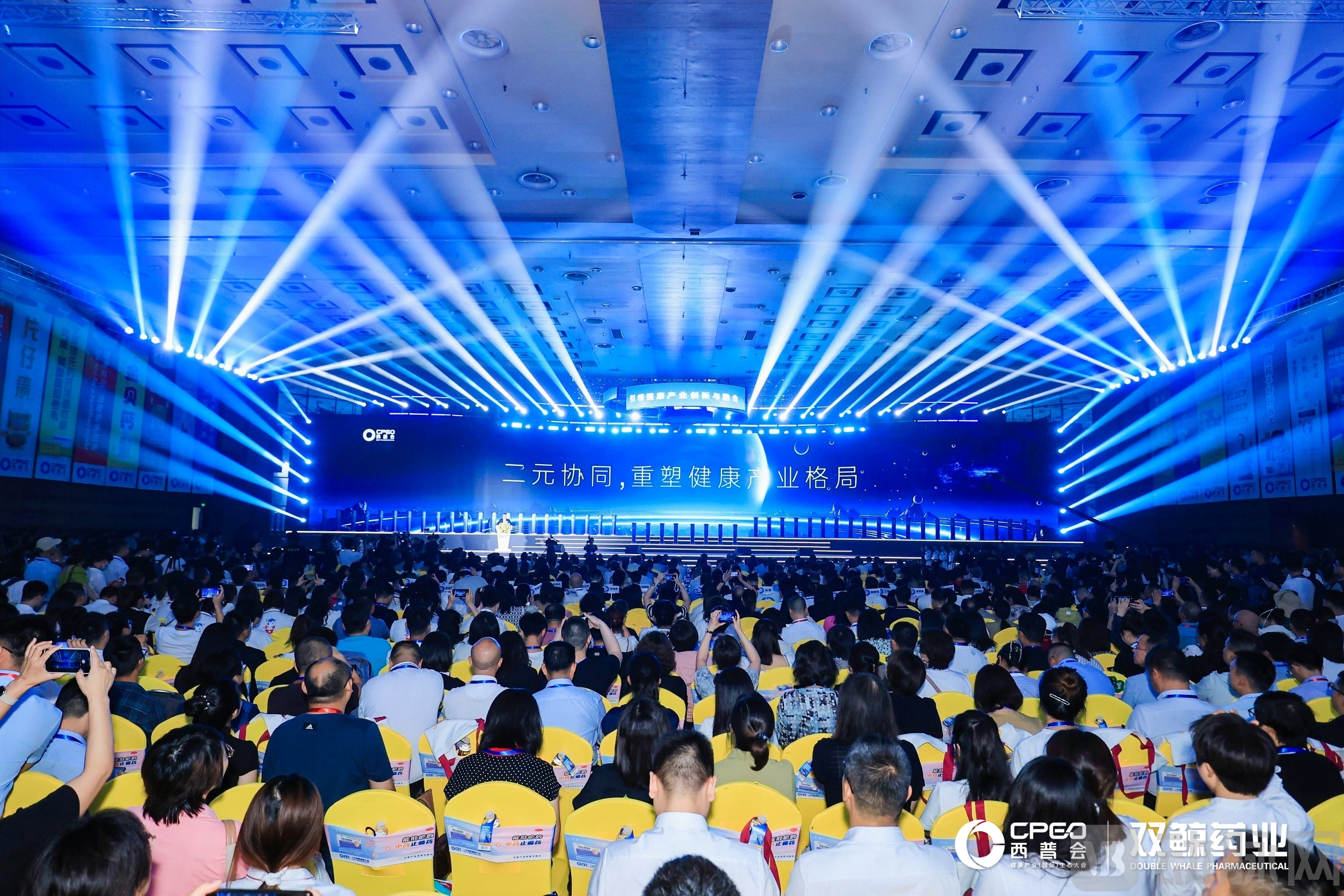
2023 West China Pharmaceutical Conference On-site
The Rise of Consumer Healthcare: Set to Become the Second Pillar of China’s Health Industry
The consumer healthcare market has long existed in China. However, during an era when health consumption awareness was weak and serious medical care—centered on disease treatment—held absolute dominance, the consumer healthcare sector lacked effective integration of systemic elements and a regulatory framework aligned with industrial development requirements. Today, however, the consumer healthcare industry is facing a once-in-a-lifetime opportunity for growth.
As China’s economic development and living standards rise, driving an upgrade in consumer spending power, the health needs of a segment of the population are shifting from disease-centered serious medical care to health-and-wellness-focused consumer healthcare. For instance, with the rise of the “beauty economy,” demand is burgeoning in areas such as anti-aging treatments, clean beauty, body contouring and shaping, myopia correction, dental implants, orthodontics, and hair loss prevention, stabilization, and transplantation.
“The rise of the consumer healthcare industry as the second pillar of China’s health sector is becoming a foreseeable trend.”Wu Han stated that, due toThe proportion of per capita healthcare expenditure to per capita consumption expenditure in China has continued to increase, reachingIt will rise to 10.1% by 2030,The expansion of personally discretionary spending power will positively drive the development of the consumer healthcare industry.
Innovation-Driven: Leading a New Round of High-Quality Industrial Development
Investment in the health industry is not merely a consumption-oriented expenditure aimed at improving quality of life, but rather a productive investment that comprehensively safeguards and enhances the quality of the workforce, constituting the nation’s most critical strategic investment.
Various indicators suggest that China’s health industry has entered a phase of rapid development, with its share of GDP expected to rise swiftly in the coming years. Innovation-driven growth, spearheaded by biologics, patented drugs, and traditional Chinese medicine, will serve as a key lever in leading this new round of high-quality industrial development.
According to forecasts by Zhongkang Industry Research Institute,Biologics willA compound annual growth rate of 14.1% has become the primary driver fueling industry development,InBy 2030, it will reach a scale of RMB 964.7 billion, accounting for 33% of the pharmaceutical market share.The market share of patented drugs in chemical drugs and biologics willfrom around 15% in 2020 to 57% by 2030,The share of generic drugs in chemical and biological medicines will, fromdeclining from 85% in 2020 to 43% in 2030. Against the backdrop of national initiatives to promote the development of Traditional Chinese Medicine (TCM) and a significant rise in public awareness of health risk management,The market size of traditional Chinese medicine willReach RMB 846.4 billion by 2030, with a CAGR of 5.8%, market shareBi 2020YearIncrease4 percentage points。
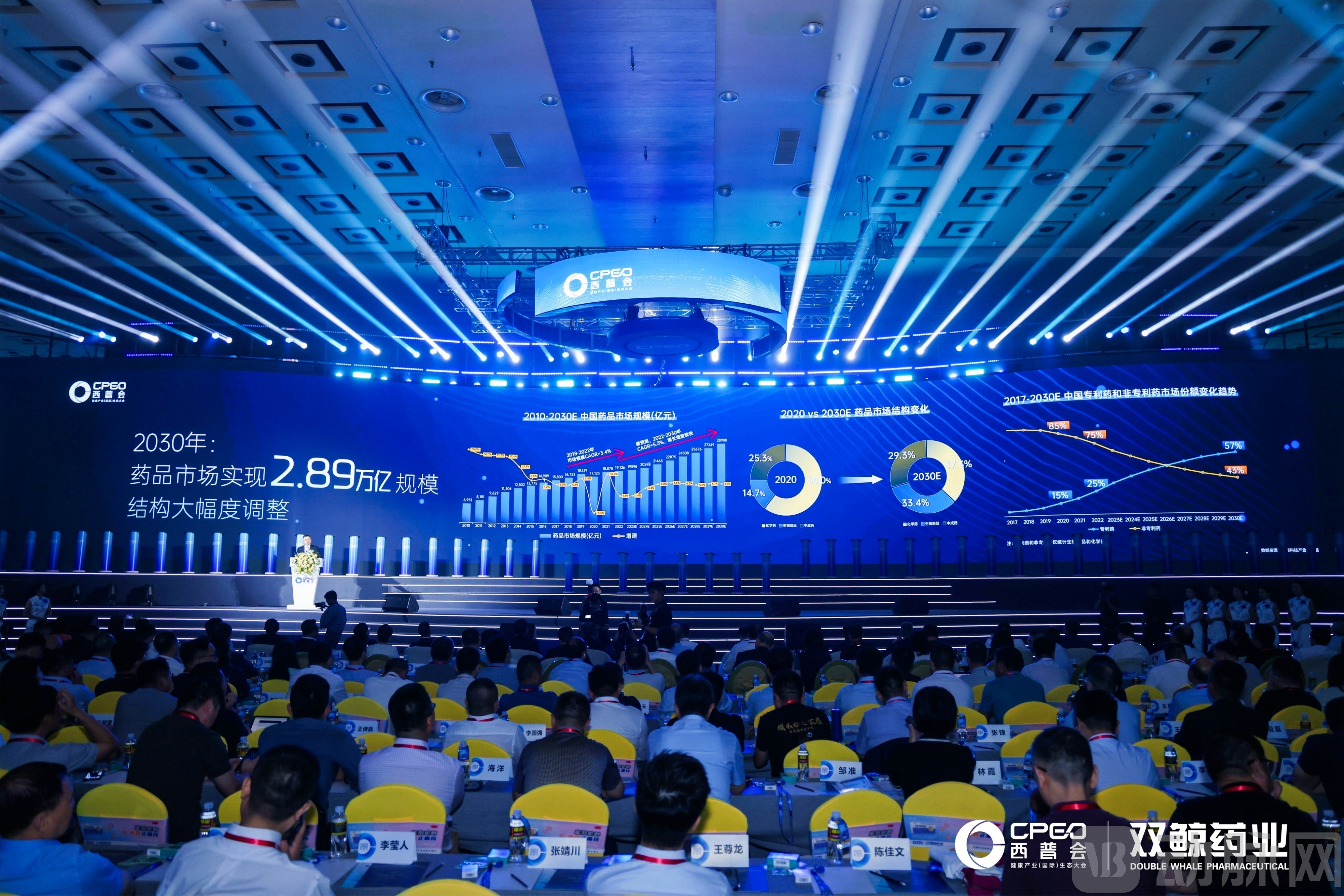
2023 Xipu Conference Onsite
Community Pharmacies Will Be the Biggest Beneficiaries of Industry Reshaping
Against the backdrop of dual-track development, social pharmacies—with their extensive outlet networks, high accessibility, and robust vitality—will emerge as one of the biggest beneficiaries of industry reshaping.
Wu Han stated that with the rise of consumer healthcare, and the shift of originator drugs, high-end generics, adjunctive medications, and proprietary Chinese medicines from in-hospital to out-of-hospital markets, coupled with the migration of usage scenarios for a significant portion of innovative drugs, the pharmacy channel will remain highly active over the long term, with its market share continuing to grow. Wu Han further pointed out that market activity for general health products, such as those enhancing immunity and promoting a youthful appearance, will continue to intensify, their market share will keep expanding, and their market position will steadily improve.
According to forecasts by the Zhongkang Industrial Research Institute, in the absence of major policy changes, the market share of pharmaceuticals distributed through social pharmacies will increase from the current 27% to 34%. If the state actively promotes the separation of prescribing and dispensing, gradually eliminates hospital outpatient pharmacies, and channels the resulting outpatient medication demand to primary healthcare institutions and retail pharmacies, the market share of the pharmacy channel is expected to reach as high as 45%.
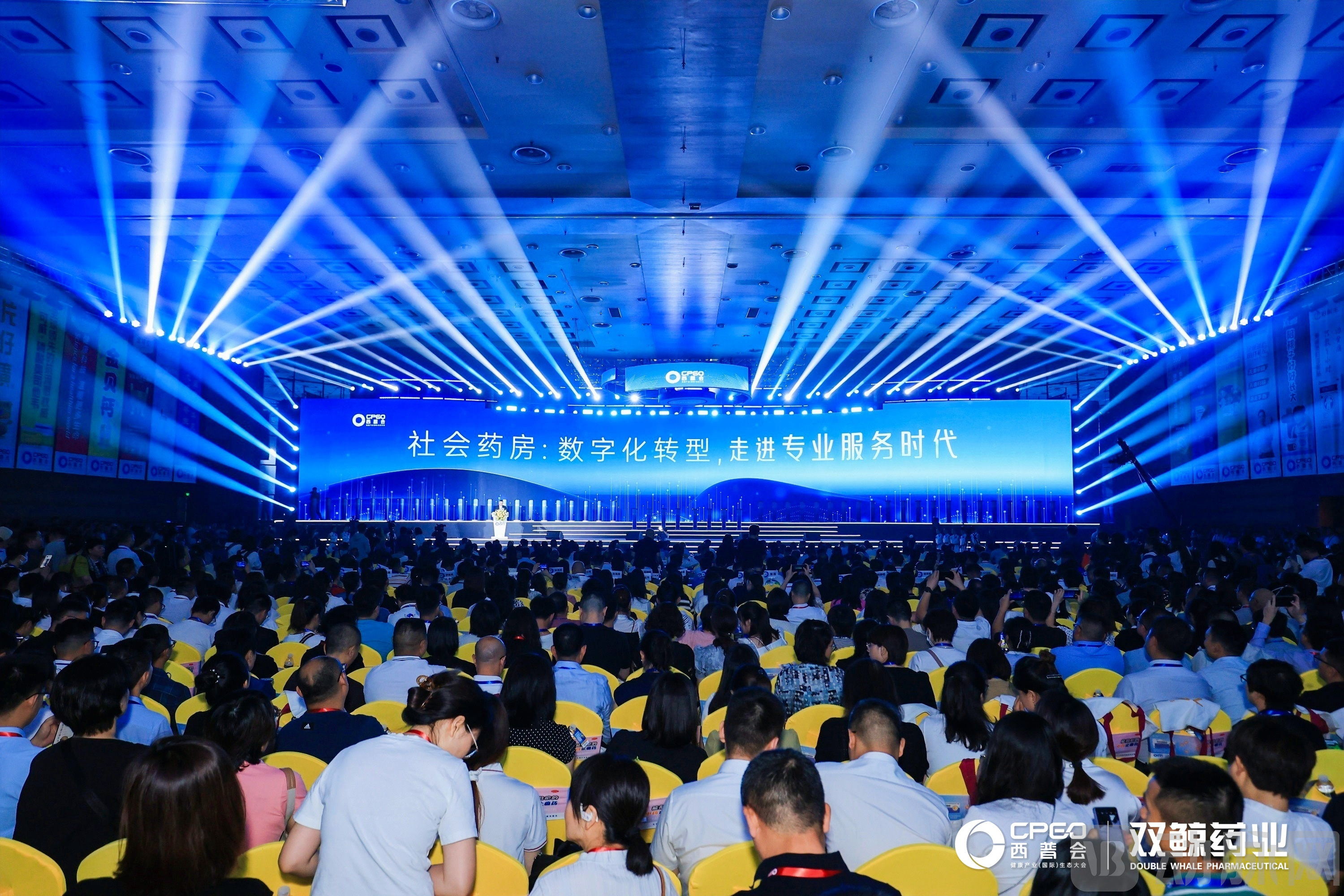
2023 Westphal Conference Site
Digitalization is the core guarantee for achieving long-term strategy
“The pharmaceutical retail industry needs to adjust its business model and enter an era of professional services,” said Wu Han. He stated that community pharmacies should actively improve the regulatory environment, optimize the business ecosystem, and promote the development of consumer healthcare, all while aligning with national policies. Becoming the preferred entry point for consumer healthcare, while collaborating with serious medical care to serve as the primary gateway for a closed-loop, full-lifecycle health management system for consumers, represents the future value of community pharmacies and is key to the sustainable development of the pharmaceutical retail industry.Digitalization is the core guarantee for realizing this long-term strategy.
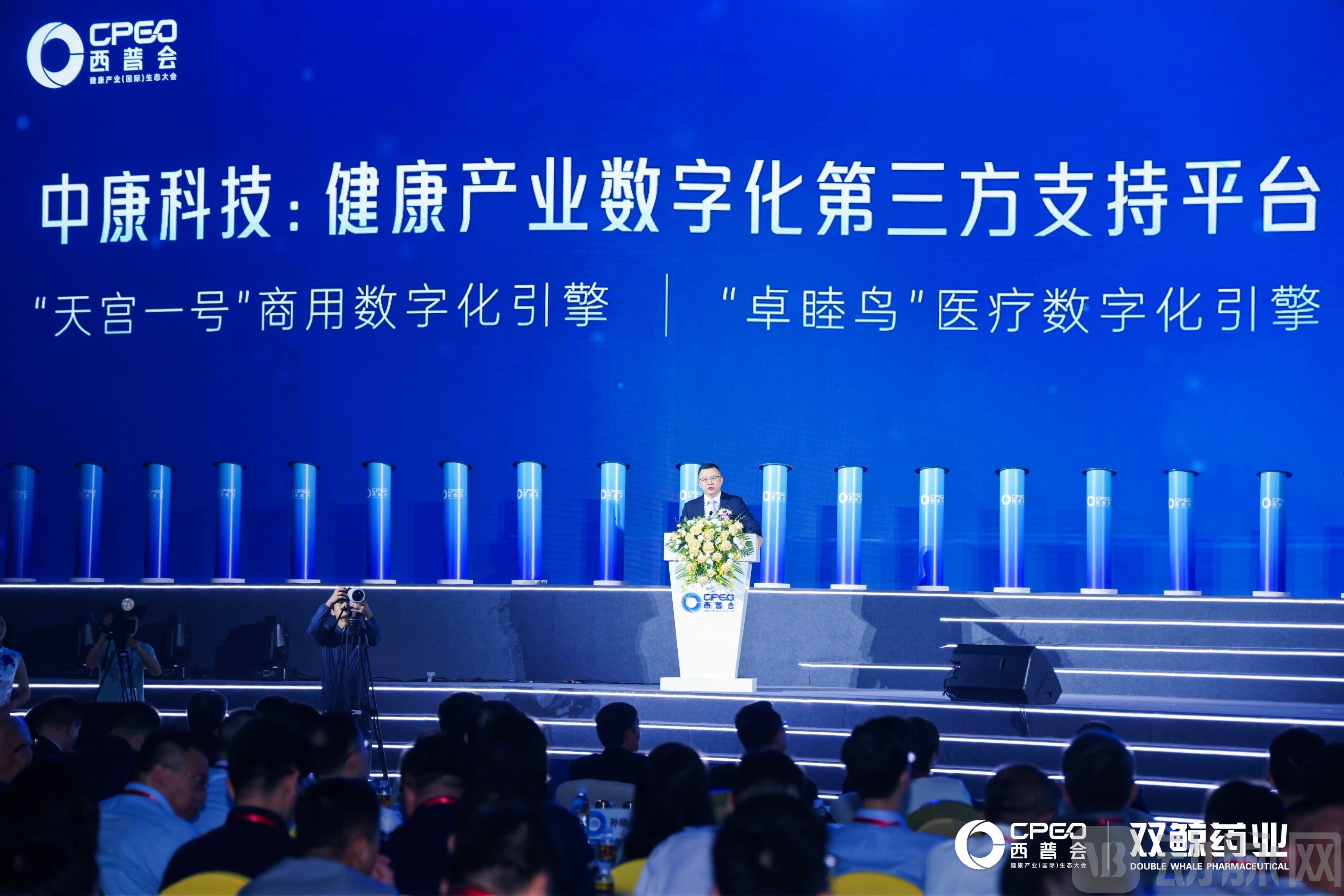
2023 Westphal Conference On-site
To this end, as a third-party digital support platform for the health industry, Zhongkang Technology integrates two specialized digital engines—commercial and medical—to provide comprehensive support for the industry’s digital capability development. According to reports, empowered by Zhongkang’s data network covering the entire industrial chain, its digital engines offer digital support for efficient decision-making and precise upstream-downstream connectivity for pharmaceutical retail chains. Furthermore, they establish a comprehensive digital solution for healthcare institutions and physical examination centers across China, centered on patient value and integrating treatment, prevention, diagnosis, and health management.
Unprecedented Grandeur at the Western China Pharmaceutical Conference: Over 50,000 Attendees
Concurrently with this year’s Xipu Conference, several major summits were held, including the Boao Forum for Global Health Development, the Pharmaceutical Innovation Ecosystem Conference, the Health Industry Capital Summit, and the Health Industry New Marketing Summit, along with more than 100 satellite meetings. Over 8,000 industry elites from various levels of government, industry associations, leading domestic and international pharmaceutical manufacturers, innovative drug companies and biotechnology firms, major pharmaceutical distributors, retail enterprises, domestic and foreign investment institutions, digital technology companies, commercial insurance providers, and medical and health service organizations attended as official delegates. Including peripheral participants, the total attendance exceeded 50,000.