

Peking University School of Life Sciences: Pioneering World-Class Research and Transformative Innovation
This statement is well-founded. The inherent charm of the Peking University campus alone is sufficient to imbue generations of PKU affiliates with its distinctive ethos and spirit. Over the years, many beautiful legends have emerged within Yan Yuan (the Peking University campus), centered around Weiming Lake, Boya Pagoda, and the Library, accompanied by numerous ingenious interpretations.
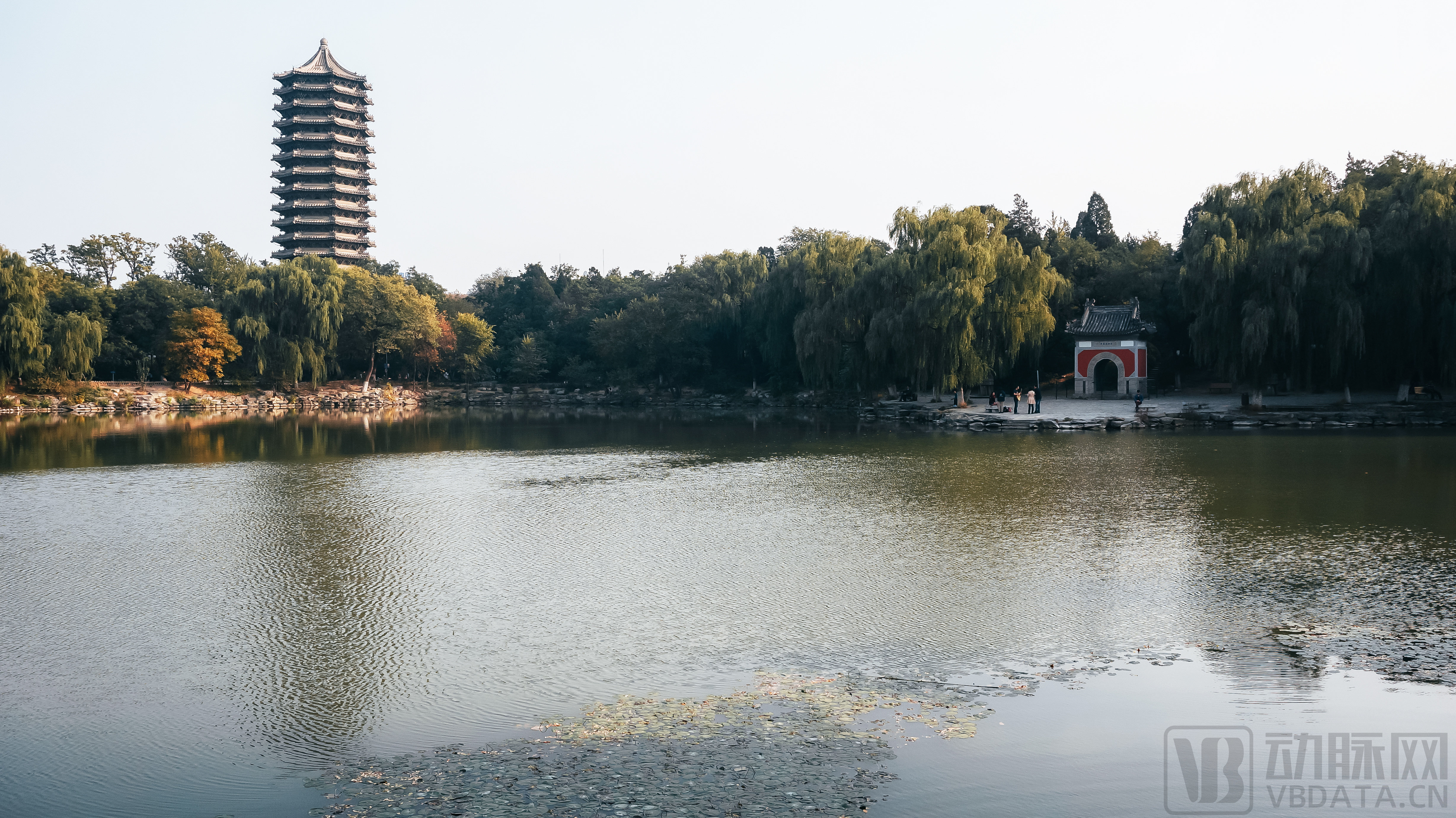 ▲ Yanyuan Campus of Peking University. Image source: 123rf
Some say that the Boya Pagoda is a magnificent, divinely inspired brush, while Weiming Lake is a giant inkstone from the Heavenly Pool. With this divine brush, dipped deep in the ink of Weiming, the Peking University community has jointly written the glorious century-long history of the University. The Library stands as the finest witness and custodian of Peking University’s hundred-year legacy... Regarding“One Tower, Lake, and Library”The legends and deepening are too numerous to mention.
And the reason Peking University has become what it is, and possesses such a captivating appeal, lies not only in the inherent charm of its campus,We can never overlook the academic prowess that people always talk about.。
In the Nature Index 2022 annual tables, Peking University ranked with a share of 501.7410th Among Universities Worldwide. Meanwhile, in the “2022 Highly Cited Researchers” list released by Clarivate Analytics, Peking University has31 person-times selected, ranking among the top 50 institutions worldwide in terms of selected participants.
Peking University’s distinction is built upon its outstanding research output and exceptional scientific impact. As one of Peking University’s flagship departments, the School of Life Sciences brings together a cohort of world-class scientists dedicated to cutting-edge research and translational work,Represented by Professor Wei Wensheng, Professor Xie Xiaoliang, and Professor Deng Hongkui, who have translated their research achievements into corporate projects.. And from the success story of this top-tier domestic institution, we may gain insights into the frontier innovative research and translational highlights in life sciences.
"The Cradle of Modern Biology in China"
The School of Life Sciences at Peking University (hereinafter referred to as “Peking University School of Life Sciences”) traces its origins to the Department of Biology established in September 1925, one of the earliest biology departments founded in Chinese higher education institutions, by pioneers of modern biologyTan XihongMr. [Name] served as the inaugural department chair, and was succeeded by Mr. Jing Libin two years later.
During the nationwide restructuring of departments and faculties in Chinese higher education institutions in 1952,Merger of the Biology Departments of Peking University, Yenching University, and Tsinghua University, the three springs converge at Yanyuan, and on this basis, the School of Life Sciences at Peking University was established in 1993.
Following the merger of the biology departments from three universities, Peking University’s School of Life Sciences attracted a large cohort of renowned experts and scholars: plant morphological anatomistsZhang JingyueMr. served as Department Chair and Director of the Botany Teaching and Research Section.Li JidongProfessor [Name] is a renowned ecologist and plant physiologist in China, and serves as the Director of the Department of Plant Physiology.Tang PeisongThe professor earned his Ph.D. from Johns Hopkins University and is a member of the Chinese Academy of Sciences (Academician)...
Moreover, many higher education institutions across China have sent faculty members to Peking University for advanced studies. The Department of Biology’s influence has extended nationwide, contributing to the development of life science disciplines, teaching programs, and faculty capacity in Chinese universities.
Since its establishment, the School of Life Sciences at Peking University has achieved remarkable scientific research accomplishments. In fundamental and frontier areas such as elucidating the functional elements of the human genome, uncovering key cancer mutations and critical pathways, deciphering biological circuits underlying cellular responses, and clarifying the molecular mechanisms of major infectious diseases, as well as in the development of new technologies and methods—including genetic diagnosis of hereditary diseases, high-throughput drug screening, rapid identification and discovery of novel drug targets, and the construction of model cells and tissues for candidate drug testing—the School of Life Sciences at Peking University has attained a series of significant and representative achievements:
Deng Hongkui’s Laboratory Achieves First-Ever Complete Reversal of the “Developmental Clock” Using Only Small-Molecule Compounds, enabling mouse somatic cells to regain pluripotency (Science, 2013), and subsequent studies elucidated novel molecular mechanisms of chemical reprogramming (Cell, 2015; Cell Stem Cell, 2018), with a series of achievements pioneering an entirely new system for somatic cell reprogramming; 2023,Li Yulong Laboratory Develops a Novel Fluorescent Probe..., enabling the detection of extracellular oxytocin both in vivo and in vitro, with research findings published online in Nature Biotechnology... By continuously achieving these disruptive research breakthroughs, the Beijing Academy of Life Sciences has clearly become a representative of frontier innovation in life sciences within China.
The Foundation of a Top-Tier Academy: Talent and Research Systems
Talent is the core of scientific research and the fundamental source of technological innovation. The School of Life Sciences at Peking University also carefully selects visionary and talented scientists in the field of life sciences, injecting strong momentum into their independent innovation.
According to the official website of Peking University’s School of Life Sciences, among the 168 faculty and staff members in the school, there are a total of74 Professors/Researchers, including 2 members of the Chinese Academy of Sciences, 10 chief scientists of the National “973” Program and the National Major Scientific Research Program, 9 project leaders of the National Key R&D Program, 1 National-Level Master Teacher, 1 National Model Teacher, and 25 recipients of the National Science Fund for Distinguished Young Scholars.
Undoubtedly, these experts and scholars have driven the advancement of the College’s scientific research endeavors. Their reasons for choosing Peking University and its School of Life Sciences are, first,High-Intensity Funding Support. In 2023, Peking University's budget reached22.247 billion yuan. Furthermore, in its 2023 recruitment brochure, Peking University pledged that the university would provide researchers withRMB 2–8 million in startup research funding(including national matching funds). Ample research funding first ensures a favorable innovation environment and robust service support that meet the needs and aspirations of researchers.
Second,Efficient and Rational Resource Allocation. In 2012, Peking University was responsible for the construction of the NMR-dominant integrated system for structural proteomics analysis and the functional proteomics research system within the National Protein Sciences Infrastructure – Beijing Facility (hereinafter referred to as the “Phoenix Project”), includingSix Subsystems: NMR Spectroscopy for Protein Structure Analysis, Large-Scale Protein Preparation, and Optical Microscopic Imaging of Protein Function, with a cumulative investment of approximately RMB 239 million. All equipment has been procured, and the majority is already operational. Researchers have leveraged the college’s facilities and equipment to conduct high-level scientific research, resulting in the publication of more than 250 papers and the filing of six patent applications to date.
3. Abundant Collaboration Opportunities. The School of Life Sciences at Peking University maintains close collaborative relationships with numerous prestigious universities, research institutions, and hospitals across China. Researchers here can engage in academic exchanges and collaborations with other outstanding scientific teams, thereby broadening their research domains and horizons. Moreover, the appeal of Peking University also lies in its widely recognizedAcademic Reputationand rich in freedomAcademic Atmosphere。
At the College of Life Sciences of Peking University, the research ecosystem—comprising talent, funding, facilities, and resource platforms—functions in a mutually reinforcing manner. Researchers leverage this ecosystem to explore cutting-edge technologies, while the advancement of the ecosystem itself relies on the participation and support of high-caliber scientific talent. This virtuous cycle has established the research model of the School of Life Sciences at Peking University—Conducting Research on Major National Projects。
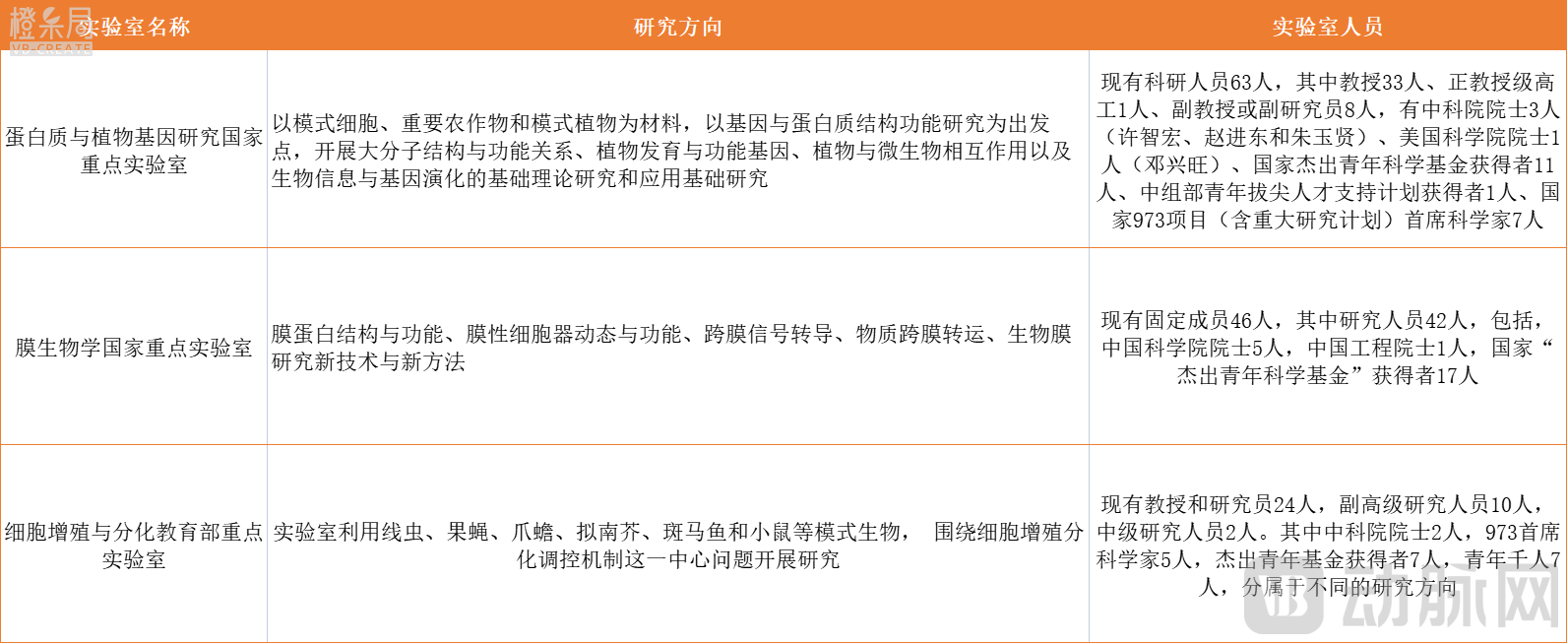
The School of Life Sciences at Peking University adopts a modular organizational model, guided by major scientific research tasks, to organize researchers from diverse professional backgrounds to collaborate on the development of innovative projects. In the School of Life Sciences at Peking University,66 independent PIs are distributed across 2 National Key Laboratories and 1 Key Laboratory of the Ministry of Education., conduct multidisciplinary integrated research to jointly address issues related to life sciences and human diseases.
The Translation Mechanisms Behind Multiple Professors’ Entrepreneurial Ventures
According to IT Juzi data, Peking University has cultivated a total of 1,149 entrepreneurs, 488 investors, and 63 angel investors. In the field of life sciences, the School of Life Sciences at Peking University has also seen the emergence of a cohort of scientist-entrepreneurs:Prof. Wensheng WeiFounded Edigene and Yuanin Biopharma,Prof. Deng HongkuiFounded Sanxiu Biotech in the field of cellular reprogramming,Professor Zhengfan JiangFounded an innovative company specializing in immune adjuvants and vaccine development...
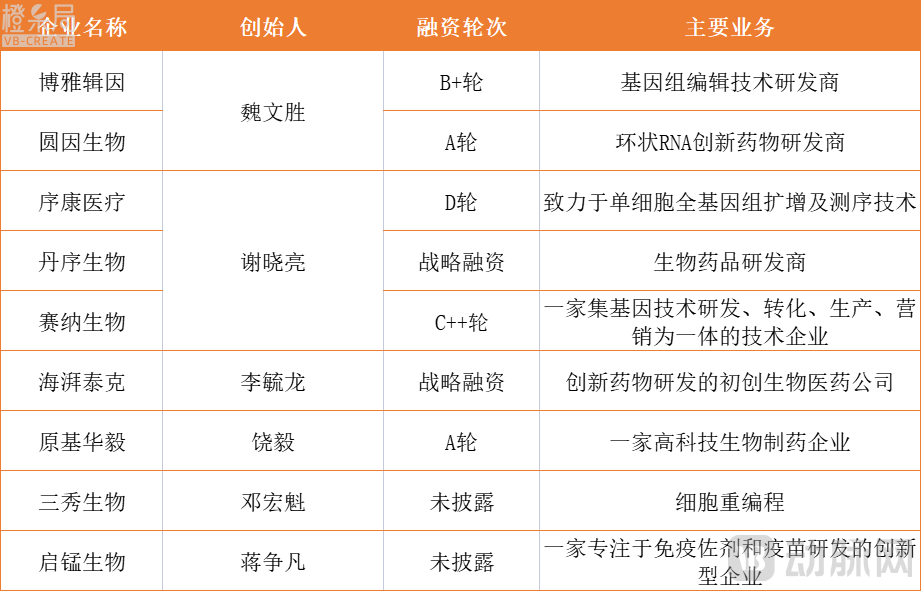 ▲ Some scientist entrepreneurs from the School of Life Sciences, Peking University. Data source: Qichacha
Behind the rise of professor-led startups lies a robust mechanism for the commercialization of scientific and technological achievements.
Universities Promote the Transformation of Achievements, with Policies Leading the Way. As early as 1996, Peking University issued"Administrative Measures for Science and Technology Development at Peking University"a series of rules and regulations, which specify that in the evaluation of professional titles, personnel engaged in applied research, technological development, and the commercialization of technological products shall be assessed primarily on the level of their applied technological achievements and their contributions to society, with incentives provided through various means. This document also marks the first step in the construction of Peking University’s policy system for the commercialization of scientific and technological achievements.
Subsequently, Peking University promulgated a series of regulations concerning the approval of technology transfer and assignment, faculty members’ outside professional activities, and intellectual property management. For example,“Peking University Patent Work Management Measures”Clarified the centralized management of intellectual property (IP) for university achievements, addressed ownership issues concerning IP and copyright, and standardized the ownership and use of Peking University-related trademarks;“Administrative Measures for External Part-time Employment of Faculty Members at Peking University”Standardized the classification and approval of off-campus part-time work, working hours and remuneration for such activities, management of leave-of-absence entrepreneurship and innovation related to the commercialization of scientific and technological achievements, and relevant responsibilities...
Ensuring zero compliance risk in the translation process hinges on the effective implementation of policies. “We have recognized this issue; addressing a substantial volume of historical legacy problems poses a significant challenge to our department. The evaluation and assessment mechanisms at universities and colleges also need further optimization. Many documents have stipulated this, and the relevant systems are already in place,”However, for effective implementation, universities must establish corresponding mechanisms to ensure it..” Yao Weihao, Director of the Science and Technology Development Department at Peking University, stated publicly.
In 2011, to ensure the implementation of relevant policy mechanisms and facilitate the practical application of scientific and technological achievements, Peking University established a commercialized technology transfer department—Office of Science and Technology Development, Peking University, focusing on the creation, protection, management, and utilization of intellectual property rights, to deploy and integrate the full-chain business activities for the commercialization of scientific and technological achievements.
 ▲ Departmental Functions of the Science and Technology Development Office of Peking University, source: official website
First, with the assistance of the Intellectual Property Office, scientists were able toDisclose achievements promptly, evaluate patents, obtain authorization, and achieve full informatization.Secondly, the Technology Transfer Center formulates appropriate commercialization pathways for intellectual property. The intellectual property generated by Peking University follows three main channels:
First,Collaborate with industry-leading enterprises, exploring collaborative R&D platform models through university-industry synergy, and striving to establish new university-industry partnerships aligned with world-class universities. Peking University, Huawei Technologies Co., Ltd., Shenzhen Tencent Computer Systems Co., Ltd., Beijing SenseTime Technology Development Co., Ltd., Anhui Dezhong Development Holding Group Co., Ltd., Tibet Cheezheng Tibetan Medicine Co., Ltd., Bayer AG (Germany), and Boehringer Ingelheim GmbH (BI)More than 80 large enterprises signed an agreement to jointly establish a collaborative R&D platform, with areas of cooperation including cybersecurity, big data, modern healthcare, high-end intelligent devices, ecological restoration, fintech, and smart education.
Second,Foster technology incubation and commercialization at off-site research institutions by following the pathway from proof of concept, laboratory-scale trials, pilot-scale trials, engineering scale-up, to productization.. The establishment of Nanjing Xinrui Regenerative Medicine Technology Co., Ltd. serves as a prime example,Xinrui RegenerationIn previous interviews with Chengguo Bureau, Dr. Zhao Yang, the founder, stated that when he decided to start his own business, the Peking University Institute of Molecular Medicine Nanjing Translational Research Center (hereinafter referred to as the “Nanjing Translational Research Center”) was carrying out a university-local government collaborative project for the commercialization of scientific and technological achievements. The incubation platform of the Nanjing Translational Research Center also strongly supported principal investigators (PIs) like Zhao Yang in fully leveraging their professional expertise to translate their research outcomes into practical applications. Zhao Yang revealed that the hardware facilities of the incubation platform were built according to the needs of researchers and enterprises, allowing teams to move in and start operations immediately.
In addition to the Nanjing Institute for Translational Medicine, Peking University has also established 19 off-campus research institutions., conduct basic and applied research in areas of strength, cultivate and introduce scientific and technological innovation talents from both domestic and international sources, and promote the translation of research findings in multiple fields including electronic design automation, artificial intelligence, and life sciences.
 ▲ List of Peking University's Off-Campus Research Institutions, Data Sourced from the Official Website
Third,Establish new spin-off companies in collaboration with the Yuanpei Fund established by Peking University and external investment institutions with which it has cooperative relationships.. In the newly established spin-off company, the Technology Development Company holds equity in the university and will divest at an appropriate time to realize returns on its equity investment.
Among them,Yuanpei FundIn January 2021, the fund was successfully established, with a total size ofRMB 1.002 billion, with the Sci-Tech Innovation Fund contributing RMB 400 million (accounting for 40%), the fund manager contributing RMB 200 million (accounting for 20%), and Peking University Education Foundation also making a corresponding contribution while enjoying rights to excess return distributions; the remaining capital will be raised from the market.
As its name suggests, the Yuanpei Fund serves a dual purpose: first, to commemorate Mr. Cai Yuanpei, the former president of Peking University; and second, to embody the spirit of “Yuanpei” in fostering original innovation. The fund aims to address the challenges of funding shortages and lack of professional services during the critical “first mile” of achievement transformation.
During the establishment period of the Yuanpei Fund, the Technology Development Department and the fund management team jointly completedNearly 200 scientific and technological achievements have been compiled and archived., achieving full coverage of innovative teams and projects across the main campus, the Health Science Center, affiliated hospitals, the Shenzhen Graduate School, and the industry-academia-research platforms of all Peking University entities.
Having been in operation for over a year, the Yuanpei Fund has completed investments or passed investment committee approvals for a total of24 items, with 15 invested projects and 9 projects pending closing or in process, representing a total investment amount exceeding RMB 250 million. In addition, Yuanpei Fund alsoEmpowering projects through market-oriented and professional management, providing in-depth support for industrialization planning, corporate governance, and team building., further stimulating the enthusiasm and initiative of university researchers and other personnel in translating research outcomes into practical applications.
Achieving First-Class Translation Requires First-Class ResearchFundamental research hinges on scientific talent, facilities and equipment, and an academic atmosphere, with each element being indispensable. In contrast, translational research depends on policy frameworks and translation systems. At Peking University, researchers’ pursuit and exploration in scientific inquiry have led to a continuous stream of landmark achievements. Meanwhile, the passion for translating these achievements into products has enabled high-quality results to be continuously transformed into landmark innovations that support industrial development. It is the synergy among policies, technology transfer systems, and scientific innovation that has made “first-class research and first-class translation” a reality.