

Weimai Medical Submits IPO Prospectus: A Digital Perioperative Temperature Management Solution Deployed in Over 300 Hospitals with 100+ Patents
After Seven Years, the Latest Edition“Expert Consensus on the Prevention and Management of Perioperative Hypothermia in Patients (2023)”(hereinafter referred to as the “Consensus”) was officially published in the Peking Union Medical College Journal on July 21.
“The Consensus” points out that since the release of the 2017 version, anesthesiologists and surgeons have made active efforts in the prevention and treatment of intraoperative hypothermia (IPH),However, statistical data from selected hospitals in Beijing between 2019 and 2021 indicated that the incidence of intraoperative hypothermia remained as high as 29.9%, while the rate of active warming was only 26.3%, suggesting that perioperative temperature management still requires further strengthening.
Why Does Perioperative Hypothermia Occur, and How Can Its Incidence Be Reduced?
Perioperative HypothermiaPerioperative hypothermia is a clinical phenomenon defined as a core body temperature below 36°C in patients due to non-therapeutic factors during the perioperative period, with an incidence rate ranging from 7% to 90%. Hypothermia can triple the incidence of surgical site infections and double the incidence of adverse cardiac events, whereas timely perioperative warming can reduce the rate of clinical blood transfusions by 36%.
However, there are numerous risk factors for perioperative hypothermia in patients, and currently, there is no strong evidence indicating that any single factor increases the incidence of perioperative hypothermia. Therefore, compared with addressing complex and diverse risk factors, combined warming methods are more beneficial for maintaining stable perioperative body temperature, thereby effectively preventing hypothermia, shortening hospital stays, and reducing the financial burden on patients.
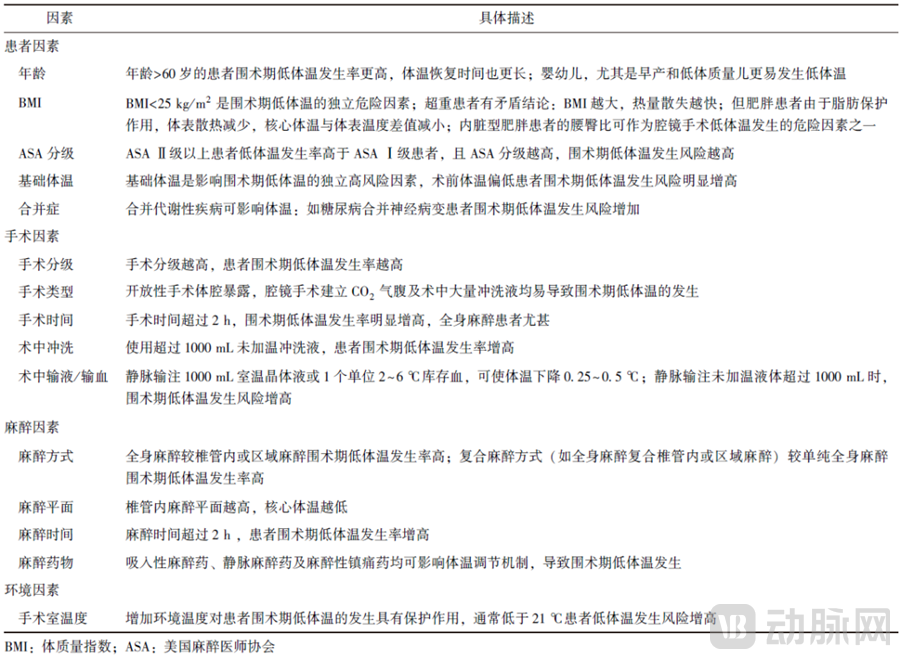
Risk Factors for Perioperative Hypothermia
Image source: “Expert Consensus on the Prevention and Management of Perioperative Hypothermia (2023)”
How can precise, real-time monitoring of body temperature be achieved in anesthetized patients during the perioperative period? Furthermore, how can dynamic warming be implemented when hypothermia occurs?
According to figures released by the National Health Commission in 2019, the annual number of patients undergoing general anesthesia surgery was 45 million. Since at least 80% of these patients require temperature monitoring, the market size for perioperative temperature monitoring alone is valued at tens of billions of yuan, excluding the market for temperature protection.
Facing a body temperature monitoring market valued at over RMB 10 billion, Weimai Intelligent Technology (Beijing) Co., Ltd. (hereinafter referred to as Weimai Medical), which has been deeply engaged in the field of intelligent health management for nearly a decade, has presented a mature digital solution for perioperative temperature management, tailored to clinical needs during the perioperative period and anesthesia quality control requirements.
“The core technology of Weimai Medical originated fromCETC 11th Institute's Military Infrared Detection Technology”,Yin Shichang, Founder and CEO of Weimai Medical Technologyintroduced to VCBeat. “If military technology could be applied in the medical field, it would greatly promote the development of comfort-oriented healthcare in China,”Through independent research and development, it has been applied in the medical field, enabling Weimai Medical to develop a digital body temperature management system consisting of wireless wearable temperature sensors, an active heating and insulation system, and digital quality control management software for body temperature.”
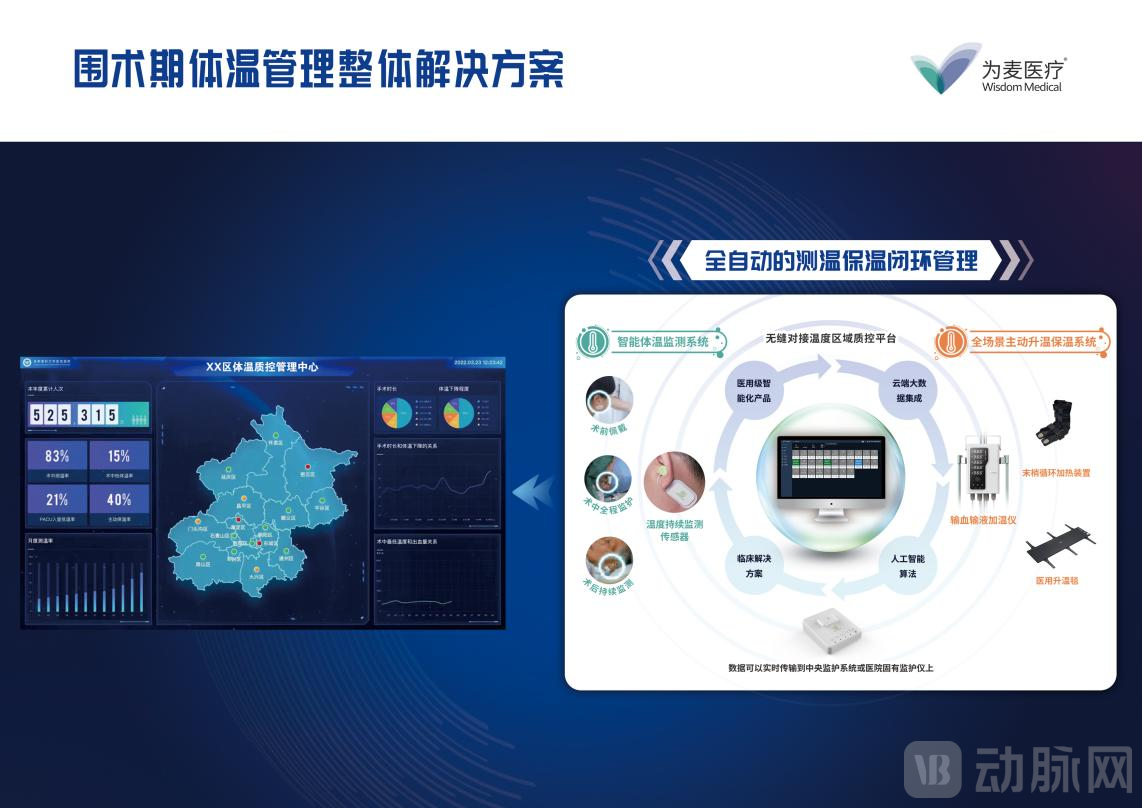
Closed-Loop Management Solution for Perioperative Temperature
Photo provided by the interviewee
Among them, the wireless wearable temperature sensor is a wireless tympanic membrane temperature measurement device, which mainly has the following four major advantages.
First, human core body temperature can be reflected by the temperature of blood in the pulmonary artery. The pulmonary artery floating catheter monitoring method is also known as the "gold standard" for temperature measurement; however, this technique requires deep venous puncture and is not suitable for widespread promotion and adoption.
In response, Weimai Medical achieved an error margin of only ±0.1°C between tympanic temperature measurements from its wireless wearable temperature sensor and the “gold standard,” by leveraging ergonomic design, developing infrared blackbody coatings, and employing a combined approach of thermal conduction and thermal radiation.
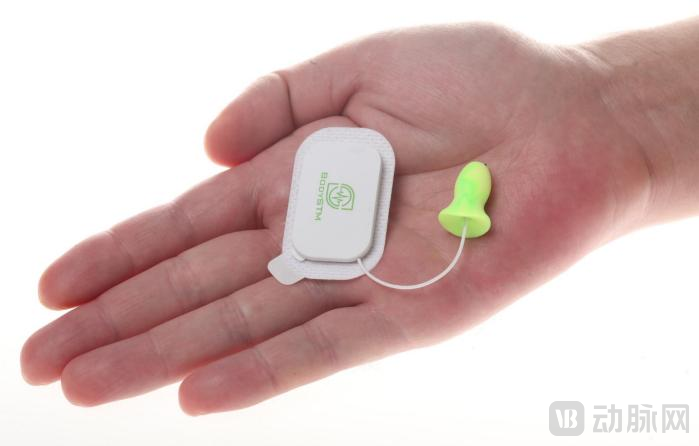
Wireless Wearable Temperature Sensor
Photo provided by the interviewee
Having ensured temperature measurement accuracy and portability, the second challenge that Weimai Medical had to address in its clinical implementation process was how to transmit signals in operating rooms filled with interference sources and sensitive equipment.
Through the team's innovative technological breakthroughs, applied by Weimai MedicalPatented technologies such as multi-frequency time-division multiplexing and CQDDR self-error correctionEnables the sensor to stably measure and transmit body temperature data in real time, even under electromagnetic interference from intraoperative high-frequency electrosurgical units, thereby linking monitoring data across the entire perioperative period—including the ward, operating room, and Post-Anesthesia Care Unit (PACU).
Secondly, to achieve broader compatibility with patient monitors from a wider range of manufacturers within hospitals, meet the scenario-based clinical usage requirements, and benefit more perioperative anesthesia patients,Weimai Medical leverages high-precision reconstruction technology to losslessly convert digital signals collected by sensors into analog vital sign signals, which are then decoded and analyzed by patient monitors.
This has not only accelerated the practical application of technologies and products, but also paved the way for the company to accelerate its strategic layout in the digital therapeutics industry. It is reported that the wireless wearable temperature sensor is currently compatible with 99% of monitors available on the market and used within hospitals.
In addition to the high compatibility of its temperature measurement products, the closed-loop solution for perioperative temperature management is also a key strategic initiative by Weimai Medical in the field of health management.
A 1°C drop in normal body temperature reduces immune function by at least 30%. Therefore, after achieving precise temperature measurement and real-time data transmission, Weimai Medical developed an active warming system. This system not only includes conventional warming functions such as intravenous fluid warming and general medical warming, but also features a proprietary peripheral circulation warming system independently developed by the company. This active warming system is not merely a multi-in-one combination; rather, it is designed with the understanding that clinical hypothermia results from multiple factors. Thus, the active warming system is capable of addressing various scenarios that contribute to perioperative hypothermia.
In addition, the company also throughDigital Quality Control Management Software for Body TemperatureTo achieve the goal of digital temperature management, big data algorithms and artificial intelligence are employed to digitally extract temperature-related indicators within the anesthesia quality control system. Based on the full-process digitization of temperature data, a digital platform for temperature quality control can be established for individual hospitals or even across regional healthcare networks. This holds significant importance for enhancing the level of quality control in hospital temperature management.
When discussing the company's core technologies, Yin Shichang said, “In addition to addressing technical challenges in clinical applications, Weimai’s technology must also overcome numerous obstacles related to commercial promotion and large-scale operations. Therefore, Weimai is fundamentally a technology-driven enterprise.。”
Vital signs are the most diagnostically significant reference standards for physicians during patient examination and clinical management. They serve as the pillars sustaining normal physiological activities, and abnormalities in any vital sign can readily lead to severe or life-threatening conditions. Conversely, most diseases also cause noticeable or subtle changes in vital signs.
Therefore, vital signs management is of great significance to patients, physicians, and hospitals alike. How can we enhance the quality of system-based monitoring and hospital monitoring networks to better meet the needs of clinical monitoring, drug evaluation, and modern hospital management?
Weimai Medical’s second health management solution is a full-course vital signs monitoring solution based on vital signs monitors. This solution comprises three components: multi-parameter vital signs monitors, central and mobile workstations integrable into HIS/CIS systems, and vital signs information management software.
Weimai Medical’s vital signs monitor is compact and portable, allowing it to be worn directly on the patient’s arm, thereby overcoming the limitations of traditional monitors that are immobile and constrained by cables.Seamlessly and simultaneously acquires six major vital sign parameters: electrocardiogram (ECG), heart rate (and heart rate variability), respiratory rate, body temperature, blood pressure, and pulse oxygen saturation. It is also expandable to include invasive arterial blood pressure, end-tidal carbon dioxide (ETCO2), respiratory mechanics, anesthetic gases, cardiac output (invasive and non-invasive), and bispectral index (BIS).
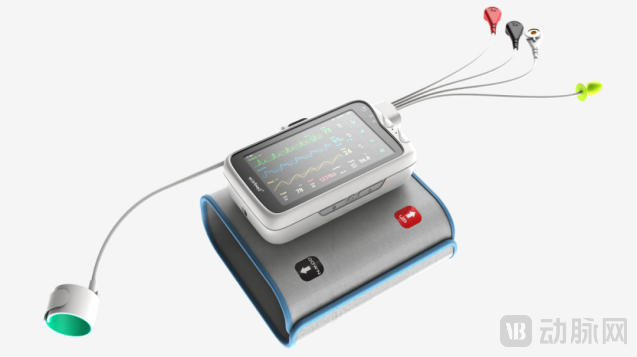
Wireless Multi-Parameter Biosensor
Photo provided by the interviewee
This solution enables closed-loop management featuring preoperative wearability, instant connectivity during surgery, and centralized postoperative monitoring. It not only accelerates operational efficiency and surgical examination turnover rates, thereby alleviating the real-world imbalance between medical supply and patient demand, but also facilitates wireless, mobile, and remote patient monitoring and management when integrated with a wireless central monitoring system.
This device is based on“One-Time Wear, Continuous Monitoring”as the foundation, monitor and record full-course vital signs data of patients during their hospitalization, and build intelligent, scenario-based solutions by combining vital signs with clinical needs. To truly achieve a closed loop in clinical applications in the future, further advancements are required to accomplish"Complete Decision-Making."
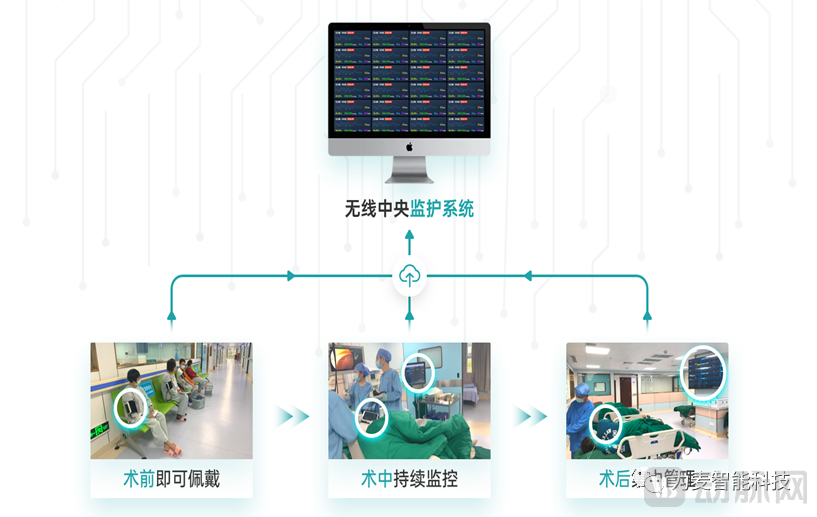
Weimai Medical Solutions: Comprehensive Monitoring with a Single Wearable Device
Photo provided by the interviewee
When discussing the logic behind designing product lines, Yin Shichang stated, “Weimai Medical has established scenario-based solutions for multi-vital-sign monitoring that integrate hardware and software. Weimai Medical positions itself asPioneer of the Digital Smart Healthcare Ecosystem。”
There are several key terms here,“Digitalization”It refers to Weimai’s technologies, including industrial wireless transmission technology, high-fidelity reconstruction technology based on data reconfiguration, edge collaboration technology, and machine learning technology. These constitute the foundation and core of Weimai.
Addressing strong clinical needs through technology-driven solutions, such as quality control and improvement of diagnostic and therapeutic capabilities, by building an integrated hardware-software scenario-based solution for clinical practice. This isSmart Healthcare。
In addition to addressing clinical needs, smart healthcare also enables Weimai Medical Technology (Tianjin) Co., Ltd. to establish connections with patients and physicians through this solution. Through these connections,Enable physicians to recognize the performance and advantages of the company’s products, while also raising patient awareness that Weimai Medical falls within the realm of serious medical care.
By establishing this connectivity, Weimai Medical can extend its medical services to out-of-hospital settings, such as post-diagnosis management for stroke and digital therapeutics for temperature monitoring. This constitutes the company’sCovering the patient ecosystem across pre-hospital, in-hospital, and post-discharge settings.
However, when viewed in isolation from the solution system, each of Weimai Medical’s products essentially serves as aAutomatic Data Collector, and these clinical data all point in one direction—digital therapeutics (DTx).
Since the National Medical Products Administration (NMPA) approved China’s first Class II medical device certificate for a digital therapeutic in November 2020, the development of digital therapeutics in China has entered a regulated track. After three years of growth, the challenge of clearly defining application scenarios and reimbursement mechanisms for digital therapeutics has become increasingly prominent, emerging as a key factor “capping” the industry’s growth speed.
It is well known that digital therapeutics sustain their product lifecycle by “consuming” and “generating” data, while Weimai Medical holds unique advantages in the data domain.
VCBeat learned during the interview that,Take the digital therapeutics for early warning of pulmonary embolism and acute myocardial infarction, developed jointly by the company and Renmin Hospital of Wuhan University, as an example. Weimai Medical’s solutions include hardware devices, which can be promoted by empowering these devices. Meanwhile, the company is also building a unified vital signs monitoring platform covering all departments, or even the entire hospital.
According to reports, this cloud platform will be able to generate revenue through service fees by integrating digital therapeutics in the future. Moreover, under the policies of China’s National Healthcare Security Administration, innovative services and their associated charges may be exempted from Diagnosis-Related Groups (DRGs) payment mechanisms. This demonstrates that China continues to encourage and support the implementation of innovative digital therapeutics.
In addition to the aforementioned collaborations,Weimai Medical has also co-developed benchmark cases for a painless outpatient management system with Peking University People’s Hospital and the First Affiliated Hospital of Zhengzhou University, and jointly established a benchmark case for a neurological disease management system with Xuanwu Hospital of Capital Medical University.
These solutions merely serve as a prelude to Weimai Medical’s strategic layout in the health management market, following its capture of the “crown jewel” in the field of temperature management—perioperative temperature management.The company has also set its sights on the home medical device market, which is valued at over RMB 100 billion.
With the issuance of the "Notice of the General Department of the National Medical Products Administration on Matters Related to the Implementation of the Minamata Convention on Mercury,"Effective January 1, 2026, mercury thermometers will be completely phased out of the Chinese market, thereby gradually highlighting the unmet demand for miniaturized, intelligent, and multifunctional home body temperature management devices.
According to the "Blue Book of China's Medical Device Industry (2020)" released by the Medical Device Research Institute, the market size of home medical equipment in China increased from RMB 48 billion to RMB 152.1 billion between 2015 and 2020. During the five-year period from 2016 to 2020, the compound annual growth rate (CAGR) of the market size was approximately 25.94%.
Against this backdrop, Alibaba Health Research Institute and Tmall Health recently released the “Insights into Consumer Trends in Home-Based Diagnosis and Treatment” (hereinafter referred to as the “Insights”). Data shows that with the accelerating aging of the population, rising consumer spending power, and heightened health awareness,The trend toward home-based use of medical devices in China is gaining rapid momentum, with the market size expanding quickly.
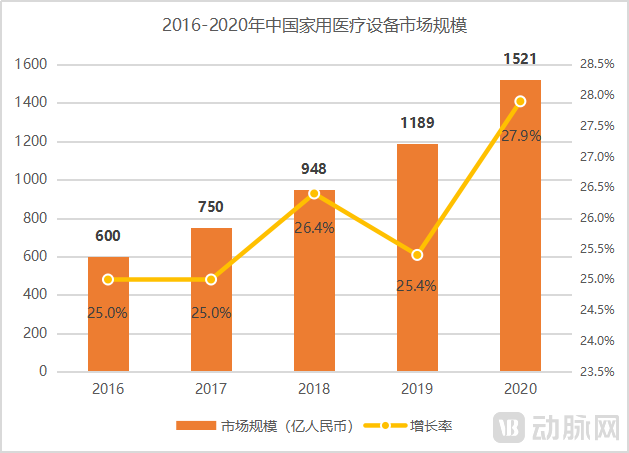
Source: Medical Device Research Institute; Chart by VCBeat
“Insight” data also shows that among various categories of home medical devices, consumers are enthusiastically embracing those that are compact, intelligent, and multifunctional.
However, whether due to conflicting opinions on the optimal temperature measurement site or the continuous emergence of so-called “cutting-edge” technologies, the accuracy and practicality of measurements from home-use thermometers have remained significant constraints for the industry.
In response, Weimai Medical’s wireless, non-invasive temperature measurement technology not only applies the accuracy standards of clinical-grade thermometry to home settings, but also ensures that the device is easy to wear and operate in daily life.According to Yin Shichang, Weimai Medical’s home-use temperature measurement products are expected to launch by the end of this year, leveraging partner hospitals as a foothold to continuously expand into patient households with needs for precise temperature monitoring.
Weimai Medical’s intelligent health management solutions currently cover nearly 300 hospitals across 17 provinces in China, including more than 100 Grade A tertiary hospitals, such as Renji Hospital Affiliated to Shanghai Jiao Tong University School of Medicine, the First Affiliated Hospital of Zhejiang University School of Medicine, the First Affiliated Hospital of Nanchang University, and the First Affiliated Hospital of Xi’an Jiaotong University.
As a national high-tech enterprise engaged in the R&D, manufacturing, and sales of innovative medical devices, Weimai Medical has grown to a team of nearly 100 employees. Its core R&D team possesses multidisciplinary and multi-sector industry experience, with the vast majority hailing from leading enterprises such as Mindray Medical and Huawei, as well as from prestigious industry research institutes.
Furthermore, as technological products continue to iterate and upgrade, the company has also attracted numerous industry-leading talents in fields such as artificial intelligence and cloud computing.According to Yin Shichang, the company has secured more than 100 patents to date, over half of which are invention patents, and has established in-depth collaborations with research institutions and universities such as the Chinese Academy of Sciences, Xidian University, Beijing Normal University, and Northwestern Polytechnical University.
At the end of the interview, when discussing his vision for development, Yin Shichang said, “Weimai Medical is dedicated exclusively to developing innovative products that deliver clinical value.”Amidst the era of "Digital China" and "Healthy China 2030," where competition is fierce, Weimai Medical will accelerate the innovation and R&D of its technological products, with the goal of becoming China's“Pioneer of the Digital Smart Healthcare Ecosystem””。