

Interview with Zhang Shaoting: SenseTime Medical's Decade of Building Large Models and the Next Chapter After 500 Million RMB Financing
In April this year, SenseTime Medical completed a new round of financing amounting to 500 million RMB. Overseas investors such as Raffles Healthcare Growth Fund and Singapore's Lion Partners Capital joined the round, while domestic industrial capital including Lenovo Capital, NewMargin Ventures, and Midea's Infore Group also participated, marking the emergence of a new unicorn.
If viewed solely through the inertial narrative of the capital markets, this appears to be a standard pre-spinoff IPO story: the group incubates the business to maturity, the business secures independent financing, and it awaits the next step in capitalization.
However, after a nearly two-hour conversation with Zhang Shaoting, CEO of SenseTime Medical, we found that what truly deserves understanding about this company is not how much funding it has raised, but what capabilities it has cultivated over the past decade.
"Last year, we were already close to breaking even, so the amount raised in the past year actually exceeded the funding scale we currently need," said Zhang Shaoting calmly. In his view, capital was the least important factor in this round of financing.
What truly matters are three other things: bringing in high-quality investors to "come on board" and contribute ecosystem resources, providing core employees with visible equity incentives, and declaring to the market that the former "AI Four Dragons" company aims to reach the pinnacle of digital healthcare in the AI 3.0 era through strengthening its "internal capabilities."
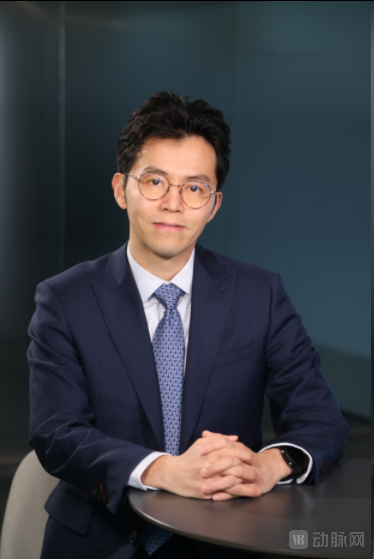
SenseTime Medical CEO Zhang Shaoting
In Jin Yong's wuxia novels, there is often a rivalry between the "Sword Sect" and the "Qi Sect." The Sword Sect emphasizes martial forms, yielding quick results; by breaking down each move for practice, practitioners can easily build momentum in the early stages. In contrast, the Qi Sect focuses on internal cultivation, which has a slower start and remains inconspicuous initially. However, once one's internal energy is fully mastered, learning any new technique becomes twice as effective with half the effort.
Over the past decade, medical AI has, to some extent, followed a similar path of divergence.
In 2016, Zhang Shaoting resigned from his faculty position in the Department of Computer Science at the University of North Carolina and returned to China, just as medical AI was emerging in large numbers.
Early AI companies leaned toward the "Sword Sect" approach, with a single disease category—such as pulmonary nodules, coronary CTA, or diabetic retinopathy—supporting an entire company.
Securing certifications, hospital admissions, and financing—tight pacing and unstoppable momentum.
Zhang Shaoting acknowledges the capabilities of AI but does not fully endorse this particular path of AI development.
In his view, healthcare is a vast system encompassing medical imaging, pathology, surgical planning, follow-up management, health insurance cost control, hospital administration, and translational research.
If AI development merely involves mastering individual skills one by one—redeploying teams, reacquiring data, and rebuilding products for each disease type, medical department, and clinical workflow—the company will quickly be bogged down by R&D and delivery costs.
Therefore, to truly penetrate the core workflows of hospitals and build products that meet their needs, the most critical factor is not the application layer, but rather the establishment of a foundational capability set that can continuously evolve, enabling the mass production of high-quality AI solutions.
At the end of that year, upon returning to China, he had a dinner discussion with several friends in the AI community. Their judgment at the time was that AI for a single disease could only serve as a transitional form, and the commercial implementation of medical artificial intelligence must be supported by a platform.
This platform can be a medical device, a regional system, or an AI foundation tailored for hospitals to support the operation and iteration of various intelligent applications.
Looking back now, the conclusion drawn at that time still holds: medical AI is not simply about who obtains certification first or launches a product first, but rather about who can sustain continuous iteration and expansion over an extended period, ultimately integrating seamlessly into hospitals' operational workflows.
Building on the conclusions drawn at that time, Zhang Shaoting led SenseTime Medical to firmly pursue a third path: creating a tailored AI foundation to systematically address hospital needs.
In Zhang Shaoting's words, building a platform is akin to cultivating "internal strength."
In the novel, Xu Zhu absorbed the internal energy of the Xiaoyao Sect overnight, and Zhang Wuji learned the Universe Shift technique after mastering the Nine Yang Divine Art, with speeds far exceeding those of ordinary people. The reason is simple: when one's internal energy is sufficient, learning new techniques no longer starts from scratch.
The large foundation model presented by SenseTime Medical today is the culmination of SenseTime's internal capabilities.
"Without the support of foundational models, every time a medical AI company enters a new department, targets a new disease type, or adopts a new workflow, it is akin to starting apprenticeship from scratch: reorganizing teams, redeveloping algorithms, refining products anew, and redeploying them. While this approach can yield high-quality point solutions, it makes it difficult to scale to hundreds of products, and even harder to sustain a complex healthcare ecosystem with a team of around 100 people."
Certainly, large models that meet the aforementioned capabilities cannot be simple medical Q&A models; instead, they are required to integrate general and specialized knowledge.
In SenseTime Medical's architecture, the foundational layer comprises SenseTime's general-purpose large foundation models and computing infrastructure; the intermediate layer features "Da Yi," a medical-specific foundation model; and the upper layer supports specific application scenarios such as medical imaging, pathology, endoscopy, surgical planning, and AI agents.
This is akin to first mastering the Nine Yang Divine Art, and then learning Tai Chi Chuan, the Universe Shift, and the Sacred Fire Order. Each martial art still requires training, but you no longer start from scratch.
Moreover, the model's capabilities should not be limited to serving physicians; rather, physicians should be actively engaged in the co-development of these capabilities.
In the interview, Zhang Shaoting cited a typical case: SenseTime Medical collaborated with Shanghai Pulmonary Hospital to enable physicians to generate specialty-specific models using small amounts of annotated data and zero coding through its model production platform, allowing one-click deployment after evaluation. Within a short period, the hospital has incubated nearly ten new models, some of which have been accepted for publication in the top-tier medical imaging journal Medical Image Analysis.
This development holds significant meaning. It signifies that physicians are not merely users of AI products but can also become co-creators of model capabilities; similarly, hospitals are not just purchasers but can also serve as incubators for new product modules.
For hospital administrators, this is not merely about purchasing another standalone software package, but rather about introducing a sustainably upgradable AI infrastructure.
Furthermore, the true value of AI is not limited to perfectly replicating physicians' capabilities; rather, it should collaborate with physicians to accomplish tasks that were previously difficult or even impossible without AI. This synergy more closely reflects the future irreplaceability of medical AI.
For example, in pathology, SenseTime Medical is exploring algorithmic conversion between H&E staining and immunohistochemistry. Traditionally, physical staining is required to visualize specific reactions, whereas AI offers the opportunity to achieve virtual conversion through models.
In emergency settings, non-contrast CT scans can also be transformed into images resembling contrast-enhanced CT using diffusion models, helping physicians make rapid judgments when there is insufficient time for re-examination.
For instance, in liver surgery planning, AI can calculate in real time the impact of resection plans on downstream liver segments and residual liver volume, providing timely feedback to surgeons akin to a game engine.
Even with 3D-printed models, it was difficult to achieve such real-time simulation in the past.
Such capabilities are not merely "auxiliary diagnosis," but are transforming the way physicians formulate treatment plans.
This is also a key reason why the SenseTime Medical foundation model differs from traditional imaging AI: it does not merely accelerate the diagnostic phase, but extends its capabilities to treatment, surgery, pathology, scientific research, health insurance, and hospital management.
Over the past few years, medical AI capabilities have undergone several iterations, yet the most difficult question to answer has remained unchanged:
Who is the ultimate payer?
Hospitals are willing to pilot the solution but face budget constraints; direct patient payment models suffer from unstable adoption pathways; while inclusion in national health insurance reimbursement is an option, it remains constrained by overall expenditure caps.
Zhang Shaoting's assessment is pragmatic: it is not easy to rely on additional funding from the medical insurance system, but AI can be supported through policy guidance within the existing budget.
This was also one of the suggestions put forward by Zhang Shaoting when Professor Xue Lan, a professor at Tsinghua University and Counselor to the State Council, led five other State Council Counselors to visit SenseTime for exchanges in March 2025.
This change is happening.
AI services for imaging and pathology have been included in the medical insurance reimbursement pathway in certain regions, with a reimbursement rate of 5 to 10 RMB per case, allocated from the existing medical insurance payment system.
The amount may seem small, but its significance is profound: AI is no longer merely an additional cost for hospitals; it has begun to serve as a tool for health insurance programs to enhance efficiency, strengthen primary care capacity, and enable early screening and intervention.
Meanwhile, policy directives such as the Smart Hospital Grading and the Interoperability Evaluation are also tilting toward AI.
Over the past decade, hospital informatization has primarily centered on the development of electronic medical records (EMRs); in the coming decade, the high-quality development of hospitals will increasingly depend on intelligent capabilities.
This is also a key reason why industrial capital has chosen to invest in SenseTime Medical at this time.
Midea's Infore Group is backed by hospital resources; Far East Horizon operates more than 30 hospitals; People's Medical Publishing House serves millions of medical students; and Lenovo possesses all-in-one hardware devices and a robust overseas business.
These investors are no longer purely financial investors; each holds key links in the healthcare industry and requires a robust AI platform to activate their respective ecosystems.
Therefore, the essence of this funding round is not about SenseTime Medical "raising capital," but rather about team-building. Developing medical AI is a challenging endeavor that is difficult for any single company to accomplish alone.
Making industry partners shareholders locks in future commercialization scenarios, channels, ecosystems, and strategic synergies in advance.
Although the large model foundation built by SenseTime Medical for hospitals is already in place, it has not yet fully demonstrated the true potential of medical large models.
Under these circumstances, Zhang Shaoting's assessment of the next phase for medical AI is the medical world model.
"Today, many large medical models are essentially still 'question-answering' models: writing medical records, searching literature, answering questions, and generating recommendations. However, real-world healthcare is not static text but a dynamic system. How do tumors evolve? What outcomes result from different treatment regimens? How do intraoperative blood flow, anatomical structures, and instrument positions change in real time? These challenges require models to evolve from 'answering' to 'simulating.'"
In his view, medical world models integrate imaging, pathology, genomics, vital signs, clinical text, and temporal dimensions to help physicians understand how diseases occur, how they progress, and how they can be intervened upon.
This path is challenging, but it is precisely the route through which medical AI can truly reach high-value scenarios.
If the past decade saw SenseTime Medical focus on building internal capabilities—computing power, models, platforms, products, regulatory approvals, benchmark hospitals, and industrial ecosystem—the next decade will be about transforming these strengths into enhanced clinical reasoning and commercialization capabilities.
After all, the competition in medical AI is no longer about isolated tactics, but rather a contest of systemic capabilities.
In the world of Jin Yong, true masters are often not those who know the most martial arts techniques, but those with profound internal energy who handle heavy tasks with ease.
SenseTime Medical is striving to demonstrate that the same principle applies to medical AI: first, deeply cultivate the foundational capabilities of large models, and then rapidly advance applied domains such as imaging, pathology, surgery, follow-up care, health insurance, and hospital management.
This is why the story of SenseTime Medical is not merely a tale of unicorn financing, but rather an industrial pathway validated by an AI company over a decade: leveraging technology as its core competency, platforms as its infrastructure, hospital scenarios as its battlefield, and ecosystem partners as its allies, ultimately advancing medical AI from isolated tools to intelligent healthcare infrastructure within hospitals.
For investors, this represents a growth curve with higher personnel efficiency, lower marginal costs, and greater ecosystem potential.
For hospital administrators, this is an AI foundation that not only addresses the current pain points of individual departments but also supports the future development of smart hospitals.
For SenseTime Medical itself, a decade of honing its expertise has paved the way for a new journey into the deeper realms of industrial application.