

China's Health Industry to Reach RMB 16 Trillion by 2030: Nine Strategic Trends Unveiled
On August 10, the 16th Westpu Conference—China Health Industry (International) Ecological Conference 2023, grandly opened in Boao, Hainan. The theme of this conference is "Dual-Element Synergy Reshaping the Industry—Launching a New Era of Personal Health Responsibility."
On the day,Li Junguo, Vice President of Zhongkang Technology, Delivered a Keynote Address Titled “Looking Ahead to 2030: A Panoramic Forecast of China’s Health Industry” at the Xipu ConferenceReport. Starting from market demand, he closely examined pharmaceutical policies and acted according to needs, basing his decisions on data from Sinohealth Technology, and madeChina's Health Industry in 2030NineLargeTrend Analysis, for industry peers to giveProvided directional insights.
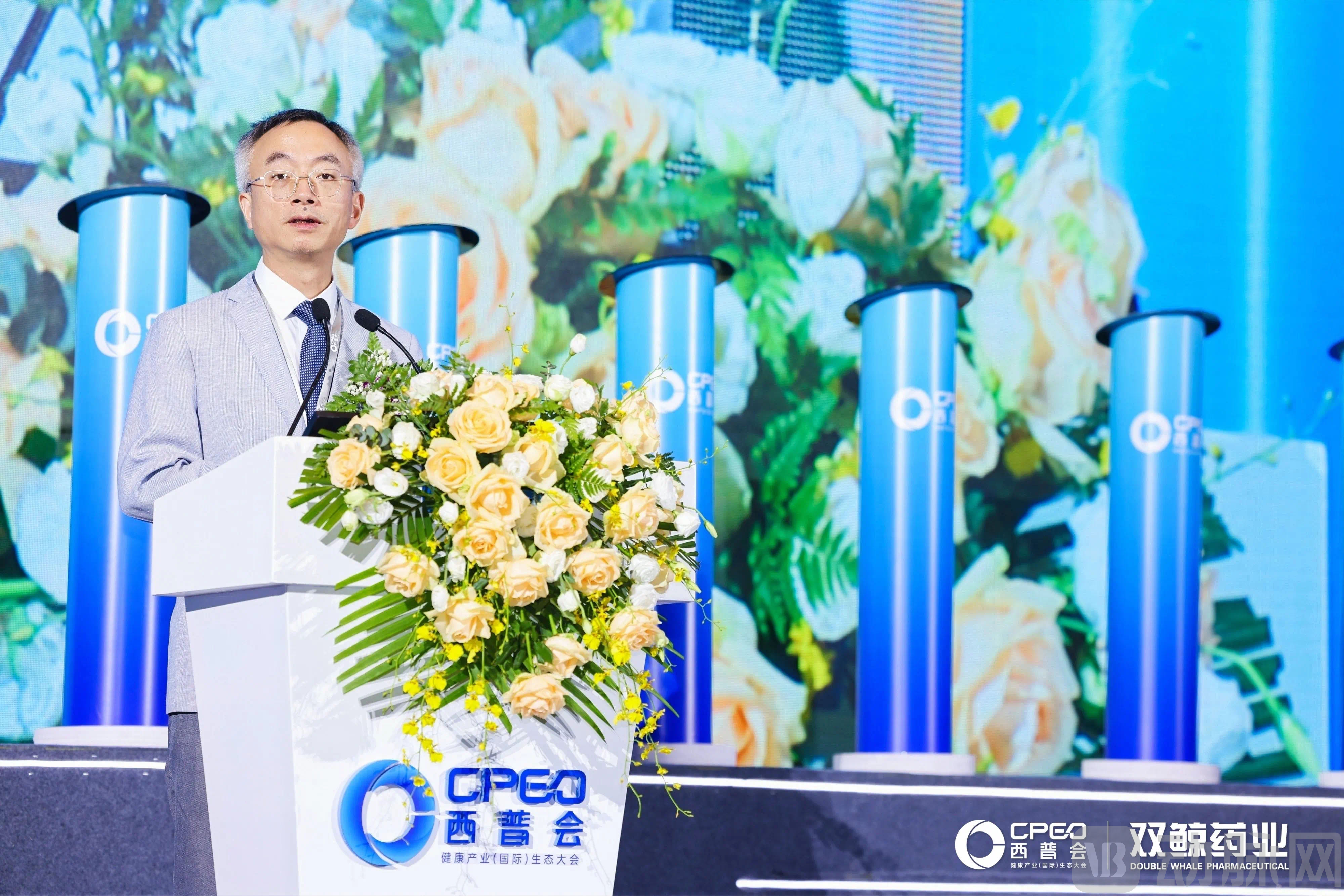 Li Junguo, Vice President of Zhongkang Technology
Demand Is Driving the Overall Leap of the Health Industry
“The theme of each CHIC Conference represents Zhongkang’s summary of industry observations and expectations for the future. This year, the conference is themed ‘Dual-Element Synergy Reshaping the Industry—Ushering in a New Era of Personal Responsibility for Health,’ with the most prominent observation being the dramatic shift in market demand.”Li Junguo stated that the steady advancement of China’s political, economic, cultural, and educational sectors has formed the fundamental foundation for the health literacy of its citizens. We project that by 2030, per capita healthcare expenditure as a proportion of per capita consumer spending will rise from 8.6% in 2022 to 10.1%, reflecting people’s growing attention to their own health as they seek to improve their quality of life. This dramatic shift in demand is driving an overall leap forward in the health industry.
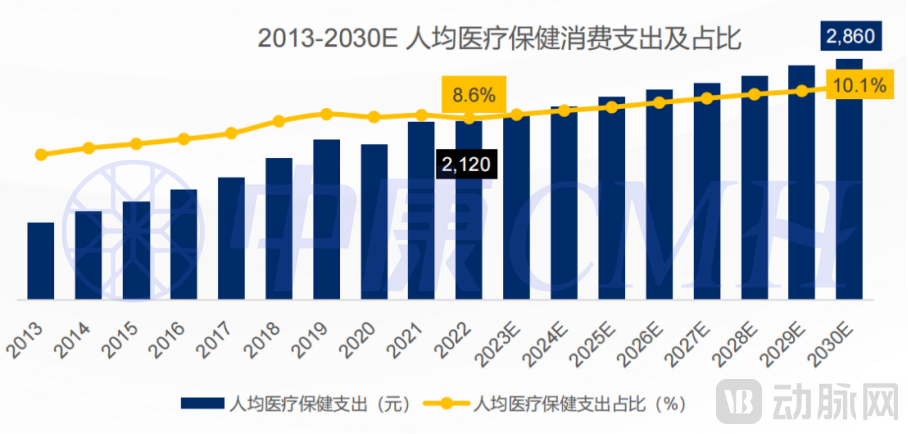 Data Source: Zhongkang CMH
Meanwhile, China’s demographic turning point has arrived earlier than expected, with the trend of declining birthrates intensifying as the country stands on the verge of becoming a super-aged society. Data projections indicate that by 2030, China’s elderly population will reach 270 million, accounting for 19.4% of the total. This signifies that China’s “silver challenge” is becoming increasingly profound.
Data from Zhongkang CMH shows that the two-week prevalence rate of illness among both urban and rural residents in China has been increasing year by year, reaching 44.2% in 2033. Among these conditions, hypertension has the highest prevalence rate in both urban and rural areas, followed by diabetes and the common cold. Of the top 10 diseases by prevalence, chronic non-communicable diseases are predominant, particularly chronic conditions affecting the elderly.
However, in the face of China’s vast healthcare demands, the country’s medical security system still has shortcomings, and certain industry pain points urgently need to be addressed.
Li Junguo stated,“National health is closely linked to national economic and social development, and has now become one of the focal points of competition among major powers.。”However, in terms of scale, China's health industry still lags behind that of developed countries. In 2022, China's total health expenditure reached RMB 8,052.8 billion, accounting for 6.82% of its GDP. By contrast, Japan's health industry accounts for over 10% of its GDP, while the United States spends more than 18% of its GDP on healthcare.
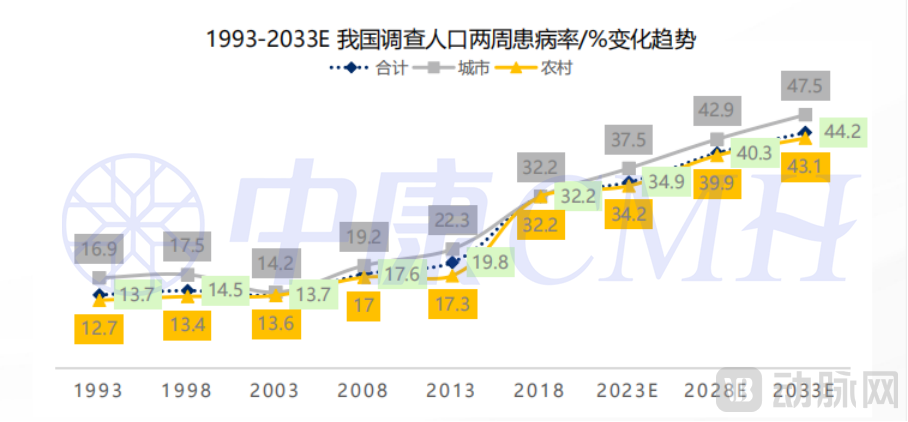 Data Source: Zhongkang CMH
“Integrating Health into All Policies”: The People’s Health Is the Foundation of Great-Power Competition
Standing at a new era and stage of the pharmaceutical industry, what safeguards its development is the steady and deepening implementation of a series of national policies related to public health.
In 2016, the Outline of the Healthy China 2030 Plan elevated the building of a “Healthy China” to a national strategy; in 2019, the Healthy China Action explicitly prioritized prevention; in 2020, the Opinions on Deepening the Reform of the Medical Security System were released; in 2022, the 14th Five-Year Plan for the Development of the Pharmaceutical Industry, the Key Tasks for Deepening the Reform of the Medical and Health System in 2022, and the 14th Five-Year Plan for National Health were issued; and in 2023, the Action Plan for Comprehensively Improving Medical Quality (2023–2025) was launched.
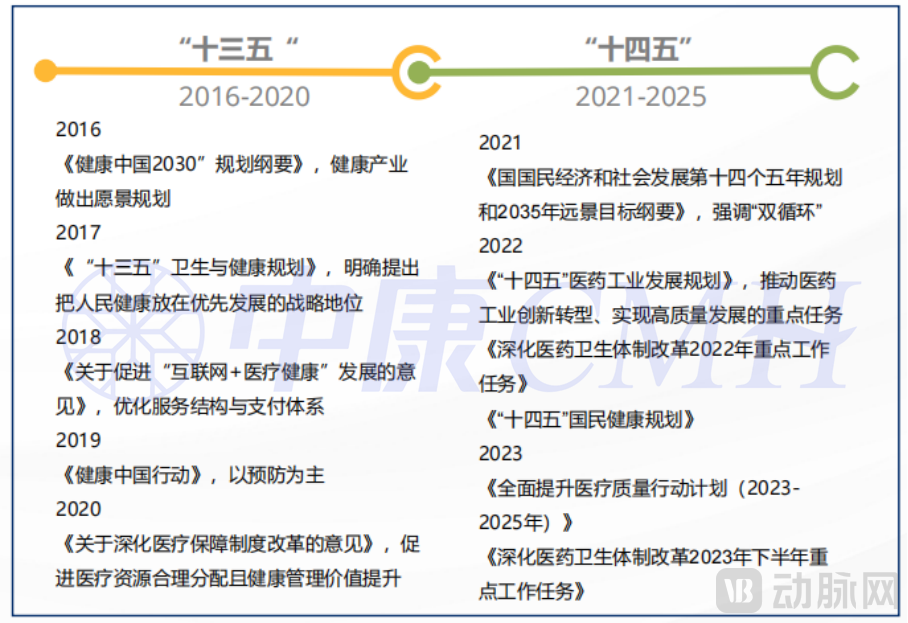 Data Source: Zhongkang CMH
In terms of improving accessibility, healthcare resources have increased, the number of diagnoses and treatments has steadily risen, outpatient and emergency departments can handle a large volume of patient demand, and treatment rates continue to improve. The annual number of outpatient and emergency visits in China continues to rise, and is projected to reach 11.2 billion visits per year by 2030.
In terms of cost containment, rapid follow-on development of innovative drugs, steady price reductions through national reimbursement negotiations, accelerated generic drug substitution, centralized procurement and import substitution for medical devices, increased reimbursement ratios for therapeutic agents in the National Reimbursement Drug List, and control of overprescribing through DRG/DIP payment reforms have all made significant progress. Statistical data show that in recent years, government and social health expenditures in China have continued to rise, while the proportion of out-of-pocket personal health spending has declined year by year, and is projected to drop to 23.3% by 2030.
Regarding medical insurance investment, by the end of 2022, the number of people enrolled in basic medical insurance across China reached 1.34 billion, with an enrollment rate stabilized at over 95%, and annual expenditures amounted to RMB 2.46 trillion. It is projected that by 2030, the national enrollment rate will rise to 97.2%, with annual expenditures exceeding RMB 4 trillion.
In terms of drug safety, China’s regulatory mechanisms and systems for pharmaceutical oversight have been progressively refined in recent years, with steady improvements in both drug quality and the variety of available products. Notable measures include the implementation or adoption of the Consistency Evaluation of Quality and Efficacy for Generic Drugs, the Good Clinical Practice (GCP) for Drug Clinical Trials, the Marketing Authorization Holder (MAH) system, and special rectification campaigns targeting traditional Chinese medicine decoction pieces.
Li Junguo believes that the Healthy China policy is driving efficiency improvements in the health industry, gradually guiding “dual synergy” to reshape the industrial landscape.
Zhongkang Technology’s Analysis of Nine Major Trends in the Health Industry
During his keynote address, Li Junguo noted that, against the backdrop of “Dual-Element Synergy Reshaping the Industry: Ushering in a New Era of Personal Health Responsibility,” the Zhongkang team has put forward its latest assessment of nine major industry trends:
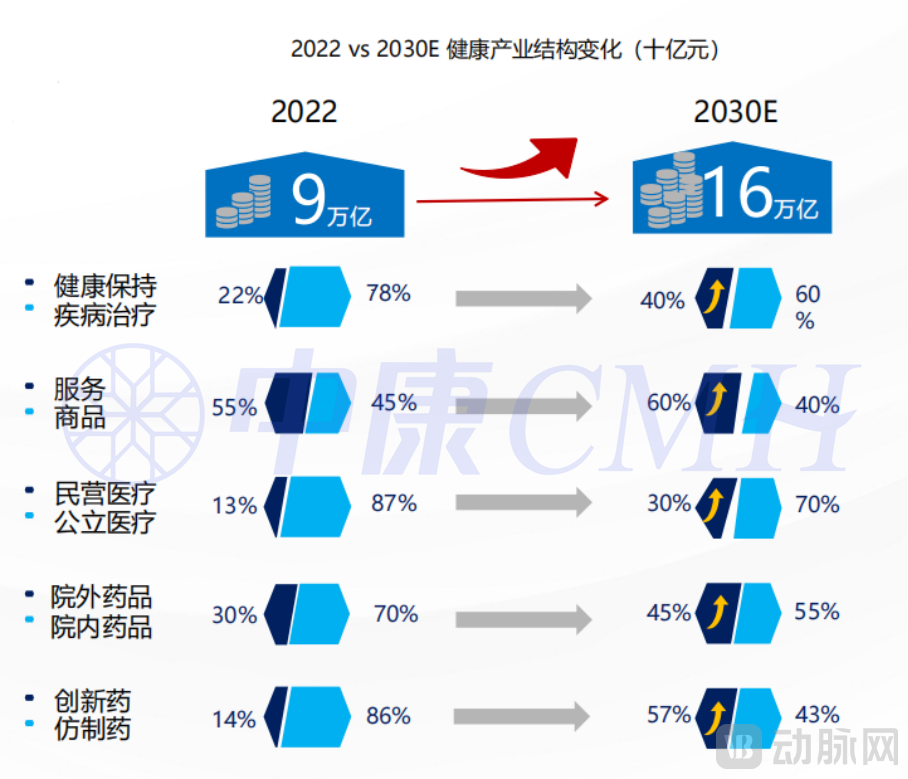
Trend 1: The health industry may reach 16 trillion yuan by 2030, with changes in its industrial structure.According to Zhongkang CMH’s projections, as the scale of China’s health industry expands, its structure is undergoing significant changes: the market for non-disease treatment segments has grown to 40%; the pure commodity trading market has declined to approximately 40%; driven by consumer-oriented healthcare, private healthcare is rising rapidly, with its market share expanding to 30%; the out-of-hospital pharmaceutical market has increased from 30% to 45%; and the drug portfolio has also shifted markedly, with innovative drugs expected to account for over 50% of the market share.
 Data Source: Zhongkang CMH
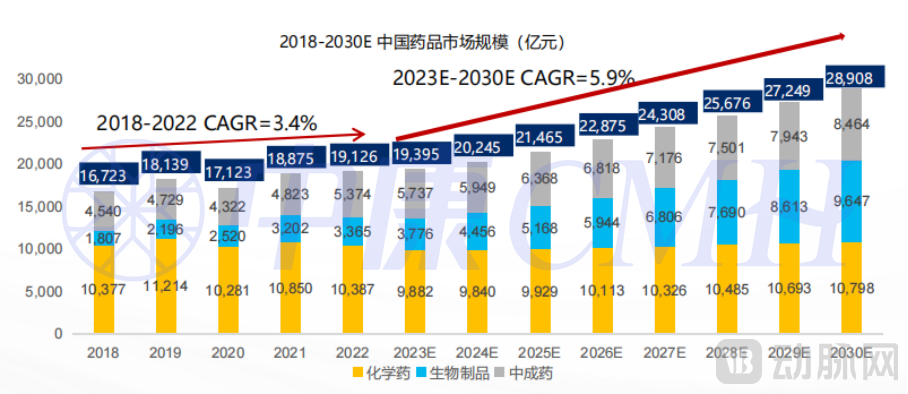
Trend 2: The scale of China's pharmaceutical market continues to expand, with its size projected to reach RMB 2.89 trillion by 2030.The Chinese market is projected to account for one-sixth of the global market, with its growth rate potentially slightly exceeding that of the global market size.
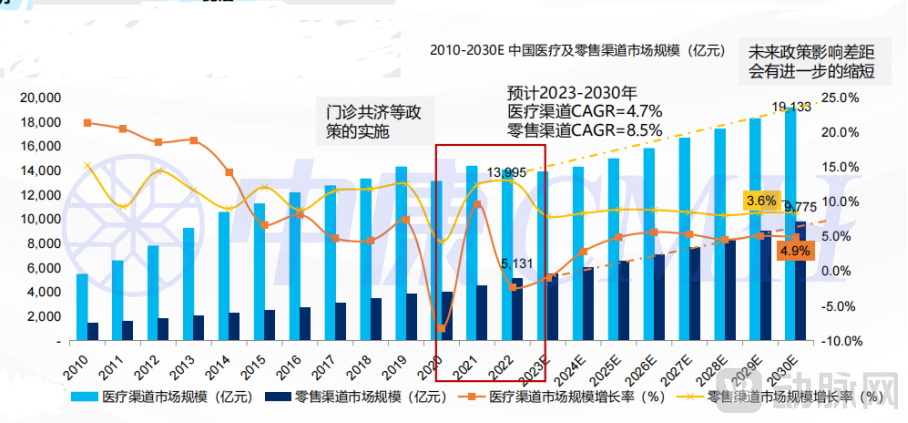
Trend 3: Pharmaceutical distribution channels are expected to continue diverging, with the retail channel gaining in importance. Physical pharmacies and B2C e-commerce platforms are projected to sustain their growth momentum, leading to a continuous increase in their share of the channel market.The share of medical channels is expected to increase with the rise in outpatient and emergency visits; however, due to the policy separating prescribing from dispensing, which drives prescription outflow to retail channels, their future market share may decline.
 Data Source: Zhongkang CMH
Trend 4:Retail channel concentration will continue to increase, while e-commerce maintains its rapid growth.。With the implementation of the outpatient mutual aid policy, large chain pharmacies will find it easier to meet the eligibility criteria for outpatient pooling reimbursement, further strengthening their competitive edge. Additionally, the scale of the B2C pharmaceutical market will continue to expand, solidifying consumers’ habit of purchasing medications online.
Trend 5:Biologics and Traditional Chinese Medicine (TCM) Proprietary Medicines Launch a Fierce Assault, Shaking the Dominance of Chemical Drugs。During the pandemic, Traditional Chinese Medicine (TCM), a “gem” of medical heritage, played an indelible role. In the post-pandemic era, self-diagnosis and self-care will become the core drivers of TCM industry development. Biologics hold immense potential, fueled by continuous advancements in high-tech fields such as gene technology and cell therapy. Chemical drugs remain the cornerstone of pharmaceutical development, with fierce competition in the sector; differentiated competition will be the key to breaking through in the future.
 Data Source: Zhongkang CMH
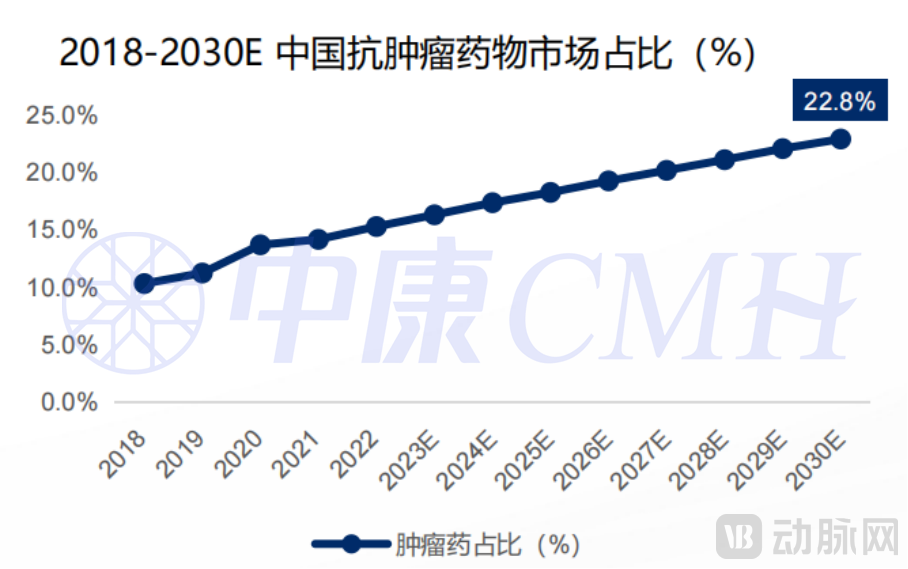
Trend 6:The market for patented drugs is expanding rapidly, with oncology drugs accounting for a significant share; innovative drugs are accelerating their development, while pediatric and rare disease medications hold promising prospects for the future.。In the future, biotechnology will drive further growth in anticancer drugs, with oncology therapeutics expected to account for more than one-fifth of the drug market by 2030.
 Data Source: Zhongkang CMH
Trend 7:China’s comprehensive health management sector is still in its nascent stage, with early screening, health check-ups, and the dietary supplement market holding significant future promise.Among these, the coverage rate of health checkups in developed countries can reach 70-90%, while the current coverage rate of health checkups in China is very low, leaving enormous room for growth.
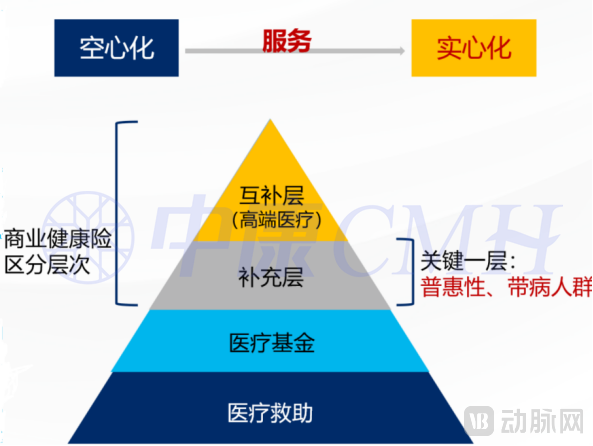
Trend 8:To be constructedMulti-Tiered Healthcare Security System: Comprehensive Protection of Residents' Health and Rapid Growth of Commercial Health Insurance。On the government side, a combination of policy measures has been implemented to substantially increase insurance enrollment rates and promote information sharing between the national medical insurance information platform and commercial health insurance platforms. Meanwhile, efforts are being made to guide commercial health insurance and inclusive city-specific supplementary medical insurance (such as “Huimin Bao”) to effectively align with and complement basic medical insurance, thereby jointly building a multi-tiered healthcare security system. Commercial insurance companies, for their part, are driving the development of the health insurance sector by designing differentiated insurance solutions, scientifically structuring product benefits and pricing them reasonably, and lowering underwriting thresholds.
Data Source: Zhongkang CMH
TrendNine:From “Point Digitalization” to “Comprehensive Digital Intelligence”: Information Technology Drives Industrial Development, regarding digitalization as the underlying productive force and mode of social operation. HealthIn the new decade of the health industry, as it pursues supply-demand equilibrium and an efficiency revolution, digitalization will continuously explore application scenarios for the integration of technology and health across the industrial chain.
“This year marks a new era in which the government is promoting the dual synergy between in-hospital and out-of-hospital sectors to reshape the pharmaceutical industry, ushers in a new era of individual responsibility for personal health, and signals the dawn of a new chapter for the Westphal Conference,” Li Junguo stated candidly.This year has been challenging for the pharmaceutical industry, yet the scale of this year’s Westphal Conference (Xipu Hui) has reached a new high. This demonstrates that our industry is home to a group of resilient practitioners who grow stronger in the face of adversity and never lose hope.As Zhongkang Technology outlines in these nine key forecasts for the future, let us jointly look forward to a new decade for the health industry!