

OrganOx Secures £25 Million Funding to Advance Normothermic Machine Perfusion Technology for Liver Preservation

OrganOx
Donor Organ Preservation Technology and Medical Device Researcher
Organ transplantation is the optimal treatment for patients with end-stage renal disease and liver disease. Every step, from organ retrieval to ex vivo preservation and subsequent implantation into the recipient, must be executed without error.
Ex vivo organ preservation is mainly divided intoStatic Cold Storage (SCS) and Machine Perfusion (MP)Two technical approaches. SCS, also known as “ice bucket” preservation, reduces cellular metabolic rate and oxygen consumption through low temperature (4°C), thereby mitigating damage to the donor liver during preservation. MP refers to a system that continuously perfuses the ex vivo organ with preservation solution during the storage and transport phases, while simultaneously supplying oxygen, nutrients, and other essential substances.
Clinically, static cold storage (SCS) is commonly used for organ preservation. However, in extended criteria donors (ECDs)—such as those from donation after circulatory death (DCD), elderly donors, and obese donors—the incidence of complications such as primary non-function (PNF) and delayed graft function (DGF) after transplantation is significantly increased under SCS conditions, seriously compromising the safety of transplant recipients. Meanwhile, prolonged ex vivo preservation and transportation may render some organs unsuitable for transplantation.
Machine perfusion (MP), as a next-generation organ preservation technology, overcomes many limitations of traditional static cold storage (SCS). Based on operating temperature, MP is categorized into three types: hypothermic machine perfusion (HMP, 4–6°C), subnormothermic machine perfusion (SNMP, 20–25°C), and normothermic machine perfusion (NMP, 37°C). Among these, NMP has demonstrated certain advantages in repairing extended criteria donor (ECD) livers, assessing liver quality, and enabling ex vivo therapeutic interventions.
OrganOxIt is a company dedicated to the research and development of NMP technology for liver transplantation. VCBeat learned that on July 17, 2023, OrganOx announced it had secured £25 million in a new round of financing, led by Lauxera Capital Partners. This new funding will help OrganOx expand its global business footprint.
Development of Normothermic Machine Perfusion (NMP) dates back to the last century. In 1935, Alexis Carrel and Charles Lindbergh investigated organ preservation using oxygenated serum under normothermic perfusion conditions, demonstrating that organs could maintain viability for a period of time in such an environment.
Due to the high technical barriers of normothermic machine perfusion (NMP) and the continuous development of two hypothermic preservation methods, static cold storage (SCS) and hypothermic machine perfusion (HMP), research on NMP has remained lukewarm. With the recent advancement of complex extracorporeal circulation systems and the increased use of extended criteria donor (ECD) organs, SCS technology can no longer meet clinical needs, while HMP technology offers limited parameters for liver function assessment.Moreover, NMP offers advantages such as reducing cold ischemia and its associated adverse effects, thereby enhancing organ viability., and is receiving increasing attention from the transplant community.
In 2002, Professor Peter Friend, Chief Medical Officer of OrganOx, and his colleagues published their first paper, heralding the beginning of the NMP revolution.
In 2016, Professor Peter Friend, Constantin Coussios (Chief Technology Officer of OrganOx), and colleagues conducted the first Phase I clinical trial of liver transplantation following normothermic machine perfusion (NMP), successfully demonstrating the safety and feasibility of NMP. Although the first NMP device was launched in Europe in 2016, its market performance remained suboptimal due to its high cost and the specialized expertise required for operation. This trial provided valuable data support and played a significant role in promoting the clinical adoption of NMP.
In 2018, led by a team from the University of Oxford in the United Kingdom and scientists from multiple countries, the COPE (Consortium for Organ Preservation in Europe) trial was launched. This was the first randomized clinical trial to evaluate static cold storage (SCS) and normothermic machine perfusion (NMP) in liver transplantation, using the “metra” NMP device manufactured by OrganOx.
Trial results demonstrated that, compared with SCS, preservation using Metra reduced early allograft dysfunction by 74%, decreased organ discard rates by 50%, lessened the severity of graft injury by 50%, and extended the mean liver preservation time by 54%.[1]。
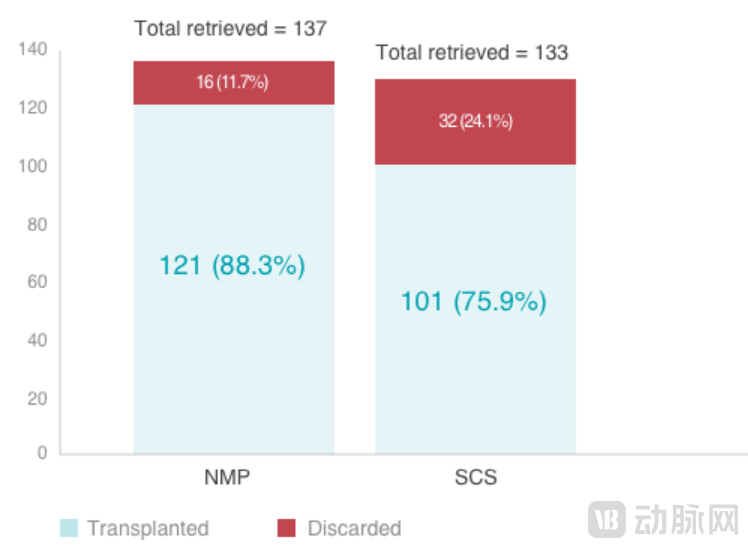 NMP vs. SCS Data Comparison Image source: OrganOx official website
Under static cold storage (SCS) conditions, even donor livers meeting all criteria for excellent quality can be preserved for a maximum of only 12 hours. The preservation time for extended criteria donor (ECD) livers is even shorter, and it is difficult to assess the quality of preserved donor livers.
Metra is a portable, fully automated, normothermic perfusion medical device designed for transport. Under conditions of normal body temperature and near-physiological pressure and flow, Metra delivers oxygenated blood, anticoagulants, and various nutrients to ex vivo livers, maintaining the organs in a stable physiological environment at 37°C. This system enables organ preservation for up to 24 hours, providing additional preoperative preparation time for liver transplantation surgeries.
 Working Principle of Metra. Image source: Nature
The liver maintains its function during preservation, producing bile, metabolizing glucose, and regulating pH. During preservation, physicians monitor markers such as perfusate lactate clearance, pH, transaminase levels, and bile production to assess donor liver function, thereby improving the utilization rate of donor livers.
METRA features automated functionality, supporting machine-based automatic measurement and control of flow, pressure, temperature, blood gases, and medications without user intervention. It is applicable to liver grafts from donors after brain death or circulatory death (≤40 years old), with a functional warm ischemia time ≤20 minutes (defined as the duration of donor systolic blood pressure <50 mmHg) and macrovesicular steatosis ≤15%.
The Metra is designed with durable materials to prevent damage during transportation. It features an internal battery pack that powers all functions of the device for at least two hours in the absence of an external power supply, such as during transport between vehicles and the operating room.
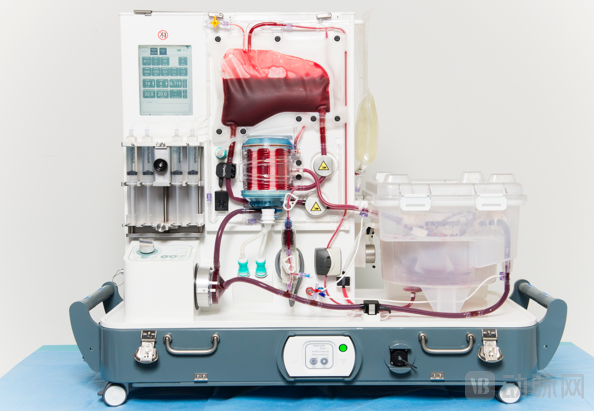 Metra. Image source: OrganOx official website
In 2016 and 2021, Metra received CE certification and FDA approval, respectively, for the preservation and transportation of donor livers.With the support of Metra, more than 2,500 liver transplant surgeries have been successfully performed in Europe, the United States, and Australia. Currently, OrganOx’s kidney perfusion device is undergoing clinical trials in humans.
OrganOx, an innovative medical company spun out of the University of Oxford in 2008. The team behind it has played an instrumental role in advancing NMP technology from theoretical concepts to clinical trials and ultimately to clinical application.
Peter Friend serves as Co-founder and Chief Medical Officer of OrganOx, where he is responsible for driving the implementation of OrganOx’s preclinical and clinical programs. He is also the Director of the Oxford Transplant Centre, overseeing kidney, small bowel, and pancreas transplantation programs. Early in his career, he served as Clinical Director at the Addenbrooke’s Hospital Transplant Unit in Cambridge and held a visiting appointment as Assistant Professor of Surgery at Indiana University School of Medicine in the United States. Peter’s research primarily focuses on novel applications of normothermic machine perfusion (NMP), including ex situ preservation and pre-transplant preservation and repair. He has published more than 25 papers on topics such as clinical transplantation, immunosuppression, xenotransplantation, and liver perfusion.
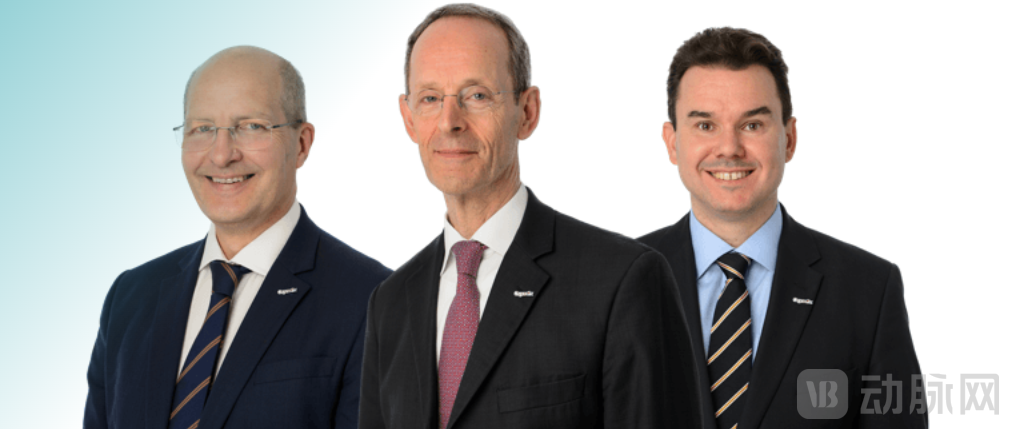 From left to right: Craig Marshall, Peter Friend, Constantin Coussios
The other co-founder is Constantin Coussios, who serves as the Chief Technology Officer of OrganOx. Constantin is also a Professor of Biomedical Engineering and Director of the Institute of Biomedical Engineering at the University of Oxford. His research interests include normothermic machine perfusion (NMP), drug delivery, and therapeutic ultrasound. The NMP technology developed by OrganOx was jointly created by Constantin and Peter’s team, representing the culmination of more than two decades of their research efforts.
Craig Marshall joined OrganOx as Chief Executive Officer in 2016. Craig holds a bachelor’s degree from the University of Liverpool and an MBA from Warwick Business School. Prior to joining OrganOx, he served as General Manager at Siemens Magnet Technology, where he was involved in the research and development of Siemens’ 7T magnetic resonance system, MAGNETOM Terra. Craig has also held positions at Oxford Instruments, GE, and Amersham, accumulating extensive experience in team management.
According to relevant data from the National Health Commission, currently,The number of voluntary registrants for organ donation in China has exceeded 6.26 million, with the total number of donated organs surpassing 139,700. The organ donation rate per million population (PMP) increased from 2.01 in 2015 to 3.98 in 2022.. However, a certain gap remains compared with international advanced standards, and the contradiction between the unbalanced and inadequate development of organ donation and transplantation services and the public’s demand for transplantation services persists.
China attaches great importance to the cause of organ donation and transplantation, and has made many efforts to promote its development.
In terms of policies and regulations, the "Regulations on Human Organ Transplantation" promulgated in 2007 clearly defined the legal responsibilities of all parties involved in organ donation and transplantation. The implementation of the "Eighth Amendment to the Criminal Law" in 2011 and the "Civil Code" in 2021 further clarified the requirement for informed consent in organ donation and strictly prohibited the trading of organs. Subsequently, China has successively issued relevant documents on the management of organ transplantation, clarifying and refining the administration of various stages of human organ donation and transplantation.
In terms of technological development,In August 2017, the world’s first “ischemia-free” human liver transplantation was performed at the First Affiliated Hospital of Sun Yat-sen University. This was followed by ischemia-free kidney transplantation in 2019, ischemia-free heart transplantation in 2021, and beating-heart transplantation in 2023.; In July this year, the Editorial Committee of the "Guidelines for Clinical Application of Innovative Technologies in Organ Transplantation by The Transplantation Society" and the Organ Transplant Center of the First Affiliated Hospital of Sun Yat-sen University announced,Incorporating China’s “Ischemia-Free” Organ Transplantation Technology into the World Guidelines for Organ Transplantation, further global promotion.
Currently, there are few companies in China that have established a presence in the organ transplantation sector. Most enterprises are still focused on developing technologies and products related to Static Cold Storage (SCS), such as storage containers and organ preservation solutions. In the field of organ preservation, Jian Geng Medical’s Hypothermic Machine Perfusion (HMP) product, LifePort, has obtained registration certification from the National Medical Products Administration (NMPA), while Qidian Medical’s Normothermic Machine Perfusion (NMP) product has entered the “Green Channel” for innovative medical devices.
References:
[1]Nasralla, D., Coussios, C.C., Mergental, H. et al. A randomized trial of normothermic preservation in liver transplantation. Nature 557, 50–56 (2018).