

How Allgenesis Bio Achieved Over 99% Overseas Revenue: Global Strategy and Product Portfolio

Orient Gene
In Vitro Diagnostic Reagent Developer, Manufacturer, and Distributor
Editor’s Note: The urgency and necessity of global expansion have become a consensus among medical device companies and innovative pharmaceutical firms. However, achieving tangible success in overseas markets remains a formidable challenge. VCBeat has launched a special series on global expansion, analyzing the strategies and methodologies employed by leading enterprises, with the aim of providing valuable insights to the industry. The focus of this article—Orient Gene。
According to the 2022 annual report released by Zhejiang Orient Gene Biotech Co., Ltd. (Orient Gene, 688298.SH), the company’s total revenue in 2022 amounted to RMB 8.74 billion, of which overseas revenue reached RMB 5.746 billion, accounting for approximately 65.75%. In the six years prior, this proportion had remained above 94%, peaking at 99.38% in 2021.
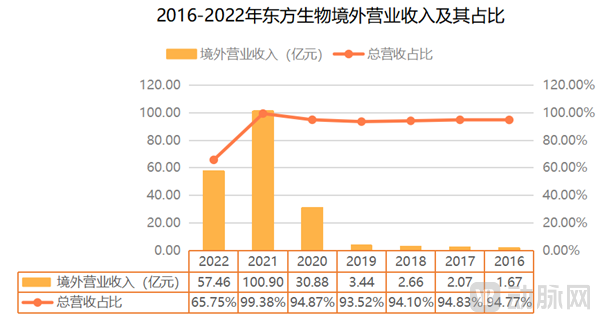
Data Source: Prospectus and Annual Reports; Chart by VCBeat
Although the proportion of overseas revenue has declined, how is Orient Gene monitoring global market dynamics and selecting the most suitable products for entering international markets amid an increasingly complex geopolitical landscape? Furthermore, how is the company further earning the trust of foreign markets and enterprises to achieve deep cooperation and expand its competitive advantages?
We hope to derive some key insights from the study.
The founders of Orient Gene deserve primary credit for the company’s current achievements.
Founder Fang Bingliang’s overseas business journey began with a major historical turning point prior to the Reform and Opening-up—the restoration of the national college entrance examination (Gaokao) in 1977.
The year after the restoration of the National College Entrance Examination, Fang Bingliang was successfully admitted to Zhejiang Medical University (now the School of Medicine, Zhejiang University). After graduation, he chose to pursue further studies.Earned a Master’s degree from the Department of Pediatrics and Genetic Medicine at Peking Union Medical College and the Chinese Academy of Medical Sciences, and later obtained a Ph.D. in Human Genetics from the University of Hamburg in Germany.
This overseas study experience also became a major turning point in his life and at Orient Gene.
Upon completing his studies, Fang Bingliang chose to return to China first, andAssociate Professor, Department of Genetic Medicine, Peking Union Medical College & Chinese Academy of Medical Sciencesposition. Now, thirty years have swiftly passed,Bingliang Fang currently serves as Professor in the Departments of Thoracic and Cardiovascular Surgery at The University of Texas MD Anderson Cancer Center, and as Director of the W.M. Keck Center for Cancer Gene Therapy.
In 2005, Fang Bingliang registered and established a wholly foreign-owned enterprise in China—Zhejiang Orient Gene Biotech Co., Ltd.—which was the predecessor of Orient Gene.
Fang Bingliang’s deep industry background and extensive professional experience in the United States may well have been the key to Orient Gene’s early success in breaking into international markets.However, during the company’s 18-year development journey, one particular year stands out as especially significant: 2020. It was an extraordinary year for Orient Gene, and even more so for the IVD industry in China and around the world.
That year, Orient Gene not only successfully listed on the STAR Market but also seized the industry’s explosive growth trend at the onset of the 2020 pandemic, maintaining this advantage to the present day.
Qualitative breakthroughs require quantitative accumulation. So, between the beginning and end of the two important milestones in 1977 and 2020, what global layout ideas and development strategies does Orient Gene embody?
By conducting an in-depth analysis of Orient Gene’s 2020 prospectus and its annual reports and other announcements from 2020 to 2022, VCBeat has categorized the company’s overseas market strategy into the following four key areas:
Establish Three Overseas Platforms to Build “Localization” Advantages
According to Grand View Research, the global in vitro diagnostics (IVD) market is projected to reach $105.3 billion in 2024, with developed economies such as the United States, Western Europe, and Japan collectively accounting for 74% of the IVD market.
Based on considerations of market size and development prospects, Orient Gene has successively established operations in mainstream IVD consumer markets such as Europe and the United States since its inception.Overseas R&D, Production, and Sales Base, such asHealgen Scientific LLC (“Healgen”), Healstone Biotech Inc., and Accubio Ltd.。
The distributed layout of these three overseas platforms holds significant strategic importance for the long-term development of Orient Gene,It has truly achieved the goals of globalized R&D, localized production and sales support, and service delivery, thereby mitigating international political and economic trade risks and realizing genuine “localization.” This has also made a significant contribution to the substantial growth in Orient Gene’s overseas performance over the past three years.
In addition to its “Great Frontline” strategic layout, Orient Gene has also established platforms and teams within China to provide support. The company has set up Amazon platforms in Shenzhen, Shanghai, and Nanjing, respectively, and formed domestic overseas sales teams to follow up, continuously exploring localized operations in overseas markets.
According to the 2022 annual report,Orient Gene's products have been exported to more than 120 countries and regions across North America, Asia, Africa, Europe, South America, and Oceania.
Distributor-led, supplemented by direct sales and ODM; the top five customers account for approximately 70% of sales.
From a market strategy perspective, Orient Gene has adopted a business model centered on distribution, supplemented by direct sales and ODM, tailored to the characteristics of overseas markets. The company primarily distributes and sells directly in overseas markets under its own brands, such as “Orient Gene” and “USA Hengjian,” while engaging in exclusive collaborations with major international IVD companies through ODM arrangements.
Distributorship is primarily conducted through large local distributors of in vitro diagnostic (IVD) products overseas.. such as Fortune 500 company McKesson, Pakistan’s large medical device enterprise Shams Scientific Traders, Indonesia’s large medical device enterprise PT. Bintang MONO Indonesia, and global pharmaceutical solutions provider Tanner Pharma.
According to the 2022 annual report,Hengjian US is responsible for sales in major international markets, including the Americas and Europe, through a distribution model. In 2022, it generated revenue of RMB 4.594 billion, accounting for more than half of the company’s total revenue.。
Under the distribution partnership model, Orient Gene completes its business process upon selling products to distributors, assuming no responsibility for downstream channel development or end-consumer maintenance.Significantly reduced the company's operational and sales costs.However, this inevitably comes at the cost of sacrificing a certain amount of profit.
In this regard, Orient Gene also covers many direct-sales end customers, such as Walmart, the world's largest supermarket chain, and Dollar Tree, a Fortune 500 company.
Leveraging its proprietary technological and product foundations, Orient Gene has also successfully penetrated overseas markets through its design and manufacturing capabilities.ODM is one of the key growth drivers for Orient Gene to achieve rapid and sustainable development of its overseas business revenue.
Taking the proprietary brand “US Health Balance” as an example, the company was virtually unknown when it was founded in 2007. To expand its market presence as quickly as possible, Fang Bingliang and his team traveled extensively to trade shows in the United States, Germany, Singapore, Vietnam, and other countries, striving to engage closely with customers, cultivate client relationships, and build brand awareness.
In addition, the company adjusted and rebranded “American Hengjian” for the international market, aligning its product design with international competitors, ultimately developing its own proprietary rapid diagnostic products. Since 2010, American Hengjian has been gradually accepting orders.
As Hengjian’s brand value in the United States continued to mature, it was designated at the end of 2021 as an authorized supplier for Siemens Healthineers’ CLINITEST COVID-19 Antigen Self-Test, which had received Emergency Use Authorization (EUA) from the U.S. FDA.
Through its ODM manufacturing model, Orient Gene has not only deepened its business collaboration with Siemens Healthineers, one of the global “Big Four” in the IVD industry, but also enhanced the influence and visibility of its products within the global IVD sector, further expanding its reach in international markets and reinforcing its competitive strength amid an increasingly fragmented industrial landscape.
The 2022 annual report shows that,Orient Gene’s top five customers accounted for RMB 6.111 billion in sales, representing approximately 70% of its total annual sales revenue.The foundation of our overseas key accounts remains stable and robust.
R&D Investment Increases 20-Fold in Three Years, with Overseas Certifications Accounting for 90%
From the perspective of technological innovation, the aforementioned market and customer relationships are fundamentally built upon Orient Gene’s robust product capabilities.From 2020 to 2022, Orient Gene cumulatively added R&D investment of RMB 1.034 billion, whereas during the three-year reporting period prior to its IPO, this figure was less than RMB 50 million.
The exponential rise in R&D investment is also directly reflected in the company’s patent portfolio and the number of product approvals.
Over the past three years, Orient Gene has cumulatively added 190 authorized patents and software copyrights, including 73 domestic and 115 overseas patents, as well as 2 software copyrights; among these, 13 are invention patents. The company has also obtained 514 new medical device product certifications, comprising 446 international certifications and 68 domestic certifications.
"As of the release of its 2022 annual report, Orient Gene had accumulated a total of 545 authorized patents and 1,148 medical device certifications for products in domestic and international markets, with over 90% of these patents and certifications filed by its overseas subsidiaries."
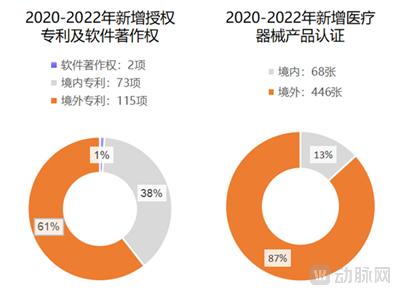
Orient Gene: Number and Proportion of Domestic and International Patents and Certifications
Data Source: Company’s 2022 Annual Report, Chart by VCBeat
As a listed company specializing in the research and development, production, and sales of in vitro diagnostic (IVD) products, Orient Gene has built a portfolio of over a thousand products. Its offerings are primarily structured around several key platforms: biological raw materials, point-of-care testing (POCT), molecular diagnostics, liquid biochips, biochemical diagnostics, and third-party testing services. The company boasts a comprehensive industry chain layout that spans from biological raw materials to diagnostic reagents and diagnostic equipment.
From upstream biological raw materials to downstream independent testing laboratories, covering the entire industry chain
Global supply chains are facing severe challenges from the combined impact of the COVID-19 pandemic and trade protectionism. “Focusing on IVD and improving industrial chain layout” is also Orient Gene’s first five-year plan after its listing. What advantages does Orient Gene have in this regard?
Since the second quarter of 2022, Orient Gene, like most IVD companies, has faced a dual decline in revenue and net profit. In the face of an inevitable downturn in profitability, Orient Gene has actively expanded its non-COVID-19 businesses to identify new growth drivers. The company proposed“Upgrading from a ‘diagnostic reagent and equipment provider’ to a full-industry-chain layout encompassing ‘biological raw materials, diagnostic reagents, and equipment provider’ plus ‘third-party independent testing laboratory’”development strategy.
First, independently develop upstream raw materials to ensure the supply of high-quality products and ingredients for the company.
Specifically, Orient Gene’s two R&D subsidiaries—Hengtong Canada and Qingdao Handison—adopt a full-industry-chain model in their research and development efforts. They concentrate their competitive advantages on the R&D of reagent raw materials, production and processing, as well as rapid response in developing and manufacturing new products to adapt to market changes. By timely developing the latest biological raw materials for drug testing, they continuously iterate products and expand their product lines, thereby reducing external dependence on core raw materials.
Secondly, automated and intelligent production lines are introduced, with four major technology platforms developing in parallel.
At the midstream level, Orient Gene operates four diagnostic platforms, namelyImmunodiagnostic Platform (Colloidal Gold, Fluorescent Immunoassay, Enzyme-Linked Immunosorbent Assay), Molecular Diagnostic Platform (PCR Nucleic Acid Testing + FISH Fluorescence In Situ Hybridization), Liquid Biochip Platform, Biochemical Diagnostic PlatformRelated diagnostic reagents and supporting diagnostic instruments.
In addition, Orient Gene alsoHouston, USA; Scotland, UKEstablishing overseas production and R&D bases not only deepens cooperation with local enterprises and contributes to local healthcare infrastructure development, but also enables the bases’ products to be sold across Europe, the United States, and worldwide.
Finally, actively advance the “sales end + application end” strategy to extend the layout across the entire industry chain.
In addition to the aforementioned efforts to drive sales, Orient Gene is also actively expanding into the application sector. During its 2022 semi-annual earnings briefing, the company announced the official commencement of operations at Shanghai Wanzijian Clinical Medical Testing Laboratory. This project aims to establish the Wanzijian Medical Group,Build an integrated business model encompassing third-party medical testing, forensic testing and appraisal, environmental (wastewater) testing, and CRO services; strengthen resource integration, leverage existing business lines and products to serve strategic clients, and achieve global expansion.
For companies expanding overseas, in addition to strengthening their core competencies, they can further increase their overseas market share through external expansion strategies such as acquisitions,Rapid ImprovementThe company's business scale and core capabilities are also crucial.
Take Mindray Medical, which was ranked first in the “China Medical Device Enterprises’ Overseas Expansion Value Index,” as an example. In late July 2023, Mindray Medical completed another international acquisition. This transaction was aimed at further enhancing its overseas supply chain platform. The company acquired a 75% equity stake in DiaSys Diagnostic Systems GmbH, held by Gorka Holding GmbH, in cash, with an acquisition valuation of approximately €115 million.
Not coincidentally, industry “pioneers” have almost universally opted for M&A to achieve business complementarity and break through to a larger, more high-end customer base. Orient Gene, an export-oriented enterprise with a full industrial chain in POCT, is no exception.
In 2022, Aikobiotech completed the acquisition of the production lines and technology from the UK-based company OMEGA, thereby securing the only HIV semi-quantitative CD4 assay product with WHO prequalification.; By acquiring a controlling stake in Beijing Emerging Sihuan, the Company added enzyme-linked immunosorbent assay (ELISA) technology and related products, and expanded its colloidal gold product portfolio, including diagnostic reagents for norovirus, Epstein-Barr virus (EBV), respiratory syncytial virus (RSV), mumps virus, human parvovirus, and hantavirus.
Beyond its portfolio coverage, Orient Gene is also making a strong push into the forefront of fourth-generation diagnostic technology—the liquid biochip detection system. According to its 2022 annual report, the company has achieved a globally leading position in the field of liquid biochips. Moreover, compared with liquid biochips developed by top global enterprises, Orient Gene’s innovative products offer lower prices and superior performance.
Furthermore, Orient Gene acquired fluorescent nanocrystal-coded microsphere technology through the external procurement of proprietary technologies combined with subsequent independent research and development.Fluorescently encoded microspheres are a type of composite functional microsphere. Their primary application currently lies in the field of multiplex detection using liquid biochips, helping to avoid reliance on critical technologies and raw materials that could hinder commercialization.
Currently, there are no liquid biochip detection systems and products independently developed in China. The completion of this platform will fill the gap in this technological field in China, break the monopoly of foreign technologies, and form technical advantages for product competition and substitution.
As the pandemic tide recedes, many companies have faded from the spotlight. Among them, Lucira Health, a star U.S. manufacturer of COVID-19 testing kits, has drawn particular attention. The company launched the first FDA-approved at-home self-test kit for COVID-19 in November 2020. However, in February 2023, Lucira Health filed for bankruptcy protection, bringing an end to the windfall profits generated by its COVID-19 self-test kits.
Homogenized products and those reliant on the dividends of the era are destined toVitalityShort-lived. Lucira Health filed for bankruptcy precisely because of its narrow product line and market dependence—relying solely on U.S. government orders for COVID-19 test kits. Therefore, as demand and prices for COVID-19 testing reagents return to rational levels, how should IVD companies that experienced explosive growth during the pandemic maintain their competitive edge and safeguard market share? How can they continue to meet international customer needs and stabilize corporate performance?
As early as 2022, Orient Gene had already formally addressed the aforementioned challenges and divided its post-pandemic development strategy into two segments, namely“Promote the layout of core markets both domestically and internationally, with a focus on achieving breakthroughs in the domestic market”。
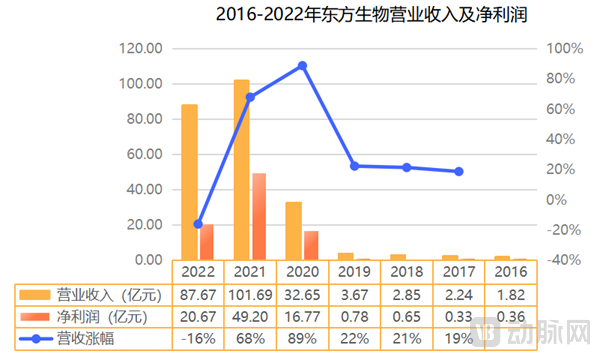
Data Source: Prospectus and Annual Reports; Chart by VCBeat
As mentioned at the beginning, Orient Gene has prioritized its strategic layout and re-entry into the Chinese market since March 2022, achieving significant breakthroughs.In 2022, the company's domestic revenue accounted for approximately 35%.
In July 2023, Shanghai Wanzijian Biotechnology, a wholly-owned subsidiary of Orient Gene, obtained the medical device registration certificate for Carcinoembryonic Antigen (CEA), Neuron-Specific Enolase (NSE), and Cytokeratin 19 Fragment (CYFRA 21-1) Detection Kits (Flow Fluorescence Immunoassay).
Some products in the liquid biochip series have already been filed with the European Union, while the product approved this time is the first in the series to obtain a domestic registration certificate. In this field, Orient Gene has made systematic arrangements from raw materials to reagents and instruments, possessing full independent intellectual property rights.
However, as it pushed forward with upgrades, Orient Gene saw a series of resignations among its core personnel. On May 31, Orient Gene announced that Guo Xingzhong, the company’s core technical staff member, had recently resigned. During his tenure, Mr. Guo was primarily responsible for the research and development and industrialization of molecular diagnostic reagents. On August 8, Orient Gene further announced the resignation of Guo Kaijun, its Securities Affairs Representative.
Furthermore, Orient Gene disclosed in its “Announcement on the Reply to the Shanghai Stock Exchange’s Inquiry Letter Regarding Information Disclosure Supervision of the Company’s 2022 Annual Report,” released in June 2023, thatIn the first quarter of 2023, the company's revenue was RMB 376 million, a year-on-year decrease of 92.08%; the net profit attributable to shareholders of the parent company was a loss of RMB 50.3301 million, a year-on-year decrease of 102.44%.
The peak has passed, yet liquid biochips have not yet come into their own. How can Orient Gene, facing a transitional gap, swiftly advance the regulatory approval and market launch of its liquid biochip product series? And how can it break into the heavily fortified overseas liquid biochip market, as it did in its early days, to compete on equal footing with industry giants Thermo Fisher, Agilent, and Illumina? Only time and the global market will provide the answer.
References:
1. IVD Listed Companies Go Global: Gold Rush or Ordeal? - VCBeat
2. Orient Gene: Polishing the “Chinese Name Card” of In Vitro Diagnostic Products - Shanghai Securities News