Getting Ahead in BD Deals: Decoding Biotech's Proactive Business Development Strategies
Jumpcan
Developer and Manufacturer of Chinese and Western Medicine and Health Products

Johnson Matthey Medical
--

MediLink
Antibody-Drug Conjugates Developer

On August 10, 2023, VCBeat New Medicine, in collaboration with the Bohe Innovation Center, hosted the themed event “How to Stay One Step Ahead in BD Deals? Decoding Biotech’s Proactive BD Strategies” at the Mint Café on the first floor of the Bohe Innovation Center in Suzhou Industrial Park. This offline event was organized byWu Chao, General Manager of VCBeat New MedicineHost, InviteJumpcan Vice General Manager Zhang Xieyi、Xiao Liang, Co-founder of MediLink、Senior Director, Business Development, Johnson & Johnson: Yu Yinghui、Yang Shujun, Investment Director at Legend Capital、Zheng Fan, Managing Partner at YAFO CapitalFive guests will deliver keynote speeches and participate in interactive discussions.

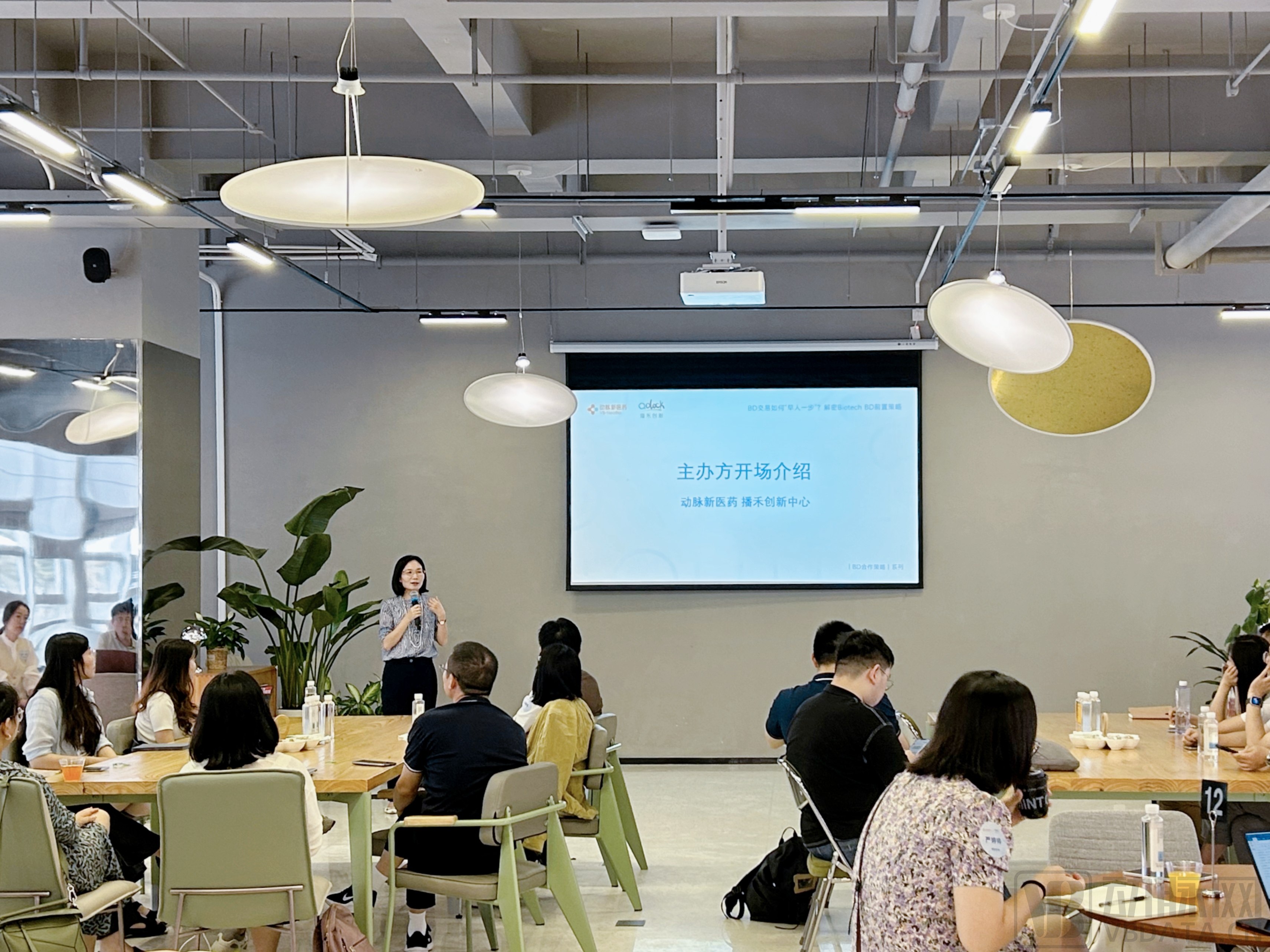
Le Xiaotong, General Manager of Bohe Innovation CenterIntroducing Bohe’s role as an incubation platform, serving as a hub for information exchange and sustained connectivity. In light of the current business development (BD) landscape and ongoing engagements with major companies, this event aims to facilitate future BD transactions between biotech firms and pharmaceutical companies.
■ Zheng Fan, Managing Partner of YAFO CapitalPresenting [Analysis of H1 BD Transaction Trends and Sharing of Cross-Border Transaction Experience], which shared data on the global expansion of Chinese innovative drugs from 2018 to H1 2023. With the enhancement of pharmaceutical companies' R&D capabilities and the gradual internationalization of drug regulatory standards, going global has become a consensus among enterprises. Adjustments in industrial structure and changes in the competitive landscape have also marked the formal entry of Chinese innovative drug companies into the second phase of global expansion.
Zheng Fan Outlines a Guide to Avoiding Pitfalls in BD Deals from Five Perspectives:
Large multinational pharmaceutical companies are not necessarily the best choice: When deciding on overseas licensing, it is essential to first determine the transaction strategy; the selection of counterparties and cooperation models is also crucial.
Patent Protection: Plan Before Acting, Agree in Advance: The high complexity of patent rules brings multi-dimensional high risks; conducting infringement risk assessments in advance is essential to avoid litigation; strengthening patent protection can deter competitors who are eagerly watching for opportunities.
Maintain sufficient control over product registration activities in various overseas regions: Maintain at least control over the partner's work during the Investigational New Drug (IND) application phase in their responsible region, and strive to obtain the right to review IND application materials as well as veto power.
“Non-"Non-Compete" Clause: Clauses that restrict partners in various regions from selling potentially competing products are particularly important for products nearing commercialization. They can prevent partners from selling competing products, which could negatively impact the sales of one's own products, and avoid the leakage of trade secrets.
Pitfalls in Cross-Border Transactions: Present Both Before and After the Deal, Requiring Proactive Mitigation Through Careful Drafting of Transaction Terms: In the event of a change in control or termination of further development of the licensed product due to insufficient funding, it is particularly important to determine how to resolve and handle compensation matters.
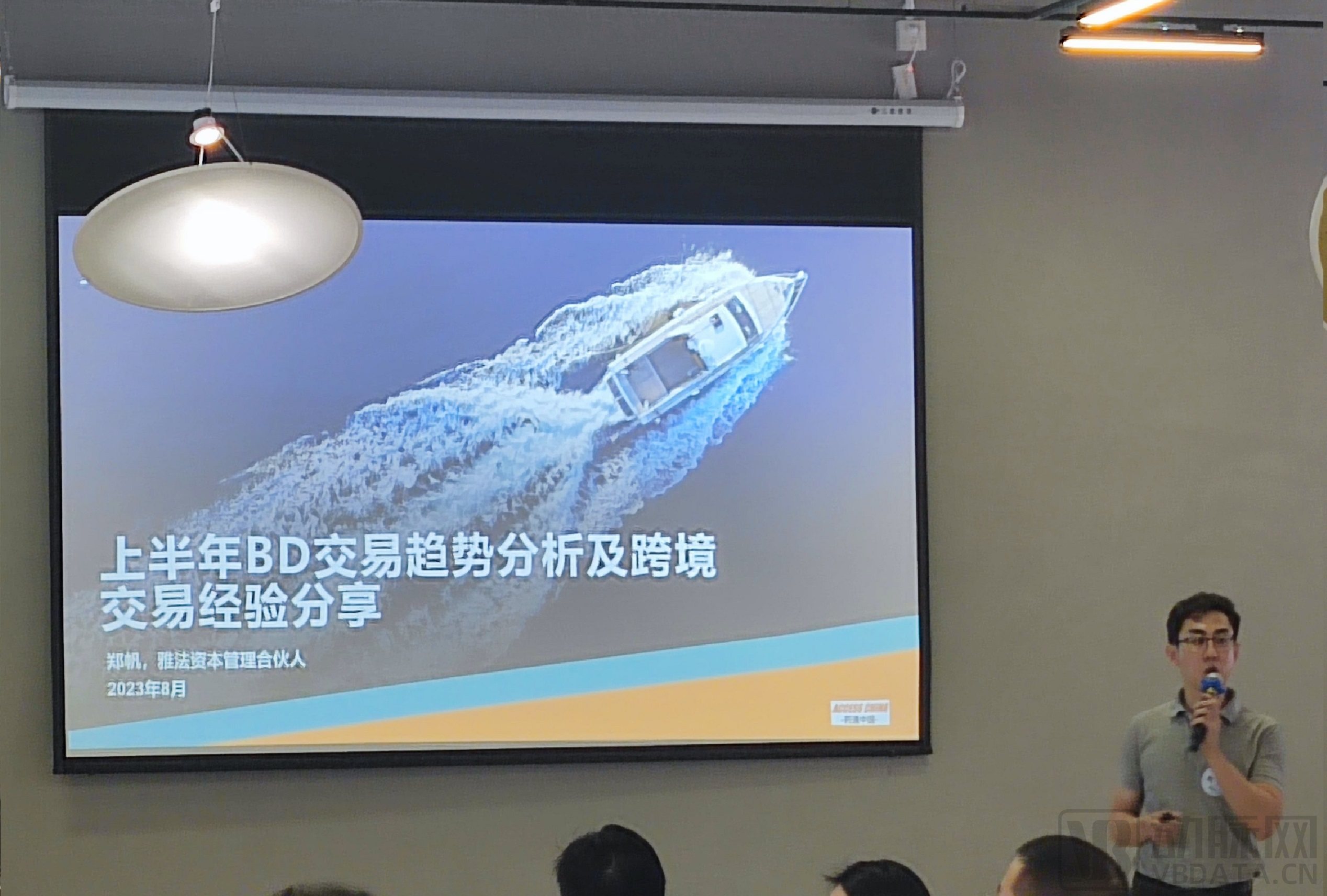
▲ Zheng Fan, Managing Partner at YAFO Capital
Following the presentations, the moderator invited four guests to the stage—Zhang Xieyi, Deputy General Manager of Jumpcan; Xiao Liang, Co-founder of MediLink; Yu Yinghui, Senior Director of Business Development at Johnson & Johnson; and Yang Shujun, Investment Director at Legend Capital—to introduce themselves and kick off the panel discussion. Drawing on perspectives from both buy-side and sell-side biotechs, local pharmaceutical companies, multinational corporations (MNCs), and investment institutions, the panelists provided a multi-faceted analysis of key considerations and pitfalls to avoid during the pre-, mid-, and post-stages of business development (BD) transactions.
■ Buyer's Perspective,Jumpcan Vice General Manager Zhang XieyiIndicates:As a traditional pharmaceutical company, Jumpcan has been actively pursuing innovation through business development (BD) and R&D in recent years, with BD serving as a critical pillar of its current transformation strategy. In the early stages of BD transactions, it is essential to define a clear strategy: internally, by understanding our strengths in therapeutic areas and marketing capabilities; externally, by monitoring hotspots in disease-focused R&D, unmet clinical needs, and the competitive landscape. Furthermore, active participation in global academic and industry conferences helps us stay abreast of industry trends, refine our project evaluation and understanding, identify potential market opportunities, and initiate proactive outreach. During the BD project progression, we leverage various opportunities to facilitate communication and exchange between functional teams from both companies. This not only builds mutual trust and lays the foundation for long-term collaboration but also fosters internal synergy to drive project advancement. Post-signing, in-depth communication with partners and effective alliance management are crucial to fully leverage internal and external resources and ensure successful commercialization. Our focus varies depending on the project stage: for late-stage clinical projects, or those priced based on late-stage milestones, we place particular emphasis on the certainty of technology, market potential, and intellectual property (IP); whereas for early-stage projects, we are willing to assume certain technical risks in exchange for greater potential market value.
■ MediLink Co-founder Xiao LiangIndicates:As an innovative technology platform company, we have the potential to leverage diverse targets to generate a broader product pipeline, yet our energy and resources are limited. Therefore, through external collaborations, we aim to continuously refine and validate our proprietary technology platform on one hand, while jointly striving to generate robust product data and explore greater possibilities on the other. Currently, we are engaging with various partners, including multinational corporations (MNCs), pharmaceutical companies, and biotech firms.
Partner selection strategies vary depending on the specific therapeutic targets; however, the primary consideration remains whether the potential partner is willing to commit the necessary capabilities and resources to drive product commercialization while maximizing the company’s interests. Additionally, it is crucial to seek partners with complementary strengths. For instance, as our upcoming strategy focuses on building overseas product development capabilities, we aim to identify partners proficient in this area. To maintain strong collaborative relationships, we recommend maintaining close and comprehensive communication prior to finalizing any agreement. Many aspects of the relationship and mutual understanding are gradually established through dialogue, including shared insights into product technology and data, which implicitly foster recognition and appreciation of the company’s overall capabilities. Furthermore, active participation in industry events and face-to-face interactions is encouraged, as in-person meetings significantly enhance mutual understanding.
■As an investor,Yang Shujun, Investment Director at Legend CapitalIt is pointed out that:While the capital market is in a downturn, the innovative drug industry continues to trend upward. This is evident from the increasing number of projects licensed by multinational corporations (MNCs) with substantial upfront payments. We believe that more domestic innovative pharmaceutical companies will enter the U.S. market through various channels in the future. Therefore, we will continue to actively seek investment opportunities in biotech firms, albeit with higher standards. We primarily focus on two types of companies: one type possesses strong local commercialization capabilities and efficiently develops innovative drugs affordable to the Chinese population, representing investment opportunities mainly in the secondary market; the other type ranks among the top three globally in terms of speed and quality for specific niche targets, holds global patents, and has the capability to enter mainstream global new drug markets.
Business development (BD) is critical to the growth of biotech companies. For early-stage, technology-platform companies, domestic and international BD collaborations help validate their platforms; for instance, Sinocelltech, an mRNA company in our portfolio, has partnered with BeiGene in the field of tumor immunology. For pipeline-driven companies, BD partnerships enable complementary strengths; for example, LinkHealth Pharmaceuticals, another portfolio company, possesses deep expertise in the JAK target but has chosen to collaborate with Simcere Pharmaceutical for commercialization.
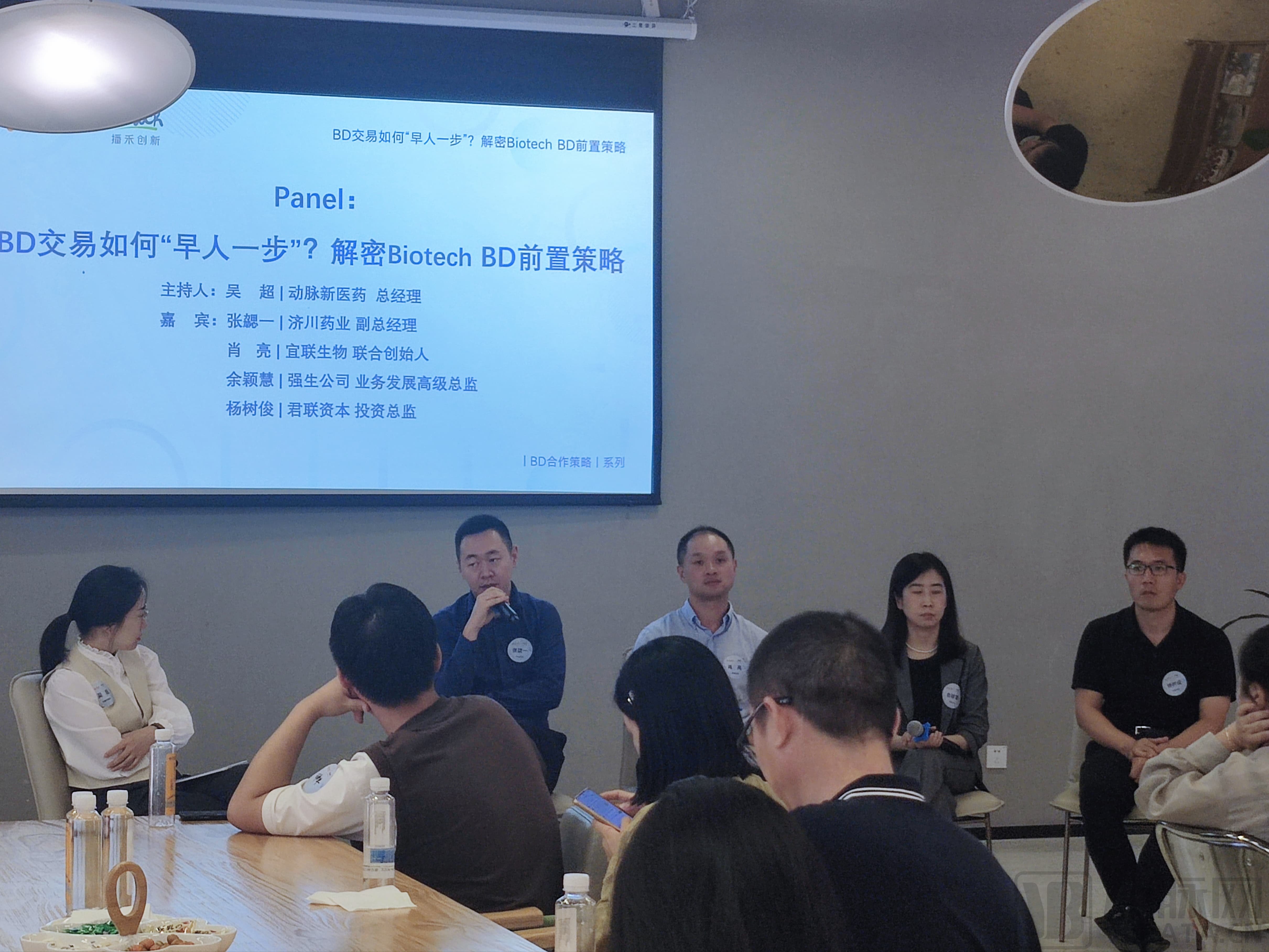
▲Panel Discussion: From left to right: Wu Chao, Zhang Xieyi, Xiao Liang, Yu Yinghui, Yang Shujun
Following the panel discussion, attendees engaged in lively exchanges based on the insights shared by the guests, fostering a vibrant atmosphere of communication. It is hoped that this multi-perspective analysis of business development (BD) cooperation strategies will provide valuable experiential references for enterprises and institutions currently seeking partnerships, thereby further advancing the development of front-loaded BD strategies in the biotech sector.