

Biotree Biosciences Files for IPO: Powered by Mass Spectrometry Innovation and Strategic Backing from Qiming Venture Partners and KingMed Diagnostics
In 2012, three college classmates from Sichuan University who shared a dormitory room embarked on an entrepreneurial venture at the Fudan Science and Technology Park in Yangpu District, Shanghai. With just three people, four workstations, one printer, and one telephone, and paying a monthly rent of RMB 1,200, they established Aiqu Biology (the predecessor of Biotree Biology), marking the beginning of their story.
Initially, the three founders were unclear about the company’s specific direction, driven solely by their passion. Their first project, which focused on developing colloidal gold test strips for disease diagnosis, was quickly abandoned due to the excessive resource investment required. They then shifted their focus to building a comprehensive platform for scientific research services, but this initiative ultimately fizzled out due to insufficient capabilities and a lack of strategic focus. Finally, they settled on the highly specialized niche of metabolomics testing services.
It took Aiqu Bio nearly five years to grow its revenue from zero to RMB 10 million after defining its entrepreneurial direction in 2012. In its early stages, the company devoted substantial time to market education and user cultivation, ushering in a period of rapid industry growth in 2016.
In 2015, President Obama proposed the “Precision Medicine Initiative” in his State of the Union address, calling for increased funding for medical research in the United States to develop individualized treatment plans for cancer and other disease patients based on their genetic information. In 2016, the Ministry of Science and Technology convened China’s first national expert meeting on precision medicine strategy, unveiling the Chinese Precision Medicine Plan. The meeting announced that China would invest RMB 60 billion in the field of precision medicine by 2030.
With the advent of precision medicine, metabolomics has entered a golden age of development. In 2016, Zion Research published a report stating that the global metabolomics market was projected to surge from $675 million in 2015 to $2.5 billion in 2021.
At this juncture, Aiqu Biological Laboratory expanded its facilities in the Shanghai Jiading Industrial Park. The company began promoting the brand of its parent company, Shanghai Biotree BIOTECH Co., Ltd. (hereinafter referred to as “Biotree Biotech”), ushering in a five-year period of rapid growth during which annual revenue surged from RMB 10 million to RMB 100 million.
Currently, Biotree focuses on the application of innovative mass spectrometry technologies in the fields of life sciences and medical health. The company’s services cover all of China, with over 200,000 samples tested annually. It serves more than 1,500 clients, including universities, research institutes, hospitals, and enterprises.
At first glance, this appears to be a startup story driven by luck and brute force, akin to an amateurish operation. In reality, to capitalize on the “benefits” of the golden age of metabolomics, Biotree had to first carve out its niche in the field. At that time, North America held a 40% share of the global metabolomics market and dominated the sector, with key players including upstream instrument manufacturers such as Agilent, Bruker, Sciex, Thermo Fisher, and Waters, as well as midstream service providers represented by the U.S.-based Metabolon and Japan’s HMT.
The metabolomics market in the Asia-Pacific region is ripe for development. As co-founder Deng Junliang stated in an interview, “We spent nearly five years educating and cultivating this market, gradually bringing it to fruition.”
Co-founder Deng Junliang jokingly referred to the three members of the founding team as the “Chinese Partners” of the new era in an interview. Over more than a decade of entrepreneurship, the trio has remained like a stable triangle, consistently supporting one another. “I believe our team’s greatest strength lies in the back-to-back trust among the three of us,” he said.
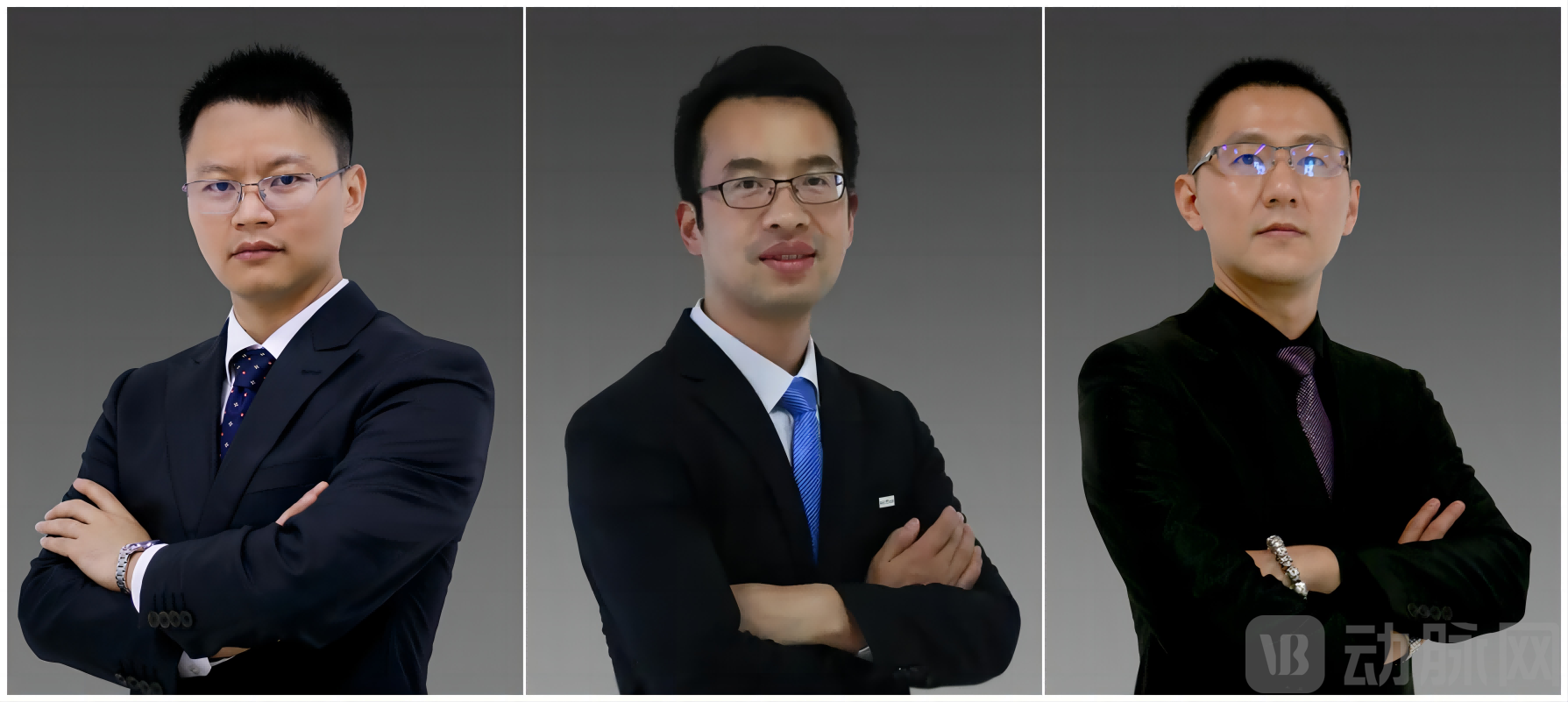
Biotree’s “Chinese Partners”: from left to right, Deng Junliang, Wu Hongqiang, and Lou Geer
The Biology Base Class at Sichuan University was where the three founders first met. Co-founders Lou Ge'er, Wu Hongqiang, and Deng Junliang were not only classmates but also roommates.As a service-oriented company, a stable founding team can bring advantages to it, and the scientific research and industrial experience of the founding team cannot be ignored.
Deng Junliang currently serves as the CEO of Biotree, with over a decade of experience in marketing and management of mass spectrometry testing technology services. He is responsible for corporate strategy, the scientific research service product team, and key account management.He completed his undergraduate studies in the Biology Base Class at Sichuan University and later earned a master’s degree in Chemical Engineering from Fudan University. During his entrepreneurial journey, he was honored with titles such as “2020 Jiading District Young Talent” and “2021 Shanghai Industrial Elite.”
Co-founder Lou Ge'er has a similar resume to Deng Junliang, with a Bachelor's degree from the Biology Base Class at Sichuan University and a Master's degree in Bioengineering from Fudan University.He previously served as a Project Director at a publicly listed company, where he led the R&D and sales team to evolve into a systematic, networked sales organization with nationwide coverage.
Co-founder Wu Hongqiang earned his master’s degree in immunology at the Chinese Academy of Sciences after graduating from the Biology Base Class at Sichuan University.With 11 years of in-depth experience in mass spectrometry analysis, he currently leads product research and development at Biotree.
In its early stages, Shanghai Biotree BIOTECH Co., Ltd. leveraged its self-developed metabolomics platform to provide mass spectrometry detection services to clients across six major sectors: medicine, agriculture and forestry, traditional Chinese medicine, pharmaceuticals, food, and environment.
Metabolomics research services are just the beginning for Biotree.
Driven by customer demand for multi-omics testing and the company’s own growth needs, Shanghai Biotree BIOTECH Co., Ltd. has expanded its service offerings from small-molecule metabolomics to large-molecule proteomics.Over the past decade of development, Biotree has established and refined testing and development platforms encompassing untargeted metabolomics, high-throughput targeted metabolomics, widely targeted metabolomics, lipidomics, metabolic flux analysis, proteomics, and antibody sequencing. Additionally, it has constructed a secondary mass spectral library containing over 20,000 compounds and developed fully automated mass spectrometry detection and analysis methods.
Expanding multi-omics testing services also means that Biotree has opened up a larger market space. Data from China Commercial Intelligence Network shows that the market size of proteomics research services in China grew from 176 million yuan in 2017 to 806 million yuan in 2021, with a compound annual growth rate of 46.3%, and is expected to reach 1.438 billion yuan in 2023.
Leveraging multi-omics, Biotree continues to refine application scenarios within its original six core focus areas and launches more targeted solutions to expand its business. For instance, the medical field is further subdivided into biomarker discovery, molecular subtyping, disease mechanisms, therapeutic response, and prognosis. Different scenarios can be addressed with distinct solutions, each encompassing a range of Biotree’s service offerings.
Deng Junliang further added, “In the field of traditional Chinese medicine (TCM), we can provide comprehensive solutions ranging from ingredient identification of TCM materials and efficacy studies of different processing techniques, to research on blood-absorbed components of TCM, network pharmacology, and target identification. Therefore, I believe that future products will continue to grow exponentially.”
However, Biotree BIOTECH is not content with merely providing scientific research testing services. Shifting its strategic focus downstream, the company has begun to lay out its business in the commercialization of mass spectrometry products (Mass Spectrometry IVD) and mass spectrometry-based research translation services (Mass Spectrometry CDMO).According to Deng Junliang, Biotree has upgraded its development strategy from a pure scientific research service provider to a combined research and translational service company.
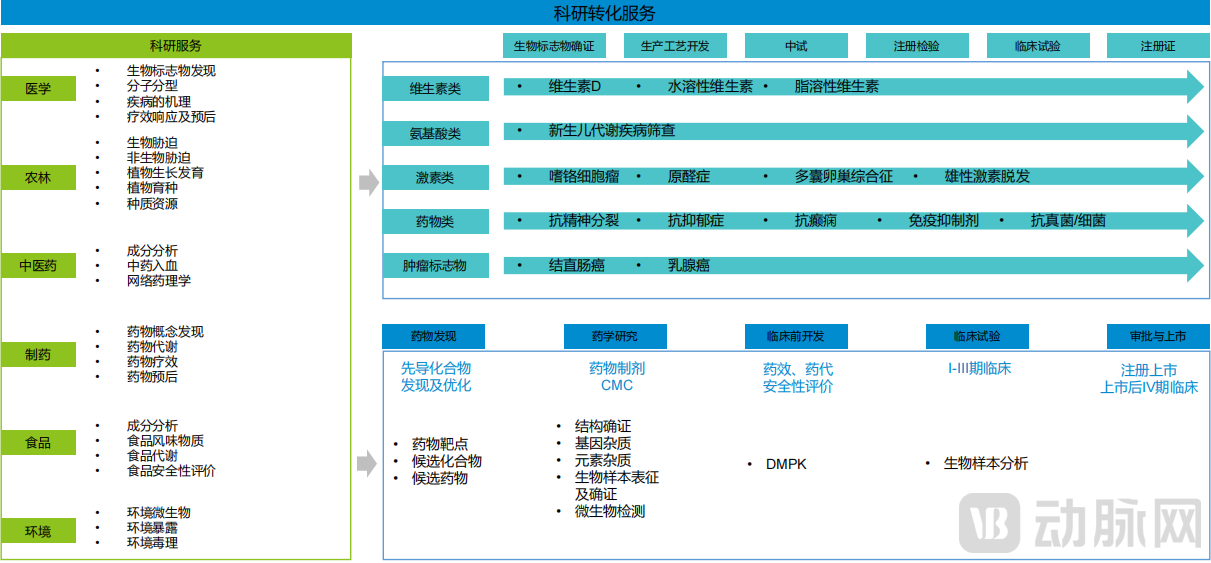
Selected Research Translation Services Provided by Biotree
In the field of in vitro diagnostic (IVD) mass spectrometry products, Biotree has developed more than 20 high-throughput mass spectrometry assay kits. Among these, 16 products—including those for hormones, catecholamines, and therapeutic drug monitoring—have obtained Class I medical device filings, while two domestically pioneering kit products have received Class II medical device registration certificates for clinical use.In mass spectrometry research and commercialization services (mass spectrometry CDMO), Shanghai Biotree BIOTECH Co., Ltd. can undertake CDMO requirements for mass spectrometry products, providing customers with end-to-end services ranging from biomarker discovery and validation, manufacturing process development, to registration testing, regulatory submission, and production. This helps innovative mass spectrometry IVD manufacturers reduce development costs and shorten product time-to-market.
The accumulation of experience and the upgrading of strategy have also enabled Biotree to gain favor from capital investors on multiple occasions.Shanghai Biotree BIOTECH Co., Ltd. has successively secured tens of millions of RMB in Pre-A financing from Guozhong Investment, nearly RMB 100 million in Series A financing led by Qiming Venture Partners, and tens of millions of RMB in Series A+ financing led by KingMed Diagnostics Group and its affiliated fund Kejin Jinyu, with follow-on investment from existing shareholder Qiming Venture Partners.This also means that, supported by ample R&D funding, Biotree BIOTECH can continuously iterate its products and services, thereby establishing a higher-quality development model.
Whether providing scientific research services or translational services, Biotree believes that the core remains two words: service.
Given the high development difficulty and substantial investment costs associated with high-end mass spectrometers, Biotree Biotech initially focused on methodology and software management, enhancing service competitiveness by improving operational efficiency.
Prior to 2020, Biotree BIOTECH launched two data processing platforms: MAPS, a comprehensive solution for metabolomics workflows, and LIMS2, a system built on a SaaS architecture. The former is designed to process raw data, enhancing data output efficiency while accumulating metabolomics-related data. The latter is a laboratory information management system (LIMS) applied to various laboratory testing scenarios, featuring functions such as sample management, consumables management, project management, instrument management, and data management.
Deng Junliang added, “The most critical feature of our MAPS Cloud Platform is the integration of our proprietary metabolomics database into the system. The key distinction between this platform and other commonly available cloud platforms on the market is its ability to process raw data generated by instruments. Supported by our database containing over 20,000 entries, it enables accurate qualitative and quantitative analysis of compounds. In contrast, LIMS2 is primarily designed to help third-party testing laboratories and university research laboratories achieve laboratory informatization, thereby improving operational efficiency and reducing operating costs.”
Furthermore, Biotree possesses a complete process-oriented organizational structure.In the process of serving clients, Shanghai Biotree BIOTECH Co., Ltd. requires that sales personnel, service staff, and laboratory technicians operate within a unified workflow. Under this process-oriented management framework, communication barriers between departments are reduced, thereby naturally enhancing operational efficiency.
In the face of ever-emerging and rapidly evolving scientific research demands, Biotree requires its team members to possess “the core competency of rapidly learning and translating new knowledge and technologies.” Accordingly, Biotree has focused on building its product development team, leveraging Shanghai’s regional talent advantages to attract a large number of specialized R&D professionals in mass spectrometry analysis. Currently, the company employs approximately 250 staff members, with R&D personnel accounting for one-third of the total workforce.The company has developed hundreds of mature methodologies capable of meeting the detection needs for various small-molecule metabolites and large-molecule proteins across multiple fields, including medicine, agriculture and forestry, traditional Chinese medicine, pharmaceuticals, food, and environmental science.
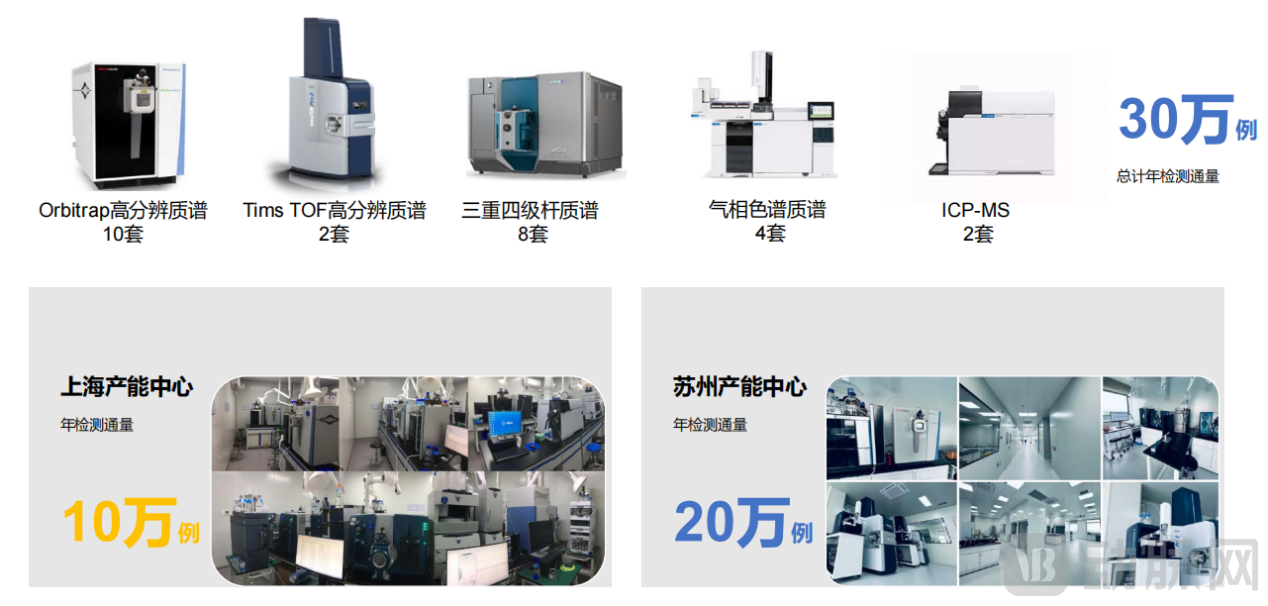
Equipment and Facilities Provided by Biotree
Leveraging its extensive service experience in the industry, Biotree BIOTECH entered into a strategic partnership with KingMed Diagnostics, a leading company in medical testing, in 2022. As a market leader, KingMed Diagnostics boasts resource advantages such as a large platform, extensive network, comprehensive services, vast sample collections, and big data capabilities, while Biotree BIOTECH holds strengths in mass spectrometry products and technical services. Thus, the two parties complemented each other’s needs for mutual benefit. Biotree BIOTECH supported KingMed Diagnostics by rapidly translating its clinical needs into products, while KingMed Diagnostics provided commercial distribution channels for Biotree BIOTECH’s independently developed products.
Partnering with industry leaders is just one component of Biotree’s strategy. Over the next three years, Biotree aims to continue leading product development in the industry, enhance operational efficiency, expand market share, and emerge as a leading enterprise driving high-quality growth in the field of mass spectrometry-based testing.