

Chengdu Medical City Accelerates Construction of ADC and RDC Dual Pillars to Build Specialized Industry Ecosystem
Conjugated drugs have emerged as one of the hottest sectors in the pharmaceutical industry. On July 11, Kelun-Biotech, a company focused on the development of antibody-drug conjugate (ADC) therapeutics, was officially listed on the Hong Kong Stock Exchange.
ADC drugs represent the most rapidly developing and hottest sector within this field. Merck has repeatedly licensed ADC pipelines from Kelun, with total authorization deal amounts reaching $11.8 billion; AstraZeneca acquired CMG901, China’s first CLDN18.2-targeting ADC novel drug, for $1.188 billion; as the globally most commercially successful ADC drug, Roche’s Kadcyla achieved sales of $2.18 billion in 2022.Although China's ADC market started relatively late, an increasing number of pharmaceutical companies have entered the field in recent years, and the market size is projected to reach RMB 68.9 billion by 2030.
Meanwhile, the RDC market is gradually heating up. In recent years, there have been multiple large financing rounds exceeding 100 million yuan in this field, among which Xiantong Medicine’s new financing of over 1.1 billion yuan has become the largest single financing deal in the pharmaceutical and healthcare sector since 2023. Good news has also been emerging from China’s RDC drug development: Grand Pharma’s RDC drug TLX250-CDx, used for diagnosing clear cell renal cell carcinoma, has completed enrollment and dosing of the first patient in its Phase I clinical trial in China; Xiantong Medicine’s lutetium [177Lu] oxodotreotide injection, the first domestic radiopharmaceutical targeting SSTR, is currently advancing through its Phase III clinical trial in China.
With the intensifying aging of China’s population and the rising prevalence of cancer, clinical demand for ADC and RDC drugs will continue to grow.However, the development of conjugated drugs is challenging and their manufacturing processes are complex. In particular, the development of radiopharmaceutical drug conjugates (RDCs) involves the procurement and regulatory oversight of radionuclides, posing high demands on pharmaceutical companies’ technical expertise and resource integration capabilities.Currently, this is not something that enterprises can achieve on their own; government support, upstream and downstream resources, and expert assistance are all indispensable.
Industrial parks serve as the optimal “hubs” for fostering a healthy ecosystem in drug development. In Chengdu, an emerging highland for biomedical innovation, there is one such industrial park—For over a decade, Chengdu Medical City has been deeply engaged in the biopharmaceutical industry, linking upstream and downstream resources to establish specialized industrial chains for Antibody-Drug Conjugates (ADCs) and Radiopharmaceutical Drug Conjugates (RDCs). This has attracted the settlement of numerous leading and innovative enterprises, including Grand Pharma, Kelun-Biotech, WuXi AppTec, Baili Tianheng, Tongrui Pharmaceutical, and Aboz.
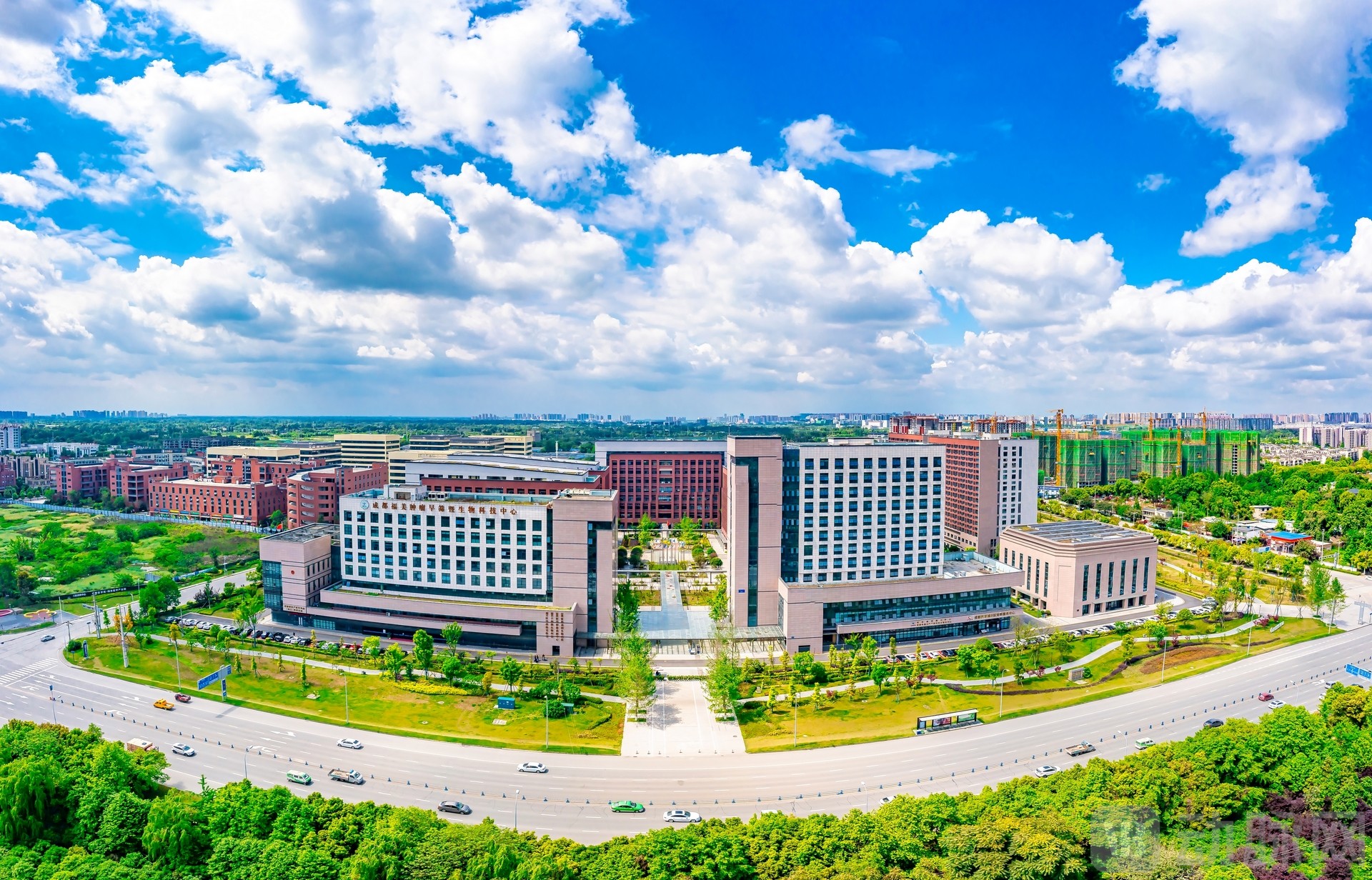
Although China's ADC and RDC drug sectors started relatively late, they have made a striking debut in the pharmaceutical market as dark horses.
ADC drugs are known as the “biological missiles” in the field of oncology treatment, representing the fourth generation of cancer therapies following chemotherapy agents, small-molecule targeted drugs, and monoclonal antibodies. According to Frost & Sullivan, the global market size for ADC drugs is projected to reach $15.9 billion in 2025. Currently, 16 ADC drugs have been approved for marketing worldwide, with eight of them available in China.
More than 100 companies in China have entered the ADC drug market, including industry leaders such as RemeGen, Hengrui Medicine, Kelun-Biotech, Junshi Biosciences, and CSPC Pharmaceutical Group. With a large pipeline of ADC drugs under development, over 70 candidates are currently in clinical trials, leading to increasingly fierce competition.
Radiopharmaceutical Drug Conjugates (RDCs) are the “rising stars” in the field of radiopharmaceuticals. According to Frost & Sullivan, the market size of radiopharmaceuticals in China is expected to reach RMB 7.81 billion in 2023. The U.S. FDA has approved a total of nine RDC drugs, among which Novartis’s Lutathera and Pluvicto have stood out, with combined sales of USD 740 million in 2022. The RDC drug market in China started relatively late, and due to high market barriers, there are fewer companies involved. Companies such as Grand Pharma, Zhihe Biopharma, Xiantong Medicine, Aboson, NewRay Therapeutics, Tongrui Biopharma, and Jinghe Biopharma have entered the market.
However, the development of radiopharmaceutical drug conjugates (RDCs) in China is progressing rapidly, with multiple RDC candidates from companies such as Grand Pharma and Sinotau Pharmaceuticals entering clinical trials. Meanwhile, the RDC market is also benefiting from favorable policy support. In 2021, the "Medium- and Long-Term Development Plan for Medical Isotopes (2021–2035)" was released, marking China’s first programmatic document specifically addressing the application of nuclear technology in healthcare. In 2022, the Center for Drug Evaluation (CDE) of the National Medical Products Administration issued the "Technical Guidelines for Clinical Evaluation of Radiopharmaceuticals for Internal Use (Draft for Comment)," providing technical guidance for clinical research on radiopharmaceuticals.
Overall, both ADC and RDC drugs face significant challenges, including high technical barriers, complex manufacturing processes, and difficulties in commercialization. Many market participants are startups or research teams that often lack specialized capabilities in clinical trial management, regulatory submissions, and production. This gap has spurred the growth of specialized CXO services. Recently, WuXi Biologics announced the spin-off and initial public offering of WuXi XDC, its CRDMO subsidiary focused on ADCs and other conjugated therapeutics.
Meanwhile, domestic ADC drug development is largely concentrated on mature targets, resulting in severe product homogenization. With numerous candidates currently in clinical trials, competition in this sector has become increasingly intense. In this context, products that either target novel antigens or are the first to complete clinical trials and achieve market approval hold a distinct competitive advantage.
The RDC drug market is in a relatively early stage, with barriers not only reflected in technology and drug design but more significantly in the establishment of the entire industry chain. Strict management is required across multiple stakeholders, ranging from radionuclide supply for RDC drugs to their production, transportation, and clinical application.
Unlike antibody-drug conjugates (ADCs), radiopharmaceutical drug conjugates (RDCs) are loaded with radionuclides. China faces a shortage of radionuclide resources and has long relied on imports. Due to the short half-lives of radionuclides, mass production in advance and long-distance transportation are not feasible; therefore, companies must establish local production facilities nearby. Radioactive waste—including solid radioactive waste, liquid radioactive waste, and uranium mine tailings—requires specialized treatment, and transportation agencies handling RDCs must hold relevant qualifications. Furthermore, domestic regulations on radionuclide use are stringent, requiring institutions engaged in diagnostic and therapeutic applications of radionuclides to apply for a Radiation Safety License (hereinafter referred to as the “Radiation Safety Permit”).
Driven by insights into the market potential and pain points of Antibody-Drug Conjugates (ADCs) and Radionuclide Drug Conjugates (RDCs), Chengdu Medical City has prioritized them as a distinctive industrial chain within its “integration of medicine, medical devices, and pharmaceuticals” ecosystem. The confidence to enter this high-barrier sector is also underpinned by Chengdu’s local industrial environment and policy support.
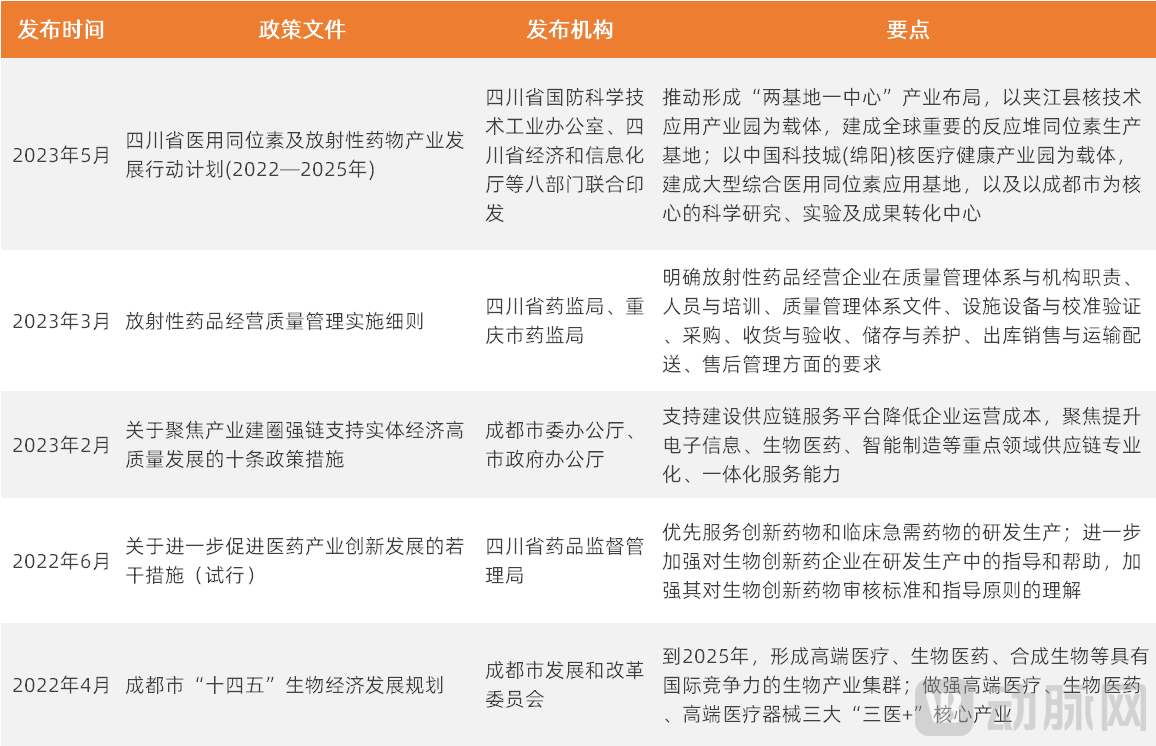
Chengdu has become a major hub for the biopharmaceutical industry in western China, focusing on developing key industrial chains for innovative drugs. In 2020, the revenue of biopharmaceutical industrial enterprises above designated size in the city reached RMB 65.5 billion. In recent years, the Chengdu municipal government and the Sichuan provincial government have successively introduced multiple policies to promote the development of the biopharmaceutical industry.
Meanwhile, Chengdu boasts a robust foundation for innovation and abundant industrial resources. The city is home to numerous universities, including Sichuan University and Chengdu University of Traditional Chinese Medicine, as well as major hospitals such as West China Hospital and Sichuan Provincial People’s Hospital. Additionally, there are more than 220 innovation platforms in the city. Sichuan Province also possesses rich nuclear resources; within a 2.5-hour drive from Chengdu, there are three nuclear reactors. Mianyang and Jiajiang are currently constructing production bases for medical isotopes. With leading capabilities in nuclear technology research, the province employs 40,000 professionals in this field. It hosts national- and provincial-level industry-academia-research-application platforms for radioactive isotopes and pharmaceuticals, including the National Engineering Research Center for Isotopes and Pharmaceuticals, the R&D Center for Radioactive Isotopes and Pharmaceuticals, and the Engineering Technology Research Center for Radioactive Isotopes.
On the fertile ground of biomedicine in Chengdu, Chengdu Medical City, located in Wenjiang District, has successfully established a specialized industrial chain by uniting upstream and downstream participants in the ADC (Antibody-Drug Conjugate) and RDC (Radionuclide Drug Conjugate) industries. Currently, the park is home to 15 companies, including ADC enterprises such as Kelun-Biotech and Baili Tianheng, RDC enterprises such as Grand Pharma, Aboscient, and Tongrui Bio, along with related upstream and downstream service providers. It has gathered nearly 1,000 professionals specializing in ADCs and RDCs, as well as supporting talent. Over the next three years, the park aims to bring together 30 ADC, RDC, and related upstream and downstream enterprises, forming a professional workforce of several thousand to jointly advance the development of its specialized sector.
Among these projects, Grand Pharma is constructing a radiopharmaceutical R&D and production base in the Chengdu Medical City, with a planned investment of RMB 3.5 billion; Aboz is investing USD 100 million to build an R&D and production base for innovative targeted radiopharmaceutical therapies within the park; Tongrui Biotech is also developing its R&D and production base, with a total planned construction area of 80,000 square meters, and the first phase of construction is currently nearing completion.
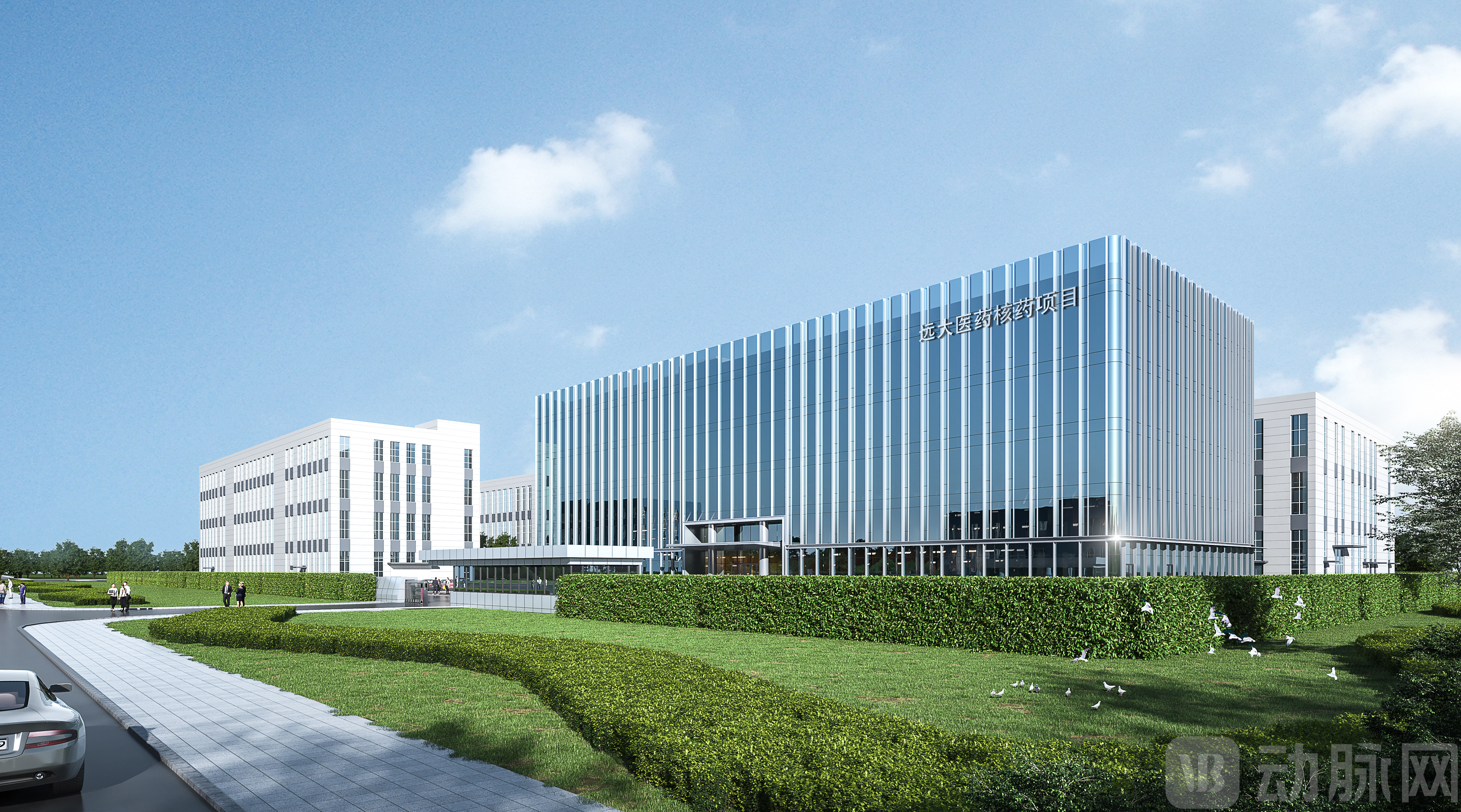
On the specialized ADC and RDC drug industry chain in Chengdu Medical City, related enterprises have reported frequent good news in recent years.Grand PharmaAll five RDC drugs in its pipeline are advancing rapidly. In February this year, the NMPA accepted the IND application for ITM-11; in April, the company’s RDC drug TLX101 for the treatment of glioblastoma received NMPA approval to initiate Phase I clinical trials; in June, the first patient was enrolled in the Phase I clinical trial of TLX250-CDx; and recently, the first patient in China was enrolled and dosed in the Phase III clinical trial of TLX591-CDx for the diagnosis of prostate cancer.
AibozEstablished a partnership with U.S. innovative pharmaceutical company RayzeBio, securing exclusive rights for the development and commercialization of its product portfolio in Greater China. In March this year, AbbVie announced that it was licensing GPC3-targeted peptide radiopharmaceuticals from RayzeBio to conduct clinical development and commercialization in Greater China.
Baili TianhengDeeply rooted in Chengdu Medical City, the company successfully listed on the STAR Market early this year. Prioritizing independent R&D, it established an overseas research and development center in Seattle in 2014. Currently, GNC-038 is undergoing Phase I clinical trials; it is the world’s first tetraspecific antibody drug approved for clinical investigation. SI-B001 has entered Phase III clinical trials, while the bispecific antibody-drug conjugate (ADC) BL-B01D1 is currently in Phase II clinical trials. Additionally, several other ADC candidates under the company’s portfolio are in various stages of clinical or preclinical research. In July this year, BL-B01D1 also received U.S. FDA approval to initiate clinical trials for the treatment of relapsed or refractory non-small cell lung cancer (NSCLC).
Furthermore, five key clinical research projects from Baili Tianheng, including BL-B01D1, SI-B001, and GNC-038, were successfully selected for presentation at the 2023 American Society of Clinical Oncology (ASCO) Annual Meeting, and seven research findings were presented at the 2023 American Association for Cancer Research (AACR) Annual Meeting.
Coincidentally, the company that successfully listed on the Hong Kong Stock Exchange in JulyKelun-BiotechIt is also an enterprise that has been cultivated by Chengdu Medical City for a decade. Kelun-Biotech is among the first batch of companies in China and one of the few globally to have established an in-house antibody-drug conjugate (ADC) development platform. This year, the National Medical Products Administration (NMPA) accepted the marketing application for the company’s core product, A166 for injection (HER2-ADC). SKB264 (TROP2-ADC), co-developed with Merck & Co., Inc. (known as MSD outside the United States and Canada), was granted Breakthrough Therapy Designation (BTD) by the Center for Drug Evaluation (CDE) of the NMPA, marking the second BTD awarded to SKB264 within less than a year. The Nectin-4 ADC drug SKB410 has received approval to conduct clinical trials in China.
To date, Kelun-Biotech has initiated clinical trials for multiple ADC drugs. Among them, SKB264, a drug targeting locally advanced, recurrent, or metastatic triple-negative breast cancer, has met its primary endpoint in Phase III clinical trials. Furthermore, in 2022, Kelun-Biotech entered into collaboration agreements with Merck & Co. for nine ADC projects, securing total milestone payments amounting to $11.8 billion.
Tongrui BiologicsThe first phase of the R&D and production base in Wenjiang, Chengdu, is scheduled to become operational by the end of the year, having previously established the first batch of fully automated, unmanned, and intelligent hot-cell production lines. Meanwhile, Chengdu Medical City assisted Tongrui Biopharma in obtaining environmental impact assessment approval for a “Class A unsealed radioactive material workplace” within seven months. Tongrui Biopharma plans to construct a radiopharmaceutical pharmacology and toxicology research center spanning approximately 3,000 square meters to provide safety evaluation services for radiopharmaceuticals, aiming to establish one of the few domestic preclinical safety evaluation (GLP) centers for radiopharmaceuticals.
Beyond pharmaceutical companies, professional pharmaceutical CXO enterprises have also developed in Chengdu Medical City. For example,WuXi AppTecPlans are underway to establish a world-class biohealth industrial park in Chengdu Medical City, with its R&D center officially commencing operations in 2020. Meanwhile, WuXi AppTec has established the “WuXi AppTec Molecular Imaging and Radiopharmaceutical Research Center,” which aims to leverage cyclotrons and radionuclide labeling and purification technologies for radiopharmaceutical development and in vivo imaging. This initiative seeks to address pharmacokinetic and pharmacodynamic challenges during drug development, thereby helping pharmaceutical companies accelerate their preclinical research.
Chengdu Medical City does not offer support targeted at individual enterprises; rather, it aggregates resources across the upstream and downstream segments of the industry to create a one-stop service platform that covers the entire process—from raw material supply, drug discovery, and research to drug production, registration, distribution, and commercialization.
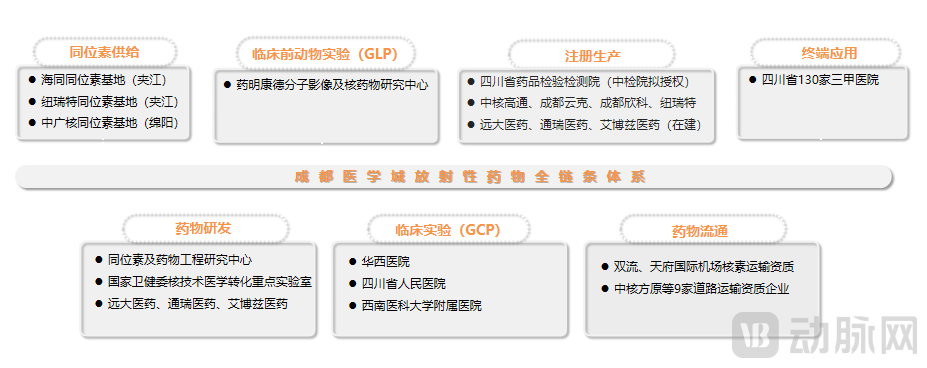
Centering on the ADC and RDC drug industry chains, Chengdu Medical City collaborates with research institutions, pharmaceutical companies, CXO enterprises, universities, hospitals, testing agencies, and other stakeholders to meet the needs of various stages of drug development. Meanwhile, focusing on different segments of the industry chain, Chengdu Medical City has establishedR&D Platform, promote the discovery of innovative targets and the design of innovative drugs; buildCXO Service Platform, strengthen the ties between leading CXO companies such as WuXi AppTec and pharmaceutical firms to accelerate drug development.
Chengdu Medical City boasts abundant talent resources and a strong foundation for innovation, attractingOver 10,000 technological innovation talents, including more than 200 high-level professionals such as Academicians Cheng Jing, Wei Yuquan, Yang Zhenglin, Chen Yeguang, Ren Qiushi, and Liu Jin.. The park is home to 2 national key laboratories, 9 national-level R&D centers, and 192 provincial-level R&D centers. It has jointly established a university science park with the University of Electronic Science and Technology of China and Chengdu University of Traditional Chinese Medicine, and co-developed high-level new-type R&D institutions with Shanghai Jiao Tong University, Nanjing University, and Sichuan University.
In terms of RDC drug transportationChengdu Shuangliu International Airport, located only 18 kilometers from Chengdu Medical City, is one of the two airports in China qualified for the import and export of radionuclides. With domestic and international connectivity, its high-frequency flights to cities such as Beijing and Shanghai ensure the timely delivery of radiopharmaceuticals to designated hospitals. Meanwhile, Chengdu Medical City has established collaborations with companies qualified for radionuclide transportation, including Sichuan Airlines and CNNC Fangyuan.
At the Level of Radiopharmaceutical Management, the Sichuan Provincial Radiation Environmental Management and Monitoring Center Station is also located in Wenjiang. It is the only entity in Sichuan Province engaged in nuclear and radiation monitoring and providing technical support for nuclear and radiation safety regulation. It can offer assistance in multiple areas, including environmental monitoring and control of nuclear radiation safety, for pharmaceutical companies within the industrial park during the development of radiopharmaceuticals. Meanwhile, Chengdu Medical City has established stringent“One Station, One Database, One Disposal” Nuclear Safety Prevention and Control Regulatory System, enterprises within the park can centrally dispose of nuclear waste (solid, liquid, and gaseous), which helps improve disposal efficiency and reduce costs.
The clinical application of drugs is also one of the challenges in the development of the ADC and RDC industries, particularly because medical institutions must hold a Radiation Safety License due to the special nature of radionuclides. AndNearly 40 Grade A tertiary hospitals in Sichuan Province are capable of administering radiopharmaceuticals.Clinical trial centers represented by West China Hospital of Sichuan University, Sichuan Cancer Hospital, and the Affiliated Hospital of Southwest Medical University are joining forces to support and advance the clinical development of innovative ADC and RDC drugs, striving to establish a prominent clinical hub in this specialized field. Through close collaboration between clinicians and R&D teams, they aim to jointly enhance the efficiency and quality of new drug clinical trials.
Chengdu Medical City acts as a chain, linking upstream and downstream participants, and further integrating these chains into an ecosystem to realize the “integration of medicine, medical devices, and pharmaceuticals.” Within this industrial ecosystem, the development of Antibody-Drug Conjugates (ADCs) and Radiopharmaceutical Drug Conjugates (RDCs) can be accelerated, expediting clinical trials and applications to benefit more patients. Meanwhile, communication costs among upstream and downstream stakeholders are significantly reduced, enhancing collaboration efficiency and promoting the healthy development of the industry.
Contact for Investment and Talent Recruitment at Chengdu Medical City:
Zhang Li, 13438833336; Tang Dian, 13540404014