

Weimai Launches CareGPT: China's First Large Language Model Application for Health Management
On August 17, Weimai, China’s largest full-course disease management platform, released CareGPT, the country’s first large language model application in the field of health management.
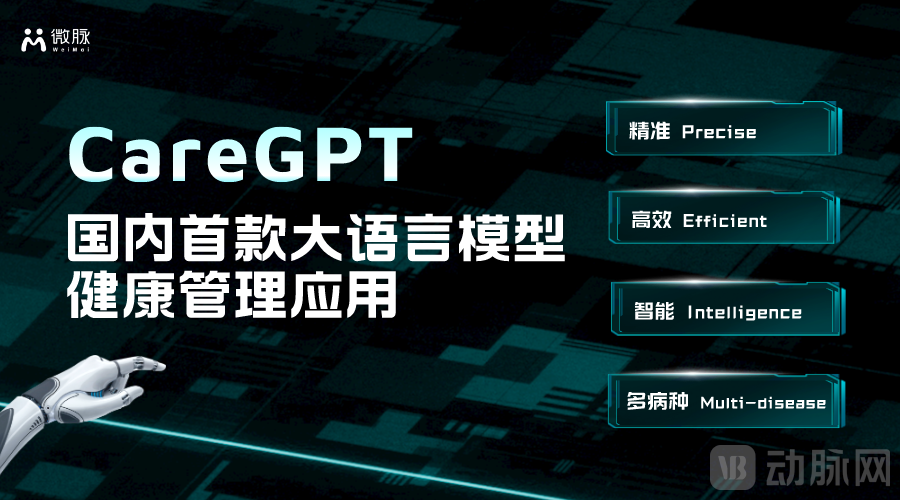
Unlike general-purpose large language model products, this health management application—developed independently based on a domestic open-source large language model—is primarily dedicated to maximizing the value of health management in real-world medical service scenarios, thereby enabling intelligent, full-cycle health management capabilities encompassing prevention, consultation, appointment scheduling, and rehabilitation.
From the perspective of AI applications in healthcare scenarios, CareGPT holds a leading position in China’s health management sector. According to Hai Ma (pseudonym), General Manager of Weimai’s Technology Center, CareGPT integrates large language model (LLM) AI technology with a suite of engineering optimization techniques and whole-course disease management. Currently boasting 7 billion parameters, it supports multimodal input and output in medical and healthcare scenarios.
From the perspective of medical AI development, Weimai CareGPT has established a unique methodology.
The first is precision. During the training phase, CareGPT was built on evidence-based medicine, leveraging over one billion medical text data points—including the latest clinical practice guidelines, disease diagnosis and treatment models, and expert consensus statements—as well as millions of Weimai case management records. This process established a specialized medical knowledge base for disease-specific management. Furthermore, more than 100 case managers participated in Reinforcement Learning from Human Feedback (RLHF) supervision and fine-tuning to ensure the accuracy and consistency of CareGPT.
Second, it is efficient. To address pain points such as the insufficient supply of medical services in China and the public’s lack of basic medical knowledge and health management awareness, CareGPT provides hospitals, physicians, and Weimai case managers with a novel auxiliary tool. By analyzing patient chat content, CareGPT can relatively accurately reconstruct a comprehensive picture of patients’ health status. It also supports the delivery of professional self-assessment scales, enabling patients to conduct preliminary health screenings independently and providing intelligent assistance for triage and patient guidance, thereby achieving more efficient patient management. With the support of CareGPT, the number of patients that physicians and case managers can manage concurrently has increased to 500, up from the previous range of 50–70.
CareGPT also supports the efficient retrieval of hospital records, enabling high-speed searches for disease-related information. It assists physicians in comparing symptoms during diagnosis, transforming traditional information-access methods, supporting clinical decision-making, and improving work efficiency.
Third is Intelligence. CareGPT can be integrated into multiple application scenarios, including hospital official accounts, call centers, Enterprise WeChat, and the Weimai APP. Based on effective patient interactions and content analysis, it provides health management recommendations in various formats—such as text, images, and videos—covering the entire process from pre-consultation to during-consultation and post-consultation.
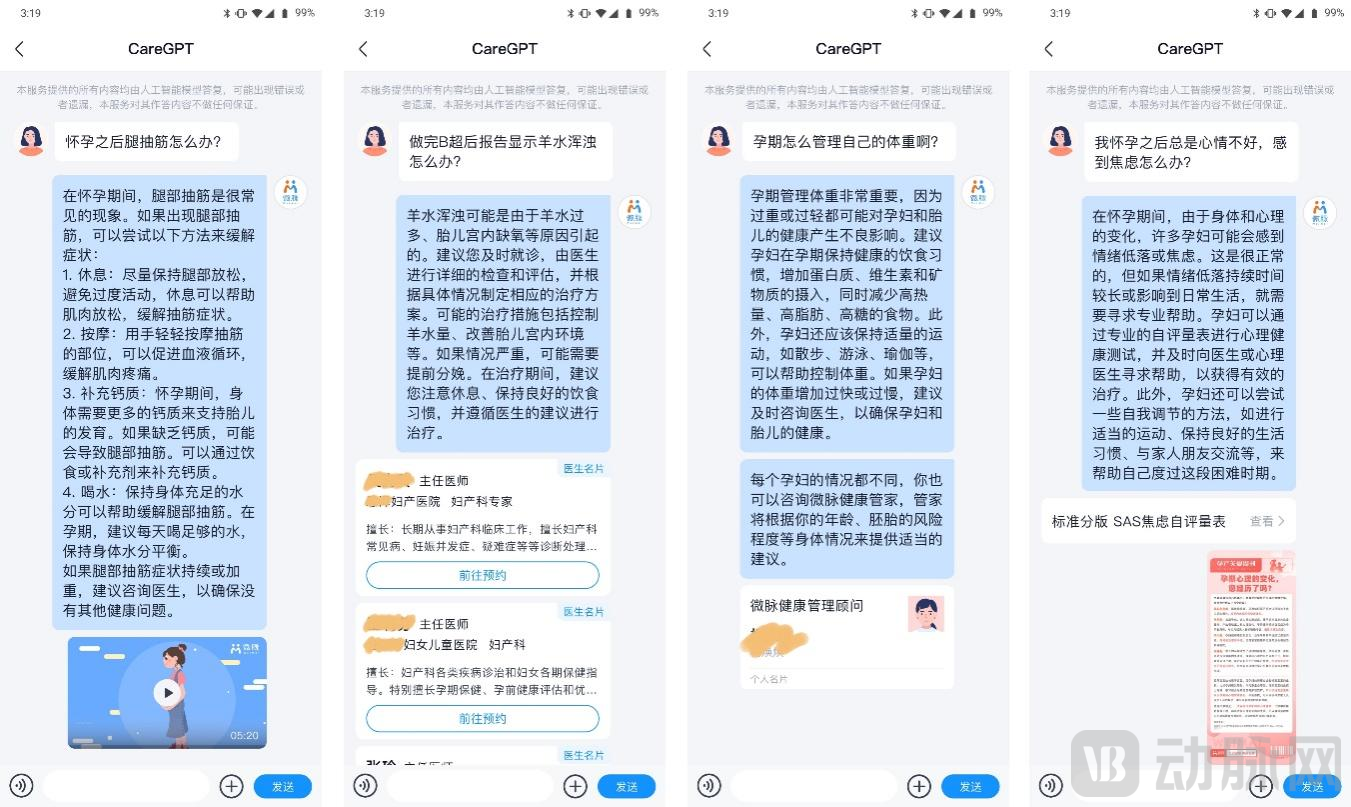
MicroPulse CareGPT integrates diverse multimodal medical capabilities to provide personalized matching and recommendations of medical resources for diseases that patients may develop or have already developed. For instance, if a pregnant woman experiences issues such as prenatal mental health concerns, hypertension, or hyperglycemia, CareGPT will promptly trigger standard operating procedures (SOPs) for management. Based on existing medical parameters and clinical data, it proactively pushes patient education materials and consultation recommendations to the patient, while also providing contact information for specialist physicians and health managers.
Fourth, multi-disease coverage. Haima (pseudonym) stated that CareGPT will leverage Weimai’s strengths in integrated, full-course management of pregnancy and childbirth, and will be initially deployed in the field of full-cycle maternal and child health management. This is merely the first step for CareGPT. Currently, Weimai’s full-course disease management covers 32 clinical departments and over 1,000 disease types, accumulating a substantial volume of valuable data through years of experience. Going forward, CareGPT will gradually expand into other specialized disease management areas, including diabetes, hypertension, and mental health disorders, thereby enabling efficient replication and application of its “health management + GPT” model.
In addition, Haima (pseudonym) revealed that MicroPulse CareGPT will undergo customized development and application in the future based on the management pathways of hospital departments. Leveraging its powerful AI capabilities, it will help hospitals enter a new phase of digitalized and intelligent whole-course disease management.
Today, Weimai is continuously exploring innovative applications of AIGC technology in the field of health management, further enriching and enhancing the intelligent experience of whole-course disease management. In the future, Weimai will remain true to its original mission, empowering medicine with technology. Through the application and implementation of CareGPT, it aims to assist public hospitals in transitioning from a “disease-centered” to a “health-centered” model, thereby promoting the development and improvement of China’s healthcare service system and contributing to the high-quality advancement of the nation’s medical industry.