

JD Health's Strategic Moves in the First Half of 2023 Amid the Internet Healthcare Cooling Period

JD Health
Internet Medical and Health Service Platform Provider
Compared with previous years, the buzz around internet healthcare has seemingly faded, giving way to a more realistic environment for steady development; high-profile disruptive innovations are rare, and gradual, step-by-step progress has become the norm.
The subdued tone reflects the market’s gradual departure from irrational demand and haphazard expansion, leaving behind players who remain committed to their established strategies, continuously deepening their efforts and seeking solutions to key challenges within the healthcare service system.
The 2023 interim performance report released by JD Health on August 16 corroborates this point.
In the first half of the year, JD Health reported total revenue of RMB 27.1 billion, a year-on-year increase of 34%. Its net profit under Non-IFRS measures reached RMB 2.44 billion, surging by 101.2% year on year. Excluding growth factors from the special period over the previous three years, the company still maintained a robust growth trajectory. Within its revenue structure, service revenue continued to lead in growth rate, rising from RMB 2.7 billion in the first half of 2022 to RMB 3.9 billion in the first half of 2023, representing a 43.7% increase.
Behind these figures, how is JD Health leveraging “services” as its strategic focus? VCBeat provides an analysis based on financial reports and other publicly available information.
Providing internet-based medical and health management services to users is one of the sources of JD Health’s service revenue. Since the beginning of the first half of the year, JD Health has continuously iterated its internet healthcare service model, upgrading specialized and refined service experiences in two key specialty areas—dermatology and mental/psychological health—as well as for the specific user segment of the elderly, thereby meeting users’ increasingly segmented health needs.
In April 2023, JD Health innovatively launched its Dermatology Specialty Internet Hospital. To date, more than 40 leading experts in the field of dermatology have established their online renowned physician studios, attracting nearly 3,000 dermatologists from Grade A tertiary hospitals to join the platform. Additionally, JD Health has built a full-time team of dermatology specialists. This comprehensive medical resource system enables JD Health’s Dermatology Hospital to provide rapid, round-the-clock responses, addressing users’ various skin diseases and concerns without constraints of time or location.
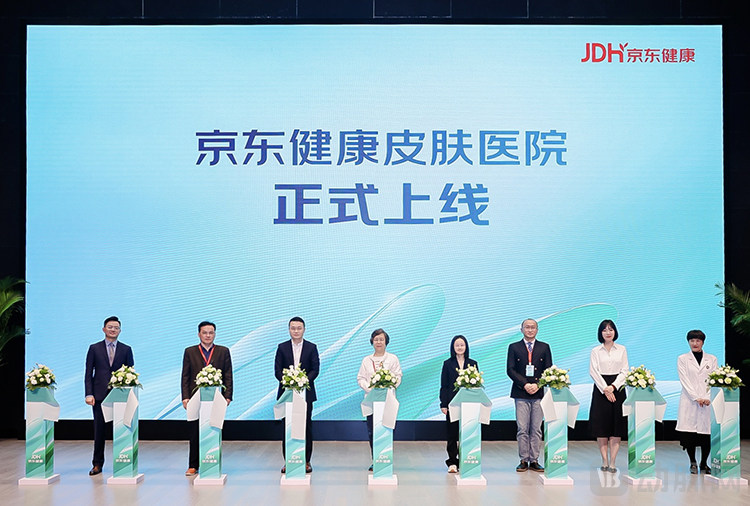
JD Health Launches Online Dermatology Hospital
In May, JD Health’s Psychological Service Center was upgraded and launched, with over 1,000 licensed psychological counselors and 6,000 psychiatrists joining the platform. The services cover multiple specialized areas, including workplace mental health, campus counseling, parent-child education, marriage and relationships, and psychological rehabilitation, providing users with end-to-end support ranging from assessments, screening, and emotional venting to counseling and treatment.
The user populations covered by these two specialties share many commonalities: long disease courses, large population sizes, and a strong emphasis on privacy protection. Within the traditional healthcare service system, certain service links are fragmented, particularly in psychiatric diagnosis and treatment as well as psychological counseling. Both specialties are well-suited for health status interventions via the internet.
Therefore, JD Health has adopted similar service pathways in both specialties: utilizing technological tools or professional scales to assess health status. Mild conditions can be addressed through consultations, while more severe cases are referred to physicians or renowned specialists for continuous treatment and management, thereby improving patient adherence and therapeutic outcomes.
Another large population group that is a key focus of JD Health’s services is the elderly, who are prone to various health issues amid the aging demographic trend—a central concern for the entire healthcare industry.
However, in the field of internet healthcare, there is an inherent contradiction regarding elderly users: on one hand, the high prevalence of chronic diseases among the elderly aligns well with the "follow-up consultation" nature of internet healthcare; on the other hand, elderly individuals have low acceptance of internet healthcare services and face numerous barriers in using smartphones and apps.
Currently, internet healthcare platforms and public internet hospitals are employing various strategies to help older adults bridge the “digital divide.” These measures include designing senior-specific versions with larger font sizes, simplified workflows, and retention of only essential features commonly used by the elderly; or aligning with seniors’ usage habits by embedding online medical service functionalities into smart TVs. Additionally, some public internet hospitals have launched nighttime outpatient clinics, extending physicians’ consultation hours to facilitate adult children in assisting their elderly parents with online consultations after work.
However, changing the mindset of the elderly is difficult to achieve in the short term, which is the direction JD Health is attempting to break through.
In user research, JD Health found that 80% of children and their parents live in different locations. The largest proportion consists of elderly individuals around the age of 70, all of whom suffer from chronic conditions such as the "three highs" (hypertension, hyperlipidemia, and hyperglycemia) and diabetes. Moreover, their conditions are unstable, with 30% facing a risk of severe or acute complications.
As a result, in June 2023, JD Health completed the upgrade of its JD Family Doctor product, launching the “Year-Round Elderly Care” service. Aligned with the consumption habits of older adults, the service incorporates various features to encourage actual utilization. For instance, JD Family Doctor assigns a dedicated health manager to each elderly user, who proactively communicates with both the purchasing customer and the designated care recipient (e.g., their father or mother) to assess health status and establish personal health records. Recognizing that many parents hesitate to disturb their busy children and often withhold information about health issues, the health manager calls the elderly users weekly to monitor their current health conditions and compiles monthly health reports for transmission to their children.
For elderly patients with chronic diseases, JD Family Doctor offers a variety of medical management programs for geriatric chronic conditions to provide professional interventions. In cases of sudden severe or critical illnesses in the elderly, JD Family Doctor can promptly coordinate offline medical resources and arrange for professional medical escorts to accompany them during consultations.
In fact, the health needs in areas such as dermatology, mental health, and geriatric care are not new; numerous platforms within the industry have already deployed corresponding services. Nevertheless, identifying the right breakthrough points, addressing practical issues, and establishing standardized, scalable product models remain challenges worthy of continuous exploration.
JD Health has received corresponding feedback in the process of deeply addressing the aforementioned needs. Supported by specialized and refined operations, JD Health’s internet hospital recorded an average daily volume of over 440,000 online consultations during the first half of 2023, while the overall user satisfaction rate for JD Family Doctor reached 99.3%.
In the offline sector, 2023 saw the official opening of Suyu Hospital, jointly established by the People’s Government of Suyu District in Suqian City, the Health Commission of Suyu District, and JD Health. The JD Health Medical Examination Centers in Suqian and Yizhuang also commenced operations. By establishing a presence in physical medical institutions, JD Health can achieve tighter integration with its online services, providing users with more convenient and higher-quality integrated online-to-offline (O2O) healthcare services.
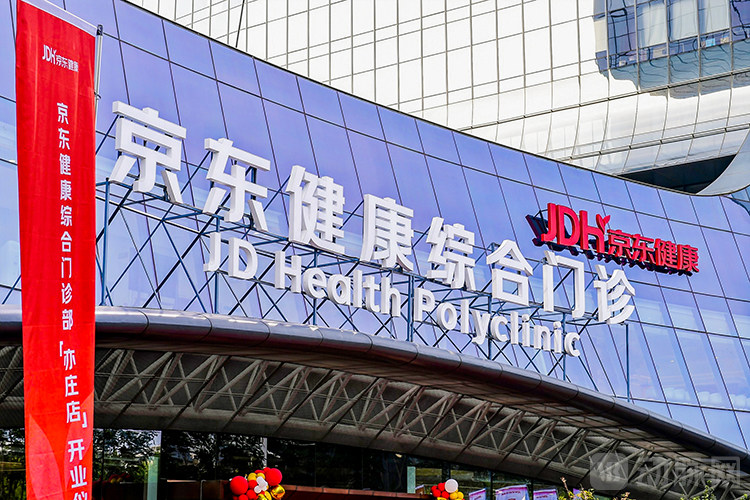
JD Health Physical Examination Center Yizhuang Branch Begins Operations
Whether it involves the upgrading of online specialty services and services tailored to specific population segments, or the fulfillment of more core medical needs through offline physical facilities,JD Health continues to strengthen its core advantage as the primary gateway for online medical consultations, aiming to meet users’ diverse health needs.
Self-operated pharmaceutical sales have long been a core strength of JD Health. In the first half of 2023, JD Pharmacy continued to expand its collaborations with pharmaceutical companies and health product suppliers, driving steady growth in its self-operated business, which increased by 32.5% year over year.
In terms of service revenue, JD Health has continuously optimized its platform ecosystem since 2023, with a particular emphasis on expanding its instant retail business, which has emerged as a major highlight.
JD Health had previously laid out its omnichannel business through “Medicine Express Delivery.” In its 2021 annual report, JD Health disclosed for the first time that it had approximately 50,000 merchants in its omnichannel business, covering more than 300 cities. By leveraging digital systems, the company can flexibly configure various fulfillment methods, including merchant self-delivery, platform delivery, and same-city delivery, to provide round-the-clock services to users. By the end of 2022, the number of merchants had grown to over 70,000.
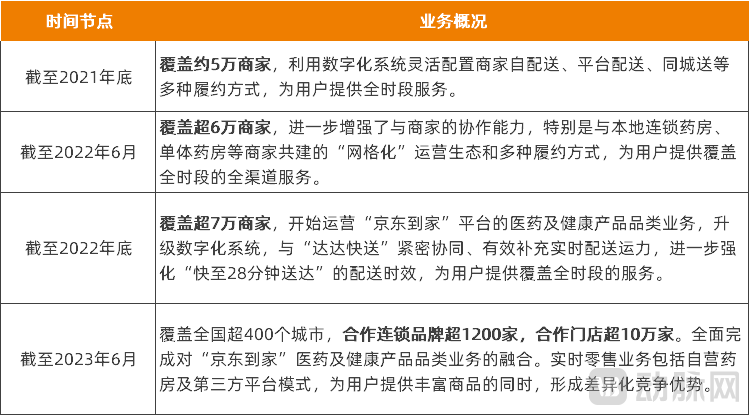
JD Health’s Key Milestones in the Development of Its Instant Retail Business, Source: Financial Reports
As of June 2023, JD Health’s omnichannel business layout has covered more than 400 cities across China, with over 1,200 partnered chain brands and more than 100,000 affiliated stores. This means that 30,000 new merchants were added in just six months, a rate significantly higher than the previous year’s addition of 20,000 merchants.
On one hand, JD Health has fully completed the operational integration of JD Daojia’s pharmaceutical and health product categories, building upon its “Ji Song” (urgent delivery) service. On the other hand, JD Health has attracted stores to join its platform and enhanced merchant activity through a series of preferential measures for merchants, including traffic support and precision marketing.
From an industry perspective, O2O (Online-to-Offline) services are gaining increasing attention from brick-and-mortar pharmacies. For both large leading chains and small-to-medium-sized or independent pharmacies, O2O operations represent a critical pathway to expanding service reach and accelerating digital transformation. Overall, the O2O model is becoming an indispensable growth driver in pharmaceutical retail.
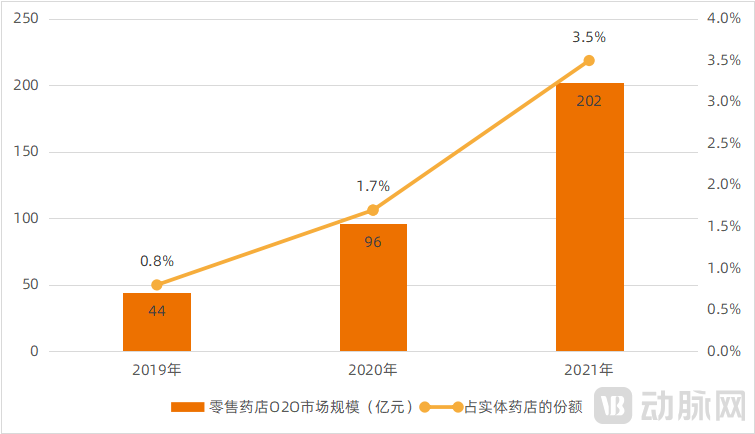
O2O Market Growth, Source: Menet
According to the “China Retail Pharmacy O2O Development Report” by Menet, the share of retail pharmacy O2O in the overall brick-and-mortar pharmacy market is projected to rise to 19.2% by 2030, with a market size reaching RMB 144.4 billion. If online reimbursement under basic medical insurance is fully opened, the share will increase to 32.1%, and the market size will reach RMB 240.7 billion.
Among the aforementioned markets, instant retail—which addresses users’ urgent needs by meeting their emergency medication requirements and providing round-the-clock access to medicines—represents a significant growth driver.
For JD Health, accelerating its expansion in the instant retail market is backed by numerous advantages. First, it boasts a massive user base; as of June 2023, JD Health’s annual active users reached 169 million, representing a net increase of 37.3 million compared to the figure for June 2022. Second, it holds substantial untapped market resources. While the instant retail model initially grew rapidly in first-tier cities, there is now significant room for growth and rapid expansion in lower-tier markets. Among the 100,000 merchants covered by JD Health, more than 60% of the stores are located in third-tier cities and below, enabling effective penetration into these lower-tier markets.
Certainly, JD Health’s accumulated expertise in pharmaceutical supply chain management and digital tools also serves as the foundational capability for rapidly expanding into the instant retail market.
In the first half of 2023, the number of merchants on JD Health’s online platform also reached a record high, totaling 36,000. During the 618 major promotional event, JD Health implemented measures such as category-specific promotions, traffic support, and brand promotion. Both the number of merchants and products participating in the promotions hit new records, with the gross merchandise value (GMV) of over 7,000 merchants doubling year-on-year.
Serving platform merchants and omnichannel merchants has made a significant contribution to the growth of JD Health's service revenue.
Furthermore, JD Health is advancing the online-offline integration of its service models through its offline DTP (Direct-to-Patient) pharmacy network, accelerating the enhancement of its professional service capabilities across all product categories. Currently, JD Pharmacy’s DTP outlets cover 26 provinces and municipalities nationwide, offering more than 400 specialized drug varieties, thereby becoming a key channel partner for many innovative pharmaceutical companies pursuing omnichannel expansion.
By continuously improving its “B2C + O2O + DTP pharmacy” retail system, JD Health has significantly enhanced its capacity to provide pharmaceutical services to end users.
Throughout the development of internet-based healthcare, technology has served as a key enabling capability for service delivery.
JD Health’s digital and intelligent technologies continue to expand. For instance, in 2023, it collaborated with the Civil Affairs and Health Bureau of Xinwu District, Wuxi City, to jointly build a regional medical service platform that integrates healthcare resources across the district, providing residents with one-stop services such as online follow-up consultations via internet hospitals, prescription circulation, and home delivery of medications. In Beijing, JD Health’s pre-prescription review system has been implemented in 16 primary community health service centers in Haidian District.
Since 2023, a new wave of AI innovation has emerged, spearheaded by ChatGPT. Amid this surge, JD Health launched its large medical language model, “Jingyi Qianxun.” This model assists physicians in gaining a more comprehensive understanding of patient conditions and provides reliable, evidence-based medical recommendations and diagnoses, representing a concentrated manifestation of JD Health’s technology-driven innovation in healthcare service delivery.
To date, JD Health’s medical knowledge system has covered 3,000 common diseases and been implemented in core processes such as intelligent diagnostic assistance, achieving an organic integration of medical AI technology with physicians’ professional expertise. For instance, JD Health has leveraged large-scale medical language and matching models to enable precise doctor–patient matching through deep learning, raising the triage accuracy across more than 100 specialties to over 99%. Breakthroughs have also been made in specialty-specific diagnostic technologies in departments such as dermatology, where the top-5 diagnostic accuracy for 98 skin conditions reached 95%, and the consistency rate of treatment plans exceeded 80%.
In the realm of medical big data, JD Health has accumulated a patient profile database, a library of medical indicators compliant with national public health standards, and vast amounts of big data on pharmaceutical circulation.
Overall, JD Health possesses abundant foundational resources and application scenarios as it continues to advance medical AI innovation.
Nowadays, generative AI and large language models (LLMs) are ubiquitous topics in the technology sector. Statistics show that numerous companies in China have launched nearly 100 LLMs. Healthcare has always been a field where new technologies penetrate deeply; many internet healthcare and health-tech companies, including JD Health, have released healthcare-specific large language models.
Currently, large medical models are primarily applied in triage consultation, assisted diagnosis, medical imaging, and whole-course disease management, demonstrating positive effects in improving efficiency and quality.
However, the significance of technological innovation lies not only in the technology itself but also in its demonstration of social and commercial value. Meanwhile, as technological innovation involves regulatory frameworks and medical ethics, its practical application must be carried out within a defined framework.
Notably,JD Health has not positioned its large medical AI model merely as a standalone product targeting a specific audience or user group; instead, it serves as the “technological foundation” for building a new generation of the healthcare service ecosystem., driving the intelligent upgrade of industry-wide solutions and products, to maximize the value and potential of new technologies.
Since 2023, the issuance of landmark documents such as the General Office of the Communist Party of China Central Committee and the General Office of the State Council’s “Opinions on Further Improving the Medical and Health Service System” and the National Development and Reform Commission’s “Measures for Restoring and Expanding Consumption”—all of which emphasize the development of “Internet + Healthcare”—has bolstered industry confidence.
Healthcare service demand differs from other types of demand; it cannot be generated or stimulated by policies or other measures. In fact, some healthcare service demands have weakened or disappeared under the specific circumstances of the past three years. Nevertheless, a substantial amount of unmet demand still exists within the healthcare system. Insufficient total resources and uneven distribution remain significant challenges. Improving the accessibility of medical resources will continue to be a key focus for a considerable period of time.
For internet healthcare companies represented by JD Health, it remains a critical mission to enhance the accessibility of medical resources through innovative service models, products, and technological capabilities. Segmenting products and services to address the specific needs of targeted populations, and penetrating lower-tier markets to deliver higher-quality medical care and pharmaceuticals, are essential pathways to achieving this goal.