

PhenomeX (formerly IsoPlexis) Files Prospectus Highlighting Award-Winning Proteomics Platform Used by MD Anderson Cancer Center

IsoPlexis
Developer of Precision Diagnostic Testing and Analysis Systems
The single-cell field is advancing at an astonishing pace.
According to Precedence Research, the global single-cell analysis market size is projected to increase from USD 4.87 billion in 2022 to approximately USD 18.59 billion by 2030, with a compound annual growth rate (CAGR) of 18.22%.
Its rapid growth has attracted significant attention from life science professionals. By analyzing information such as gene expression and protein composition at the single-cell level, researchers can uncover differences and interactions among various cell types, thereby gaining insights into disease mechanisms, drug development, and related areas.
IsoPlexis is one of the participants in the study of functional cellular characterization.
IsoPlexis, founded in 2013 and headquartered in Connecticut, USA, is dedicated to developing single-cell assay systems that identify patient immune responses. By revealing unique immune biomarkers within small cell subsets, the company advances immunotherapy and targeted therapy toward greater precision and personalization.
Since its founding nearly a decade ago, IsoPlexis has raised $200 million across 12 rounds of financing and went public on the Nasdaq in October 2021 under the ticker symbol “ISO.”Previously, IsoPlexis was recognized as a top innovator or design leader by multiple organizations, including The Scientist, Fierce, BIG Innovation, and Red Dot.

Honors Received by IsoPlexis
After a decade-long journey to go public, it seemed that IsoPlexis had finally seen the light at the end of the tunnel. However, in March 2023, IsoPlexis was acquired by Berkeley Lights (Nasdaq: BLI) and delisted from the Nasdaq stock exchange. The two companies merged to form PhenomeX (Nasdaq: CELL), a functional cell biology company providing live-cell biology research tools to the industry.
Going public, delisting, and mergers and acquisitions are the norm in the development of life sciences companies. Was IsoPlexis, once hailed as a “top-tier innovator,” driven by necessity or strategy in making this decision?
Why Is Cytokine Detection So Important?
Each immune cell is distinct, and cytokine function determines how each cell responds to tumors. For instance, CD4+ T cells can coordinate the remaining cells to attack the tumor, while CD8+ T cells and NK cells are capable of delivering their effector payloads to the tumor. Therefore, it is crucial to understand the complete phenotypic profile of each cell.
Traditional cell detection methods primarily analyze the average response from a population of cells, without considering the phenotypes of individual cells. Leveraging novel proteomic technologies, IsoPlexis enables the study of single cells within complex samples and the direct detection of key functional cytokines. Notably,IsoPlexis integrates cellular detection and analysis into a single system, providing life science professionals with a comprehensive solution through its CodePlex series chips, IsoSpark/IsoLight instruments, and IsoSpeak software.
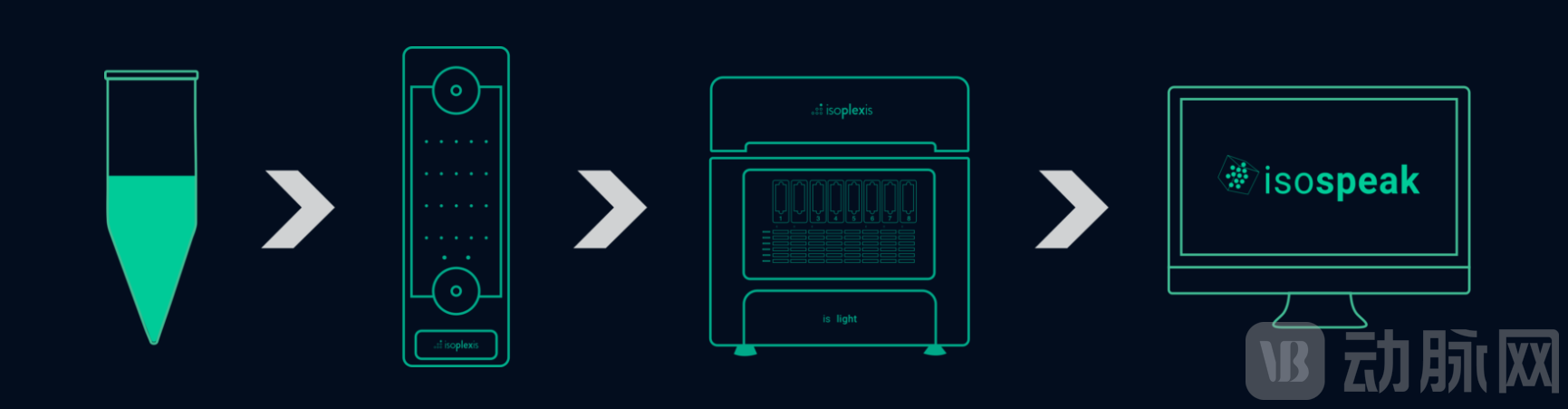 IsoPlexis Complete Testing Workflow
First, IsoPlexis utilizes the Isocode chip to barcode highly multiplexed antibodies for each cell in a highly sensitive and specific manner. The Isocode chip automatically captures key measurements of a broad panel of cytokine indicators.Each IsoCode chip features a proteomic barcode, enabling the quantitative detection of 32 cytokines per cell in just 5 minutes.
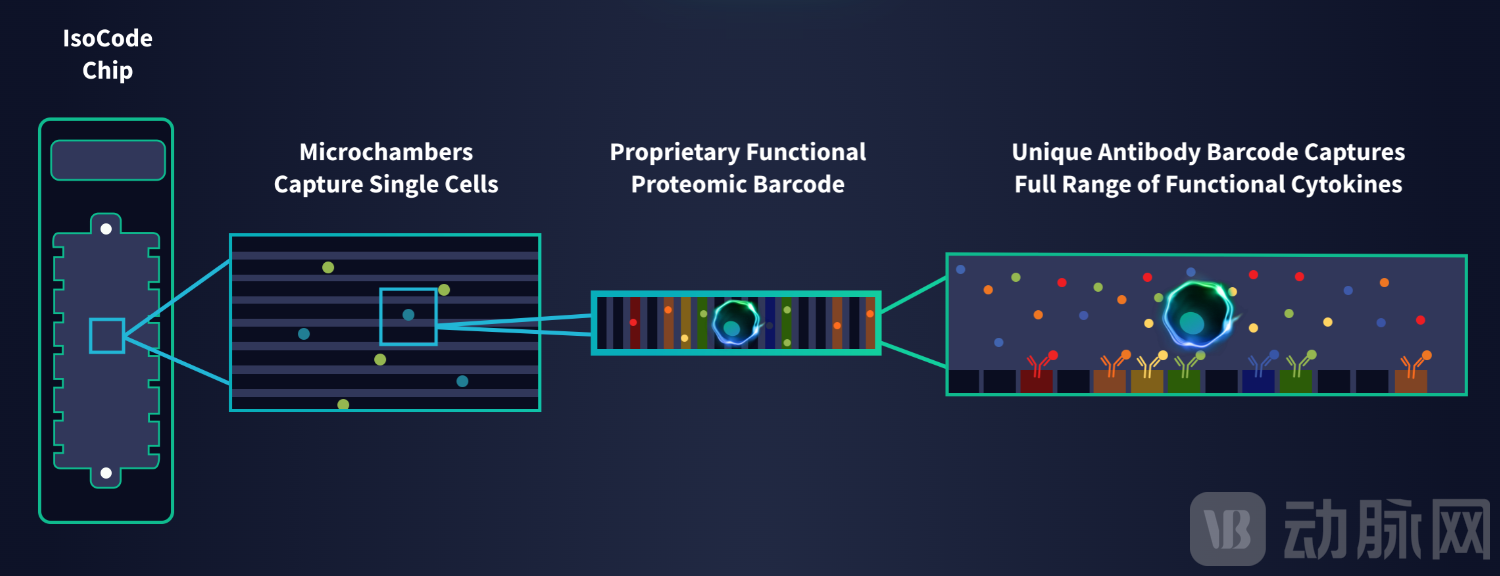 IsoCode Chip
The second step is loading the instrument. Traditional ELISA (enzyme-linked immunosorbent assay) typically involves more than 10 procedural steps, including coating solid-phase microplates, sample addition, and washing, requiring over 20 hours of labor from laboratory technicians.
IsoPlexis’s Isospark/IsoLight instruments provide an automated workflow. Researchers simply load samples into the chip, insert the chip into the system, and select the desired assay. There is also no need for researchers to perform serial dilutions for standard curves.The entire process involves only 5–20 minutes of hands-on time.
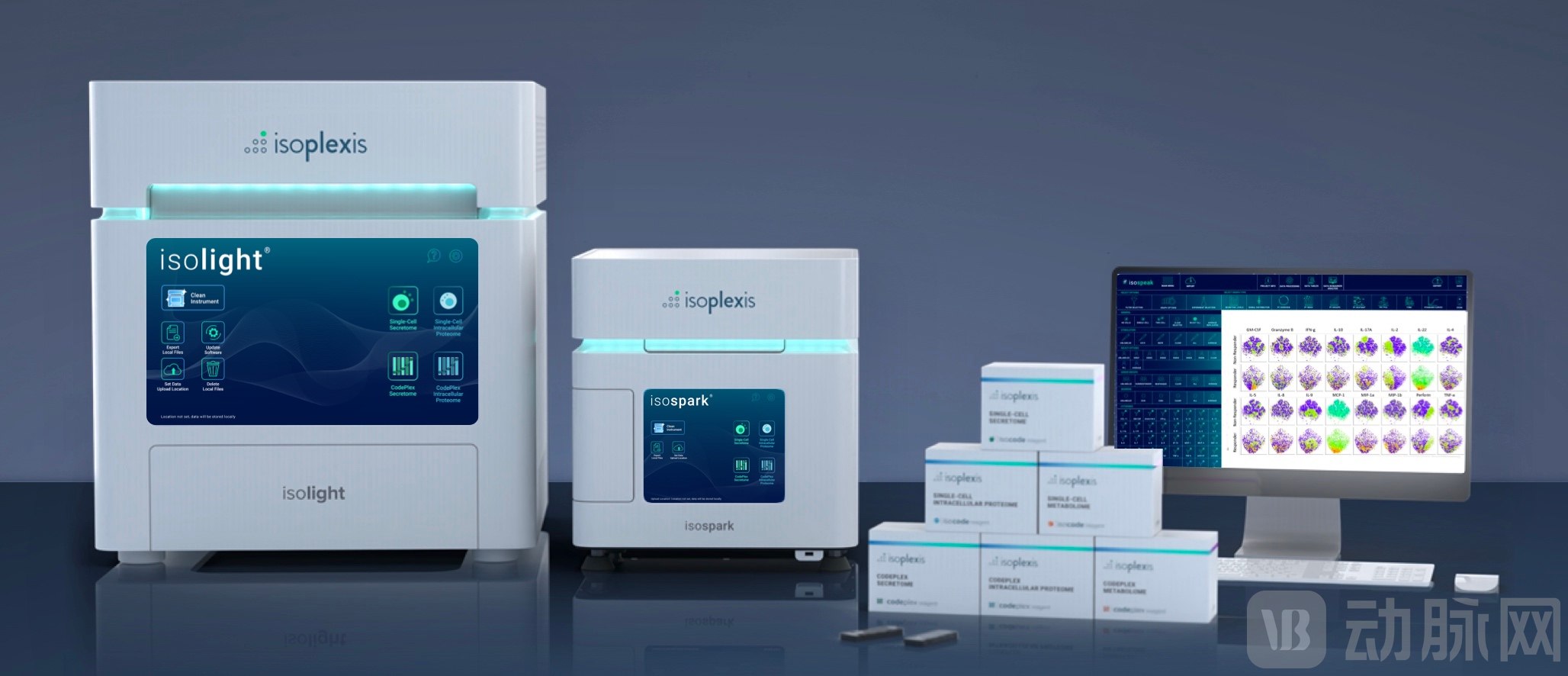
IsoSpark and IsoLight Instruments
Finally, technicians can use IsoSpeak software for automated on-site analysis and functional single-cell mapping. IsoSpeak leverages t-SNE (t-distributed stochastic neighbor embedding) to distinguish cells based on the greatest functional differences in cytokine profiles, thereby generating cell maps. Meanwhile, the t-SNE functionality visualizes hierarchical differences between responders and non-responders, revealing the functional origins that reflect cellular biomarkers.
During the procedure,Technicians can visualize, analyze, and export data with just a click of a button.
In the process of providing experimental services to clients, IsoPlexis has collected a variety of ultra-strong immune and tumor cell types.
Beyond selling instruments and providing services, IsoPlexis is contemplating what else it can do.
Current CEO Sean Mackay revealed in an interview, “We have accumulated a vast amount of data from the services we run for our customers. We believe that releasing this data could drive further growth. This presented us with a trade-off and a difficult decision. Ultimately, we are confident that our highly multiplexed proteomic data is unique, and researchers will leverage our analytics to generate additional insights when publishing their findings.”
Therefore,IsoPlexis has developed a Functional Cell Library (FCL) characterized by functional proteomics to complement the genome-based Human Cell Atlas.
Simply put, this comprehensive library includes T cells, natural killer cells, monocytes, CAR-T cells targeting hematologic and solid tumors, TCR-T cells, melanoma cells, HeLa cells, and other immune cells. Leveraging IsoPlexis’s single-cell functional proteomics technology, FCL defines the functional phenotype of each cell type.
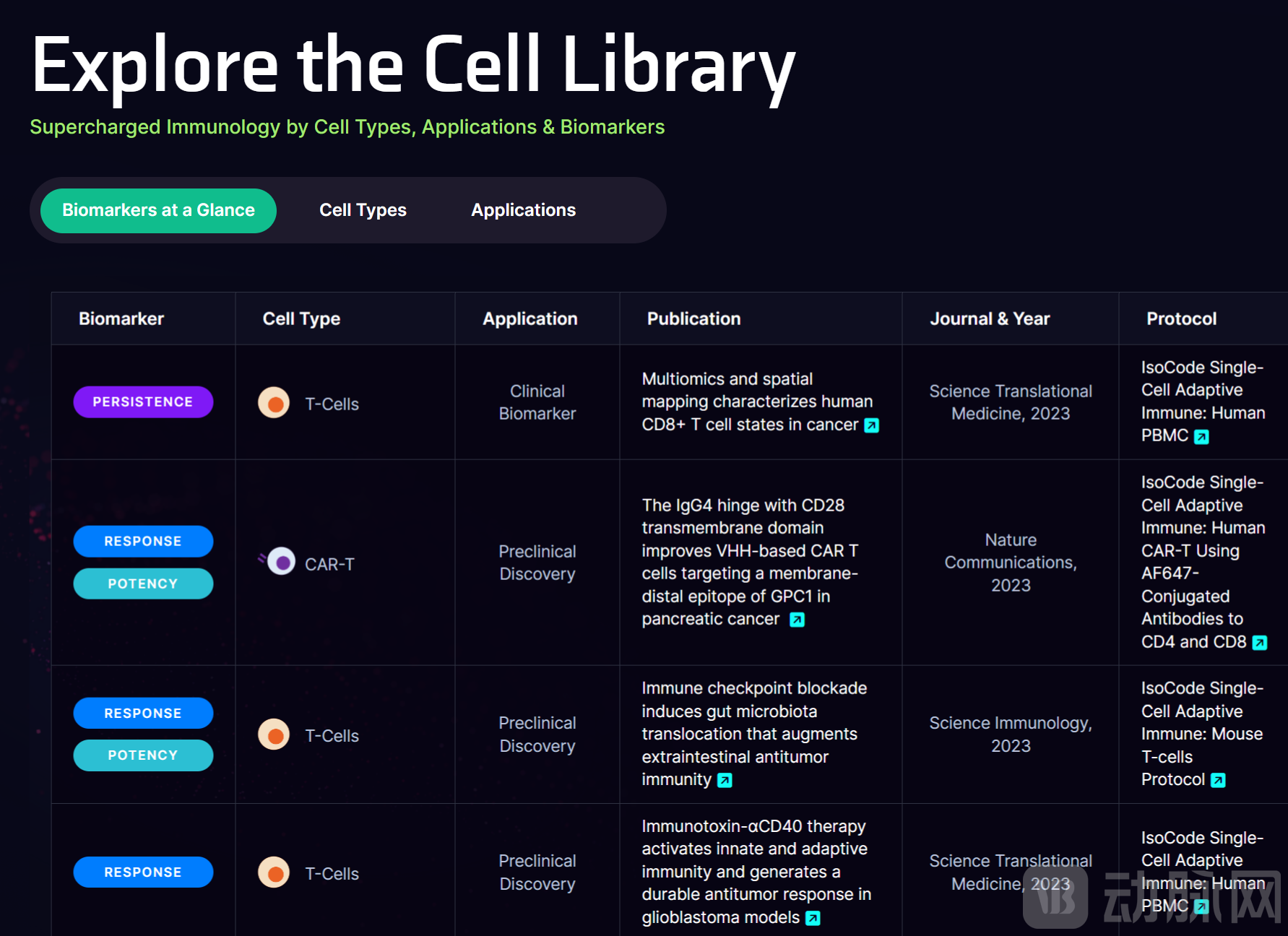
Functional Cell Bank
Furthermore, this cell bank is also referred to as the “Superhuman Cell Bank.” IsoPlexis likens highly polyfunctional cells to “superhuman cells,” which serve as early participants and coordinators in immune responses. These rare, high-functioning cell subsets may be beneficial (“superhero cells”) or detrimental (“supervillain cells”).
Among these, "superhero cells" are a rare subset of highly multifunctional "supercells" that coordinate anti-tumor responses and are associated with efficacy, durability, and survival. In contrast, "supervillain cells" are highly multifunctional "supercells" that drive disease progression and are linked to inflammation, toxicity, and resistance. Detecting these cell populations is critical for the development of more effective immunotherapies and vaccines.
This library serves as a research tool, featuring an annotated list of cell types that bridges the gap for industry researchers.Researchers can access the functional cell library, browse and search, and leverage functional phenotypic data to understand patient responses, thereby driving technological translation and clinical application.
At the onset of the COVID-19 pandemic, IsoPlexis rose to prominence in the industry.
In March 2020, IsoPlexis established a partnership with the Institute for Systems Biology (ISB). Leveraging IsoPlexis technology, ISB mapped functional immune responses at the single-cell level to study immune cells in patients diagnosed with or recovered from COVID-19. During this period, IsoPlexis also collaborated with the Division of Infectious Diseases at Columbia University Irving Medical Center, where IsoPlexis solutions were similarly employed in COVID-19 research.
James Heath, Director of IBS, stated, “Functional phenotyping of individual immune cells using the IsoPlexis system will serve as the cornerstone for understanding immune responses in affected patients.”
Meanwhile, IsoPlexis has become a frequent feature in international journals, with nearly 100 research papers published using its technology. Previously, collaboration between IsoPlexis and Kite demonstrated a significant association between the functional profile of pre-treatment anti-CD19 CAR-T cell products and objective responses in patients with non-Hodgkin lymphoma. These findings were published in Blood.
However, honors and recognition from industry professionals are not synonymous with commercial value.
In 2022, affected by macroeconomic headwinds and the international environment, IsoPlexis experienced a decline in orders for instruments and consumables from its downstream customers. The total revenue for the full year of 2022 is projected to range between $16.6 million and $16.8 million, representing a decrease of approximately 3% to 4% compared to $17.3 million in 2021. Notably, CEO Sean Mackay stated that “its customer base grew in 2022.”
Driven by broader industry trends, IsoPlexis made a strategic adjustment in 2022, planning to merge with Berkeley Lights to establish a sustainable company.
Berkeley Lights (hereinafter referred to as “Berkeley”) is a life sciences technology company headquartered in California, United States. The company has developed a technology known as the “Optical Cell Manipulation Platform” (OptoSelect), which leverages optical principles to enable high-throughput manipulation and analysis of single cells. Since its launch in 2016, its single-cell optofluidic system, represented by the Beacon platform, has been adopted by more than 100 pharmaceutical companies, research institutions, and contract development and manufacturing organizations (CDMOs) worldwide.
Even with a flagship product anchoring its portfolio, Berkeley has not been immune to the industry’s downturn. In 2022, Berkeley generated $78.6 million in annual revenue, an 8% decline from 2021.
Berkeley Lights Completes Acquisition of IsoPlexis in All-Stock Transaction Valued at $57.8 MillionUpon completion of the transaction, Berkeley Lights shareholders will own approximately 75.2% of the combined company, while IsoPlexis shareholders will hold approximately 24.8%.
Can the two companies ultimately weather the cold spell and turn their combined negatives into a positive?
Both parties will enhance the profitability of the merged company, PhenomeX, and accelerate its path to break-even through multiple approaches: leveraging the cost-effective IsoPlexis platform to provide technical support for Berkeley Lights; cross-leveraging customer resources by combining Berkeley Lights’ strengths in the biopharmaceutical sector with IsoPlexis’ presence in the academic sector; integrating R&D, supply chain, and manufacturing infrastructure to boost productivity; and expanding the product portfolio to meet customers’ workflow needs, among other measures.
Berkeley predicted, “The new company is expected to generate $150 million in operating cash flow by 2024.”