

Fronter Bio Advances Oncolytic Virus Pipeline to Unlock Synergies with CAR-T and ADC Therapies
Oncolytic Virus (OV), a class of natural or recombinant viruses capable of selectively infecting and killing tumor cells without damaging normal cells, possesses specific replication capabilities and stimulates the body to generate anti-tumor immune responses.
A Century Since the Discovery of Oncolytic Virotherapy as an Anti-Cancer StrategyIt has been a century since humanity first discovered oncolytic virotherapy as a strategy for combating cancer. Over this period, oncolytic viruses (OVs) have undergone two major iterations: evolving from natural wild-type viruses to attenuated genetically recombinant viruses, and further advancing to third-generation OVs that leverage gene editing to carry therapeutic payloads, with a focused emphasis on attenuation and cancer cell killing.
As of July 2023, 11 new oncolytic virus pipelines have received clinical trial approval in China (including approvals granted both domestically and internationally).
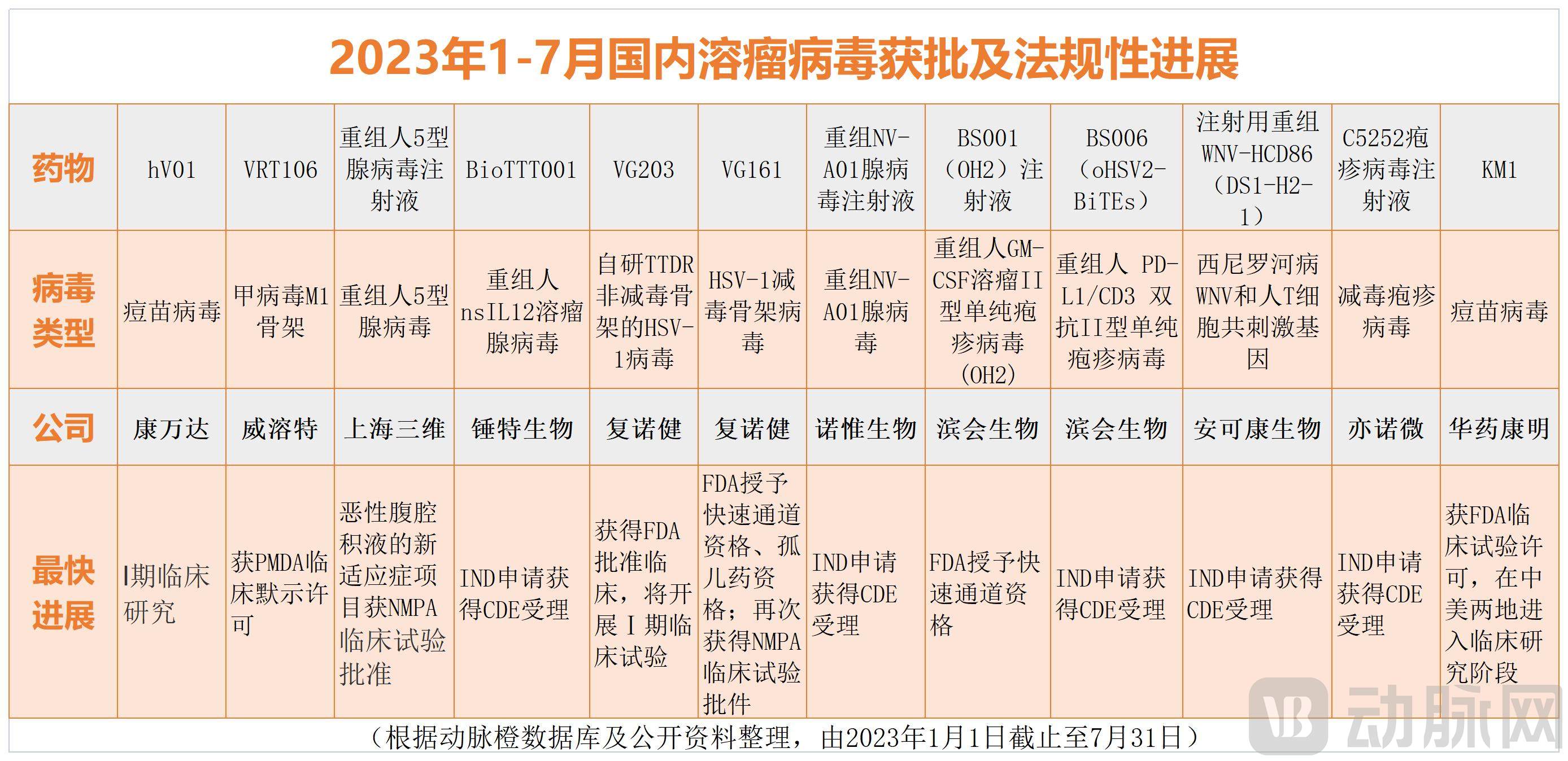
As third-generation and improved oncolytic viruses gradually enter clinical trials, attention is once again focused on them. However, the controversy surrounding oncolytic viruses has never ceased:
Toxicity—Is Attenuation More Important or OV Activity?
Concerns regarding the inherent toxicity of oncolytic viruses (OVs) have persisted over time. Although the incidence of clinical adverse reactions to OVs is extremely low, primarily manifesting as fever, local injection site reactions, and flu-like symptoms. For instance, Delytact®, approved in 2021, reported incidence rates of Grade 3 and Grade 4 adverse events at 26.3% and 10.5%, respectively. Due to safety concerns, viral designs often involve the deletion of virulence genes to enhance safety, which carries the potential risk of reducing oncolytic virus activity. More critically, the emphasis on attenuation has led to the neglect of a decisive factor in efficacy—OV activity.
Route of Administration—Intratumoral Injection or Intravenous Injection?
There is ongoing debate among oncolytic virus (OV) research teams regarding the merits and drawbacks of different administration routes. Proponents of intravenous injection argue that this method offers greater diversity and convenience in delivery, along with higher clinical accessibility. Advocates of intratumoral injection contend that it is more conducive to OV efficacy, triggering an intratumoral cytokine storm and better modulating the tumor microenvironment for enhanced therapeutic effects. Furthermore, depending on the location of solid tumors indicated for treatment, multiple alternative administration routes have been developed, including intracranial, intraperitoneal, and intravesical injections.
Scope of Efficacy—Can efficacy against distant lesions and systemic efficacy be achieved, and how can efficacy and efficiency be enhanced?
Preclinical and clinical studies of oncolytic viruses (OVs) have revealed the abscopal effect, whereby local administration yields systemic efficacy, demonstrating significant therapeutic effects on tumor lesions beyond the primary site. Upon tumor lysis and the subsequent release of abundant tumor antigens, the primary tumor serves as an in situ vaccination center, recruiting large numbers of immune cells that “learn” to recognize tumor antigens and target distant metastatic sites throughout the body. This understanding has propelled the evolution of OV therapy from a localized treatment modality to a systemic one.
Efficacy—How to Better Improve the Immunosuppressive Tumor Microenvironment and Convert “Cold Tumors” into “Hot Tumors”?
As research trials advance, numerous R&D teams have gained a deeper understanding of the efficacy of oncolytic viruses (OVs). The therapeutic effect of OVs is not solely attributed to direct oncolysis; more importantly, it stems from the amelioration of the immunosuppressive environment within tumors. By modulating the tumor microenvironment (TME), OVs can be combined with other immunotherapies to achieve synergistic effects, converting “cold tumors” into “hot tumors” and rendering tumor types that previously responded poorly to immunotherapeutic agents sensitive to treatment.
Amid Ongoing Controversy, Oncolytic Viruses Are WelcomingThird Iteration—Leveraging an upgraded and modified viral backbone to carry a greater quantity and diversity of payloads, thereby enhancing oncolytic activity and triggering a more robust host immune response.Virogin Biotech, established in 2015, has been deeply engaged in the R&D of oncolytic virus immunotherapy and mRNA platforms, having raised over $300 million in funding to date.
“Virogin’s core mission is to convert antiviral immunity into antitumor immunity by expressing cytokines and other payloads to remodel the tumor microenvironment, thereby redirecting infiltrating immune cells from an antiviral to an antitumor response.”Introduced by Dr. Jia Weiguo, Co-founder and Chief Scientific Officer of Virogin Biotech.
First-Generation OV Pipeline: Equipped with Multiple Synergistic Exogenous Genes
February 2023, First-Generation Oncolytic Virus PipelineVG161 Receives U.S. FDA Orphan Drug Designation for the Treatment of Intrahepatic Cholangiocarcinoma (ICC). In June, it was granted Fast Track Designation (FTD) by the FDA for the treatment of advanced hepatocellular carcinoma that has failed standard therapy.
VG161 is the first attenuated HSV-1 backbone virus engineered to carry four exogenous genes: IL-12, IL-15/IL-15Rα (IL-15 and the IL-15 receptor alpha subunit), and a PD-L1 blocking peptide (PDL1B). Leveraging the synergistic expression of IL-12 and IL-15, VG161 activates a range of immune cells, including T cells and NK cells, stimulates immune responses, improves the tumor microenvironment, and enhances anti-tumor efficacy.
In patients with hepatocellular carcinoma (HCC) who failed standard therapy and received VG161 monotherapy, the 4-month progression-free survival (PFS) rate was 20% higher than that of historical controls, and the median PFS doubled. Furthermore, overall survival (OS) was significantly prolonged in patients who subsequently received checkpoint inhibitor (CPI) therapy compared to those who did not receive CPIs thereafter.
In Phase I clinical data, the expression of 700 immune response-related genes was analyzed in injected tumor tissue samples from two patients. More than 300 genes were significantly upregulated in post-treatment samples, indicating an increase in various immune cell types (including CD4+ T cells, CD8+ T cells, and dendritic cells). These findings demonstrate that VG161 improves the tumor microenvironment by heating the tumor and enhancing immune activity.
Currently, VG161 is being investigated in 10 clinical trials worldwide, including Phase II trials for hepatocellular carcinoma (HCC) and intrahepatic cholangiocarcinoma (ICC).In Greater China, Virogin Biotech will collaborate with Sinopharm China National Biotec Group to develop the market for VG161. The joint venture, CNBG-Virogin Biotech, will serve as the implementing entity. Meanwhile, Virogin Biotech is actively exploring its overseas markets.
Second-Generation OV Pipeline: Transcriptional and Translational Dual Regulation (TTDR) Non-Attenuated Backbone
Entering the second-generation oncolytic virus pipeline, Virogin Biotech has developed its proprietary Transcription-Translation Dual Regulation (TTDR) non-attenuated backbone to enhance viral replication within tumor cells and improve tumor clearance efficacy.
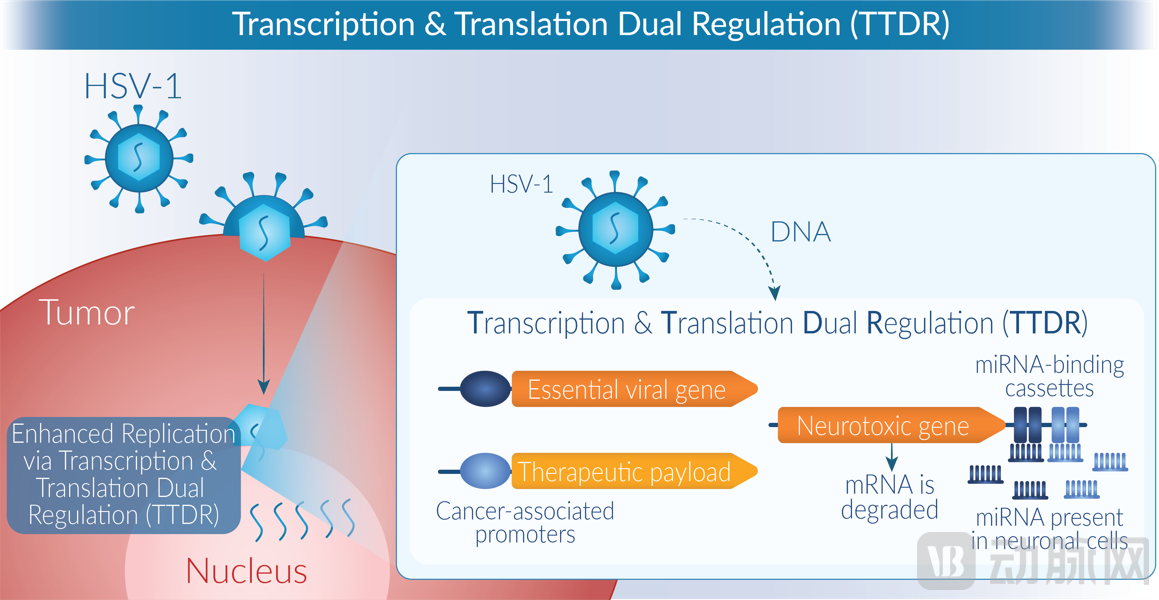 Schematic Diagram of Virogin’s TTDR Backbone Principle Model (Image provided by the interviewee)
Specifically, tumor-associated promoters are employed to regulate the transcription of viral early proteins, thereby enhancing selective viral replication in tumors. Meanwhile, multiple microRNA binding sites are utilized to control the translation of neurovirulence factors, preventing the formation of functional proteins to ensure safety.
In preclinical efficacy studies, a single administration of TTDR HSV-1 was sufficient to sustainably inhibit tumor progression. Complete tumor suppression was achieved at a dose as low as 1/10,000th of the attenuated virus dose, demonstrating potent and durable systemic antitumor activity that can induce immune memory and prevent tumor recurrence. To date, 25 patients have received VG201 treatment in global clinical trials, with no reported dose-limiting toxicities, and preliminary efficacy outcomes have been observed in the monotherapy cohort.
Based on the TTDR non-attenuating backbone, Virogin Biotech has developed the VG-2XX and VG-3XX series of oncolytic virus pipelines.Currently,VG201 has received clinical trial approvals from the NMPA and the FDA, with two clinical trials underway in China and the United States. VG203 has obtained FDA approval for clinical trials and will initiate a Phase I clinical trial targeting advanced solid tumors in the United States.
Third-Generation OV Pipeline: RDE Redirector and Expanded Technology Platform VIETATM
Advancing its third-generation oncolytic virus pipeline, Virogin Biotech continues to innovate by integrating its expanded technology platforms: Re-directing Engager (RDE) and VIETA.TM(VIrus-Enabled Target Adaptor)。
Via adapter-equipped vectors, oncolytic viruses can target multiple tumor types, overcome the barrier of solid tumor heterogeneity, and be combined with targeted immune cell therapies and antibody-drug conjugates (ADCs).
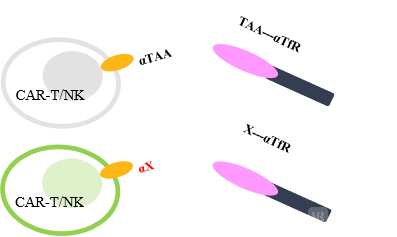
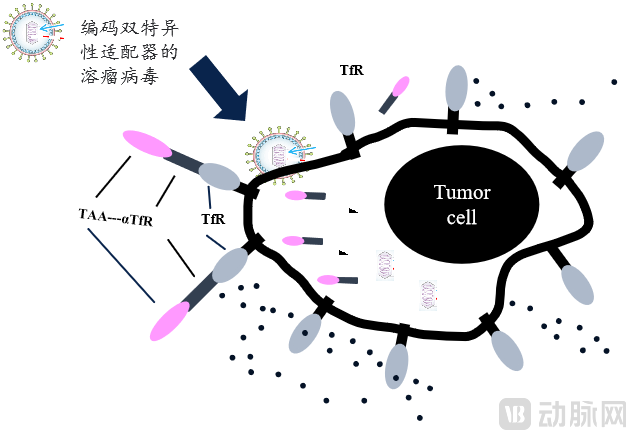
CAR-T/NK-Targeted Adaptor Model (Part I) and VIETATMPlatform Model (Part II)
Engager: By expressing bispecific or multispecific antibodies, it “grabs” immune cells and tumor cells with multiple arms, leveraging the “bystander effect” to redirect immune cells from attacking viruses to targeting and killing tumor cells. This approach not only addresses the issue of poor penetration of bispecific antibodies into solid tumors but also reduces the systemic risk of “on-target, off-tumor” effects.
Adapter (i.e., VIETATM), by releasing bispecific molecules via oncolytic viruses, one end targets the transferrin receptor and binds to proteins highly expressed in tumors, thereby "capturing tumor cells." The other end expresses tumor-associated antigens that can be targeted by CAR-T, CAR-NK, or ADC therapies. Since the adaptor uses non-human proteins as targets, it fundamentally reduces the potential for off-target toxicity.
VG30X is a bispecific T-cell engager targeting CD3 and CEACAM6, with clinical trial applications in China and the United States expected to be filed next year.
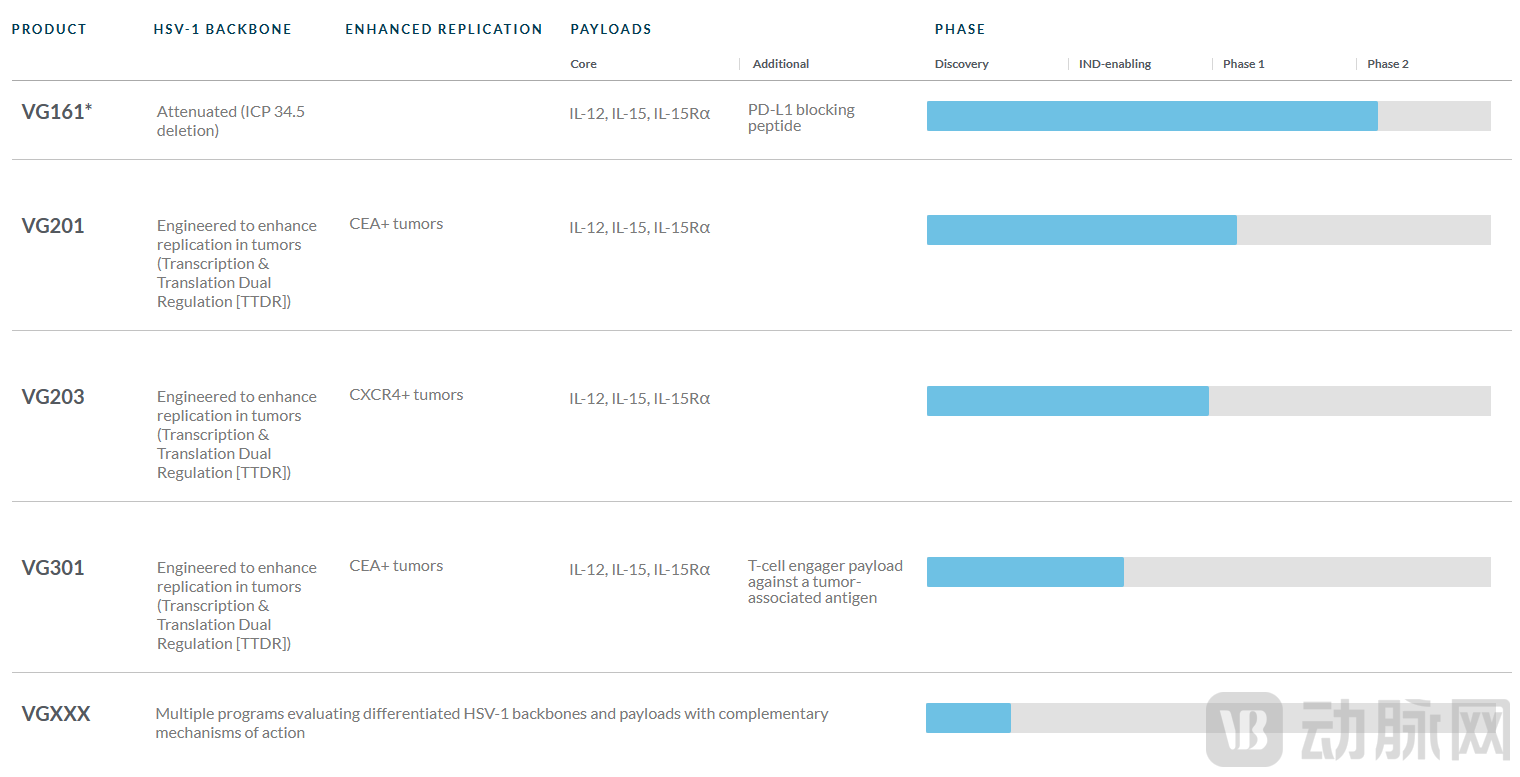
Virogin’s Pipeline Layout (Image provided by the interviewee)
Dr. Jia Weiguo, Co-founder and Chief Scientific Officer of Virogin Biotech, is one of the international pioneers in the use of oncolytic viruses—leveraging their tumor-specific replicative properties—for the treatment of malignant tumors. Since 1991, Dr. Jia has been researching the genetic engineering of viruses. He was the first to demonstrate that genetically modified, replication-competent oncolytic viral vectors can still selectively target tumor cells and achieve therapeutic efficacy in immunocompetent hosts, thereby providing critical evidence for the feasibility of using viral vectors.
From September 1994 to June 2019, Dr. Jia Weiguo served as a Senior Scientist at the Brain Research Centre of the University of British Columbia (UBC) and as a Tenured Associate Professor at the UBC Faculty of Medicine. In 2015, he co-founded Virogin Biotech in Canada. In July 2019, he resigned from his tenured professorship at UBC to serve full-time as Chief Scientific Officer of Virogin Biotech.
In 2019, Virogin Biotech and China National Biotec Group (CNBG) established a joint venture, CNBG-Virogin Biotech, which began developing mRNA COVID-19 vaccines in 2021.In January 2023, CNBG-Virogin Biotech’s self-developed innovative COVID-19 mRNA vaccine, the first domestically developed candidate encoding the full-length S protein of the Omicron variant, officially received clinical trial approval from the National Medical Products Administration (NMPA) and commenced clinical studies.
Virogin Biotech’s R&D team not only participated in the entire process of COVID-19 mRNA vaccine development, but also comprehensively optimized the mRNA and saRNA vaccine platforms, leveraging its solid scientific knowledge and R&D foundation, to proposeCombination of Oncolytic Virus + mRNA Vaccine, seeking systematic and synergistic activation of anti-tumor immunity.
For a long time, mRNA vaccines have been regarded as a new possibility for cancer therapy, with advantages including effective stimulation of cellular immunity, high expression speed and levels, no risk of genomic mutations, short development cycles, and relatively simple production. However, mRNA vaccines have not yet succeeded as monotherapy.
One reason is that tumor antigens, having coexisted with the immune system for a prolonged period, have induced immune tolerance. Coupled with the potent immunosuppressive effects of the tumor microenvironment, the anti-tumor immunity generated peripherally by mRNA vaccines struggles to reach the tumor site and exert its therapeutic effect.
Oncolytic viruses are well-positioned to address this issue.
Virogin Biotech proposes a prime-boost (heterologous priming and boosting) strategy that leverages mRNA vaccines to establish systemic peripheral anti-tumor immunity, while employing oncolytic viruses to break intratumoral immunosuppression and improve the tumor microenvironment.On one hand, it enhances the intratumoral efficacy of mRNA vaccine-induced anti-tumor immune activity; on the other hand, it promotes tumor cell lysis to expose a broader repertoire of tumor antigens, thereby augmenting the overall anti-tumor immune response.
Virogin Biotech has currently developed multiple mRNA cancer vaccines, which have demonstrated promising efficacy in preclinical models. The next step,Virogin Biotech will initiate CMC and independent research evaluation for its mRNA cancer vaccine, advancing the IND application.
Dr. Zhao Ronghua, Chief Medical Officer of Virogin Biotech, previously served as Director of the Medical Department at Shanghai Sunway Biotech Co., Ltd., where he led the preclinical and clinical research on the innovative oncolytic virus drugs H101 and H103. H101 (Oncorine) received marketing approval from the China Food and Drug Administration (CFDA) in 2005, becoming the first oncolytic virus product officially approved for commercial sale by Chinese regulatory authorities.
Dr. Zhao Ronghua introduced that, in addition to Virogin Biotech Canada, Virogin has established Virogin Biotech (Shanghai) Ltd. as its global R&D headquarters, and set up clinical R&D centers in the United States and Australia, namely the North America Clinical Team and the Asia-Pacific Clinical Team.
Based on its global footprint, Virogin Biotech presentsDifferentiated and Complementary ClinicalStructure“One is to avoid redundant clinical trials and accelerate the clinical development process through data sharing. The other is to strategically position different high-incidence indications across various regions,” said Dr. Zhao Ronghua. He noted that Virogin Biotech plans to initiate international multi-center clinical trials in the future and leverage favorable regulations for oncology drug research—such as priority review, orphan drug designation, breakthrough therapy designation, and conditional approval—to expedite product market entry.
“The most important thing is to identify and enrich potential patient populations with heightened sensitivity, which entails pursuing biomarker-dependent strategies.”Biomarkers (Markers): Another Remaining Challenge for Oncolytic Viruses.“Which biomarkers indicate which indication(s) are sensitive to oncolytic viruses? Within the same indications, which patients expressing specific biomarkers are sensitive to oncolytic viruses?”
For example, VG161 has demonstrated favorable efficacy in hepatocellular carcinoma, and potential biomarkers have been identified from clinical data. The median overall survival of patients with this biomarker was more than one year longer than that of other patients. “If the potential marker is validated and used to establish new patient inclusion criteria to enrich for potentially sensitive patients, such clinical studies will be more effective.”
From another perspective,The discovery of biomarkers will also transform the clinical development strategies for oncolytic viruses.“Theoretically, the higher the expression of tumor markers, the stronger the viral replication, oncolytic potency, and immune activation. In the future, Virogin Biotech will explore and validate through clinical data whether our second-generation oncolytic virus exhibits marker dependency and whether a basket trial design could be adopted.”
Basket design studies, or biomarker-guided clinical trials, are a research approach that has emerged in response to targeted therapy. Specifically, drug clinical trials and even regulatory approvals are no longer dependent on specific indications; instead, they target all indications expressing the same molecular target or biomarker.
On July 3, VG203 received FDA approval for clinical trials. While conducting Phase I clinical trials, Virogin BiotechFocus on CXCR4-positive tumors with the potential for improved therapeutic efficacy, analyze the correlation between CXCR4 expression levels and treatment outcomes, and actively explore the feasibility of conducting future basket trial studies.
“Clinically, the multi-pronged exploration of combining oncolytic viruses with immunotherapy is also a critical area of research. Factors such as the sequence and dosage of administration in combination regimens can significantly affect the efficacy of oncolytic viruses, necessitating extensive preclinical and clinical studies for validation. Of course, the first step is for oncolytic viruses to demonstrate efficacy as monotherapies, and we are very confident in this regard,” said Dr. Zhao Ronghua. He noted that the development of oncolytic viruses is not solely a scientific challenge; it also requires building broader industry awareness and fostering collaborative efforts among more clinicians and oncologists.
Dr. Jia Weiguo concluded, “It may take another 3 to 5 years for the updated third- or fourth-generation oncolytic viruses to demonstrate clinical efficacy.”Once combination strategies demonstrate clinical promise, a wave of cancer vaccines will move toward co-administration with oncolytic viruses, and the broad market already captured by immunotherapies will also open up to oncolytic viruses.”