

Nanobiotix Announces $1.8 Billion Collaboration with Johnson & Johnson for First-in-Class Radioenhancer NBTXR3

Nanobiotix
Nanomedicine Technology Product Developer
On August 15, Nanobiotix announced that the waiting period for its collaboration with Janssen Pharmaceuticals, a subsidiary of Johnson & Johnson, which was reached on July 10, had ended, and the transaction officially took effect. Under the terms of the agreement, Janssen was granted an exclusive license to develop and commercialize its radioenhancer NBTXR3 globally (excluding regions previously licensed to LianBio).
Nanobiotix will receive a $30 million upfront payment and up to $1.8 billion in potential development, regulatory, and commercial milestone payments. Janssen will take full responsibility for a Phase 2 study evaluating NBTXR3 in patients with Stage III lung cancer and will have the right to take over studies currently led by Nanobiotix.
For Johnson & Johnson, the oncology segment is gradually growing into the second-largest core revenue pillar, after its immunology segment. According to Johnson & Johnson’s 2022 annual report, oncology product revenues reached $15.9 billion, second only to the $16.9 billion generated by its core immunology segment, and accounting for 31% of pharmaceutical business revenue. At this year’s JPM Conference, Johnson & Johnson announced plans to expand its acquisition strategy in the oncology field, particularlyNanobiotix has publicly stated that NBTXR3 can be extended to any solid tumor treatable with radiotherapy and to any combination therapy regimen, particularly in combination with immune checkpoint inhibitors.Will further bolster Johnson & Johnson’s oncology pipeline.
Securing the development and commercialization rights to Nanobiotix’s core product with a $30 million upfront payment, and maintaining a strong leading position in subsequent collaborations, is attributable not only to Johnson & Johnson’s appeal as a multinational corporation (MNC),Another driving force is Nanobiotix’s urgent need for cash flow to sustain the progress of its Phase III clinical trials.
In May 2022, Nanobiotix’s cash reserves fell to $74 million. At the time, forecasts indicated that the company would exhaust its cash before releasing the interim results of the Phase 3 NANORAY-312 trial, plunging it into financial distress. As of the market close on July 7, the company’s stock price had dropped to around $5 per share. The announcement of an agreement with Johnson & Johnson spurred a 50% surge in the stock during early trading on July 10. With the collaboration agreement now in effect, the company’s cash runway is projected to extend into the first quarter of 2024.
Nanobiotix, founded in 2003, is a late-stage clinical biotechnology company that emphasizes “delivering unprecedented therapeutic outcomes to millions of patients through disruptive, physics-based treatments.” Headquartered in Paris, France, the company also maintains subsidiaries in the United States (Cambridge, Massachusetts), France, Spain, and Germany.Nanobiotix holds more than 20 patents related to three nanotechnology platforms, with applications spanning oncology, bioavailability and biodistribution, and central nervous system disorders.
Due to their minute size, nanoparticles can circulate freely throughout the body and reach multiple therapeutic sites. They have emerged as powerful drug delivery systems, capable of delivering small-molecule drugs, proteins, nucleic acids, or diagnostic agents to target sites. For many scientists developing cancer therapies, nanoparticle-based drugs are among the most promising candidates for achieving breakthroughs in cancer treatment. The key advantage of nanoparticles lies in their precision; when loaded with therapeutic agents, they can selectively target tumor cells while sparing healthy tissues. In some cases, nanoparticles help improve the absorption or efficacy of drugs or therapies, such as in radiation therapy for cancer.
Due to inherent limitations of conventional therapeutic agents in clinical practice, such as insufficient efficacy and toxicity, nanomedicine design has garnered significant attention for its ability to markedly enhance therapeutic efficacy and reduce off-target side effects. To date, the U.S. Food and Drug Administration (FDA) has approved more than 60 nanomedicines, with the majority indicated for the treatment of cancer (53%) and infectious diseases (14%). (Data sourced from “Current research trends of nanomedicines” published in APSB)
Approximately 50% of cancer patients worldwide undergo radiotherapy during their treatment course. Although technological advancements have enabled the delivery of high-dose radiation to specific target areas, damage to normal tissues at such doses remains inevitable.To overcome the dosimetric challenges associated with radiotherapy, Nanobiotix is accelerating the development of NBTXR3.
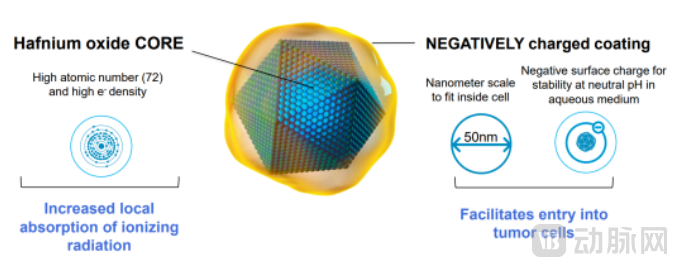 ▲ Schematic diagram of NBTXR3 structure
NBTXR3 is a potential "first-in-class" anti-tumor drug developed by Nanobiotix. NBTXR3 consists of 50 nm functionalized hafnium oxide (HfO2) composed of nanoparticles.Prior to standard ionizing radiation therapy, it is administered directly into the malignant tumor via a single intratumoral injection.Its unique physical propertiesIt enables greater localized accumulation of radiation within cancer cells.
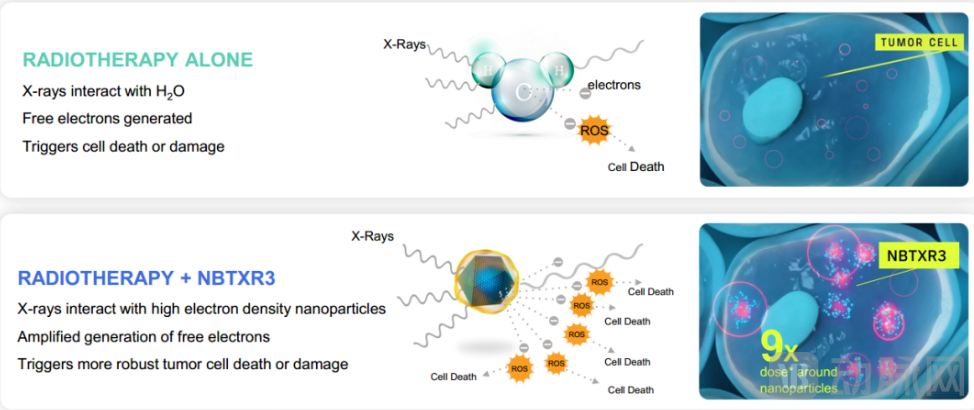
▲ Combined Effect of NBTXR3 with Radiotherapy
Once activated, NBTXR3 can amplify the radiotherapy energy delivered to tumor cells by a factor of nine compared to radiotherapy alone. Clinical data indicate that the mechanism of action of NBTXR3 ultimately induces extensive tumor cell death without increasing damage to surrounding healthy tissues. Furthermore, because NBTXR3 nanoparticles return to an inactive state after each irradiation session, patients can undergo multiple courses of radiotherapy following a single injection.
Head and neck squamous cell carcinoma is the sixth most common malignant tumor worldwide, with up to 40% of patients aged 70 years or older. There is an urgent need for safer and more effective therapies in this patient population, and Nanobiotix has selected this group to determine the safety and efficacy of radiotherapy-activated NBTXR3. Previously, NBTXR3 had received Fast Track designation from the U.S. FDA for the treatment of locally advanced head and neck squamous cell carcinoma.
Several studies are evaluating NBTXR3 for solid tumor indications. Nanobiotix’s two most advanced pipeline programs include a global, pivotal Phase 3 study of NBTXR3 in elderly patients with locally advanced squamous cell carcinoma of the head and neck, with interim data expected to be read out in the second half of 2024. The other is a Phase 3 clinical trial of NBTXR3 in combination with anti-PD-1 therapy, with the latest CMC review status to be announced in Q3 2023.
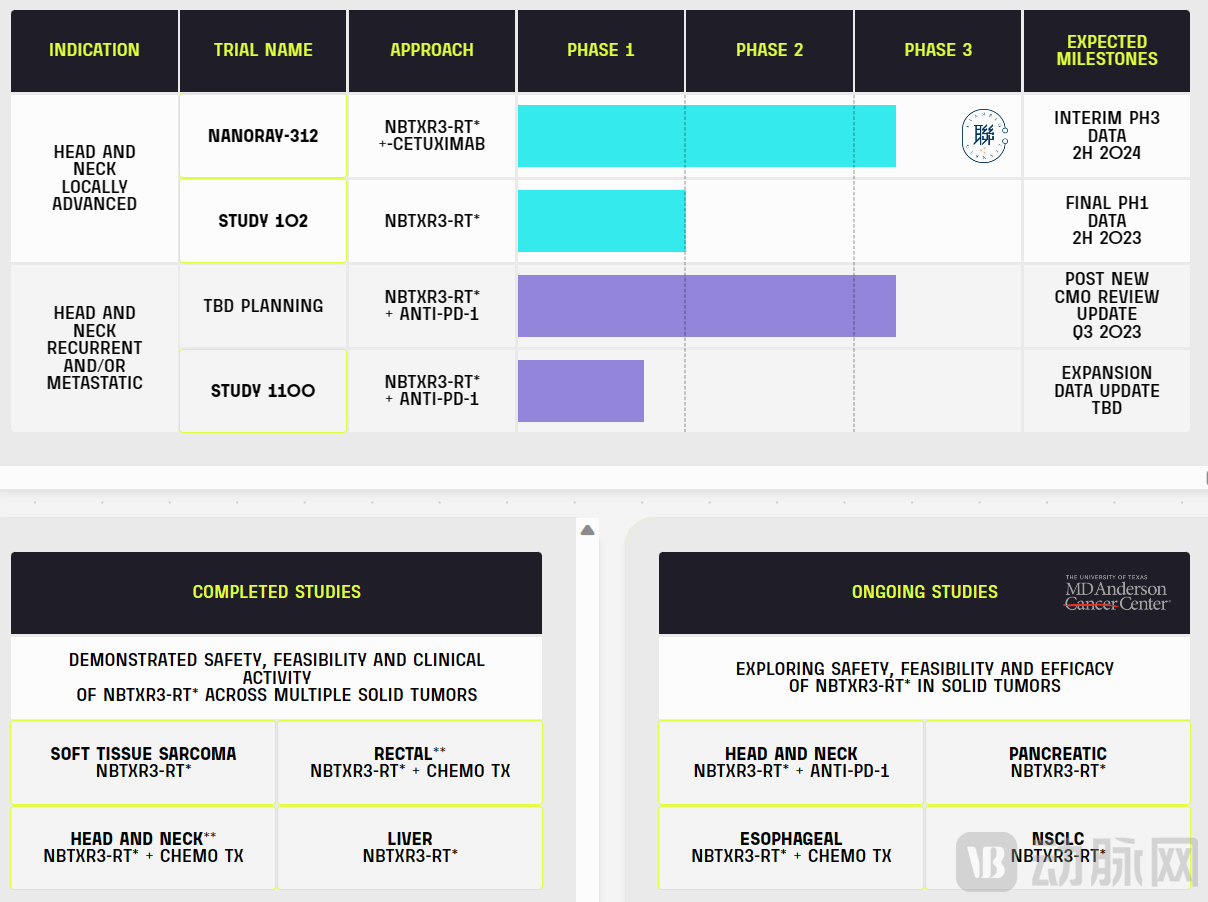
▲ Nanobiotix Pipeline Progress
In addition to the two pipelines mentioned above, Nanobiotix is conducting a Phase I prospective clinical study to evaluate the efficacy of NBTXR3 combined with anti-PD-1 therapy as a systemic treatment for patients with metastatic cancer, as well as the safety of intratumoral injection. Previous clinical data have shown that combining NBTXR3 with radiotherapy and PD-1 monoclonal antibodies can significantly improve tumor control at irradiated sites, resulting in prolonged tumor suppression.

▲ Nanobiotix Leadership Team
Dr. Laurent Levy, the founder, has deep expertise in the field of nanotechnology and extensive experience in related scientific and technological areas. Prior to founding Nanobiotix, he served as a consultant at Altran Technologies and collaborated with companies such as Sanofi, Guerbet, and Rhodia, as well as other early-stage biotechnology firms, to develop nanotechnologies. Additionally, he has served as Chairman of the Supervisory Board of Valbiotis, Vice-Chairman of the Executive Committee of the European Technology Platform on Nanomedicine (ETPN), and a founding member of the Nanomedicine Advisory Committee. The leadership team also boasts extensive experience in the life sciences industry.
In an era of rapid advancements in cancer immunotherapy,Global pharmaceutical companies are embracing new therapies, with combination regimens of chemotherapy, physical therapy, and immunotherapy representing a key direction.Nanobiotix is not the only biotech company to receive substantial investment from backers due to its advantages in combination therapies; Novocure, which focuses on oncology treatment, is another example.
In September 2018, Zai Lab and Novocure announced a strategic collaboration, under which Zai Lab would develop and commercialize Novocure’s tumor treating fields therapy in Greater China and collaborate with Novocure on global product development. In May 2020, the tumor treating fields therapy Optune, jointly developed by both parties,®Approved for marketing in China for the treatment of patients with glioblastoma (GBM). This is the first innovative therapy approved in mainland China for GBM in 15 years, regarded by the industry as ushering in a new era in oncology treatment, and has generated substantial revenue for the two companies, with sales repeatedly reaching record highs.
Currently, Zai Lab and Novocure are conducting or have completed multiple clinical trials of tumor treating fields. On January 5, the two companies jointly announced that the pivotal LUNAR study for non-small cell lung cancer (NSCLC) had met its primary endpoint. Following the announcement, Novocure’s stock price surged 68% on the day, with its market capitalization increasing by $5 billion to reach $12.5 billion.
Whether it is Nanobiotix, whose cash flow was “revitalized” through its collaboration agreement with Johnson & Johnson, or Novocure, whose market capitalization surged due to its partnership with Zai Lab, combination therapies are emerging as a new trend in cancer immunotherapy owing to their applicability across multiple tumor types. Whether more companies will follow this path to success remains to be seen.