

"Digital Intelligence" Drives Efficient Chronic Disease Management: Shandong Province Advances Digital Health Community Operations
Recently, the Tai’an Municipal Government in Shandong Province signed a cooperation agreement with WeDoctor Group to launch “Chronic Disease Digital Health Services” and further advance the development of Tai’an’s Chronic Disease Digital Health Consortium. As one of the first cities in China to explore the digital health consortium model, Tai’an’s latest move has drawn significant attention.
According to data from the National Health Commission, 75% of elderly people in China suffer from at least one chronic disease, and 43% have multiple coexisting conditions. As the aging process accelerates, effectively implementing health management that prioritizes prevention while integrating preventive and therapeutic measures has become a key focus for local governments and healthcare systems. Meanwhile, as healthcare reform deepens, addressing challenges such as tiered diagnosis and treatment to improve the overall operational efficiency of the medical service system is a critical reform task being actively pursued by local governments.
In the "Opinions on Further Improving the Healthcare Service System," it was proposed to "explore the establishment of joint chronic disease clinics by primary healthcare institutions and higher-level medical institutions to carry out treatment, prevention, and rehabilitation for common chronic diseases." This initiative was first successfully piloted in Tai'an, Shandong Province, and has since been promoted throughout the province. The underlying architecture of Tai'an's Digital Chronic Disease Health Community is the digital-intelligent joint chronic disease clinic, also known as the Internet-based Medical Consortium for Chronic Diseases. Since 2019, the Tai'an Municipal Government has collaborated with WeDoctor to explore the construction of a Digital Health Community, starting with the digitalization and intelligent management of chronic diseases. Currently, the Digital Chronic Disease Health Community has achieved standardization and replicability, emerging as an effective model for improving chronic disease management efficiency and facilitating the implementation of tiered diagnosis and treatment.
The Taian Chronic Disease Internet Medical Consortium Model relies on the collaboration between the Taian Municipal Government and WeDoctor to establish China’s first internet hospital dedicated to chronic disease management. Together with 15 secondary-and-above hospitals across the city, it has formed an Internet-based Medical Consortium for chronic diseases. Within member hospitals of the consortium, offline joint outpatient clinics for chronic diseases and online zones for follow-up consultations and medication purchases have been established. By integrating offline and online services, the model provides outpatients with chronic and special diseases with integrated, end-to-end services, including follow-up visits, prescription renewals, medical insurance settlement, and medication dispensing.
This service model has effectively addressed the pain points faced by chronic disease patients in seeking medical care and obtaining prescriptions, extending chronic disease management from within hospitals to community settings. In particular, it has innovatively established a “three-provider collaborative management” mechanism involving specialists, general practitioners, and health managers, thereby effectively promoting the integration of treatment and prevention. According to statistical data, the Internet-based Medical Consortium for Chronic Diseases in Tai’an City has covered 236,000 outpatient chronic disease patients across the city, alleviating more than 20% of the pressure on hospital outpatient services. The time required for patients to consult doctors and collect medications has been reduced from the previous 2–3 hours to just 20–30 minutes.
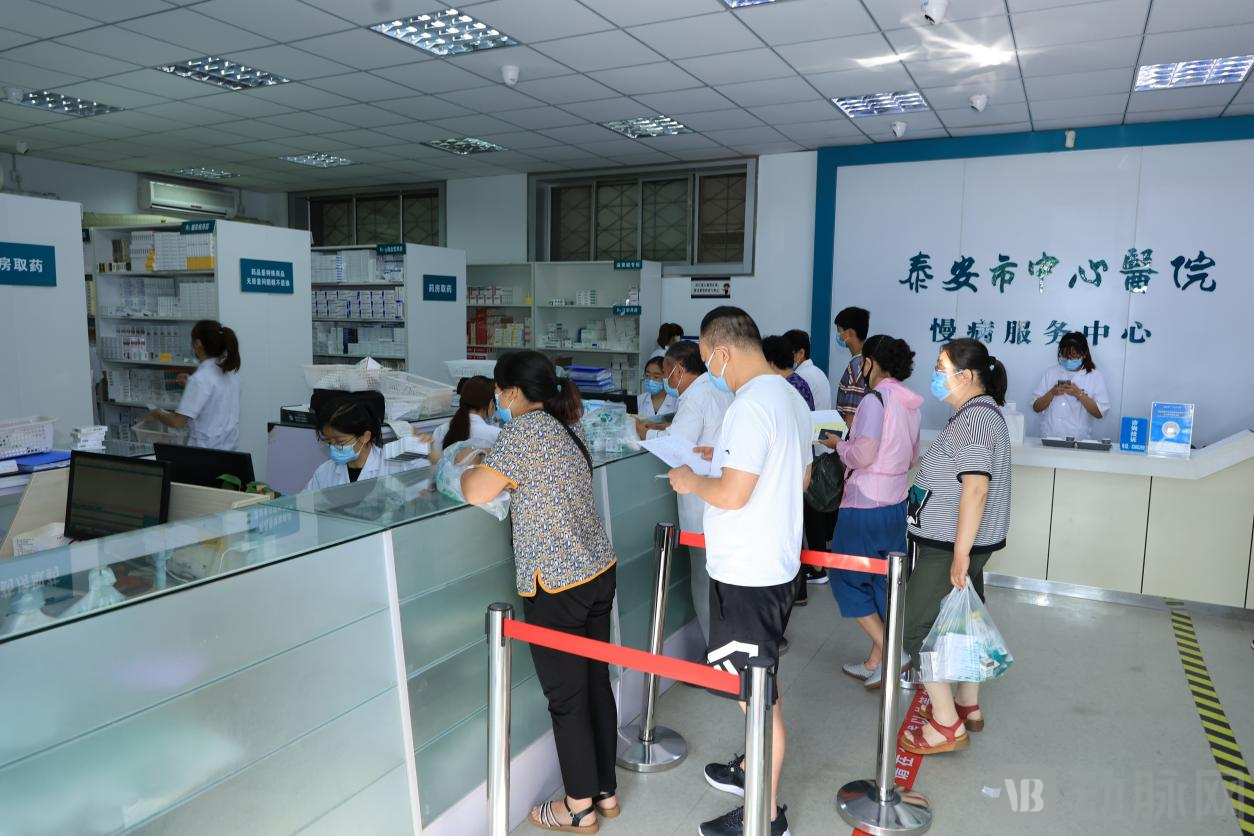
Figure | 15 Public Hospitals in Tai’an City Have Established Joint Outpatient Clinics for Chronic Diseases
Meanwhile, to better streamline chronic disease management services at the primary care level, the Internet Hospital for Chronic Diseases has collaborated with counties, districts, and cities to establish digital medical consortia. By deploying cloud-based mobile consultation vehicles, cloud-based mobile consultation kits, and medical and health workstations to create “mobile hospitals,” it empowers primary healthcare institutions to provide online diagnosis and treatment, remote consultations, two-way referrals, online prescribing, and medication delivery for common and chronic diseases. Leveraging digital tools and intelligent devices, an internet-based tiered diagnosis and treatment platform is being built to establish a closed-loop service system for comprehensive chronic disease management at the grassroots level.
This model fosters effective coordination among medical care, health insurance, and pharmaceuticals through an “Internet + Health Insurance + Medical Care + Pharmaceuticals” framework. It has initially achieved the “two increases and one decrease” goal—namely, improved chronic disease management services, enhanced patient health indices, and reduced burden on health insurance funds. As a process reengineering reform case submitted by Shandong Province to the Central Office for Comprehensive Deepening Reforms, it has been promoted across all 16 prefecture-level cities in Shandong.
The key to the success of Tai’an’s innovative exploration lies in the restructuring of medical insurance service processes through the “streamline administration, delegate power, and improve services” reform in the medical insurance sector. Tai’an established China’s first internet hospital for chronic diseases, issued China’s first online medical insurance settlement statement, and built an intelligent medical insurance monitoring system covering the entire healthcare process. By leveraging a digital platform to strengthen the review of reasonable examinations and medication, and to enhance cost containment efforts, Tai’an has secured the foundational service network of the internet-based medical consortium for chronic diseases from the perspective of medical insurance payment.
The renewed signing ceremony between the Tai’an Municipal Government and WeDoctor Group to deepen their cooperation will integrate and upgrade the Internet-based Medical Consortium for Chronic Diseases and the Digital Medical Community, further advancing the construction of Tai’an’s Digital Health Community for Chronic Disease Management. It will also actively explore reforms in health insurance payment methods, such as “global budgeting with retention of surpluses.”
The Digital Health Community model was first proposed and explored by WeDoctor, a leading digital healthcare service platform in China. This model has gained recognition from governments in multiple regions. In addition to Shandong Province, several other provinces and municipalities—including Tianjin, Shanghai, Zhejiang, and Jiangxi—are collaborating with WeDoctor to advance the development of local Digital Health Communities. At the 2021 National Conference on Promoting Experience in Deepening Healthcare Reform, the Tianjin Grassroots Digital Health Community ranked first among the “Top Ten New Initiatives for Advancing Healthcare Reform and Serving Public Health.” Led by Tianjin WeDoctor Internet Hospital and jointly established with 266 grassroots medical institutions across the city, this initiative implemented the “Four Clouds” platforms—Cloud Management, Cloud Services, Cloud Pharmacy, and Cloud Diagnostics. These efforts have enabled Tianjin to establish a grassroots healthcare service system characterized by unified management, shared responsibility, shared benefits, and standardized services.
Tianjin’s grassroots digital health consortium has taken the lead in implementing capitation-based payment reforms for diabetes within its medical insurance system and has established a performance incentive mechanism centered on health management, innovatively constructing a value-based healthcare service system based on “payment for outcomes.” This provides a replicable model with referenceable mechanisms and standards for Tai’an, Shandong Province, and other cities within the province as they further advance digital health consortia for chronic disease management.
The foundational value enabling the rapid nationwide adoption of Digital Health Communities lies in their ability to leverage digital intelligence to overcome bottlenecks in tiered diagnosis and treatment, thereby effectively “strengthening primary care.” Internet-based Medical Consortia, built on a foundation of digital intelligence, can resolve the persistent issue of “connected but not integrated” that plagues current medical consortia. By deeply integrating online and offline medical resources, they deliver value-based healthcare services that cover multiple scenarios, support various payment methods (including basic medical insurance, commercial insurance, and out-of-pocket payments), and incorporate supply chain solutions. This approach offers new strategies for promoting the expansion and decentralization of high-quality medical resources and achieving balanced regional distribution.
An examination of the Tai’an City Digital Health Community for Chronic Diseases reveals that this model addresses three common bottlenecks in the current development of Medical Consortia: First, it has obtained health insurance accreditation by ensuring equivalent quality and high efficiency (i.e., homogeneous service standards and more effective outcomes), thereby resolving a key obstacle to the integration of online and offline services from the payer perspective. Second, it enables the deployment of standardized diagnosis and treatment protocols and leverages technologies such as artificial intelligence to rapidly enhance the capabilities of primary care hospitals, thus strengthening the downward allocation of medical resources. Third, leveraging internet hospitals as a focal point, it progressively covers regional digital and intelligent infrastructure, establishing a unified “cloud platform” for data, services, and management within the Medical Consortium. This fosters connectivity and sharing from an information technology perspective, achieving seamless integration of workflows, services, data, and management, and ultimately constructing an integrated service delivery system.
In accordance with the five phases of building the WeDoctor Digital Health Community—“Establishing an Integrated Healthcare Service System,” “Upgrading Primary Healthcare Services,” “Single-Disease Management,” “Multi-Disease Management,” and “Exploring Diversified Services Combining Basic Medical Insurance and Commercial Health Insurance”—digital health communities in regions such as Shandong and Tianjin have adopted tailored approaches. Based on local realities, including population distribution characteristics and the status of their healthcare systems, these regions have chosen different entry points for development and are currently at varying stages of digital health community construction.
The digital chronic disease management consortium model in Tai’an, Shandong Province, has been rapidly promoted across all 16 prefecture-level cities in the province due to its “small-scale entry point, major reform” approach, which enables faster replication and easier implementation. In response to China’s gradual shift from volume-based (treatment) payment to value-based (health outcomes) payment and the growing momentum behind building a value-based healthcare system, the digital health consortium model is expected to explore more effective mechanisms in additional regions.
It is understood that, in addition to its implementation in Shandong, Tianjin, Shanghai, Zhejiang, Jiangxi, and other provinces (municipalities), the Digital Health Community is currently accelerating its expansion into 15 provinces, including Sichuan, Hainan, and Heilongjiang, presenting a widespread development landscape. Meanwhile, given the pioneering value of digital intelligence technologies and institutional innovations in driving the upgrading of medical service systems, and in light of China’s long-term goal of building an integrated healthcare and public health service system, the high growth potential of the Digital Health Community provides local governments with a high-quality platform and effective tool for achieving their objectives and implementing phased strategies.