

Qitan Tech Unveils QPursue Mid-Throughput Nanopore Sequencing Platform at READs2023 in Chengdu

QitanTech
Gene Sequencing Technology R&D Provider
On August 18, the “READs2023·China Nanopore Gene Sequencing Conference,” themed “Glimpsing All Things Through Nanopores, Envisioning the Future,” was grandly held in Chengdu, Sichuan. As a pioneer of nanopore gene sequencing technology in China, QitanTech joined forces with academicians and industry experts to engage in extensive academic exchanges and intellectual discourse. The conference comprehensively showcased the latest advancements in nanopore sequencing technology and its applications, explored its future potential and diverse possibilities in clinical and research settings, and jointly promoted high-quality development from scientific research to the translation of technological achievements.
Meanwhile, QitanTech further expanded its product portfolio by launching the QPursue mid-throughput nanopore sequencing platform at the conference. The platform includes the portable QPursue-6k nanopore sequencer, the desktop QPursue-6khex nanopore gene sequencer, and the accompanying QCell-6k chips. Specifically, the QPursue-6k supports sequencing with a single chip, offering a designed throughput of 60 Gb, while the QPursue-6khex allows flexible selection of 1–6 chips for sequencing, generating up to 360 Gb of data, thereby meeting demands for higher throughput and greater flexibility. Thanks to the significant increase in sequencing throughput, the QPursue mid-throughput nanopore sequencing platform greatly broadens its scope of application, further empowering scientific research and clinical practice in areas such as microbiome studies, Mendelian genetic disorders, cancer research, species identification, and biodiversity assessment.

READs 2023 · On-Site at the China Nanopore Sequencing Conference
“READs2023·China Nanopore Gene Sequencing Conference” was jointly organized by the Molecular Diagnostics Branch of the China International Exchange and Promotive Association for Medical and Health Care, the Frontiers Science Center for Disease-related Molecular Network of Sichuan University, and QitanTech. The conference brought together senior experts and scholars from prestigious institutions across multiple fields, including the Chinese Academy of Sciences, the Chinese Center for Disease Control and Prevention, the National Center for Bioanalysis, Yangzhou University, and Southern University of Science and Technology. Standing at the cusp of generational transformation in gene sequencing, the attendees leveraged their forward-looking perspectives to explore how next-generation sequencing technologies can unlock their potential and benefit human health.
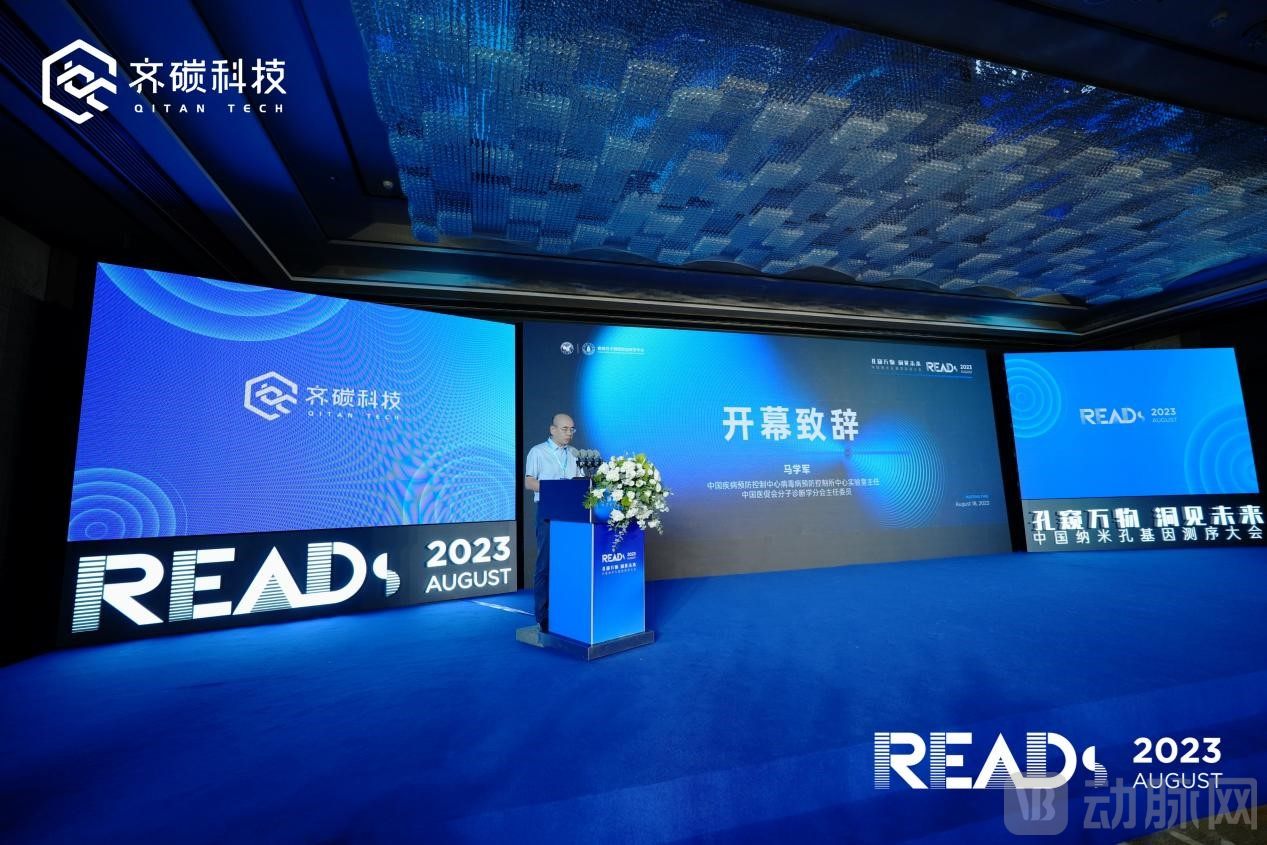
Address by Ma Xuejun, Director of the Central Laboratory of the Institute for Viral Disease Control and Prevention under the Chinese Center for Disease Control and Prevention, and Chairman of the Molecular Diagnostics Society of the China Medical Promotion Association
Ma Xuejun, Conference Chair, Director of the Central Laboratory at the National Institute for Viral Disease Control and Prevention (China CDC), and Chairman of the Molecular Diagnostics Committee of the Chinese Medical Promotion Association, delivered the opening address. He stated that gene sequencing technology has already played a significant role in multiple fields, including disease control, medicine, agriculture, and environmental science. Nanopore sequencing technology has not only brought about important breakthroughs in gene sequencing but also opened up numerous possibilities for life science research and applications. The READs Conference will establish a platform for gathering collective wisdom and fostering innovation, jointly promoting the advancement and diverse applications of next-generation sequencing technologies.
In his opening remarks, Professor Guo Yingqiang, Vice President of West China Hospital, Sichuan University, stated that gene sequencing technology serves as a critical foundation for the development of precision medicine. After nearly 50 years of advancement, it now plays a pivotal role in areas such as pathogen research and the diagnosis, prevention, and control of infectious diseases. He expressed hope that READs 2023 would accelerate the clinical translation of cutting-edge technological achievements through academic exchange and discussion, thereby promoting the development of precision medicine.
As a distinguished guest of the conference, Zhang Xuemin, an academician of the Chinese Academy of Sciences and Director of the National Center for Biomedical Analysis, also expressed high expectations for the event. He believes that the COVID-19 pandemic has made humanity realize that many scientific questions remain unanswered. The immense development potential of nanopore sequencing technology may revolutionize, or even disrupt, the prevention and control of major diseases. He looks forward to the advancement of this technology and its associated equipment providing breakthrough solutions and technical approaches.
During the academic presentation session, leading experts from various fields of life sciences—including pathogen detection, tumor diagnosis and treatment, forensic genetics, public health, and environmental microbiology—shared their latest research advances based on QitanTech’s nanopore gene sequencing platform.

Researcher Hu Songnian from the Institute of Microbiology, Chinese Academy of Sciences, Shares Cutting-Edge Applications of Nanopore Sequencing
Hu Songnian, Chief Engineer of the Chinese Component of the Human Genome Project and Researcher at the Institute of Microbiology, Chinese Academy of Sciences, compared the current applications of second-generation and third-generation sequencing technologies in microbial genome sequencing from the perspective of sequencing technology. He stated that the genome is akin to an anatomical chart in medicine or the periodic table of elements in chemistry, serving as the most fundamental basis. Over the past five years, third-generation sequencing has been involved in nearly all genome sequencing projects. Currently, achieving high-quality genome sequencing has become “straightforward and forceful”—primarily relying on third-generation sequencing. As the most representative third-generation sequencing technology, nanopore sequencing is highly competitive in high-quality microbial genome sequencing due to its characteristics of real-time analysis during sequencing and its compact, portable design.
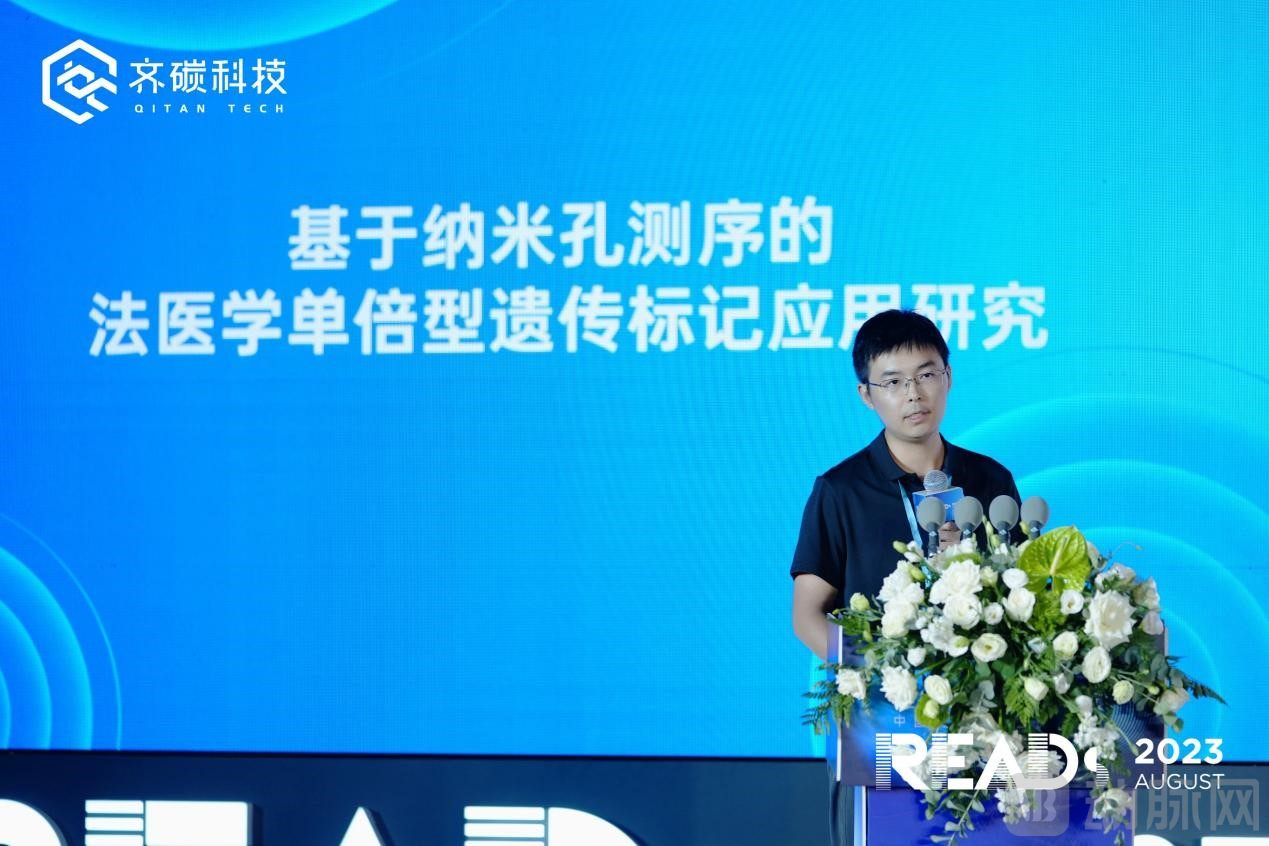
Wang Zheng, Associate Research Fellow at West China School of Basic Medical Sciences and Forensic Medicine, Sichuan University, Shares Frontier Applications of Nanopore Sequencing
Wang Zheng, an Associate Researcher at the West China School of Forensic Sciences, Sichuan University, shared the latest research advancements in nanopore sequencing for forensic criminal investigations. Notably, on August 14, a paper by Professor Hou Yiping’s team at the same institution, which utilized the QitanTech nanopore sequencing platform to study the mitochondrial genome, was published in a top-tier journal in forensic genetics.
Furthermore, during the one-day academic sharing session, experts including Professor Li Ruichao (Distinguished Professor at Yangzhou University), Researcher Yang Xinglou (Kunming Institute of Zoology, Chinese Academy of Sciences), Associate Researcher Wang Ji (Central Laboratory, National Institute for Viral Disease Control and Prevention, Chinese Center for Disease Control and Prevention), Associate Researcher Xia Yu (School of Environmental Science and Engineering, Southern University of Science and Technology), and Mr. Huang Yufeng (President of Meiyin Genomics) engaged in vigorous intellectual exchange and diverse perspective-sharing, presenting a feast of ideas on sequencing technologies and life sciences.
At the conference, Dr. Xie Dan, Co-founder of QitanTech, announced the launch of QPursue, a self-developed mid-throughput nanopore gene sequencing platform. The platform includes the QPursue-6k and QPursue-6khex nanopore sequencers and their配套 QCell-6k chips. This marks QitanTech’s second major commercial release of a nanopore sequencer following the QNome-3841hex, representing the cutting edge of China’s nanopore gene sequencing technology and signaling the advancement of domestically produced nanopore sequencers into the mid-to-high throughput segment.
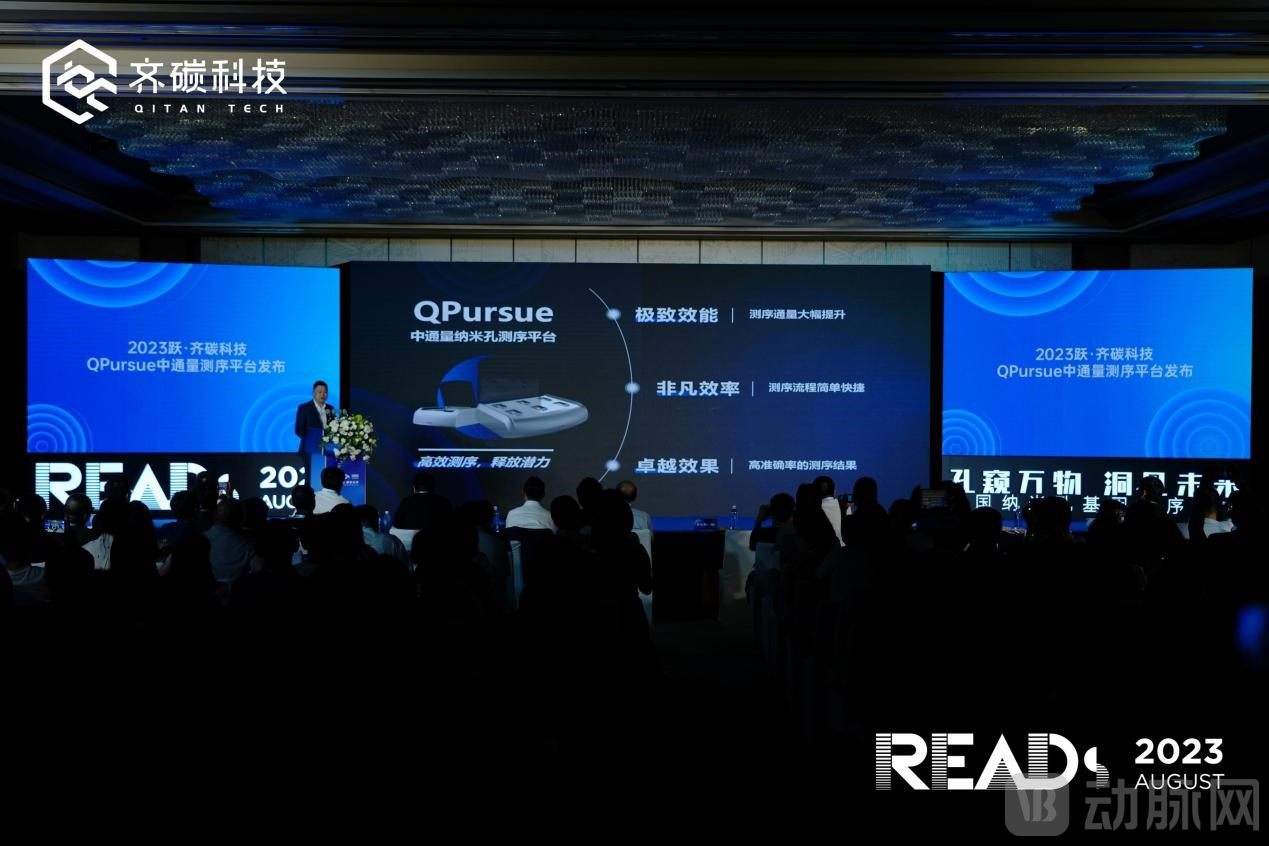
QitanTech Co-Founder Dr. Xie Dan Unveils QPursue Mid-Throughput Sequencing Platform
In the announcement, Dr. Xie Dan stated that the newly launched QPursue medium-throughput nanopore gene sequencing platform is another flagship product meticulously refined by the QitanTech team over many years. With two models released simultaneously, the company aims to meet users’ diverse, flexible, and higher-throughput sequencing needs.

QitanTech's Self-Developed Mid-Throughput Nanopore Gene Sequencer QPersue-6k
Among them, the QPursue-6k is equipped with one chip and has a designed throughput of 60 Gb, while the QPursue-6khex allows flexible selection of 1 to 6 chips for sequencing, generating up to 360 Gb of data. The increase in sequencing platform throughput is primarily attributed to the enhanced performance of the accompanying QCell-6k sequencing chip. The QCell-6k adopts a higher-density ASIC circuit layout, integrating the biochip and circuit chip into a single unit. With more than 6,000 nanopores per chip, it achieves a substantial increase in throughput, along with stronger anti-interference capability, a higher signal-to-noise ratio, and more stable sequencing performance.
In terms of accuracy, the QPursue medium-throughput sequencing platform is compatible with QitanTech’s latest generation K2 biochemical system and equipped with a new algorithm suite, achieving a single-read accuracy of 97% and a consensus accuracy (70x) above Q50. The significant increase in throughput, combined with its inherent long-read capability, offers immense potential for large-genome sequencing applications.
Building on high throughput and high accuracy, the QPuesue-6k retains its compact and portable design, with the instrument measuring only 15 cm in length and width. The chip loading mechanism has been upgraded to a one-step snap-in design, streamlining sequencing operations. Despite an order-of-magnitude increase in sequencing throughput, real-time sequencing is still achievable thanks to efficient algorithms and computing hardware, making it the preferred choice for point-of-care sequencing and small laboratories.
The substantial increase in throughput will also bring about a significant reduction in per-unit sequencing costs, meeting the data volume demands of large-scale genomic sequencing. This greatly expands the applicability of nanopore sequencing, providing rapid and reliable sequencing support for applications such as microbiome research, Mendelian genetic disorders, cancer research, species identification, and biodiversity studies.
In terms of application performance, which has garnered widespread attention within the industry, QitanTech conducted sequencing using the human reference genome and Zymo bacterial mixed standards. The data results demonstrate that the QPursue medium-throughput sequencing platform has validated its performance in application scenarios such as large and complex genome assembly and variant detection, microbial community composition analysis, and metagenomic assembly. All aforementioned sequencing results met the expected outcomes or specifications, underscoring the broad applicability and reliability of the QPursue medium-throughput sequencing platform.
At the press conference, Dr. Xie Dan also unveiled QPrenano-100, a compact automated library preparation device independently developed by QitanTech. This device enables the automated construction of 1 to 24 libraries in any quantity. When used in conjunction with QitanTech’s library preparation kits and rapid library preparation sequencing kits, it achieves full automation of the entire library preparation workflow, significantly reducing manual labor and improving operational efficiency. Featuring a compact footprint and precise liquid handling, the QPrenano-100 can be placed on standard laboratory benches, helping users achieve efficient, fully automated sample preparation.
At the conference, Dr. Bai Jingwei, Co-founder and Chief Scientist of QitanTech, shared insights into the current state and future trends of nanopore gene sequencing. Starting with the generational evolution of sequencing technologies, he elaborated on the principles and characteristics of each generation, as well as the most cutting-edge scientific research achievements based on nanopore gene sequencing technology.

Dr. Bai Jingwei, Co-Founder & Chief Scientist of QitanTech, Shares Insights on Nanopore Sequencing Technology
Regarding the development of nanopore sequencers, he stated, “The hallmarks of nanopore sequencing technology are ultra-long read lengths, miniaturization, and high speed. Throughout the product development process, we have set even higher standards for ourselves. For instance, when we refer to speed, we mean not only the sequencing speed itself but also the real-time, rapid turnaround from data generation to analytical results. When we speak of ease of use, we go beyond simple sample preparation to achieve one-touch sequencing from sample to result. In terms of cost, we focus on how to further reduce both the cost per unit of data and the equipment cost.”
Dr. Bai Jingwei believes that the era of nanopore sequencing technology, as an innovation-enabling tool, has arrived. This view resonated widely among attendees. New-generation gene sequencing technologies, represented by nanopore gene sequencing, are entering a new phase of accelerated development, poised for explosive growth, thanks to their prominent advantages such as long read lengths, real-time sequencing, and compact portability.
Attendees at the event also noted that while second-generation sequencing currently remains mainstream, next-generation sequencing technologies represented by nanopore sequencing are accelerating in terms of market maturity and expansion. After reaching an inflection point, these technologies are poised for explosive growth.
Since 2016, QitanTech has ventured into the uncharted territory of nanopore gene sequencing technology in China. Through continuous technological breakthroughs, it launched the country’s first commercial nanopore gene sequencer, the QNome-3841, in late 2021, opening the door to the commercialization of domestically produced nanopore gene sequencers and establishing itself as a leader in China’s nanopore sequencing industry.
Since its commercial launch over a year ago, QitanTech’s nanopore sequencing platform has played a significant role across multiple fields, serving more than 200 institutional clients in areas such as pathogen research, prevention and control of animal and plant diseases, forensic investigation, and public health epidemic prevention. To enable broader user access to hands-on experience and learning of nanopore sequencing technology, QitanTech officially opened its first Customer Experience Center in Chengdu this June. To date, the center has welcomed over one hundred users from across China.
Behind the rapid commercialization strategy lies, on one hand, QitanTech’s solid technological accumulation and sustained innovation capabilities, and on the other, vast market demand. Data shows that the global market for gene sequencers and consumables has achieved a compound annual growth rate (CAGR) of 20% in recent years. By 2030, the global market for gene sequencers and consumables is projected to reach $24.58 billion, while China’s market is expected to reach RMB 30.39 billion.
Looking ahead, QitanTech will take the launch of its medium-throughput nanopore sequencing platform as a new starting point to continuously refine its products, reduce sequencing costs, and enhance performance. Aiming to create a one-stop nanopore gene sequencing solution that delivers results directly from sample input, the company will persistently drive the commercial translation of nanopore sequencing technology, truly making gene sequencing accessible to all and safeguarding human health.