

Akai Bio Strengthens Leadership with Renowned Immuno-Oncologist Matthew Paul McCormack to Drive Foundational Innovation in Cell Therapy

iCamuno
Developer of Universal Cell Therapies
In September 1971, in Texas, USA, a male infant suddenly developed a widespread red rash, accompanied by severe convulsions and sudden cardiac arrest, just minutes after birth. The child was immediately placed in a sterile isolation chamber. Without the use of any medications, the boy’s condition gradually improved. He remained inside this isolation “bubble” for 12 years.
The boy was named David Phillip Vetter. He was later diagnosed with X-linked severe combined immunodeficiency (X-SCID), a condition that subsequently became known as “bubble boy” disease. For many years, David lived in a “bubble” while awaiting a suitable bone marrow match. Twelve years later, he finally underwent an allogeneic hematopoietic stem cell transplantation. The surgery was successful, and his postoperative recovery initially delighted everyone. However, the improvement was short-lived; he was soon diagnosed with acute lymphoblastic leukemia (ALL) and unfortunately passed away shortly thereafter.
In the early 2000s, Matthew Paul McCormack, a researcher at the MRC Laboratory of Molecular Biology at the University of Cambridge in the United Kingdom, collaborated with others to study gene therapy for X-SCID. They discovered that this gene therapy had the side effect of causing ALL in many cases.
Under normal circumstances, the body’s key immune cells—T cells—develop within the thymus, a process that involves competing for space with other cells, known as “cell competition.” Professor Matthew’s subsequent research revealed that it was precisely because this gene therapy disrupted the “cell competition” process in the thymus that leukemia was triggered.
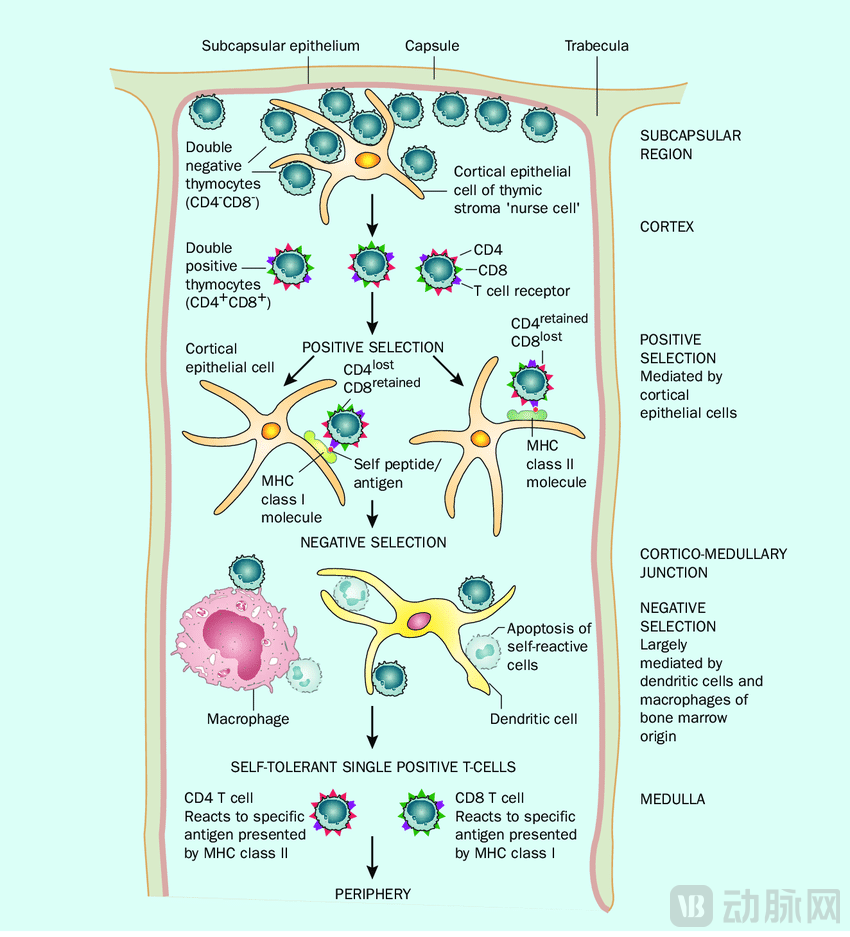
T Cell Development in the Thymus (THE LANCET • Vol 357 • June 2, 2001)
“Cell competition” has been proven to be an important mechanism for leukemia suppression, and a recent paper published by Professor Matthew in the Journal of Experimental Medicine further reveals that overexpression of the Lmo2 gene can induce T-cell lymphoblastic leukemia by affecting thymocyte competition. This suggests that the failure of cell competition may be a major factor in the onset and progression of human leukemia, which is crucial for preventing leukemia following cell therapy and gene therapy.
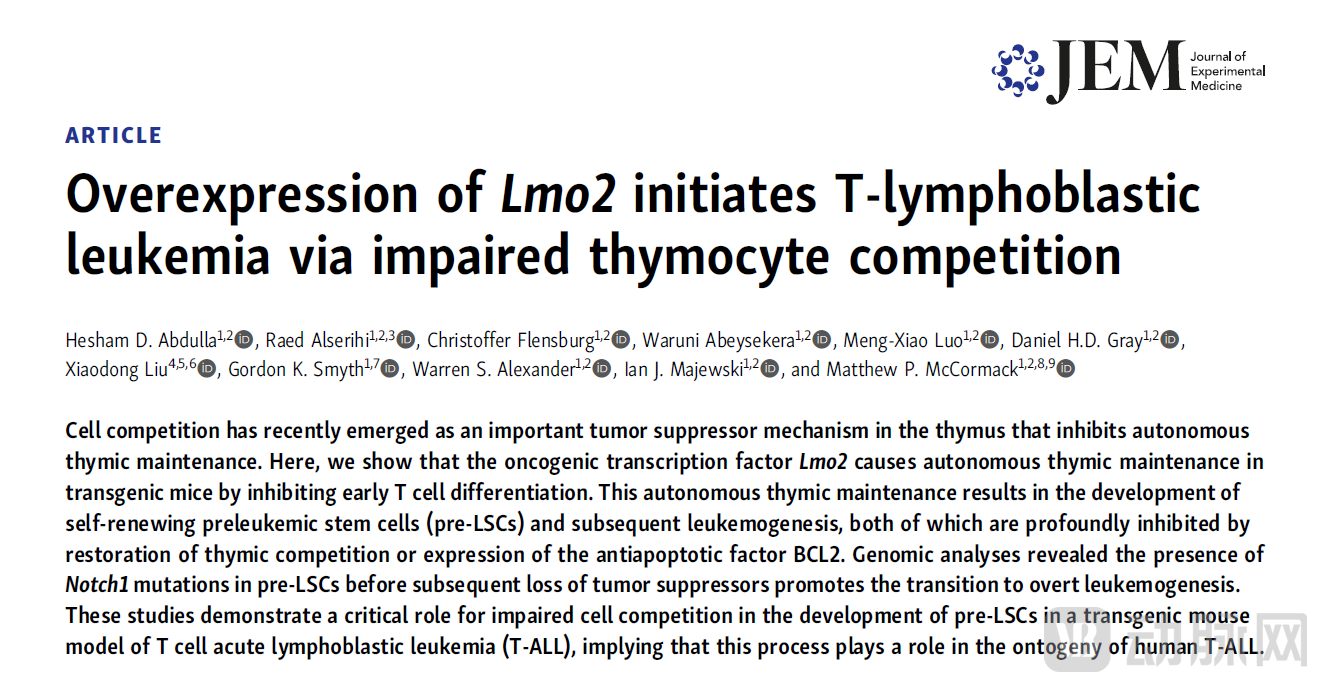
Matthew Paul McCormack’s recent paper was published in the Journal of Experimental Medicine.
According to Professor Matthew, dissecting the process of cell competition and refining therapies to ensure that cell and gene therapies do not disrupt cell competition, while preventing immune cells from excessive expansion in the absence of cell competition, is the “inevitable path” toward safer cell and gene therapies.
After earning his Ph.D. at the Hanson Institute for Cancer Research at the University of Adelaide, Professor Matthew has long been engaged in scientific research on oncology and immunology at the University of Cambridge (UK), the Royal Melbourne Hospital at Parkville in Victoria, the Walter and Eliza Hall Institute of Medical Research, the Australian Centre for Blood Diseases, and Monash University.
During my tenure at Monash University,Dr. Liu XiaodongOutstanding achievements in fields such as cellular reprogramming and epigenetics caught the attention of Professor Matthew. The two subsequently engaged in extensive exchanges and collaboration in their research, leaving a profound impression on each other.
In recent years, fields in which Professor Matthew specializes—such as tumor immunology, epigenetics, bioinformatics, and protein chemistry—have been rapidly developing and converging. iPSC-derived cell therapies have demonstrated strong potential for clinical application in research on cancer, neurodegenerative diseases, ophthalmic diseases, and other conditions.
“Through his long-term focus on the industry, Professor Matthew believes that the time has come to translate scientific achievements into clinical applications. He is thrilled to leverage his expertise to help treat human diseases, which has sparked his idea to move from the laboratory to the industrial sector.”
In 2022, Aikailiyuan Biotechnology, co-founded by Dr. Liu Xiaodong, extended an invitation to Professor Matthew. Subsequently, he resigned from his position at Monash University to join Aikailiyuan Biotechnology full-time as the Senior Director of Oncology Immunotherapy.
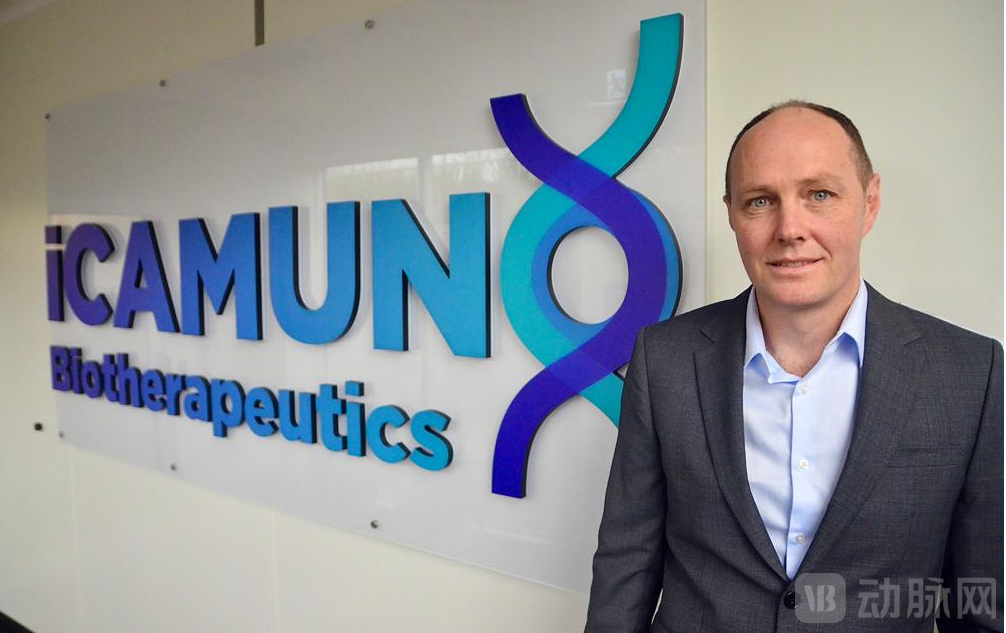
Professor Matthew Paul McCormack
Professor Matthew has identified early and late mutations in the onset and progression of leukemia through genomic studies of mouse models of leukemia.Identifying early mutations is even more critical for preventing the onset of leukemia, because a therapy targeting late-stage mutations will inevitably leave some cells harboring early mutations, thereby posing a risk of post-treatment relapse.
Professor Matthew and his team have also discovered a novel approach to studying the process of cell competition and its significance in the development of leukemia. This work is highly significant, as it can guide the development of cell therapies by maintaining a state of cell competition, thereby enhancing safety and minimizing the risk of side effects while ensuring efficacy.
For Aikailiyuan Biotechnology, co-founder Dr. Liu Xiaodong has been conducting research related to induced pluripotent stem cells (iPSCs) since 2013 and successfully constructed the world’s first human-derived three-dimensional blastocyst-like structure using somatic cell reprogramming technology, establishing Aikailiyuan Biotechnology’s leading position in the iPSC field.
Currently, leveraging its proprietary iPSC platform technology, Aikailiyuan Biotechnology has developed multiple pipelines in oncology, Parkinson’s disease, and ophthalmic disorders across the fields of cancer therapy and regenerative medicine.
According to Professor Matthew, the next major hurdle that cell therapy must overcome in the future is leveraging gene-editing technology to empower cell therapies and address safety, manufacturing processes, stability, cost, and regulatory compliance issues in industrialization.
In the biopharmaceutical sector, although we have achieved rapid growth over the past decade, our development has been rather “extensive.” We have established some basic frameworks in progressing from “0” to “1”; however, amid the current “capital winter,” the industry is increasingly awakening to the importance of source innovation and core technologies.
Tracing back to source-oriented basic research, developing foundational core patents, and conducting clinical-purpose scientific research, stakeholders across the industry are beginning to scrutinize whether every effort yields “tangible impact” and ensures “sustainable development.”
Strategically building innovation capabilities at the source is a fundamental requirement for biotech companies to compete in the next era, and a prerequisite for fostering the robust growth of China’s biomedical and healthcare sector.
Whether in the application of iPSC technology or in basic research on tumor immunology, Aikailiyuan Biotechnology possesses robust technical reserves, scientific leaders capable of sustainable innovation, and extensive clinical practical experience. The company is fully equipped with the driving force to maintain a leading position in the fields of cancer therapy and regenerative medicine, and it is believed that it can deliver safe and effective cell therapies that offer promising prospects for patients.