

BeyondMind Secures Angel Investment from Zhongke Angel Fund to Advance Emotion Recognition and Wearable Interaction Technologies
VCBeat has learned exclusively that Shenzhen Bi'an Mind Technology Co., Ltd. (hereinafter referred to as "Bi'an Mind") recently secured exclusive angel-round investment from the CAS Angel Fund. The funds raised in this round will be primarily allocated to the development of new products and market expansion.
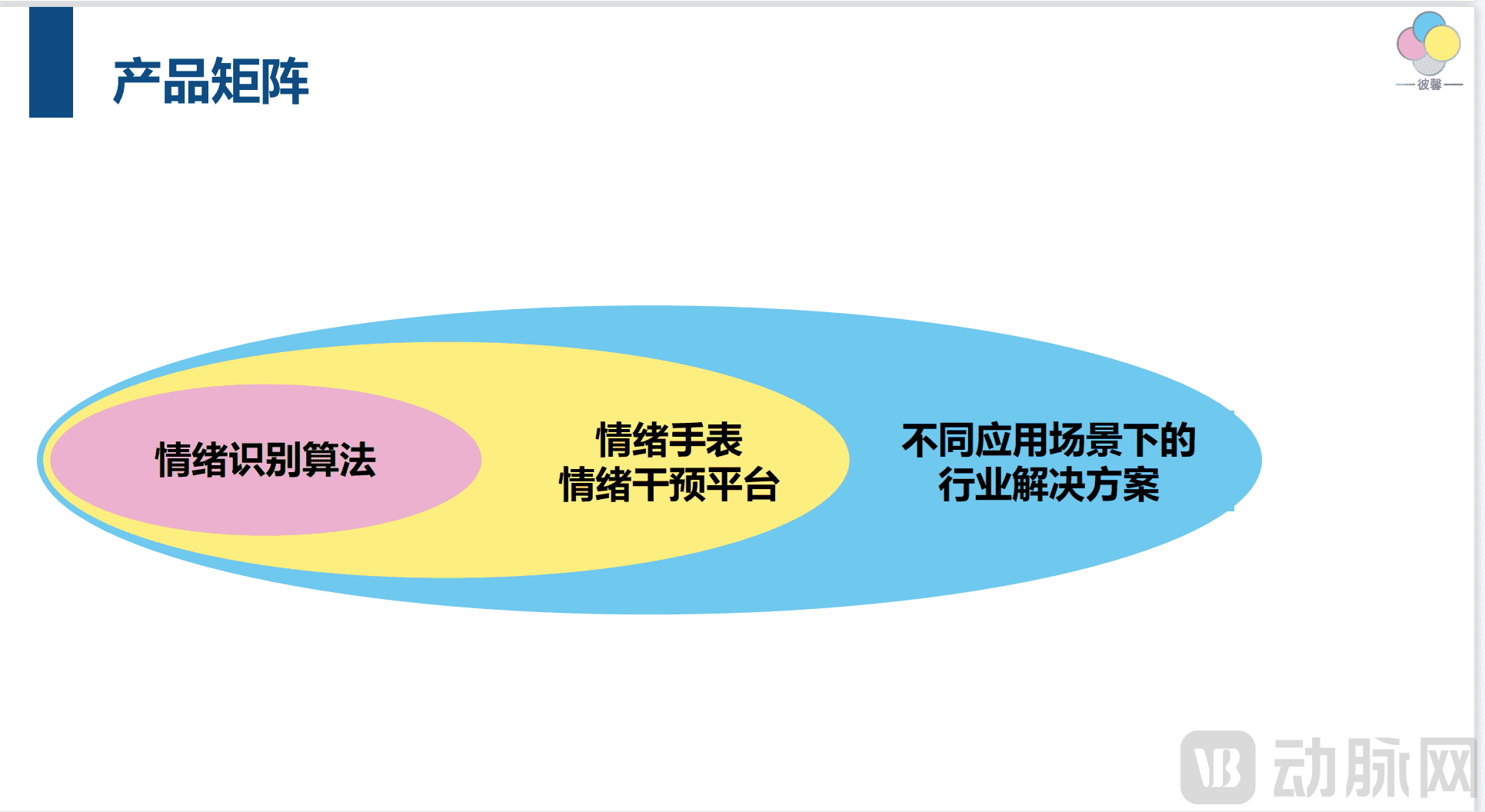
Bian'an Mind is a company specializing in emotion recognition and wearable device interaction. It has established multiple product lines, including emotion recognition algorithms, wearable interactive hardware, and industry-specific solutions based on its hardware, thereby creating a comprehensive product ecosystem that integrates algorithms with hardware.
Mental HealthMental health, in contrast to physical health, refers to a stable psychological state characterized by internal psychological harmony and effective adaptation to the external environment. It encompasses five key dimensions: emotional experience, self-awareness, interpersonal relationships, cognitive efficacy, and adaptability. Based on the severity of conditions and the hierarchical needs of the population, the application fields of mental health can be categorized into emotional regulation, psychological counseling, and psychiatric diagnosis and treatment.
According to the China Mental Health Survey (CMHS), the weighted lifetime prevalence of any mental disorder (excluding dementia in old age) among Chinese residents is 16.6%. In comparison, data from the International Diabetes Federation (IDF) indicate that the prevalence of diabetes among Chinese adults was only 10.4% in 2021. Since the outbreak of the COVID-19 pandemic, mental health issues have become more prominent, with a significant increase in the number of individuals affected by depression and anxiety disorders.
Corresponding to the vast market is the scarcity of psychiatric diagnostic and treatment resources and the lack of technological innovation. In China, the per capita investment in psychiatric specialty hospitals amounts to only $1.07, less than 1/30th of the per capita investment in developed countries such as those in Europe, the United States, and Japan. There is a relative shortage of psychiatric medical staff, facilities, and financial investment.
The vast market has attracted a significant number of investment institutions. From 2021 to the present, there have been 34 investment events in the mental health sector, involving 25 companies. These include technology-driven system developers, intervention platforms for specific mental disorders, digital healthcare platforms, and broad-based psychological service brands. Notably, the businesses of most of these companies have integrated technological innovation to varying degrees. Although the mental health track has attracted numerous startups at this stage, few large corporations have emerged as prominent players. The primary reasons for this are—
First, mental health is a worthwhile endeavor, but not a lucrative business. Providing psychological counseling and therapy along with related professional training can generate enough income to support one’s family; however, scaling it into a rapidly replicable business model is exceedingly difficult. This is because mental health services are highly non-standardized, naturally lending themselves to small-scale, boutique service models.
Second, although mental health boasts a vast market potential, the number of truly “effective” markets remains limited. While the importance of mental health is widely recognized, cultivating consumers’ willingness to pay for such services requires prolonged market education. Furthermore, companies in the mental health sector face competitive pressure not only from industry peers but also from various entertainment sectors, including fortune-telling, astrology, tarot readings, live-action role-playing (LARP) games, and bars. When confronted with emotional distress, consumers appear more inclined to spend on entertainment venues rather than purchase psychological services.
Faced with such a vast yet immature market, Sun Haiyang, founder of Bi’an MindTech, believes that the mental health industry currently presents both opportunities and challenges. Although the market remains underdeveloped, Bi’an MindTech has found a key—a key capable of unlocking new frontiers in the field of mental health: emotion recognition and intervention based on wearable devices.
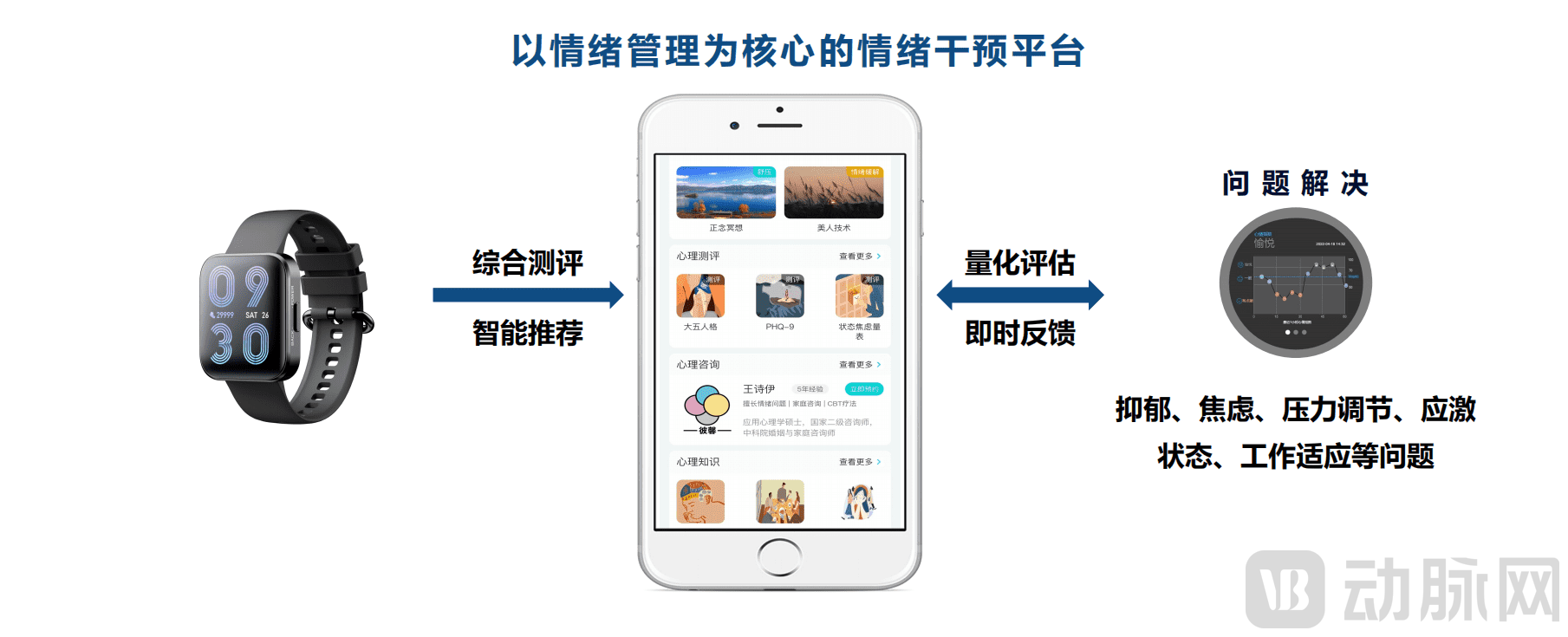
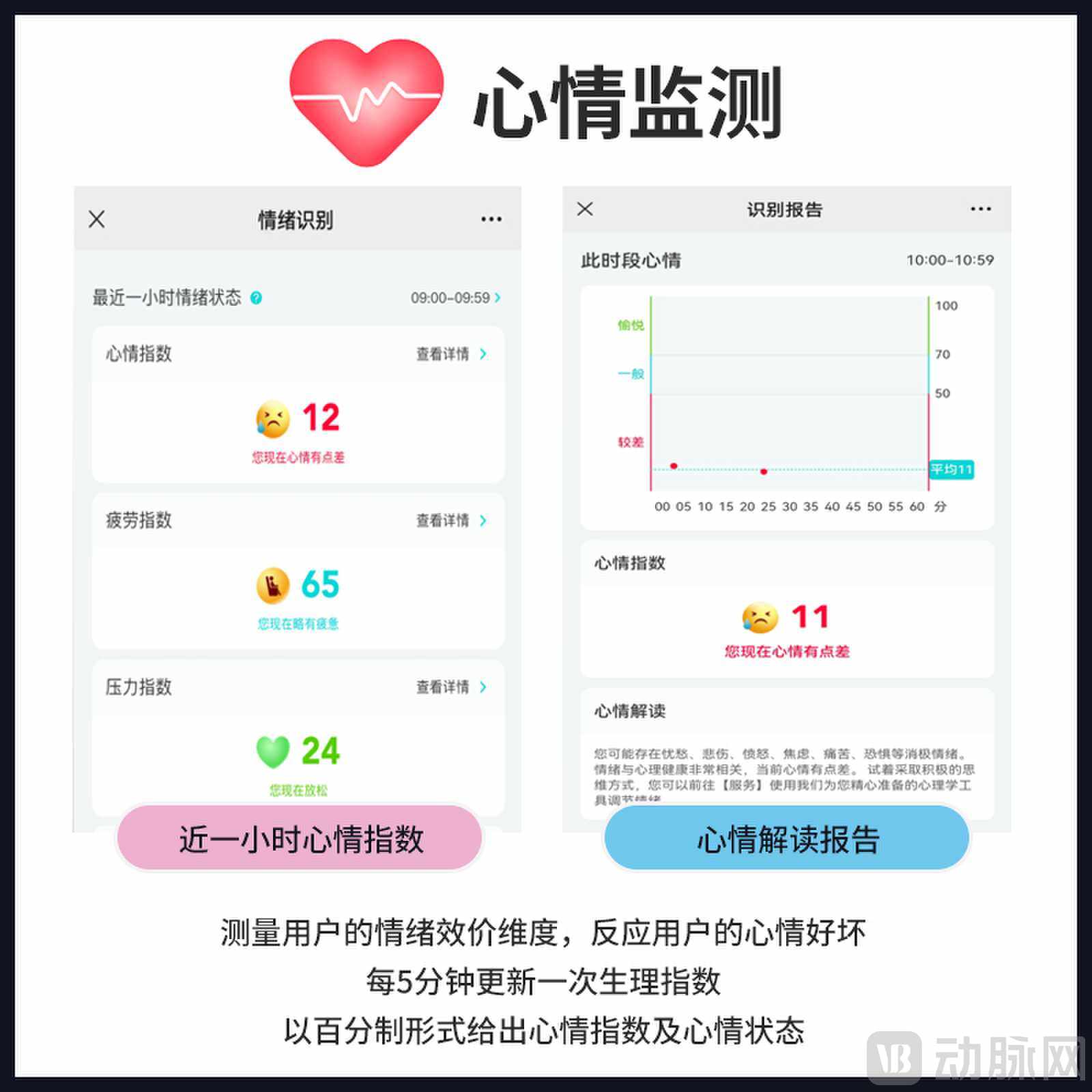
Bian An Mind currently possesses algorithms for emotion recognition via wearable devices, capable of identifying various indicators such as stress, mood, mental fatigue, and concentration levels. Furthermore, it can intelligently recommend and match corresponding psychological services—such as mindfulness meditation, exercise, and psychological assessments—based on an individual’s specific emotional state. “We have truly achieved a fully data-driven process for the assessment, intervention, and outcome evaluation of emotional states, enabling closed-loop management. This is our significant advantage,” said Sun Haiyang.
Bi’an Mind is dedicated to building a novel emotional intervention platform that leverages its proprietary emotion algorithms for mood monitoring and proactively recommends matched “intervention methods” based on users’ emotional states. During the intervention, real-time changes in users’ emotional and physiological data are used to assess intervention efficacy and enable deep interaction with digital therapeutics, thereby forming truly personalized therapies grounded in the principle of “concurrent treatment of body and mind.” After users experience the intervention methods, their ongoing emotional data are continuously collected to evaluate the effectiveness of these methods and to calibrate them using large-scale datasets.
Mr. Xu Mingliang, Chairman of Zhongke Angel, stated: “The mental health services market is large and growing robustly. However, current mental health products face significant challenges: psychological counseling offerings are relics of a previous era; digital therapeutics pursuing a serious medical product pathway struggle with monetization; and consumer-grade products suffer from poor perceived efficacy, low user retention, limited personalization in interventions, suboptimal outcomes, and overly simplistic monetization models. Leveraging its proprietary emotion recognition technology, Bi’an Mind can serve as a bridge between intervention methods and wearable devices, facilitating monetization while also acting as a ‘ruler’ for digital therapeutics.”
In terms of intervention methods, Bi'an Mind has already collaborated with multiple well-known psychological service and digital therapeutics companies, such as “Little Sleep.” A variety of psychological services and digital therapeutics products have been launched on Bi'an Mind’s psychological service platform. The platform’s monthly active users (MAU) have reached nearly 10 million.
The greatest advantage of Bi’an Mind’s emotional intervention platform lies in its ability to achieve near-zero-cost customer acquisition, leveraging the massive shipment volume of smart wearable devices. In the future, as more intervention products are launched, Bi’an Mind will build an integrated ecosystem connecting users, hardware, and interventions, serving consumers as a core provider of interactive functionalities.
“We have reason to believe that an emotional intervention platform integrating monitoring, intervention, and assessment will undoubtedly become the future of psychological services,” said Zhao Lei, Managing Director of Zhongke Angel Fund.
Currently, over two million smartwatches are equipped with Bi’an Mind’s emotion algorithm. It is also expected that by the end of this year, a leading wearable brand will integrate Bi’an Mind’s emotion algorithm into its smartwatches. This substantial shipment volume provides significant market potential for Bi’an Mind to expand its innovative emotional intervention services.
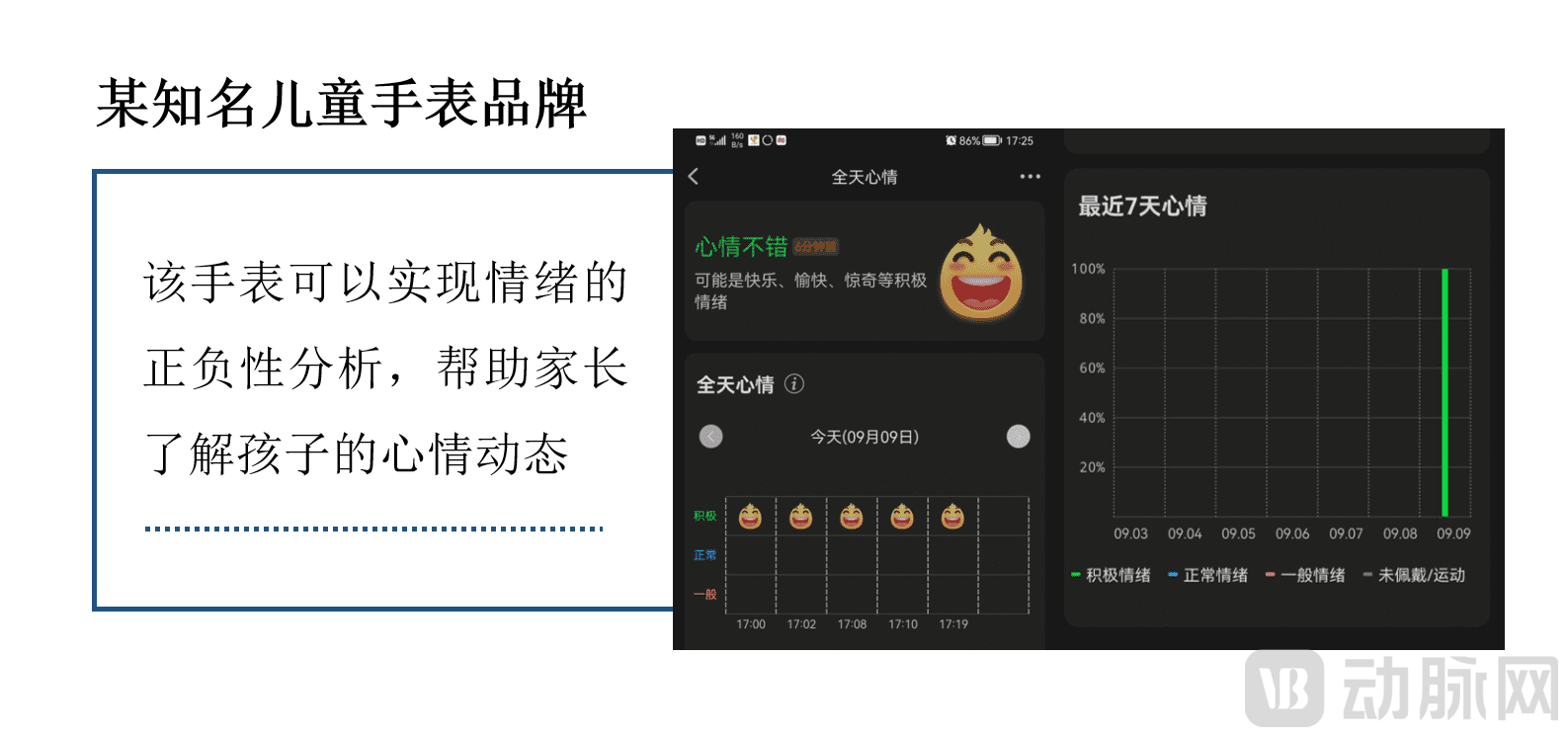
In addition to licensing algorithms to traditional smartwatches to enable emotion detection and intervention capabilities, Bi’an Mind is also committed to identifying “essential needs” by applying emotional intervention services in the field of human factors engineering, thereby monitoring the work status of employees in specialized roles within special industries. In recent years, there has been a growing imperative in these special industries for wearable devices that provide end-to-end data monitoring of employees during work hours and deliver targeted solutions.
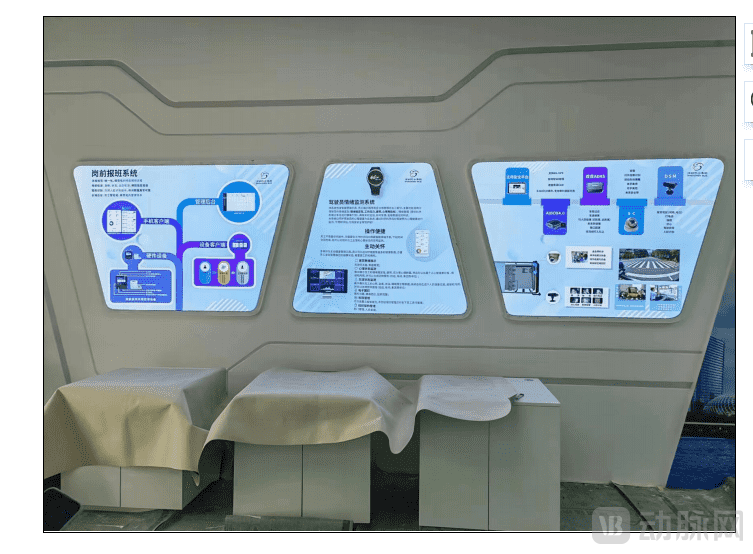
Driver Emotion Detection System Showcased at a Local Bus Group
The key reason Bi’an Mind has garnered favor from the CAS Angel Fund lies in its transformation of relatively “soft” psychological services into hardware-based, productized, and data-driven solutions, thereby achieving ecosystem-wide data monitoring. This approach aligns perfectly with the current trend toward proactive health.
Moreover, Bi'an Mind's emotion-tracking smartwatch not only features emotion recognition capabilities but also provides consumers with a platform for emotional intervention. It is compatible with various data-driven therapies and psychological service models, and can conduct data-based evaluations of the efficacy of different therapies and services. The future development of Bi'an Mind holds immense potential.
Introduction to Investors
Zhongke Angel Fund was jointly established by the CAS Fund of Funds and Jiadao Capital Investment. Relying on the Chinese Academy of Sciences (CAS) and headquartered in Shenzhen, it is an angel investment fund dedicated to the commercialization of scientific and technological achievements from top-tier research institutions. The fund focuses on angel and Pre-A rounds of investment in projects characterized by technological and business model innovation, capable of fostering strategic emerging industries such as next-generation information technology, artificial intelligence, biomedicine, and advanced manufacturing. By fully integrating hard-core technological strength with capital market connectivity, the fund aims to identify and invest in early-stage deep-tech projects with strong market prospects, thereby promoting the industrialization of outstanding domestic scientific and technological achievements. Adhering to the principle of being “a growth partner for entrepreneurs,” the fund helps them evolve into great enterprises with long-term social and commercial value.