

Billion-Dollar Mental Health Market Gap: Addressing the Psychological Needs of China's 180 Million Elderly

Long Hill Capital
Venture Capital Institution
The title is somewhat sensational, but the data are truly “alarming.”
Data from the National Bureau of Statistics in 2021 showed that China had approximately 267 million people aged 60 and above, accounting for about 17.9% of the total population. Among them, a study by the Chinese Academy of Sciences indicated that the mental health prevalence rate among urban elderly was 30.3%, while that among rural elderly was only 26.8%.
This means that the rate of good mental health among Chinese adults aged 60 and older is less than 30%.
Evidence shows that as older adults age, it is not only their bodies that become fragile, but also their “minds.” This vulnerability may be far greater than we imagine—taking late-life depression as an example, approximately 16% of Chinese adults aged 60 and older suffer from depression, whereas the prevalence among the general adult population in China is only 3.4%.
Regrettably, due to various reasons, the mental health of older adults has long been consigned to “hidden corners.” Over an extended period, stakeholders ranging from policymakers and market players to family members, friends, and even older adults themselves have rarely engaged in introspection. Phrases such as “I’m just getting senile,” “I’ve been sleeping poorly at night lately,” and “I don’t know why I’ve lived so long” have become habitual refrains attributed to aging, rather than being recognized as symptoms of mental illness.
Fortunately, this situation is taking a turn for the better.
First, from a policy perspective. In 2021, China elevated “proactively addressing population aging” to a national strategy, with supporting policies gradually being implemented: these include encouraging attention to the psychological well-being of older adults, advocating for improved service quality, promoting the development of networked mental health services at the grassroots level, and incorporating mental health into the criteria for assessing healthy aging.
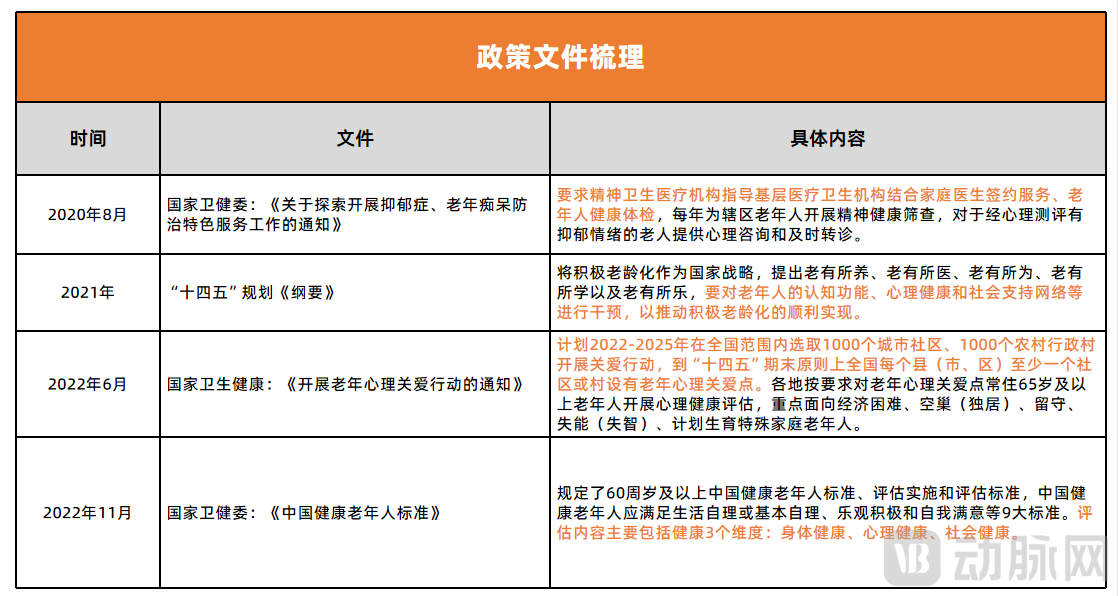
Figure: Compiled by VCBeat based on public information
Secondly, from a market perspective. After the pandemic, the mental health sector began to gain momentum. According to previous statistics by VCBeat, since 2020, there have been a total of 84 financing rounds completed in China's mental health field. Leading companies have progressed to Series B and C funding rounds, with business models for all-age psychological treatment becoming increasingly clear, and new therapies and technologies continuously entering the sector.(See VCBeat’s “40 Funding Rounds in Six Months: Why Are Chinese and American VCs Both Betting on ‘Mental Health’?”)These favorable developments will inevitably drive an increase in both the volume and innovation of mental health services for the elderly.
The core domain of the silver economy is health, wherein mental health is equally important as physical health.As policies are progressively implemented, social awareness continues to rise, and demand is gradually activated, companies in this sector are on the verge of entering a “Age of Discovery.”
Now may be the perfect time to discuss mental health in the elderly.
“We have clearly noticed an increase in elderly patients seeking consultations,” Xu Feng, COO of Haoxinqing Health Industry Group, a leading domestic mental health platform, told VCBeat. According to their statistics, patients aged 65 and above (those with insomnia, anxiety, or depression, excluding cognitive impairment) now account for more than 10% of the total.
Guo Tingting, founder and CEO of Pause Lab, shares the same sentiment.
Pause Lab is a digital psychological intervention brand, often referred to as the "psychological gym," akin to the mental health equivalent of Keep. (The platform provides users with online intervention programs designed to enhance emotional regulation skills; by consistently practicing these exercises over set cycles, users can effectively alleviate emotional distress.)
The platform currently has approximately 76,000 paying users, with those aged 50 and above accounting for about 7%. The oldest user is 81 years old. The demographic data of middle-aged and elderly users somewhat exceeded the expectations of Guo Tingting and her team, as Pause Lab appears to be more of a platform for younger people and has never specifically targeted seniors in its marketing outreach.
In fact, with the rapid growth of middle-aged and elderly internet users in China (the number of internet users aged 50 and above has reached 300 million), the digital divide is further narrowing.In the field of mental health, digital products and services do not present significant barriers to adoption among the elderly population.On the contrary, “their adherence may be better.” Judging from the practices of Pause Lab, “middle-aged and elderly people’sAverage"The duration of practice was 17 days longer than that of younger individuals."
It is an industry consensus that the advantages of digital technologies in improving the accessibility of mental health services, reducing stigma, and reaching individuals with limited mobility are equally effective among the elderly population.
The real challenge lies in the diagnostic and therapeutic difficulties arising from the comorbidity of psychological issues and physiological diseases in the elderly.
“An elderly patient visits a psychiatrist, reporting frequent feelings of tension and sudden palpitations. How do we rule out coronary heart disease?” cited Lin Zhaoyu, founder of XQ Health. A psychiatrist by training, Lin boasts 20 years of clinical experience. Currently, XQ Health has grown into a leading digital mental health diagnosis and treatment platform in China.
Certainly, it includes not only diagnosable diseases but also physical discomfort arising from the decline in physiological functions among the elderly.For the elderly population, it is more worthwhile to consider how to build a service chain for mental health rather than providing simple mental health services.The mental health service chain referred to here includes both medical-grade and non-medical-grade services.
Taking the “Factors Triggering Depression in the Elderly” as presented in the 2022 Blue Book on National Depression as an example, although anxiety over chronic disease management ranks first, feelings of worthlessness, loneliness, and life difficulties are all significant contributing factors. Addressing these issues cannot be achieved through psychotherapy alone.
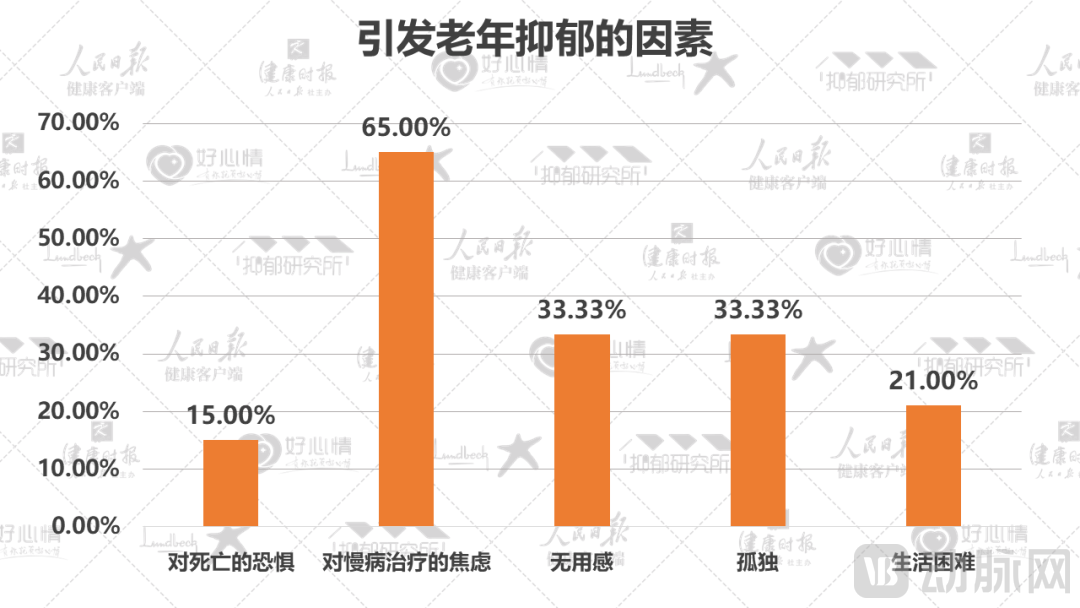
Figure: From the 2022 Blue Book on National Depression, jointly released by People’s Daily Health Client, Health Times, Good Mood Psychological Medical and Mental Health Digital Service Platform, and Lundbeck China. Authorized for use by VCBeat.
Lin Zhaoyu suggests that the demand for mental health services among the elderly can be viewed as a pyramid. At the top are medical-grade services, which also include physiologically related care; at the base are non-medical-grade services, which should encompass not only psychological counseling but also senior universities and community activity groups for the elderly. When delivering services, different tiers of elderly individuals should receive corresponding and differentiated service content, with professional mental health practitioners responsible for assessing, guiding, and managing these needs.
XQ Health’s practice follows this approach. The platform primarily serves as an integrator of the service chain, providing diagnostic and treatment plans as well as health management solutions, while “stratifying” patient needs. Currently, in addition to integrating medical-grade service resources, XQ Health has partnered with more than 10 elderly care institutions to promote the establishment of an ecosystem for elderly mental health services.
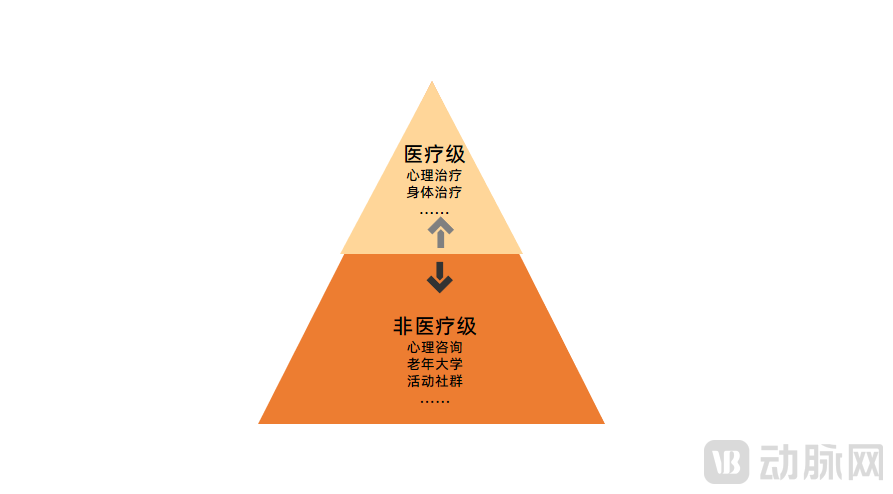
From this perspective, the issue of mental health treatment for the elderly is, in fact, also a matter of supporting infrastructure for elderly care.
In the interview, Jiang Xiaodong, Managing Partner of Long Hill Capital, who has long focused on the elderly care and broader health sectors, expressed similar views.CurrentlyThe biggest problem in the elderly care market is insufficient supply.
Specifically in the field of mental health, Jiang Xiaodong focuses more on cognitive changes in the elderly.
Jiang Xiaodong stated that the insomnia, anxiety, and depression we observe are merely “manifestations” of underlying cognitive issues. As cognitive abilities decline and change, the ways in which older adults interact with society and other individuals may undergo significant changes.
“By focusing on cognitive function as the central thread and expanding the ‘toolkit’ of psychotherapy to facilitate early intervention and management, we can better address the challenges in the elderly care market.” In this regard, companies specializing in cutting-edge technologies such as digital therapeutics and brain-computer interfaces may offer more “solutions.”
Furthermore, payment remains a perennial issue in the mental health industry. Xu Feng stated that the elderly market relies more heavily on medical insurance.
However, strictly speaking, currently only Guangdong and Jiangsu provinces in China have included psychotherapy in their medical insurance coverage. Patients need to seek treatment at designated hospitals, with reimbursement rates determined by the hospital's tier. The reimbursable amount ranges from 160 to 200 yuan per session.
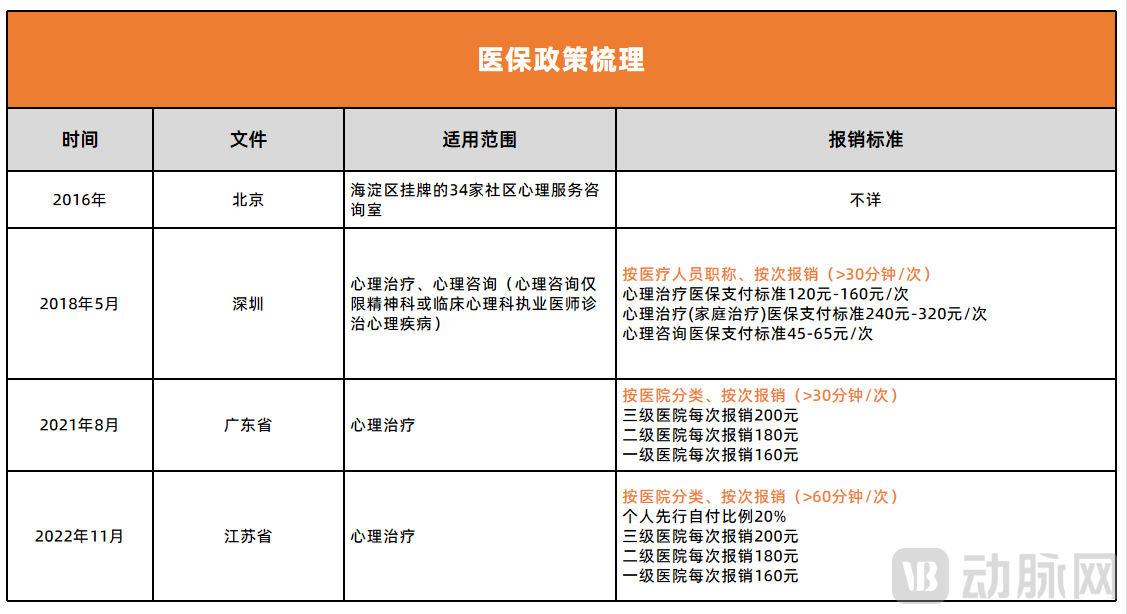
Figure: Compiled by VCBeat based on public information
There are also some restrictions. Taking Jiangsu Province as an example: 1. Treatment must be administered by qualified professionals; 2. Treatment must be conducted in a separate, independent space; 3. Each session must last more than one hour.
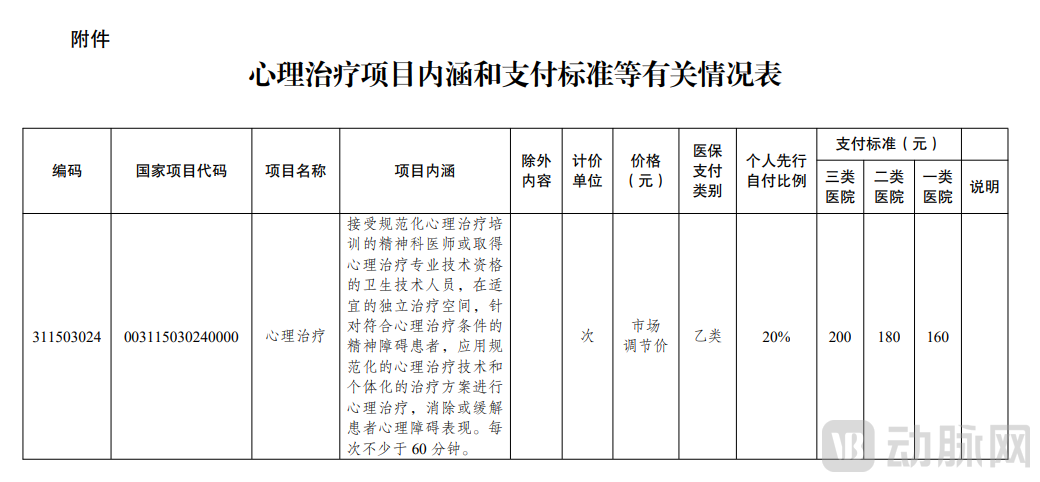
Figure: Source from 2022 Jiangsu Medical Insurance Documents
Objectively speaking, the majority of current mental health services are excluded from medical insurance coverage. Meanwhile, commercial insurance providers in China have largely remained silent on the mental health front.
This is related to the nascent stage of China’s mental health industry, which lacks standardized delivery models and supporting big data on associated risks. As mental health services become more widely practiced and the service chain gradually matures, Xu Feng remains optimistic about innovative approaches to mental health coverage under medical insurance.
At this stage, incorporating psychotherapy into medical insurance coverage not only alleviates the financial burden on patients but also holds greater significance in “disease education”—raising awareness that mental illness is no different from physical illness.
“Although practitioners note that ‘an increasing number of elderly individuals are now proactively seeking help,’ a significant gap remains between the incidence of mental disorders and their awareness and treatment rates. At this stage, rather than competing for the ‘existing stock,’ it is more beneficial to collectively expand the ‘incremental growth.’”
"In the Wave of Digitalization, Every Business Deserves to Be Redone."
This statement is particularly applicable to the field of mental health within the healthcare industry. For the elderly market, while the principles of psychotherapy remain unchanged, an increasing number of innovative approaches have emerged with the support of digital technologies.
Jiang Xiaodong, a managing partner at Long Hill Capital, collectively refers to these “new approaches” as the toolkit for psychotherapy. Faced with a wide variety of tools on the market, he adopts proven efficacy and scalability as the criteria for selecting projects.
Xu Feng believes that AI-powered robots hold significant value in providing mental health services for the elderly.
Taking “Xinxin” from Good Mood as an example, it is an AI robot that primarily focuses on “companionship.” It provides users with 24/7 psychological companionship and emotional counseling through conversational services. During testing, although the product was not exclusively targeted at the elderly, the number of users exceeded 10,000, with over 1,000 paying subscribers.
“In this area, data is the core. The nature of the data determines the type of AI product that can be trained. For example, by learning from doctor-patient chat records related to depression, we can develop a conversational bot specialized in depression care.” As China’s largest online mental health medical service platform, Haixinqing has long accumulated a substantial volume of relevant data. Xu Feng stated that Haixinqing has established a team dedicated to advancing specialized models in psychiatry and psychology.
Psychological issues in the elderly are typically the result of complex causes.
Research indicates that companionship serves as a “panacea” for preventing and alleviating mental and psychological disorders in the elderly, such as dementia and depression.When we broaden our perspective to the wider elderly care sector, more cross-industry players are offering smart aging products, represented by companion robots, to address the “loneliness” experienced by the elderly population.
Baidu, Midea, and UBTECH Technology are all involved.
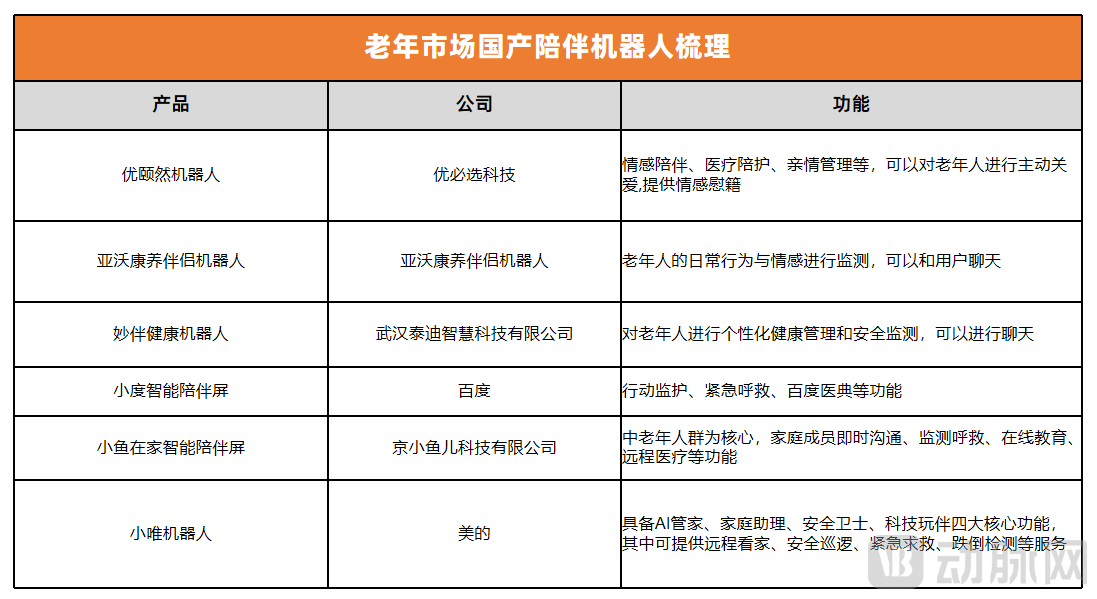
Figure: Data source: Artery Orange
These robots primarily focus on home-based elderly care scenarios, with some emphasizing emotional companionship and others specializing in medical assistance. Although we cannot yet definitively determine the extent to which such “companionship” alleviates psychological issues among the elderly, these robots are increasingly “recognizing” the richer inner worlds of older adults in China.
Jiang Xiaodong discussed mental health in the elderly, beginning with changes in cognitive function among older adults.
In fact, age-related cognitive disorders, represented by Alzheimer’s disease, are regarded as a paramount challenge in aging societies. Due to their irreversible and incurable nature, prevention and intervention to reduce or delay disease progression constitute the current mainstream therapeutic approach.
Jiang Xiaodong is optimistic about digital therapeutics for mental health and the application of brain-computer interface science in this field.
Among them, Bositeng Technology represents Long Hill Capital’s strategic entry into the niche sector of cognitive function in the elderly. According to statistics from VCBeat, there were a total of six related investments in China over the past year, all occurring at stages prior to Series B.
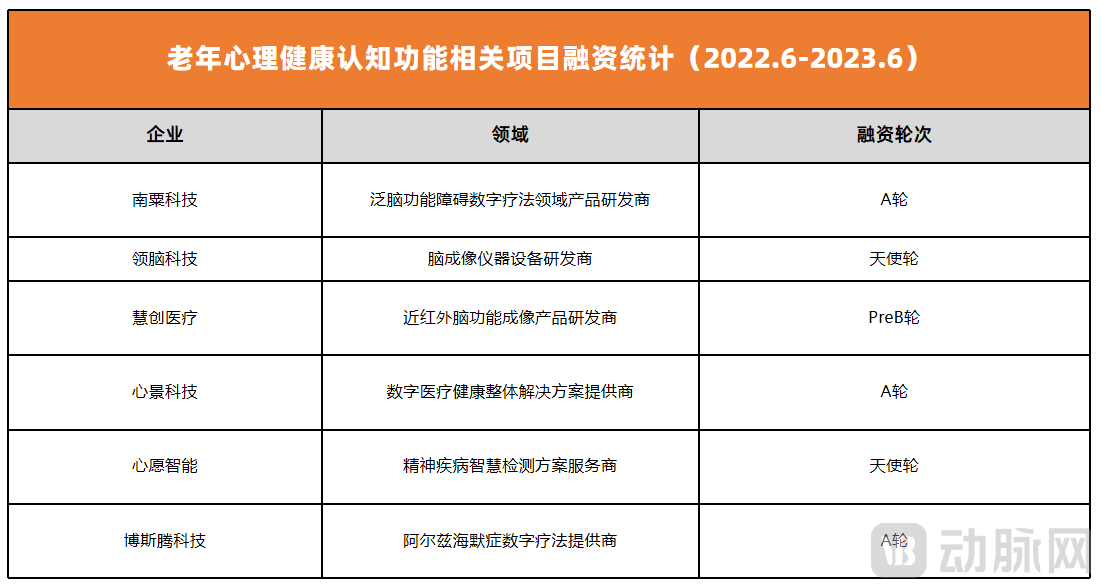
Figure: Data source: VCBeat Orange
Jiang Xiaodong believes that companies at this stage have mostly demonstrated the efficacy of their products through research and validation, but they all face the challenge of scaling up.
Fortunately, star projects have already emerged in related fields, providing case studies for these latecomers.
In August, the startup “Liu Liu Nao” (Zhejiang Naodong Jiguang Medical Technology Co., Ltd.), founded by a Ph.D. in brain science, stood at the threshold of the capital market, poised to become China’s first publicly listed digital therapeutics company.
According to reports, “66 Brain” has established a complete digital therapeutics product pipeline. The company’s system is designed for various cognitive impairment indications, covering the assessment and intervention of four major types of cognitive disorders: cognitive impairment caused by vascular diseases, cognitive impairment caused by neurodegenerative diseases, cognitive impairment caused by mental disorders, and cognitive impairment caused by developmental defects in children.
In addition to its system, “Liu Liu Nao” has developed three other digital therapeutic products for cognitive impairment: the Basic Cognitive Ability Test software (“BCAT”), the Supplementary Cognitive Screening and Assessment software (“SAS”), and the Cognitive Impairment Treatment software (“ADHD Software”), which received the EU CE mark in 2022 and regulatory approval.
According to its prospectus, “Liu Liu Nao” generated revenues of RMB 2.299 million, RMB 11.291 million, and RMB 10.564 million in 2021, 2022, and the first quarter of 2023, respectively, indicating rapid revenue growth and favorable marketization progress for “Liu Liu Nao.”
In addition to leveraging technological solutions, some companies are also focusing on home-based care models.
Kaixin Medical, established in 2015, is a healthcare service provider specializing in full-course management of psychological and psychiatric disorders, with a focus on psychotherapy for children and adolescents and comprehensive medical care management for patients with dementia.
Among them, Jing’an Hospital in Shenyang has integrated digital technologies to create the “HSH (Hospital–Community–Home)” care model. Based on the concept of whole-course medical and nursing management for mental disorders—encompassing “screening, consultation, hospitalization, and home care”—the HSH care model provides continuous nursing services for elderly patients.
This model provides seamless integration among hospitals, communities, and households, extending hospital-based nursing models and practices to community and home settings. This approach eliminates gaps in care, offers scientific guidance on medication use, and leverages community support and home-based nursing after discharge.
“Pause Lab,” founded by Guo Tingting, is one of the earliest companies in China to achieve scaled revenue in the consumer-grade digital health market.
Pause Lab targets the market gap between “self-regulation” and “one-on-one diagnostic intervention,” serving the general population and direct-to-consumer (DTC) users experiencing the full spectrum of out-of-hospital emotional distress.
In response, the mental health services of Pause Lab need to adopt a model of "scientific core + consumer-facing shell," which means having both a new model of digital professional psychological intervention with significant improvement effects and genes that are scalable, mass-market oriented, and communicable.
By analyzing Pause Lab, we can clearly see the "internet productization of psychological science."
First, the design of all products on the platform is evidence-based. From this “origin,” how can we maximize the “utility” of psychological science?
First, “simplistic thinking.”Based on evidence, identify the “universality” of mainstream psychological interventions, comprehensively design a cross-diagnostic skills training system, and standardize the product. Furthermore, strive to simplify user participation in the psychological intervention process. Guo Tingting maintains a prudent attitude toward the use of “non-essential” new technologies and equipment, as they “would raise the barrier to entry for users.”
Second, “user mindset.”A typical example is the design of the “course” dynamics system. “Persistence” is a key factor influencing the outcomes of users’ psychological improvement. To enhance users’ motivation to engage in exercises, Pause Lab fully “makes excuses for users” when designing its “task mechanisms.”
(1) Principle of Fastest Initiation: Keep daily practice tasks light to ensure initiation at the lowest difficulty level, then gradually increase the intensity.
(2) Dual drive of improvement effects and rewards: In addition to periodic assessments of improvement outcomes, the platform manages users’ “milestones” during their practice sessions, provides feedback on their milestone achievements, and offers scholarship rewards upon completion of all courses.
(3) A Boon for Procrastinators: Better aligned with modern lifestyles, daily tasks conclude and new-day updates occur at 5:00 AM.
(4) User “Slack-off” Mechanism: Each exercise plan cycle spans 25 days, with actual tasks scheduled for only 22 days.
This user-centric approach translates into a significant advantage in the data: Among users of Happify, a leading international digital therapeutic company, only 9.76% completed more than a certain proportion of exercises within one treatment course. In contrast, new participants in Pause Lab’s 25-day intervention program achieved a completion rate as high as 63%, while returning users reached a completion rate of 72%.
Meanwhile, the product is iterated based on user feedback.During operations, the team observed that elderly users constitute a significant portion of the customer base for sleep-related products. Guo Tingting stated, “We have implemented several age-friendly updates to better align with the daily lives of older adults in typical usage scenarios.”
“The middle-aged and elderly market may become the next focus for platform development.” Guo Tingting stated that they would subsequently attempt to initiate product optimizations and marketing campaigns targeted at the elderly demographic.
In addition, insurance companies are also taking steps to include mental health services for the elderly within “senior living community activities.”
In December 2021, Dajia Insurance Group launched its elderly care brand, “Dajia’s Home,” which provides families with comprehensive, all-scenario, and full-lifecycle elderly care services through a business model integrating “insurance protection + elderly care services.”
Based on available data and aligned with the needs of the elderly population, Dajia’s Home has established eight service lines: medical care, rehabilitation, nursing, assisted living, dietary services, wellness and recreation, travel, and healing. Among these, the wellness and recreation services focus on the mental and psychological well-being of older adults, emphasizing their sense of social participation, belonging, and being needed.
Here, music therapy experiences are the most popular activities among the elderly.
Prior to treatment, the music therapist conducts multiple interviews and observes and records the elderly individual’s attention span, as well as their physiological, emotional, social, and cognitive performance, along with their abilities in listening, speaking, reading, writing, and singing. Based on this comprehensive assessment, a personalized intervention plan is designed.
To cater to different groups (self-care seniors, semi-self-care seniors, seniors with dementia, etc.), the Dajia Health Recreation Service Team carries out a variety of music activities, such as zero-based interactive instrument playing, using music therapy to regulate sleep disorders, and organizing different intervention groups to carry out targeted music therapy.
According to reports, most members of the Dajia Jiale (Everyone’s Health and Happiness) team possess professional backgrounds in psychology, psychiatry, and sociology. Currently, the team has developed therapeutic modalities such as dance therapy, music therapy, and pet-assisted therapy.
Behind the “unhappiness” of 180 million elderly people lies both a social and a business issue, harboring a hundred-billion-yuan market yet to be tapped.
Currently, actively addressing population aging is a national strategy, and “ensuring care for the elderly” has become a major topic and trend. Highly educated individuals, younger demographics, as well as capital and technology are all flowing into related industries. According to data from Tianyancha Professional Edition, there are currently more than 212,000 companies in China whose names or business scopes include the terms “elderly,” “senior,” or “elderly care.”
The intersection of mental health science and elderly care has only garnered attention from various sectors in China over the past two years. Currently, this field remains in a stage characterized by the need to improve service supply and guide its development. However, we observe that the market is becoming increasingly promising, driven by both the expanding coverage of psychological service enterprises in this domain and the growing participation of more “cross-industry” players.
Of course, many challenges remain. User awareness is low, the service chain is fragmented, service efficiency and accessibility need improvement, medical insurance support is still in its infancy, companies are in their early stages of development, and new models urgently require market validation...
Fortunately, the ship has been launched. The answers will gradually become clear through practice and discussion.
"As more people discuss mental health in the elderly, many express that they are 'waiting for a tipping point.'"