

Global First High-Risk PCI Successfully Completed with NyokAssist® Percutaneous Ventricular Assist Device by Academician Ge Junbo’s Team
Recently,Academician Ge Junbo’s Team, Zhongshan Hospital Affiliated to Fudan UniversitySuccessfully launched the new-generation interventional pump (NyokAssist®, with the support of HeartPort Medical) for three-vessel disease, left main coronary artery disease accompanied by chronic total occlusion of the left anterior descending arteryPatients with left main coronary artery disease combined with low left ventricular ejection fraction completed high-risk percutaneous coronary intervention (HRPCI). The successful conduct of this high-risk PCI procedure preliminarily confirms thatNyokAssist®Safety and Efficacy of the New-Generation Interventional Pump in Assisting High-Risk PCI Procedures Mark the Official Clinical Debut of the World’s Smallest Interventional Artificial Heart[1], marking a significant milestone.
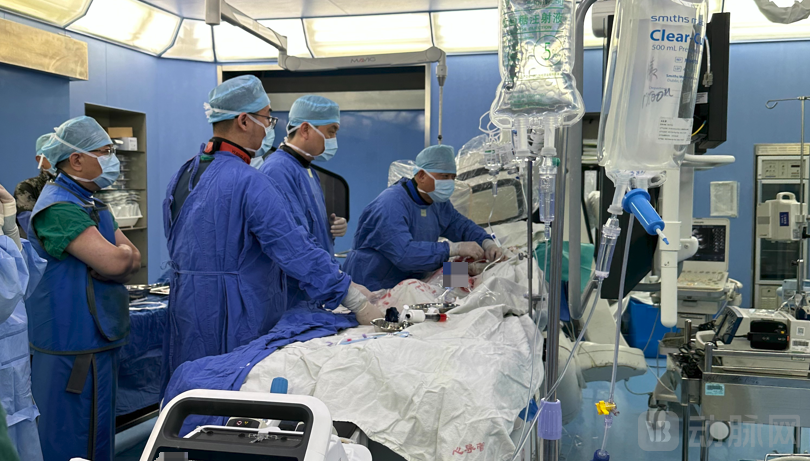
Case Information
Patient, male, 48 years old. Preoperative diagnoses included coronary atherosclerotic heart disease, heart failure, status post coronary stent implantation, and type 2 diabetes mellitus. Preoperative echocardiography revealed enlargement of the left atrium and ventricle accompanied by global hypokinesis of the left ventricle, with a left ventricular ejection fraction of 34%.
Surgical Strategy
The patient had a history of three-vessel coronary artery disease and left main coronary artery disease, accompanied by chronic total occlusion of the left anterior descending artery. Preoperative assessment revealed impaired left ventricular ejection function, a complex clinical course, and high surgical risk. The team anticipated potential intraoperative hemodynamic instability and determined that the procedure should be performed with mechanical circulatory support. With family consent, the decision was made to use NyokAssist.®PCI Procedures Conducted Under the Support of Next-Generation Interventional Pump Circulation.
Surgical Procedure
Intraoperative angiography revealed 85% in-stent restenosis in the distal segment of the previously implanted stent in the left main coronary artery. The proximal segment of the left anterior descending (LAD) artery showed 80% stenosis, while the mid-segment was totally occluded. The ostium of the first diagonal branch had 99% stenosis, and the mid-segment of the second diagonal branch had 50% stenosis. The left circumflex artery was small with total occlusion at its ostium. The previously implanted stents in the proximal and mid-segments of the right coronary artery were patent, with 50% stenosis in the distal segment.
Following comprehensive preoperative assessment, Academician Ge Junbo and his team inserted a 9F interventional sheath via the right femoral artery, advanced the NyokAssist® to the working position, activated the device to provide circulatory support, and maintained a flow rate of 3.0 L/min.Arterial blood pressure increased from 85/50 mmHg before pump initiation to approximately 120/80 mmHg.,Continue to maintain and initiate PCI procedure.
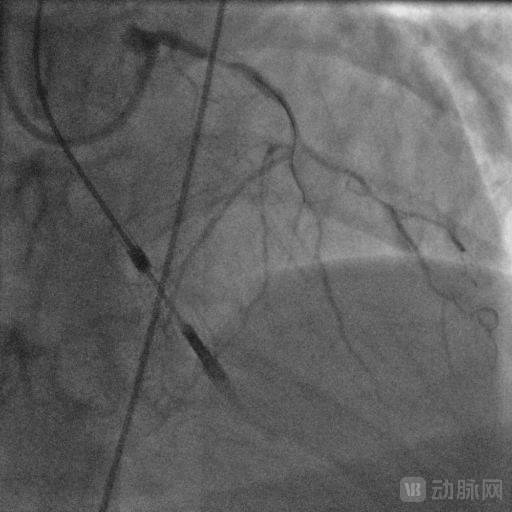
An EBU 3.5 guiding catheter was engaged at the left coronary ostium. With the assistance of an Expressman extension catheter and a 130-cm APT microcatheter, a Fielder XT-R guidewire was successfully advanced across the occluded segment to the distal left anterior descending (LAD) artery. Predilation was performed in the proximal-to-distal LAD lesion using 2.0×20 mm and 2.5×20 mm balloons. Two stents were implanted in series from the distal to the proximal LAD. Finally, post-dilation of the first diagonal branch ostial lesion was performed using a 2.0×20 mm balloon.
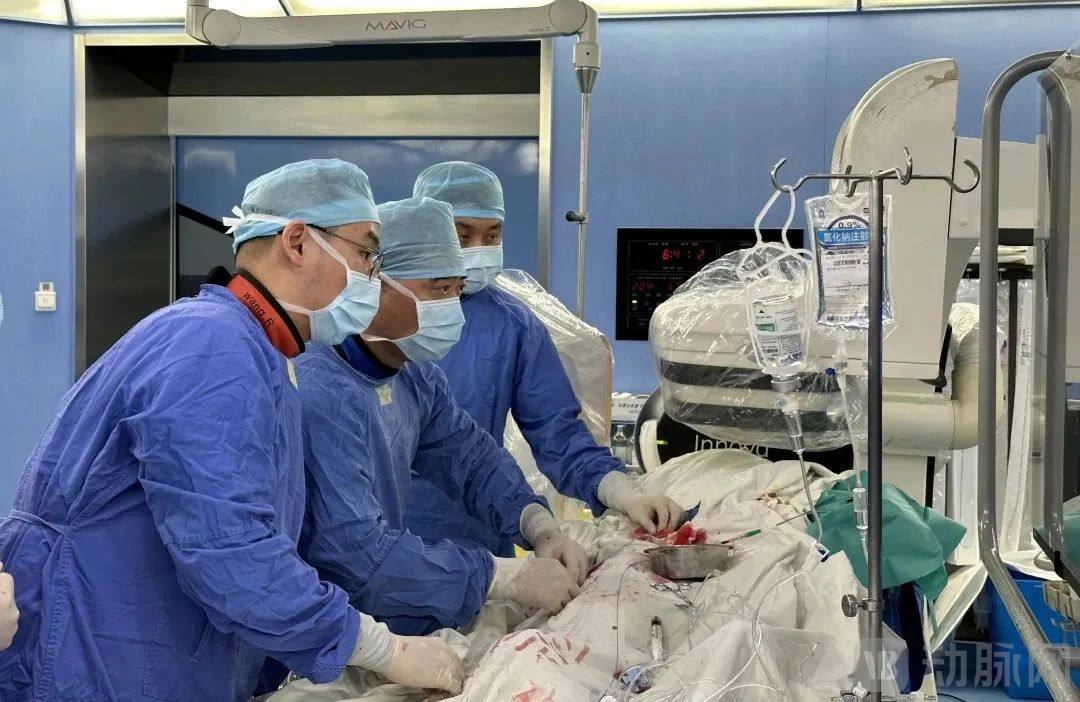
The Wolverine (3.5*10mm) cutting balloon was dilated at the left main lesion, and the Bingo (3.5*20mm) drug-coated balloon was used for dilation and drug delivery. Angiography showed satisfactory expansion of the lesion with no residual stenosis.
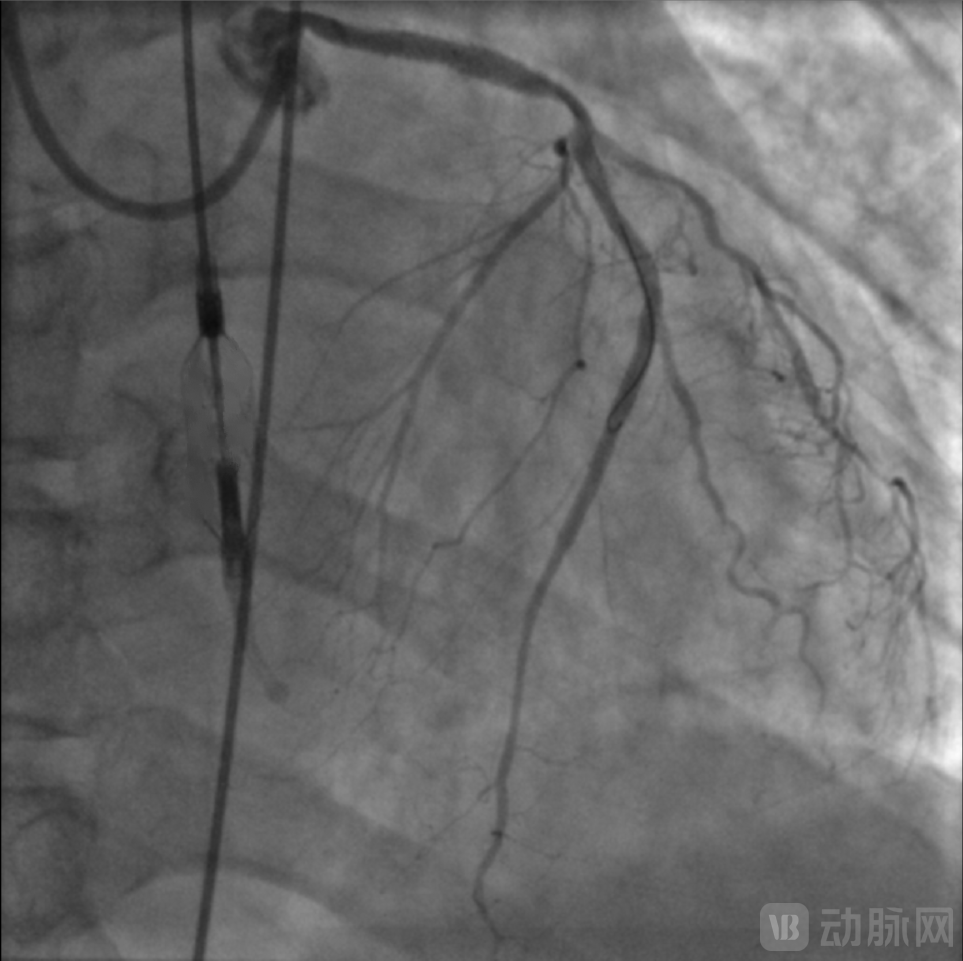
Follow-up angiography indicated satisfactory stent expansion, with residual stenosis of <30% in the first diagonal branch and no residual stenosis from the mid to distal segments of the left anterior descending artery. TIMI flow grade was 3. The procedure proceeded smoothly. NyokAssist®Easy to operate, with excellent performance in navigating the aortic arch and crossing valves. The patient’s blood pressure remained stable during the procedure. Echocardiography showed good and stable positioning of the interventional pump, with no worsening of regurgitation observed in the aortic or mitral valves.
The interventional pump was successfully withdrawn into the sheath and removed postoperatively. Hemostasis at the femoral artery puncture site was achieved using only a single ProGlide suture device. The patient ambulated 6 hours after the procedure, with no vascular complications. Postoperative recovery was uneventful; complete blood count, liver function, and renal function tests showed no significant abnormalities. Arterial blood pressure was maintained at 130/80 mmHg. Postoperative echocardiography demonstrated an improvement in left ventricular ejection fraction to 36%, with no evidence of aortic or mitral valve injury. The patient was discharged two days after the procedure.
In recent years, China’s coronary intervention field has gradually matured, with annual PCI procedures exceeding one million. High-risk PCI accounts for approximately 10% of these cases. Such procedures carry significant risks and high patient mortality rates, and there has been a persistent lack of safe and effective intraoperative protective measures in clinical practice. Interventional artificial hearts are key to maintaining hemodynamic stability during surgery, ensuring procedural success, and influencing patient prognosis. NyokAssist®The transcatheter ventricular assist system is a new generation of interventional pump developed through medical-engineering interdisciplinary integration and innovative collaboration by Academician Ge Junbo’s team at Zhongshan Hospital, Fudan University, and MagAssist Medical, in response to national initiatives. With an intervention profile of only 9Fr, the NyokAssist® device delivers an average flow rate exceeding 3.5 L/min, ensuring robust safety and efficacy. Incorporating core innovations such as a foldable impeller and an externally mounted motor, this product has successfully overcome multiple critical technological bottlenecks, achieving international leapfrog development. It was recently designated as a “Breakthrough Device” by the U.S. FDA.With the orderly conduct of clinical trials for this new generation of interventional infusion pumps, it will fill a clinical gap in China, lead domestic innovation onto the global stage, and benefit more patients.
Expert Profile

Ge Junbo
Zhongshan Hospital, Fudan University
References:
[1] Bhuiyan, R., Bimal, T., Fishbein, J., Bandotra, P., Selim , S., Ong, L., & Gruberg, L. (2023, May 8). Percutaneous Coronary Intervention with Impella Support with and without Intra-Aortic Balloon in Cardiogenic Shock Patients. ScienceDiret.