

Lixu Gu of Shanghai Jiao Tong University Advances 'Tech-Driven Healthcare Reform' with Electromagnetic Navigation-Based Interventional Robotics

AccuMed
Developer of Medical Devices for Precision Surgery
When you hold a firm belief that stands in stark contrast to the views of nearly everyone around you, can you remain steadfast and resolute, free from self-doubt and unwilling to conform to your surroundings?
One year should not be difficult, and three years might also be manageable. But what about five or ten years? As you witness continuous innovation and emerging trends within your industry’s competitive landscape, while you choose to remain understated and focus on refining your technology, how can you uphold rationality? Furthermore, when your once-unconventional ideas suddenly become the mainstream consensus overnight, how will you maintain your psychological equilibrium?
1Rational Choice
Perhaps due to his innate personality, his years of research in computer and biomedical engineering, or the cultural influence he absorbed while studying in Japan during the 1990s, Professor Gu Lixu exhibits a rationality that surpasses the norm. If you were to speak with him for the first time, the labels that would likely come to mind are “organized,” “logical,” and “clear.”
During conversations with Professor Gu, he habitually breaks down answers into several segments, elaborating on each point sequentially, and concludes with a brief one- or two-sentence summary. When discussing more open-ended topics that allow for divergent thinking, Professor Gu’s response style is equally distinctive. He rarely retracts or corrects his words while speaking; instead, he prefers brief pauses to ensure word-for-word coherence and sentence-level accuracy, as if what he is articulating were not sound waves but lines of code.
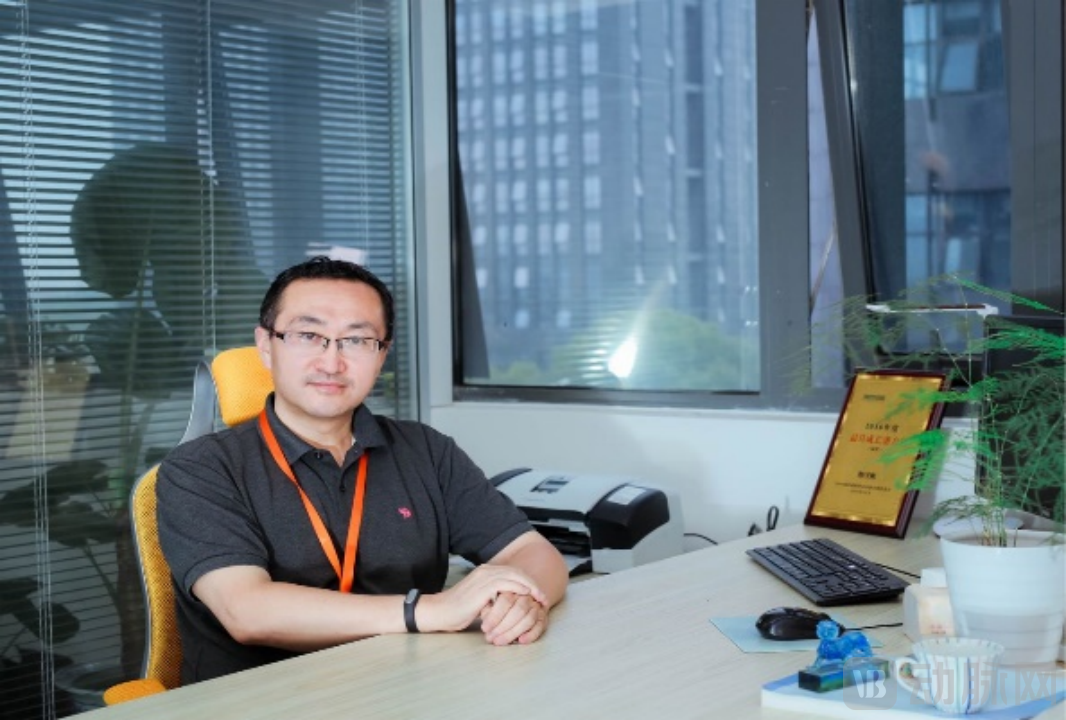
Image provided by Professor Gu Lixu
Professor Li Xu Gu earned his Master of Engineering degree from the Department of Information Systems Engineering at Kobe University in his early career. He subsequently specialized in medical image processing research within the Department of Computer Science at Toyohashi University of Technology. After obtaining his Doctor of Engineering degree in 1999, he joined the Medical Image Analysis Laboratory at the Robarts Research Institute in Ontario, Canada, where he conducted postdoctoral research under the supervision of Professor Terry Peters, a renowned international expert in surgical navigation.
In 2003, Professor Gu decided to return to China and joined the Department of Computer Science and Software School at Shanghai Jiao Tong University, where he was responsible for establishing and directing the first computer-assisted surgery and therapy laboratory in China. He conducted research in medical image processing, minimally invasive surgery, computer-aided diagnosis and treatment, surgical navigation, augmented reality applications in medicine, and virtual surgery. Additionally, he supported Shenzhen Anke High-tech Co., Ltd. in developing China’s first commercial neurosurgical navigation system.
In the spring of 2008, Professor Gu visited Harvard Medical School and engaged in academic exchanges at its renowned Surgical Planning Laboratory. Since 2009, he has been working at the Med-X Research Institute and the School of Biomedical Engineering, both established at Shanghai Jiao Tong University. In addition to conducting in-depth academic research, he is also committed to the industrial translation of scientific and technological achievements.
Professor Gu also approaches the selection of pathways for translating scientific research achievements with rational deliberation.
In an era where the dual narratives of “chokepoint” technologies and import substitution run in parallel and intersect, products representing “low-hanging fruit”—which can be rapidly deployed using low- to mid-tier technologies—have been largely captured by major domestic medical device manufacturers. Meanwhile, the launch of mid- to high-end products has created greater opportunities for independent innovation.
Unlike the European and American markets, which prioritize high-end, perfect products with low price sensitivity, China imposes dual high demands on both quality and price for mid-to-high-end medical devices. Coupled with China’s unique market access environment, this creates greater development opportunities for domestically developed technologies.
Faced with indigenous technological self-innovation—a prospect that has deterred many investors—Professor Gu’s approach is driven less by subjective agency within a grand narrative and more by objectivity grounded in rational calculation. Even a 1% success rate, however low, is worth pursuing if it exceeds a 0.1% probability.
2Increasing Success Rate
In 2003, Professor Gu’s initial attempt to commercialize medical technology was unsuccessful.At that time, the market environment was uncertain, with lengthy approval processes and limited exit channels. These factors confined Professor Gu’s surgical navigation system to the realm of technology, yet they also prompted him to raise critical questions: How to secure investment? How to formulate a business plan? How to accurately identify the target market? And how to maintain team cohesion within the company?
In 2010, Professor Gu launched his second commercialization project.Having shed the inexperience of a novice, Professor Gu adopted the then-pioneering, now-mainstream model of “mentors guiding students, and students leading teams” to enter the field of dental implant navigation systems. With support from the Suzhou Leading Talent Program, the company secured Class III medical device certification and achieved rapid growth, advancing the commercialization of its technology.
However, the new plateau brought new challenges. As development progressed, disagreements arose within the team over equity distribution. To ensure a balance among all parties and enable both the product and the company to move forward, Professor Gu relinquished his equity interests and redirected his full focus back to scientific research. The student team lived up to Professor Gu’s expectations, stabilizing the product commercialization process. They even mortgaged their properties during downturns to provide crucial support, allowing the company to thrive to this day.
Professor Gu’s assessment of the second attempt was highly thought-provoking.“No financial gain, but a success”. In Professor Gu’s view, he has accumulated experience at this stage, ranging from more optimized equity structure design and process management for regulatory approval submissions, to the art of collaborating with professional managers.
While most people would choose to give up after facing repeated setbacks, Professor Gu believes it is illogical not to attempt something when the likelihood of success is higher.
In 2016, Professor Gu initiated the third industrialization of his technology.After connecting with incubation partners who had experience in foreign enterprises and startups, both parties quickly finalized the preliminary plan and secured angel-round investment from Legend Star. Jingmai Technology’s flagship product, the “Lung Puncture Surgical Navigation System,” has now successfully entered production and been deployed for clinical use in hospitals.
3Incremental Cognition
Along with the experiences gained from three rounds of industrialization, there has been not only a continuous increase in success rates but also an ongoing iteration of cognitive understanding.
Two decades ago, Professor Gu was still struggling to secure basic funding for his projects. Within just a few years, during the second phase of commercialization, he gained insight into the critical role of “human nature” within corporate dynamics. Later, in the third wave of industrialization, he found himself grappling with the market—a powerful, invisible hand.
When asked about key insights on bringing technology to market, Professor Gu highlighted four imperatives:
The company must ensure sufficient cash flow on its books.
The engineered prototype must be stable.
Process management records must be properly maintained.
Outsourcing is permissible, but frontline participation is mandatory.Self-Control
Concise yet comprehensive, every sentence embodies the accumulated time and costs invested by Professor Gu and his team.
The implications behind each of these statements are self-evident. Sufficient cash flow ensures that the team can maximize its survival time in unfavorable market conditions; stable engineering prototypes lay a solid foundation for rational mass production; rigorous process management documentation minimizes time losses during regulatory approval and certification; and frontline quality control serves to mitigate unpredictable external risks to the lowest possible level.
4Logical Products
With higher success rates and enhanced cognitive capabilities, Professor Gu successfully launched his self-developed electromagnetic navigation surgical system into the market.
For lung cancer, which requires relatively low clinical intervention and relies heavily on early diagnosis and treatment, Jingmai Technology’s products have opened up new avenues. Influenced by earlier practices abroad, bronchoscopic approaches once dominated pulmonary interventions. However, due to their drawbacks—including low efficiency, prolonged procedural time, radiation exposure, and high costs—they are gradually becoming less suitable for the healthcare context in China.
Although percutaneous puncture was not mainstream abroad in its early stages due to its blind-needle nature, its relatively low cost and manageable risk profile have endowed it with inherent potential. By leveraging surgical robots for intelligent assistance and addressing challenges such as tissue displacement caused by respiration—which can impair visualization—percutaneous puncture has become accessible to a wide range of primary-care hospitals, thanks to its lower costs and gentle learning curve. Earlier this month, Shanghai Jingmai Medical Technology Co., Ltd., in collaboration with the Inner Mongolia Research Institute of Shanghai Jiao Tong University, established an Early Diagnosis and Treatment Center for Pulmonary Nodules. The center is conducting technical training and demonstration applications across the entire Inner Mongolia Autonomous Region, thereby promoting the adoption of innovative clinical technologies at the grassroots level.
Under the leadership of Professor Gu, Jingmai Technology did not alter its R&D direction due to the prevalence of mainstream technologies in the early market. Instead, it has remained committed to enhancing product performance, reducing costs, and lowering usage barriers, thereby enabling a broader population to benefit. With its integrated and portable puncture surgery navigation devices obtaining Class III medical device certification and becoming accessible to hospitals in more remote areas, Professor Gu’s advocated “technology-driven healthcare reform” has taken another significant step forward.
5Conclusion
Even after enduring multiple rounds of ups and downs, Professor Gu continues to tackle a myriad of intricate challenges in his dual role as a scientist and entrepreneur. He has never allowed emotion to override reason, remaining deeply committed to research and development and relying on quantifiable data for deduction. To borrow a common saying from the venture capital community: while some chase trends and others wait for them, Professor Gu has accurately calculated that the wind will inevitably come.