

HeSheng: World's First Interventional Multi-Frequency Ultrasound Thrombectomy Catheter Successfully Completes First-in-Man Clinical Trial
Interventional therapy, with its unique advantages such as minimal invasiveness, rapid efficacy, and a lighter overall burden on patients, has gained recognition from both physicians and patients since its inception and has been rapidly adopted in clinical practice. Interventional medical devices are indispensable tools for interventional therapy. However, developing safe and highly efficient interventional medical devices that allow operators to easily navigate through fragile human tissues to complete treatments is by no means an easy task. In particular, domestic brands that introduce interventional device products featuring original innovations in foundational technologies, possessing fully independent intellectual property rights, and capable of leading clinical transformations are extremely rare. Fortunately, the challenging path of science has never lacked brave challengers. Beijing Heqing Hechuang Medical Technology Co., Ltd. (hereinafter referred to as “Heqing Hechuang”) is one such challenger. It has established a leading position and technical barriers in domestic interventional ultrasound thrombolysis within the vascular intervention field, holding the promise of enabling domestic brands to achieve “overtaking on a bend” in this sector.
World’s First Interventional Multi-Frequency Ultrasonic Thrombectomy Method
Heqing Hechuang was established in May 2022 as a young company dedicated to the research, development, and manufacturing of innovative medical devices for vascular intervention.
Heqing Hechuang is currently developing an innovative interventional ultrasound thrombectomy device for the treatment of deep vein thrombosis (DVT) in the lower extremities. DVT is the third most common vascular disease worldwide, characterized by high incidence and recurrence rates, as well as significant clinical severity. It can lead to serious complications such as pulmonary embolism, including fatal pulmonary embolism. Furthermore, the long-term retention of substantial thrombus burden within the vasculature can result in post-thrombotic syndrome, manifesting as persistent limb swelling, venous insufficiency, ulceration, gangrene, and chronic pulmonary hypertension. Anticoagulation therapy serves as the cornerstone of DVT management. Building upon systemic anticoagulation, the use of minimally invasive interventional devices and techniques to remove thrombi has become a focal point in current DVT treatment research, as it effectively reduces residual thrombus burden and promotes vascular recanalization and organ function recovery. Although devices for catheter-directed thrombolysis, mechanical thrombectomy, and aspiration occupy a certain position in the field of DVT treatment, they still fail to fully meet clinical needs.
Heqing Hechuang has introduced the world’s first interventional multi-frequency ultrasound thrombolysis method. This technique utilizes ultrasound to modulate the pharmacological thrombolysis process, enhancing efficiency and reducing drug dosage while avoiding mechanical damage to the vascular wall, thereby making thrombectomy rapid and safe. In vitro and animal studies have demonstrated that this technology can achieve Grade III recanalization of occluded vessels within 15 minutes. Furthermore, the amount of thrombolytic agent used during treatment is only 10%–25% of that required for conventional Catheter-Directed Thrombolysis (CDT). The technology also exhibits excellent adaptability and scalability. In addition to acute thrombi, it can be applied to subacute and chronic organized thrombi, and is suitable for various thrombotic conditions affecting both cardiovascular and peripheral vessels. Tailored to China’s specific healthcare context, multi-frequency ultrasound thrombolysis effectively addresses the pain points of other thrombosis treatments, offering higher thrombolytic efficiency and safety, a broader scope of application, reduced patient burden, and faster hospital turnover. It holds promise as the next-generation mainstream thrombolytic technology suited to China’s national conditions.
Heqing Hechuang’s first product, developed based on multi-frequency ultrasound thrombolysis technology, targets the indication of deep vein thrombosis (DVT) and is named “Hesheng.” This product is a Class III active interventional medical device with independent intellectual property rights, representing the first of its kind in China and leading internationally. Unlike existing ultrasound thrombectomy products available domestically and abroad, the “Hesheng” ultrasound-assisted thrombolysis catheter is an entirely novel product. It has secured up to 18 invention patents and related PCT patents, and has been awarded the Gold Medal at the 48th Geneva International Exhibition of Inventions, the Silver Award at the 17th Beijing Invention and Innovation Competition, and the 2023 VB-LINK Annual Innovative Medical Device Award (Figure 1). Within just one year of Heqing Hechuang’s establishment, the product completed type testing and registration-required animal trials, achieving efficiency and speed that rank among the top in the industry. Meanwhile, the company has also initiated the research and development of interventional ultrasound thrombolysis products for pulmonary embolism, completing multiple animal trials. Applications of the ultrasound thrombolysis technology platform in other fields, such as coronary arteries, are being developed concurrently.
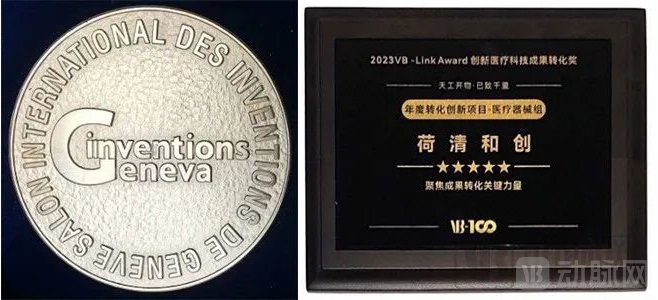
Figure 1. The “Hesheng Ultrasound-Assisted Thrombolysis Catheter” and its related patents won the Silver Award at the 17th Beijing Invention and Innovation Competition and the 2023 VB-LINK Annual Innovative Medical Device Award.
China’s First Clinical Trial of “Hesheng” Catheter for Deep Vein Thrombosis Treatment Successfully Completed
On August 16, 2023, Professor Ye Bo and his team from the Department of Vascular Surgery at Ganzhou People’s Hospital (Nanfang Hospital Ganzhou Hospital) successfully performed minimally invasive thrombectomy on a middle-aged male patient with deep vein thrombosis (DVT) of the lower extremity using the “Hesheng” ultrasound-assisted thrombolysis catheter. This procedure marked the successful completion of the first-in-man (FIM) clinical trial for the “Hesheng” ultrasound-assisted thrombolysis catheter, representing a significant milestone. The patient had presented with swelling in the right lower limb for over ten days, which worsened five days prior to admission with the formation of blisters on the calf. Color Doppler ultrasonography and venography both revealed extensive thrombosis throughout the inferior segment of the inferior vena cava and the entire right iliofemoral-popliteal venous system, resulting in complete luminal occlusion (Figure 2).
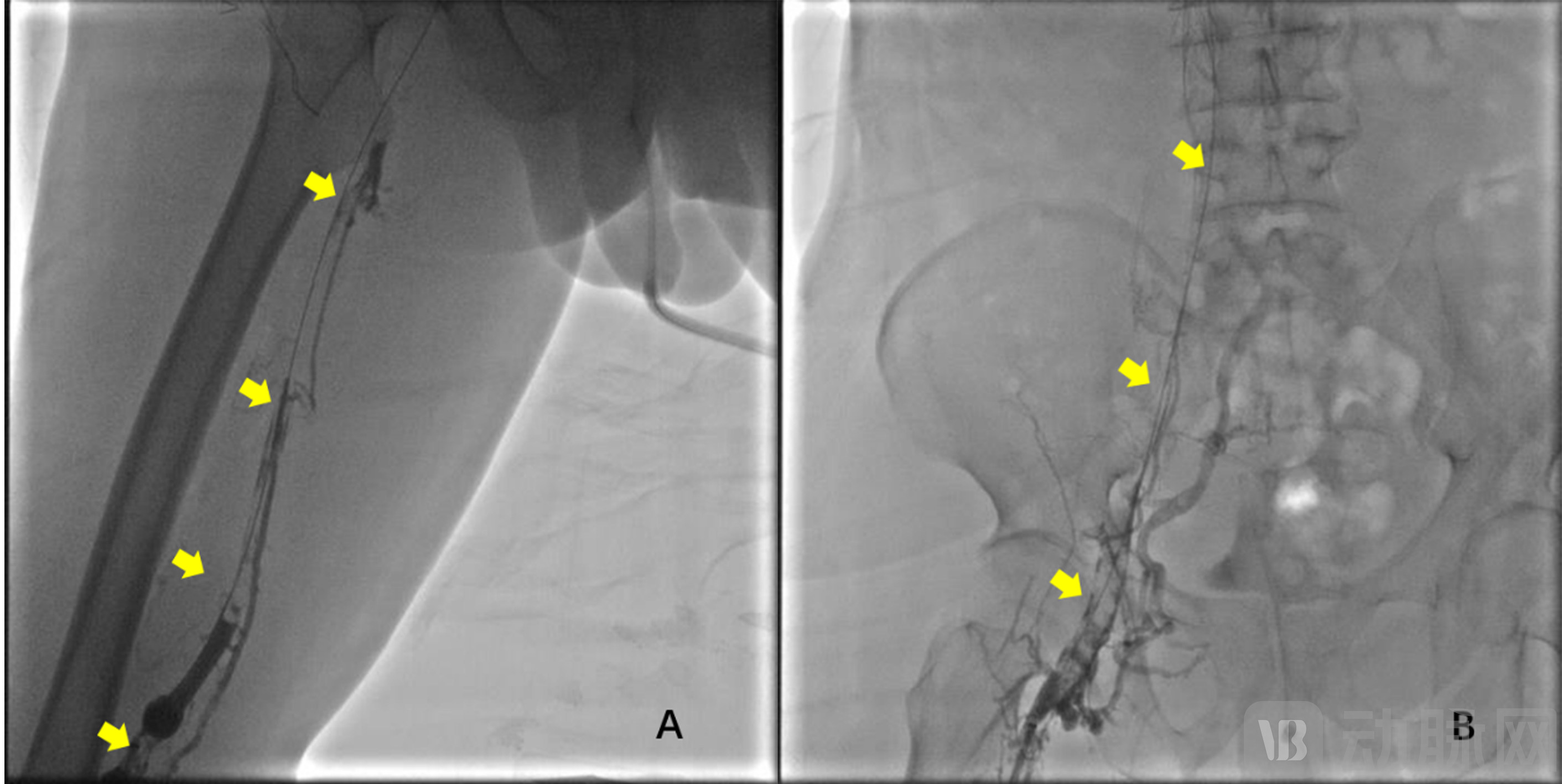
Figure 2 A: Thrombosis throughout the right popliteal vein and femoral vein (yellow arrow), with blood flow obstruction
B: Thrombosis throughout the right common femoral, external iliac, and common iliac veins, as well as the inferior vena cava below the filter (yellow arrows), with blood flow obstruction
Following intraoperative placement of an inferior vena cava (IVC) filter via the jugular vein, the right popliteal vein was punctured. A guidewire and catheter were advanced through the thrombus, and a "Hesheng ultrasound-assisted thrombolysis catheter" was inserted. After 15 minutes of treatment time, angiography demonstrated that more than 90% of the thrombus in the right popliteal vein, superficial femoral vein, common femoral vein, and middle-to-distal segment of the external iliac vein had been cleared, with restoration of antegrade blood flow (Figure 3A). After 30 minutes of treatment time, further dissolution of the ilio-caval thrombus was observed; the thrombus clearance rate in the right external iliac vein approached 100% (yellow arrow), and the clearance rate in the right common iliac vein and IVC approached 50% (green arrow), with restored antegrade blood flow (Figure 3B). After 120 minutes of treatment time, venography confirmed complete clearance of thrombus in the common iliac vein and IVC, with patent blood flow. Only a localized residual stenosis (length <5 mm) remained in the right common iliac vein. Following balloon angioplasty of this residual stenosis in the right common iliac vein, the filter was successfully removed (Figure 3B). The patient reported no discomfort during the procedure. Postoperatively, limb swelling subsided rapidly, leg circumference decreased, and the patient was discharged after recovery.
Notably, this patient had undergone left lower limb amputation one year prior due to arterial and venous thrombosis. This time, the patient presented with extensive deep vein thrombosis in the right lower limb. Professor Ye Bo’s team employed the “Hesheng” ultrasound-assisted thrombolysis catheter from Heqing Chuanghe Company, which achieved rapid thrombus removal and restoration of blood flow. This intervention ultimately alleviated the patient’s symptoms, successfully salvaged the limb, and prevented the occurrence of severe pulmonary embolism.
Professor Ye Bo remarked postoperatively that this domestically produced, world’s first interventional multi-frequency ultrasound thrombectomy device demonstrated excellent thrombus removal efficacy in cases of extensive deep vein thrombosis, using only a few hundred thousand units of urokinase within a short period. Its safety, effectiveness, maneuverability, and patient comfort met or even exceeded expectations! Thumbs up for this domestically made device! (Figure 3)
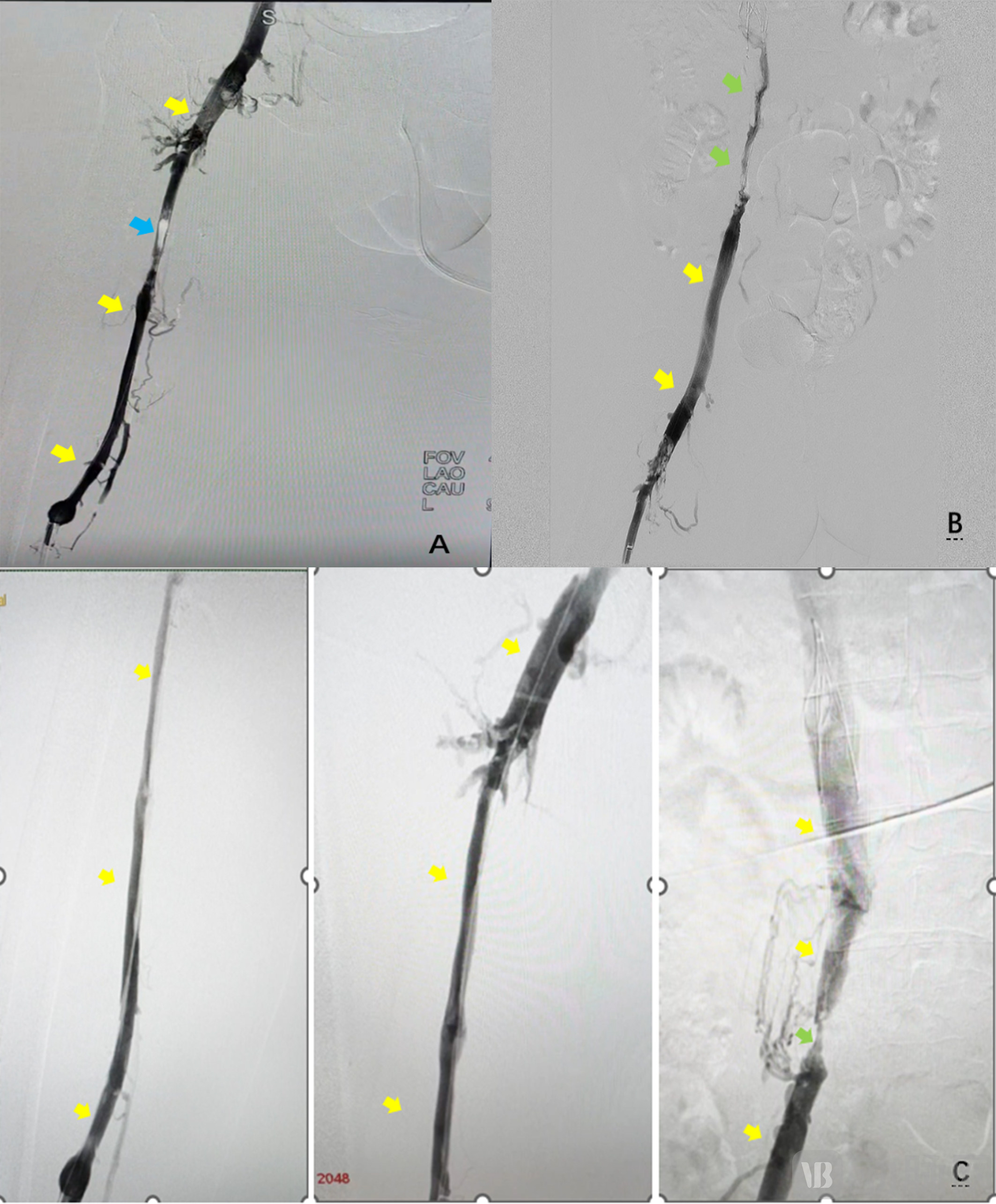
Figure 3 A: After 15 minutes of operation with the “Hesheng Ultrasound-Assisted Thrombolysis Catheter,” the thrombus clearance rate in the right popliteal vein, superficial femoral vein, common femoral vein, and the middle-to-distal segment of the external iliac vein (indicated by yellow arrows) reached 90–95%, with restoration of antegrade blood flow. (Note: Blue arrows indicate contrast-induced bubble artifacts.)
B: After 30 minutes of operation with the “Hesheng Ultrasound-Assisted Thrombolysis Catheter,” the thrombus clearance rate in the external iliac vein approached 100% (yellow arrow), while that in the common iliac vein and inferior vena cava was nearly 50% (green arrow), with restoration of antegrade blood flow.
C: After 120 minutes of operation with the “Hesheng Ultrasound-Assisted Thrombolysis Catheter,” deep vein thrombosis in the lower extremities, including the common iliac vein and inferior vena cava, was completely cleared, restoring patency. Only residual stenosis remained (green arrow). Following balloon angioplasty of the residual stenosis in the common iliac vein, the filter was successfully removed.
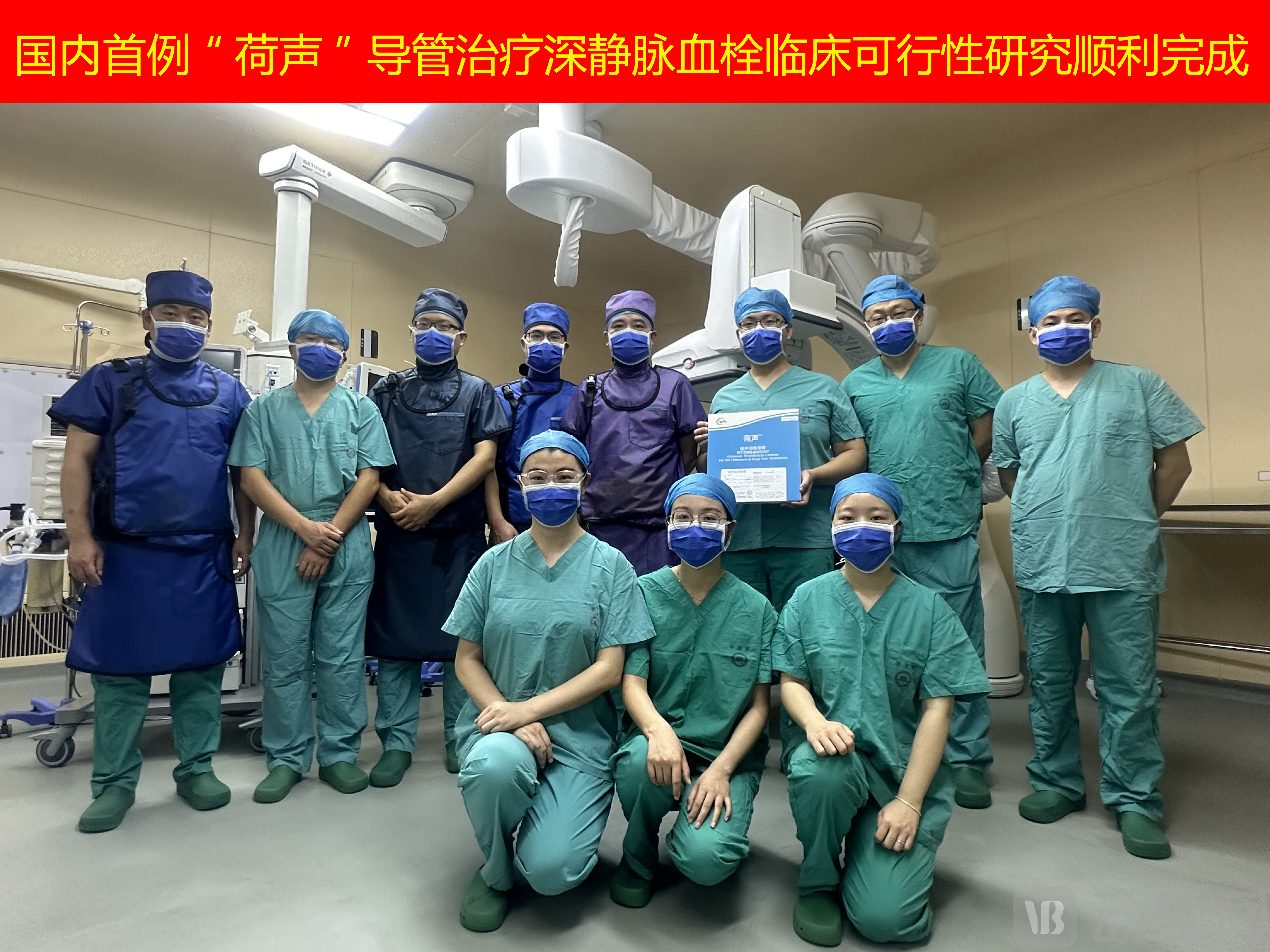
Figure 4. Team Group Photo
Professor Zheng Yuehong, Director of the Department of Vascular Surgery at Peking Union Medical College Hospital and Principal Investigator (PI) of the lead site for the multicenter clinical trial of the “Hesheng Ultrasound-Assisted Thrombolysis Catheter,” stated that innovation is the primary driving force behind advances in medical technology and improvements in healthcare standards. The successful first-in-human clinical trial of the dual-frequency ultrasound thrombectomy technology and its catheter has further bolstered confidence in China’s capacity for original innovation in novel vascular devices, bringing it on par with international standards, and will ultimately benefit patients.
Advantages of Interventional Multi-Frequency Ultrasonic Thrombectomy Devices
Although a variety of devices for mechanical thrombectomy and aspiration thrombectomy have emerged in the field of deep vein thrombosis (DVT), interventional ultrasound-assisted thrombolysis has carved out a unique niche, becoming a powerful tool for endovascular thrombus treatment due to its distinct advantages. The “Hesheng Ultrasound-Assisted Thrombolysis Catheter,” developed by Heqing Hechuang, fully leverages the multifaceted effects of ultrasound energy—including acoustic streaming, mechanical effects, cavitation, and enhanced distribution of thrombolytic agents—thereby significantly improving thrombolysis efficiency, reducing the dosage of thrombolytic drugs, and lowering the risk of bleeding. Furthermore, through multiple proprietary patented technologies incorporated into the design of the “Hesheng Ultrasound-Assisted Thrombolysis Catheter,” uniform drug delivery over an ultra-long working length is ensured, along with optimized catheter trackability, maneuverability, and safety. Due to its multifaceted mechanisms, ultrasound-based thrombus removal can overcome the limitations imposed by thrombus age and composition that constrain traditional mechanical thrombectomy or catheter-directed thrombolysis, holding promise for the treatment of subacute and even chronic thrombi. In preliminary animal studies, the “Hesheng Ultrasound-Assisted Thrombolysis Catheter” has demonstrated excellent efficacy in clearing dense thrombi. Additionally, ultrasound-assisted thrombolysis maximizes the protection of venous endothelium and preserves the morphology and function of venous valves, thereby mitigating the risk of post-thrombotic syndrome caused by valve damage resulting from mechanical intervention or thrombus burden. Patients experience greater comfort during treatment, avoiding the discomfort associated with aspiration and mechanical maceration processes. Despite incorporating numerous innovative technologies and patents, the “Hesheng” Ultrasound-Assisted Thrombolysis Catheter features a convenient and straightforward operational procedure, overcoming the steep learning curve often associated with innovative products and facilitating broader adoption and application at primary healthcare levels.
Technology originating from Tsinghua University, with an operations team deeply integrating medicine and engineering
Heqing Hechuang possesses distinctive characteristics and professional advantages in the integration of medicine and engineering. The company was angel-incubated and established in 2022 by Hetang Venture Capital, an investment arm affiliated with Tsinghua University that specializes in early-stage innovation investment and the commercialization of technological achievements. The company’s interventional ultrasound platform technology was jointly developed by an engineering team from Tsinghua University and a team of clinical experts from leading hospitals. This collaboration has addressed fundamental issues in ultrasonic field regulation and technical challenges in the design of key components, elucidated the mechanisms of multi-frequency acoustic fields in ultrasonic drug delivery under microscale flow conditions, significantly improved thrombolysis efficiency, and fundamentally resolved the persistent heating issue associated with ultrasonic devices, thereby laying a solid foundation for intellectual property commercialization and practical application. Leveraging the respective professional strengths of both teams and the project leaders’ years of collaborative experience, Heqing Hechuang has possessed cross-disciplinary expertise in medicine and engineering as well as an innovative DNA since its inception. The synergy between advanced engineering technologies and novel insights from clinical experts will continue to drive the development of innovative medical devices.
In terms of corporate operations, Ms. Zhang Shuyan, the company’s CEO, brings over a decade of experience in the production and operational management of Class III medical devices. Under her leadership, a specialized and innovative R&D and operations team, composed primarily of individuals with doctoral and master’s degrees, is working efficiently. Within one year, the company has established multiple product lines based on interventional ultrasound technology for conditions such as deep vein thrombosis (DVT) and pulmonary embolism (PE). The DVT thrombectomy device is poised to enter clinical trials, while the PE thrombectomy device is about to obtain type testing reports and registered animal study reports. Additionally, the company has filed more than 20 new invention patent applications.
In an interview, Ms. Zhang Shuyan discussed the journey of the company’s founding and development: “The greatest challenge for startups is time. Starting from scratch, it takes time for the team to gel and for systems to be established, yet market dynamics often do not afford companies sufficient time to grow. Over the past year, the ‘three pillars’ of R&D, clinical affairs, and operations have achieved effective collaboration. Type testing, registered animal studies, and First-in-Human (FIH) trials for our products were all completed on schedule. These phased achievements demonstrate that our team has stood the test.”Heqing Hechuang will leverage its proprietary core technologies as a platform, adopting a rolling development strategy characterized by the rhythm of “finalizing one product, developing another, and conducting preliminary research on a third.” Within the next three to five years, the company aims to launch a series of innovative products, providing physicians with better options, delivering improved treatments for patients, and ensuring stronger growth for the company.
Seize the Momentum, Make an Impact
Against the backdrop of an increasingly aging population, and with the continuous optimization and implementation of national science and technology policies as well as medical insurance policies, the vascular intervention industry is currently experiencing a robust period of development. Meanwhile, as research into ultrasound-assisted thrombolysis models and related studies deepens both domestically and internationally, ultrasound thrombolysis technology is poised for broader application prospects. The company will remain committed to independent innovation, launching more high-quality products to provide superior services to patients. It aims to contribute its strength toward breaking the monopoly of imported equipment and securing a prominent position for China’s high-end precision medical devices in the global medical device landscape.