

Belite Bio: A Clinical-Stage Biotech Leading in Two Major Ophthalmic Indications with Breakthrough Oral Therapy Tinlarebant
Belite Bio
Drug Developer
Recently, there has been a surge of new developments in the innovative ophthalmic drug sector.
Earlier this month, the FDA approved avacincaptad pegol intravitreal injection (Izervay), developed by Iveric Bio, for the treatment of geographic atrophy (GA) secondary to age-related macular degeneration (AMD).
This is the second GA therapeutic agent, coming just six months after the approval of the first drug—Apellis’s complement C3 cyclic peptide inhibitor, pegcetacoplan. Although the efficacy and safety of pegcetacoplan have been subject to some degree of scrutiny, it has still achieved strong sales post-launch; Apellis’s Q2 financial report revealed that its sales reached$67.3 million,This clearly demonstrates the strong clinical demand in the GA field.
Not only for the indication of GA, but there are also many unmet clinical needs in the field of ophthalmology.
This June, Alkeus, a U.S.-based clinical-stage ophthalmology startup, announced that Joshua Boger, the legendary founder of Vertex Pharmaceuticals, will serve as its Executive Chairman. This isBoger Returns After Six Years in Retirement,Alongside the appointment announcement, Alkeus also announced the successful completion of its $150 million Series B financing round.
Alkeus Targets Inherited Eye DiseasesStargardt Disease, an autosomal recessive macular atrophy degenerative disease, which also represents a significant unmet clinical need.
Among the clinical programs with advanced progress in the indications of GA and Stargardt disease, there is also a listed biotech company—Belite Bio.In 2022, Belite Bio’s stock price surge in the U.S. biotech sector was truly unrivaled.From its Nasdaq listing in April 2022 to the market close on December 30, 2022, its total market capitalization reached $750 million, representing a surge of 402.42% compared to its initial market cap. The upward trend has continued this year; as of August 24, 2023, the company’s total market capitalization reached $856 million.
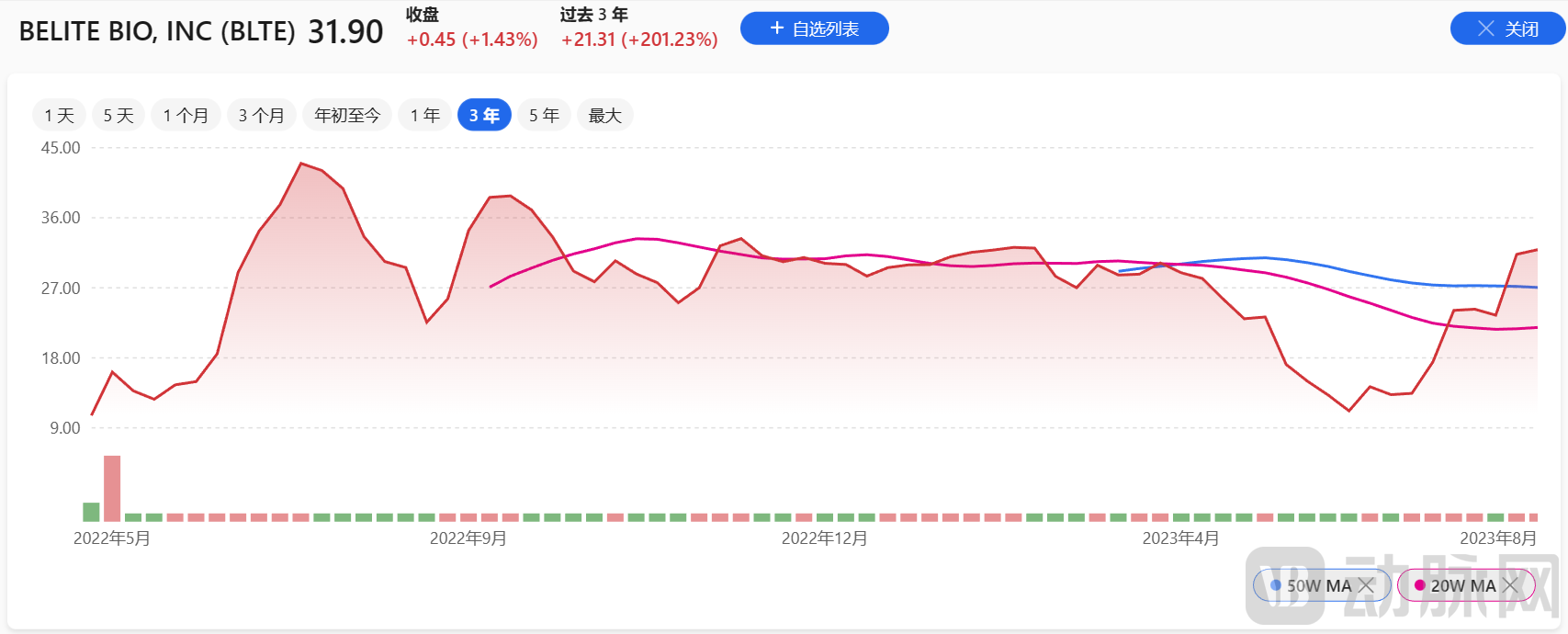
▲ Belite Bio's Stock Price Movements After IPO
For small-cap innovative biotech companies, stock price fluctuations are easily influenced by progress updates disclosed by the company and market trends.As a clinical-stage biotech company without any commercialized drugs, Belite Bio has managed to avoid the typical post-surge stagnation in its stock price, instead maintaining a consistent upward trajectory. This demonstrates that the market continues to view its targeted indications and therapeutic areas favorably.
Ophthalmic Drug Development Heats Up, Rivaling the Boom in Oncology DrugsThe surge in ophthalmic drug development is now comparable to the earlier boom in oncology therapeutics. This trend is driven by two main factors: first, the overcrowding of oncology targets has prompted innovative biotech companies to seek out unmet medical needs; second, population aging has expanded the patient pool, as most major eye diseases—including cataracts, glaucoma, and retinal disorders—are positively correlated with advancing age.
However, due to the irreversible nature of structural ocular changes caused by certain eye diseases and the yet-unclear pathological mechanisms, the primary limitation of current pharmacological treatments is their inability to cure these conditions. Long-term medication use can only delay disease progression, control deterioration, and reduce the incidence of severe complications. Therefore, surgical intervention remains the first-line treatment for certain eye diseases.

▲ Number of People with Different Eye Diseases in the United States
Stargardt disease is an autosomal recessive macular atrophy degenerative disorder, clinically characterized by the degeneration of retinal cells (rods and cones). This condition is a leading cause of blindness in children and young adults, affecting more than 30,000 individuals in the United States and over 150,000 people worldwide. Patients typically have normal vision at birth; however, mutations in the ABCA4 gene accelerate the dimerization or aggregation of vitamin A in the eye, leading to retinal damage and subsequent progressive vision loss. Although the genetic basis of the pathology is well established, there are currently no effective treatments for Stargardt disease, indicating a substantial market opportunity.
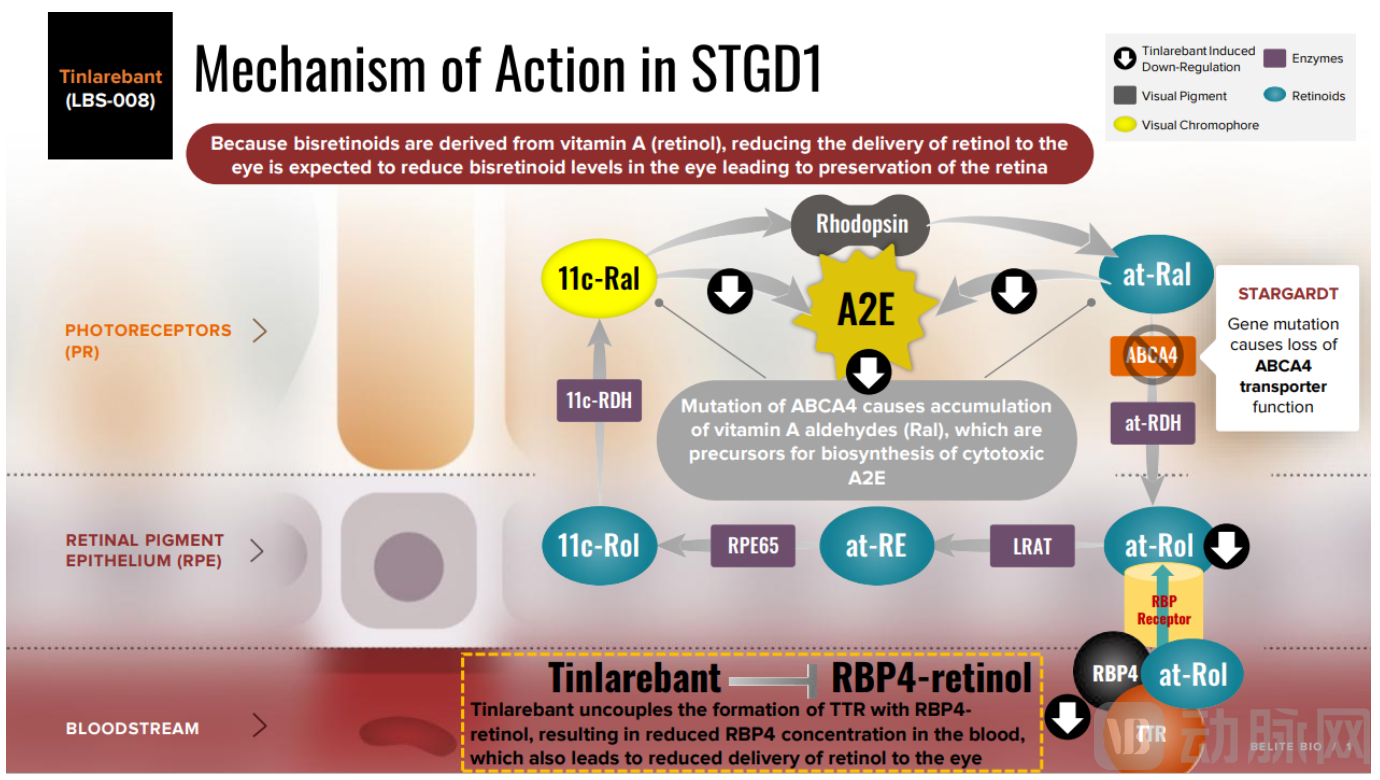
▲ Mechanism of Action of Tinlarebant in Stargardt Disease
AlkeusThe lead candidate targeting the Stargardt disease indication is a deuterated drug that slows or prevents vision loss by reducing the rate of vitamin A dimerization.Belite’s lead candidate drug, Tinlarebant (LSB-008), is a novel oral therapy,Developed from the company’s RBP4 intellectual property portfolio, its mechanism of action involves lowering and maintaining serum RBP4 levels (RBP4 is the sole carrier protein responsible for transporting retinol from the liver to the eyes), thereby reducing toxin formation by modulating the amount of retinol entering the eyes. Tinlarebant has received Fast Track Designation and Rare Pediatric Disease Designation in the United States, as well as Orphan Drug Designation for the treatment of STGD1 in both the United States and Europe.
However,The Market for the Stargardt Disease IndicationCompetition is also relatively intense,Recently, multiple companies have disclosed their latest clinical progress.
Company | Pipeline in Development | Clinical Progress |
Belite Bio | LSB-008 | Phase III |
Alkeus | ALK-001 | Phase II |
Nanoscope Therapeutics | MCO-010 | Phase II |
Kiora Pharmaceuticals | KIO-301 | Phase I |
KALA Bio | KPI-014 | Preclinical |
▲ Incomplete Statistics of the R&D Pipeline for Stargardt Disease
In addition to Alkeus, a number of other companies are also working on developing novel therapies for Stargardt disease. In February 2023,NanoscopeNanoscope Announces FDA Fast Track Designation (FTD) for Its Investigational AAV Gene Therapy MCO-010 for the Treatment of Stargardt Disease; Key Phase II Trial Results Presented at ARVO Show Visual Acuity Improvement with a Favorable Overall Safety Profile
As can be seen, among the various clinical pipelines, Tinlarebant is advancing most rapidly, making it the most likely candidate to become the first approved drug for Stargardt disease.Possesses “first-in-class” potential. Currently, Tinlarebant has initiated a two-year Phase III study (DRAGON). DRAGON is a multicenter, randomized, double-masked, placebo-controlled trial designed to evaluate the safety and efficacy of Tinlarebant in adolescent patients with STGD1. To date, the DRAGON trial has completed enrollment of 100 subjects across 11 countries worldwide.
Dr. Tom Lin, Chairman and CEO of the Company, stated, “Over the next 12–18 months, the Company will reach several potential inflection points. The final two-year data for LBS-008-CT02 will be released in the fourth quarter of this year, while the interim safety and efficacy data from the Phase III DRAGON trial will beMid-2024released.”
In addition to conducting research on tinlarebant for STGD1, Belite Bio is also concurrently carrying out PHOENIX, a Phase III clinical study evaluating the safety and efficacy of tinlarebant in patients with geographic atrophy (GA), given that STGD1 and GA share similar pathophysiological features, namely excessive accumulation of cytotoxic bisretinoids, retinal cell death, and vision loss.
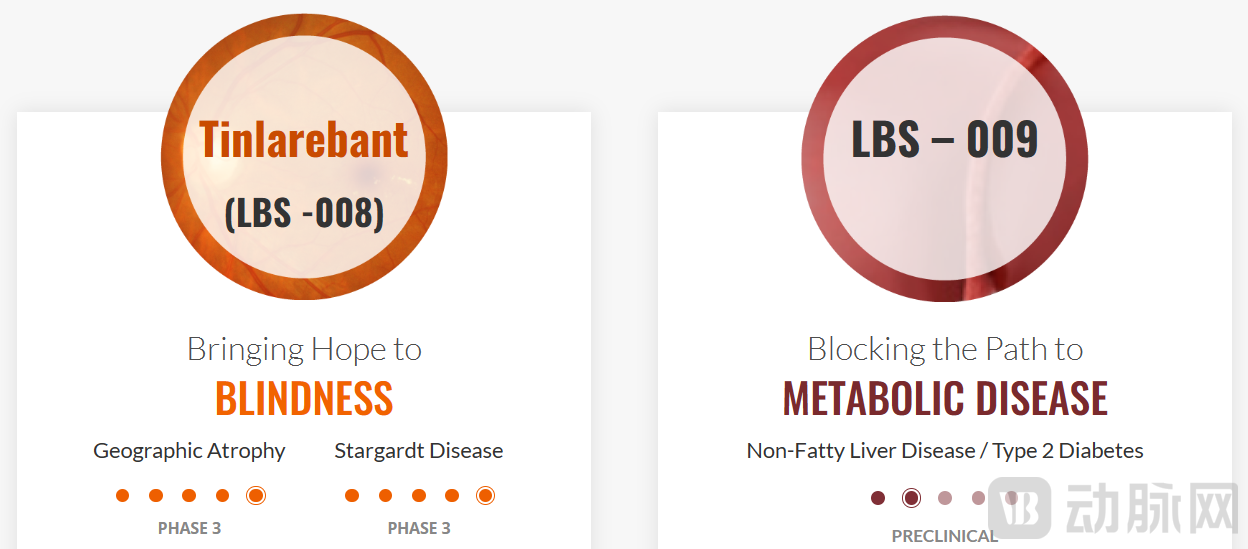
▲ Belite's Pipeline in Development
As mentioned above,This year can be regarded as a turning point for GA, with the FDA successively approving two complement drugs.
In February, pegcetacoplan injection (Syfovre), developed by Apellis Pharmaceuticals, became the first drug approved by the FDA for the treatment of geographic atrophy (GA). On August 4, the FDA further approved avacincaptad pegol intravitreal injection (Izervay), developed by Iveric Bio, for the treatment of GA secondary to age-related macular degeneration (AMD).
As the first approved GA drug, Syfovre’s strong sales of $67.3 million underscore its market demand; however, reports of retinal vasculitis by the ASRS have cast a lingering shadow over Apellis. Among the 60,000 GA patients treated with Syfovre since its launch, seven cases of retinal vasculitis have been confirmed. Apellis’ stock price has also plummeted: while it peaked at nearly $95 in the months following FDA approval of Syfovre, it closed at $40.04 on August 24, 2023.
During the clinical trials of another approved drug, Izervay, adverse reactions (≥5%) were also reported in treated patients at the 12-month mark: conjunctival hemorrhage (subconjunctival hemorrhage: 13%), increased intraocular pressure (elevated eye pressure: 9%), and blurred vision (8%).
It is estimated that there are 20 million GA patients in the United States and over 196 million patients worldwide, with global direct medical costs amounting to approximately $255 billion, indicating substantial room for market growth. Although the FDA has consecutively approved two GA drugs within six months, their clinical adoption remains constrained by limited efficacy and side effect concerns,The GA market still has significant room for improvement and commercialization potential. Currently, the FDA has not yet approved GAOral TherapyDrug.If Tinlarebant is successfully approved in the future as the first oral medication for GA, its commercialization prospects will be substantial.
In addition to the field of ophthalmic diseases, Belite is also expanding its indications into the booming area of metabolic disorders. It is estimated that approximately 1.9 billion patients worldwide suffer from non-alcoholic fatty liver disease (NAFLD), with more than 9 million people affected in the United States alone. NAFLD represents a growing unmet medical need, as there are currently no FDA-approved treatments available.
The company’s other pipeline candidate in development, LBS-009, is a small-molecule oral anti-RBP4 drug primarily targeting indications including non-alcoholic fatty liver disease (NAFLD), non-alcoholic steatohepatitis (NASH), and type 2 diabetes (T2D), which collectively affect more than 2.4 billion patients worldwide.
An analysis of Belite’s pipeline reveals that the indications it primarily targets share a common characteristic: they represent areas with significant unmet medical needs, many of which currently lack FDA-approved therapies.On August 9, Belite Bio released its financial results for the second quarter of 2023. The financial report showed that the company's balance sheet was strengthened, with total proceeds of $30 million obtained through an underwritten public offering.
The strategic layout also reflects the professionalism of the leadership team. Dr. Tom Lin, founder of Belite Bio, is also the founder of Lin BioScience. Prior to establishing Belite Bio, Dr. Lin served as an executive at several biotechnology companies. Nathan L. Mata, the Company’s Chief Scientific Officer, previously held positions as Principal Consultant in the Clinical Development Division at Halloran Consulting Group, Clinical Research and Operations Consultant at Kubota Vision Inc., Chief Operating Officer and Director of R&D at Trethera Corporation, and Vice President of R&D at Sirion Therapeutics.
Certainly, to secure a foothold in these commercially promising sectors, Belite still needs to present more robust data and results. Nevertheless, Belite’s development trajectory once again underscores the substantial unmet needs that persist within the ophthalmology field.For other biotech companies, this also means there are still ample opportunities to “pan for gold in the waves.”