

Kangxintong Launches Low-Code Intelligent Health Management Platform Targeting Digital Health
The “wind” of health management is blowing ever stronger.
On the one hand, favorable policies continue to guide and drive the development of the health management industry.As China continues to deepen its healthcare reforms, it has been strengthening the management of health risks and has successively introduced a wide range of health management policies. For instance, as early as 2016, the “Outline of the ‘Healthy China 2030’ Plan” proposed driving the development of health management through the construction of medical systems and strategic health planning.
On the other hand, the development and transformation of health insurance are also driving the continuous deepening of health management services.Amid the rapid growth of the health insurance market, it faces challenges such as product homogenization and inadequate service capabilities. The synergy between health insurance and health management can undoubtedly address these issues more effectively. Meanwhile, the development of health insurance has also created new opportunities for the advancement of health management.
Furthermore, against the backdrop of an aging population, the awakening and enhancement of public health awareness are also driving the development of the health management market.Over the past three years, the pandemic has heightened residents’ awareness of personal health management. Meanwhile, against the backdrop of an aging population, the rising number of elderly patients with chronic diseases has not only imposed a substantial burden on the healthcare system but also generated significant demand for health management services.
According to data from LeadLeo Research Institute, the market size of China's health management industry continues to demonstrate steady growth. From 2016 to 2020, the market size expanded from RMB 11 billion to RMB 27 billion, representing a compound annual growth rate (CAGR) of 31.6%. The market size is projected to reach RMB 136 billion by 2025, with a CAGR of 20.8%.
As the market continues to show positive momentum,How to better meet the health management needs of a vast user base is a challenge facing industry practitioners.Beyond the medical device manufacturers at the upstream end of the industry chain, manufacturers in the midstream segment undoubtedly need to possess capabilities in cloud computing, the Internet of Things (IoT), and big data to truly realize the implementation of health management application scenarios.
SINCERITY HEALTH (operating under the brand “Kangxintong”) is precisely such a provider of technical infrastructure and services dedicated to the digital health sector.
The establishment of SINCERITY HEALTH in 2019 was no coincidence.
This is closely tied to the personal journey of its founder and CEO, Ji Renwen. According to him, a computer science graduate, he had already begun developing management systems for traditional Chinese medicine clinics before graduation. However, those early attempts made him realize that technical expertise alone was insufficient; he needed to address his own gaps by gaining firsthand experience, developing a deeper understanding of the industry, and thoroughly familiarizing himself with business scenarios and user habits. After graduation, Ji Renwen held positions at several well-known healthcare companies, including B-Soft, Tianfangda, and Zhanghu Medical, eventually rising to senior executive roles in some of these organizations. To better position himself for future entrepreneurial endeavors, he even worked in investment banking.
In 2019, Ji Renwen embarked on his first true entrepreneurial venture by joining an internet-based diabetes management company as a co-founder. The company established through this venture was acquired by JD Health less than a year after its inception.
Not one to rest on his early success, Ji Renwen embarked on a new entrepreneurial venture in August 2019, giving rise to SINCERITY HEALTH.
Initially, SINCERITY HEALTH set its sights on the health checkup industry. On one hand, SINCERITY HEALTH recognized the vast market potential in this sector; by the end of 2022, the market size for health checkups had exceeded RMB 200 billion. On the other hand, Ji Renwen’s decade of experience in the healthcare industry enabled him to rapidly enter the field by leveraging his accumulated expertise and resources. Furthermore, the industry faced significant pain points, including challenges in managing and analyzing health checkup data, as well as the need to improve digitalization across the pre-checkup, intra-checkup, and post-checkup stages. Traditional information technology solutions were unable to fully address these issues facing health checkup centers.
It is precisely for this reason thatIn its early days, SINCERITY HEALTH primarily focused on developing end-to-end smart health checkup system solutions targeting health examination centers as its core customers, and its solutions were rapidly deployed and adopted by multiple public hospitals.As one of the few companies in China capable of independently developing a full-process digital health checkup solution, SINCERITY HEALTH boasts undeniable competitiveness in products and technology.
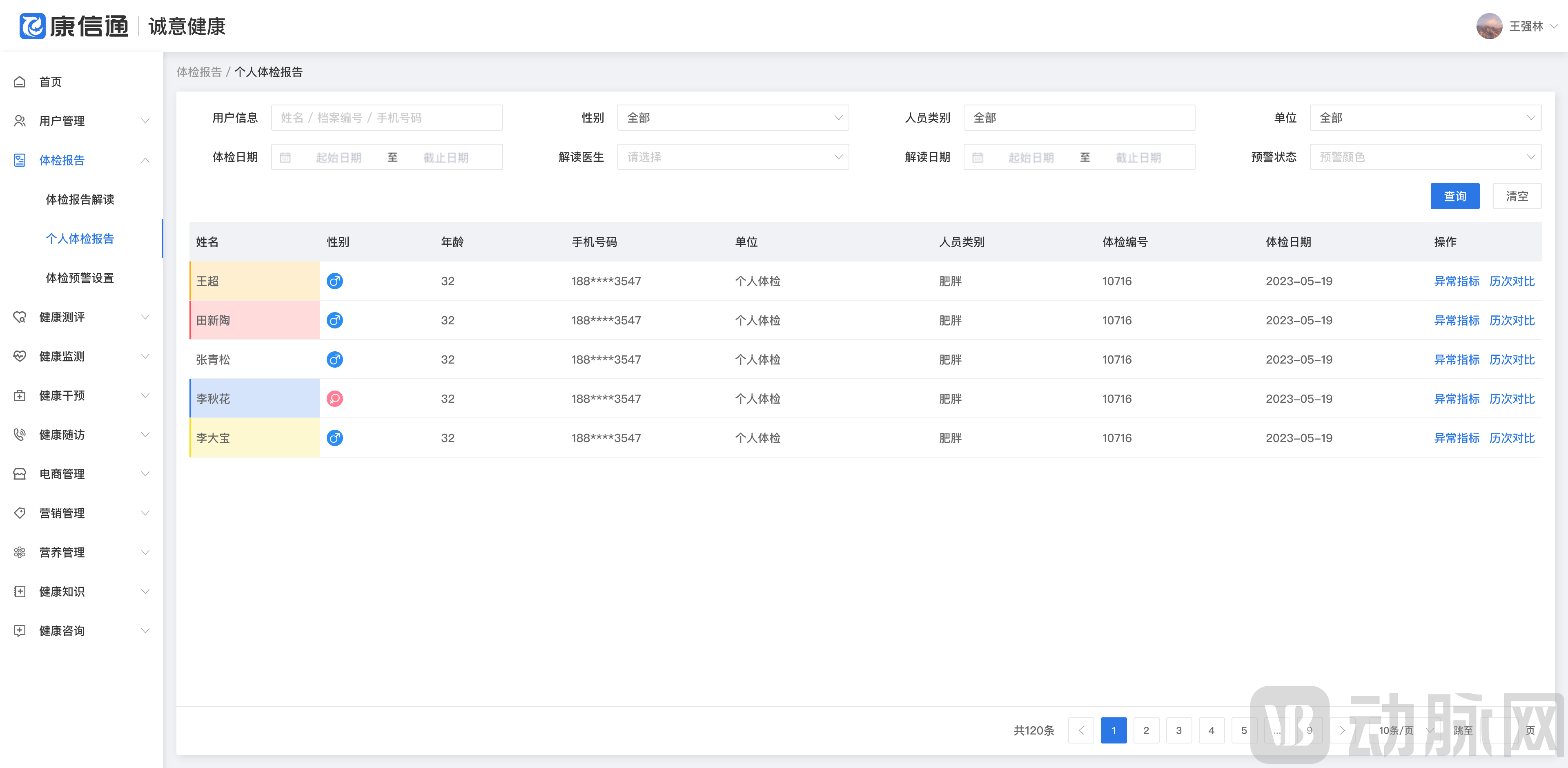
Schematic Diagram of the Personal Health Checkup Report Page
However, the outbreak of the pandemic and the risk of cross-infection in offline settings have, to some extent, impacted the development of the health checkup industry. As a technology service provider targeting health checkup centers, SINCERITY HEALTH has also encountered obstacles in its business growth. Furthermore, as a startup, it faces additional challenges: both public medical institutions’ checkup centers and private third-party checkup providers tend to prioritize the continuity of services offered by system vendors. The inherent instability of startups often leads these institutions to prefer established large enterprises when selecting solutions. This has contributed to the difficulties SINCERITY HEALTH experienced in its early development.
Ji Renwen keenly realized that his business could no longer be confined to addressing the pain points of the health checkup industry.Taking a holistic view to address the common challenges facing the healthcare sector is a more effective solution: ultimately, they set their sights on “health management.”Compared with the previous multi-product solutions under the “Smart Health Checkup” series, focusing on “Health Management” is undoubtedly more targeted. Meanwhile, the business characteristics of health management make it easier to leverage the team’s strengths in product development and technology.
In May 2022, SINCERITY HEALTH began preparing for the launch of its health management brand, “Kangxintong,” which was officially launched in June 2023. Kangxintong is a healthcare service SaaS platform built on the WeChat ecosystem and AIoT technology, dedicated to helping clients develop integrated digital solutions that combine user operations, health management, and commercial monetization. The client base for Kangxintong is no longer limited to physical examination institutions but extends to the entire broader health industry, including check-up centers, medical device companies, health management firms, primary care providers, and chain pharmacies. In addition to its SaaS products, Kangxintong provides comprehensive empowerment to clients through operational services and supply chain capabilities.
For health examination centers, Kangxintong’s digital technologies can help automate and intelligently deliver health management services, thereby improving efficiency and service quality.Meanwhile, digital technologies can also provide health checkup centers with precise user profiling and health needs analysis, offering strong support for the development of more accurate and personalized health management plans, thereby better serving individual and corporate clients.
For medical device companies, digital technologies can enable intelligent, data-driven health monitoring and management, thereby improving the efficiency and precision of medical device utilization.Meanwhile, digital technologies can also provide medical device companies with precise user profiling and health needs analysis, offering robust support for the formulation of more accurate and personalized R&D and sales strategies for medical devices.
For health management companies, digital technologies can facilitate the integration of online and offline health service models, thereby improving the utilization efficiency of medical resources and the quality of services.Meanwhile, digital technologies can also provide health management companies with precise patient profiling and analysis of patient health needs, offering robust support for the development of more accurate and personalized medical services.
To date, Kangxintong has established collaborative partnerships with numerous enterprises, including Lepu Medical, Cofoe Medical, and Meinian Onehealth, as well as with a wide range of public and private healthcare institutions.
Historically, both physical examination centers at public hospitals and third-party examination institutions have predominantly focused on delivering services during the examination phase, while neglecting the pre- and post-examination stages. This gap has led to several consequences:
On the one hand, focusing solely on the provision of services during health examinations often means neglecting long-term health tracking for users. The lack of digital tools also makes it difficult to leverage the value of user health examination data. On the other hand, health examinations are often conducted in isolation, without accompanying medical services, which prevents users from accessing personalized health management services. Furthermore, the absence of relevant operational systems within health examination institutions often leads to a disconnect with users, hindering the effective exploration of their potential value.
Kangxintong has undoubtedly recognized the aforementioned issues. One of the key objectives of its digital health management platform is to assist physical examination institutions in delivering health management services, thereby effectively addressing the gap in post-examination service offerings. Simultaneously, it aims to further empower these institutions by facilitating user retention and conversion. Leveraging modular functionalities that integrate capabilities such as customer acquisition, health management, health assessments, remote monitoring, intelligent alerts, health interventions, smart follow-ups, health consultations, an online marketplace, user operations, and data analytics, Kangxintong’s products are turning these objectives into reality.
Currently, Kangxintong leverages cloud computing, the Internet of Things (IoT), big data, and AI technologies to develop digital solutions. By offering both SaaS-based and private deployment models, the company provides comprehensive solutions covering health management, chronic disease management, digital operations, and enhanced medical profitability. Through its integrated hardware, software, and services, Kangxintong empowers healthcare institutions to boost efficiency, upgrade and transform business processes, improve the quality of medical services, and enhance both operational efficiency and patient satisfaction.
Clearly, SINCERITY HEALTH has long recognized that the demand for “health management” is not limited to the field of medical checkups. The need for health management is widespread.
Perhaps using two customer segments as examples can better illustrate B-side requirements and Kangxintong’s capabilities.
From the perspective of health management companies, they possess relatively professional service capabilities; however, their business models lean toward traditional B2B patterns, primarily focusing on member-based health management. Their key pain points include a lack of stable traffic and user operation systems, high customer acquisition costs, and limited market potential.Digital technologies can help health management companies significantly improve operational efficiency.First, optimize the customer acquisition model.After establishing an online physician studio, channel-specific QR codes can be used to leverage the studio as a patient acquisition entry point;Secondly, establish operational SOPs.Transforming operational tasks into standardized processes through a digital platform can ensure efficient execution;Furthermore, it enables more efficient reach.By leveraging official WeChat accounts and mini-programs, healthcare providers can better reach patients and their families, deliver higher-quality services, and effectively improve patient satisfaction.Finally, efficiency gains driven by a more mature operational model.Promoting and replicating proven operational models can effectively enhance corporate competitiveness.
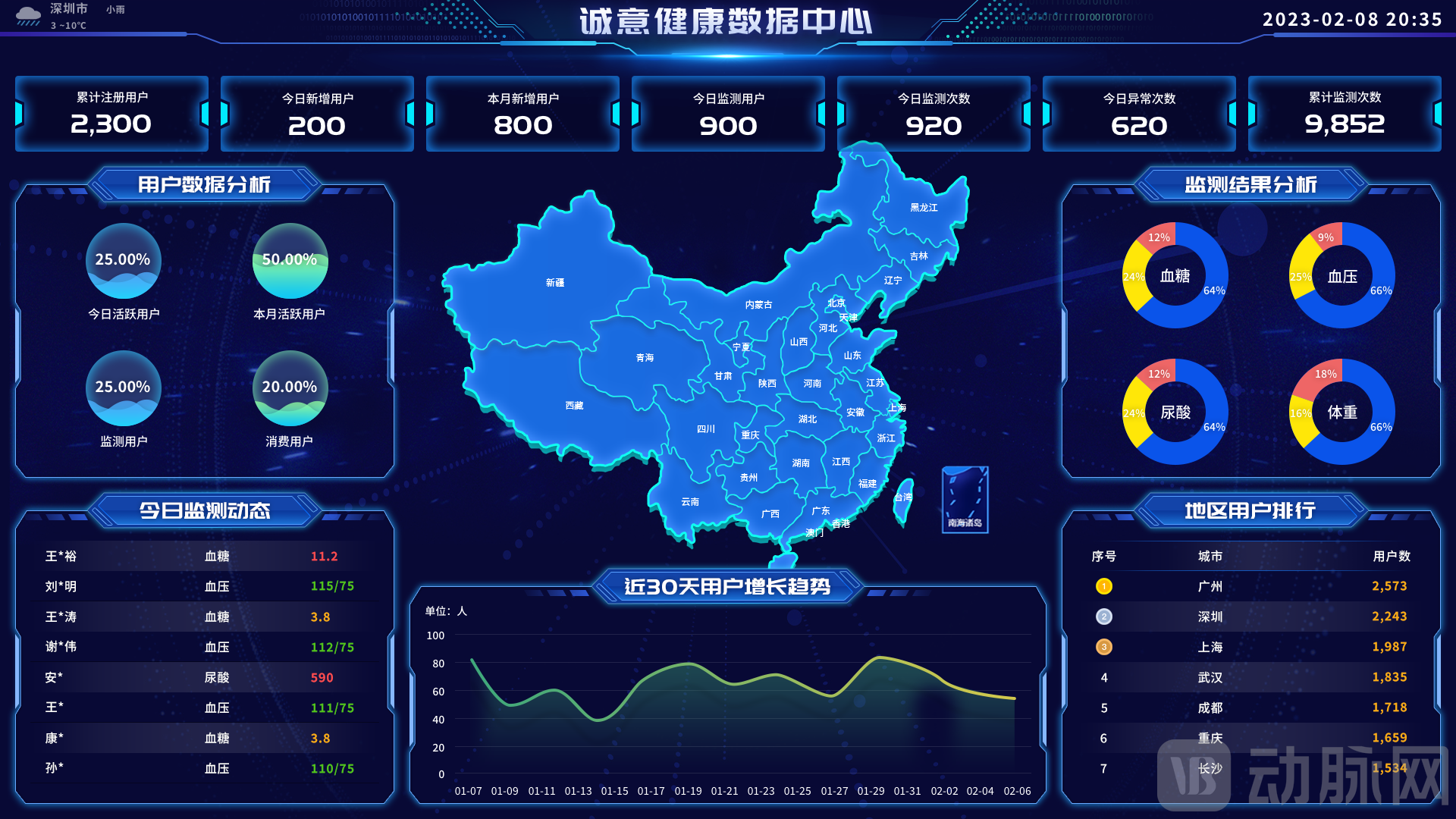
Data Dashboard Schematic
If chain pharmacies and health management companies are broadly categorized as midstream players in the health management industry chain, how does Kangxintong empower upstream medical device manufacturers? Ji Renwen illustrated this with a specific case study.
“Among our previous clients was a high-end startup specializing in blood glucose meters. Due to its premium pricing, which reached several thousand yuan, traditional sales channels failed to meet its customer acquisition needs.”Kangxintong empowers enterprises by providing digital solutions across product innovation, customer acquisition and traffic generation, user operations, channel expansion, and business decision-making, thereby enhancing their competitiveness and service capabilities.First, by leveraging IoT technology, we enabled device data to be uploaded to the cloud and integrated with mini-programs, thereby creating intelligent terminals. Second, capitalizing on the advantages of the WeChat ecosystem, we established connectivity between mini-programs and third-party platforms to drive traffic and acquire customers. Third, the mini-program serves not only as an extension of smart device functionalities but also provides health services to users, acting as a primary vehicle for conveying brand value. Its presence bridges public-domain and private-domain operations. Furthermore, we expanded product sales channels through an open data platform, targeting key channels such as medical research institutions and major internet healthcare platforms. Finally, the solution empowers data-driven decision-making; through the “cockpit” feature provided by Kangxintong, enterprises can monitor users’ daily usage patterns. On top of these enhanced functionalities, midstream healthcare service providers reached via Kangxintong can also serve as sales channels for medical device products, ultimately helping enterprises increase both sales volume and service quality.
By integrating the upstream supply chain and collaborating with more medical device manufacturers and healthcare service providers, Kangxintong has further optimized the transaction links across the upstream and downstream sectors, improved the efficiency of product circulation and trading, and reduced procurement costs for midstream institutions and downstream users.
Currently, Kangxintong’s clients include physical examination centers, health service companies, medical device manufacturers, public and private hospitals, community clinics, chain pharmacies, elderly care centers, and more. “On one hand, these institutions themselves face significant pain points in areas such as health management, creating demand for service providers like Kangxintong; on the other hand, they serve a vast population. By leveraging these institutions as foundational partners, Kangxintong can help address the health management needs of a large number of patients.”
It is reported that Kangxintong is currently rolling out its services across China. Its client base is predominantly composed of medical examination centers, medical device companies, and health management firms.
For Kangxintong, its value undoubtedly stems from the services it provides.
Among its clients, a privately owned, high-end medical checkup center with proper medical qualifications (serving 150,000 individual consumers) requested an online consultation module after adopting Kangxintong’s digital solutions. The Kangxintong team spared no expense to help the institution develop this internet hospital module—a area previously untapped by Kangxintong—and comprehensively empowered it across all aspects, including pharmaceutical supply chains and medical services.
In response, Ji Renwen stated, “His needs were reasonable in themselves. By developing the corresponding functional modules, we can better serve other customer segments and recoup our costs, which is why we chose to commit ourselves wholeheartedly to this endeavor. For practitioners, the technical barriers in this field may not be high; however, our competitive advantage lies more in providing empathetic, perspective-taking services. High-quality service undoubtedly generates greater value and helps us build a stronger reputation.”
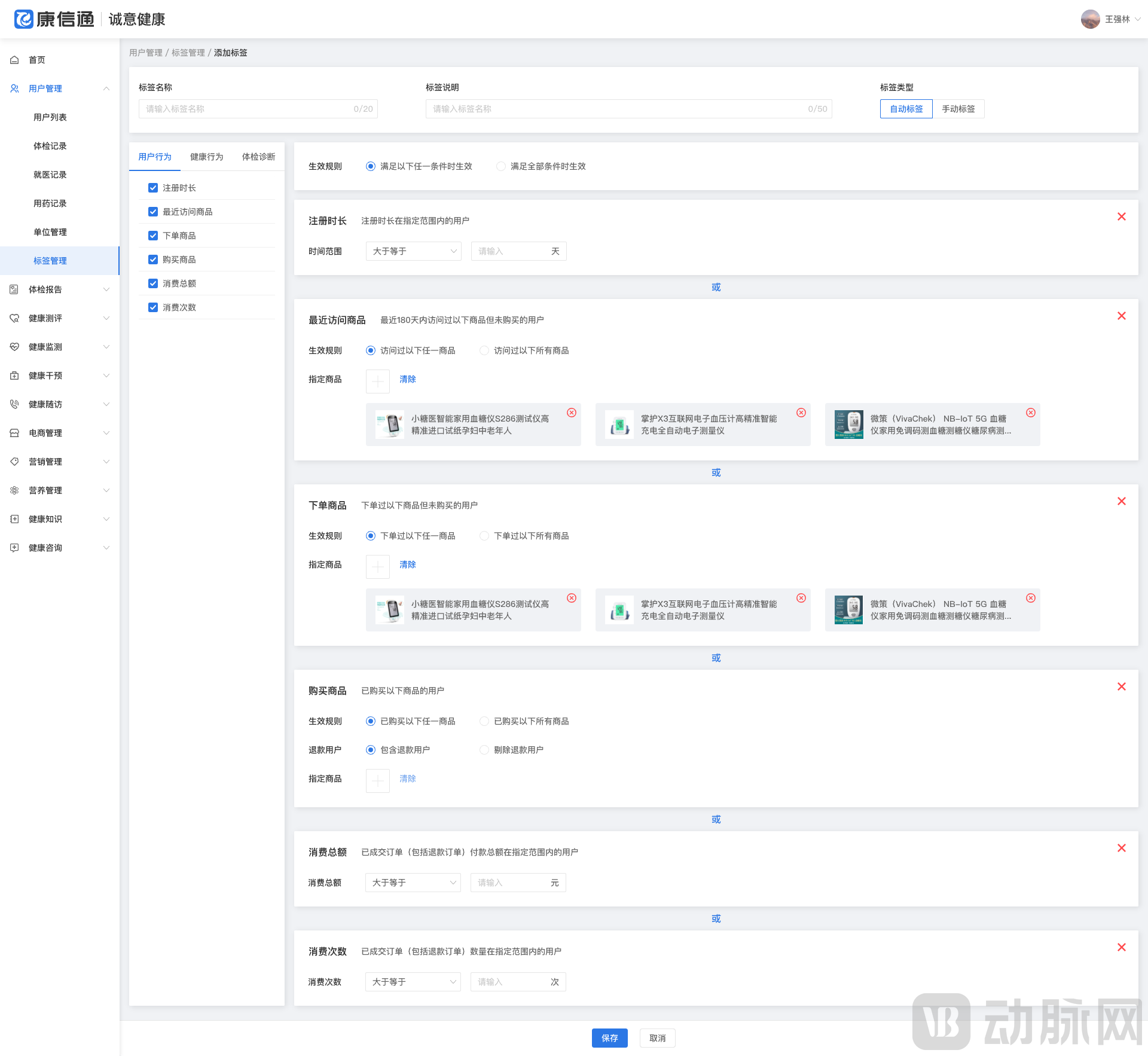 Tag ManagementSchematic Diagram
The ability to better meet customer needs is also related to Kangxintong itself:
First, Kangxintong has built a team of nearly 20 people.Ji Renwen’s background as a product manager enables him to better understand customer needs and rapidly help clients develop suitable products. Meanwhile, the addition of seasoned professionals with extensive experience in both software and hardware, along with the team’s diverse backgrounds, equips the company with the capability to integrate resources across the upstream, midstream, and downstream segments of the healthcare industry.
Secondly, there are unique technological advantages.Kangxintong adopts a low-code platform design, which not only facilitates rapid application deployment but also reduces development and maintenance costs. Furthermore, the scalability of its architecture ensures that new customer requirements can be met promptly.
Furthermore, it boasts robust operational capabilities.Kangxintong itself possesses the capabilities for efficient user acquisition, scaled user operations, and conversion. By analyzing relevant user personas and data, it can better help clients achieve commercial conversion. This is also what distinguishes it from other third-party digital solution providers.
Currently, Kangxintong is planning to raise funds. The company stated that the proceeds will be allocated to various areas, including product research and development, enhancement of service capabilities, and market expansion.
In Ji Renwen’s vision,Kangxintong must first continue to deepen its services for different types of customers, thoroughly understanding their needs. On this basis, it will then extend and expand integrated services with health insurance and other sectors, achieve synergy across various business lines, and ultimately build an ecosystem-based service system. Through this approach, Kangxintong aims to further empower its partner manufacturers and enhance commercial efficiency.Meanwhile, throughout this process, Kangxintong will further enhance resource allocation efficiency based on user data insights, strengthen its AI capabilities, and fully explore and unlock the inherent potential value of data.
“Amid the surge in development of large language models and other technologies, high-quality data remains a core asset for enterprises.”SaaS companies, owing to their deep understanding of specific industries and vast amounts of high-quality, non-public data, will become important data sources for vertical large language models. Meanwhile, SaaS product services will also emerge as one of the most valuable application scenarios for vertical large language models.“The integration of high-quality data with artificial intelligence can further promote the widespread adoption of health management services, ultimately contributing to an improvement in the overall health of the nation,” mentioned Ji Renwen.