

Shanghai Jiao Tong University and Industry Partners: How China Can Forge Its Own 'Biodesign' for Innovation Translation
On August 20, the scorching heat was as intense as ever, and the atmosphere in the second-floor conference hall of Xingguo Hotel was equally fervent. Nearly 40 researchers from the medical field and industry professionals gathered there to hold a press conference for a new “fruitful achievement.”
This is China’s first full-cycle guide to medical technology innovation and entrepreneurship——"Medical Technology Innovation and Entrepreneurship"At the new book launch event. More than a year ago, senior professionals from the fields of healthcare, marketing, investment, and law gathered at Shanghai Jiao Tong University, where a professor of biomedical engineeringQian DahongUnder the leadership of [Name], this book was co-authored. Its original intent is to introduce fields that have seen rapid technological advancements in recent years, such as computer hardware, software algorithms, semiconductor chips, sensors, new materials, and molecular nanotechnology, as well as their impact and applications in healthcare. It provides a detailed analysis of the characteristics and development of interdisciplinary research projects at the intersection of medicine and engineering, inspiring readers to identify or explore opportunities for technological innovation. When we arrived at the scene, Professor Qian Dahong was delivering a speech for the launch of the new book.
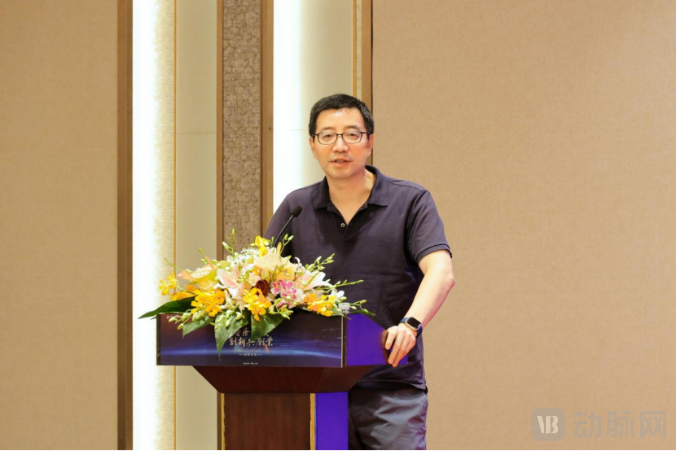
Address by Professor Qian Dahong
Secretary of the Party Committee, School of Biomedical Engineering, Shanghai Jiao Tong UniversityChen JiangpingIn the words of , "Medical Technology Innovation and Entrepreneurship" isChina’s First Full-Cycle Guide to Innovation and Entrepreneurship in Medical Technology, drawing on Stanford University’s Biodesign innovation model while integrating China’s entrepreneurial and innovation environment and policies.
Therefore, throughout the entire process of initiating and conceptualizing the framework for this book, Secretary Chen Jiangping and Professor Qian Dahong aimed to bring together all elements of the medical innovation ecosystem. Researchers from the scientific community, founders from the industry, and investors from the investment sector were all part of the editorial team. For the new book launch event, they traveled from across China to share their industry insights.
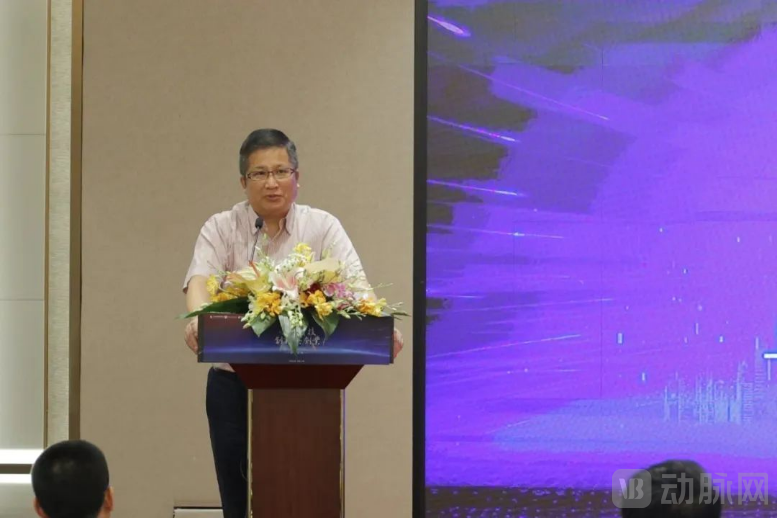 Address by Secretary Chen Jiangping
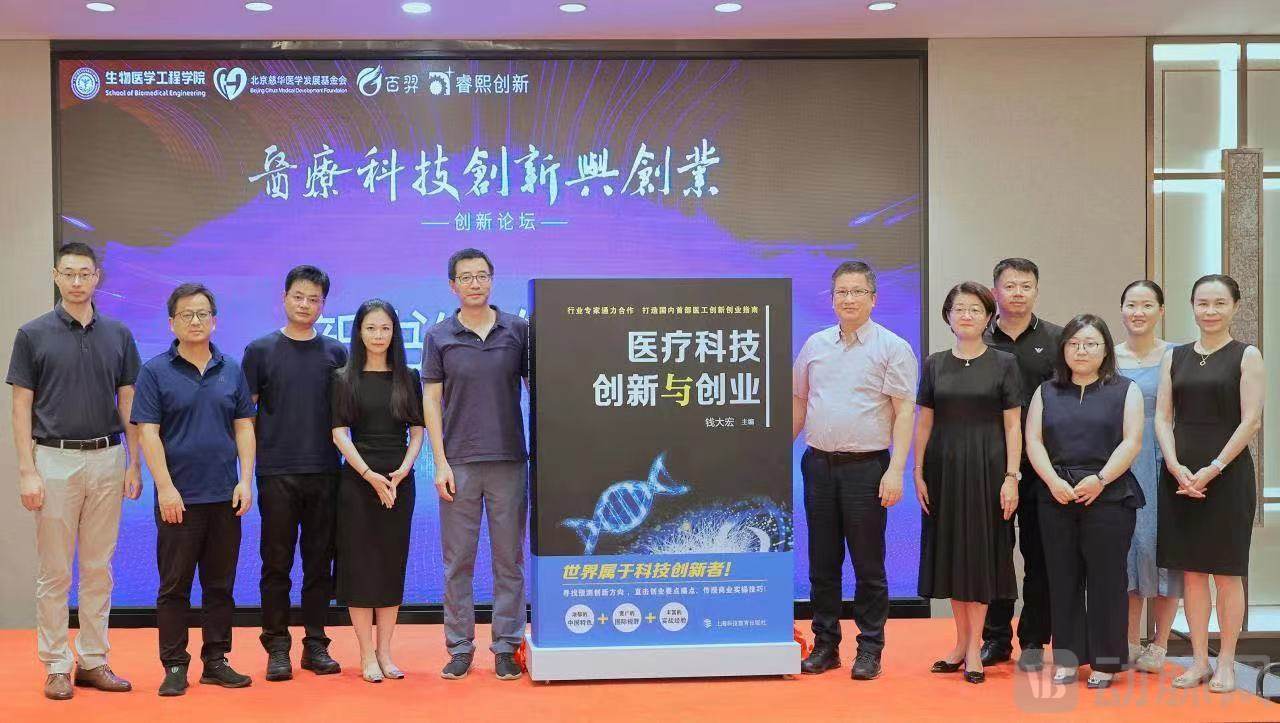
New Book Unveiling Ceremony
There is a gap that needs to be closed.
“Gap”, were the key terms discussed at this press conference. Whether they were researchers involved in translating academic findings into practical applications, corporate founders, or investors, all agreed that China’s medical innovation and entrepreneurship “lag behind and need to catch up.” Secretary Chen Jiangping noted that this gap has been his primary motivation for consistently promoting medical-engineering innovation at Shanghai Jiao Tong University.
Currently, the translation of scientific and technological innovations into practical applications in China is just getting started, particularly in the field of medical technology innovation. Few universities stand out in this area. Secretary Chen Jiangping stated that more than two-thirds of the funds from foreign investment companies are distributed in the medical technology sector, and university patent transfers are also concentrated in the life sciences field.Compared with international standards, China still does not place sufficient emphasis on the translation of medical innovations.
Beyond being a key direction for the future, medical-engineering innovation also significantly contributes to the development and strategic layout of academic disciplines within universities.
However, the challenge in translating medical technology innovation into practical applications lies in original innovation projects.Complex processes, high barriers, and long cycles. The translation and commercialization of medical technological innovations rely on highly educated professionals to generate innovative projects, utilizing extensive and advanced equipment and facilities to conduct early-stage experiments. This inherently necessitates substantial upfront investment. When an innovative technology emerges, the market often struggles to assess its feasibility. Furthermore, the prolonged cycle of research, development, and commercialization in medical innovation is mismatched with typical fund investment horizons, leading to widespread difficulties in the translation and commercialization of medical technological innovations in China.
In addition, differences in medical education systems have also contributed to the gap between China and other countries in the translation of medical technologies. The United States tends to cultivate interdisciplinary talents, requiring medical students to study engineering before learning medical knowledge, while Chinese medical education places more emphasis on clinical treatment. Even after entering the workforce, most of Chinese doctors' time and energy are consumed by clinical work, making it difficult for them to independently complete innovation and technology transfer.
Dr. Cheng Zhengjie of Aurora Venture Partners first noted that, from the perspective of a medical student and physician, the greatest difference between China and the United States lies inEducation System. U.S. medical education fosters interdisciplinary talent, equipping physicians with both medical and engineering expertise, thereby giving them a natural advantage in innovative discoveries. From an investor’s perspective, Dr. Cheng Zhengjie noted that the current challenge in the medical device market lies in product homogenization. The key to breaking this homogenization is whether founders and their founding teams possess comprehensive product thinking.
This also means that China’s medical-engineering innovation must forge its own path.
The Pyramid Principle
The transformation process takes the form of a pyramid. Secretary Chen Jiangping believes that,The key to expanding the foundational base is to conduct robust basic research.
“First, we need to expand the base; with more participants, more ideas will be generated. However, not everyone is suited for entrepreneurship. Only projects with market value can be commercialized after intermediate screening,” Secretary Chen Jiangping specifically noted in the interview.
In the realm of basic scientific research, Shanghai Jiao Tong University has consistently provided researchers with long-term and ample research conditions. In June 2023, the university unveiled a new batch of independent innovation research initiatives, including the “Special Zone for Basic Research Program” and the “SJTU 2030” Program. Twenty-six scientists were selected to join the “Special Zone for Basic Research,” receiving long-term, stable, and concentrated support.
As the source of innovation, universities also have the responsibility to identify basic research with market value and facilitate its translation for societal benefit. Secretary Chen Jiangping revealed that the School of Biomedical Engineering at Shanghai Jiao Tong University has 32 officially registered spin-off companies. This endeavor requires support from both capital and government.“Capital provides funding, while the government needs to drive system development and platform building.””
Sun Kai, Head of the Business Development Department at the Suzhou Industrial Park BioBAY, also shared some insights from BioBAY’s experience. At BioBAY, a cohort of entrepreneurs and scientists dedicated to translating scientific research into commercial applications has been introduced. The allocation of industrial resources within BioBAY—including capital, talent, and policy support—is all centered around innovative products.As a crucial carrier and base for medical innovation, the industrial park not only provides space, services, and funding but also acts as an active participant in corporate development by engaging in company meetings and industry salons.
At this juncture, Shanghai Jiao Tong University has also made some attempts. Outside the Minhang Campus of Shanghai Jiao Tong University lies a global hub for innovation and entrepreneurship—Grand Bay Zero, is a case in point. Grand Neo Bay is an incubator platform jointly established by the Shanghai Municipal Government, the Minhang District People’s Government, and Shanghai Jiao Tong University. Leveraging Shanghai Jiao Tong University’s talent and technological resources, enterprises’ industrial services and capital allocation, and the Minhang District People’s Government’s efforts in environment building and policy coordination, it provides incubation services covering the entire innovation and entrepreneurship industry chain, attracting and gathering innovative talents from domestic and overseas universities, industrial innovators, and technical innovation teams to launch startups.
It is understood that nearly 1,000 companies are currently registered in the Greater Bay Area of Zero, with biopharmaceutical enterprises accounting for approximately 20% of the total.
Challenges: A Long and Arduous Journey Ahead
Government investment and the innovative output of universities make medical entrepreneurship and innovation both inevitable and essential. Even amid a capital winter, the industry and investment communities continue to pay unique attention to medical innovation, keeping the sector vibrant and active.
But Beyond the Hype, What Challenges Do We Face?
This question was raised by Cheng Si, Partner at Ruixi Innovation and Head of Medical Investment and Financing at the Yangtze River Delta Physics Research Center, during the on-site roundtable discussion.
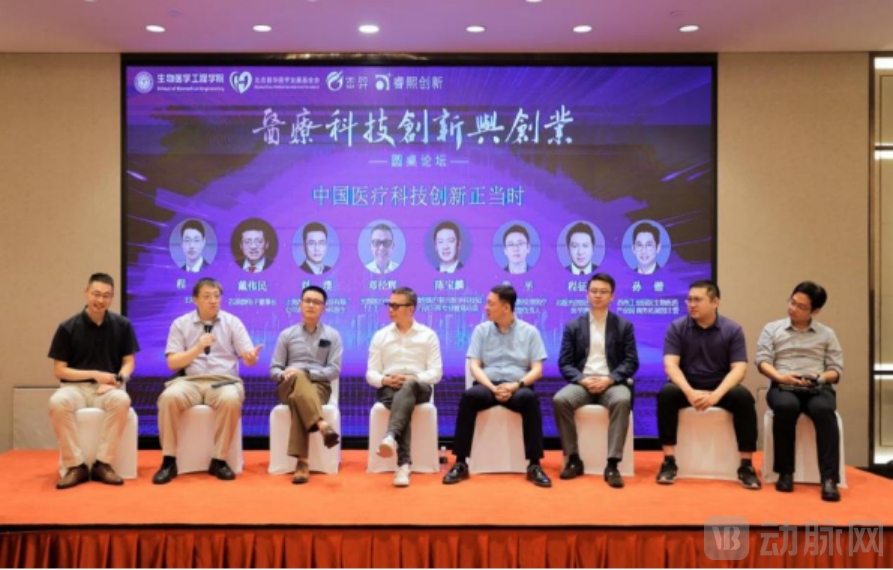 Roundtable Discussion Venue
Huang Ping, Head of the Healthcare Investment Department at Guotai Junan Innovation Investment, analyzed the challenges currently facing medical technology innovation from three normalities at the investment level.
The first norm isLow return on investmentTo date, many medical innovation enterprises in China have listed on the Hong Kong Stock Exchange and the STAR Market; however, from the perspective of sales revenue, few have delivered substantial returns to investors. This is because most innovative companies have not yet achieved sufficient breakthroughs in addressing clinical needs and facilitating industrial commercialization.
The second isThe Homogenization Problem of Innovative EnterprisesA large number of startups in the industry are focusing on the same innovation or product category. Although this creates a temporary appearance of a booming sector, the technology lacks originality. Even if products reach the market, their commercialization and sales pathways remain unviable. Over time, investors have grown weary of these homogeneous projects, leading to diminished investor enthusiasm.
The third normality isTolerance for Investment Innovation and RiskHighly innovative ventures are often accompanied by high risks. When investors identify promising early-stage projects, they must consider not only the innovation inherent in the projects themselves but also the investment time horizon and market conditions. In the face of high investment risk, do investors have the courage to champion original innovation and overcome significant obstacles?
At this level, the root of the challenge may lie in the technology and product itself. This also means that medical innovation and entrepreneurship are not simply about discovering and translating innovations; they also require a clear understanding of the starting point, ultimate goal, and market positioning of the product.
Liu Pu, General Manager of Shanghai Hansai Medical Technology Co., Ltd., believes that,Where to Innovate MattersSpecifically, the initiation of a product project must consider three key points: whether existing technology can manufacture the product; whether it can gain hospital access or be included in medical insurance coverage during its product lifecycle; and whether there is genuine clinical demand for the product. Only when there is proven need and an identified payer can the commercialization of scientific research findings find a solid foothold.
In this regard, Deng Jinghui, founder of Guanghui Medical, also emphasized: “"Identifying genuine clinical needs is the key to effective product positioning."In addition, he noted that over the past three decades, China’s R&D efforts have primarily revolved around imitation and replication, thereby eliminating the need for extensive preliminary experiments by R&D teams. While this approach may have enabled a cohort of companies to go public, it leaves them ill-equipped to address challenges arising in clinical settings.
"Internationalization", this is the answer given by Dai Weimin, Chairman of VeriSilicon. VeriSilicon Microelectronics (Shanghai) Co., Ltd. (VeriSilicon, 688521), known in the industry as “China’s First Semiconductor IP Stock,” provides platform-based, comprehensive, one-stop chip customization services and semiconductor IP licensing services. By advocating internationalization, Dai Weimin points out the mistake of some domestic companies that proactively decouple from global supply chains amid the backdrop of deglobalization. He believes thatIn the biomedical sector, many materials, equipment, and facilities still rely on imports.
Starting from the market for innovative products, Chen Baolin, Professional Education Director of the MicroPort Emerging Medical Technology Zhixing Institute, stated thatGrowth in the domestic market is constrained by medical insurance and payment mechanisms, as insurance has yet to serve as a positive supplement to the healthcare industry.In China, patients primarily rely on public health insurance for payment; the scale of this insurance system determines the market size for medical products. In contrast, patients abroad also have the option to pay through commercial health insurance.
Returning to the medical innovation projects themselves, their R&D and investment are long-term endeavors that require more time and patience from the market, government, and investors to help researchers and startups achieve original innovations and launch products with genuine market barriers.
Postscript
During the intermission, the venue had already transformed into a book signing event. Although the editors were already well acquainted with the contents of the book, each of them still carefully collected their own copy. This book, fewer than 500 pages in length, encapsulates the hopes and expectations of the scientific research community, the industry sector, and the investment circle for technological innovation and entrepreneurship in healthcare. I also joined the queue and, at the very end, obtained Professor Qian Dahong’s signature.
 Professor Qian Dahong's New Book Signing
Reflecting on the impetus and original intent behind writing this book, Party Secretary Chen Jiangping and Professor Qian Dahong both recalled their visit to the Biodesign Center at Stanford University. They noted that Stanford’s Biodesign program offers a comprehensive, end-to-end methodology covering everything from the identification and screening of clinical needs, to the discovery and selection of solutions, as well as regulatory affairs, intellectual property, market positioning, and financial analysis. This methodological framework is highly systematic and practical. In 2019, Shanghai Jiao Tong University launched the course “Intelligent Healthcare and Innovation,” adopting the Stanford Biodesign model.
However, during the lectures and training sessions, they discoveredChina’s National Context Cannot Be Directly Applied to Stanford University’s Biodesign Textbook. First, Biodesign is primarily based on the U.S. healthcare system, including detailed introductions to the FDA and case studies. Second, the Biodesign book was published in 2015, and the rapid development of high technology over the past decade has not been fully reflected in its medical application cases.
Thus, starting in 2021, the two of them nurtured an idea: to write a guide to medical technology innovation and entrepreneurship tailored to China’s national context. They invited seasoned experts from the fields of healthcare, technology, investment, product development, marketing and sales, regulatory affairs, and intellectual property to contribute to the writing, with the aim of helping innovators and entrepreneurs conduct comprehensive assessments of their translational projects and develop complete, actionable business plans.
But as Li Zhe, founder of the healthcare-focused vertical incubator Baichuanghui and partner at Proxima Venture Partners, stated,A Single Textbook Is Not Enough for the Translation of Medical Scientific and Technological Achievements. Medical technology translation is both a pyramid and an ecosystem. The entire healthcare industry is engaging in dialogue, catching up, and achieving breakthroughs. The road ahead is long, the prospects are vast, and we remain true to our original aspiration.