

Invalidation Challenges Against Foundational CRISPR-Cas9 Patents of UC and Broad Institute in China
Editor's Note, Author of this articleYuan Yuan, Senior Director of Intellectual Property and Legal Affairs, Huida (Shanghai) Biotechnology Co., Ltd. Republished with permission from VCBeat.
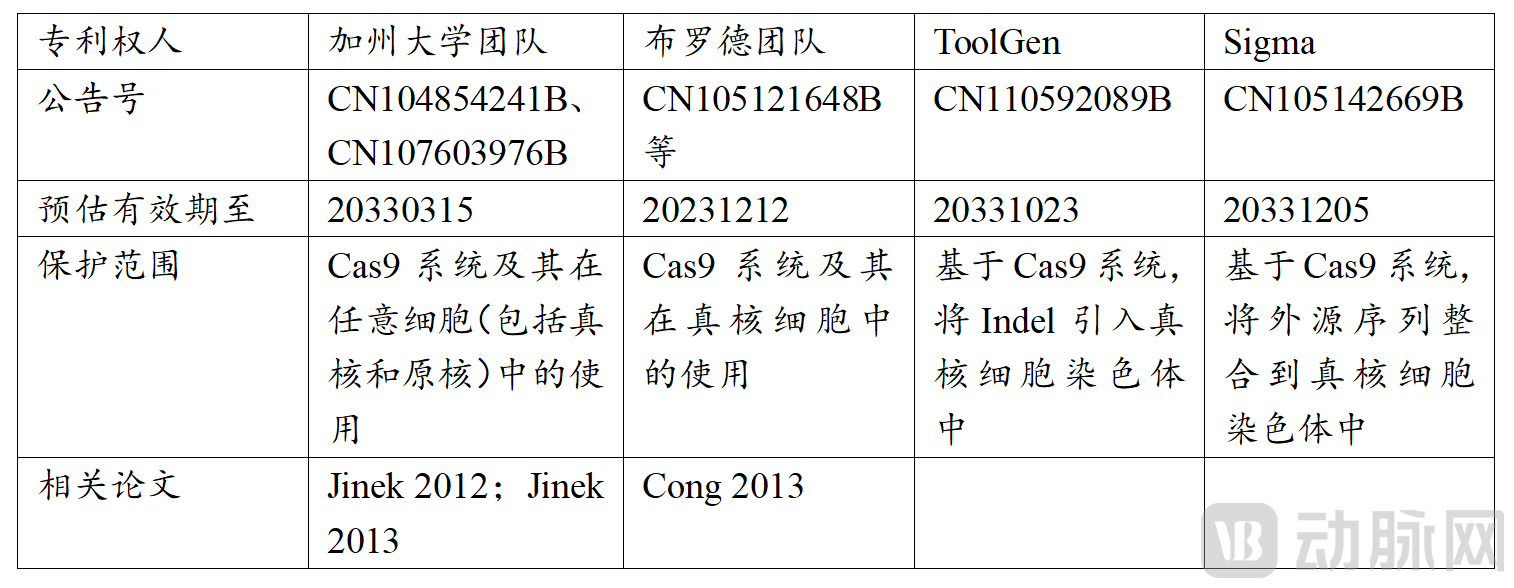
The 2020 Nobel Prize in Chemistry was awarded to Ms. Jennifer A. Doudna and Ms. Emmanuelle Charpentier for their contributions to the development of genome editing methods using the CRISPR-Cas9 system (hereinafter referred to as the “Cas9 system”). Their landmark paper, titled “A programmable dual-RNA-guided DNA endonuclease in adaptive bacterial immunity” (hereinafter referred to as “Jinek 2012”), was published on August 17, 2012. This work developed a highly streamlined Cas9 system comprising a single guide RNA (sgRNA; formed by linking crRNA and tracrRNA via a linker) component and a Cas9 protein component. Subsequently, they published another paper on January 29, 2013, titled “RNA-programmed genome editing in human cells” (hereinafter referred to as “Jinek 2013”), which demonstrated the use of the CRISPR-Cas9 system in eukaryotic cells. The earliest priority date for the relevant Chinese patents (CN104854241B and its divisional patent CN107603976B) is May 25, 2012. The patentees are the University of California, the University of Vienna, and Emmanuelle Charpentier, collectively referred to as the “University of California Team.”
On the other hand, the Zhang Feng team published a paper on January 3, 2013, demonstrating the use of the Cas9 system in eukaryotic cells, titled “Multiplex genome engineering using CRISPR/Cas systems” (hereinafter referred to as “Cong 2013”). The earliest priority date for the relevant Chinese patents (such as CN105121648B) is December 12, 2012, with the patentees being the Broad Institute, the Massachusetts Institute of Technology, and Harvard University, collectively referred to as the “Broad team.”
The aforementioned Cas9 system patents held by the University of California team and the Broad Institute team both claim protection for the use of the Cas9 system in eukaryotic cells, which holds significant commercial value. These are foundational patents that warrant close attention from any entities seeking to commercialize related technologies. Furthermore, entities commercializing Cas9 systems should also monitor, based on their specific business activities, Chinese Patent CN110592089B held by ToolGen Inc. (“ToolGen”), which relates to introducing indels into eukaryotic cell chromosomes using the Cas9 system, and Chinese Patent CN105142669B held by Sigma-Aldrich Co. (“Sigma”), which relates to integrating exogenous sequences into eukaryotic cell chromosomes using the Cas9 system.
In the United States and Europe, the University of California team and the Broad Institute team have engaged in protracted patent disputes over the Cas9 system—particularly its use in eukaryotic cells—both between themselves and with third parties. Now, their Chinese patents are also being challenged separately.
On February 15, 2023, the oral proceedings for the invalidation request filed by the South Korean company ToolGen Inc. (also referred to above as Gene Tool Inc., ToolGen) against the Broad Institute team’s Chinese Patent No. CN105121648B were held at the Reexamination and Invalidation Department of the China National Intellectual Property Administration (CNIPA). On June 20, 2023, the oral proceedings for the invalidation request filed by natural person Wang Xiaoyang (suspected of employing a “straw man” strategy, with the actual interested parties behind the action remaining uncertain) against the University of California team’s Chinese Patent No. CN104854241B were held at the Reexamination and Invalidation Department of the CNIPA. The invalidation procedure is an administrative process before the patent office that challenges a patent after its grant; once a patent is declared invalid, the patent right is deemed to have never existed ab initio.
Based on information obtained from the oral proceedings, the invalidation strategies employed in these two cases exhibit certain similarities. Both attempts sought to argue that the earliest priority right claimed by the patents in question was invalid, asserting that the earliest priority date should instead be the priority date of the second or a later priority application. This would cause the patentees’ own papers or closely related publications, whose publication dates were originally later than the earliest priority date, to qualify as prior art, thereby undermining the novelty and/or inventiveness of the patents concerned. The difference between the two cases lies in their specific arguments: in the invalidation case against Patent CN105121648B involving the Broad Institute team, the petitioner primarily challenged the validity of the earliest priority right based on procedural issues related to the assignment of priority rights; whereas in the invalidation case against Patent CN104854241B involving the University of California team, the petitioner primarily challenged the validity of the earliest priority right based on substantive issues concerning the disclosure of technical effects in the priority application. As of the press date, both cases remain pending.
As previously mentioned, the use of the Cas9 system in eukaryotic cells in China is covered by multiple licensed patents held separately by three or even more parties. Filing invalidation requests against only a subset of these patents, even if successful in invalidating all targeted patents, cannot fully address the concerns of commercial users of the Cas9 system. Gene therapies based on the Cas9 system, including ex vivo (e.g., CAR-T cells, blood cells) and in vivo editing, have made rapid progress in preclinical and clinical studies in recent years. The Biologics License Application (BLA) for Exa-cel, the first gene-editing therapy based on the Cas9 system (co-developed by Vertex Pharmaceuticals and CRISPR Therapeutics), for the treatment of severe sickle cell disease and transfusion-dependent beta-thalassemia, was accepted by the U.S. FDA for priority review this April. Barring any delays, the review results are expected to be announced by the end of 2023. A commercial breakthrough for Cas9-based gene therapies is imminent; however, the validity periods of the underlying Cas9 patents held by the aforementioned parties are not set to expire until approximately 2033.
In addition to DNA cleavage applications that directly leverage the DNA nuclease activity of Cas9, further DNA editing technologies developed by early pioneers such as David Liu—including base editing and prime editing—utilize the DNA-binding properties of Cas9 (or Cas12a/Cpf1) in conjunction with attached functional domains, such as deaminases or reverse transcriptases, to achieve more precise DNA nucleotide editing. These advanced DNA editing technologies are also covered by underlying patents, which potential commercial users must pay special attention to, in addition to the aforementioned foundational Cas9 patents. For example, U.S. Patent Nos. US10167457B2 (expiring in 2036) and US11214780B2 (expiring in 2037), owned by Harvard University and listing David Liu among the inventors, cover C-to-T base editing systems using Cas9 or Cas12a/Cpf1 with any cytosine deaminase. U.S. Patent Nos. US11643652B2 and US11447770B1 (expiring in 2040), jointly owned by the Broad Institute and Harvard University and also listing David Liu among the inventors, cover prime editing systems using Cas9, Cas12a/Cpf1, or Cas12b1 with any reverse transcriptase. For potential commercial users of these technologies, even after the foundational Cas9 patents expire around 2033, they will still need to contend with the underlying patents for base editing and prime editing.
Typically, when facing potential patent infringement risks, particularly during financing or initial public offering (IPO) processes, it is advisable for commercial users to eliminate such risks in advance. Common mitigation strategies include: (1) invalidating the relevant patent rights ab initio through invalidation proceedings and subsequent judicial procedures; (2) employing reasonable design-around techniques to bypass the relevant patents while achieving comparable technical effects; and (3) obtaining a commercial license from the patent holder.
The CRISPR-Cas12 system (Class 2, Type V) (hereinafter referred to as the “Cas12 system”) represents a major class of CRISPR-Cas systems that are distinct from the Cas9 system (Class 2, Type II) in terms of both evolution and taxonomy. Current research has revealed that it can achieve DNA editing capabilities comparable to, and in some cases superior to, those of the Cas9 system. Furthermore, it does not fall within the scope of protection of the aforementioned foundational patents for Cas9, thereby circumventing these layered patent barriers.
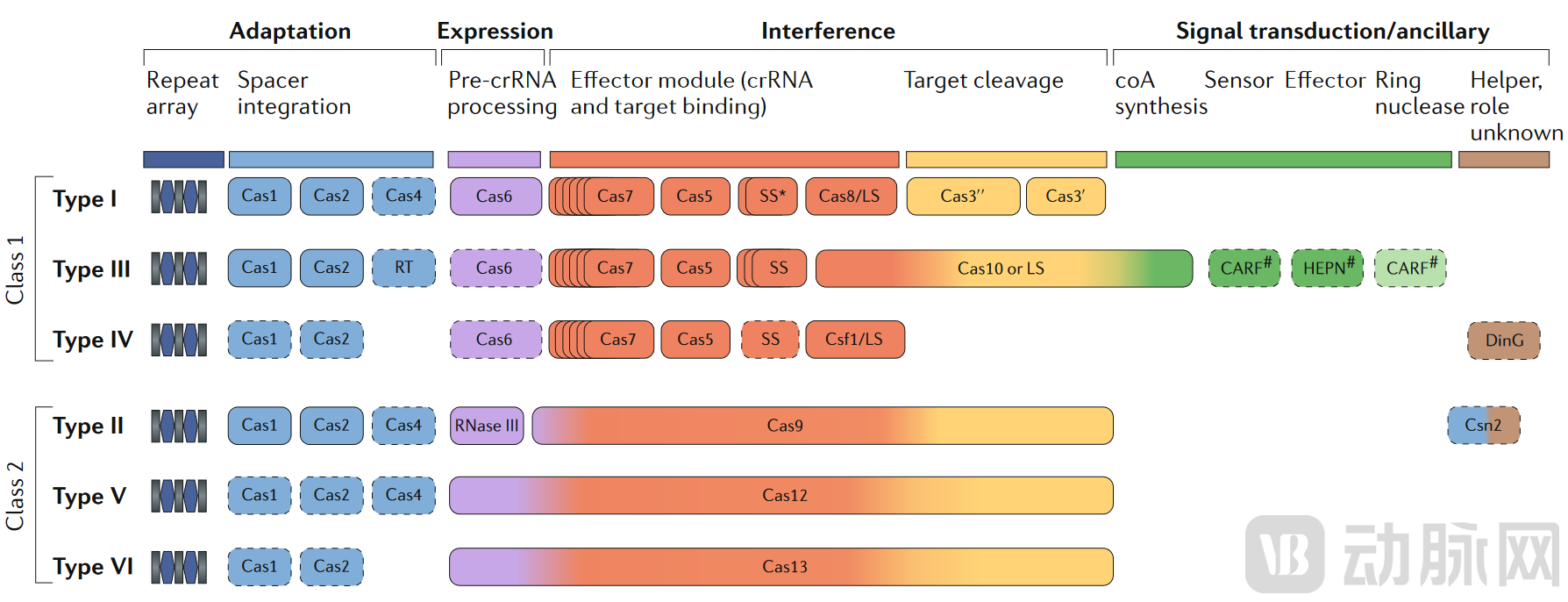 (Box 1,“Evolutionary classification of CRISPR–Cas systems: a burst of class 2 and derived variants”,Nature Reviews,2019)
According to public information, the scientific team of Huida (Shanghai) Biotechnology Co., Ltd. (hereinafter referred to as “Huida Gene”) published a paper titled “An engineered xCas12i with high activity, high specificity and broad PAM range" research paper (Huida Gene Develops High-Fidelity Cas12 System with Higher Activity and Better Specificity). In this work, scientists at Huida Genomics identified multiple novel Cas12i proteins from metagenomic databases. Using a fluorescent reporter system, they screened and found that xCas12i exhibits remarkably high eukaryotic gene-editing efficiency in mammalian cells, even surpassing that of SpCas9 and LbCas12a. They further leveraged Huida’s evolution platform, HG-PRECISE®High-fidelity xCas12i variants (Cas12Max) obtained through engineering, featuring high-efficiency targeted editing activity but extremely low off-target editing activity®) and the engineered Cas12i variant ABR-001 published by Arbor (Colin, et al., 2022, Nature Communication) exhibited comparable efficacy in terms of on-target and off-target editing.
In May 2023, the novel DNA editing system CRISPR-Cas12i (Cas12Max®) of U.S. Patent No. US11,649,444B1, which was granted within 9 months through the Patent Prosecution Highway (PPH) programOfficially Granted by the United States Patent and Trademark Office (USPTO), protecting the novel Cas12i proteins and methods for using this system to modify target DNA, thereby achieving a breakthrough in the overseas patent layout for China’s first underlying CRISPR-Cas12i system and addressing the “chokehold” issue of intellectual property rights in China’s gene editing field.
In summary, for the commercial use of the Cas9 system and its various improved technologies (such as base editing), the layered patent barriers and licensing difficulties constructed by foreign patent holders remain serious issues that must be addressed in the next decade and beyond. In light of the rapidly accelerating development and market launch of new drugs in China, it is advisable to adopt Cas tools with independent Chinese intellectual property rights that offer greater potential for commercial licensing at an early stage, thereby laying a solid patent foundation for drug development.