

Going Global as a Necessity: A Strategic Roadmap for Biotech Companies to Navigate the 'Biotech Winter'

HiFiBiO Therapeutics
Biological Innovation Drug Developer
“Since 2015, we have witnessed significant changes across the entire industry. The first change is a shift in mindset: from focusing on drug accessibility to addressing clinical needs, and further advancing toward globalization and international expansion.” pointed out Xu Ting, founder of HiFiBiO Therapeutics, during the roundtable discussion at the 2023 XiPu Conference.
Yang Jianxin, CEO of CStone Pharmaceuticals, observed that with the arrival of the industry’s winter, the innovative drug market should also evolve, no longer confined to a China-centric mindset."In the past, the general approach was to develop overseas business on an ad hoc basis, without making it a core strategic focus.""I believe that the overseas market urgently needs to be tapped, for example, by laying out an overseas presence starting from the global clinical trial phase."
Globalization, and the challenges of overseas expansion in this context, have become one of the most frequently discussed topics at industry conferences.Visionary company founders are increasingly convinced of the necessity of global expansion, believing that globalization is an essential consideration for this generation of innovative pharmaceutical companies, and that it is crucial for new drugs to generate revenue in Europe and the United States.
In May this year, Drug Discovery Today published a feature article titled “Globalization or Localization: The Future of Biotechnology Companies,” which corresponds to the active discussions within China’s industrial sector regarding overseas expansion and globalization.
The article argues that biotechnology startups typically begin as localized companies relying on domestic resources and talent, but this approach may not effectively achieve rapid growth and long-term success, particularly in developing new therapies that require substantial resources and extensive investment. Instead,Globalized biotechnology companies are better equipped to address major industry challenges, such as innovation, resource constraints, and limitations in talent diversity, particularly during the current challenging period known as the “biotech winter.”
“Establishing a globally oriented biotechnology company offers a potential solution to navigate the severe environment of the current ‘biotech winter.’ This downturn is characterized by intense competition for top talent, reduced deal activity, depressed stock prices, and tight investor capital. Even under favorable macroeconomic conditions, globalization provides biotechnology companies with more options than domestic firms to access the talent, funding, and innovation necessary for rapid growth. The article emphasizes that the advantages of going global—such as increased opportunities for open innovation, social capital generation, and team growth and diversity—will outweigh the costs of global operations if executed properly.”
Hai Zhang proposes strategies to optimize the value of global biotechnology companies. To maximize the advantages of these global biotech firms, this paper emphasizes the importance of capital efficiency.Furthermore, a roadmap has been charted for global biotechnology companies based on the “Flywheel” concept to ensure that all key advantages of international operations are integrated into the business framework.。
VCBeat has translated the full text of the article, hoping to provide insights for industry professionals, as follows:
Advantages of Born-Global Biotech Companies
Global startups are business organizations that seek international operations from inception by leveraging their unique innovation capabilities, networks, and knowledge. In contrast, locally focused companies may passively evolve into multinational enterprises, but internationalization has never been their core growth strategy.To effectively implement a global strategy, biotechnology startups must actively pursue internationally oriented opportunities.
Given that new drug development is a resource-intensive and protracted process, with the median development cost per product reaching as high as $1.1 billion, we believe that therapeutic companies are best suited to adopt a globalized strategy. Here, we explore the advantages and challenges of globalized biotechnology companies compared to their localized counterparts, and share the developmental journey of HiFiBiO Therapeutics, a globalized biotech firm. To enhance the success rate of this globalized strategy, we recommend applying optimized capital efficiency to maximize these global advantages, and provide an operational framework derived from Jim Collins’ Flywheel concept to translate these key advantages into building a sustainable, globalized biotechnology company.
New therapy companies require deep scientific knowledge andTechnologySpecialized expertise transcends geographical barriers to address unmet medical needs. Because the development of innovative therapies involves longer timelines and more complex mechanisms of action compared to generic drugs, for new therapeuticFor pharmaceutical companies, this point is particularly important. Since startups face significant obstacles before achieving success, the ability to provideExtensive Innovation Science Network,Substantial capital and high-quality talent,This sector may hold the most promise for the biotechnology industry. Compared with domestic companies, global biotechnology firms are likely better positioned to access these resources, leveraging their geographic advantage in international expansion.
Historically, startups have maintained a localization strategy due to lower operating costs and simpler organizational structures. Furthermore, differing policies and standards from health regulatory agencies—such as the U.S. Food and Drug Administration (FDA), the European Medicines Agency (EMA), and the National Medical Products Administration (NMPA)—pose challenges for multi-regional operations. We summarize the advantages and challenges of globalization and localization models in Table 1. Various factors must be considered when evaluating whether to remain domestic or expand globally. Here, we highlight the key factors for ensuring the success of new therapies, which require scientific innovation and adequate resources to drive projects forward, as well as top-tier talent to create value for patients.
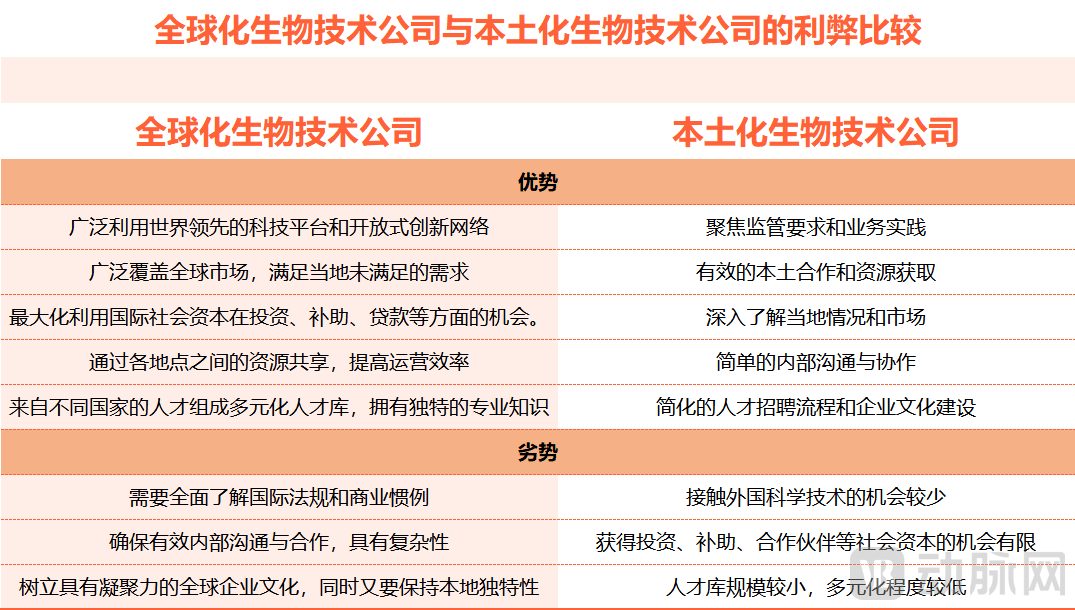
Table 1/VCBeat New Medicine Charting
Open Innovation
The quality of scientific innovation is the foundation of success in biotechnology. Through open innovation, the exchange of scientific knowledge among biotechnology companies, pharmaceutical companies, and academic research institutions has become a common practice, which is crucial for ensuring access to cutting-edge scientific discoveries. Breakthroughs achieved through open innovation are characterized by the synergy between scientific and technological contributions, combined with partners’ best practices, thereby increasing the overall probability of success. Therefore,Biotechnology companies can gain a unique advantage by fostering open innovation through the establishment of global networks, thereby accessing cutting-edge science and technology across borders.For domestic companies, cross-border collaboration can become challenging due to various factors, including language barriers, time zone differences, cultural nuances, and data sharing. Establishing physical offices in different locations enables more effective direct exchange of knowledge and information with partners.
Open innovation is embedded in the DNA of HiFiBiO Therapeutics; its proprietary single-cell technology emerged from interdisciplinary collaborations among ESPCI Paris-PSL (Paris School of Industrial Physics and Chemistry) in France, the Broad Institute in Cambridge, Massachusetts, and Harvard University professors in Boston. After launching therapeutic programs in 2017, the company rapidly established a branch in China. It has collaborated with Institut Curie, ESPCI Paris-PSL, and Gustave Roussy Hospital in France; Harvard University, the Broad Institute, Kite Pharma, and FibroGen in the United States; Nankai University and Xinhua Hospital in China; as well as multinational corporations including Pfizer and Takeda. These partnerships have significantly advanced the company’s innovative single-cell technology platform and novel therapeutic programs, some of which have entered clinical trials or been licensed out.
Social CapitalResources generated as a team develops collaborative capabilities to achieve a common purpose. Biotechnology companies are typically institutions with strong early-stage R&D capabilities, which can establish upstream partnerships with academic institutions (for new technologies or scientific discoveries) and downstream partnerships with pharmaceutical companies (for product commercialization).to accumulate social capitalThe existence of globalization helps expand the scope of these global collaborations and improve the success rate of partnerships. Furthermore, global social capital can provide diverse patient populations for clinical trials; collaboration with international hospitals and patient groups can help global biotechnology companies increase patient diversity, reduce costs, accelerate trial recruitment, and better understand local unmet needs.
When financial strategy aligns with the company’s vision and mission,Social capital can also facilitate international financing.Such financing can be non-dilutive, such as tax incentives, grants, and loans, which typically require the beneficiary to have a local presence. Direct R&D investment by the South Korean government in biotechnology small and medium-sized enterprises (SMEs), and Singapore’s biotechnology cluster strategy implemented through foreign direct investment, are examples of international financing. These funding sources can help offset the operational and administrative costs of running international offices.
Dilutive financing can come from investors across multiple countries and regions, involving various institutions such as venture capital firms, hedge funds, and pharmaceutical companies. Inflows of foreign and domestic capital may be driven by different factors, with geographic-related factors having a greater impact on foreign capital inflows. Therefore, biotechnology companies born global have the potential to simultaneously leverage both domestic and international capital inflows, attract a broader range of international investors from diverse institutions, and secure more funding opportunities, whereas local companies may not benefit from these channels.
HiFiBiO Therapeutics’ global business footprint has unlocked numerous financing opportunities, including capital from international investors in the United States and Asia, as well as non-dilutive funding through multiple government grants and tax incentives in the United States, France, and China. The company’s global social capital, cultivated over the years within the biotechnology clusters of these three countries, has further enhanced its ability to secure long-term financing and attract high-quality partners.
Team Diversity
Another advantage of global business coverage is broader access to the international talent pool, increasing the likelihood of recruiting individuals with diverse backgrounds and experience. This diversity has proven beneficial in both financial and non-financial domains. In one study, researchers examined small and medium-sized biotechnology enterprises that completed initial public offerings (IPOs) between 1989 and 2009,Companies with more diverse management teams were found to raise larger amounts of capital in their IPOs.Furthermore, when faced with complex, interdependent tasks, cross-cultural teams characterized by deep-level diversity (differences in values, personality, and work preferences) exhibit a positive correlation with creativity and innovation. In contrast, surface-level diversity (differences in ethnicity, culture, and race) does not necessarily yield significant benefits. Therefore, we can assert that, unlike surface-level diversity (which can be achieved within a domestic context),Establishing Deep DiversityIt is necessary to find individuals who differ in their upbringing, education, and beliefs, which is more easily achieved in a global context.
HiFiBiO Therapeutics has transcended superficial diversity to achieve deep-level diversity by building teams across three continents, composed of individuals from diverse backgrounds, educational systems, and beliefs. The company has fostered a shared corporate culture known as SOAR (Supportive, Optimistic, Adaptable, Responsible) to promote cross-site collaboration and communication, ensuring that all voices are heard and valued. Furthermore, each country contributes unique talent that complements skill gaps in other regions. As a result, the company has grown to over 80 employees within three years, boasting integrated R&D capabilities and platforms that accelerate the drug development process from target identification to patient delivery.
Challenges of Becoming a Globalized Biotech
Although global biotechnology enterprises enjoy distinct advantages, they must also address the challenges associated with worldwide operations. As a globalized biotech company, it is essential to invest in international offices and teams while complying with local regulatory requirements and business practices. Fortunately, certain central functions—such as finance, administration, and information technology—can be established in any location around the world. This frees up capital for R&D talent. While costs such as rent and utilities are unavoidable, they can be mitigated through local subsidies and shared incubator facilities.
As an added benefit, these spaces can help biotechnology companies increase their visibility among local partners and within financing networks. It is also crucial to have an in-depth understanding of each country’s intellectual property (IP) laws to ensure adequate protection before conducting international business. In terms of team diversity, employees from different countries must collaborate across varying business etiquette, communication styles, and decision-making processes, which incurs social costs.Cultural insensitivity can lead to poor communication, reduced work efficiency, and an "us versus them" mentality.When integrating international teams, it is crucial to preserve the local distinctiveness of each branch while aligning with global cultural values. Therefore, it is essential to build a strong corporate culture that ensures adherence to a shared set of principles and fosters deep-level diversity, thereby enhancing innovation capabilities and business success rates.
HiFiBiO Therapeutics successfully overcame these challenges by minimizing redundant work across sites, keeping costs low while maximizing cross-functional collaboration, and fully leveraging the company’s diverse capabilities. Across different locations, a shared commitment to the company’s vision, mission, and strategy has played a crucial role in uniting international employees to work together as one team. Furthermore, the globally shared SOAR culture—Supportive, Optimistic, Adaptable, and Responsible—has fostered a sense of community through company initiatives such as news features, awards, all-hands meetings, and keynote addresses on trending topics.
Maximizing the Advantages of Globalization
Despite the aforementioned challenges, we believe that biotechnology startups should adopt a globalized model when the value generated exceeds the costs. Capital efficiency has been used to measure the effectiveness of various financing methods for biotechnology R&D. This is also the mantra of venture capitalist Bruce Booth, who defines capital efficiency as the value generated per dollar invested.To ensure the company maximizes the benefits of its globalized model, we recommend monitoring capital efficiency across all locations.
We will analyze the capital efficiency of domestic companies (EL) defined as its net value (VN) divided by operating costs (CL), and the capital efficiency of globalized biotechnology companies (EG) equals the net value (V generated in each country (1, 2, 3...N)N) divided by total operating costs (CN) sum. Factors such as social capital and organizational diversity will affect VNand CNexert a significant impact. However, given the challenges in independently measuring the effects of these factors, we advocate for a simpler approach to calculating the global optimization average of capital efficiency (EGO), meaning that each country (N) must independently maximize its capital efficiency. Under this simplified approach,As long as the company can increase E by entering a new countryGO, then this approach is beneficial.. However, if the capital efficiency of the new country reduces the average EGO, then it is best to first invest in improving the capital efficiency of existing sites.
In accordance with this principle,Biotech Startups Should Consider Launching Operations First in Countries with the Highest Capital EfficiencyFor example, John Oyler, co-founder and CEO of BeiGene, recognized that China’s pharmaceutical market is rapidly developing, with a rich talent pool, favorable reimbursement policies, and lower clinical trial costs. These advantages were key drivers for Mr. Oyler to establish a biotechnology company in China, where capital efficiency is higher compared to his home country, the United States. His investment has paid off: since BeiGene’s founding in 2010, the company has grown to 9,000 employees, established 40 offices across five continents, and generated over $1 billion in product revenue.
Whether pursuing international startups or global expansion, it is crucial for biotechnology startups to continuously improve capital efficiency as their operations mature. Over time, this growth can be modeled using the J-curve commonly employed by investors to track startup returns. We adopt this curve to monitor capital efficiency over time, serving as a metric for comparing value creation between domestic and globalized biotechnology companies. In the initial years following establishment, we project net value (VNet) is negative (resulting in negative capital efficiency), because both domestic and global biotechnology companies need to invest in infrastructure, equipment, and related services before generating revenue. Depending on the degree of internationalization, the capital efficiency of global biotechnology companies may be more negatively affected compared to domestic companies; however, as global biotechnology companies leverage resources to establish revenue streams, they can accelerate the achievement of positive capital efficiency more rapidly. In contrast, domestic companies have lower operational complexity but also fewer accessible resources, leading to a slower improvement in capital efficiency. Global biotechnology companies have a higher ceiling for capital efficiency, as costs can be optimized on a global scale, or they can collaborate with global partners to unlock more value-creation opportunities.
Applying this capital efficiency model to HiFiBiO Therapeutics, the company has successfully achieved E by maximizing capital efficiency across all locations.GOmaximization. In the United States, the company has secured investment, grants, and partnerships, as well as translational and clinical expertise. In France, collaborations, tax incentives, grants, and advancements in single-cell platforms have enabled positive capital efficiency. In China, the company has gained favor with Asian investors, benefited from tax incentives, and established collaborative opportunities with hospitals and academic institutions. By maximizing value creation and reducing costs across countries, HiFiBiO Therapeutics’ capital efficiency (EGO) continues to improve over time.
A Roadmap for Born-Global Biotech Companies
To establish a sustainable born-global company, we propose an operational framework (Figure 1) based on the Flywheel concept introduced by Jim Collins, fully leveraging open innovation, social capital, and team growth. This concept posits thatNo successful business transformation can be achieved through short-term efforts. Instead, it requires a massive flywheel to keep turning in order to sustain breakthrough momentum. The first phase of the flywheel involves building a global network that provides open innovation opportunities for scientific exchange.Once sufficient differentiation and technological novelty are achieved, social capital is generated, thereby attracting more funding and partners. Leveraging its global network and capital, the team integrates new technologies with multicultural perspectives to achieve rapid growth. This typically leads to higher R&D productivity through advancements in platform technologies and the accelerated development of therapeutic pipelines. The resulting profits are reinvested into the company, creating a virtuous cycle of sustained international growth and success.
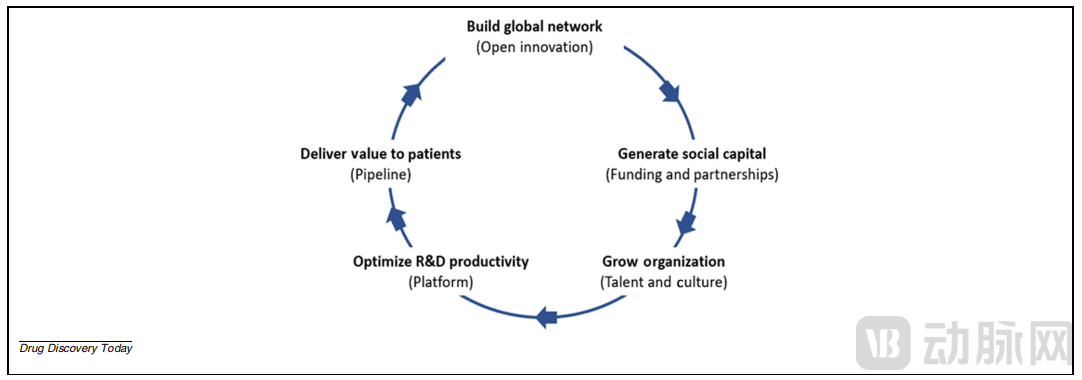
Figure 1
HiFiBiO Therapeutics’ growth trajectory exemplifies the globally synchronized growth model within the Flywheel framework, highlighting how deliberate early-stage global expansion can accelerate value creation. In its early stages, the company established two global research hubs in Cambridge (USA) and Paris (France). Although this approach increased costs, international social capital facilitated partnerships with major pharmaceutical companies such as Pfizer, Takeda, and Kite, and enabled the acquisition of an antibody generation platform from H-Immune, a Paris-based company. Shortly thereafter, HiFiBiO expanded its operations into China, rapidly scaling its research team and completing a $37.5 million Series B financing round led by several Asian investors. By 2023, the company had secured over $200 million in funding (including both diluted and non-diluted capital) from global investors and partners. This capital supported the operation of its powerful single-cell and data intelligence platform (DISTM), advanced a pipeline of potential first-in-class and best-in-class therapeutics into clinical trials, and fostered a globally shared SOAR culture.
References: Tse, Vincent, and Liang Schweizer. “Global or local: The future of biotech.” Drug Discovery Today, vol. 28, no. 5, 103528. 14 Feb. 2023.