

Weiyong Medical Targets the Billion-Dollar Minimally Invasive Surgical Device Market with Over 10 Products Launched Within One Year of Founding
A review of the history of surgical development reveals that the advent of aseptic technique, blood transfusion, and anesthesia successively addressed critical issues such as wound infection, hemostasis and transfusion, and surgical pain, thereby significantly reducing surgical mortality. Furthermore, the development of minimally invasive surgery has injected new vitality into traditional surgery, gradually transitioning surgical procedures from invasive to non-invasive approaches.
Minimally invasive surgery, represented by laparoscopy, can be traced back to the early 19th century. It was not until 1987, when the world’s first laparoscopic cholecystectomy was successfully performed, that the advent of the era of minimally invasive surgery was marked.
China’s minimally invasive surgery lagged several years behind that of foreign countries. Since the first minimally invasive surgical procedure was performed nationwide in 1991, more than three decades have passed, and the field has now expanded to encompass numerous specialties, including abdominal surgery, gynecology, urology, thoracic surgery, orthopedics, and cardiovascular surgery.
In parallel with the advancement of minimally invasive surgery, the market for minimally invasive surgical instruments has also entered a period of rapid growth. According to Frost & Sullivan data, the size of China’s minimally invasive surgical instrument market (excluding endoscopes) increased from RMB 11.772 billion in 2016 to RMB 22.893 billion in 2021, representing a compound annual growth rate (CAGR) of 13%, and is projected to reach RMB 58.7 billion by 2027.
Hangzhou Weiyong Medical Devices Co., Ltd. (hereinafter referred to as "Weiyong Medical"), established in 2022, specializes in the research and development of minimally invasive surgical implants and interventional medical devices. Products developed in the first phase includeIrrigation-suction devices, absorbable/non-absorbable tissue closure clips, biodegradable biliary stents, ultrasonic high-frequency surgical energy platforms, arterial blood gas needles, and more; over 10 products are currently under simultaneous development.。
Compared with open surgery, minimally invasive surgery has undergone significant changes in surgical access, instrument structure, visual observation, and operative techniques. During the procedure, bleeding, exudates, pus, and other fluids are frequently generated, which not only obscure the surgical field and hinder operative maneuvers but also impair postoperative recovery due to residual waste fluids.
Therefore, repeated irrigation and suction of the surgical site are required both intraoperatively and postoperatively to provide the surgeon with a clear field of view, ensuring the smooth progress of the procedure while significantly reducing the risk of postoperative infection. This is the primary function of an irrigation-suction device. Although it is a relatively niche product, the irrigation-suction device is an essential surgical instrument in operative procedures.
Viction has independently developed three models of irrigation and suction devices, namely Weierjie, Weierjing, and Weierkang.
Weierjie is aNon-powered Irrigator, featuring an elegant swan-inspired design that is both aesthetically pleasing and comfortable to handle. The working end is available in multiple lengths to meet the requirements of both open and minimally invasive surgeries. Unlike Weierjie, WeierjingPressurized Irrigation Using Diaphragm Power Pumps, two adjustable irrigation flow rates with powerful irrigation force for rapid flushing.
These two irrigation and suction devices share the following design features:
1. Blunt tip design for atraumatic blunt dissection and tissue manipulation, minimizing tissue injury and bleeding;
2. The beveled tip design enables high-volume suction;
3. The curved design of the handle provides surgeons with a better surgical field of view and a larger operating area;
4. The working end features a hydrophobic coating design to ensure clean, residue-free performance.
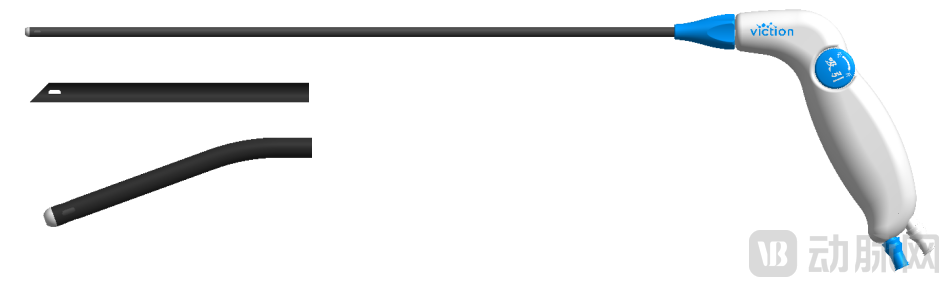
Weierjie Irrigation and Suction Device
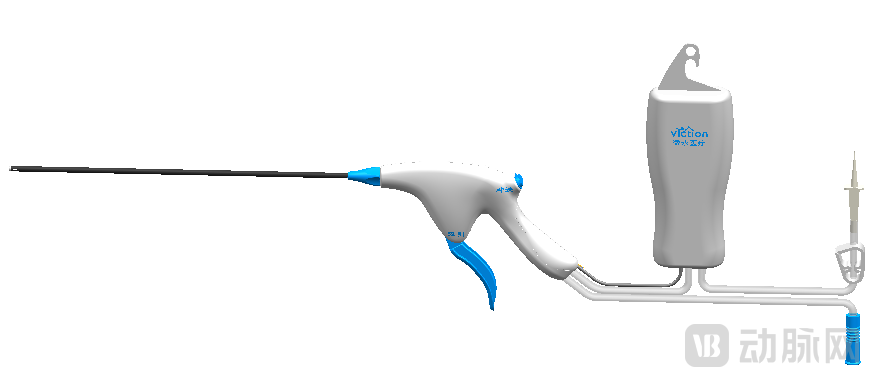
Weierjing Irrigation and Suction Device
The third product, Weierkang, is aIrrigator with Electrocautery Function, while fulfilling basic irrigation and suction functions, it also enables electrosurgical resection. Viction features multiple working tip designs to meet the cutting and coagulation needs of various anatomical sites and tissues. A single instrument achieves dual functionality.It eliminates the need for surgeons to repeatedly switch instruments during procedures, thereby not only shortening operative time but also reducing medical costs.。
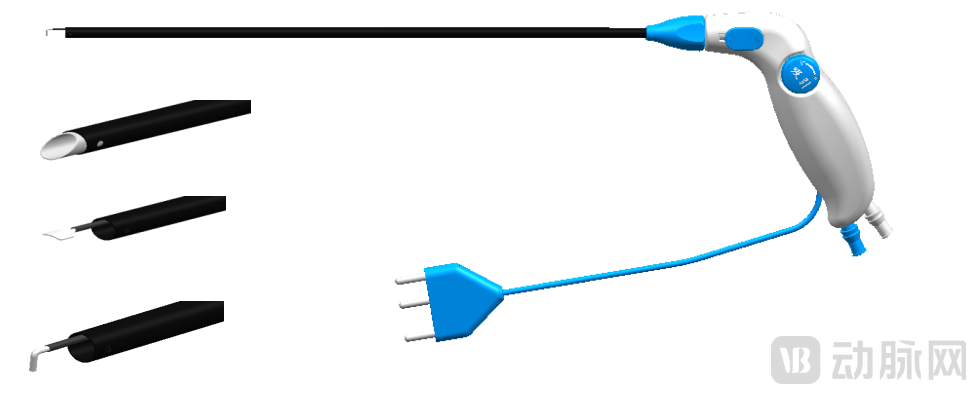 Weerkon Irrigation and Suction Device
All three irrigation-suction devices are designed for single use, thereby avoiding issues associated with reusable devices, such as cumbersome disassembly and reassembly, inadequate compatibility of components across different batches, high cleaning and maintenance costs, and the risk of cross-infection due to incomplete cleaning and sterilization.Currently, Weierjie and Weierjing are in the stage of registration testing, while Weierkang will enter the registration testing stage in the fourth quarter of 2023.. Every product has intellectual property rights.
The development of absorbable biomedical materials integrates multiple disciplines, including medicine, chemical engineering, materials science, and mechanics. Products in this field account for a significant proportion within specialized areas such as the diagnosis and treatment, replacement and repair, and induction of regeneration of new tissues and organs.
According to a QYResearch report, the global market size for absorbable biomedical materials exceeded RMB 10 billion in 2022 and is projected to reach RMB 18 billion by 2028, with a compound annual growth rate (CAGR) of 9.3%. Currently, over 90% of biomedical materials used in China are imported, particularly absorbable polymer materials, indicating substantial potential for domestic substitution.
To overcome the critical technological bottlenecks in absorbable biomedical materials, Viction is building an R&D platform for absorbable biomedical materials, aiming to establish its core technical advantages. The platform brings together experts from relevant institutions such as the School of Chemical Engineering at Dalian University of Technology and the College of Materials Science and Chemical Engineering at Zhejiang University of Technology, primarily focusing on the research and development and performance studies of absorbable biomedical materials. Leveraging this platform, Viction has developed absorbable tissue closure clips, biodegradable biliary stents, and products related to medical aesthetics.
● Absorbable Tissue Closure Clips
Tissue Closure Clips are used for the ligation and anastomosis of blood vessels and tissues during surgical procedures. Typically made from titanium alloy or stainless steel, they can close blood vessels ranging from 3 to 16 mm in diameter, depending on the specifications.
The non-absorbable tissue closure clips developed by Viction Medical include single-fire and multi-fire types. The multi-fire closure clips enable rapid tissue ligation, thereby improving surgical efficiency.Viction's absorbable tissue closure clips feature a novel, exclusive patented design that ensures excellent clamping stability and reliability. Capable of sealing vessels ranging from 3 to 8 mm in diameter, their key advantage lies in complete bioabsorption after vessel closure, leaving no foreign material in the body.Non-absorbable tissue closure clips are currently in the registration and testing phase, while absorbable tissue closure clips are scheduled to enter the registration and testing phase in the fourth quarter of 2023.
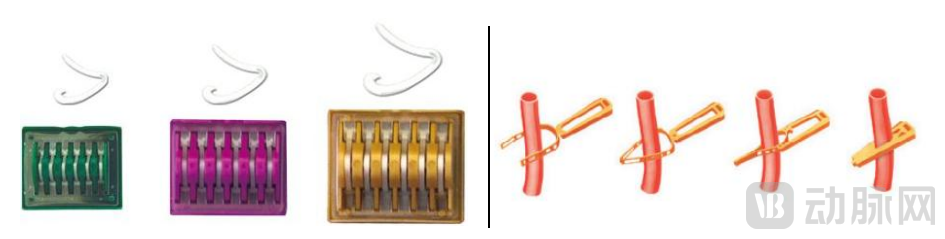
The left image shows non-absorbable tissue closure clips, and the right image shows absorbable tissue closure clips.
● Biodegradable Biliary Stent
The most commonly used materials for biliary stents are plastic and metal. Woven mesh stents made from these materials can be inserted into the bile ducts to relieve both benign and malignant biliary obstructions, and they are also employed for the palliative treatment of advanced malignant biliary tumors. Biliary stents are generally implanted via endoscopy; however, traditional biliary stents require a second surgical procedure for removal.
Viction’s biodegradable biliary stent is composed of absorbable biomedical materials and can be directly excreted from the body after losing mechanical support. By adjusting the material composition, the biodegradable biliary stent can achieve maintenance periods of 2 weeks, 4 weeks, or 1 year.. The product is under intensive development. As no similar products are currently available in China, the biodegradable biliary stent will become a key focus for Viction’s future product development.
In addition to the aforementioned products, Viction is also strategically positioning itself in sectors such as ultrasonic high-frequency surgical energy platforms and arterial blood gas needles, continuously expanding its portfolio of minimally invasive surgical series products.
Compared with other companies that have been deeply engaged in the field of minimally invasive surgery for several years, Viction has been established for only one year, with substantive operations running for just over six months, placing it still in the early stages of its startup development. The company’s ability to build a product matrix featuring more than ten products under simultaneous R&D within such a short period is inseparable from the strong support provided by its team.
Zhang Yongyang, founder of Viction Medical, has over 20 years of experience navigating the international trade market and 15 years of corporate management expertise. In 2015, he established an angel investment firm that invested in more than 20 projects, most of which were related to biomedicine. Recognizing the significant growth potential in China’s medical device market, he founded Viction Medical, focusing on minimally invasive surgery.
During his comprehensive research into the domestic market, he connected with more like-minded partners.
Luo Zhicong is one of them, currently serving as a Partner and General Manager at Viction. During his master’s studies, Luo specialized in biomedical materials, and after graduation, he engaged in the development and management of medical device products, accumulating 14 years of experience. Wen Deyi serves as the Sales Director at Viction; he previously worked as a urologist at Shanghai Tenth People’s Hospital and Shanghai Sixth People’s Hospital, possessing extensive clinical and product sales experience. In addition, other key members of the company’s team each have more than five years of experience in the medical device industry.
Through team collaboration and refinement, various technologies and products were rapidly implemented. In accordance with the company’s product development plan and progress,It is expected that 4–5 Class II medical device registration certificates will be obtained in 2024., and some products have obtained FDA 510(k) clearance and CE certification.
Regarding future development, Viction has a clear plan. In the short term, Viction will establish a marketing team by the end of 2023, including domestic and international sales teams. By 2024, it aims to initially build a sales network covering most regions across China, while simultaneously launching international sales in markets such as ASEAN, the Middle East, and South America.The company plans to achieve a 5:5 split between its domestic and international market expansion, aiming to reach break-even within two to three years.。
In the long term, Viction will continue to establish and improve its R&D platforms for energy-based (intelligent) products and absorbable biomedical materials. Leveraging these two platforms, the company will develop more new products in the field of minimally invasive surgery, including medical devices for the digestive, respiratory, and urological systems.