

Chengdu Wuhou District, Huaxi and Huawei Forge a Digital Health Innovation Hub for the Next Decade of Digital Medicine
Innovative applications of medical technology, along with improvements in the quality and efficiency of healthcare services, have always been central to the development of the healthcare industry. Since the turn of the millennium, numerous hospitals have progressively acquired digital and smart devices, driving comprehensive upgrades to hospital management information systems and medical equipment. These efforts aim to enhance patient experiences and address challenges such as low efficiency in offline healthcare delivery and unequal distribution of medical resources. With the accumulation of data and breakthroughs in innovative technologies, the wave of digitalization—centered on artificial intelligence (AI), big data, and other core technologies—has advanced rapidly.
National policies have also clearly identified the digitalization of the healthcare industry as a key development direction. Since 2015, China has successively released important documents such as Made in China 2025, the Development Plan for Intelligent Manufacturing (2016–2020), the Development Plan for New-Generation Artificial Intelligence, and the Three-Year Action Plan for Promoting the Development of New-Generation Artificial Intelligence Industry (2018–2020). These policies position innovation in medical equipment as a critical component in the upgrading and transformation of the healthcare industry, providing policy-level support for the advancement of digital technologies.
However, due to the vast scale of healthcare systems, data sharing and utilization within the medical industry remain challenging. Moreover, the pace, focus, and progress of digital transformation and application vary across different specialized scenarios. Consequently, the genuine implementation of innovative digital health applications continues to face numerous obstacles. The scarcity of innovation is an unavoidable issue in the current healthcare sector. At this juncture, there is an urgent need to establish an effective support system to facilitate the translation of innovative achievements in the digital health industry, thereby systematically addressing the various challenges encountered during hospitals’ digital transformation.
It is also against this backdrop that Wuhou District, ChengduAn innovation ecosystem chain has been established, tailored to the characteristics of the healthcare industry, spanning from source innovation and technology incubation to practical implementation., entered into a strategic partnership with West China Hospital of Sichuan University’s “One University, Four Hospitals” system (hereinafter referred to as “West China”) and Huawei Technologies Co., Ltd. (hereinafter referred to as “Huawei”).Leveraging West China Hospital’s industry-leading medical and health resources, and harnessing Huawei’s globally leading advantages in information and communications technology (ICT) and digital technologies—By leveraging strategic alliances between leading enterprises and fostering government-enterprise collaboration, we will jointly build a digital health IT innovation industrial park with nationwide influence.Shuanghua Digital Health Industrial Park(hereinafter referred to as the “Shuanghua Park”), seize the opportunity presented by the convergence of next-generation information technology and the healthcare industry, and promote technological iteration, business format upgrading, and model innovation.
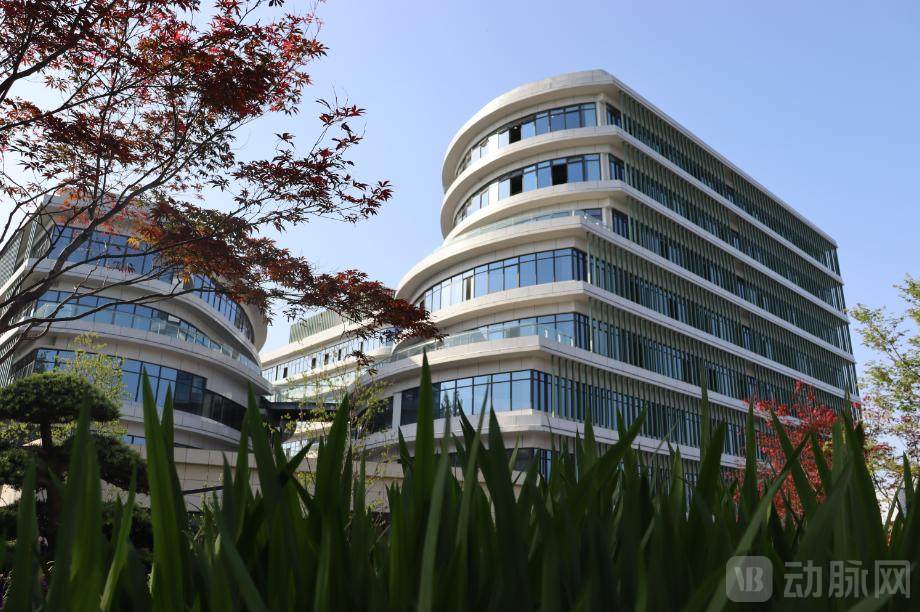
Shuanghua Digital Health Industrial Park
On September 1, the Party Working Committee and Management Committee of the West China Medical Aesthetics Health City in Wuhou District, Chengdu, together with Wuhou Industrial Development Investment Management Group Co., Ltd., joined forces with West China Hospital and Huawei to take further steps from an industrial perspective. They engaged in dialogue on innovation in the healthcare industry by organizing an industry salon that integrated frontier analysis of the digital health sector, academic exchanges, industrial cooperation, and innovation showcases. Under the theme “Deep Thinking, Far-Reaching Action: Pioneering a New Journey,” government bodies, universities, hospitals, enterprises, and investment funds came together to discuss, build, and share new opportunities in the digital health industry.
The salon launched the 2023 China Healthcare IT Application Innovation Index research and initiated the drafting of white papers on “Digital-Physical Twinning and AI-Driven Innovative Development in Hospitals” and “Digital Transformation of Primary Healthcare,” aiming to further accelerate the development of digital health and the healthcare IT application innovation industry. Meanwhile, the “Cooperation Opportunity List for Shuanghua Digital Health Industrial Park” was released to help enterprises share in the dividends of industrial growth.
Notably, Shuanghua Park shared significant achievements: the “Wuhou Family Doctor” digital therapeutics primary care application scenario, initiated by the Wuhou District Health Commission and developed and operated by Huaxi Public Medical Information Service Co., Ltd., is now capable of providing residents with comprehensive, full-cycle health management services through Internet-plus-big-data technologies.
From a global perspective, the development of any industry is inseparable from a region that boasts industrial cluster advantages and deep collaborative capabilities. After all, innovation is typically accompanied by significant risks. From technology validation to product commercialization, every stage of the process tests the comprehensive capabilities of market entrants.
Wuhou District brings together14 renowned universities and research institutes, including Sichuan University, home to a national-level base for medical scientific research and technological innovation—West China University’s “One University, Four Hospitals”, boasting substantial resource advantages and a solid foundation for development. In the process of accelerating the establishment of a modern industrial system that is high-quality, efficient, and structurally sound, and in speeding up regional development, Wuhou District has anchored its primary focus on the digital health industry.Deeply Advance the Development of Industrial Ecosystems and Strengthening of Supply Chains, the district has introduced policy measures such as the “Ten Policy Measures of Wuhou District, Chengdu, on Focusing on Industrial Ecosystem and Chain Strengthening to Support the High-Quality Development of the Real Economy” and the “Wuhou District Support Policies for Promoting the Development of the Big Health Industry through Ecosystem and Chain Strengthening,” so as to support industry development and transform regional resource advantages into industrial development advantages.
First, deepen cooperation with high-level chain leaders such as West China Hospital and Huawei.Bridge the academic and industrial innovation chains, integrate medical resources with the leading advantages of digital technology to drive innovation in the healthcare industry, and accelerate the digital, networked, and intelligent transformation of healthcare.Second, the development of the Shuanghua Digital Health Industrial Park, laying out four core sectors: the Digital Health and Healthcare IT Application Transformation Center, the Shuanghua Healthcare IT Application Empowerment Center, the Wuhou District Primary Care Digital Health Integration Platform, and the China Intellectual Property Association Medical and Health Digital Property Rights Innovation Center.
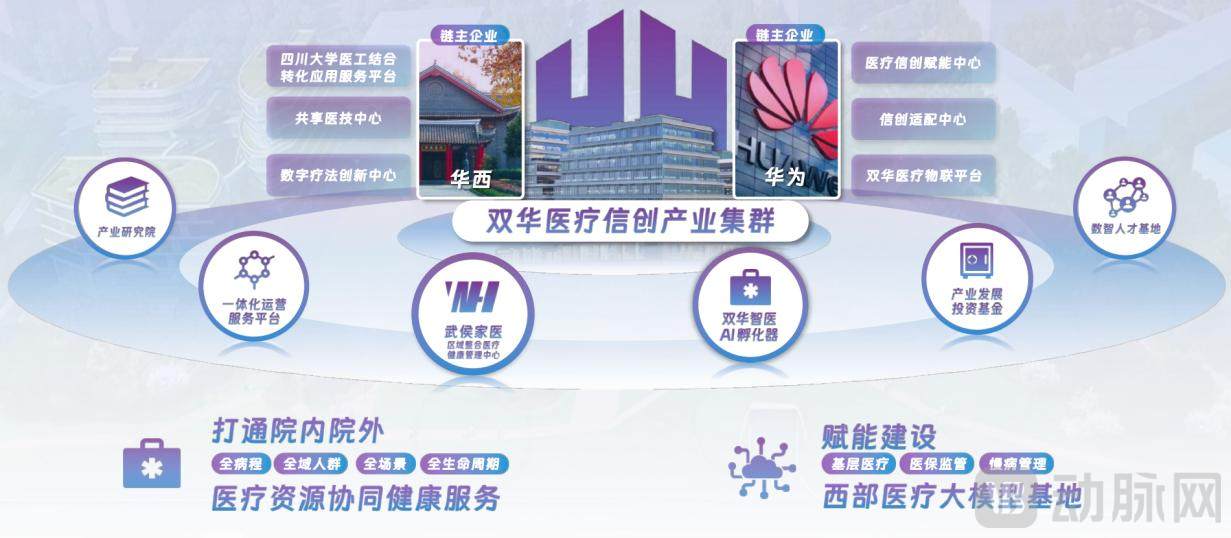
Shuanghua Medical Xinchuang Industry Cluster
Chain Leader: West China HospitalAs a benchmark for healthcare in Western China, Wuhou District boasts unique resource advantages. Leveraging West China Hospital as the digital health foundation of the Shuanghua Campus and relying on its high-quality medical resources, the campus focuses on building the Sichuan University Medical-Engineering Integration and Translation Service Platform, the Shuanghua Medical Technology Sharing Platform, and the Digital Therapeutics Innovation Center. It deeply promotes the integration of medicine, research, industry, and application, facilitating the transfer of achievements in medical information technology innovation and scientific research to the digital health industry, as well as advancing clinical outcome translation, project incubation, and industrial development.
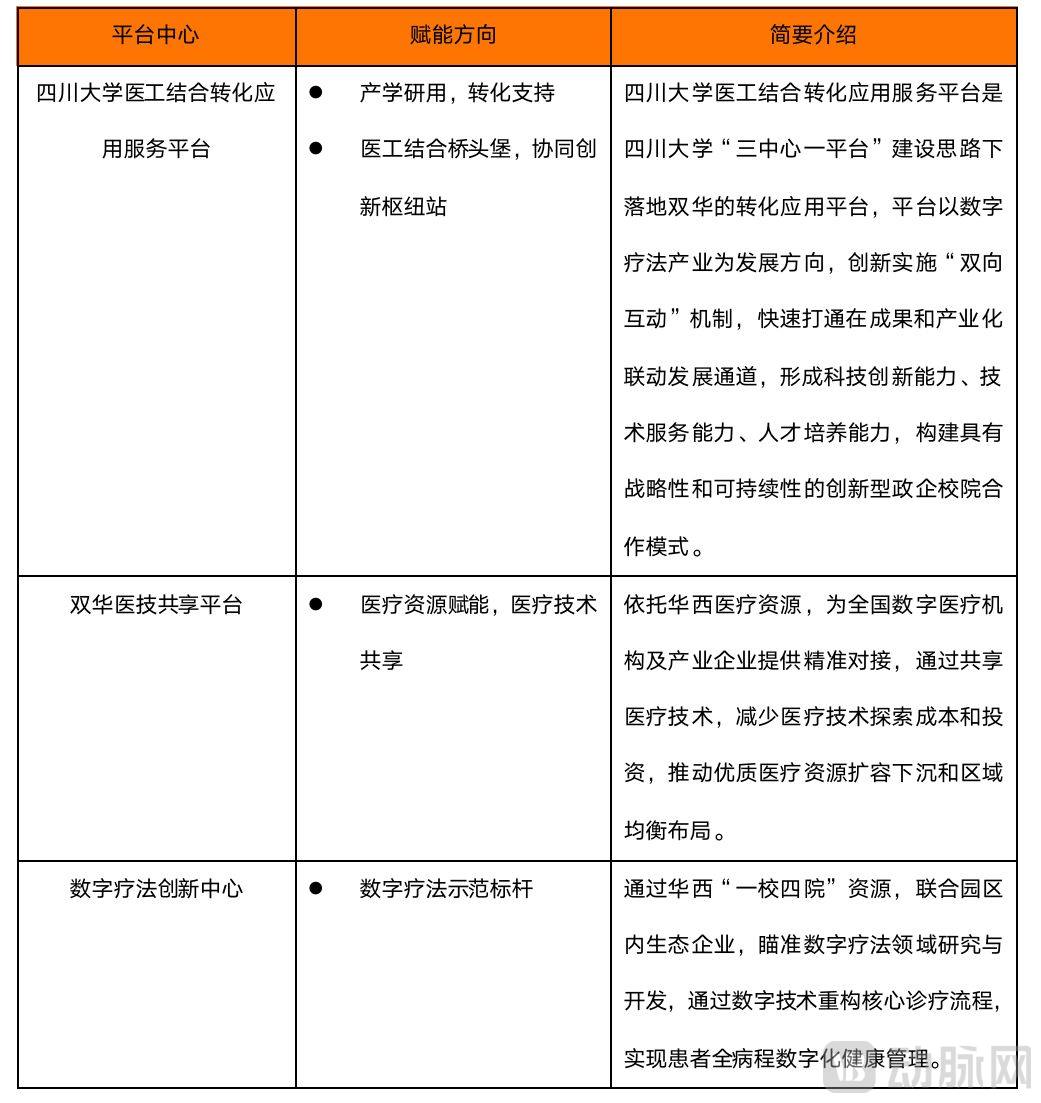
West China Hospital as the Chain Leader
Huawei as the Chain LeaderIt closely addresses the critical pain points of digital transformation in healthcare by providing intelligent services such as Cloud AI and big data, enabling interoperability among medical institution information systems and empowering integrated operational management across multiple campuses of hospital groups. This drives intelligence and standardization in the healthcare industry while significantly enhancing the security and availability of medical data.
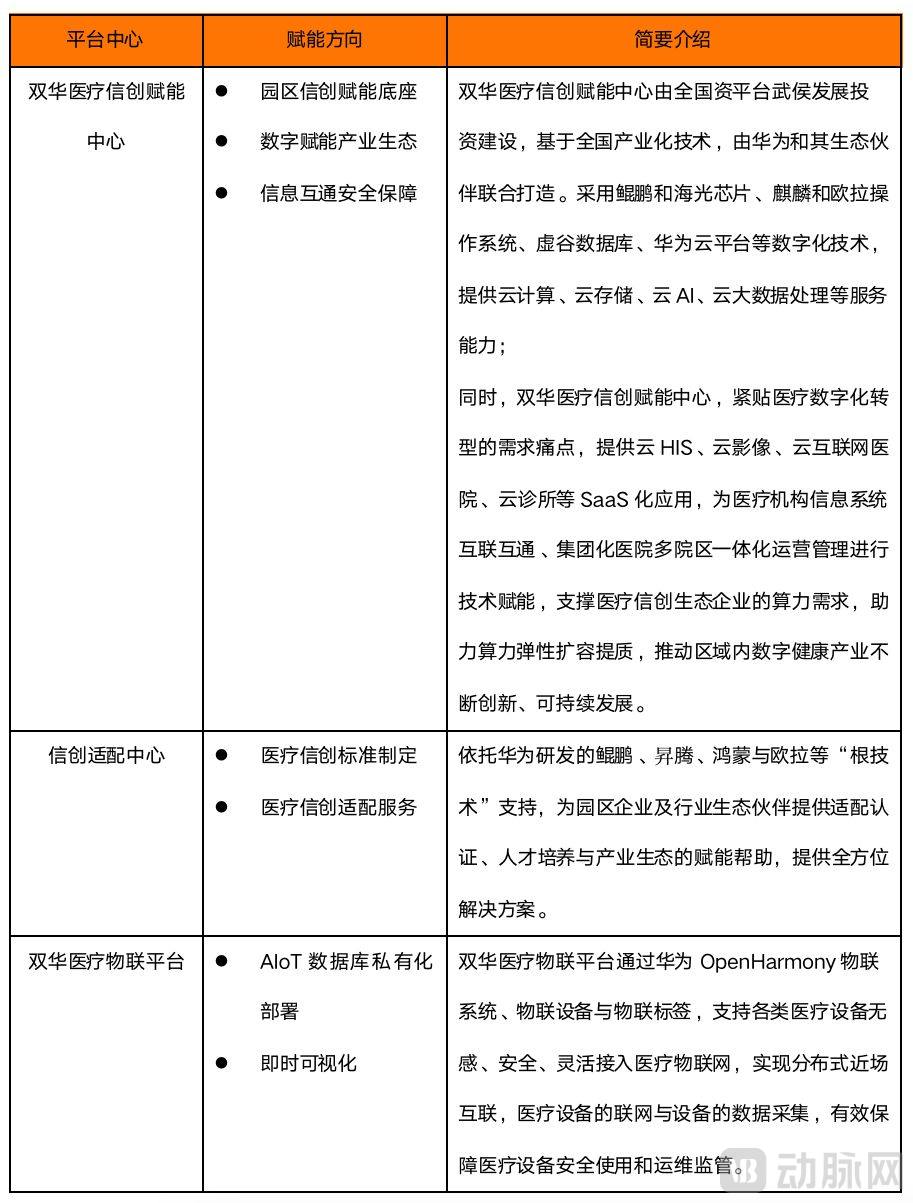
Chain Leader Huawei
The establishment of the Shuanghua Industrial Park has clearly outlined a concrete pathway for the in-depth implementation of the medical-engineering integration strategy, building a complete chain from R&D innovation and clinical trials to incubation acceleration and industrialization. Leveraging the dual chain-leader advantages of West China Hospital and Huawei, dozens of enterprises and institutions, including Yuanxin Technology, Tongxin Zhiyi, and Yishu Technology, have officially signed agreements to settle in the park. The occupancy rate is expected to reach 60% by the end of the year, with more than 30 leading and affiliated enterprises in the digital health industry cluster anticipated to gather within the next five years, achieving an industrial scale exceeding RMB 1 billion.
Moving forward, Wuhou District will continue to strengthen its support for the development of the digital health industry by establishing a dedicated investment fund for medical information technology innovation. This initiative aims to provide full-lifecycle services for the growth of the digital health sector, jointly creating a model collaboration among government, universities, hospitals, and enterprises, setting a benchmark for the digital health industry, and propelling Wuhou District to become a pioneering demonstration zone for digital healthcare in western China and across the nation.
In fact, since last year, the digital therapeutics industry has accelerated its development, with large-scale favorable policies being implemented to promote positive growth in the sector. The Shuanghua Industrial Park has taken the lead in exploring primary care application scenarios for digital therapeutics, setting a model for the development of China’s digital therapeutics industry.
“Wuhou Family Doctor” is an application demonstration of the coordinated integration and decentralization of medical resources, as well as the implementation of the Shuanghua industry.
At the networking salon, the head of the Wuhou District Health Commission shared grassroots application scenarios for the “Wuhou Family Doctor” digital therapeutics program. “Wuhou Family Doctor” is a multi-dimensional healthcare initiative focused on chronic disease management and other areas, developed by the Wuhou District Health Commission in collaboration with West China Public Medical Information Service Co., Ltd. Leveraging 11 community health service centers across the district and employing digital technologies, the program offers open access to digital therapeutics companies nationwide. As a key future direction in digital health, digital therapeutics will provide residents with comprehensive, full-cycle health management services through an “Internet + Big Data” approach.
During the golden age of digital therapeutics implementation, Wuhou District has undoubtedly pioneered exploratory efforts and trials, setting a benchmark and providing support for the development of China’s digital therapeutics industry. This represents a significant boost and breakthrough for the growth of the digital therapeutics sector in Southwest China and across the nation.
Throughout the evolution of digital healthcare, data has played a foundational role. Across the four stages of digital healthcare, it is evident that processes such as data acquisition, processing, storage, and transmission—underpinned by digital and information technologies—have been integral to the entire healthcare delivery continuum.
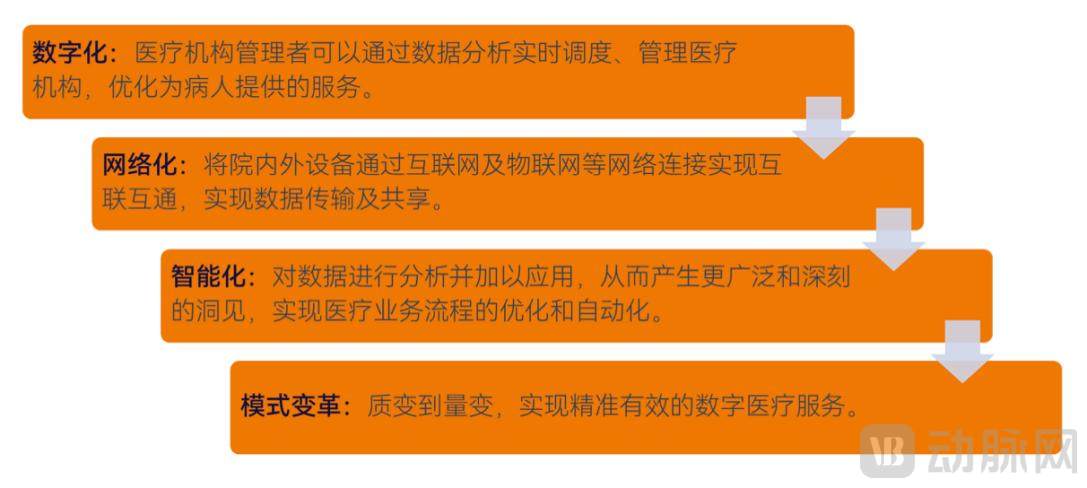
The Four Stages of Digital Health
Image Source: "2022 Annual White Paper on Digital Health Innovation"
Despite the deepening accumulation of data driven by the digital transformation of the healthcare industry, hospitals continue to grapple with severe information silos due to inconsistent internal system interfaces, and information barriers persist among medical service institutions within regions. Meanwhile, unresolved issues regarding data standardization and data security have prevented the full realization of data’s true value. Consequently, China’s medical big data sector has experienced unstable development over the past decade, with challenges such as data ownership, data governance, data security, difficulties in measuring data assets, and benefit distribution continuing to hinder industry progress.
Following the reclassification of data as an asset in the “14th Five-Year Plan for the Development of the Big Data Industry,” the strategic importance of data as a factor of production has been elevated to the level of national strategy. Under this policy framework, industry perceptions of medical big data have undergone a significant transformation. Furthermore, the establishment of the National Data Bureau this year, the emergence of innovative technologies such as generative AI, and the development of sectors like digital therapeutics are all driving the growth of the medical big data industry. Examining the various indicators of industry progress, it is evident that data has become indispensable for the digital transformation of the healthcare sector and for the innovation and application of information technology.
Wuhou District has identified this pain point and, in addition to deepening the development of industrial ecosystems and strengthening supply chains, as well as leveraging the strengths of West China Hospital and Huawei, has alsoShen Kaihong’s independently developed OpenHarmony empowers the Shuanghua Park with a secure digital foundation, fostering a secure, trustworthy, and open digital ecosystem. It fundamentally addresses data source issues, providing a foundational software platform for industry-wide digitalization and intelligent transformation, thereby enabling efficient utilization, openness, and sharing of data resources.
The Shuanghua Medical Information Technology Innovation Empowerment Center in the industrial park is built upon this system, supporting healthcare institutions in expanding and enhancing their computing power for high-quality development, and driving the formation of an intelligent computing cluster and industrial ecosystem for digital health.
Currently, the Empowerment Center has provided services for projects within the park, including Wuhou Family Doctor, Internet Hospital, Medical Imaging Center, Healthcare Big Data, Medical Research Big Data, and Innovative Digital Therapeutics, while also offering medical information innovation cloud services to other healthcare institutions.
In the future, OpenHarmony will facilitate comprehensive connectivity and extension of medical data for the Shuanghua Digital Health Industrial Park, further fostering new hardware, models, business formats, and industrial ecosystems, thereby supporting the development of the smart healthcare industry. Meanwhile, the Empowerment Center will collaborate with upstream and downstream enterprises to achieve organic integration of computing power, algorithms, and big data. By leveraging AI to empower emerging service models such as medical big data, digital therapeutics, and the health metaverse, it will drive the medical and health industry into a new era of intelligence.
After fully leveraging the strengths of West China Hospital and Huawei to establish a secure digital foundation centered on OpenHarmony, Wuhou District established the Shuanghua Digital Health and Medical Information Technology Application Innovation Industry Research Institute (hereinafter referred to as the “Institute”). Focusing on the technological innovation chain and the information technology application innovation industry chain, the Institute targets strategic industrial development directions such as AI-driven healthcare, digital therapeutics, and medical big data. It aims to build a research and service platform for think-tank exchanges among government, universities, research institutes, and enterprises, integrating production, education, research, and application. This platform combines high-quality top-level resource support with market flexibility, promoting the deep integration and development of upstream and downstream industries.
At this salon, Wang Junfeng, Executive Vice Dean of the Institute of Intelligent Systems at Sichuan University and Dean of the Shuanghua Digital Health and Medical Information Technology Innovation Industry Research Institute, announced the launch of the 2023 China Medical Information Technology Innovation Index study, as well as the drafting of white papers on “Digital-Physical Twinning and Innovative Development of AI Hospitals” and “Digital Development of Primary Healthcare.” Focusing on the two major themes of digital transformation in healthcare and the development of medical information technology innovation (Xinchuang), the initiative will dynamically track and present the current status and development trends of the national digital health and medical Xinchuang industries on an annual basis. By employing scientific tools to diagnose and guide industrial development, it aims to fulfill central hub, think tank, and monitoring functions, promote precise policy implementation, and accelerate industrial growth. Meanwhile, research on applied fundamentals, frontier technologies, and key generic technologies will be conducted in strategic areas such as digital health services, digital therapeutics products, medical AI and big data, and the cultivation of digital health talent, so as to address technical challenges in industrial development and meet the needs for the commercialization of scientific and technological achievements.
It is reported that the Research Institute has explored innovative implementation mechanisms, including two-way interaction, internal co-investment, and contracted research, to establish a seamless pathway from basic research to technology transfer and industrial development. By continuously facilitating the commercialization of scientific and technological achievements and incubating industries, the Institute aims to strengthen, supplement, and build out the entire industrial chain. In the future, the Shuanghua Digital Health and Medical Information Innovation Industry Research Institute will fully leverage its role as a frontier hub, gradually establishing an integrated innovation platform characterized by the organic integration of innovation resources, efficient allocation of innovation factors, rapid aggregation of innovative talent, smooth transformation of innovation outcomes, and the construction of a robust innovation ecosystem. This will enable the Institute to deliver specialized expertise and services in “industrial research + industrial services,” further enhancing the position of the Shuanghua Digital Health Industrial Park as a national source of innovation.
As an innovation hub in Wuhou District, the Institute will also undertake the tasks of strategic planning for industrial ecosystems and conducting research on forward-looking top-level design to foster innovation in medical information technology application innovation (medical Xinchuang). Leveraging its advantages in building an open operational environment and ecosystem based on a “small core, large periphery” model, it will integrate scientific and technological resources from major universities and research institutes, promote interaction between discipline development and industrial innovation, and introduce and cultivate a cohort of interdisciplinary talents who are innovative, pioneering, and practically skilled. By establishing a regional highland for innovation and talent aggregation, the Institute aims to accelerate the integrated development of healthcare in the Chengdu-Chongqing Twin City Economic Circle, inject momentum into the high-quality development of Sichuan Province’s digital health and medical Xinchuang industries, and contribute to the nation’s high-level self-reliance and strength in science and technology.
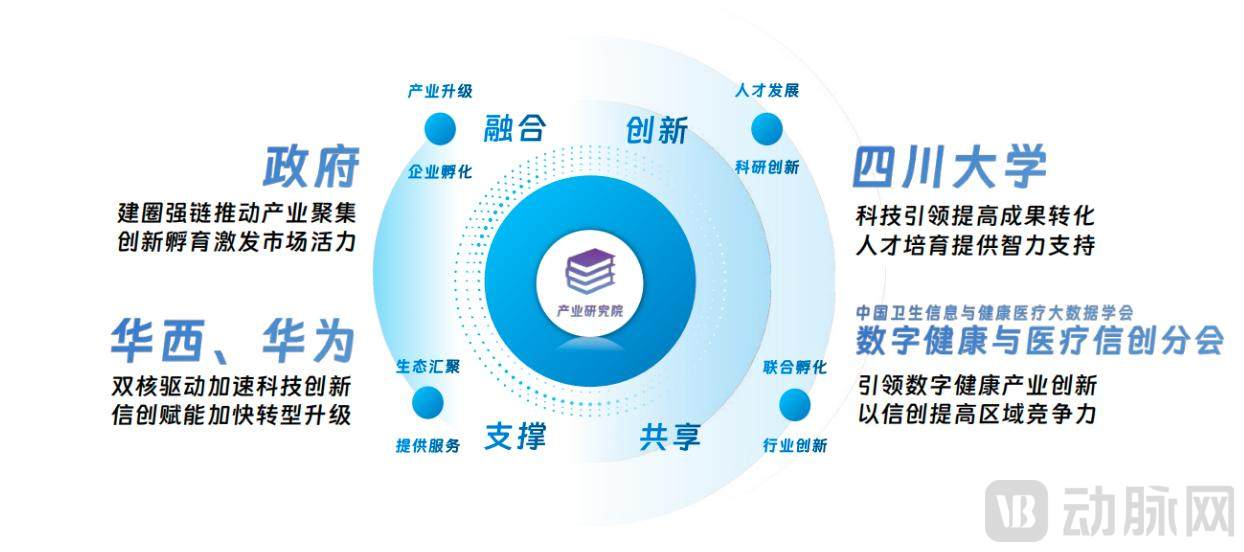
Shuanghua Digital Health and Medical Information Innovation Industry Research Institute Capabilities
Of course, the wave of digitalization in the healthcare industry is far from reaching its peak, and the sector will face even greater challenges ahead. With the advent of the golden age of digital health, how participants should seize these opportunities remains a question worthy of deep reflection.
It was precisely at the conclusion of the salon that the panelists actively shared their insights on this issue, providing robust guidance and support for the digital transformation of the healthcare industry and accelerating the development of the digital health sector.