

PanSheng Ruixiang Files IPO Prospectus: Building a Regenerative Aesthetics Leader with 1 Platform, 15 Medical Devices, and 60 Cosmetics Powered by Regenerative Medicine
For a long time, hyaluronic acid has held the “top spot” in the injectable medical aesthetics industry, thanks to its technological maturity, product diversity, cost-effectiveness, and regulatory compliance.
In 2021, three domestically produced regenerative aesthetic injectables, known as “Girl’s Needle” and “Youthful Face Needle,” were successively approved for market launch in China. Offering more natural and longer-lasting results than hyaluronic acid fillers, these products have propelled medical aesthetic injections from the “Filler Era” into the “Regenerative Era.” Regenerative medical aesthetics has rapidly attracted market attention, emerging as a new growth hotspot.
# The Concept of Regenerative AestheticsThe concept of regenerative aesthetics originates from regenerative medicine. Regenerative medicine is a medical technology that utilizes artificially modified and cultured cells or tissues to repair and regenerate damaged organs. Regenerative aesthetics, on the other hand, leverages regenerative medicine technologies, such as stem cell therapy, to repair, replace, and regenerate human cells and tissues, while simultaneously employing medical aesthetic procedures to restore, reshape, and enhance human appearance, form, and function.
Leveraging innovations in regenerative medicine technology and the translation of scientific research achievements, Pansheng Ruixiang (Shandong) Bioengineering Co., Ltd. (hereinafter referred to as “Pansheng Ruixiang”) has established a regenerative medicine industry chain that integrates research in regenerative aesthetic medicine, research and clinical applications in skin function assessment, and medical aesthetic and anti-aging services.
Pansheng Ruixiang, established in July 2018, is a subsidiary of Pansheng Bioengineering Group Co., Ltd., which specializes in research in the field of “regenerative medicine” and the commercialization of scientific and technological achievements.
Pansheng Ruixiang’s technology originates from the skin regeneration technique developed by its parent group’s subsidiary, Jinan Pansheng Biotechnology Co., Ltd. Specifically,By utilizing human skin tissue to isolate epidermal and dermal stem cells, maintaining their pluripotency during in vitro culture and expansion, and then transplanting the expanded cells to damaged skin areas, functional skin regeneration can be achieved.. Regenerated skin contains the epidermis, dermis, and subcutaneous tissue layers, exhibits pigmentation, and enables the reconstruction of mature appendageal organs such as hair follicles, sebaceous glands, sweat glands, blood vessels, and nerves.
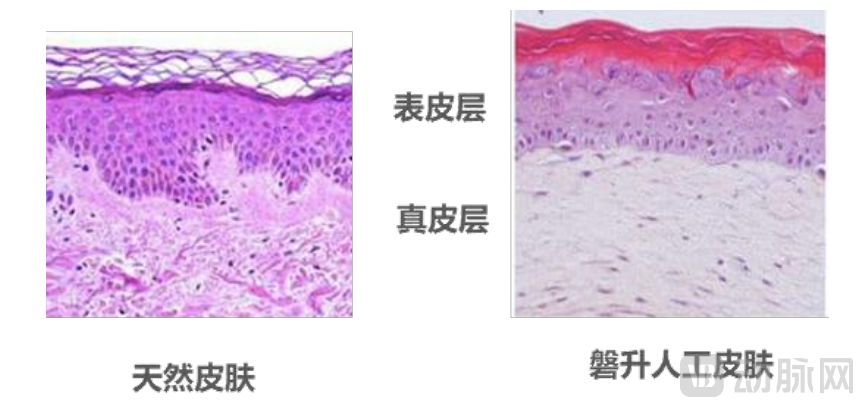 Comparison of Sections Between Natural Skin and Pansheng Bioengineered Artificial Skin
Based on skin regeneration technology, Pansheng Ruixiang has established a clear technical pathway—using epidermal keratinocytes derived from healthy individuals as seed cells to obtain highly differentiated, stratified three-dimensional epidermal models through in vitro culture, which can be used for in vitro testing of pharmaceuticals, medical devices, cosmetics, chemicals, textiles, and other products.
Leveraging this new technology, Pansheng Ruixiang has developed personalized skincare solutions for users, encompassing two aspects: skin assessment and skincare products.
First is the skin function testing platform, which can assess seven major skin functions and 28 specific parameters, including anti-aging function, moisture retention, melanin levels, hormonal balance, barrier function, skin sensitivity, and water-oil balance.
Meanwhile, Pansheng Ruixiang has developed a diverse product portfolio. Its offerings include medical devices such as injectable fillers, dressings, sprays, and gels, as well as cosmetics including facial masks, toners, lotions, creams, serums, and cleansers. The company primarily operates two skincare brands: Luofulan and Aixier.The company currently has 15 approved Class II medical devices and 60 marketed cosmetic products, with four Class III medical devices in the clinical trial stage.。
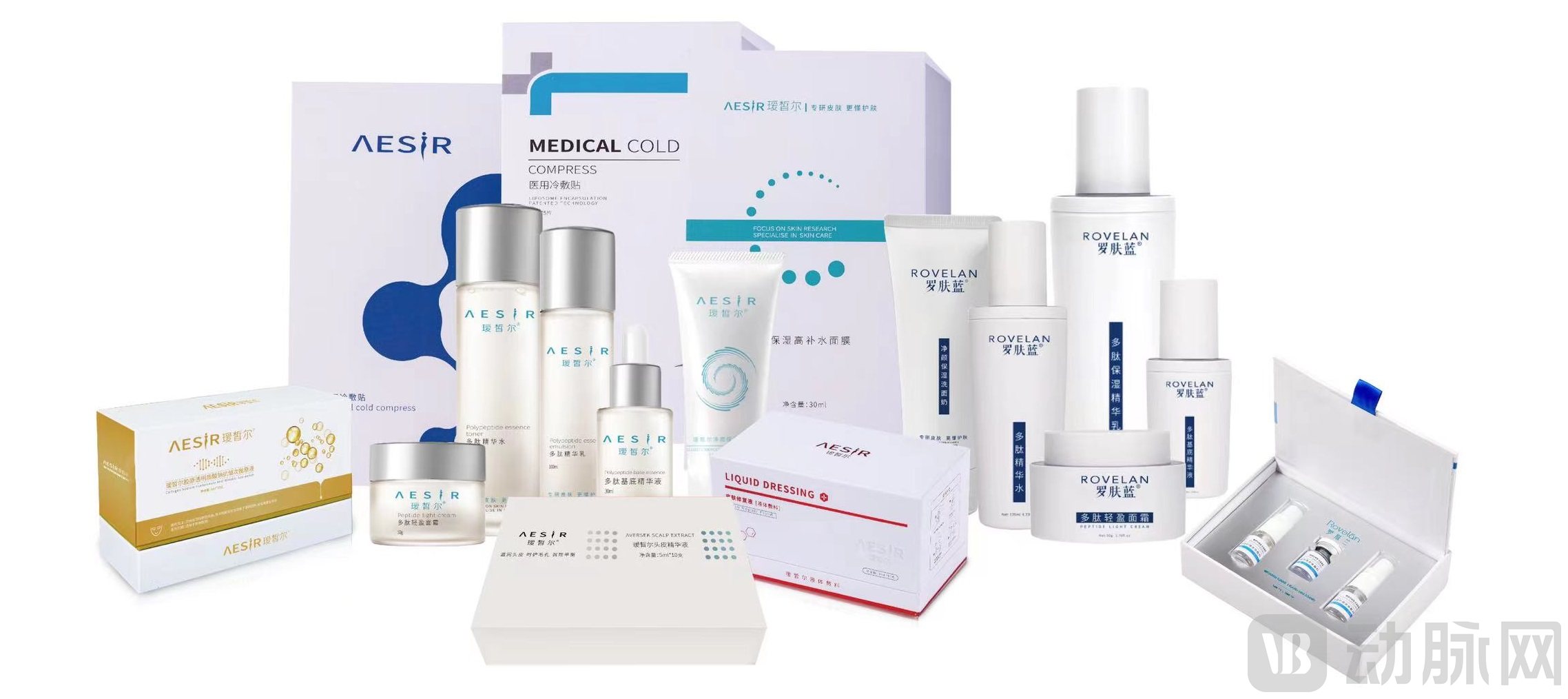
Pansheng Ruixiang Skincare Brand
Hyaluronic acid is a transparent, gel-like substance abundantly present in the dermis. Also known as hyaluronan, it was first isolated from the vitreous humor of bovine eyes. In principle,Hyaluronic acid functions through space-occupying filling., as the hyaluronic acid degrades post-injection, the skin will return to its original state. After years of development, the market for hyaluronic acid-based medical aesthetic products has matured. Currently, there are more than 40 brands of injectable hyaluronic acid officially approved in China, and the application of hyaluronic acid is even extending into the consumer sector.
Compared with hyaluronic acid space-occupying fillers,Regenerative materials target the root causes of aging, stimulating senescent human fibroblasts to regain vitality and secrete more collagen, thereby achieving volume restoration and skin tightening for anti-aging effects.. Post-operatively, the skin texture becomes tighter, more natural, longer-lasting, and closer to a "natural-born" appearance. Regenerative aesthetic medicine materials are diverse, with poly-L-lactic acid (PLLA) and polycaprolactone (PCL) being the mainstream options, which are the respective components of Sculptra and Ellansé.
Pansheng Ruixiang offers three injectable fillers based on biodegradable materials, namely poly-L-lactic acid (PLLA) filler for injection, sodium hyaluronate solution for injection, and collagen implants, all of which are classified as Class III medical devices. Among these, the PLLA filler for injection has completed patient enrollment in clinical trials and entered the follow-up phase. The other two fillers are currently in the patient enrollment stage for clinical trials. Together with a collagen dressing also in the clinical trial enrollment phase, all four Class III medical devices from Pansheng Ruixiang are expected to obtain regulatory approval in the second half of 2024.
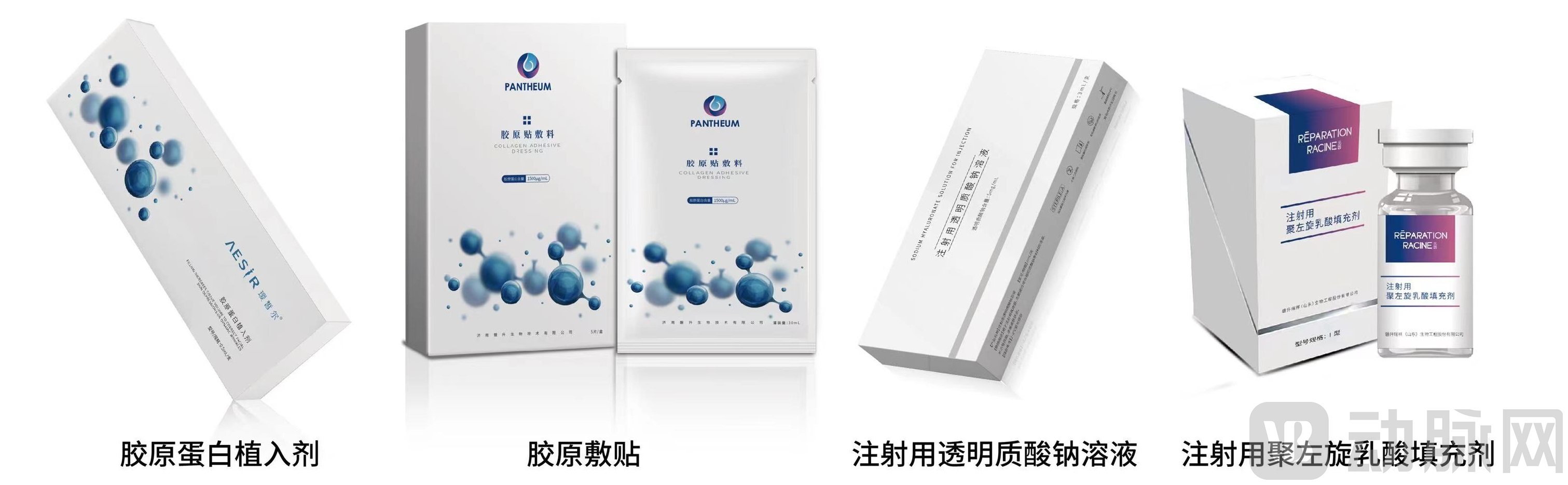
Pansheng Ruixiang’s Four Class III Medical Devices
● Poly-L-lactic acid filler
PLLA is a biodegradable polymer material and a highly effective collagen stimulant, with its safety and efficacy certified by multiple regulatory bodies, including the U.S. FDA, the EU CE, and China’s CFDA.
Pansheng Ruixiang’s PLLA filler contains PLLA, mannitol, and sodium carboxymethyl cellulose.When PLLA filler is mixed with water and injected into the mid-to-deep layers of the human dermis, it produces an immediate filling effect. As the water is absorbed by the body, the skin temporarily returns to its pre-injection state. The remaining PLLA gradually degrades within the skin tissue, stimulating fibroblasts to produce collagen and elastin fibers, thereby repairing facial tissue structure. Ultimately, it breaks down into lactic acid, carbon dioxide, and water, which are naturally absorbed by the body.. Noticeable effects begin to appear 3–6 months after injection.
● Sodium Hyaluronate Solution
Hyaluronic acid is a major component of the intercellular and extracellular matrices, playing a crucial role in maintaining normal cellular structure and function. Sodium hyaluronate, the sodium salt form of hyaluronic acid, offers superior solubility and applicability. Injectable formulations primarily composed of cross-linked sodium hyaluronate are mainly used for wrinkle reduction and soft tissue augmentation, commonly referred to as “dermal fillers.” In contrast, injectables primarily composed of non-cross-linked sodium hyaluronate are mainly used for hydration and moisturizing, commonly known as “skin boosters.”
Currently, there is a vast number of products with sodium hyaluronate as the main ingredient. Most products that have obtained Class III registration certificates from the NMPA use cross-linked sodium hyaluronate and are all intended for wrinkle filling in the neck and face. At present, there are no compliant Class III “skin booster” products in China.
Pansheng Ruixiang's sodium hyaluronate solution uses non-cross-linked sodium hyaluronate as its main raw material,Injecting it into the dermis can provide moisturizing and hydrating effects, and promote scar-free wound healing.。
● Collagen Implant
Collagen is primarily distributed in the skin, ligaments, tendons, cartilage, and other tissues, where it plays a crucial role in maintaining the morphological structure of the skin and various organs. It also serves as an essential raw material for the repair of damaged tissues. There are many types of collagen, with Type I, Type II, and Type III being the most thoroughly studied. Type I collagen constitutes the main component of normal adult skin, accounting for 80%.
As age increases, collagen is gradually lost, leading to reduced skin elasticity and firmness, resulting in wrinkles and sagging. The most direct method of supplementing collagen is through collagen injections.
The collagen implant under Pansheng Ruixiang consists of Type I collagen and sodium chloride injection. The Type I collagen is extracted from neonatal bovine hide, featuring a unique triple-helix structure with a purity exceeding 95%. The entire process, from extraction to purification, is conducted at low temperatures of 2–8°C to preserve the biological activity of the collagen.
This product requires no reconstitution. After injection into the facial dermis, a portion is assimilated into endogenous collagen, while the remainder is gradually metabolized by the body into various amino acids. This process augments tissue volume, thereby correcting moderate to severe nasolabial folds.This product is fully biodegradable and absorbable, leaving no residue in the body. Its effects can last up to 12 months after supplementary injections. This collagen implant also nourishes the skin, reduces wrinkles and tightens the skin, smooths acne-prone areas, brightens dull complexion, and whitens while reducing hyperpigmentation.
With the rapid advancement of medical technology and the booming “beauty economy,” advanced aesthetic procedures such as facial laser therapy and intense pulsed light (IPL) skin rejuvenation have continued to evolve. However, these procedures can cause damage to the superficial layers of the skin post-operatively, thereby weakening or compromising the skin barrier function. Driven by market demand, the market for medical dressings that promote wound healing has rapidly expanded. The medical dressing market is dominated by hyaluronic acid and collagen.
In 1962, Dr. Winter from the United Kingdom confirmed in animal experiments thatWound healing in a moist environment is twice as fast as in a dry environment., thereby giving rise to the novel theory of moist wound healing. The purpose of using dressings is to create a natural environment similar to that of the skin, thereby promoting rapid wound healing.
Pansheng Ruixiang’s collagen dressing is the company’s fourth Class III medical device, composed of a collagen solution (Type I collagen, purified water, and preservatives) and non-woven fabric.
Unlike traditional moist dressings,Collagen dressings can provide a moist environment for wounds, effectively protect the skin, and promote wound healing.. This is attributed to collagen, which contains natural moisturizing factors and hydrophilic groups that provide moisturizing effects; meanwhile, collagen possesses a unique self-repair function that can accelerate tissue regeneration and recovery, thereby facilitating the proliferative repair of epithelial cells at the wound site. In addition, collagen dressings also offer functions such as reducing scar formation, bactericidal activity, minimizing pigmentation, pain relief, and hemostasis.
Collagen dressings can be used for the treatment of mild to moderate inflammatory acne, early post-acne hyperpigmentation, and early superficial scarring after acne healing; they are also used as an adjunctive therapy for facial allergic dermatoses and post-procedural scarring following facial laser or photon therapies.
Dressings constitute the largest product category within Pansheng Ruixiang’s product portfolio. The company also offers liquid wound care dressings, medical trehalose wound dressings, medical hydrogel wound dressings, and polyethylene glycol liquid dressings. With the exception of collagen dressings, all other dressings are classified as Class II medical devices.
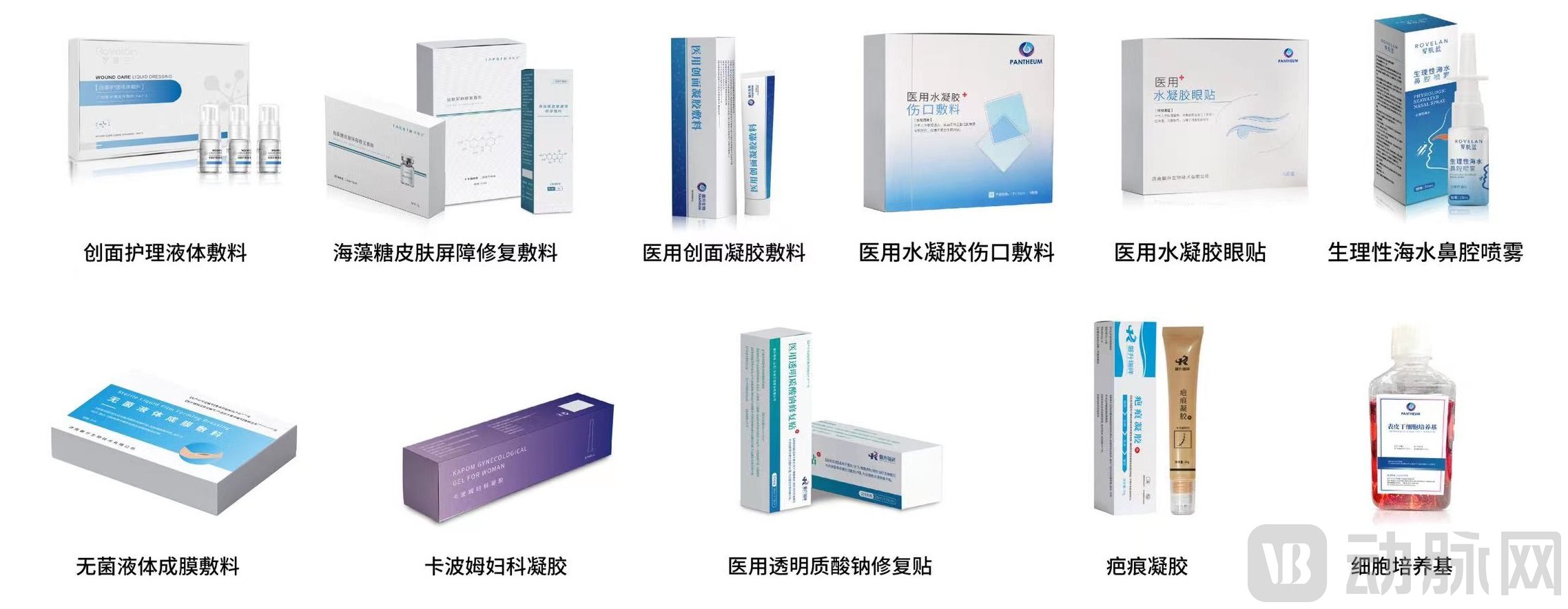
Pansheng Ruixiang Class II Medical Devices
Next, Pansheng Ruixiang will establish a nationwide sales channel and network with the Yangtze River Delta as its hub. The company also seeks to forge partnerships with domestic and international medical aesthetics enterprises, as well as channels with in-depth expertise in the medical aesthetics sector, to jointly drive the advancement of both the enterprise and the industry.