

Raynor Medical Advances from Benchtop to Cordless: Pioneering Minimally Invasive Surgery with Next-Gen Ultrasonic Scalpel
Throughout the history of surgical development, cutting and hemostasis techniques have always been among the most critical components.
As far back as prehistoric times, people used cautery irons or heated stones to treat wounds and achieve hemostasis; in 18th-century Europe, boiling oil and cautery irons were the primary methods for controlling bleeding; in the 19th century, the advent of anesthesia and aseptic technique laid the foundation for modern surgery; in the 1920s, with the introduction of the first spark-gap electrosurgical unit, energy-based surgical devices emerged and have thrived over the century since their inception.
Energy-based surgical devices refer to instruments that enable surgeons to perform tissue cutting, dissection, hemostasis, and other procedures using various energy-generating equipment during surgical operations. In recent years, driven by growing surgical demand and the trends toward minimally invasive and standardized surgical techniques, the market for energy-based surgical devices has seen continuous innovation. A variety of devices, including monopolar/bipolar electrosurgical units, ultrasonic scalpels, plasma scalpels, and microwave scalpels, have been introduced successively and are now widely used in surgical procedures. Energy-based surgical devices have become indispensable tools in modern surgery.
Suzhou Raynor Medical Technology Co., Ltd. (hereinafter referred to as “Raynor Medical”) entered the market with ultrasonic scalpels and has strategically expanded into niche segments such as intelligent electrosurgical units, ablation systems, and endoscopes, striving to become a leading enterprise in the field of minimally invasive surgery.
Ultrasonic scalpels first emerged in the 1950s, were subsequently introduced into clinical practice in the 1980s, and entered the surgical market as an innovative minimally invasive surgical instrument. Compared with high-frequency electrosurgical units, ultrasonic scalpels offer a broader range of applications and enjoy higher clinical acceptance.
In recent years, the state has encouraged independent innovation in medical devices and the breakthrough of key “chokepoint” technologies. Through the continuous efforts of domestic enterprises, ultrasonic scalpels have seen their vessel sealing capacity increase from 3 mm to 7 mm in diameter, evolving from console-based to host-free systems, and from corded to cordless designs. With constant iterative upgrades, the process of import substitution with domestically produced alternatives has accelerated.
● Tabletop Ultrasonic Scalpel
The tabletop ultrasonic surgical system from Raynor Medical consists of the main unit (Ultra E5), handpiece (HP05), disposable ultrasonic scalpel tips (PSP36, PSP23, PSP14, SP36, SP23, SP14, including torque wrench), footswitch (FSW05), and cart (CART05, optional). Its design features the following characteristics:
1. Fully digital real-time frequency algorithm tracking, high-efficiency power amplifier, independent monitoring circuit, and ATT (Adaptive Tissue Sensing) technology,Significantly reduce system power consumption and ensure stable and secure system operation;
2. Classic amplifier and filter circuit design,Improve the spectral purity of drive signals, reduce external interference, enhance EMC (Electromagnetic Compatibility), and lower EMI (Electromagnetic Interference);
3. The ultrasonic scalpel handpiece is a single-use device,Reduces the risk of cross-infection; the blade tip is coated,Prevents tissue adhesion with minimal smoke; Different blade tips can meet different clinical needs,Supports surgeries lasting 3–8 hours, with durability comparable to foreign competitors.。
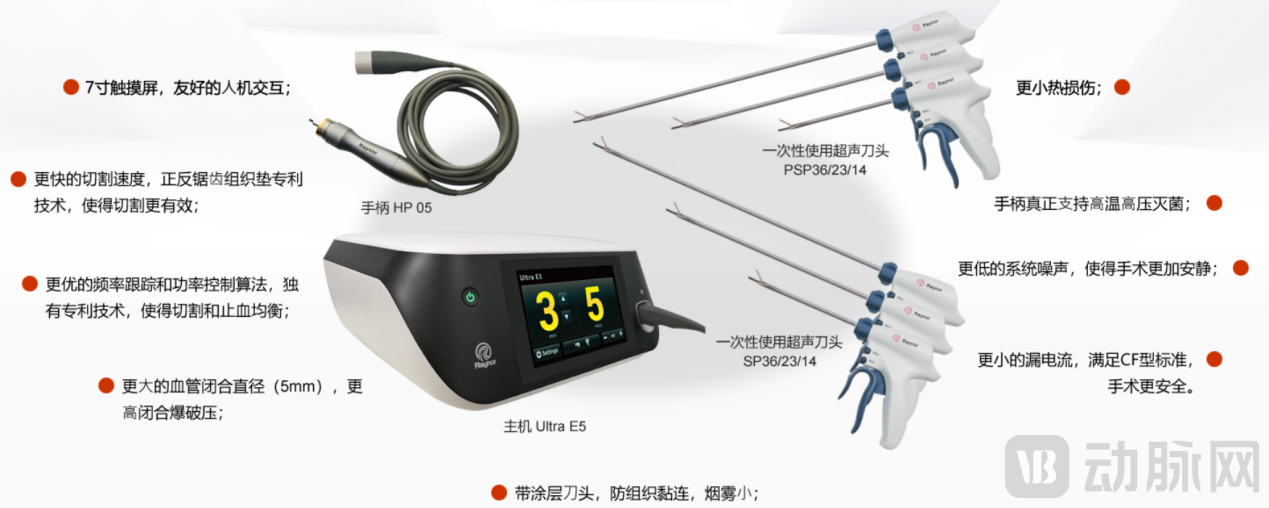 Raynor Medical Tabletop Ultrasonic Scalpel
This tabletop ultrasonic scalpel obtained the Class III registration certificate from the National Medical Products Administration (NMPA) in December 2022. It is approved for use in medical institutions to cut and achieve hemostasis of soft tissue, and to seal blood vessels with a diameter of no more than 5 mm during surgical procedures. Currently, this ultrasonic scalpel has been listed on provincial procurement platforms across China and has been successfully trialed at hospitals including the 302 Hospital of the PLA, Shengjing Hospital, Shanxi Provincial Cancer Hospital, and the First Affiliated Hospital of Xi’an Jiaotong University.
In overseas markets, this product obtained CE certification as early as 2020 and has been sold to countries and regions including Italy, Spain, Poland, France, Saudi Arabia, the United Arab Emirates, and India.
● Cordless Ultrasonic Scalpel
An innovative product inevitably undergoes multiple rounds of refinement and iterative upgrades. Building upon the design of tabletop ultrasonic scalpels, Suzhou Raynor Medical Technology Co., Ltd. has eliminated all cables and, through continuous iterative development, created a cordless ultrasonic scalpel that offers greater convenience in surgical procedures.
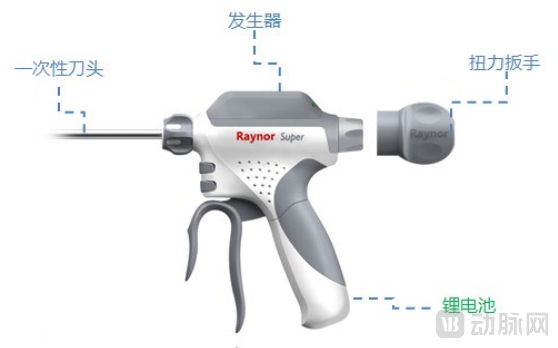
Raynor Medical Cordless Ultrasonic Scalpel
The transition of ultrasonic scalpels from desktop to cordless models is akin to the evolution from landline phones to mobile phones, eliminating cable constraints and enhancing usability. Cordless ultrasonic scalpels retain most of the advantages of their desktop counterparts, with clinical performance no inferior to that of desktop ultrasonic scalpels.It also offers the advantage of superior mobility within the operating room, addressing the cable constraints associated with tabletop ultrasonic surgical systems during procedures. Furthermore, compared to cordless ultrasonic scalpels from other brands, it provides a more comfortable hand feel, lower static power consumption, and greater operational efficiency.
“Ultrasonic scalpels inherently possess high technical barriers, as they are multidisciplinary products spanning electronics, algorithms, software, mechanics, and acoustics. The transition from tabletop to cordless models presents an even greater challenge.”We must ensure that its performance is no inferior to that of desktop ultrasonic scalpels, meet the stringent low-power design requirements for battery operation, and overcome the EMC and safety compliance challenges associated with miniaturization..” When discussing the challenges of product upgrades, Zhang Xuewu, founder of Raynor Medical, also outlined their key focus: “During development, our top priority was to optimize system matching to ensure the best possible cutting and hemostatic performance. Through continuous design, validation, and refinement of its performance and quality, we were ultimately able to create this cordless ultrasonic scalpel.”
This cordless ultrasonic scalpel is expected to obtain NMPA registration certification in 2024.
Entrepreneurs often establish a company after identifying market pain points and development opportunities, and Raynor Medical is no exception.
Medical technologies are primarily categorized into diagnosis and treatment.
Diagnostic technologies refer to methods such as imaging diagnostics and in vitro diagnostics (IVD) used to determine the type and severity of a patient’s disease. In the medical imaging market, domestic companies such as United Imaging and Mindray have continuously achieved breakthroughs in medical imaging technology, securing significant competitive advantages within the industry. Meanwhile, companies like Snibe and Autobio have gained certain market shares by achieving breakthroughs in the field of in vitro diagnostics.
Therapeutic devices are categorized into interventional therapy devices and conventional therapy devices. Interventional therapy is a minimally invasive treatment approach, utilizing general-purpose equipment such as stents, catheters, and guidewires, which are primarily passive consumables. Companies focusing on the research and development of stents and balloons, such as Shanghai MicroPort and Beijing Lepu, have continuously innovated and developed many products that are first-of-their-kind in China.
Conventional therapeutic devices typically apply various forms of energy—such as mechanical force, heat, light, electricity, sound, and magnetism—to the human body to remove non-functional tissue and maintain physiological stability, thereby achieving therapeutic outcomes. Most therapeutic devices consist of active equipment and high-value consumables, encompassing a wide variety of types; however, no clear industry leader has yet emerged in China.
The trend toward minimally invasive treatments is shaping the future of surgery, with its device market primarily comprising segments such as ultrasonic scalpels, staplers, endoscopes, handheld instruments, sutures, biomaterials, and tumor ablation.
Among these, ultrasonic scalpels demand extremely high levels of safety and operational precision, resulting in high entry barriers and significant technical hurdles. This has led to the long-term dominance of overseas companies in China’s ultrasonic scalpel market, with Johnson & Johnson holding a particularly dominant position. According to VCBeat’s “Report on Energy-Based Surgical Devices in China,”In 2019, Johnson & Johnson’s sales of ultrasonic scalpels in the Chinese market amounted to approximately RMB 1.2 billion, capturing a market share of over 77%. Other overseas brands, such as Olympus and Medtronic, held market shares of 6.1% and 5%, respectively, with imports accounting for more than 80% of the total market., the ultrasonic scalpel market is one of the segments with the greatest potential for domestic substitution.
Meanwhile, imported ultrasonic scalpels are expensive, with prices ranging from around RMB 6,000 for lower-end models to over RMB 10,000 for more advanced ones. Moreover, imported ultrasonic scalpel tips from companies such as Johnson & Johnson and Medtronic are labeled for single-use only. Domestic hospitals lack bargaining power, and some departments cannot afford the cost of single-use disposables, leading to reuse in clinical practice. However, reused ultrasonic scalpel tips exhibit poor performance in cutting and hemostasis, and may pose surgical risks such as cross-infection.
Against the backdrop of gaps in specific segments of China’s therapeutic equipment sector and the long-standing overseas monopoly on ultrasonic scalpels, Raynor Medical was established in 2019. Headquartered in Suzhou Industrial Park, the company entered the minimally invasive surgery field with ultrasonic scalpels and focuses on the research and development of active medical devices and associated high-value consumables.
With a deep focus on the surgical field, the core team of Raynor Medical largely originates from Mindray Medical. The entire team has collaborated on ultrasonic scalpel R&D for over a decade, possessing distinct advantages in technology, experience, and teamwork.
Zhang Xuewu, founder of Raynor Medical, transitioned from the telecommunications industry to healthcare. He joined Mindray Medical in 2003 and worked there for 14 years. During his tenure, he served as Deputy Manager of Mindray’s Beijing Research Institute, Manager of the Ultrasound R&D Department, Deputy Director of R&D for the Surgical Business Unit, and R&D Director at Hangzhou Guangdian Medical (a Mindray Group subsidiary). He also led the development of China’s first mid-to-high-end desktop color Doppler ultrasound system with independent intellectual property rights (the DC-7 series), which received the “National New Product” award and achieved cumulative sales of RMB 1 billion.
“At Mindray, we witnessed the company’s listing in the United States and saw product sales grow from an initial 100 million to 10 billion. Over these 14 years, the most valuable lesson we learned was how to continuously iterate a product from needs assessment and solution design to verification, ultimately launching it into the market. Through collaborative teamwork and constant ‘refinement,’ we strived to meet customer demands and deliver more ‘perfect’ products.” Looking back on his more than ten years with the team at Mindray, Zhang Xuewu stated that the experience accumulated at Mindray laid a solid foundation for their entrepreneurial venture.
Raynor Medical currently holds nearly 50 patents, covering areas such as devices, software (algorithms), and transducers.
Raynor Medical has previously completed two rounds of financing and will soon launch a new round to increase R&D and investment in the field of energy-based surgical devices, accelerate market expansion both domestically and internationally, and focus on the “3+N” volume-based procurement program in the Beijing-Tianjin-Hebei region. In terms of long-term development, Raynor Medical will expand into the broader field of general surgery, continuing to develop active medical devices and associated high-value consumables.