

Boling Robotics Files IPO Prospectus: Leveraging Technological Innovation and Digital Solutions to Break the 'Rehabilitation Impossible Triangle'
Amid the thunderous anti-corruption campaign in healthcare and the ensuing atmosphere of panic, SPD-related stocks have surged against the trend. Over nine consecutive trading days starting August 8, Kaikai Industrial’s stock price hit the daily upper limit six times. Industry insiders believe that SPD, with its end-to-end digitalization, transparency, and traceability, stands to benefit structurally from anti-corruption efforts. This same logic also applies to the rehabilitation sector.
In recent years, driven by the aging trend and policy initiatives, the demand for rehabilitation services has continued to rise. According to the Global Burden of Disease (GBD) study on rehabilitation published in The Lancet, China has the largest rehabilitation needs globally, with a total population exceeding 460 million people requiring such services.
However, in stark contrast to the surging demand for rehabilitation services are the acute supply-demand imbalance of rehabilitation resources and the challenges in regulatory oversight.
First, there is a significant contradiction between the vast rehabilitation market and the scarcity of rehabilitation professionals. The rehabilitation diagnosis and treatment process relies heavily on physicians and specialized rehabilitation therapists; in other words, China’s rehabilitation industry is a “highly professional, labor-intensive service sector.” However, public data indicate that the total number of rehabilitation therapists in China is approximately 20,000, with an average of only 0.4 rehabilitation therapists per 100,000 people—far below the levels seen in middle- and high-income developed countries. This shortage of rehabilitation healthcare personnel directly constrains both the coverage and the quality of rehabilitation services.
Secondly, from a management perspective, unlike other sectors of the healthcare industry, the rehabilitation industry primarily consists of physicians and rehabilitation therapists. Physicians prescribe treatment plans, while rehabilitation therapists assist patients in executing them. This division of labor separates the entities responsible for diagnosis and treatment, resulting in a longer service chain that inevitably leads to regulatory oversights.
Furthermore, current rehabilitation diagnosis and treatment processes rely heavily on the subjective experience of rehabilitation physicians, lacking standardization and transparency. This reliance results in a heavy workload for therapists, prevents hospitals or rehabilitation institutions from establishing manageable and replicable standards, and limits the scalability of rehabilitation services. Moreover, during prescription transmission, discrepancies often arise between the prescriptions issued by physicians and their actual implementation by therapists due to subjective variations or objective constraints. The lack of managerial transparency makes it difficult to regulate exercise therapy, posing challenges for hospital administration and health insurance cost control.
Furthermore, constrained by the limited number of rehabilitation physicians and inadequate rehabilitation facilities, the Department of Rehabilitation exhibits significant diminishing marginal returns. Once patient volume reaches a certain threshold, the department struggles to accommodate additional rehabilitation demands, thereby hindering its in-depth development.
Anti-corruption efforts in the healthcare sector are driving the purification of the medical market, representing not only a “breakdown” but also a “build-up.” Drawing on the experience of SPD (Supply, Processing, and Distribution), the rehabilitation market is inevitably poised to gradually upgrade toward full-process digitalization, standardization, and transparency.
The principle that “rehabilitation therapy begins and ends with assessment” ensures the generation and documentation of extensive, real-world patient status and rehabilitation data throughout the care process. This systematic data recording provides the rehabilitation field with an inherent foundation and advantages for digital-intelligent, standardized, and refined management. By consistently implementing digital tools, rehabilitation departments can effectively enhance diagnostic, therapeutic, and managerial efficiency, leading to better patient outcomes, reduced workload for therapists, and greater vitality for departmental development.
A review of the global rehabilitation market reveals that many companies have focused their R&D efforts on assistive devices and pharmaceuticals. Although numerous digital therapeutics exist, they mostly optimize rehabilitation diagnosis and treatment processes for a single disease, with no scalable technical solutions yet emerging. Move Robotics’ remote therapy system for exercise-based rehabilitation effectively fills this market gap.
Technological Innovation, Through Digital Means,
Breaking the “Impossible Triangle” of Rehabilitation Diagnosis and Treatment
Founded in 2017, Move Robotics boasts a core team entirely composed of alumni from the Department of Automation at Tsinghua University. Since its inception, the company has been dedicated to innovative automation in motion technology and rehabilitation medicine, striving to provide efficient, precise, and professional AI products, as well as services such as assisted diagnosis and rehabilitation intervention, for the medical, rehabilitation, and sports health sectors.
The company was recognized as a High-Tech Enterprise in 2019 and has received numerous honors, including the Shanghai Pujiang Talent Program, Top 10 National Finalists in the China Entrepreneurship Competition, and Third Prize in the China Medical Device Innovation and Entrepreneurship Competition. To date, Move Robotics has filed over 60 intellectual property applications and published multiple SCI-indexed papers in international journals.
Gao Xiao, co-founder of Move Robotics, believes that under the premise of pursuing scalability with the goal of benefiting a broad population,"High professionalism," "labor-intensive," and "service" cannot be achieved simultaneously.It is the "impossible triangle" in the field of rehabilitation.The key to driving volume growth in the rehabilitation market lies in leveraging technological products to standardize traditional manual diagnosis and treatment processes, thereby achieving efficiency, scalability, and personalization. This is also the core design philosophy behind BoLing Robot’s remote consultation system for motor therapy.
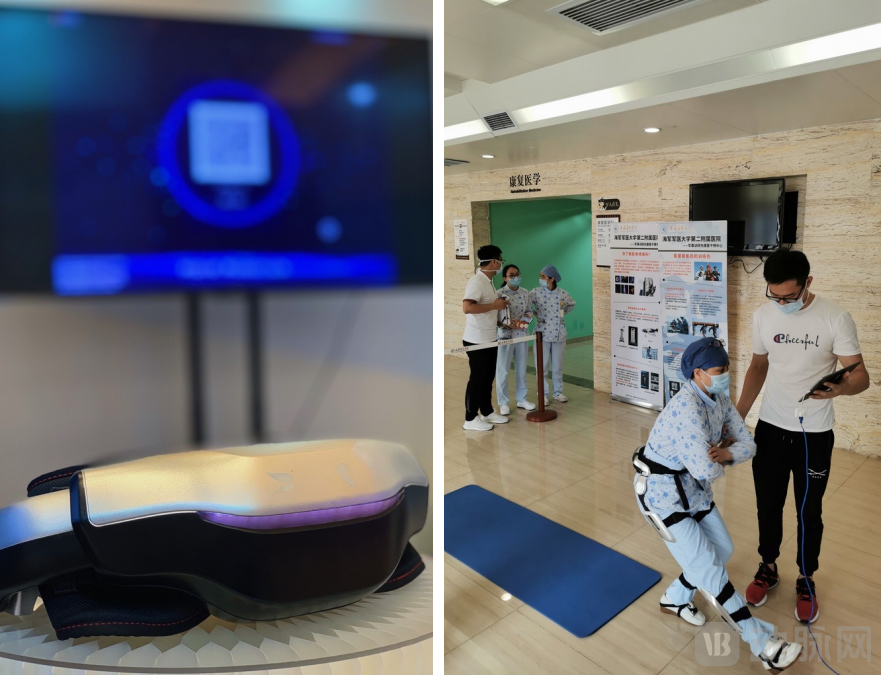
Patient Uses Move Robotics' Remote Diagnosis and Treatment System for Motor Therapy at Shanghai Changzheng Hospital
Boling Robotics’ Remote Telemedicine System for Exercise Therapy is an integrated rehabilitation product combining assisted diagnosis and treatment.By leveraging digital therapeutics, it integrates high-precision sensors with a sports medicine analysis engine to establish a standardized hardware-software anchor. Building on this foundation, it develops digital therapeutic devices that, when combined with manual therapy, enhance treatment efficiency, reduce costs, and expand scalability. This approach initially establishes a closed-loop diagnosis and treatment system in active rehabilitation, effectively addressing key management challenges such as standardization, personalization, traceability, and transparency in rehabilitative care.
The workflow involves loading the exercise therapy prescription into the therapeutic device, after which the patient wears the device and performs exercise therapy training according to the prescribed recommendations. The device monitors the patient’s movements in real time, provides feedback on exercise accuracy, and tracks joint range of motion. Physicians remotely adjust parameters such as exercise type, frequency, duration, intensity, and angular range based on the patient’s condition. This ensures transparency throughout the entire rehabilitation process.
For patients,This product enhances the efficiency, accessibility, and convenience of patient rehabilitation, enabling patients to receive professional, targeted rehabilitation training from the comfort of their homes, thereby reducing healthcare costs.
For physicians and rehabilitation therapists,The integration of digital technologies with smart devices maximizes the fidelity of physicians’ prescriptions in actual rehabilitation processes, reducing therapists’ workload while increasing the legitimate income of both physicians and therapists through higher service volumes.
For hospitals and rehabilitation institutions,It reduces healthcare service costs and, without increasing staffing or expanding facilities, enables the expansion of service capacity through standardized diagnosis and treatment processes that achieve economies of scale, thereby enhancing the overall capabilities of rehabilitation departments and helping them generate revenue.
Move Robotics’ remote telemedicine system for exercise therapy can be applied in cervical spine rehabilitation, orthopedic rehabilitation, cardiovascular and cerebrovascular care, postpartum rehabilitation, and other fields. Its product functionalities cover Diagnosis-Intervention Packet (DIP) items and detailed medical insurance categories. As the frequency, duration, and content of digital exercise therapy sessions are all subject to real-time monitoring, the entire process is transparent and traceable, facilitating medical insurance cost-control assessments and achieving a win-win outcome for all stakeholders.
Currently, Move Robotics has established in-depth collaborations with prestigious institutions such as Shanghai Changzheng Hospital and the Department of Automation at Tsinghua University in areas including academia and talent development. Initial achievements have been made in sensor algorithm development, the construction of a human biomechanics database, and the establishment of an intelligent decision-making engine for the human movement system.
Partnering with Zhengzhongji Medical, a Chain of Specialized Spine Clinics,
Providing Home-Based Spinal Correction Services to Over 1,000 Adolescents
Leveraging its unique industry insights and clear product technology advantages, move robotics has made rapid progress in commercialization.
It is reported that the company has recently entered into a strategic partnership with Zhengzhongji Medical, a specialized chain clinic focusing on spinal care, for adolescent scoliosis rehabilitation training, and has reached cooperation intentions with multiple rehabilitation institutions and insurance providers.
Zhongzhengji Medical, a subsidiary of Lianyihui Health Group, is dedicated to improving spinal health for the general population. It specializes in non-surgical correction of adolescent scoliosis, treatment of adult spine-related disorders and osteoarticular pain, as well as prevention and intervention for suboptimal spinal health. The company operates more than ten clinics in Shanghai, Hangzhou, Shenzhen, Hefei, Ningbo, and other cities.
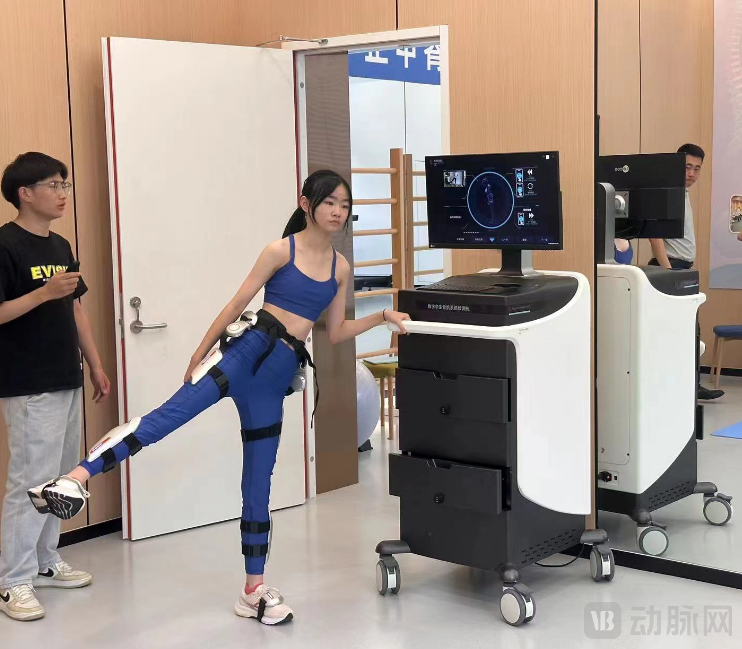
Children Try Out the Move Robotics Digital Twin Musculoskeletal Assessment System at Zhengzhongji
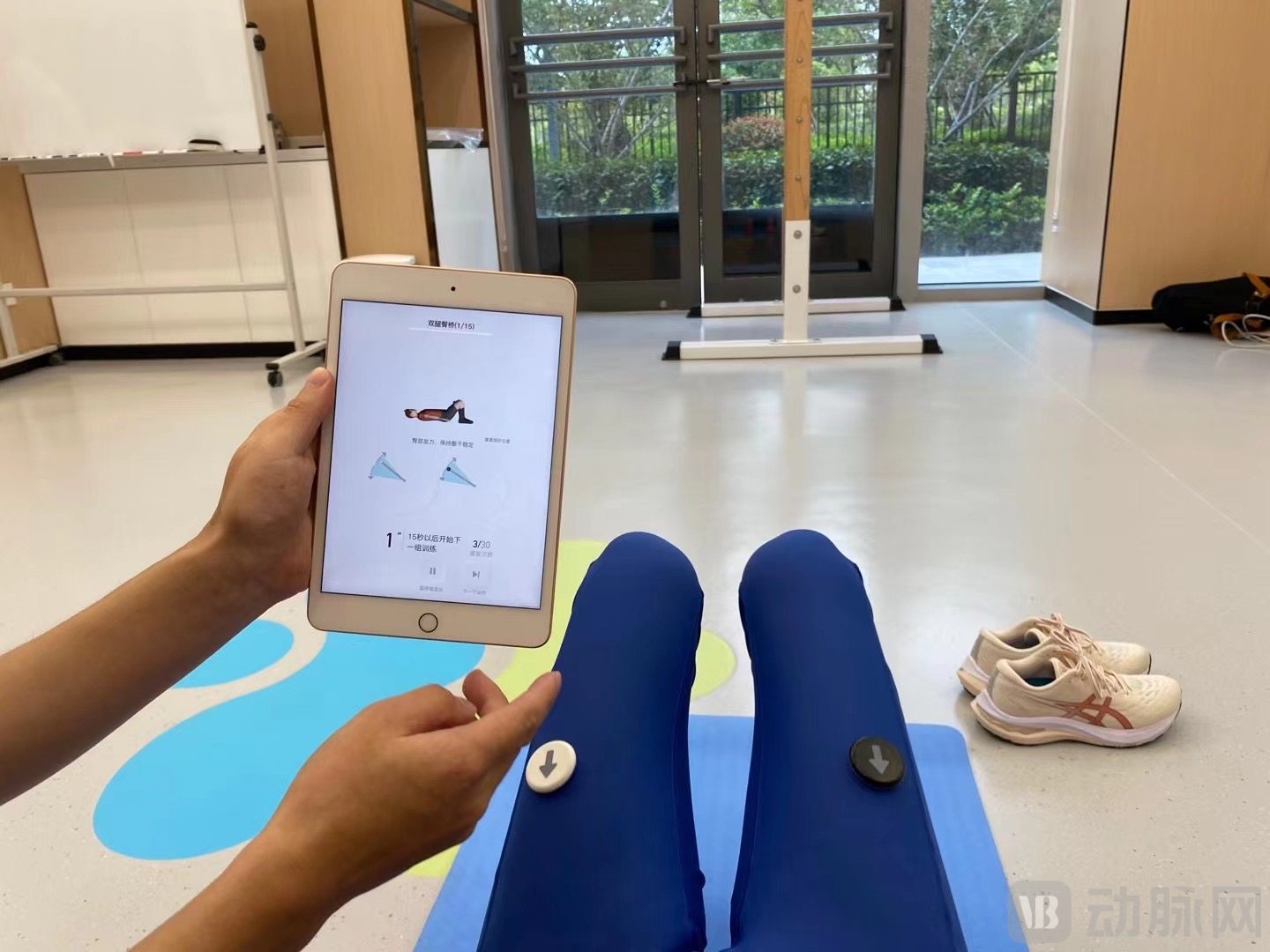
Pediatric Scoliosis Patients Undergo Digital Twin Musculoskeletal System Assessment and Treatment with BoLing Robotics at Zhengzhongji
This collaboration involves Move Robotics providing home-based spinal correction services to the first batch of over 1,000 adolescents with scoliosis treated by Zhengzhongji Medical. Through Move’s therapeutic products, professional rehabilitation therapists can deliver real-time remote tracking and guidance for exercise therapy to adolescent patients in a telehealth setting.
This collaboration not only marks another step forward for Move Robotics in commercial validation and application scenario exploration, but also confirms the market’s recognition of and demand for its remote diagnosis and treatment system for movement therapy.
“Leveraging digital technologies and intelligent equipment to reshape the rehabilitation diagnosis and treatment process into one that is standardized, efficient, and transparent—this is our original aspiration and our core objective,” said Gao Xiao. He noted that transparency in the rehabilitation industry is not achieved overnight but is a gradual, step-by-step process. “Though the road is long, we will arrive if we keep walking; though the task is difficult, we will succeed if we keep working. On this long journey, we are bound to see the dawn.”