

AI-Driven Biotech Firms Navigate Market Extremes Amid Dual Challenges of Innovation and Commercialization
Recently, the 2nd China Bio-Computing Conference was once again held by Jinji Lake. Co-hosted by Bohe Innovation and Biotree, this year’s conference centered on the theme “Witnessing Evolution.” It focused on technological advancements in the IT and BT (Information Technology and Biotechnology) sectors over the past two years, as well as AI applications in life sciences. Seizing the opportunities presented by the technological transformation in the era of large generative AI models, the conference explored the next phase of convergence among AI, bio-computing, and frontier science.
Two years on, the “era of biological computing” is no longer a novel term. Ultra-large-scale pre-trained models, exemplified by ChatGPT, have emerged one after another, demonstrating the potential to decipher high-dimensional life codes in the AI + New Drug Discovery 2.0 era.
Meanwhile,Le Xiaotong, General Manager of Bohe Innovation CenterIn his address, he noted that the complexity of biological systems makes new drug development a high-risk systemic engineering endeavor, and the integration process will inevitably encounter numerous challenges and issues. AI-driven pharmaceutical companies continue to face challenges in practical application, platform iteration, and commercialization. The Bohe Innovation Center hopes to collaborate with various stakeholders across the ecosystem, leveraging the platform of the China Bioinformatics Conference, to discuss and showcase current progress and future evolution in bioinformatics and AI-enabled drug discovery.
Between Ice and Fire: How Are AI-Driven Drug Discovery Companies Evolving? VCBeat New Medicine has compiled remarks from the “Biocomputing and Drug R&D” special forum held at the China Biocomputing Conference, aiming to provide industry professionals with the latest insights and inspiration.
During the application of antibodies, affinity is one of the most critical parameters for evaluating the biological activity and clinical efficacy of therapeutic antibodies. High-affinity antibodies can reduce antibody dosage, minimize side effects, and simultaneously lower costs.
Antibody Affinity MaturationAntibody affinity maturation is the process by which antibody affinity, activity, and antigen-binding capacity are enhanced. In natural settings, this process occurs in B cells through somatic hypermutation of immunoglobulin genes, followed by repeated antigenic stimulation and selection, ultimately converging into a state characterized by antigen specificity and high-affinity binding.
From the perspective of AI, the computational process is implemented through generative models.Peng Jian, Senior Visiting Professor at the Institute for AI Industry Research (AIR), Tsinghua University, and Founder and CEO of Huashen ZhiyaoIt is posited that the computational processes of biological evolutionary computing and AI models are similar; therefore, by drawing on the concept of antibody maturation and integrating the selectivity of antigens and antibodies, it is possible to design models with genuine biological insights. HuaShen ZhiYao applies generative and discrete models to the modeling of antibody and protein design, incorporating biological insights into AI modeling.
AI algorithms can explore problems that are difficult to solve using traditional methods, but computational results ultimately need to be validated through experiments, integrating data feedback patterns with experimental approaches.
Peng JianIt is noted that to achieve effective outcomes, large models must not only meet scientific and data-related requirements but also address the challenges of developing language models for proteins and antibodies, taking into account their linguistic systems, functional priorities, and structural needs. Following training on large-scale datasets, vertical models based on smaller, specialized datasets will gradually emerge, enabling more efficient and precise complex predictions. In response, Huashen Zhiyao has developed a variety of application models, including structure prediction, antibody optimization, and druggability optimization.
TCR (T-cell receptor)-T therapy is a T-cell therapy involving genetic engineering of cell receptors. By transducing conventional T cells with chimeric antigen receptors or TCR α/β heterodimers, this approach enhances the affinity of TCRs for specific recognition of tumor-associated antigens and boosts the effector function of immune cells, enabling T lymphocytes to efficiently re-recognize target cells and exert potent anti-tumor immune effects in vivo.
TCR-T cells can recognize intracellular antigens, resulting in a significantly larger number of potential targets compared to CAR-T cells, and thus hold broad prospects for application in solid tumors.
Peng Songming, CEO of Xinjing ZhiyuanIntroduction: To address two major industry pain points—discovery of novel targets and development of therapeutic TCRs—the team has developed a highly sensitive platform for target and TCR validation. By leveraging an iterative cycle of computational prediction and experimental validation, the platform rapidly predicts and validates targets presented by tumor cells and identifies TCRs capable of recognizing tumor antigens.
Over the past two years, NewGene Intelligence has built a database of more than 7,000 target–TCR pairings. Functional validation identified sequences with optimal efficacy and safety profiles, forming the therapeutic TCR sequence set. Leveraging this database, NewGene Intelligence has discovered high-performance TCR sequences targeting various antigens, including PRAME and KRAS, which have progressively entered clinical trials.
Furthermore, Xinjing Zhiyuan is actively expanding into the TCR bispecific antibody field. By employing methods such as TCR structure simulation, it predicts key amino acid sites in the TCR CDR3 region involved in antigen recognition, thereby enhancing the efficiency of affinity optimization experimental design and rapidly obtaining high-affinity TCRs suitable for TCR bispecific antibody molecules.
Jiang Zhaoshi, Senior Vice President of BiotoptorIt was mentioned that the fundamental starting point for drug target discovery lies in collecting high-quality data; therefore, it is essential to integrate three key components—data collection, algorithm development, and experimental validation—to establish a complete lifecycle for drug target discovery.
With advances in clinical research and drug applications, the complexity of diseases such as autoimmune disorders and cancers is gaining increasing attention, influenced by factors including the tumor microenvironment and individual variability. The direct challenge posed by this complexity lies in patients’ drug sensitivity and treatment efficacy.
Jiang ZhaoshiEmphasizing the need to focus drug R&D on real-world clinical settings, BioMap has partnered with numerous medical institutions to collect first-line treatment data. By integrating high-throughput wet-lab experiments and multi-omics profiling, it observes complex mechanisms and dynamic changes, leveraging deep learning to identify novel targets and uncover mechanisms for overcoming drug resistance, thereby enabling informed selection of next-generation therapeutics.
From the perspectives of target discovery and data-driven approaches, it is essential not only to leverage public data but also to establish specific data screening criteria to facilitate the selection of appropriate patients, targets, and tissues, as well as the determination of optimal dosing. Furthermore, by analyzing patient-derived data, potential mechanisms of drug resistance can be investigated to develop strategies for overcoming resistance and improving therapeutic outcomes.
Furthermore, as research into drug applications advances, single-target approaches are proving to be less than highly effective. Consequently, for many highly heterogeneous diseases, combination targeting has emerged as a new exploratory paradigm. Target discovery is now tightly integrated with downstream antibody engineering, requiring both multi-target combinations and specific design strategies to drive the antibody engineering and discovery teams to develop specialized technical solutions.
The sub-forum culminated in a roundtable discussion moderated by Zhenping Zhu, Co-CEO of Huashen Zhiyao and Venture Partner at Mint Angel Fund. Participants included Jian Li, former Vice President of the Domestic New Drug R&D Services Department and Advisor to the Strategic Investment Department at WuXi AppTec; Zhaoshi Jiang, Senior Vice President at BioMap; Zhendong Zhu, Founder and Chairman of Kehui Zhiyao and CTO of the Bairui Innovation Center at Shenzhen Bay Laboratory; and Hang Chen, Co-founder and CEO of neoX.
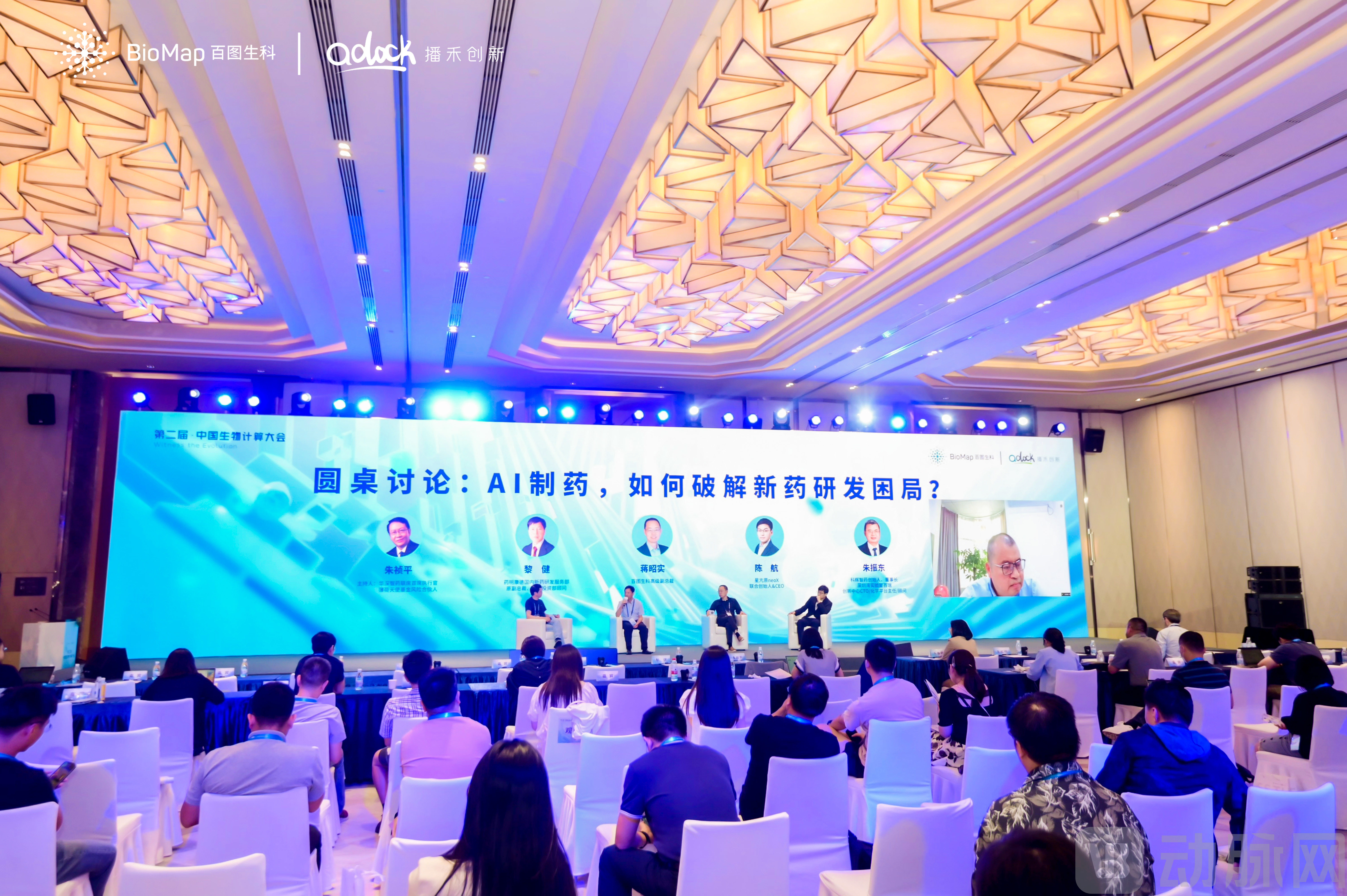
In the integration of AI-driven drug discovery and human expertise,Zhu ZhenpingIt stated: “The expectation for AI is to address challenges that conventional laboratories and scientists are unable to resolve.”Jiang ZhaoshiIt is noted that AI prompts reflection on the limitations of human labor—specifically, whether objective evidence exists. In the complex process of drug development, integrating AI assistance and data analysis to ensure objectivity, fairness, and accuracy at every stage will enhance the success rate of drug development. Only by addressing different issues with appropriate methods can the cycle and cost of drug research and development be comprehensively reduced.
When it comes to how investors understand an AI company,Chen HangBelieved to be primarily judged by cash flow,Jiang ZhaoshiIt is also believed that investors will indirectly assess the capabilities of AI enterprises through cash flow, platforms, and order analysis.Li JianIt was mentioned that while the project itself is important, the team’s capabilities and qualifications are equally critical.
Q&A Session,Li JianQ: What are the differences and advantages between the business models of platform-centric and pipeline-centric AI companies?Jiang ZhaoshiIt is believed that possessing a DNA of original creativity is paramount for the company. Meanwhile, many AI enterprises require pipeline development to demonstrate the maturity and capabilities of their large model platforms. Collaborating with large pharmaceutical companies during pipeline R&D also serves as a process of leveraging their experience and data.Zhu ZhendongTaking Schrödinger as an example, the core value of an AI enterprise lies in its leadership role, whether through technological pioneering or the development of new products via its platform.