

How Top Global Hospitals Are Investing in Digital Health: 20 Deals in 5 Years

Nference
Developer of Artificial Intelligence-Driven Life Science Software Platforms

Abridge
Developer of Artificial Intelligence Medical Applications

Medivis
Medical Software Developer

Clearsense
Medical Data Management and Analysis Technology Platform

Smile Digital Health
Supplier of Health Data Structure and Exchange Solutions

Diagnostic Robotics
Developer of Medical-Grade AI Triage and Clinical Prediction Platforms

Theator
Surgical Decision Support Tool Developer

MediView XR
AR Medical Solutions Developer

Mayo Clinic
Mayo Clinic specializes in caring for patients with serious and complex conditions, operating across five states and providing care to more than one million people annually from all 50 U.S. states and nearly 140 countries. Mayo Clinic is ranked No. 1 by U.S. News & World Report.

Cleveland Clinic
Cleveland Clinic is one of the world’s most renowned medical institutions. It is a non-profit organization that integrates patient care, research, and education, providing specialized medical services and cutting-edge treatment options. Founded on February 28, 1921, Cleveland Clinic is owned and operated by the Cleveland Clinic Foundation, a non-profit corporation based in Ohio. Its main campus is located in Cleveland, with additional branches in Florida, Nevada, Canada, and Abu Dhabi.

Cleveland Clinic Foundation
Non-Profit Academic Medical Center

The University of Pittsburgh Medical Center
The University of Pittsburgh Medical Center (UPMC), founded in 1893, is located in Pittsburgh, Pennsylvania. It employs over 43,000 staff members, including 2,300 physicians, and accepts 1,300 residents annually. With a total of 3,350 hospital beds, UPMC records 167,000 inpatient admissions, 3 million outpatient visits, 400,000 emergency department visits, and more than 130,000 surgical procedures each year. As the world’s largest organ transplant center, UPMC has performed over 12,000 organ transplant surgeries to date. The University of Pittsburgh Medical Center is currently ranked among the best hospitals in the United States.

Avaneer Health
Healthcare Platform Provider
Global Digital Health Returns to “Reality” in 2026 as Investors Collectively “Lie Flat”
On a macro level, according to Rock Health data, there were only 244 financing deals in the U.S. digital health sector during the first half of the year, raising a total of $6.1 billion—the lowest funding levels for this period since 2019.
At the micro level, the industry’s crowding-out effect has intensified, with digital therapeutics becoming a hard-hit sector. In May, Pear filed for bankruptcy and was sold off at distressed prices; in July, Babylon was mired in bankruptcy rumors, sparking considerable controversy within the industry.
Industry leaders often say that the deeper we traverse through the industry’s “trough,” the more investment must return to common sense. Thus, we have turned our attention to the front lines of healthcare services to examine digital health: What do healthcare professionals truly need from digital health solutions? And how should hospitals strategize their next steps in digital health adoption?
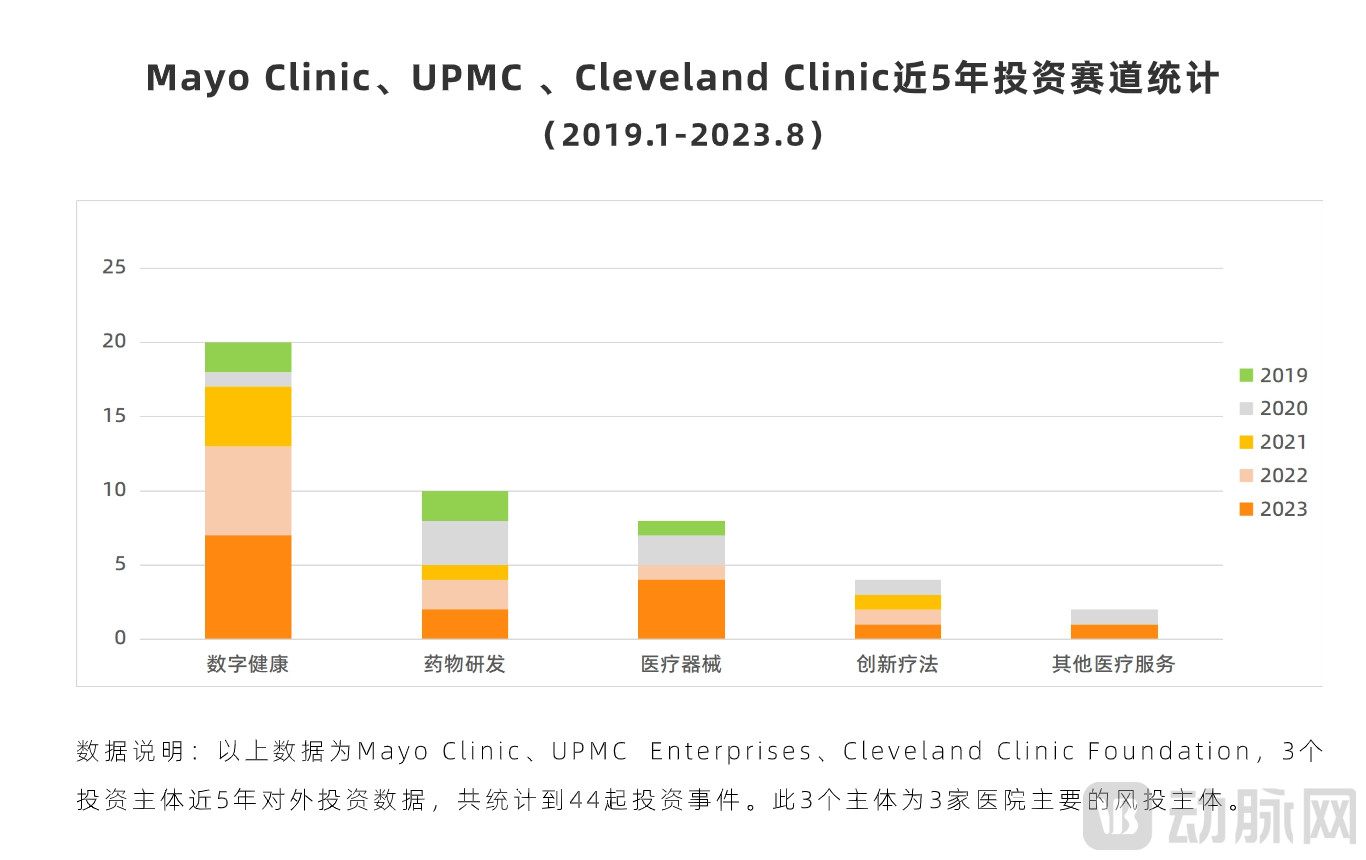
VCBeat compiled the overseas investment data of three world-leading hospitals over the past five years, including Mayo Clinic, UPMC (University of Pittsburgh Medical Center), and Cleveland Clinic, to examine their evolving strategies and insights in the digital health sector.
Data Source: VCBeat, IT Juzi
From the hospital’s perspective, digital health may never have “cooled down.”
Among the 44 recorded investment deals, digital health emerged as the most frequently targeted sector. Over the past five years, the three hospitals made a total of 20 investments in digital health. Moreover, since the pandemic, these three hospitals have continued to increase their investments in the digital health sector.
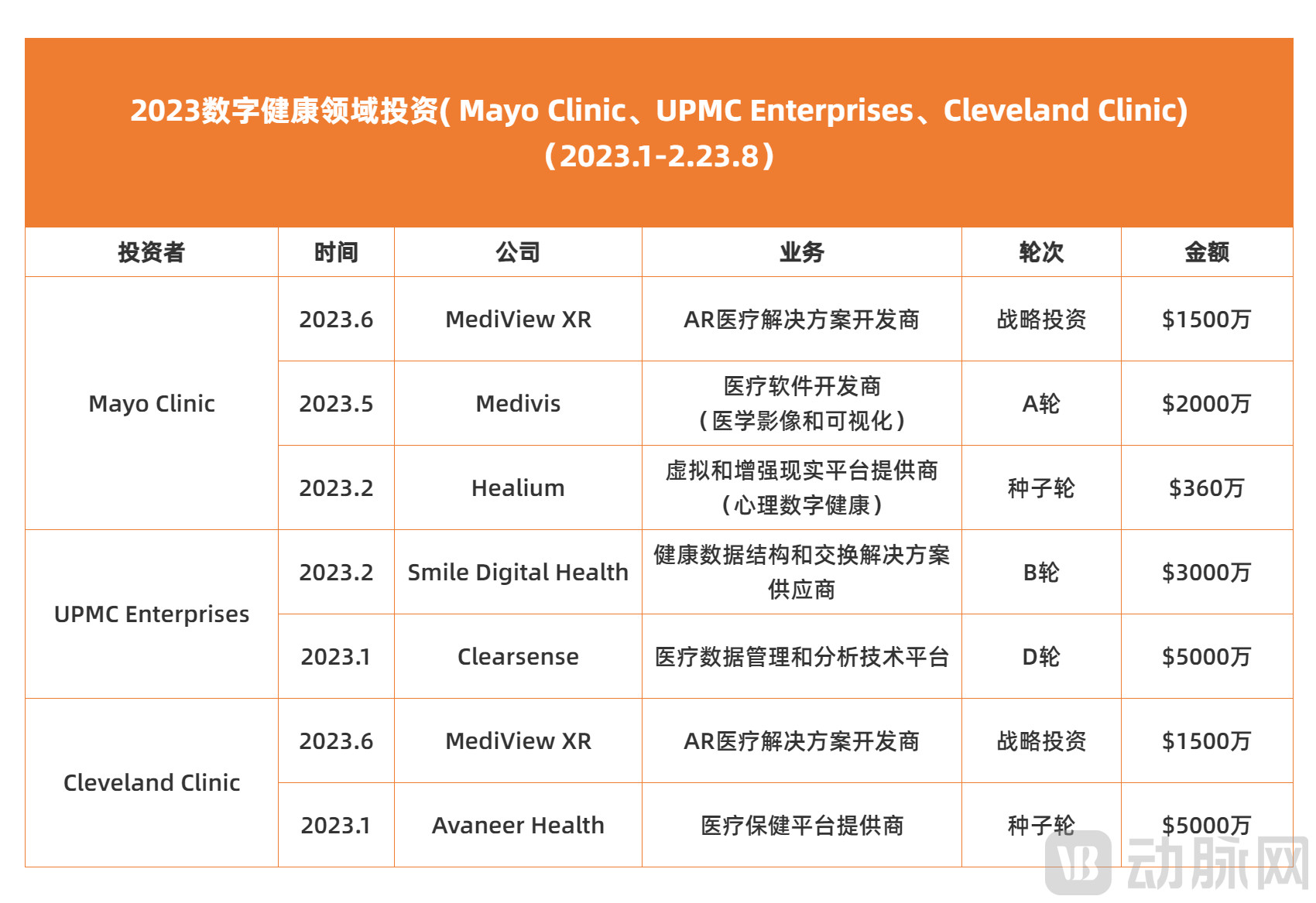
In 2023, three hospitals made a total of seven investments in the digital health sector, representing a slight year-on-year increase in both the number of transactions and the investment amounts.
 Data Source: VCBeat, IT Juzi
Of course, the concept of digital health is very broad. It encompasses all technologies, platforms, systems, devices, therapies, and more that can help consumers improve their lifestyles and health.
The fact that all three hospitals are actively embracing new technologies and applications indicates that the “involution” in informatization and digitalization among large hospitals has long been underway.
According to statistics from Becker’s Healthcare, at least 23 U.S. hospitals have established investment divisions since the onset of the pandemic. An article in mHealth states that these hospital venture capital arms will shape the investment landscape for the future of digital health in the United States.
In the past, this sector was the most “bustling” arena for major tech companies; now, large hospitals are also entering the fray with great ambition.
Data Source: VBData, IT Juzi
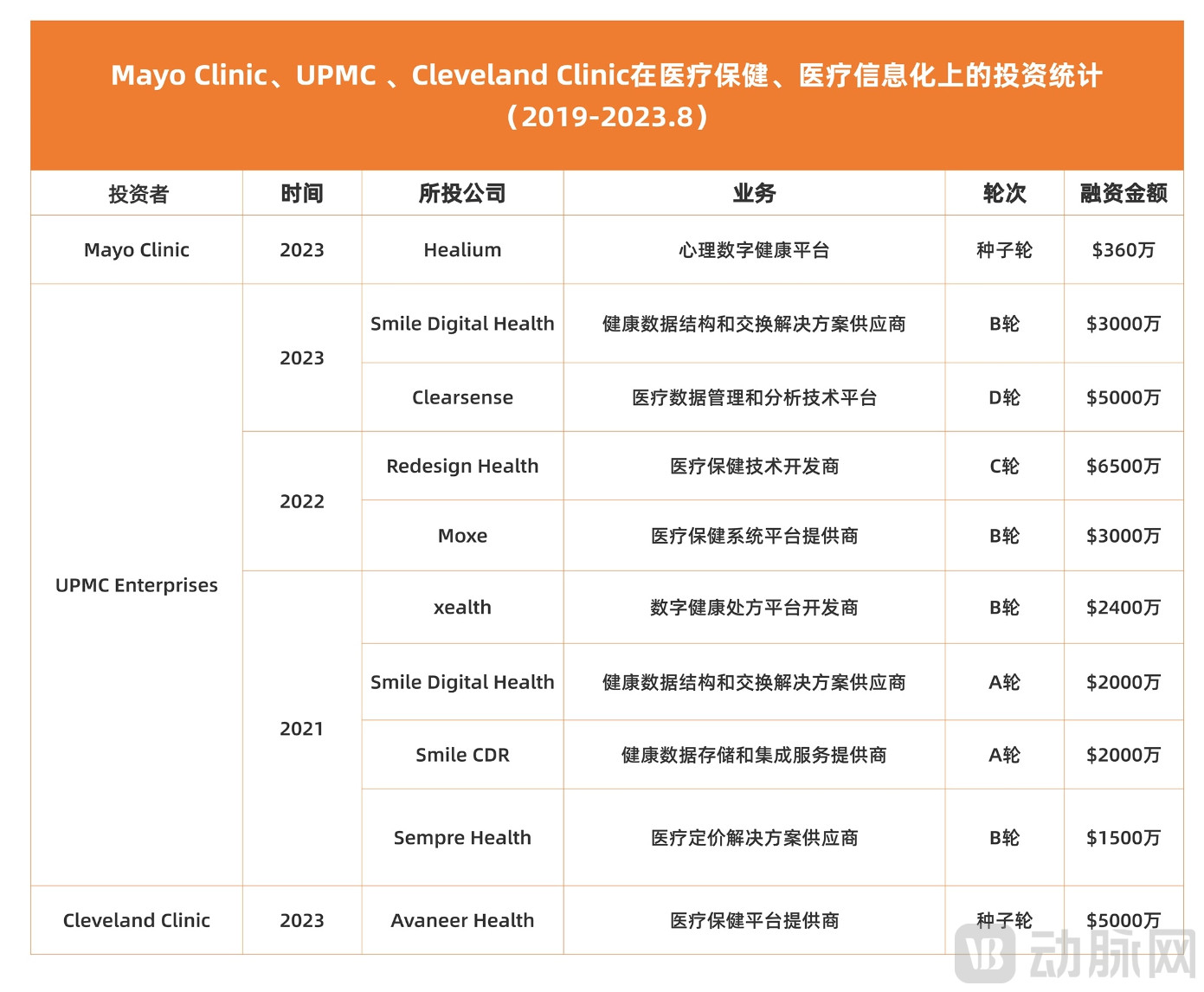
Over the past five years, among a total of 20 digital health investments made by three hospitals, 10 were directed toward informatization and digitalization in the healthcare sector (excluding AI-related projects), accounting for half of the total.
In the first eight months of 2023, the three hospitals made a total of four related investments. Among them, UPMC was a major investor in healthcare informatization, while Mayo Clinic and Cleveland Clinic increased their investments in this field during the first half of the year.
As digital health funding cools, the investment arms of three hospital systems have stated they will focus more closely on “their own mission,” namely technological innovation in primary healthcare. Brent Burns, Executive Vice President of UPMC Enterprises, noted that UPMC will leverage automation and advanced technologies to improve patient access to care and enhance operational efficiency.
In fact, the healthcare industry is one of the largest and fastest-growing sectors in the United States. According to data from the Centers for Medicare & Medicaid Services (“CMS”), healthcare spending is projected to grow at an average annual rate of 5.4% from 2019 to 2028, accounting for approximately 19.7% of U.S. GDP by 2028, or about $6.2 trillion.
From the demand side, significant long-term opportunities in healthcare remain.
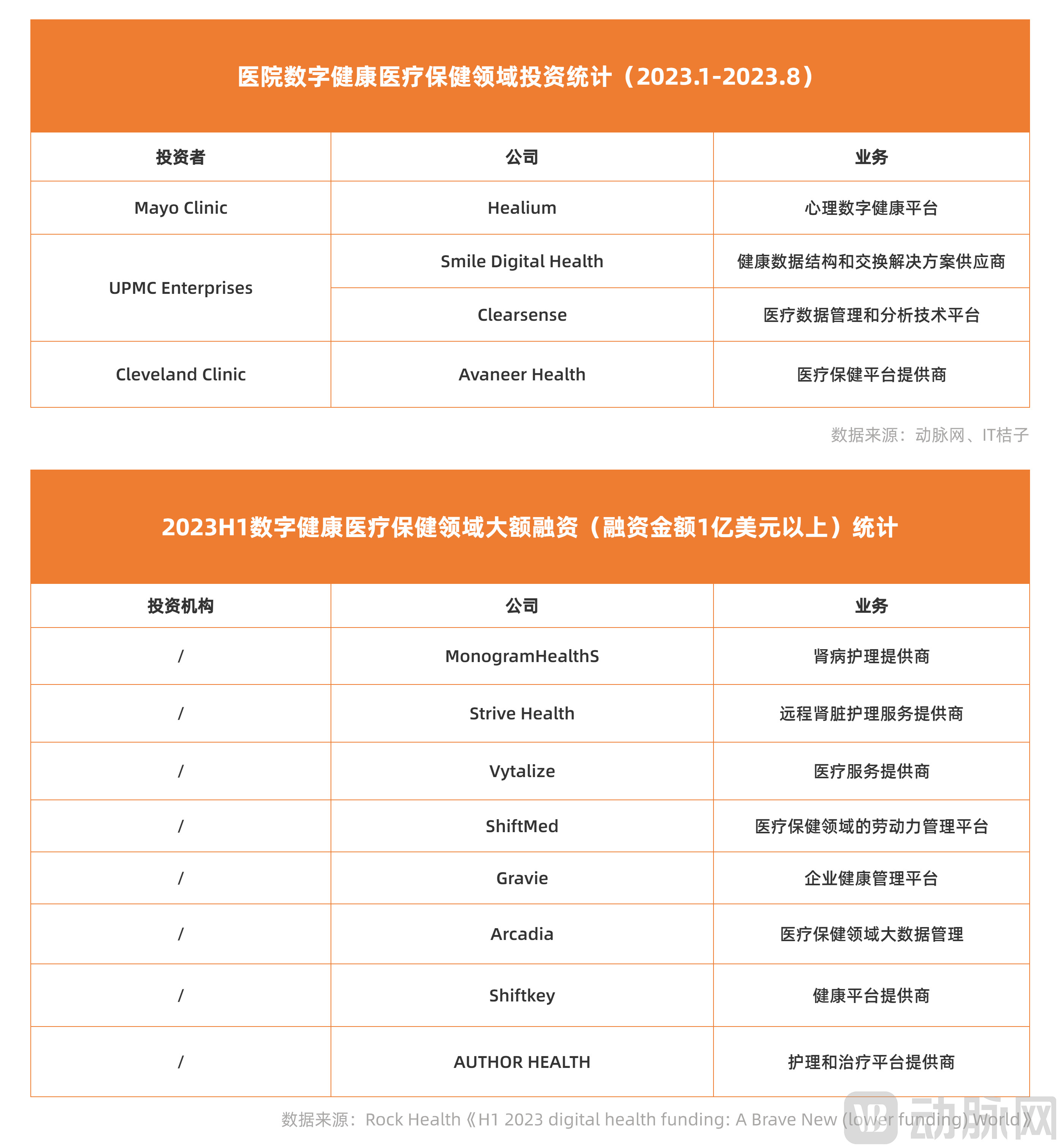
Consequently, it is not only hospitals that are heavily investing; traditional venture capital firms are also eager to cultivate the next star company. According to Rock Health data, there were 12 investment deals exceeding $100 million in the U.S. digital health sector during the first half of the year, eight of which were focused on the healthcare sector, with a total investment amounting to approximately RMB 11.5 billion.
But an interesting aspect emerged.
We compare the four healthcare-related investments made by three hospitals this year with the eight aforementioned investments in this sector exceeding $100 million:Hospitals are focusing their investments on medical big data, while traditional venture capital firms primarily invest in service supply.
Data source: VCBeat, IT Juzi
Well, everyone seems to love “cross-industry” ventures this year.Although hospitals remain optimistic about investing in the healthcare sector, their primary focus has shifted from traditional telemedicine to medical big data.
Specifically, from January to August 2023, UPMC Enterprises made two investments in the digital health sector, both focused on healthcare informatics and big data projects. Notably, its continued investment in Smile Digital Health underscores its “big data ambitions.”
Smile Digital Health is a provider of data structuring and exchange solutions in the healthcare sector. In 2021, UPMC Enterprises participated in Smile Digital Health’s Series A financing round, and it has further increased its investment in the company’s Series B round this year.
The core of this company’s solution is to break down the barriers to the use of clinical data in the healthcare sector, ensuring that clinical data from a single source of truth can efficiently serve all stakeholders in the healthcare ecosystem, including physicians, patients, payers, health authorities, and even developers of related applications.
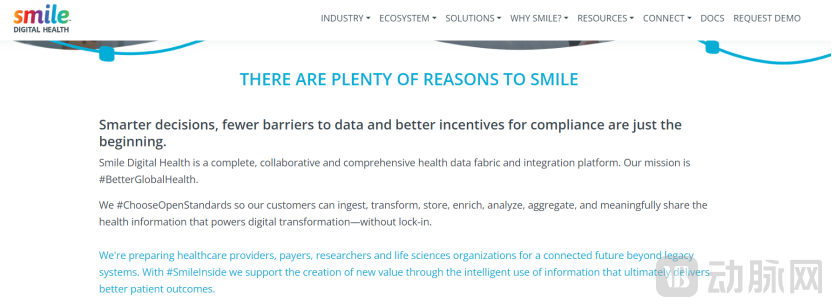
Image source: Smile Digital Health official website
This indicates that UPMC has come to view medical data as a commercial asset.They aim to make medical data resources available to a broader range of institutions, while seeking to lead in application efficiency and establish usage standards within data applications.
Cleveland Clinic shares this consideration.
“Cleveland Clinic Venture General Manager JD Friedland said, ‘We have a wealth of patient data. We aim to build the capacity to manage this data and ensure it is used in a timely, accurate, secure, and ethical manner for intervention purposes,’ said JD Friedland.”He stated that the application of medical big data is a key focus area for Cleveland Clinic in the future.
Among this year’s new investments, Cleveland Clinic participated in the seed funding round of Avaneer Health. The company announced the launch of a decentralized network and platform built around blockchain and FHIR technology (the recognized standard for exchanging healthcare information). The Avaneer Network™ is the first peer-to-peer network in the United States created specifically for the healthcare industry.
Building a socially shared, secure, and accurate medical big data application network may be the next step in healthcare informatization. In this phase, large hospitals are clearly unwilling to remain merely providers of medical data.
Over the past decade, discussions on the landscape of digital health and healthcare have frequently highlighted the “cross-industry” entry of major internet companies as a key topic. So, in the coming decade, what sparks will fly between these large hospitals and the internet sector? We shall wait and see.
Among the three hospitals, UPMC has been the fastest to cross industry boundaries.
In 2021, alongside Smile Digital Health, UPMC also invested in Smile CDR, a health data storage and integration service provider. Its database and platform architecture are also compliant with U.S. FHIR technical standards.
In January 2023, UPMC Enterprises completed its Series D investment in Clearsense, a healthcare data management and analytics technology platform.
In March 2023, after completing its Series B financing, Smile Digital Health announced a partnership with software company BDR Solutions LLC to deploy shareable data structures and systems across the United States for healthcare providers and public sector entities, aiming to improve primary healthcare services.
Judging from the statistics, during the generative AI boom of 2023, the three hospitals appeared collectively uninterested in AI, submitting a “blank sheet” for the first eight months.
But this does not mean that they are conservative about artificial intelligence; on the contrary, they have long been involved in the field and are more concerned with the “efficiency improvement” of artificial intelligence in practical work.
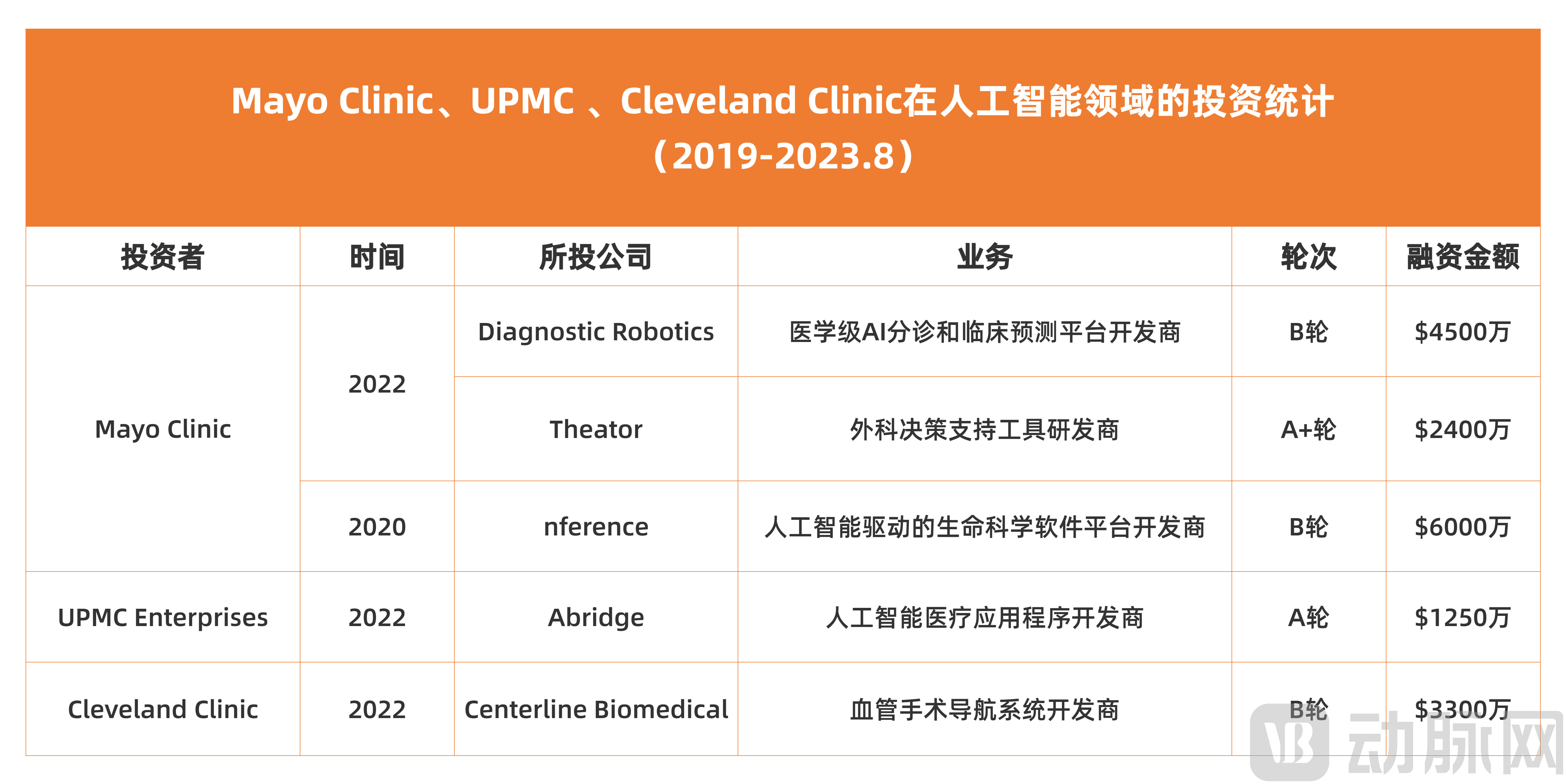
Data Source: VBOrange, IT Juzi
Mayo Clinic views AI as a “superbrain,” valuing its ability to enhance efficiency in prediction, decision-making, and scientific research.
Diagnostic Robotics primarily addresses the challenges of labor and budget constraints in primary healthcare services. It has developed a medical-grade AI triage and clinical prediction platform for health insurers, healthcare providers, and patients. Currently, in addition to collaborating with payers and healthcare institutions in the United States, Diagnostic Robotics has also entered the Israeli market.
Theator is a surgical assistant for surgeons. The company’s independently developed Minutes platform leverages machine learning and provides precise medical imaging to help physicians scientifically determine the most appropriate surgical approach. Furthermore, the platform’s database contains thousands of similar medical cases; even if the system cannot immediately recommend the optimal treatment plan, the information provided enables the medical team to analyze the patient’s condition and reduce the risk of surgical failure.
Nference breaks down information silos in biological knowledge, primarily empowering medical research. In the biomedical field, most biomedical information is unstructured, such as clinical records, scientific literature, pathological images, and electrocardiogram (ECG) waveforms. The biological knowledge embedded within this information was previously interpreted by medical experts; however, nferX, an AI software platform developed by Nference, makes this unstructured medical knowledge computable. nferX can generate relevant solutions in real time and automatically to support drug discovery and development, drug lifecycle management, and precision medicine.
UPMC is more concerned with improving the efficiency of physicians' daily work, tending to shift routine but time-consuming tasks to technology.
Abridge, a medical conversation AI company invested in by UPMC Enterprises, offers products similar to generative AI plugins—audio-based tools designed to record and summarize medical conversations. Currently, Abridge serves as a documentation assistant for physicians, applied in the fields of doctor-patient communication and medical record generation. To date, more than 2,000 physicians and 200,000 patients have participated in its use.
These initiatives, in turn, prompt us to consider: which AI projects do hospitals truly need?
In practice, the implementation of AI in hospitals requires identifying high-frequency, repetitive work scenarios and integrating AI as an auxiliary tool for physicians. This enables doctors to focus on clinical diagnosis, treatment, and scientific research, thereby promoting the healthy development of the hospital’s overall capabilities. Quality, efficiency, and accessibility remain the perennial themes of healthcare services.
Brent Burns, Executive Vice President of UPMC Enterprises, believes that digital health tools are reshaping the healthcare landscape by improving the quality and accessibility of medical services, thereby helping UPMC “move beyond the clinic and into the community.” Consequently, innovative digital health tools represent a long-term investment focus for UPMC Enterprises.
However, major hospitals are not “worshipping” AI. Cleveland Clinic stated, “We aim to support genuine applications of generative artificial intelligence in healthcare, but we will not start throwing money around just to slap an ‘AI’ label on ourselves.”
In fact, in current practices involving large language models in healthcare, major hospitals still prioritize collaborations with leading technology companies.
This June, Mayo Clinic officially announced its partnership with Google, formally integrating generative AI into healthcare.
Under the collaboration agreement, Mayo Clinic will utilize the latest chatbot tools developed by Google Cloud to enhance healthcare workflows and improve clinical efficiency.
This tool is based on the Generative AI App Builder platform, released in March 2023, and is named “Enterprise Search.” It not only enables the rapid development of generative AI-powered applications such as customer service chatbots, product recommendation engines, and customized search engines, but also supports multimodal search across images, text, video, and audio.
Notably, this year’s collaboration between Mayo Clinic and Google is an extension of the “Ten-Year Agreement” signed four years ago. As early as September 2019, Google entered into a 10-year partnership with Mayo Clinic to drive digital transformation. Under the agreement, Mayo Clinic provides patient health data, while Google commits to developing a series of AI-driven healthcare products over the next decade, ensuring strict data confidentiality.
The powerful collaboration between Mayo Clinic and Google also signals the direction of AI development in hospitals: the compatibility of healthcare informatics with large language models.
Unlike traditional venture capital, hospital-based venture capital prioritizes the development of its own business operations over mere financial metrics. Consequently, even when betting on new technologies, it consistently demonstrates a pragmatic approach.
This pragmatism is first reflected in the continuous expansion of physicians’ “toolkit.”
Their approach to AI healthcare projects, as described above, essentially involves investing in “new tools” that are frequently used by physicians in specific clinical scenarios. This year, upon examining the “toolkits” of doctors at these top-tier hospitals, augmented reality (AR) in healthcare has emerged as a new favorite. Among the seven investments made in three hospitals over the first eight months, three were directed toward this field.
Although AR in healthcare is still in its early stages, investment and financing have accelerated this year.
According to VR Planet statistics, the global AR healthcare sector secured five financing rounds (out of a total of 12 deals) in the second quarter of 2023, with a total amount reaching $126 million, leading the AR/VR industry. Towards Healthcare recently released a study showing that the global AR/VR healthcare market size is expected to reach approximately $22.2 billion by 2030.
In the first half of the year, Mayo Clinic invested in two AR healthcare projects to expand surgeons’ “vision” and improve surgical quality and efficiency.
In May 2023, Mayo Clinic, Cleveland Clinic, and GE Healthcare jointly invested in MediView XR, a developer of AR medical solutions. This July, MediView’s HoloLens-based MR medical platform, XR90, received U.S. FDA 510(k) clearance.
The product primarily focuses on diagnosis and minimally invasive surgery, enabling physicians to visualize patients’ internal soft tissues, blood vessels, organs, and skeletal structures in three dimensions based on CT images. It also integrates CT imaging with ultrasound to project three-dimensional holographic images onto the patient’s subcutaneous anatomy, thereby allowing healthcare providers to perform minimally invasive procedures such as tumor ablation and biopsy. Holographic light rays can also be used to track and display the trajectory of surgical navigation instruments.
In June 2023, Mayo Clinic made another investment in Medivis, a provider of AR-assisted surgical solutions. The company’s flagship product, SurgicalAR, focuses on preoperative planning by simulating and testing the efficacy of surgical approaches, among other functions. The platform projects holographic human anatomical data and images directly into the user’s field of view, thereby enhancing surgical efficiency and success rates. Additionally, Medivis’s products are utilized for the education and training of clinicians.
Secondly, pragmatism is also reflected in the approach to new technologies: first, “collaborate before investing,” and second, long-term incubation with continuous reinvestment.
Among the seven digital health financing deals this year, Smile Digital Health represents a long-term reinvestment by UPMC, which served as the lead investor in both its Series A and Series B rounds. Prior to investing in MediView XR, the Mayo Clinic officially announced a partnership with MediView XR in January 2023. Under the terms of the collaboration agreement, MediView XR will provide clinical, technical, and research expertise to the Mayo Clinic.
Industrial Investment: Look Upstream for Technology, Downstream for Demand. Amid this year’s market volatility, healthcare VC and PE firms have collectively shifted “upstream,” flocking to universities to snap up professors and projects in search of security. However, it may be by immersing themselves in hospital settings and returning to clinical needs that investors can truly get back to the essence of investment.
For hospitals, delivering basic healthcare remains their paramount mission, with quality, efficiency, and accessibility serving as enduring priorities—even in developed regions. Consequently, the world’s top hospitals continue to make long-term investments in technological innovations within digital health. Despite the global cooldown in digital health funding this year, they have maintained their investment pace.
With the advancement of digital health, world-class hospitals have reached a certain stage in medical informatization. Their investment strategies have indeed demonstrated a trend toward cross-sector integration between healthcare and internet technology. Compared to traditional venture capital firms, these hospitals may be more proactive in adopting new technologies. This year, their key areas of focus for innovation are medical big data and AR-enabled healthcare.
However, they do not blindly follow new technologies; instead, their investments are driven entirely by integration with their own business operations, reflecting an investment style that is both pioneering and prudent, characterized by a willingness to innovate and rapid, incremental progress.
In fact, investing in digital health is not an end goal, but rather infrastructure.
*References:
mHealth:《Exploring Digital Health Funding Strategies atCleveland Clinic, UPMC》