

OneMedicalData Developer YiJianLian Files for IPO to Address Critical Needs in Clinical Research with AI-Powered High-Quality Medical Data Processing Platform
Undeniably, the field of clinical research in China is undergoing rapid development. In this process, China’s advantages are particularly evident: it possesses the world’s most abundant resources of clinical case data. Against this backdrop, the number of clinical studies has increased twentyfold over the past decade.
However, the challenges facing clinical research are also evident. As the primary subjects of such research, physicians must manage large patient populations, with clinical duties consuming nearly all their time. Attempting to conduct research on disease diagnosis and treatment under these circumstances often proves overwhelming: they lack the time to organize and analyze case data, let alone carry out clinical studies or write manuscripts. This is not an issue faced by only a minority of physicians.
What Kind of Clinical Research Support Tools Do Physicians Truly Need? This Is an Urgent Issue Facing the Healthcare Industry.
“Treating patients transferred from other hospitals, such as those with severe pneumonia or pulmonary infections of unknown etiology, by excluding confounding factors to rapidly and comprehensively assess their clinical status, achieving precise diagnosis of complex and critical conditions, implementing treatment plans that maximize patient benefit, and continuously monitoring therapeutic efficacy and safety, constitute one of our core daily clinical responsibilities,” said Dr. Pan Lei, an attending physician in the Department of Respiratory and Critical Care Medicine at Shanghai Public Health Clinical Center.

Pan Lei, Attending Physician, Department of Respiratory and Critical Care Medicine, Shanghai Public Health Clinical Center
Dr. Pan Lei, with 16 years of clinical experience and seven years of specialized practice in pulmonology and critical care, has been actively engaged in scientific research alongside his clinical duties. To date, he has conducted five clinical studies and obtained one utility model patent related to ECMO.
How Should We View the Relationship Between Clinical Practice and Clinical Research Given Physicians’ Limited Time? Is It Sufficient to Focus Solely on Clinical Practice?
Dr. Pan Lei pointed out, “Clinical diagnosis and treatment are inherently integrated with scientific research, mutually reinforcing each other. Since every patient’s condition is unique, clinicians must adopt a researcher’s perspective to observe and reflect during clinical practice. Taking Chlamydia psittaci pneumonia as an example, patients typically present with acute onset and severe symptoms, including high fever, cough, chest pain, and altered mental status, along with characteristic imaging findings. When encountering patients with similar features in clinical practice, it is essential to determine whether a special infection is present to ensure effective treatment. Analyzing the patterns of disease progression is a key focus of diagnosis and treatment, as well as one of the objectives of research observation. To transform clinical experience into medical knowledge, physicians need to professionally organize and standardize data through logical structuring, including detailed records of the entire course of disease development and clinical features. Obtaining highly reliable and usable case data forms the foundation for conducting clinically valuable research. By scientific methods, experiential knowledge can be systematized and then applied back to clinical practice to generate new diagnostic and therapeutic insights, thereby enabling iterative, cumulative clinical research that ultimately drives the updating and advancement of medical knowledge.”
The value of physicians’ scientific research achievements largely depends on the completeness, reliability, and usability of research data. Although China possesses the world’s most abundant clinical case data resources, physicians must devote considerable time and effort to data curation in order to obtain “high-quality clinical research data,” a process that encounters multiple challenges:
On the one hand, data types are diverse and fragmented, making it highly challenging for physicians to organize them.Patient case data are often scattered across various medical natural language records, such as outpatient notes, inpatient records, nursing documentation, and diagnostic reports. Historically, the lack of a standardized approach to effectively consolidate these disparate data sources has frequently necessitated manual organization by physicians.
On the other hand, the lack of unified data content standards has increased physicians' workload.Even within the same hospital, there are often discrepancies in how different physicians describe the same disease, let alone in multicenter clinical trials. Such variations in content standards frequently necessitate data re-cleaning, thereby further complicating the data curation process.
Another prominent issue is the “additional” problems arising from the inherent complexity of the disease itself.The progression of a patient’s disease often involves characteristic changes in symptoms and signs, which are closely correlated with clinical data such as laboratory indicators and imaging features, as well as adjustments in treatment strategies. However, the processing of evidence chains related to these dynamic characteristics—particularly regarding their temporal sequence and the causal relationships underlying pathogenesis—still relies heavily on manual efforts by researchers. During this process, researchers may encounter numerous challenges, including incomplete diagnostic and therapeutic logic.
For Dr. Pan, the key to encouraging physicians to engage in scientific research lies in obtaining reliable research data that can present correlations among disease characteristics through medical logical analysis, thereby further reducing the research burden on clinicians.
Industry practitioners have not refrained from exploration and experimentation. However, it is evident that existing medical natural language processing (NLP) tools still have room for improvement. Shanghai Yijianlian Medical Technology Co., Ltd. (hereinafter referred to as “Yijianlian”), established in 2019, has identified development opportunities in this area, dedicating itself to addressing the core needs of physicians for data support in clinical diagnostic and therapeutic decision-making as well as in scientific research.
On one hand, the allocation of medical resources in China remains unbalanced, a situation that can be effectively improved through the application of digital tools. Patients often prefer coastal hospitals or Tier 3 Grade A hospitals for diagnosis and treatment, partly because physicians in economically developed regions generally possess higher clinical proficiency. The adoption of digital tools can significantly enhance clinicians’ diagnostic and therapeutic capabilities, thereby further reducing regional disparities.
On the other hand, promoting the high-quality development of public hospitals in China requires the further application of digital tools. To further enhance the quality of hospital development, China mandates that hospitals strengthen both basic and clinical research while meeting the clinical needs for major diseases. Simultaneously, hospitals are expected to achieve scientific, standardized, and refined operational management to improve efficiency and reduce costs. This undoubtedly necessitates the integration of digital tools that are better aligned with clinical applications and scientific research.
andHigh-quality case data play a crucial role in both clinical diagnosis and treatment, as well as scientific research.
During its exploration, YijianlianThe oneMKE digital medical knowledge service architecture, built upon multidisciplinary logical frameworks, supports the deep restructuring and application of oneMedicalData healthcare data. It enables computers to understand and organize comprehensive medical data—including medical records, examination reports, treatment records, health records, and clinical research literature—with the proficiency of skilled physicians. This endows the data with high reliability and usability, characterized by multidimensional medical logic and deep standardization, thereby addressing challenges in medical data processing and quality while creating greater data value.
For example, physicians can transform the full-disease-cycle data of patients with severe pneumonia and underlying diabetes—including clinical manifestations, pharmacological treatments, and laboratory and diagnostic test results—into standardized data structured around disease diagnosis and treatment logic through this deep reconstruction process, thereby enabling storage for subsequent analysis and research.
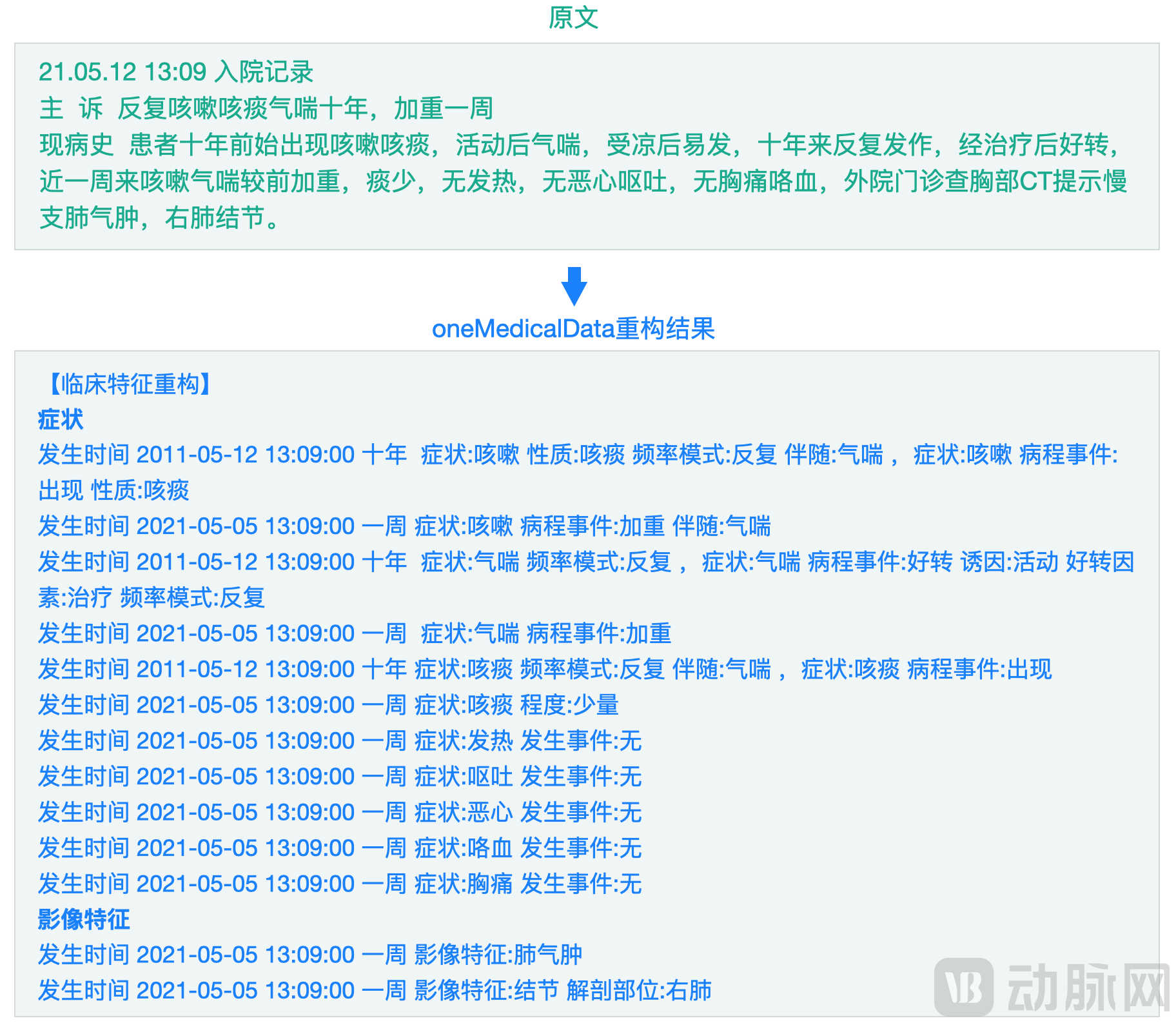
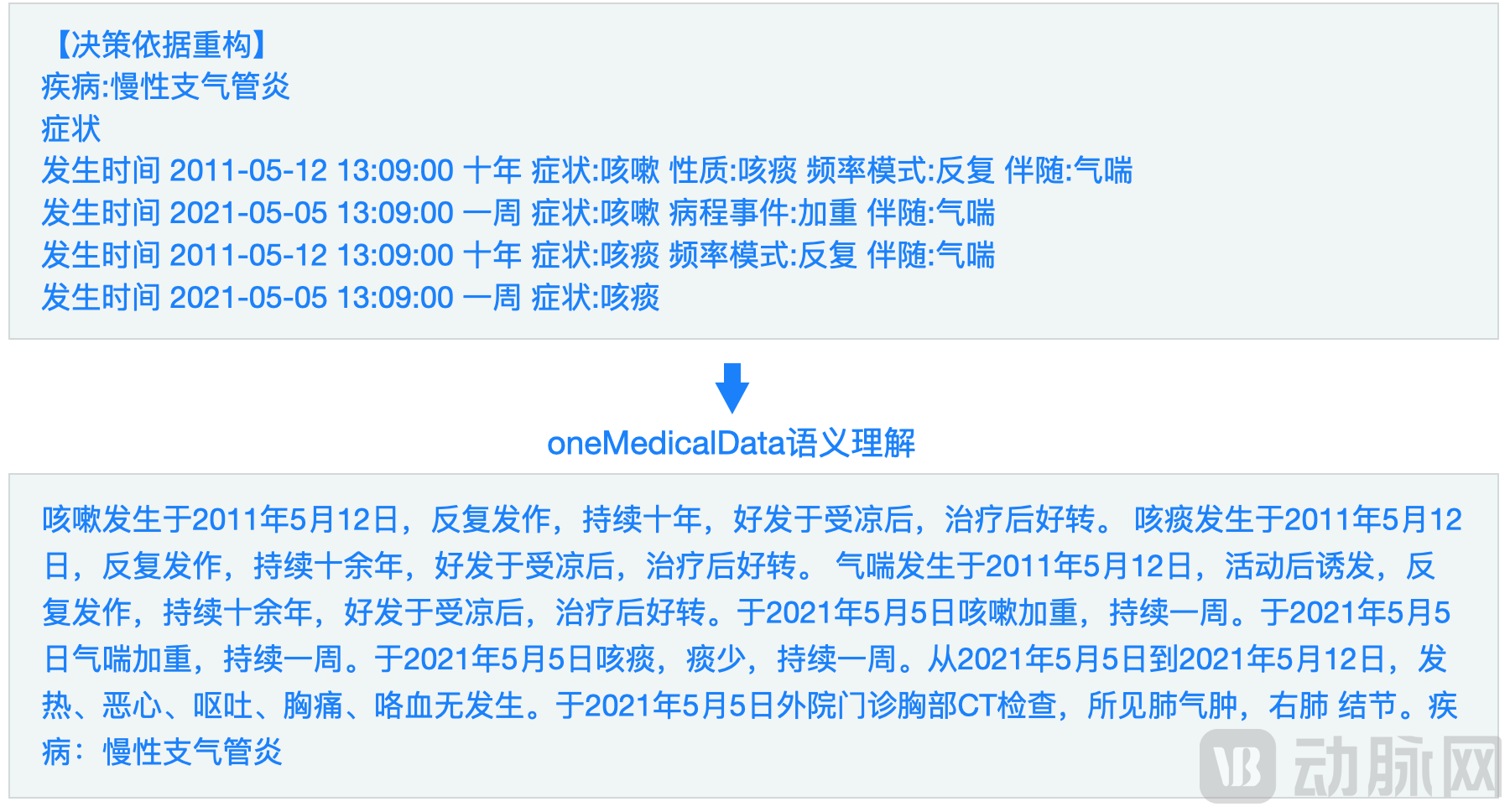
Deep Reconstruction of Medical Data with oneMedicalData Based on the oneMKE Knowledge Engine
In fact, the emergence of digital analysis tools such as AI-assisted imaging diagnosis has, to some extent, helped physicians improve the efficiency of detecting certain diseases. However, this type of assistance has limited clinical application value, as it is often confined to correlating specific imaging features with disease diagnoses, such as identifying small pulmonary nodules. In contrast, imaging-based diagnosis of pulmonary diseases requires a comprehensive analysis of multiple imaging features and associated clinical manifestations. Whether in clinical practice or scientific research, these digital tools often fail to meet the needs of physicians.
“Experience summarized from years of clinical observation by physicians must undergo rigorous scientific validation to be transformed into high-value medical knowledge. This requires standardizing and logical structuring of empirical insights, followed by verification through clinical studies to elevate the level of evidence, thereby achieving knowledge translation and value creation from individual clinical experience. Medical logic plays a crucial role in this process. Physicians can build clinical decision-making frameworks—such as predicting disease subtypes, assessing severity risks, evaluating condition status, and determining treatment directions—based on case data characterized by multidimensional medical logic and high standardization. This constitutes the core value of diagnostic assistance tools. However, some current tools still need improvement in data standardization and medical logic processing,” noted Dr. Pan Lei.
The initiative undertaken by Yijianlian is based on restructuring case data through the lens of clinical reasoning, thereby assisting physicians in transforming their diagnostic and treatment experience into medical knowledge and establishing their own proprietary knowledge engine, iMKE. To meet the complex data processing requirements within hospitals,Currently, Yijianlian has achieved deep restructuring of various types of medical natural language data, including medical records, examination reports, treatment records, nursing records, and remote health consultations. It also supports the real-time proactive identification of patient cases that meet complex screening criteria for clinical recruitment and disease research.
For example, the clinical experience in diagnosing and treating Chlamydia psittaci pneumonia, as previously mentioned, can be presented through standardized and logical data processing that captures changes in patients’ symptoms, signs, laboratory findings, and imaging features after onset. Furthermore, case cohorts can be selected for study based on criteria such as individual and clinical characteristics, thereby further validating the effectiveness of diagnostic and disease-status decision-making models during clinical practice. This approach effectively “upgrades” clinical experience into knowledge for disease diagnosis and condition assessment.
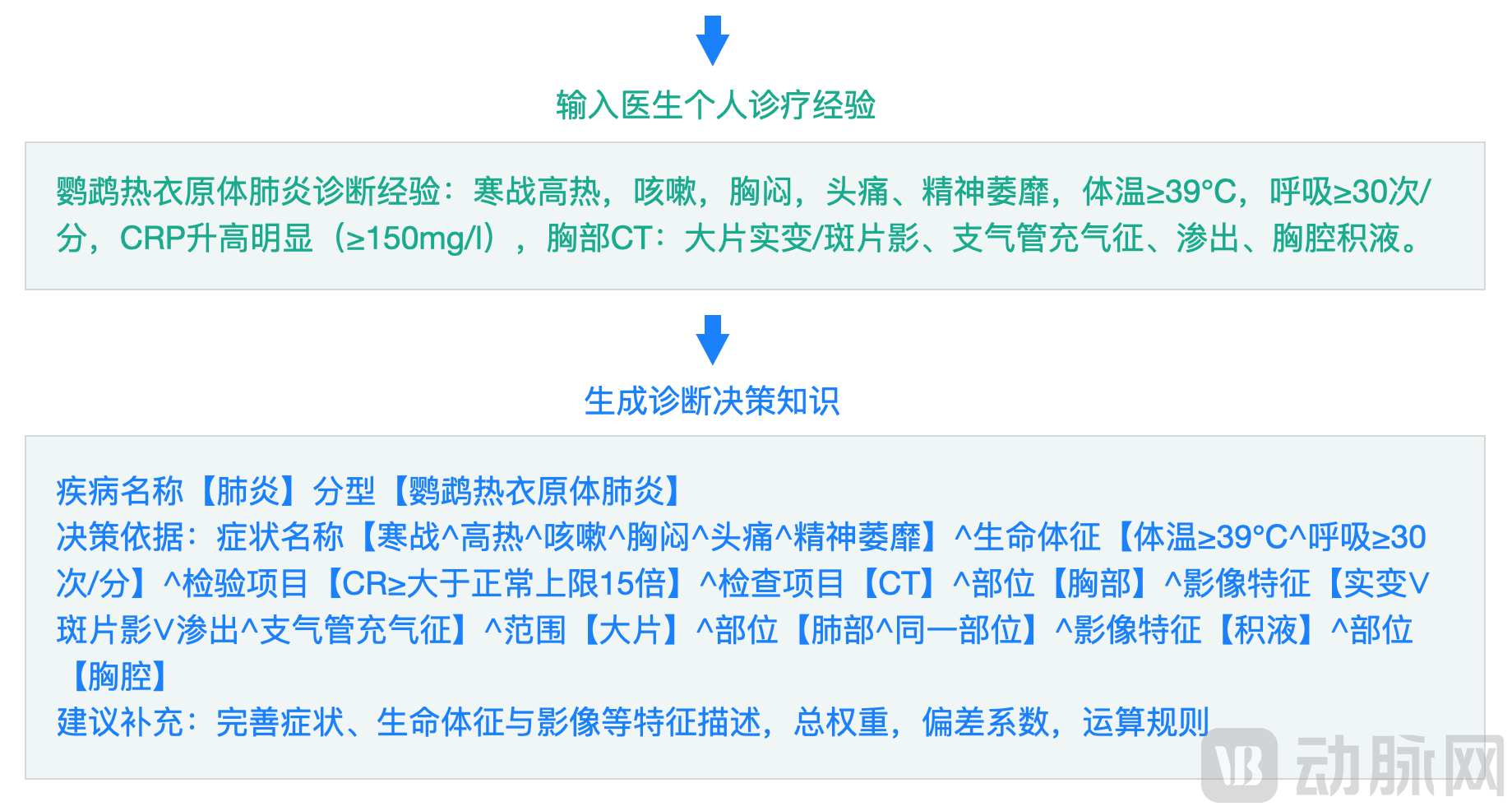
Translation of Diagnostic Experience into iMKE Applications
In this process, Yijianlian undoubtedly places significant emphasis on the “rules” for restructuring processes.
On the one hand, it ensures data consistency, high reliability, and medical logicality.For instance, each data point possesses attributes such as multi-temporal and multi-source characteristics to ensure data reliability and traceability; it enables the identification of the strength of associations between patient-specific clinical features and the triggers, etiologies, and progression of diseases. More importantly, by reconstructing fragmented data, it can comprehensively and accurately describe case characteristics, clinical features, disease progression, diagnostic dynamics, and treatment processes, thereby making case data more accessible for understanding, analysis, and utilization.
On the other hand, it emphasizes the correct handling of data during the reconstruction process.During manual data processing, anomalies are often identified and addressed through appropriate data handling. The digital tools provided by Yijianlian can achieve similar outcomes. Furthermore, they place significant emphasis on data traceability, structuring, and standardization.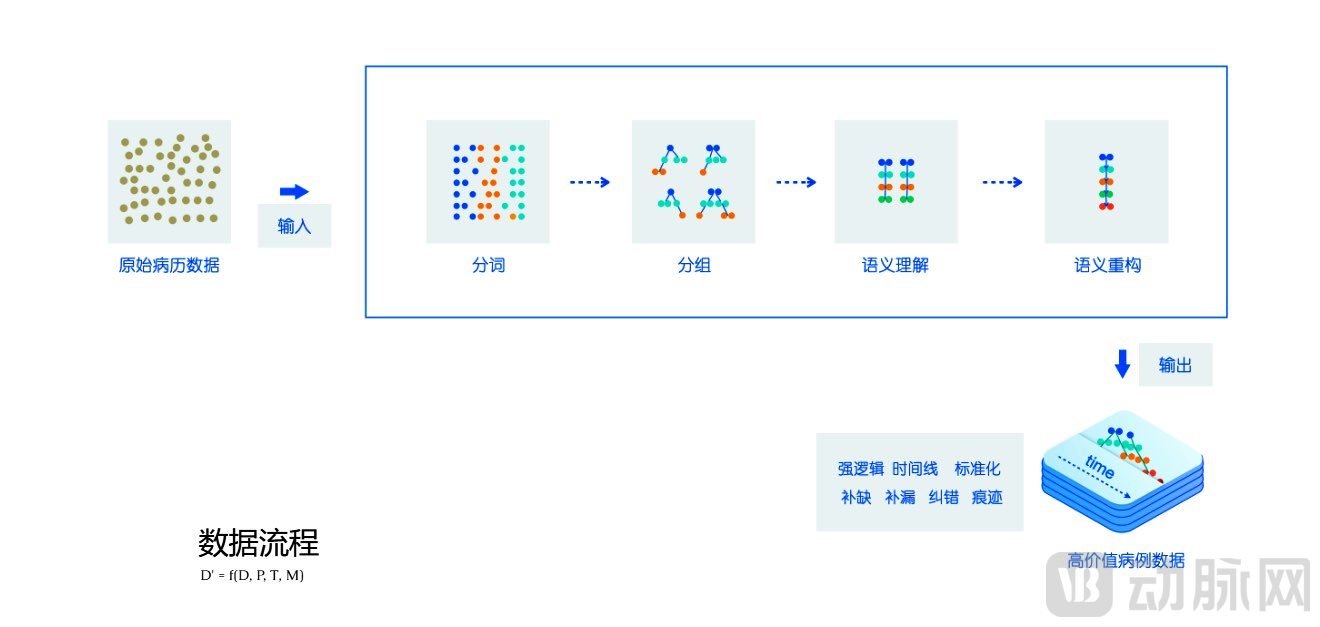
oneMedicalData Medical Natural Language Deep Reconstruction Process
Currently, Yijianlian has also achieved certain results in its exploration of data processing.
In clinical practice, the oneMKE medical knowledge engine service and the oneMedicalData deep medical data reconstruction tool, both independently developed by Yijian Lianyi, can better assist physicians in promptly grasping patient condition data.Even when a patient’s condition changes, the system can reasonably prompt clinical diagnostic support items based on medical logic to better determine the patient’s disease. Alternatively, when abnormal physiological indicators occur, such as liver injury, it can identify potential influencing factors, facilitating physicians in making effective decisions to control risks and thereby enhancing the reliability of clinical diagnosis and treatment services.
In research, real-world studies require full traceability of data sources to ensure data authenticity.In contrast, data obtained through manual searches and curation has inherent limitations in terms of reliability and source traceability. By leveraging Yijianlian’s oneMKE and oneMedicalData, physicians can better transform patient clinical features scattered across various medical records into data with complete diagnostic and treatment logic, along with attributes for sourcing processes and timelines. This enables the rapid identification of study cases meeting complex screening criteria and facilitates automatic cohort stratification for subsequent research analysis.
Furthermore, Yijianlian also considers how to better support physicians’ scientific research in a multi-center clinical setting.On one hand, the adoption of oneMedicalData can better reduce errors caused by previous manual transcription, further standardizing analytical results. On the other hand, leveraging oneMKE’s ability to understand clinical features from case data of diverse sources enables consistent and logical processing of research data, thereby comprehensively enhancing data quality and research efficiency to better support high-value clinical studies.
How to Maximize the Value of Digital Tools?
This may involve the selection of clinical application scenarios. For physicians and patients, the most urgent need is undoubtedly to better address diseases that pose the greatest threat to life and health, such as severe infectious diseases or cancer. Taking lung cancer as an example, its high incidence and mortality rates impose a substantial burden on the national economy, making it one of the priority disease areas for targeted intervention.
Yi Jianlian has undoubtedly taken this demand into account, taking the lead in focusing on critical diseases and lung tumors in departments such as Respiratory Medicine and Critical Care Medicine, while gradually expanding to other related specialties. The ability to develop and deliver the oneMKE Medical Knowledge Engine and oneMedicalData deep medical data reconstruction services is attributable to Yi Jianlian’s senior team, which boasts over 20 years of experience in the healthcare industry. Currently, while continuing to expand its presence in the hospital market, Yi Jianlian is further advancing product updates and iterations.
“More complete, reliable, highly standardized, and deeply logical case data form the foundation for supporting physicians’ clinical diagnostic and treatment decisions as well as medical research, and serve as the core driver enabling physicians to deliver high-value healthcare services,” stated Dr. Pan Lei. We also look forward to the emergence of more high-quality case data analysis tools that place greater emphasis on medical logic, such as those developed by Yijianlian, which will further transform the entire healthcare industry and benefit patients.