

Harvest Capital Launches RMB 3 Billion Healthcare Growth Fund IV Amid Market Downturn
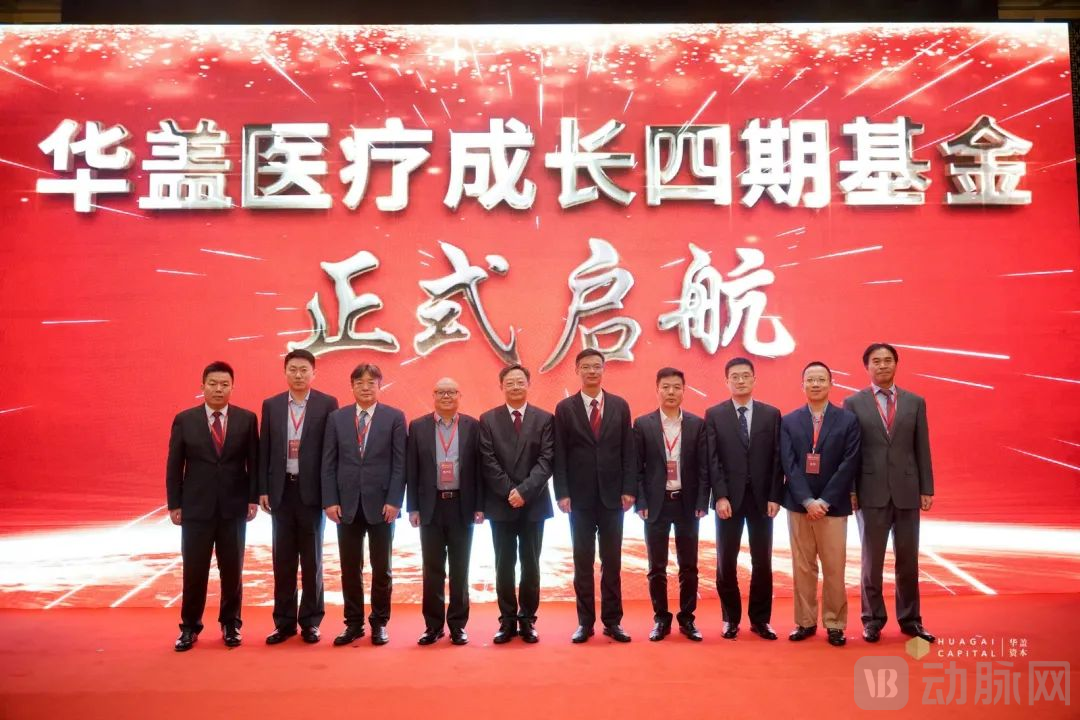
On the occasion of its 11th anniversary, Huagai Capital held a closed-door seminar on the landscape of the healthcare industry, at which it announced the official launch of the Huagai Capital Healthcare Growth Fund IV. The new fund is registered in Linping District, Hangzhou.
It is understood that the Huagai Capital Medical Growth Fund IV has completed its first closing, with a signed commitment of RMB 1.5 billion at the first closing, and it is expected thatThe final scale shall be no less than RMB 3 billion.. The fund has continued to receive support from new and existing investors, including government guidance funds, insurance companies and other financial institutions, renowned funds of funds, and listed healthcare companies.
Founded in 2012, Huagai Capital currently manages assets exceeding RMB 20 billion, focusing on private equity investments in the healthcare and technology sectors. To date, Huagai Capital has invested in over 160 projects, with 26 portfolio companies achieving public listings, thereby establishing an extensive investment footprint.
Total scale exceeds RMB 3 billion
Huagai Capital’s New Fund Is Here
The fund will continue to focus on four key sectors: biopharmaceuticals, medical devices, healthcare services, and digital health. In addition, the new fund is expected to complete its final closing in early 2024, with a final size of no less than RMB 3 billion.
To date, Huagai Medical Growth Fund has established a total of four funds, with the first three launched in 2015, 2017, and 2019, respectively. In addition, this marks Huagai Capital’s second new healthcare fund this year; in the first half of 2023, Huagai Capital also co-established the Huagai Ningyuan Healthcare Fund of Funds, with a total size of approximately RMB 1 billion.
Earlier, in 2021, Huagai Capital established the “Capital Big Health Fund,” targeting a size of RMB 3 billion and focusing on PIPE investments. In January 2022, Huagai Capital completed the fundraising for its early-stage healthcare fund, with a scale of approximately RMB 800 million. Both funds received support from professional investors, including insurance companies and other financial institutions, listed companies, government guidance funds, and renowned funds of funds.
With this, HuaGai Capital has established a "full-stage + full-industry-chain" healthcare investment layout covering early-stage funds, growth funds, PIPE funds, and funds of funds (FOFs), becoming one of the largest healthcare industry fund managers in the sector. The launch of HuaGai Healthcare Growth Fund IV undoubtedly further bolsters HuaGai’s healthcare fund firepower.
In fact, as early as 2009, core members of the Huagai Medical team established China’s first RMB-denominated healthcare fund. Over the past 15 years, the Huagai Medical team has continued to deepen its expertise in the sector, fostering a robust healthcare ecosystem. Huagai Medical’s numerous funds have attracted capital from approximately 50 listed healthcare companies as limited partners (LPs), including Liaoning Chengda, Fosun Pharma, Tigermed, Joinn Laboratories, Pien Tze Huang, JD Health, and Aier Eye Hospital.
Today, Huagai Medical Fund has a direct investment team of approximately 30 professionals and has cumulatively invested in nearly 100 healthcare companies, including Kangtai Biological Products, Hygeia Healthcare, Jianhui Information, MGI Tech, Henlius Biotech, MicuRx Pharmaceuticals, Rendu Biology, Yiming Cell Therapy, Mozhuo Biotechnology, Ruilaipu Medical, and Qitan Technology.
Notably, Huagai Capital’s new fund has been established in Hangzhou.
Hangzhou, located in the lower reaches of the Qiantang River, at the western end of Hangzhou Bay and the southern terminus of the Beijing-Hangzhou Grand Canal, is one of the key central cities in the Yangtze River Delta and a hub city of the G60 Science and Technology Innovation Corridor. Although renowned for its e-commerce sector, Hangzhou has developed robust industrial clusters primarily focused on Internet Plus, financial services, life and health, and high-end equipment manufacturing.
This May, Hangzhou unveiled three major RMB 100-billion funds. The city established three RMB 100-billion fund-of-funds—the Hangzhou Science and Technology Innovation Fund, the Hangzhou Innovation Fund, and the Hangzhou M&A Fund—and promoted the formation of a “3+N” Hangzhou fund cluster with a total scale exceeding RMB 300 billion, which includes the “life and health” industry, one of Hangzhou’s five pillar industries.
As the place of registration for Huagai Medical Growth Fund Phase IV,Linping DistrictIt also serves as Hangzhou's eastern gateway to Shanghai and Jiangsu.
Data shows that Linping District in Hangzhou is located on the southern wing of the Yangtze River Delta urban agglomeration. In recent years, its medical and health industry has experienced rapid development, establishing not only the province’s sole high-tech industrial park for biopharmaceuticals but also introducing numerous platforms such as the Zhejiang University Institute of Innovation in Basic Medical Sciences and the Linping (Denovo) Global Life Science Technology Innovation Center.
The area is home to nearly 500 companies spanning the entire healthcare industry chain, including bioengineering, pharmaceutical manufacturing, and medical services, with prominent enterprises such as Beta Pharma, Minsheng Pharmaceutical, and Hu Qing Yu Tang emerging from this cluster.
When venture capital thrives, industries cluster. It is foreseeable that an increasing number of healthcare investors and startups will converge here.
Is Healthcare Investment Still a Golden Industry?
Looking back on the past decade, China’s pharmaceutical innovation has achieved remarkable success, driven in no small part by venture capital (VC) and private equity (PE). However, over the past two years, both the healthcare industry and healthcare investment have undergone profound transformations. Amidst this complex and volatile market environment, both healthcare entrepreneurs and investors are facing significant pressure.
Medical Investment Slows Down. Data shows that the total financing and investment in China's healthcare industry amounted to approximately RMB 41.1 billion in the first half of 2023, representing a year-on-year decline of 36.57% compared with RMB 64.8 billion during the same period last year. Compared with the five-year average of RMB 59.62 billion for the first half of the year, the figure dropped by 31%.
Having witnessed the ups and downs of healthcare investment in China, Xu Xiaolin, Founding Partner and Chairman of Huagai Capital, believes that biomedicine and the broader healthcare sector in China are still at a stage of low-level yet rapid development. “Despite the adjustments over the past two years, it remains a golden industry.”
He judges that the industry still lacks publicly listed companies with global competitiveness and a market capitalization of $30 billion, so from this perspective, China’s pharmaceutical industry is still in its early stages of development.
Meanwhile, although innovative drugs have experienced a significant decline since last year, whether in the primary market or the secondary market, the PE valuation of the entire biopharmaceutical sector is basically approaching the levels of 2000 or 2010, which can be considered the lowest point of PE valuation since the financial crisis of 1998. From the perspective of the entire secondary market,Innovative drugs’ valuations have likely reached a point of recovery.
China’s innovative drug development still has a long and arduous journey ahead. As noted by the guest speaker at Huagai Capital’s recent closed-door seminar on the medical industry landscape—Academician of the Chinese Academy of Sciences and former President of Tongji UniversityPei GangIntroduction: The United States invests $45 billion annually in biomedical R&D through the NIH alone, excluding the substantial contributions from major private foundations and pharmaceutical companies. This funding has laid the foundation for biomedical advancements in the U.S. and worldwide. To develop first-class innovative drugs, we also require significant and diversified capital investment to drive basic research, translational research, and industrial development.
The pharmaceutical industry is highly influenced by policy; investors should align with trends and seek directions with the least policy resistance. Academician of the Chinese Academy of Engineering, Academician of The World Academy of Sciences for the Developing World, Researcher at the Shanghai Institute of Materia Medica, Chinese Academy of SciencesDing JianProposal: “It is crucial to integrate sci-tech finance into the biopharmaceutical value chain, ensuring not only investment appetite but also clear exit pathways.”
Does China’s biopharmaceutical sector still hold investment value? Academician of the Chinese Academy of Engineering, Professor at the School of Life Sciences, University of Science and Technology of ChinaTian Zhigang“It is believed that in recent years, China’s life sciences sector has risen globally, boasting strong reserves of strength and a robust influx of returning talent, with bright prospects ahead. ‘The overheated investment climate five or six years ago led to a rebound and correction, ushering in a capital winter. However, I firmly believe that if the issue of capital exit channels is resolved, China’s biopharmaceutical industry still holds significant promise for investment.’”
Co-CEO of Fosun InternationalChen QiyuThis indicates that healthcare investment is currently at a cyclical trough. It is precisely the existence of such cycles that gives rise to companies with competitiveness, persuasiveness, and appeal. He believes that after undergoing the trials of this cycle, China will see the emergence of new drugs valued at the hundred-billion-yuan level, which is an inevitable process of evolution.
Markets have their peaks and troughs. A senior expert in the healthcare industry noted that the biopharmaceutical sector has established a solid industrial foundation after years of development. “Innovative drugs launched in recent years account for 14% of the global total. Although achieving global leadership in a short period is no easy feat, we believe that the day when we will deliver first-in-class novel drugs is just around the corner.” Whenever an industry expands too rapidly, bubbles are inevitable; yet these bubbles will eventually burst, marking a process of survival of the fittest.
So, when will the spring of healthcare investment arrive? Xu Xiaolin shared a pattern: every two to three years that the industry’s overall index declines, it is generally followed by a two- to three-year rise. “Looking at historical trends, sectors within the healthcare industry that have experienced sharp declines over the past two years tend to see relatively strong rebounds in the future. This is a consistent historical trend. Therefore, my personal assessment is that the healthcare sector is poised for an upturn after bottoming out by the end of 2023.”
Perhaps the golden bottom for healthcare investment has arrived.