

Altos Labs Files for IPO Following $3 Billion Angel Round, the Largest in Life Sciences History

AIMIRA
Medical Aesthetics Anti-Aging Artificial Intelligence Platform

BioTrack Capital
Healthcare Investment Institutions
CBC Group
Diversified Alternative Asset Management Institution

Gaorong Ventures
Venture Capital Institution

HongShan
Business Consulting, Enterprise Management Consulting Investment Institutions

Retro
Developer of Cell Reprogramming, Autophagy, and Plasma-Inspired Therapies

iCamuno
Developer of Universal Cell Therapies

Altos Labs
Anti-aging Technology R&D Provider

Fumeilei Medical
R&D Developer of Medical Aesthetic Devices
Aging is an enduring theme throughout human development and a focal point of industrial and capital interest.
For instance, at the beginning of last year, news of a rare, sky-high financing round sent shockwaves through the venture capital and startup community: At that time,Altos Labs, an anti-aging company founded just one year ago, secured $3 billion in angel financing, equivalent to nearly RMB 22 billion., making it the largest financing round in the life sciences sector to date. The investor lineup behind it is particularly star-studded, including Israeli billionaire Yuri Milner and Jeff Bezos, founder of Amazon and the world’s former richest person.
Market enthusiasm was thus ignited. According to the VCBeat Orange Database,From January 2022 to September 2023, more than 30 companies in the anti-aging sector secured financing., with total financing exceeding RMB 25 billion.Its backers include a host of renowned institutions such as Alpha Wave Ventures, BioTrack Capital, Redhill Capital, Gaorong Ventures, Magic Stone Alternative Investment, HongShan, CBC Group, Panlin Capital, Saidesi Group, Shenzhen Capital Group, Yifeng Capital, and Yunfeng Capital.
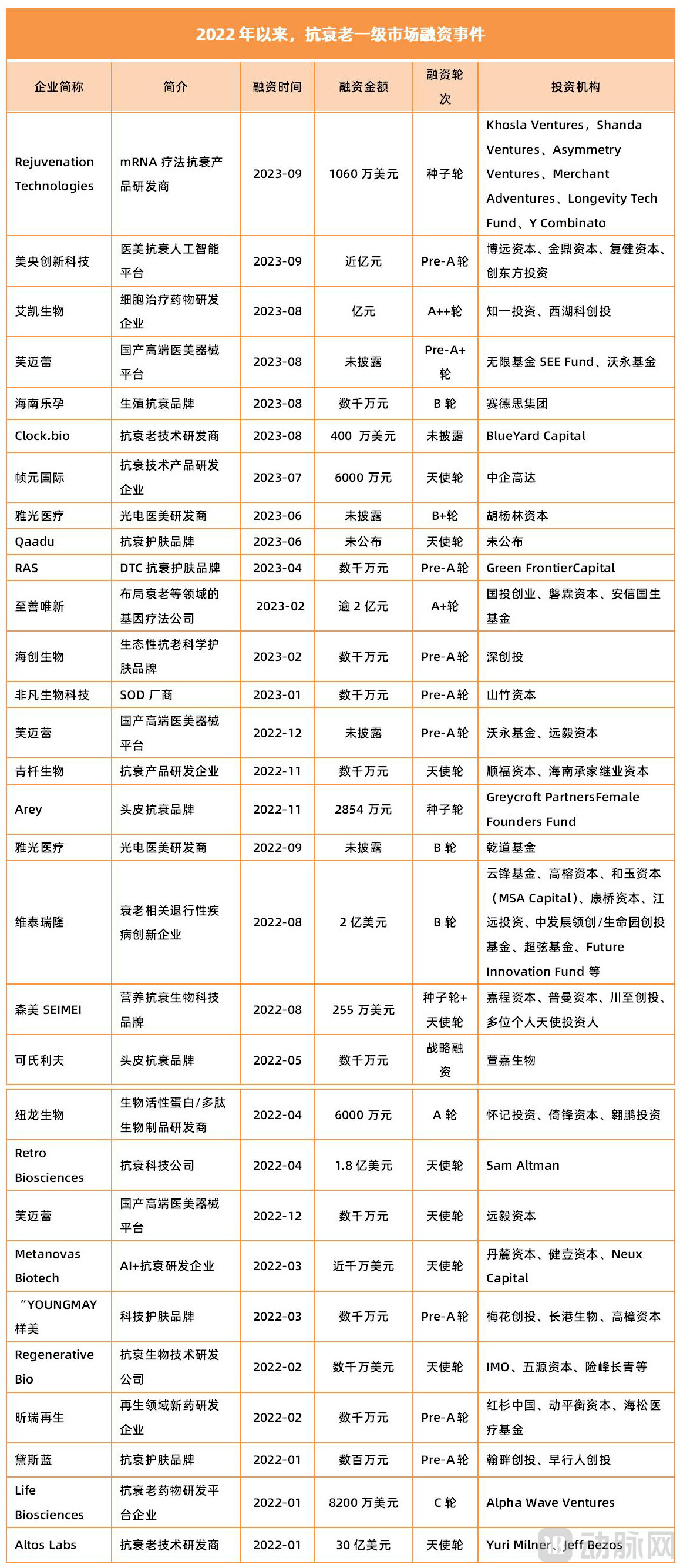
(Data source: Arterial Orange Database; Graphic by VCBeat)
Moreover, in the face of the vast potential of the anti-aging market,Google even stepped in directly to establish California Life., the company aims to leverage its parent company’s cloud services and data centers to mine useful information for research on aging and age-related diseases.
Tech Titans and Industry Giants Enter the Fray as Billions Pour In: How Far Along Is the Anti-Aging Narrative?
Prolonging life and preserving youth constitute the most captivating chapter in the narrative of anti-aging. Consequently, anti-aging has become a trillion-dollar investment “gold mine.”
“Aging is a natural process of biological evolution and is not itself a treatable disease. However, delaying aging has significant social and commercial value and has been proven feasible. Consequently, an increasing number of companies have been strategically positioning themselves in the anti-aging sector in recent years,” investor Wu Dan told VCBeat.Drugs, therapies, and other innovations continuously emerging on the supply side are sustaining a vast and rapidly growing market.
Data supports this trend. According to a report by iiMedia Research, the global anti-aging market size grew from $139.5 billion in 2015 to $216 billion in 2021 (approximately RMB 15.6 trillion), maintaining a high growth rate. Based on trend forecasts, the global anti-aging market size is expected to exceed $300 billion by 2025, equivalent to over RMB 2 trillion.
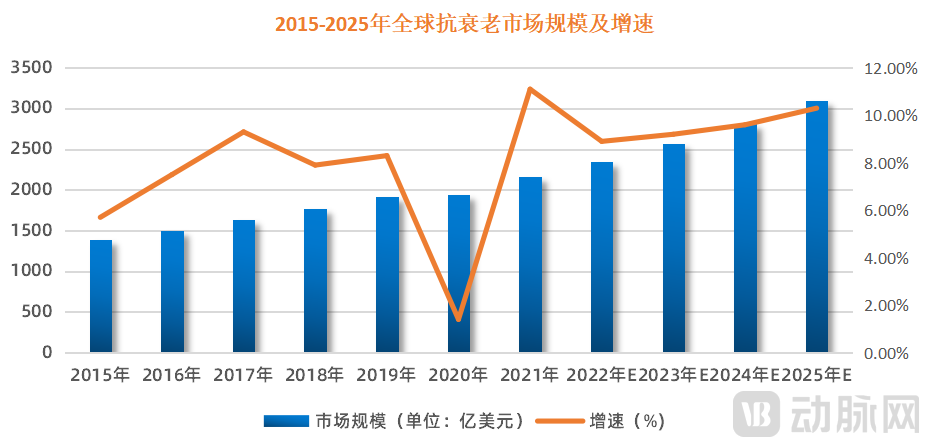
(Data source: iiMedia Research; Chart by VCBeat)
So, how is the industry thinking about and strategizing around the “gold mine” of anti-aging?
To understand this issue, the first question to address is what influences aging.
CB Insights' report shows that,There are nine factors influencing aging: genomic instability, telomere attrition, epigenetic alterations, loss of proteostasis, deregulated nutrient sensing, mitochondrial dysfunction, cellular senescence, stem cell exhaustion, and altered intercellular communication.
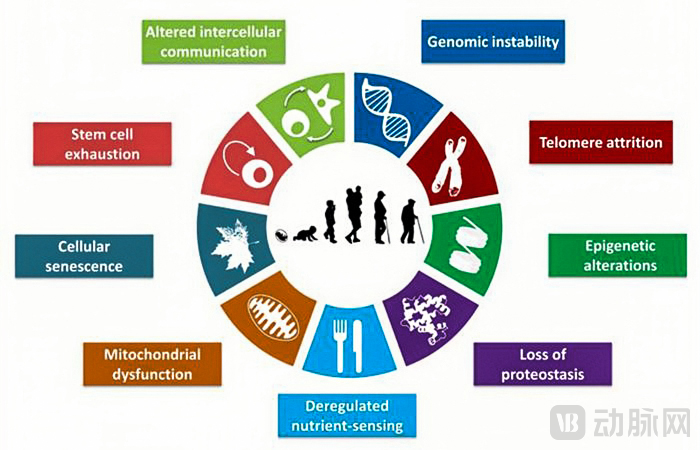
(Factors Associated with Aging Image Source: CB Insights)
Accordingly, innovative enterprises have leveraged their respective strengths to propose relevant solutions centered on these nine factors.
VCBeat, incorporating insights from industry experts, broadly categorizes the proposals into six major sub-sectors, with the first beingRegenerative Medicine Represented by Stem Cell Research, secondlyAnti-Aging Skincare ProductsR&D, and thirdly,Anti-Aging DrugsR&D and treatment, fourthly,Photoelectric Aesthetic Medical Devices, fifthly, focusing on sports and healthCaloric Restriction and Expenditure, sixthlyDietary Supplementsand other categories.
Thus, an industry landscape centered on anti-aging has gradually emerged.
Generous spending is a true reflection of VC/PE investments in the anti-aging market.
Whether it is the ultra-large financing rounds worth hundreds of millions or even billions of dollars secured by companies such as Altos Labs, VitaeRuiLong, ZhiShanWeiXin, Retro Biosciences, and Life Biosciences, or the multiple rounds of funding obtained within two years by enterprises like Fumeilei Medical, all these developments underscore investors’ emphasis on and long-term optimism toward the anti-aging market.
Returning to specific sectors, VCBeat’s analysis reveals that, with funding amount and number of financing deals as reference metrics,Regenerative medicine, anti-aging skincare, anti-aging pharmaceuticals, and energy-based aesthetic devices are the four most prominent sectors.
Next, we will examine in detail why these four major sectors have garnered significant investor enthusiasm.
Direction 1: Angel Secures Rare $3 Billion Funding—What Is the Magic of Regenerative Stem Cells?
In the field of anti-aging, a rare financing round of nearly $3 billion last year propelled Altos Labs, a startup founded in 2021, into the spotlight. Its backers include some of the world’s wealthiest individuals, such as Amazon founder Jeff Bezos.
andAltos Labs’ core focus is regenerative stem cells.
Specifically,Altos Labs Makes “Cellular Reprogramming Technology” Its Primary Research Focus, with the aim of developing induced pluripotent stem cell-based therapies to restore cellular health and thereby reverse aging and extend lifespan.
How should this be understood? In simple terms, human cells undergo a series of processes—proliferation, differentiation, senescence, and death—to sustain the body’s vital activities. The emergence of “cellular reprogramming technology” has altered this natural course.
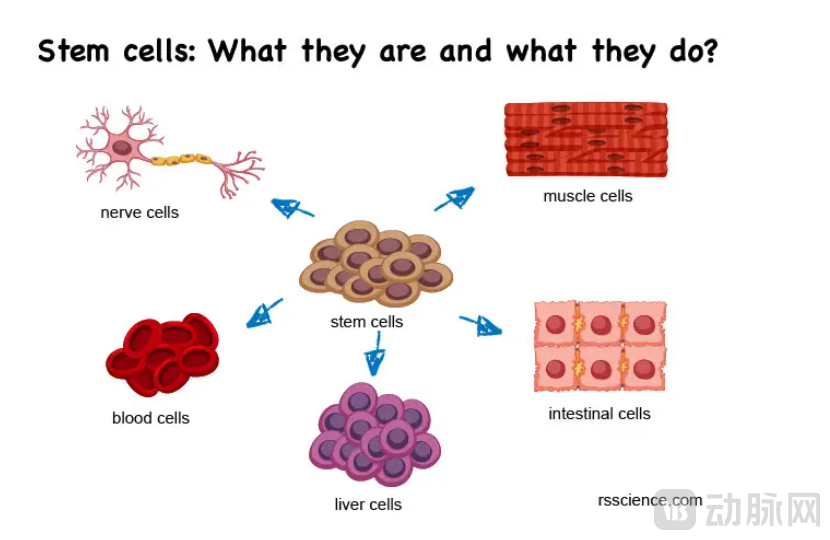
(Schematic diagram of the role of stem cells. Image source: rsscience official website)
Theoretically, induced pluripotent stem cells (iPSCs) possess regenerative capabilities similar to those of embryonic stem cells, enabling them to differentiate into all organs and tissues of the adult body while avoiding immune rejection. The pioneer of this technology is Shinya Yamanaka, who serves as a scientific advisor at Altos Labs. In 2006, through experiments on mice, he successfully introduced the “Yamanaka factors” into mouse somatic cells for the first time, reprogramming them into a cell type resembling embryonic stem cells. Based on this research, Shinya Yamanaka jointly received the Nobel Prize in Physiology or Medicine that year with British scientist John Gurdon.
In addition, Altos Labs has three Nobel laureates serving as advisors or directors: Professor David Baltimore, winner of the 1975 Nobel Prize in Physiology or Medicine; Professor Frances Arnold, winner of the 2018 Nobel Prize in Chemistry; and Professor Jennifer Doudna, winner of the 2020 Nobel Prize in Chemistry.
Notably, all three founders of Altos Labs are prominent figures in the industry. Hal Barron, Chief Executive Officer and Chairman of the Board, previously served as President of Research and Development and Chief Scientific Officer at the British pharmaceutical giant GlaxoSmithKline (GSK). Co-founder Dr. Klausner formerly chaired the U.S. National Cancer Institute and served on the board of directors of the biopharmaceutical company Juno Therapeutics. Dr. Bishop previously served as Chief Executive Officer of both Juno Therapeutics and GRAIL.
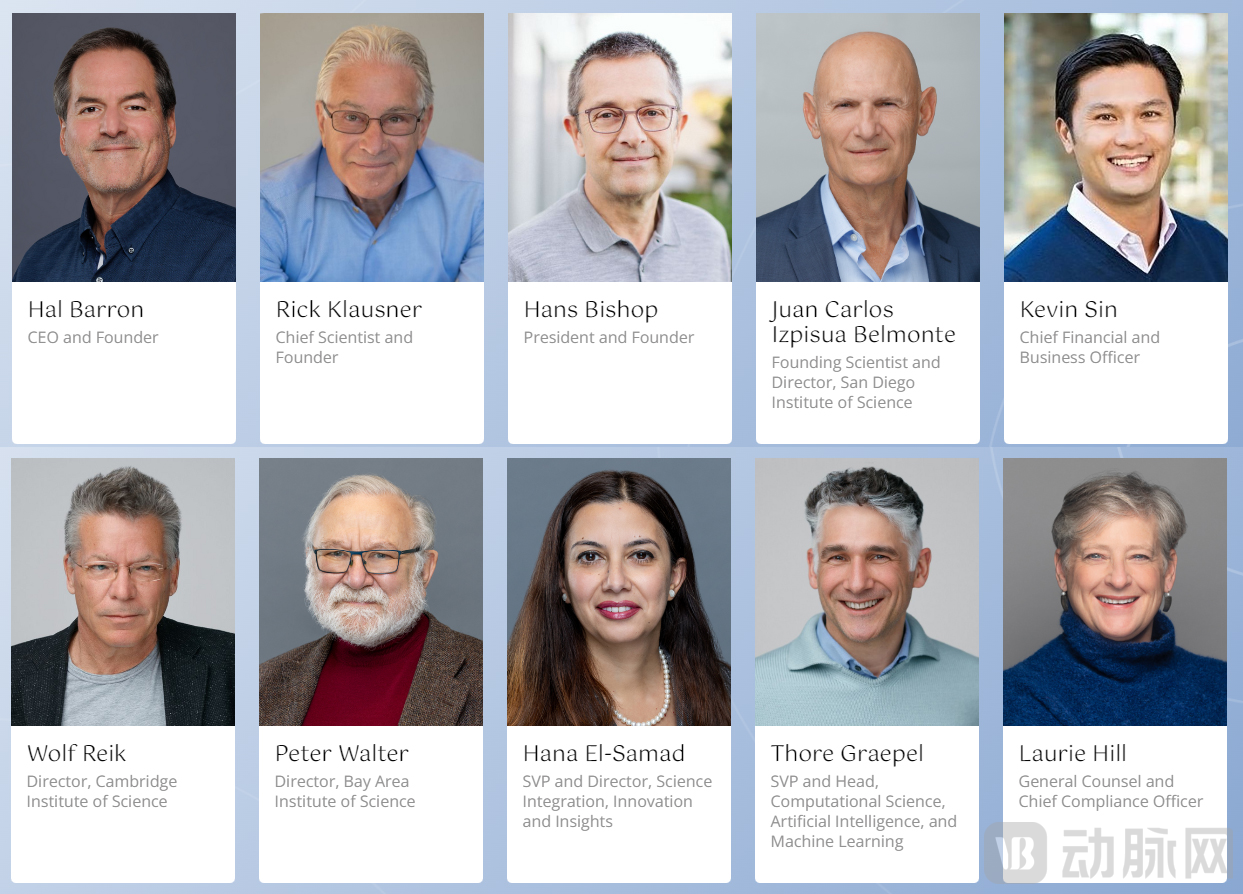
(Altos Labs Management. Image source: Altos Labs official website)
Currently, related research is rapidly advancing. The aforementioned technologies have demonstrated extensive anti-aging effects in mouse models, reversing aging markers across multiple organs and extending the lifespan of premature aging mouse models by 32%. Furthermore, reprogramming interventions in the liver can counteract liver failure and enhance hepatic regenerative capacity.
Nevertheless, regarding project advancement, Altos Labs has also stated that the company will focus on basic research during its early development stage and will not initiate commercialization. Currently, Altos Labs has established three research institutes in the San Francisco Bay Area and San Diego in California, USA, and in Cambridge, UK, and will launch significant collaborations in Japan.
From an industry perspective, as one of the most promising research fields in regenerative medicine, why has stem cell research attracted such significant capital attention? In fact, beyond the star power of Altos Labs’ founding team, the greater draw lies in the immense potential it offers:Stem cells can differentiate into and generate specific cell types and tissues; therefore, in theory, they can be utilized to regenerate dysfunctional cells or tissues, holding immense potential in the field of disease treatment.
Just this August, Clock.bio, an innovative company similarly focused on regenerative stem cells as Altos Labs, secured $4 million in funding. The latter primarily focuses on decoding regenerative biomarkers and mechanisms in human cells to establish disease maps and identify regenerative targets suitable for clinical translation.
In terms of the team, Clock.bio’s founder, Mark Kotter, is a stem cell biologist and neurosurgeon at the University of Cambridge, with a research focus on stem cells and cellular reprogramming. Additionally, alongside completing its financing round, Clock.bio announced that Markus Gstöttner would join as Chief Executive Officer; he previously founded the cultured meat company Meatable.
Currently, Clock.bio has developed an aging model that can induce senescence in human induced pluripotent stem cells (hiPSCs) and trigger their self-repair mechanisms. Specifically, Clock.bio conducts CRISPR screens on large samples of these cells to identify candidate genes with causal relationships to cellular repair. The model encompasses proprietary aging interventions for iPSCs, identification and validation of regenerative targets, as well as the prioritization of therapeutic leads and their translation into clinical applications.
In addition to the aforementioned companies,Life Biosciences, Retro Biosciences, Rejuvenate Bio, and Aikailiyuan Biotechnology are also developing cellular reprogramming therapies to treat age-related diseases and extend lifespan.
Undoubtedly, as more players enter the field, competition in stem cell research will intensify.
Direction 2: Skincare and Anti-Aging—Safe and Effective New Ingredients Drive New Market Growth
Unlike stem cell research, which is still in the transitional phase from laboratory studies to industrialization, the market for skincare and anti-aging products is already highly mature.
This is evident from sales figures. According to the “Report on Market Trends in Anti-Aging Skincare,” 21 of the top 50 best-selling products on Tmall in the first half of 2023 were anti-aging products, accounting for over 40% of the total, which underscores the strong consumer demand for anti-aging skincare solutions.
Furthermore, in terms of product layout,From niacinamide to hyaluronic acid, and then to collagen, a steady stream of skincare ingredients has emerged, underpinning the success of one listed company after another.
“Both internal and external factors, such as natural aging, photoaging, and aging caused by circadian rhythm disruption, accelerate skin aging. Therefore, identifying the right approach to help users combat aging presents an opportunity for new market entrants,” said investor Wu Dan.The new pathways include safer and more effective ingredients, as well as novel anti-aging concepts and comprehensive solution sets.
which secured tens of millions in Pre-A financing this FebruaryHaichuang BioTaking this enterprise as an example, it is committed to the concept of microbiome-based scientific skincare, providing safe and healthy skincare solutions for skin microbiome imbalances associated with early signs of aging and skin damage. The company has launched “HEPRO-6A,” an active ingredient with anti-photoaging, anti-glycation, antioxidant, anti-inflammatory, antibacterial, and reparative properties, thereby exerting anti-aging effects. The “HEPRO-6A” active ingredient has received the CIC2022 “Innovative Ingredient Award” and the “InnoCosme Awards Innovative Formula Award.”
Another example is the company that secured tens of millions of yuan in Series A financing in April 2022.Newron Biotech, specializing in the R&D, production, and sales of protein separation resins and bioactive protein/peptide biopharmaceuticals, which are widely used in fields such as the separation and purification of protein drugs, diagnostic reagents, and cell culture.
Secured millions of yuan in Pre-A round financing in January 2022DaslanThe brand focuses on anti-aging products in its “caviar” series, using sturgeon caviar as the primary raw material, and primarily targets consumers aged 25–35 with anti-aging needs. It is reported that Daslan is launching new products featuring peptides and imported Pro-Xylane as active ingredients to further expand its market presence.
In summary, the skincare and anti-aging market remains robust, presenting ample opportunities for innovative enterprises to explore. However, amidst rapid growth, product quality serves as the cornerstone of brand reputation; therefore, ensuring safety and efficacy is paramount in research and development.
Trend 3: The Momentum of Photoelectric Aesthetic Medicine Is Strong; Drug-Device Combination Is the Trend
In the field of anti-aging treatments, energy-based medical aesthetic procedures are gaining consumer recognition and driving tangible spending.
According to data released by SoYoung, in 2022, among the medical aesthetic procedures most favored or most desired for trial by consumers in China, 47.34% of surveyed users indicated that energy-based device (EBD) treatments were their top choice.
The underlying reason is that,Optical Aesthetic Medicine Offers High Cost-Effectiveness in Combating Early Signs of AgingOn one hand, optical energy sources can address multiple skin concerns, including skin tone and texture. Compared with technologies such as radiofrequency and ultrasound, laser and intense pulsed light (IPL) demonstrate superior efficacy in treating superficial skin issues. On the other hand, treatments based on optical energy sources are more cost-effective and offer a higher safety profile, with a lower risk of severe adverse effects such as facial nerve injury or permanent scarring.
It is precisely on this basis that an increasing number of optoelectronic medical aesthetics companies have secured capital support and carved out their own distinctive market positions.
For example, those that just completed their Pre-A+ round of financing in AugustFumeilei MedicalIt has independently developed a range of high-end medical devices, including the ForeShine mesotherapy device, picosecond laser therapeutic instrument, cold air therapy device, long-pulse laser therapeutic instrument, intense pulsed light (IPL) therapeutic instrument, and photoacoustic imaging skin detection system. Among these, the ForeShine mesotherapy device officially received regulatory approval in February this year and has successfully commenced commercialization, with sales exceeding 100 units in Q2 2023. The core product, the picosecond laser therapeutic instrument, has completed registration testing; its measured performance parameters are fully comparable to those of imported counterparts, and clinical trials are set to begin shortly. The cold air therapy device is also expected to receive approval for market launch in the near future.
which completed its Series B+ financing round this JuneY&G MedicalThe “Shuiyingji” product series has been launched. This device is a non-invasive, transdermal drug delivery medical device classified as a Class II medical device and holds an NMPA registration certificate as a non-invasive transdermal drug delivery system. Specifically, it applies medium-frequency pulses to the skin to induce temporary disruption of the stratum corneum structure, creating reversible “electropores” that facilitate drug penetration. The electric field applied to cells increases cell membrane permeability, allowing nutrients to penetrate into the dermis.
However, due to the current immaturity of visualization systems in photoelectric medical aesthetic devices, truly personalized treatment cannot be achieved. Variations in individual skin types can easily lead to adverse effects such as subcutaneous scarring and nerve damage resulting from improper operation, often necessitating subsequent corrective procedures for these patients.
Therefore, postoperative care and repair are essential for photoelectric treatments.The combination of pharmaceuticals and medical devices is clinically recognized as an effective treatment approach.On the one hand, it can effectively prevent adverse reactions, alleviate immediate postoperative discomfort, and enhance clinical acceptance.
Taking laser therapy as an example, persistent erythema is a predictable outcome following treatment with most laser devices. The erythema typically lasts for 24–72 hours, causing psychological stress and mild burning discomfort to patients. Post-procedure application of specific topical vasoconstrictive agents can effectively shorten the duration of erythema or even prevent its occurrence, thereby facilitating the clinical adoption of laser therapies.
On the other hand, the combination of pharmaceuticals and medical devices can enhance therapeutic efficacy and improve patient satisfaction. Following photoelectric therapy, the skin barrier is compromised, leading to increased transdermal drug absorption. This allows therapeutic agents to reach the target treatment layer directly, thereby reinforcing treatment outcomes.
Of course, the industrialization of combined drug-device products is highly challenging and remains in its early exploratory stage.
Direction 4: Anti-aging drugs become a hot spot in R&D, with new breakthroughs underway
In the field of anti-aging, pharmacological interventions hold immense potential. However, research on anti-aging drugs is still in its early stages, and clinical trials are needed to fully validate their feasibility.
“There are currently no true anti-aging drugs on the market; most approved medications primarily offer certain benefits, such as antioxidant effects,” said investor Wu Dan.There is an urgent market need for drugs that directly target aging genes or repair damaged genes.
The industry is taking action. According to statistics from Beike Society, there are currently 14 anti-aging drugs under development worldwide, including one in Phase II clinical trials, one in Phase I clinical trials, seven in preclinical stages, and five in drug discovery.
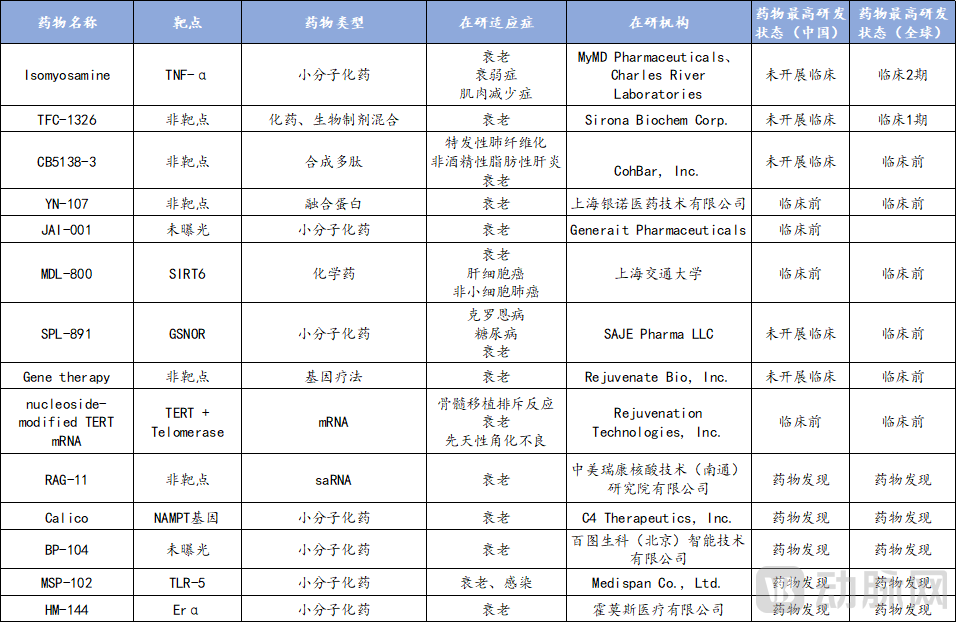
(Global Anti-Aging Drugs in Development. Image source: Beike She)
From the perspective of layout direction,Rapamycin and Senolytics are two popular drugs.For instance, Novartis began studying the immune-boosting effects of rapamycin in the elderly as early as 2014; the drug is commonly used as an immunosuppressant during organ and bone marrow transplantation to prevent rejection.
Senolytics are drugs that target senescent cells, destroying them by inducing cell death. This class of drugs has received emergency use authorization in Europe and is currently undergoing global research and clinical trials. As there is currently insufficient data on the safety and efficacy of senolytics, patients should carefully weigh the risks and benefits before use.
In addition, other anti-aging drugs are currently under research and development.For example, some drugs can delay the aging process by modulating gene expression and promoting metabolism; others can mitigate the negative effects of aging by improving cardiovascular health and reducing inflammatory responses.
“Anti-aging remains a field where both genuine and pseudo-demands coexist. Our primary approach to this sector is to analyze whether the technologies and companies are addressing genuine needs within it,” a partner at an institution specializing in medical aesthetics told VCBeat.The current landscape of anti-aging drugs is complex and fragmented, making it essential to carefully evaluate product barriers, including the technical route itself and regulatory approval status.
In the cutting-edge field of anti-aging, new technological breakthroughs are bringing more possibilities to the industry.
Take the AI boom this year as an example; it is accelerating its integration with anti-aging drug development. It is important to note that,The development of anti-aging drugs requires substantial time and resources, while AI can accelerate the drug discovery process through technologies such as virtual screening, molecular simulation, and machine learning.
For exampleCalico, Google's Anti-Aging CompanyLeveraging its parent company’s cloud services and data centers, it conducts research on aging and age-related diseases, mining useful information from data to combat human aging. Last September, Calico Life Sciences partnered with the UK Biobank to build a disease imaging system, scanning pathological images of 60,000 project participants. This enables researchers to better understand the physiological trajectories of major chronic diseases in middle and later life, and to explore the mechanisms by which these diseases develop in individuals.
For example, in March 2022, it secured nearly USD 10 million inMetanovas BiotechBy integrating AI with life sciences, the company leverages deep learning, knowledge graphs, and multi-omics analysis to decipher complex biological networks and disease mechanisms, thereby developing anti-aging products through the modulation of disease network pathways. It is reported that the NAD+-related anti-aging research project jointly conducted by Metanovas Biotech and the School of Pharmaceutical Sciences at Tsinghua University has achieved preliminary validation in vitro, with AI-predicted validation success rates far exceeding those of traditional systematic screening via wet-lab experiments.
Secured angel round financing in February 2022Regenerative BioThe world’s first AI-based anti-aging substance screening platform, PASS, has been developed to enhance the efficacy and stability of commercially viable anti-aging products in areas such as drug delivery, formulation, and ingredient ratios, significantly improving R&D efficiency and reducing costs. In September this year, Regenerative Bio launched its self-developed RevOrganTM anti-aging substance discovery platform, which is also an anti-aging substance screening platform primarily driven by AI-powered high-performance computing for targeted high-content screening experiments.
It is not difficult to see that the integration of new technologies is accelerating anti-aging research by a significant leap. However,As anti-aging research continues to advance, it is accompanied by extensive controversy and discussion.
First, once future anti-aging technologies and products can significantly extend human lifespan, it is highly likely to lead to changes in demographic structure, thereby affecting the alignment between population and resources.
Secondly, if only a small affluent population can afford expensive anti-aging treatments and products, it may exacerbate inequalities in resource allocation and lead to social injustice.
Therefore, in the exploration of frontier technologies, how to integrate technological advancement with ethical frameworks and institutional constraints remains a significant challenge for all stakeholders involved.
As Vannevar Bush wrote in his book Science: The Endless Frontier:"The path of science is long and lonely; only through the tireless efforts of generations have we uncovered even a small fraction of the truth."
It is precisely through the baton passed down from generation to generation that research and industrialization in anti-aging will surely tell more and better stories.
In this process, longevity and eternal youth are no longer mere aspirations, but a light that will inevitably shine into reality.
References:
1. "Healthcare Industry Trends Report" CB Insights
2. “Nature Medicine: Using Anti-Aging Therapies to Clear Senescent Cells in the Brain for Alzheimer’s Disease Treatment” Aging