

World-Renowned Multi-Omics Scientist Dr. Rong Wang Joins Pingsheng Medical to Accelerate Global Precision Medicine Innovation and Clinical Translation
Pinsheng Medical Takes New Action.
Recently, VCBeat learned thatProfessor Rong Wang, a returned Chinese scientist, Tenured Professor at the Icahn School of Medicine at Mount Sinai in New York, USA, and a globally renowned multi-omics expert, has officially joined Pingsheng Medical as Chief Scientist. In this role, he will be fully responsible for exploring and applying cutting-edge technologies in mass spectrometry and multi-omics. With an international perspective, he is committed to driving Pingsheng Medical’s continued deep engagement in the research and development and clinical translation of innovative biomarkers, making greater contributions to advancing human health.
Wang Rong, a world-renowned multi-omics scientist, possesses over 40 years of experience in research and clinical translation within this field. In 1982, Professor Wang began his career in mass spectrometry at the Health Science Center of Peking University. He subsequently pursued graduate studies in the United States, earning a Ph.D. in Biochemistry, Cell, and Molecular Biology from the Johns Hopkins University School of Medicine, and conducted postdoctoral research at The Rockefeller University. Later, he was appointed as Tenured Professor of Genetics and Genomics, with a joint appointment as Professor in the Department of Structural and Chemical Biology, at the Icahn School of Medicine at Mount Sinai in New York. Professor Wang also serves as a reviewer for projects funded by the National Institutes of Health (NIH), the Alzheimer’s Association, the Research Grants Council (RGC) of Hong Kong, and the Ministry of Science and Technology of China. In 2016, Professor Wang officially returned to China to join the industry sector, where he has been continuously advancing mass spectrometry technology research and its clinical translation.
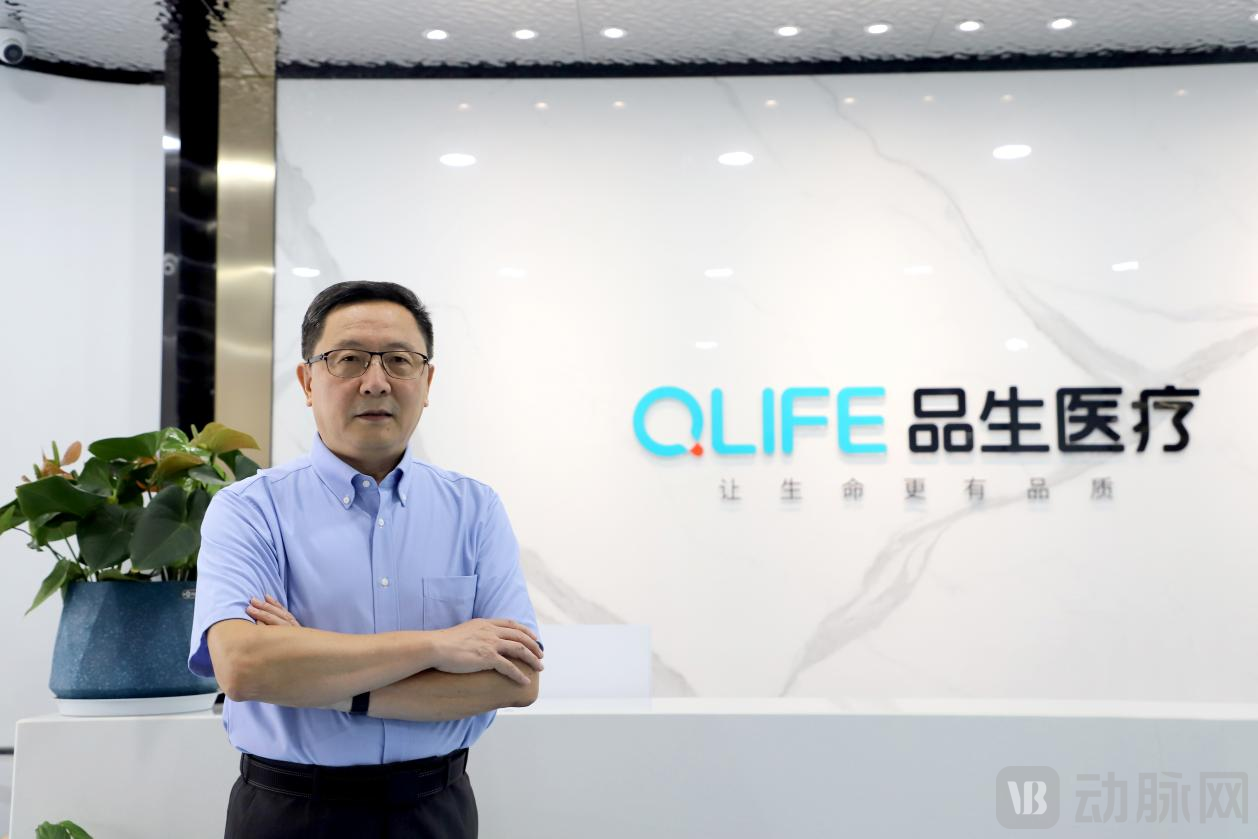 Professor Wang Rong, Chief Scientist at Pinsheng Medical
What attracted this highly accomplished multi-omics mass spectrometry scientist to join Pinsheng Medical? What new opportunities and unresolved challenges exist in the translation of mass spectrometry and multi-omics research? Recently, VCBeat held a dialogue with Professor Wang Rong to gain insights into the development trends and methodologies in the fields of mass spectrometry and multi-omics.
Mass Spectrometry and Multi-Omics Research: In-Depth Development and Clinical Translation for Public Welfare
With the advancement of high-throughput sequencing, high-resolution mass spectrometry, multi-omics integration analysis methods, and databases, omics technologies are transitioning from traditional single-omics approaches to integrated multi-omics analyses encompassing metabolomics, proteomics, and microbiomics. This evolution is driving the era of precision medicine toward greater depth. Mass spectrometry-centered multi-omics research plays a pivotal role in elucidating disease mechanisms, disease screening, early diagnosis, and treatment assessment.
After pursuing graduate studies in the United States in 1986, Professor Wang Rong began engaging with mass spectrometry technology and its medical applications. In his view, the greatest advantage of mass spectrometry lies in its ability to analyze complex compounds, and only through multi-omics analysis can more comprehensive and useful information be obtained. Through years of dedicated research at the forefront of mass spectrometry and multi-omics, Professor Wang has achieved numerous innovative breakthroughs. His representative papers have been published in top-tier international academic journals, including Science, Nature, Nature Medicine, Nature Neuroscience, Nature Genetics, Neuron, JBC, and PNAS. His work has been cited more than 23,000 times (h-index: 68).
In 2016, Professor Wang Rong officially returned to China and entered the industry sector. A key factor motivating his return was the desire to accelerate the translation of basic scientific research into practical applications, thereby benefiting the public.
“For multi-omics research, how can we obtain all omics information more sensitively, rapidly, with higher throughput, and more comprehensively?This presents a formidable challenge to all researchers. AndIn China, given the substantial differences in historical origins and genetic backgrounds among populations of different regions and ethnicities, conducting large-scale multi-omics studies can enable more efficient research into various complex diseases.“Professor Wang Rong said.”
In recent years, the value of large-scale multi-omics studies in the prevention, diagnosis, and new drug development for chronic diseases, cancer, and genetic disorders has become increasingly prominent. This has driven transformations in personalized precision health management and disease diagnosis and treatment, making significant contributions to global healthcare. China has also initiated several projects under its Precision Medicine Initiative.
“The connection between livelihood-oriented projects and basic scientific research is extremely close. By having research institutions and enterprises jointly carry out livelihood-focused initiatives, we can collect extensive research data and accelerate the translation of scientific findings. The resulting innovations can then serve the general public,” said Professor Wang Rong. A graduate of Peking University Health Science Center, Professor Wang possesses a strong sense of social responsibility. “The word ‘Houdao’ (Kindness and Integrity) inscribed on the stone at the west gate of our alma mater carries profound weight in the hearts of all PKU Health scientists. This sense of social responsibility aligns closely with Pinsheng Medical’s advocacy of ‘enhancing quality of life’ and ‘ensuring that everyone benefits from precision diagnosis and treatment,’ which is precisely what I am truly committed to doing.”
The Time for Clinical Translation Has Matured, with Greater Potential in the Field of Complex Diseases
With the in-depth development of mass spectrometry and multi-omics technologies, Professor Wang Rong pointed out that although many challenges remain in multi-omics research, we are currently able to advance clinical translation based on existing achievements.
“Unlike traditional research, multi-omics studies do not focus on the role of a single pathway or molecule in disease; instead, they provide a more comprehensive and systematic investigation of diseases.“Currently, a major challenge facing multi-omics research is whether multi-omics technologies can yield the most comprehensive and authentic data, and whether such data can be integrated to achieve a more holistic understanding of diseases, thereby translating these insights into strategies for disease prevention and treatment,” said Professor Wang Rong.
Currently, multi-omics has become an essential tool in scientific research services and new drug development. Multi-omics research can be applied to drug target discovery, biomarker identification, studies on drug resistance mechanisms, disease subtyping, and indication selection, thereby providing more comprehensive data support for pharmaceutical research and enhancing the efficiency and success rate of drug development. In 2022, PhenoMed officially announced the launch of its strategic sub-brand, Antan Bio, which is dedicated to providing end-to-end clinical translation services for molecular phenotyping multi-omics with a core focus on proteomics. As a next-generation platform enterprise in multi-omics, Antan Bio is committed to delivering comprehensive solutions for biomarker discovery and translation. Meanwhile, PhenoMed, in collaboration with the China Pharmaceutical Innovation Promotion Association (CPIPA), launched the "Shennong Initiative" to support applied research on molecular phenomics in the fields of translational medicine and innovative drug development.
Pinsheng Medical’s strategic advancement in multi-omics frontiers is one of the reasons Professor Wang Rong chose to join the company. Dr. Cheng Xiaoliang, Founder, Chairman, and CEO of Pinsheng Medical, was among the first researchers in China to specialize in mass spectrometry technology, as well as in proteomics and metabolomics. Under his leadership, Pinsheng Medical has focused on omics research since its inception. After years of accumulation, the company has successfully developed its proprietary precision omics platform, qULTRA.
The qULTRA Precision Omics Platform enables multi-omics molecular phenotyping of various types of clinical samples, including proteomics, post-translational modification proteomics, metabolomics, and lipidomics. A single comprehensive proteomic analysis can cover over 10,000 proteins, while a single metabolomic analysis can detect up to 4,500 endogenous metabolites. The qULTRA platform has undergone global multi-center validation, with related findings published in high-impact academic journals such as Nature.
“For complex diseases involving multiple pathways or factors, such as cardiovascular and cerebrovascular diseases or neurological disorders, multi-omics research offers greater potential for application.“Professor Wang Rong said. In recent years, Professor Wang Rong has focused his research on chronic diseases, primarily neurodegenerative disorders such as Alzheimer’s disease (AD), as well as cardiovascular and cerebrovascular diseases.”
“Aging is a challenge facing China and the world alike; identifying pathways for the prevention and treatment of age-related diseases is a formidable task entrusted to us by our era,” said Professor Wang Rong. Pinsheng Medical recognized the global challenge of aging at an early stage. Targeting Alzheimer’s disease, the company has leveraged immunoprotein mass spectrometry technology to develop assays for detecting Aβ1-40 and Aβ1-42 in blood on its commercialized mass spectrometry platform. It is currently one of the few clinical mass spectrometry enterprises in China capable of achieving precise early screening and diagnosis of Alzheimer’s disease.
Furthermore, Pinsheng Medical has collaborated with multiple top-tier hospitals, including Zhongshan Hospital Fudan University, to work with Academician Ge Junbo’s team in identifying a metabolomic signature composed of various ceramides based on Chinese population data for the first time. This signature enables earlier and more precise prediction of cardiovascular diseases. Meanwhile, through internal and external validation and multi-center large-cohort studies, models built on Chinese population data can accurately assess patients’ risk of adverse cardiovascular events. Currently, Pinsheng Medical has established technological barriers in the field of ceramide testing through comprehensive intellectual property layout.
In the area of clinical translation, which Professor Wang Rong highly values, Pinsheng Medical has developed a portfolio of innovative products across maternal and child health, oncology, endocrinology/cardiovascular disease, neurology, and metabolism. To date, Pinsheng Medical has successfully launched over 500 clinical mass spectrometry testing items, covering multiple fields including maternal and child health, endocrinology, cardiovascular disease, oncology, neurology, and therapeutic drug monitoring, and featuring several proprietary precision omics assays.
New Direction: Accelerating the Clinical Translation of Multi-Omics Research and Market Education
How to Further Promote the Clinical Translation of Mass Spectrometry and Multi-Omics Research? Professor Wang Rong stated,On one hand, we will continue to deepen our research in mass spectrometry and multi-omics, accelerating clinical translation; on the other hand, we will intensify market education efforts for mass spectrometry and multi-omics technologies, facilitating their faster transformation into clinically user-friendly applications that are widely accepted by the public.
Regarding market education for mass spectrometry and multi-omics technologies, Professor Wang Rong identifies three key priorities. “First, clinicians: how to gain their acceptance and facilitate the clinical adoption of novel diagnostic methods derived from multi-omics, and how to collaborate with them to overcome conceptual barriers and jointly advance precision medicine. Second, patients: how to leverage our technology transfer efforts to make these new methods both high-quality and affordable, thereby meeting patient needs. Third, management and regulation of multi-omics methodologies: establishing standardized operational and pricing frameworks to truly drive the translation and implementation of new technologies and applications.”
Driven by supportive policies, technological innovations, and a continuous influx of talent, the fields of clinical mass spectrometry and multi-omics will maintain an upward trajectory. Currently, key stages in omics technologies—including sample pretreatment, mass spectrometry analysis, data processing, and bioinformatics analysis—have been fully integrated into platform-based technologies. These platforms provide robust tools for standardized and large-scale clinical omics research, offering enhanced support for proteomics and metabolomics studies, while also paving the way for clinical laboratory applications based on omics technologies.
Currently, the clinical application potential of multi-omics technologies is continuously expanding, gradually extending to scenarios involving complex diseases with greater imaginative scope. In the era of life omics, an integrated layout covering omics research, equipment, reagents, and testing will be one of the strategies for Pinsheng Medical to explore clinical applications, drug development, and international markets.
With over 40 years of accumulated expertise in mass spectrometry and multi-omics research, Professor Wang Rong possesses a profound understanding of both basic research and clinical translation. His collaboration with BGI Medical is poised to generate unique synergies, leveraging his extensive R&D and management experience to provide robust support for the company’s next phase of clinical translation. This will further strengthen BGI Medical’s integrated layout spanning omics research, instrumentation, reagents, and diagnostic testing.