

Industry Leaders and ChatGPT Ignite a Thought Leadership Forum on the Future of Healthcare
To delve into the impact and transformation of ChatGPT in the healthcare sector, the S-Innovate Shanghai 2023 MedTech Night, co-hosted by S-Innovate and VCBeat, was successfully held at the West Bund Museum in Shanghai on September 21, 2023.
This event centered on the transformation and impact of AI on the healthcare sector in the wake of the ChatGPT wave. The conference invited six distinguished guests with extensive practical experience and insights in the field of ChatGPT, representing companies such as Temedo, Yuncheng Technology, Baixinghua AI, Nateri, and NVIDIA. Below are highlights from their on-site presentations.
Regarding the question of whether the singularity of AI-driven drug discovery has arrived in the era of ChatGPT, Huang Jinglin, Chief of Staff at Tenmile Pharma, stated that the company’s longstanding vision is to reshape the infrastructure of new drug discovery through an integrated approach combining computational (“dry”) and experimental (“wet”) methods, thereby significantly lowering the barrier to accessing the world’s most advanced computational tools. She emphasized that developing such advanced computational tools requires deep integration of the practical expertise of computational chemists, medicinal chemists, and biologists to design products aligned with the logic and workflows of drug discovery. These tools must be closely coupled with wet-lab experiments, enabling rapid hypothesis testing, validation, and iteration through dry-wet integration, thus achieving substantial breakthroughs in drug discovery efficiency. However, the “ChatGPT moment” for drug discovery remains relatively distant. The primary challenge lies in data: specifically, how to structurally, coherently, and at scale collect high-quality data tailored to the diverse properties of various therapeutic targets. This constitutes a critical bottleneck in building “GPT-like models” for AI-driven drug discovery.
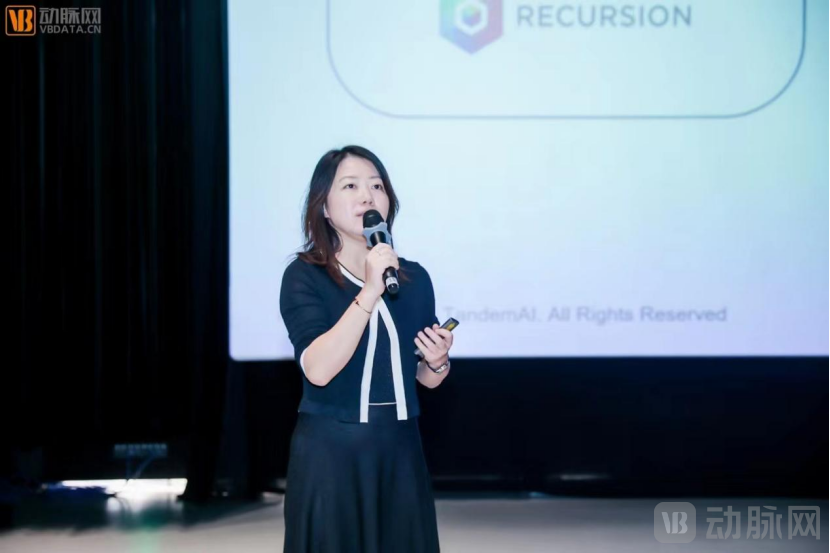
Huang Jinglin | Chief of Staff, Tenmile Pharmaceuticals
AI applications in the clinical phase of pharmaceutical R&D have already seen tangible implementation. Ms. Chen Xiao, CEO of HealthX Technologies, shared on-site her team’s frontier explorations and practices in applying AI to the digitalization and intelligence of clinical research, under the theme “ChatGPT Empowering Life Sciences Research.” Ms. Chen stated that HealthX Technologies is dedicated to the digitalization and intelligent transformation of life sciences clinical research. Starting from scratch, the company has gradually built AuroraPrime, an integrated clinical research platform featuring comprehensive modules covering the entire clinical trial lifecycle, including protocol writing, database construction, randomization, data collection, biostatistics, project management, document management, and Clinical Study Report (CSR) generation. AuroraPrime can host complete trial data, workflows, and documents, and has achieved standardized organization based on a leading underlying architecture, making it possible for computers to “understand” trials.“In HealthX Technologies’ digital-intelligent ecosystem, AI is a core component. As a member of the Microsoft Accelerator Pegasus Program, HealthX Technologies was among the first companies globally to integrate with OpenAI and apply ChatGPT in deep industry-specific scenarios. Given the unique attributes of the pharmaceutical industry, we have fully considered data security and compliance. We have implemented ChatGPT in multiple clinical research scenarios, such as professional content recommendation, data analysis, optimization of statistical models, and medical translation, and have deployed these solutions into the daily operational systems of numerous renowned pharmaceutical companies. We believe that with the rapid development and maturation of AI technology, AI applications based on integrated digital-intelligent platforms will significantly optimize clinical trial efficiency and resource utilization, truly helping life sciences innovation enterprises accelerate product launches and success. In the future, AI will further unlock the value of enterprise-level clinical trial knowledge bases, exploring more possibilities for intelligent insights, which represents an opportunity for AI-driven industry upgrading and transformation.”
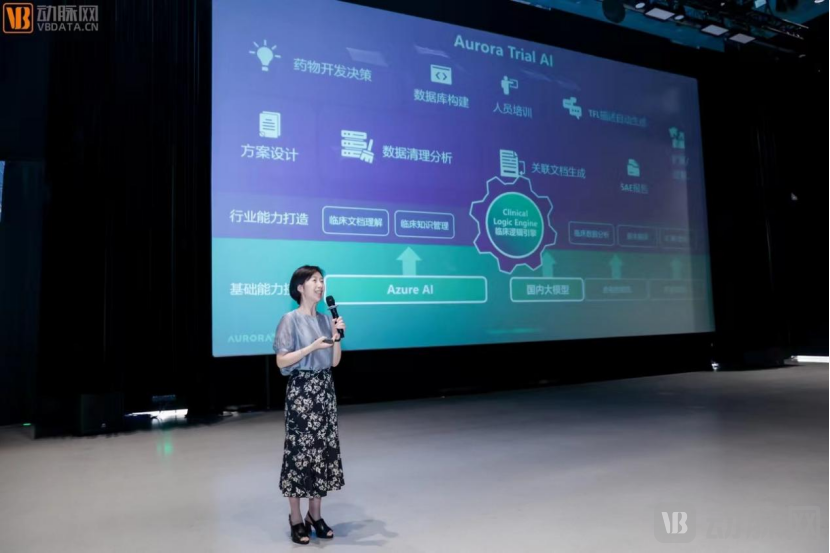
Chen Xiao | Founder & CEO of Yaosheng Technology
Wang Suhong, Co-founder and CEO of Baixinghua AI, delivered an insightful presentation titled “ChatGPT Large Language Models: Redefining Research in Pharmaceutical Companies and Hospitals.” Starting with BAIX GPT, a generative AI-powered SaaS tool for medical research, he provided a detailed overview of its applications across multiple domains, including clinical research form generation, literature traceability verification, meta-analysis, and discovery of new drug indications. He emphasized that this tool will deliver deeper, more comprehensive, and more accurate AI-driven analysis, thereby supporting pharmaceutical companies, physicians, and researchers in their studies on basic medicine and drug mechanisms.
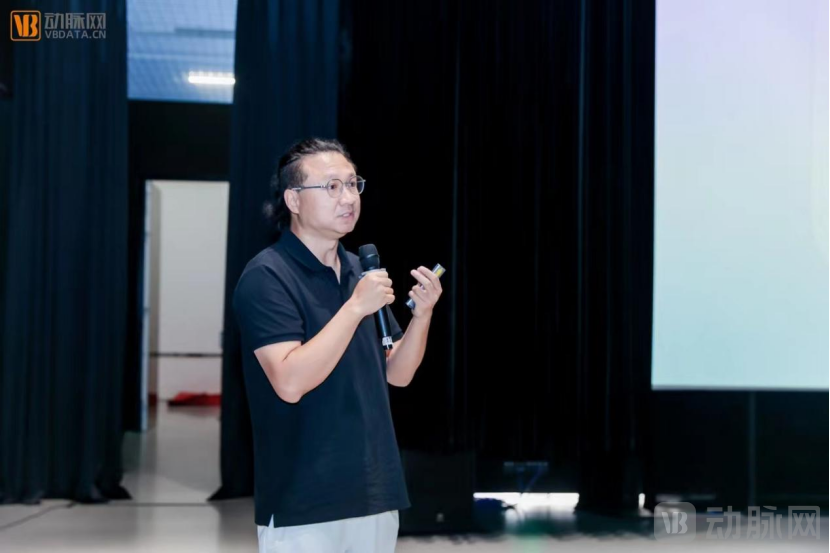
Wang Suhong | Co-founder & CEO of Baixinghua AI
In his speech titled “How ChatGPT Is Transforming Diagnosis and Treatment Models,” Qu Yi, Chairman and CEO of NetRain, highlighted that the continuous penetration of digital technologies into the healthcare sector has driven the rapid development of digital health. Internet-based healthcare, leveraging cutting-edge technologies such as artificial intelligence (AI), big data, and 5G, has integrated patients, physicians, pharmaceuticals, testing, and insurance, thereby establishing a closed-loop diagnosis and treatment system and facilitating the digital transformation of healthcare. The emergence of ChatGPT will address potential pain points across various stages of digital healthcare, including pre-diagnosis, during diagnosis, and post-diagnosis. For instance, its powerful and rapid information retrieval and matching capabilities can assist hospitals with triage and patient guidance; its vast data resources can support clinical consultations, enabling a dual-layer review process involving both “AI and medical experts”; it can combine real-time monitoring technologies to aid ward rounds and health management; and it can generate data insights based on feedback. Mr. Qu also noted that ChatGPT still has a long road ahead in terms of medical professionalism and diagnostic accuracy. Fully integrating ChatGPT to create a novel diagnosis and treatment model presents both challenges and opportunities, requiring concerted efforts from industry experts. He expressed confidence in the promising prospects of internet-based healthcare.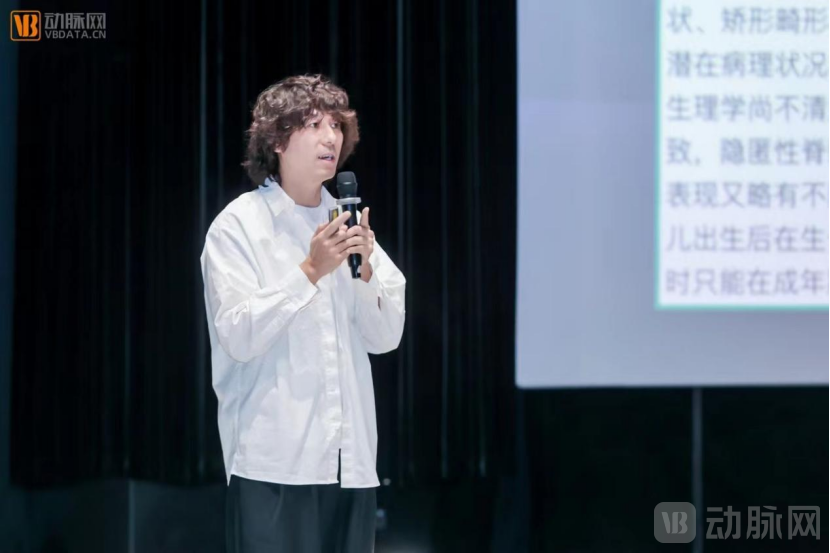
Qu Yi | Chairman and CEO of NetRain
During the fireside chat, Zhang Haiyang, Senior Researcher at VCBeat’s VBInsight, and Qu Yi, Chairman and CEO of NetRain, engaged in a discussion on “Growth and Sustainability of Digital Health Platforms.” Against the backdrop of the continuous advancement of AI in healthcare, both parties explored how medical enterprises can build their own digital health platforms through appropriate channels to achieve efficient and compliant operations. Addressing the issue of “risks posed by technology,” Mr. Qu stated, “Just as waves never cease to crash against the shore, the wheels of history never stop rolling forward. We believe that a technology-driven future is certainly worth imagining.”
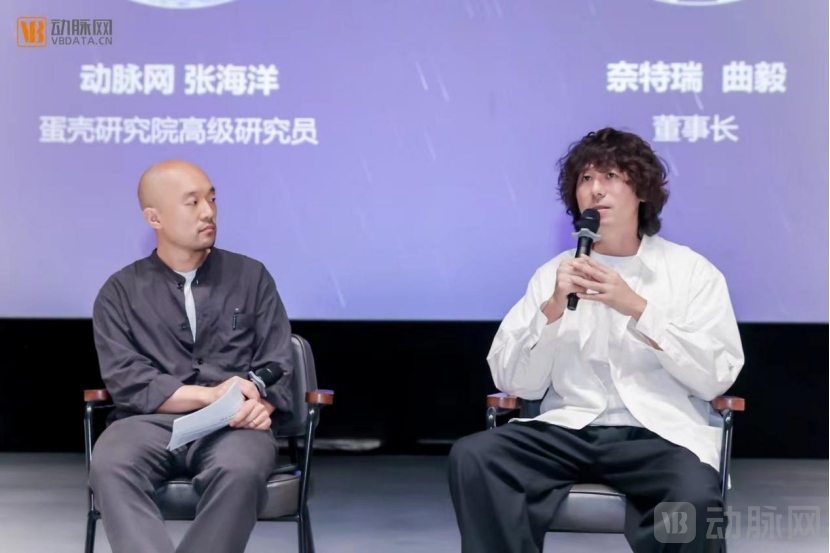
Qu Yi | Chairman and CEO of NetRainZhang Haiyang | Senior Researcher at VCBeat (arranged from right to left)
Subsequently, during the session on “Computational Trends in the Pharmaceutical and Life Sciences Industries in the Era of Large Models,” Zhang Tianjing, Senior Developer Ecosystem Manager at NVIDIA, and Zhang Meng, Senior Solutions Architect at NVIDIA, engaged in a joint discussion. As a globally renowned artificial intelligence computing company, NVIDIA has extensive applications in the healthcare sector and has collaborated with more than 100 enterprises worldwide, including those involved in new drug development. The two senior technology and product experts discussed on-site the computational trends shaping the pharmaceutical and life sciences industries amid the surge of large models, as well as the new research paradigms introduced to the pharmaceutical industry by advancements in pre-trained model technologies.
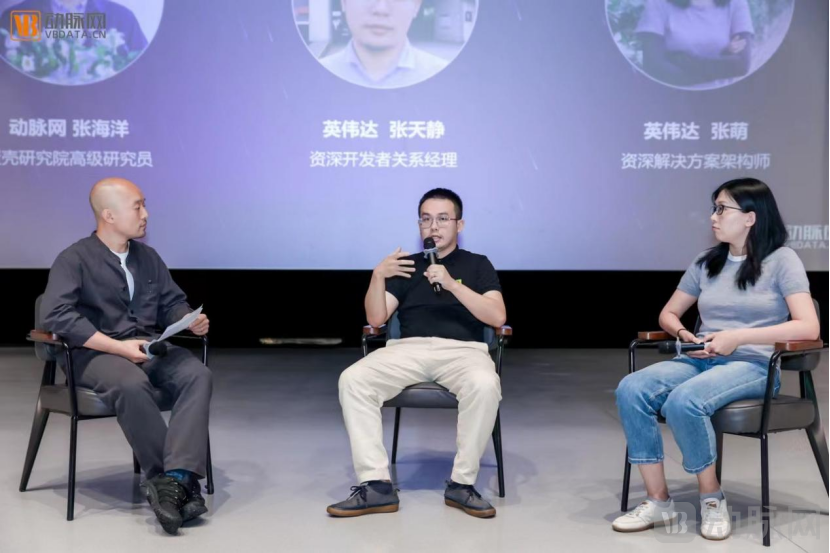
Zhang Meng | Senior Solutions Architect, NVIDIAZhang Tianjing | NVIDIA’s own Developer Relations Manager,Zhang Haiyang | Senior Researcher at VCBeat(arranged from right to left)