

Is Type 2 Diabetes Reversal the Next Big Industry Trend?
No way...
How Is It Possible for Diabetes to Be Reversed...
It sounds rather mysterious...
"Just another bunch of scam companies selling health supplements..."
Behind the widespread skepticism lies a gradually emerging new phenomenon: the “reversal” of type 2 diabetes. Currently, some hospitals and private enterprises have already engaged in this field.
This September, with the official unveiling of “Tangyi Bangbang Internet Hospital,” the first online hospital dedicated to reversing type 2 diabetes, the concept of “diabetes reversal” has moved further from behind the scenes into the spotlight. Meanwhile, it is reported that the Shanyu Liankang Diabetes Reversal Internet Hospital is also expected to launch this November.
Unlike previous diabetes management approaches that emphasized glycemic control targets, the concept of diabetes "reversal" sets a higher goal: enabling patients with type 2 diabetes mellitus (T2DM) to achieve diabetes remission.
Currently, the academic community has established criteria for defining remission of type 2 diabetes mellitus (T2DM):
HbA1c <6.5% after discontinuation of glucose-lowering medications for at least 3 months is used as the diagnostic criterion for remission of type 2 diabetes mellitus (T2DM). When HbA1c does not accurately reflect true blood glucose levels, a fasting plasma glucose level <7.0 mmol/L or an estimated HbA1c <6.5% calculated from continuous glucose monitoring data may be used as alternative criteria for diagnosing T2DM remission.
This also means that it is possible for patients with type 2 diabetes to discontinue glucose-lowering medications.
However,We still need to emphasize that——“If anyone currently claims to be able to cure diabetes, do not doubt it; they are undoubtedly a fraud”—just as clinicians have always told their patients,As a lifelong metabolic disorder, diabetes currently has no evidence of being curable.Furthermore, although the "reversal" of type 2 diabetes can allow patients to remain free from glucose-lowering medications for an extended period, the "Currently, no measures can effectively halt the natural course of type 2 diabetes mellitus (T2DM) through phased interventions; maintaining remission requires the continued presence of therapeutic interventions.”
Rigorous medical terminology highlights the many limitations of “reversal” in type 2 diabetes and, to account for potential public misunderstanding, prefers the term “remission” over “reversal.” Nevertheless, patients undoubtedly harbor high expectations for “diabetes reversal.” The Chinese Expert Consensus on Remission of Type 2 Diabetes also acknowledges that “remission of T2DM helps alleviate patients’ psychological burden, strengthens their confidence in adhering to healthy lifestyles, improves quality of life, and, in the long term, can slow disease progression and reduce the lifetime risk of complications.”
This also means that it encourages the entire society to attempt type 2 diabetes reversal, which in turn presents development opportunities for industry practitioners.
In this article, the topics we wish to discuss are as follows:
I. How Did the Academic Community “Fast-Forward” to Diabetes Reversal?
II. Why Is It Possible to Reverse Type 2 Diabetes Today?
III. How are domestic and international enterprises/institutions currently positioning themselves?
IV. What Are the Impacts of Diabetes Reversal and the Challenges It Faces?
It has been a long journey from the earlier focus on glycemic management in patients with type 2 diabetes mellitus (T2DM) to delay disease progression, to the current growing emphasis on T2DM remission. This protracted transition is closely intertwined with advances in clinical research within the academic community.
In a recent lecture, Professor Guo Xiaohui from the Department of Endocrinology at Peking University First Hospital presented to the public how academic research on type 2 diabetes has progressively “fast-forwarded” from “prevention” to “remission.”
Based on years of experience in treating patients with type 2 diabetes, physicians have established a robust and firmly entrenched consensus: the short-term goal of diabetes management is to alleviate symptoms and prevent acute metabolic complications by controlling hyperglycemia and metabolic disturbances, while the long-term goal is to prevent chronic complications, improve quality of life, and extend life expectancy through optimal metabolic control.
Are there measures to prevent progression to diabetes beyond treatment?Early research focused on the prevention of type 2 diabetes—
The 1997 Da Qing Study in China demonstrated that lifestyle interventions could delay or prevent the onset of type 2 diabetes mellitus (T2DM) in individuals with impaired glucose tolerance (IGT). Compared with the control group, interventions involving diet, exercise, or a combination of both significantly reduced the incidence of diabetes among the IGT population. This finding was further corroborated by the Finnish Diabetes Prevention Study (DPS) in 2001.
Studies at that time indicated that while early intervention could delay the progression of high-risk patients to type 2 diabetes mellitus (T2DM), once patients progressed to T2DM, treatment strategies remained centered on glycemic control and slowing disease progression.
Are there effective interventions that can allow patients with type 2 diabetes to return to a stage where blood glucose can be managed without medication? Research on the “reversal” of type 2 diabetes is also being conducted intensively.
In 2008, a multicenter, randomized trial demonstrated that intensive glycemic management enabled patients to achieve sustained fasting blood glucose levels <6.1 mmol/L without medication, thereby attaining diabetes remission. In 2014, results from a Swiss study on metabolic surgery revealed that metabolic surgical intervention for certain obese patients with type 2 diabetes mellitus (T2DM) achieved similar outcomes. In 2019, the DiRECT trial indicated that diabetes remission could be achieved through weight loss under lifestyle interventions.
Various research advances have demonstrated the possibility of diabetes remission (reversal); however, the diagnostic criteria, eligible populations, and efficacy remain insufficiently defined. There is an urgent need within the academic community for a clearer definition of type 2 diabetes reversal.
In 2021, China’s “Chinese Expert Consensus on Remission of Type 2 Diabetes” was released, which adopted the American Diabetes Association (ADA) 2021 definition and interpretation of “Definition and Interpretation of Remission in Type 2 Diabetes” for defining diabetes remission—
It is recommended that HbA1c <6.5%, after discontinuation of glucose-lowering medications for at least 3 months, be used as the diagnostic criterion for remission of type 2 diabetes mellitus (T2DM). In certain circumstances where HbA1c does not accurately reflect true glycemic levels—such as in the presence of hemoglobin variants, conditions affecting red blood cell survival, or non-standardized HbA1c assay methods—fasting plasma glucose (FPG) <7.0 mmol/L or estimated glycated hemoglobin (eA1c) <6.5% derived from continuous glucose monitoring may serve as alternative criteria for diagnosing T2DM remission. Even after confirming a state of diabetes remission, annual HbA1c re-evaluation remains necessary. |
Based on a clear definition,Recent studies have also found that patients who are younger, have a shorter disease duration, higher fasting C-peptide levels, and greater weight loss are more likely to achieve remission of type 2 diabetes mellitus (T2DM).
From the perspective of patient benefit, as long as the criteria for type 2 diabetes remission are met, earlier initiation of reversal interventions is generally associated with greater benefits.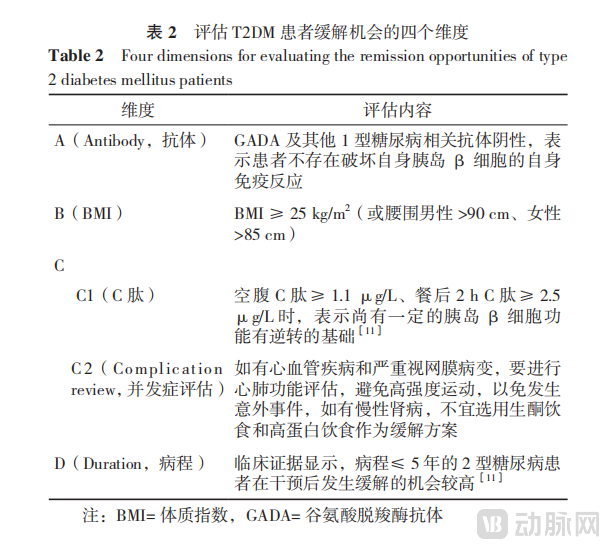
Image source: “Expert Consensus on the Remission of Type 2 Diabetes Mellitus,” Four Dimensions for Assessing the Likelihood of Remission in Patients with T2DM
It is important to emphasize that the “Expert Consensus” states that approaches to achieving remission of type 2 diabetes mellitus (T2DM) include intensive lifestyle intervention, weight-loss medications, non-insulin glucose-lowering agents, insulin, and metabolic surgery, each with its corresponding indications. The “Expert Consensus” recommends intensive lifestyle intervention as the foundational strategy for T2DM remission in all patients. In this discussion, we focus primarily on intensive lifestyle intervention to distinguish it from other T2DM remission modalities such as pharmacotherapy and surgery.
Looking back, we have mentioned that research on diabetes reversal was already underway in 2008 and achieved certain successes. Why, then, did the industry’s major leap from managing patients’ blood glucose levels to achieving “diabetes reversal” occur around 2021?
It should be noted that attempts to reverse type 2 diabetes were not absent among relevant medical institutions and third-party enterprises prior to 2021. For instance, the Second People's Hospital of Guangdong Province initiated such explorations at an early stage.Professor Xu Gugen, the academic leader of the Center for Reversing Diabesity at Guangdong Second Provincial General Hospital, published the book *Truly Saying Goodbye to Obesity and Diabetes* in 2015. In 2018, the Guangdong Provincial Committee for Reversing Diabesity was established, with Guangdong Second Provincial General Hospital serving as the chairing unit; this was the first such professional committee in China. In 2019, the hospital further founded the nation’s first Institute for Reversing Diabesity. To date, it has helped thousands of patients with type 2 diabetes reduce or discontinue their medications. In 2021, the hospital established the Center for Reversing Diabesity, becoming the first department in a Grade A tertiary hospital in China dedicated to the reversal of diabetes and medication reduction/cessation therapy. Additionally, other institutions, such as Peking University First Hospital, are also engaging in diabetes reversal practices through the establishment of obesity clinics.
Based on interviews with VCBeat, practitioners specializing in the reversal of type 2 diabetes began to emerge around 2021, driven by complex factors.
First, the ability to achieve remission of type 2 diabetes is itself associated with improved understanding of the disease.Previously, although numerous international multicenter randomized clinical trials had demonstrated the possibility of reversing type 2 diabetes, there was a lack of corresponding clinical studies in China to substantiate this. The release of the “Expert Consensus on Remission of Type 2 Diabetes” in 2021 was grounded in both domestic and international clinical research. Its publication has helped more physicians become aware of type 2 diabetes mellitus (T2DM) remission and provided practical tools to support clinical practice. Furthermore, it has offered authoritative medical endorsement for industry practitioners. Third-party companies such as Shanqiu Liankang and Xinyilu can now better build trust among patients, healthcare providers, and enterprises based on this expert consensus and clinical data.
Second, it is related to motivating practitioners.With the reform of medical insurance payment methods such as DIP (Diagnosis-Intervention Packet) and DRGs (Diagnosis-Related Groups), public hospitals are required to further control the proportion of pharmaceutical expenditures, shifting away from the previous drug-dominated model. Meanwhile, under the imperative of high-quality development, public hospitals also seek to enhance refined patient management. These factors collectively facilitate the implementation of type 2 diabetes mellitus (T2DM) remission programs. For instance, in certain areas of Weifang, pilot projects are underway for a single-disease chronic condition management service model, which sets per-patient cost caps for chronic disease management and allows hospitals to retain surplus funds for their own development. At the same time, the large population of patients with type 2 diabetes and their associated needs are driving third-party enterprises to establish business models centered on achieving T2DM reversal.
Third, it is related to the further maturation of diabetes management systems and devices.In the past, the management of blood glucose in patients with type 2 diabetes has seen the maturation of various patient management systems and blood glucose monitoring devices and systems, which have also created conditions for the current reversal of type 2 diabetes. Taking continuous glucose monitors as an example, continuous dynamic blood glucose monitoring data helps in intervening in patients' lifestyles and providing refined management during the process of diabetes reversal. Previously, equipment imported by foreign manufacturers was often expensive and difficult to popularize. However, with the acceleration of domestic substitution, domestically produced continuous glucose monitors have entered the market at lower prices and with relatively higher precision compared to previous models, achieving wider application.
Fourth, it is related to the emergence of supporting, mature dietary and exercise products (therapies).Studies have shown that in patients with type 2 diabetes mellitus (T2DM) and comorbid obesity, calorie-restricted diets (CRD) combined with exercise, low-carbohydrate diets (LCDs), very-low-calorie diets (VLCDs), intermittent fasting, and ketogenic diets can all promote early remission of T2DM. For patients with type 2 diabetes, the development of more patient-friendly food options, such as nutritional meal replacements and low-carbohydrate products, along with easier access to convenient exercise prescriptions, has made diabetes remission achievable. Companies like Tangyou Baobao have enhanced patient adherence by developing diabetic-friendly food products that do not require significant changes to patients’ existing dietary habits, thereby helping to facilitate T2DM remission.
The well-established “holistic” approach, which has gradually matured on the foundation of past blood glucose management for diabetic patients, is now further facilitating the possibility of “remission” in patients with type 2 diabetes, amidst the evolving understanding of this condition.
In the effort to help patients with type 2 diabetes achieve remission, the diverse professional backgrounds of industry practitioners have given rise to varying models of diabetes remission. VCBeat separately interviewed Professor Guo Xiaohui from Peking University First Hospital, Ye Haifeng, CEO of Shanqiu Liankang, which provides digital out-of-hospital health management services, Zhu Shuiwang, founder of Tangyi Bangbang, which offers remission solutions based on diabetic-friendly food products, and Li Dong, CEO of New Medical Path, which integrates family physician services with digital therapeutics. Additionally, drawing on available data, we analyzed Virta Health, a leading overseas enterprise in type 2 diabetes remission, aiming to explore the similarities and differences in the approaches and pathways adopted by these companies for achieving diabetes remission.
① Public hospitals launch obesity clinics, with multidisciplinary teams promoting weight loss to reverse diabetes.Professor Guo Xiaohui pointed out that Peking University First Hospital currently conducts diabetes remission practices for patients with obesity and type 2 diabetes primarily through its Obesity Clinic. During the remission process, a patient-centered approach is adopted, with a multidisciplinary team including dietitians, exercise rehabilitation specialists, traditional Chinese medicine acupuncturists, and surgeons assigned to support each patient. When guiding patients in lifestyle interventions, the hospital often employs a “many-to-many” model: “For instance, if there are ten patients in a morning session, our physicians take turns explaining key points to note during the intervention, followed by individualized guidance for specific patients.” Currently, only registration fees are charged under the framework of multidisciplinary team support. To better achieve patient education and out-of-hospital management, Peking University First Hospital is also collaborating with third-party partners to develop a patient management system, providing online follow-up and management services for patients with type 2 diabetes to help them address issues in a timely manner.
While public medical institutions are exploring new avenues, private enterprises have not slowed their pace. Rather than focusing on in-hospital advantages, these companies are directing their attention toward out-of-hospital management and tend to offer proactive services to meet patients’ personalized needs. This approach aligns with the requirement for long-term intervention in type 2 diabetes remission. Participating companies include Hill Union Health, which benchmarks against Livongo and has developed the MPD Balance Method; Tangyou Baobao, which creates diabetic-friendly food products and remission solutions; and New Yilu, which integrates family physician services with digital therapeutics.
② Establish a five-specialist co-management mechanism to digitally enable out-of-hospital health management.The provision of multidisciplinary, out-of-hospital management services is a hallmark of Shanqiu Liankang. Its global partner, Professor Eric C. Westman, has served over 8,000 patients with metabolic diseases in the United States. Professor Zou Dajin, one of the drafters of the “Expert Consensus on Remission of Type 2 Diabetes,” joined Shanqiu Liankang in 2020. In its service delivery, Shanqiu Liankang employs a five-specialist co-management model, wherein renowned endocrinologists and other medical experts from top-tier tertiary hospitals, along with nutritionists, sports medicine specialists, psychologists, and health managers, assess whether patients are suitable for diabetes remission based on specific indicators. For eligible patients, personalized, phased intervention plans are provided, including blood glucose control and fat reduction products, smart hardware monitoring toolkits, and related services. Currently, Shanqiu Liankang offers integrated online and offline services, leveraging big data and AI algorithms to help patients with type 2 diabetes achieve scientific blood glucose control.
③ Blood sugar control foods improve adherence, and internet hospitals provide professional services.Diet and exercise are central to lifestyle interventions. Tangyou Baobao enhances patient adherence by developing specialized food products for individuals with diabetes, allowing them to maintain their existing dietary habits while meeting their nutritional needs through its medical nutrition brand, “Quanyin Nizhuan” (All-Cause Reversal). Building on mechanisms such as continuous glucose monitoring and a tri-disciplinary care model, Tangyi Bangbang Internet Hospital emphasizes product-centric non-pharmacological treatment plans. By integrating “effective products + visualized efficiency tools + professional medical services,” it improves both patient adherence and satisfaction. During the service process, Tangyi Bangbang Internet Hospital assesses key patient indicators to determine the extent of pancreatic islet function impairment and provides tailored protocols for diabetes reversal and control. To boost patient confidence, Tangyi Bangbang Internet Hospital collaborates with insurance companies to offer services, including claims compensation for patients who fail to achieve expected outcomes.
④ Integrate family doctors with digital therapeutics, and combine online and offline services.Leveraging a team of overseas academicians, Xin Yi Lu has developed a digital therapeutic solution for glycemic control and diabetes reversal. Tailored to individual patient factors such as age and disease severity, this solution provides comprehensive guidance covering exercise prescriptions, diet, nutrition, and lifestyle modifications. Originating from family doctor contracted services, Xin Yi Lu emphasizes the integration of online and offline services. In addition to assigning online nutritionists and health managers to plan patients’ daily diets, the company offers family physician management services, along with expert consultations and remote diagnosis and treatment. Currently, Xin Yi Lu is collaborating with public medical institutions to help them establish refined post-discharge management systems, enabling continuous patient data monitoring and management. It delivers type 2 diabetes reversal services in the form of service packages, which include nutritional dietary supplements and blood glucose monitoring devices. Based on its online digital therapeutics and offline family physician services, Xin Yi Lu provides patients with continuous, personalized treatment plans.
While domestic medical institutions and third-party enterprises continue to explore diverse models and pathways, it is also worthwhile to look overseas. Virta Health, established in 2011, has secured over $300 million in funding from leading investors.
⑤ Academic luminaries provide theoretical oversight, developing algorithms to formulate ketogenic diet therapy.Among the founders of Virta Health, Dr. Stephen Phinney is a Professor Emeritus at the University of California, Davis, and an internationally recognized expert in obesity, carbohydrate restriction and ketogenic diets, diet and performance, and essential fatty acid metabolism. Dr. Jeff Volek is a registered dietitian and professor at The Ohio State University who has made substantial contributions to the existing science of ketones and ketogenic diets, the use of ketones as a tool for treating insulin resistance, and the potential of ketones to enhance human resilience. After patients register as members, Virta Health ships devices for monitoring blood glucose, weight, and other metrics. Physicians then develop personalized dietary plans for patients based on daily monitoring data, assisted by AI. Additionally, the company provides one-on-one counseling services to meet users’ individualized needs.
In fact, we can see that while the field of diabetes reversal is exploring diverse pathways, a growing number of practitioners are entering this space. For instance, Miaozhikang, which recently secured financing, is a company specializing in the “reversal of diabetes and obesity-related conditions (such as obesity, fatty liver disease, and polycystic ovary syndrome).” Their numerous explorations, along with those of others, are collectively advancing the cause of type 2 diabetes reversal.
As previously mentioned, the implementation of diabetes reversal will bring about significant changes.
On the one hand, for individuals, it will significantly alleviate patients’ psychological burden, enhance their confidence in adhering to a healthy lifestyle, improve their quality of life, delay disease progression in the long term, and reduce the lifetime risk of complications.
On the other hand, for society, it helps to further reduce the socioeconomic burden.An article published in the Journal of Practical Diabetology in 2020 pointed out that an estimated 10% of global healthcare expenditure in 2019 was spent on diabetes management. Among them, China spends approximately $109 billion annually on diabetes management, ranking second in the world. Reversal therapy for type 2 diabetes patients who meet the criteria will undoubtedly help change the situation of overtreatment for some patients and reduce the social burden.
Driven by both patient and societal needs, industry practitioners are accelerating their entry into this field. As more participants join the market, will this bring about changes to the industry? In our interviews, we received mixed responses regarding the potential impact of reversing type 2 diabetes.
One perspective holds that, under current circumstances, pharmacological treatment for patients with type 2 diabetes still accounts for a significant proportion. Reversal of type 2 diabetes through lifestyle intervention serves as a complementary approach and does not impede the development of other sectors focused on diabetes reversal or glycemic control.
One perspective holds thatCompared with pharmacological and surgical interventions, lifestyle intervention represents a significant future direction for achieving diabetes remission. Whether traditional pharmaceutical and medical device companies choose to embrace this shift or remain entrenched in existing practices will determine whether the impact on them is positive or negative. In the process of diabetes remission, new developments are expected to emerge in areas such as glucose monitoring devices, nutritional products, and follow-up management services and systems. Diabetes remission will benefit the growth of enterprises in these sectors.
From a market perspective, the divergence is also evident.Some perspectives suggest that, against the backdrop of healthcare cost containment, digital therapeutics related to lifestyle interventions are poised for development within hospitals, emerging as a preferred alternative or supplement to traditional intervention methods. Other viewpoints argue that, given hospitals’ heavy burden of scientific research and clinical work, the out-of-hospital market is more likely to become the dominant arena for the reversal of type 2 diabetes in the future.
But regardless of how divergent the viewpoints may be,For practitioners, it is crucial to accurately identify target patients and possess both professional expertise and the capacity for scaled delivery of “products (services).”
Currently, although the prospects for diabetes reversal are promising, we also observe several issues that remain to be addressed—
Issues such as the enhancement of service capacity.This year, the "Convenient and Beneficial Service Measures for Primary Healthcare" proposed that urban and rural primary healthcare institutions should provide non-pharmacological prescriptions, such as exercise and dietary nutrition advice, as well as recommendations on smoking cessation, alcohol limitation, and the "Three Reductions" (reducing oil, salt, and sugar intake) to patients newly diagnosed with or in the early stages of chronic conditions like type 2 diabetes mellitus (T2DM), hyperlipidemia, and hypertension. These measures aim to help patients control risk factors such as obesity through moderate exercise and healthy eating, thereby restoring and maintaining their health. Compared to pharmacological treatment alone, T2DM remission strategies involving intensive lifestyle interventions undoubtedly require physicians to devote more time to patient education and management. Although the introduction of these "Service Measures" further provides diagnostic and treatment guidance for primary care settings, critical questions remain: how to enhance primary care capabilities and drive a shift away from the current paradigm dominated by glucose-lowering medications, towards the adoption of diabetes remission protocols at the primary care level.
Issues such as enhancing patient awareness.Professor Guo Xiaohui once remarked, “It takes at least 20 minutes to help patients understand lifestyle interventions. While in-hospital health education may enable patients to retain some information, such interventions remain merely verbal if patients fail to translate this knowledge into action and behavioral change outside the hospital setting.” She added, “Dedicated physicians are needed to educate and manage patients, but there is still a lack of corresponding standards for hiring specialized personnel.” Many patients require physicians’ support to build confidence, particularly those diagnosed with type 2 diabetes in its early stages, when interventions tend to be more effective. “However, if patients are unaware that ‘remission’ is achievable, or fail to recognize the severity of the condition and the possibility of change, the outcomes are often very poor.”
For the cause of reversing type 2 diabetes, this may merely be the first step; there is still a long road ahead.
--------------------------------------------- (End of Full Text) ---------------------------------------
Acknowledgments to the following interviewees for their contributions to this article:
Professor Guo Xiaohui, Peking University First Hospital
Ye Haifeng, CEO of HillLink
Zhu Shuiwang, Founder of Tangyou Baobao & Tangyi Bangbang
Li Dong, CEO of New Medical Path