

Why Universities Deepen Ties with Enterprises: The Case of Freie Universität Berlin
In 2019, at the centennial celebration of Freie Universität Berlin, President Professor Günter Ziegler emphasized: “We must not only achieve scientific breakthroughs but also translate innovative concepts into practical applications.”
This necessitates that the scientific research community prioritize market demands over purely curiosity-driven studies, while also establishing effective channels to identify where innovative technologies from researchers are needed.
In the technology transfer model of Freie Universität Berlin,Enterprises may be more prominent. A cohort of dynamic enterprises is leveraging the abundant and relatively affordable advanced technologies available at universities.
They have focused their attention on fields that “transform” human life, such as microelectronics, robotics, computer-aided design and manufacturing, and biology. In 2004, Freie Universität Berlin and Deutsche Telekom established their first joint research institute, named the Research Laboratory for “Next-Generation Network Optimization Algorithms.” The establishment of this laboratory marked the beginning of Freie Universität Berlin’s scientific research collaborations with enterprises, jointly promoting technological innovation and translation.
Since then, Freie Universität Berlin has expanded its industry collaborations, including establishing a research laboratory on “Renewable Energy Systems for Solar and Wind Power” in partnership with a German electric utility company, conducting research on intelligent driving technologies with a German automaker, and collaborating with the pharmaceutical company Pfizer to develop novel antibiotics...
As one of Germany’s Universities of Excellence, why has the Free University of Berlin devoted such considerable enthusiasm and energy to forging deep ties with industry? And how should it establish such deep industry partnerships?
The Crowd Responds to the Call
The root cause of most behaviors lies largely in macroeconomic policies.
As an initiator and defeated nation of World War II, post-war Germany suffered devastating blows to its economic and social development, while also experiencing a significant brain drain of outstanding scientific researchers.
In order to rapidly restore the vitality of its science, technology, and economy, West Germany began toIntegration of Industrial Foundation and Technological Innovation, effectively rebuilding the foundational elements of the innovation system, including enterprises and their laboratories, schools, universities, and technical colleges, the Kaiser Wilhelm Society, the Fraunhofer Society, the German Research Foundation/Science Foundation, government research institutions, as well as business and technology alliances. Scientific research activities gradually resumed.
Following the reunification of East and West Germany, the German government placed greater emphasis on the revitalization and development of technological innovation. By formulating consecutive strategies and plans, it established a comprehensive science and technology management system as well as an R&D framework, thereby enabling Germany to regain its footing during turbulent times.
Since the 1980s, the German governmentA series of preferential policies have been formulated, encourage and support industrial enterprises in establishing R&D institutions to develop new products and new technologies.
These measures include reducing the tax burden on R&D expenses to encourage industrial enterprises to increase their investment in research and development; providing government subsidies to support R&D projects, particularly those that are innovative and forward-looking; establishing joint research centers through government-industry collaboration to undertake long-term, large-scale R&D initiatives; and offering low-interest loans to support R&D projects and the acquisition of major equipment.
Most importantly, the German government also encouragesTechnology Transfer Between Industrial Enterprises and Universities and Research Institutions, fostering technological innovation and application. With government support, the Fraunhofer Society maintains close ties with universities and operates through a service-oriented model heavily reliant on contracts. This approach has built a bridge of communication between academia and industry.
This has led to significant changes in both the quantity and quality of industrial enterprise research institutions in Germany, making them the main force in applied technology research.
It is understood that from 1948 in the post-war period to 1989, prior to German reunification, the proportion of R&D expenditure by German enterprises in the total social R&D expenditure continued to rise,Increased from 25% to 60%。
As a result, more enterprises are willing to engage with universities.
Technology Born of Necessity
To summarize the relationship between Freie Universität Berlin and enterprises in one sentence: “Universities provide what enterprises need.” At Freie Universität Berlin, a set of enterprise-engagement principles has been established, which are demand-driven and adaptable to changing needs.
Under the overarching principles, however, specific implementation methods vary widely.
The first type,Establish Joint Research Institutes with Enterprises。
The “Next-Generation Network Optimization Algorithms” Research Laboratory and the “Solar and Wind Renewable Energy Systems” Research Laboratory, mentioned earlier, are both typical examples of joint research institutes established by Freie Universität Berlin and enterprises.
The benefits of establishing joint research institutes with enterprises at the Free University of Berlin lie inResource Sharing, Freie Universität Berlin can provide outstanding research talent and advanced laboratory equipment, while enterprises can offer practical experience and industry context. Such resource sharing can foster collaboration and exchange between both parties, thereby enhancing the quality and impact of research outcomes.
also lies inTalent DevelopmentBy collaborating with enterprises, Freie Universität Berlin enables students to engage in real-world engineering projects and access cutting-edge industry technologies in laboratory settings, thereby enhancing their practical skills and innovative mindset. For companies, such partnerships facilitate the recruitment of high-caliber talent, providing support and assistance for technological research and development as well as management operations.
All of this facilitates the translation of scientific research achievements into practical applications. Notably, the network optimization algorithms developed by the “Next-Generation Network Optimization Algorithms” Research Laboratory have been applied in fields such as communication networks, the internet, and the Internet of Things (IoT) to enhance network performance and efficiency.
The second type,Conduct project research in collaboration with enterprises.
Over the past 15 years, Freie Universität Berlin has accepted as many as third-party funded projects8,804, among which there were a total of 1,354 third-party funded projects in the field of biology.
Third-party project funding is derived fromFoundations and Industry. This constitutes a significant component of the research funding at Freie Universität Berlin, in addition to the basic state funding provided to universities.
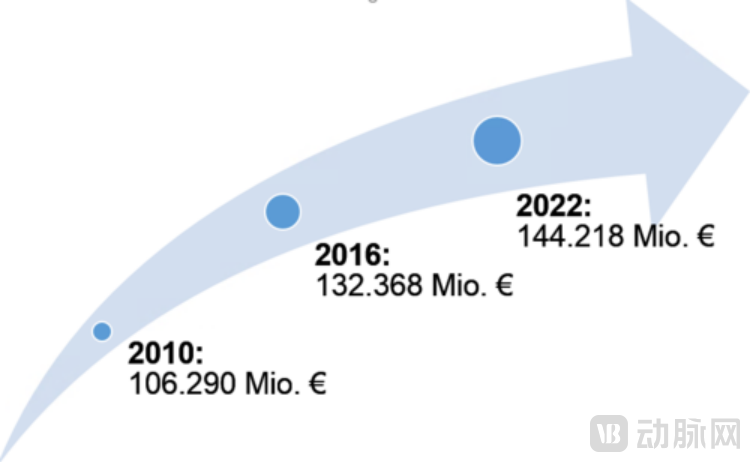
Formulation of Net Expenditure for Third-Party Funding, image courtesy of Freie Universität Berlin
From 2010 to 2022, the net expenditure of third-party funds at Freie Universität Berlin increased from €10.6144 billion to€14.4218 billion, which means that the third-party funding income and expenditures at Freie Universität Berlin have been increasing for over a decade.
With substantial financial investment from enterprises, professors at Freie Universität Berlin have produced a series of outcomes to drive industrial development.
Professor Ulrich Alt collaborates with the biotechnology company Genentech on research in tumor immunotherapy; Professor Matthias Klein partners with the biopharmaceutical company Boehringer Ingelheim to develop innovative drugs for cancer; Professor Thomas Greive works with the biotechnology company Genentech on neuroscience and neurodegenerative diseases; Professor Martin Kircher collaborates with the biotechnology company CRISPR Therapeutics on the application of gene therapy in rare diseases and hematologic disorders...
Third,withCorporate Co-Built Innovation Platforms and Centers。
To provide technological incubation and entrepreneurial support, as well as to offer opportunities for industrial collaboration and talent development, the "Big Data Processing Technology" innovation platform established in collaboration with SAP, and the "Quantum Computing Technology" innovation platform established in collaboration with Intel.
Beyond the scope of individual platforms lies the co-construction of Innovation and Entrepreneurship Centers. Once projects incubated on these platforms reach a certain stage, the teams are transferred to the Innovation and Entrepreneurship Center to further advance commercialization. A notable example is the “Digital Health Innovation and Entrepreneurship Center,” established through a partnership between Freie Universität Berlin and an accelerator company.
Under a diversified collaboration model, Freie Universität Berlin and corporate partners fulfill their respective needs and objectives, achieving mutual benefit and driving the translation of innovations into practice. The university has identified a viable pathway forward, while companies have gained access to internal academic resources and expertise.
The Engine of Innovative Transformation
As can be seen from the above, enterprises may be more proactive.
However, Freie Universität Berlin has long been aware of and strategically positioned for innovation translation.
Freie Universität Berlin’s research system is guided by the motto of excellence and diversity in both disciplinary and interdisciplinary fields, maintaining over 200 bilateral partnerships worldwide and more than 400 university partnerships within EU and global mobility networks.
Each year, approximately600 individualsInternational scholars and scientists contribute to the various teaching and research activities at Freie Universität Berlin.
In the field of artificial intelligence, Professor Bernd Barthel developed an algorithm called the “Neural Network Controller,” which optimizes the performance of neural networks; in the field of biomedicine, Professor Gerd A. Müller discovered the role of telomerase reverse transcriptase in cancer formation and proposed inhibiting this enzyme as a novel strategy for cancer treatment; in the field of materials science, Professor Dmitry V. Goltsev discovered new types of supercapacitor materials...
These robust academic foundations and abundant research achievements require the protection of Freie Universität Berlin and the promotion of their commercialization process.
Therefore, in 2008, the Free University of Berlin established a Technology Transfer Office.Profund Innovation, facilitating the smooth transition of scientific research achievements from the laboratory to the market, thereby realizing their economic value and social benefits.
In the protection and commercialization of intellectual property, Profund Innovation is responsible for all matters concerning the legal protection of research results by members of Freie Universität Berlin, the practical implementation of third-party use, and their commercial development, with the costs borne by the university;
In facilitating specific transformations, Profund Innovation professionally negotiates licensing terms for spin-offs and interested companies, expertly drafts contracts, and secures third-party funding from external sources.
In addition, Europe's largest technology transfer institution—Steinbeis Technology Transfer CompanyIt has also provided assistance to the technology transfer efforts at Freie Universität Berlin. As discussed in the article “How Does the Steinbeis Technology Transfer Company Define ‘Networked Incubation’ with 14 Technology Transfer Deals Completed Daily?”, the various technology transfer centers under the Steinbeis Technology Transfer Company have been developed based on universities and research institutions. It is reported that university professors and researchers account for approximately 10% of the total staff at Steinbeis. These expert professors from diverse fields are not only capable of undertaking technology transfer projects at their respective centers but also collaborate with experts and professors from other technology transfer centers to jointly complete projects.
Professor at the Department of Law, Freie Universität BerlinGerhard Kromp, has served as a member of the Board of Directors of Steinbeis Center GmbH since 2013 and as its Managing Director since 2016, illustrating the close ties between Freie Universität Berlin and Steinbeis Technology Transfer Company.
Over the past five years, Freie Universität Berlin has successfully commercialized more than 100 scientific and technological achievements, among whichNearly 20% were incubated by the Free University of Berlin. These include BioNTech, founded by Professor Ute Pfrang in 2009; Vaxxas, co-founded by Professor Bernd Schnabl and Professor Gerd A. Müller in 2011 (focused on the development of nanoparticle-based vaccines and adjuvants); and Leo Pharma, established by Professor Fritz Feye in 1991 (focused on the development and marketing of dermatological and ophthalmic pharmaceuticals)...
Innovation in the industry is always built on a strong scientific research foundation, which also reflects the relationship between enterprises and universities. On one hand, if companies seek breakthroughs, they need to look toward original innovation; on the other hand, for universities to implement their achievements, they must maintain good communication with the industry. This has nurtured the fertile ground for industry-academia-research collaboration at Freie Universität Berlin, as well as all universities in Germany.
Reference Article:
1. "Technology Transfer Models at German Universities and Their Implications: A Case Study of Ruhr University Bochum"
2. “Research on the Mechanism of Marketizing Scientific and Technological Achievements: A Case Study of Germany’s Technology Transfer”
3. “Freie Universität Berlin: The Motto in the Details”
4. "Analysis of Germany's Technology Transfer System and Its Implications"
5. “Completing 14 Technology Transfer Transactions Daily: How Does Germany’s Steinbeis Foundation Define ‘Networked Incubation’?”