

Isomorphic Labs Files for IPO Amid $2.1B Funding Milestone and Ambitious Mission to Cure All Diseases Within a Decade Using AI

Isomorphic Labs
AI Drug Developer

Will the AI pharmaceuticals financing record be broken?
AI pharmaceutical company Isomorphic Labs is advancing a deal worth over $20 billion(Approximately RMB 13.6 billion)Financing.
This company was incubated by Google DeepMind, and its founder and CEO is Demis Hassabis, the 2024 Nobel Prize in Chemistry winner.
Demis Hassabis further pointed out that "In the next decade, AI will cure all diseases.」
The Imagination of AI Drug Development is Entering the Clinical Validation Stage
Isomorphic Labs was founded at the end of 2021 with the goal of redesigning the drug research and development process using AI.
Traditional new drug development typically takes a decade and costs billions of dollars, with an extremely high failure rate.
What Isomorphic wants to do is a universal drug design engine,Let AI help predict molecular structures, drug binding modes, and potential efficacy, thereby identifying candidate drugs more quickly.
Source of the image:Isomorphic Labs
In 2024, Google DeepMind and Isomorphic Labs released AlphaFold 3.
Not only predicting protein structures, but also predicting the interactions of biomolecules such as proteins, DNA, RNA, and ligands, it is regarded as an important tool for AI drug discovery.
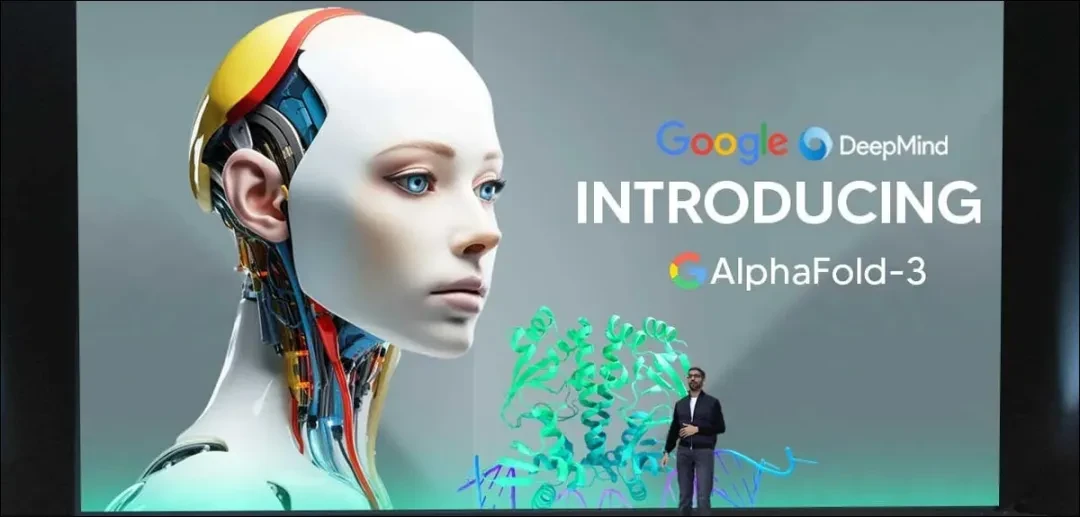
Source:AlphaFold 3
In 2025, the company completed a $600 million financing round to advance its AI-driven drug design engine and internal pipeline.
With the technical accumulation of AlphaFold, the backing of Alphabet, and the imaginative space of "reconstructing drug discovery with AI," Isomorphic Labs is becoming one of the most sought-after companies in the AI pharmaceuticals field by investors.
In February this year, Isomorphic released IsoDDE.
This model outperforms existing methods in protein-ligand structure prediction and small molecule binding affinity prediction, further demonstrating the potential for AI to directly participate in drug design.
Currently, Isomorphic has reached partnerships with Novartis and Eli Lilly, with a potential total value nearing 3 billion US dollars.
The company also stated that its self-developed drug is being prepared to enter the clinical stage.
The president of Isomorphic Labs recently stated: "Our drugs are preparing to enter the clinical stage, and we will begin to see the efficacy of these molecules. This will be a very exciting moment."
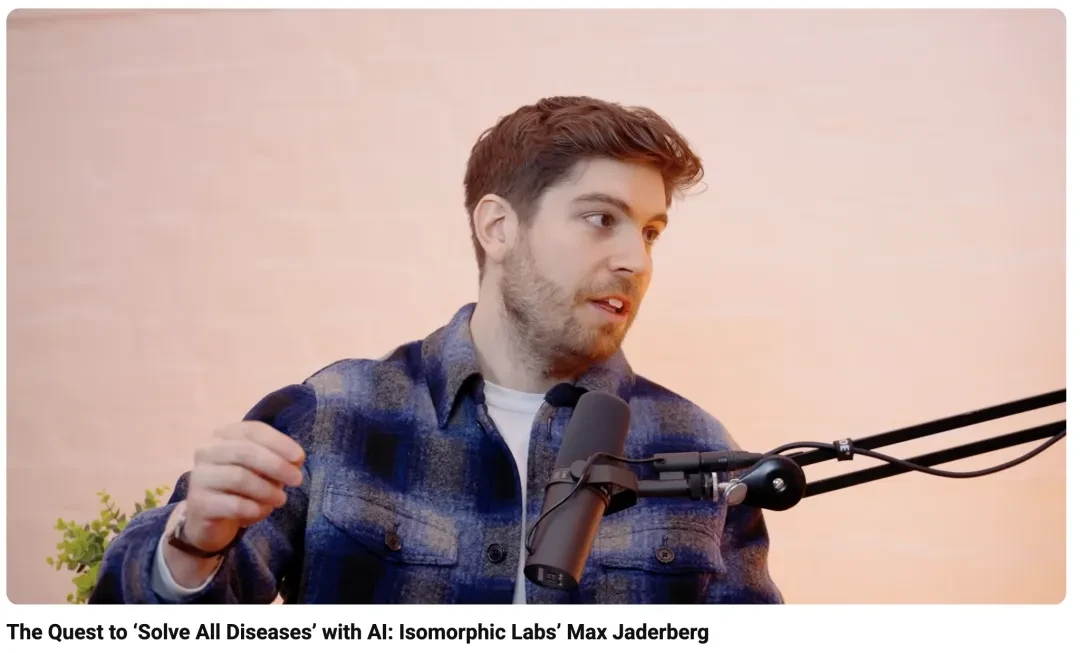
Source: Video screenshot
Because what AI pharmaceuticals really need to prove is not how strong the model is, nor how high the financing amount is,But whether the molecules designed by AI can prove to be safe and effective in the human body.
FDA is also accelerating changes to clinical trial rules
Meanwhile, the U.S. FDA is advancing the "Real-Time Clinical Trials" pilot.
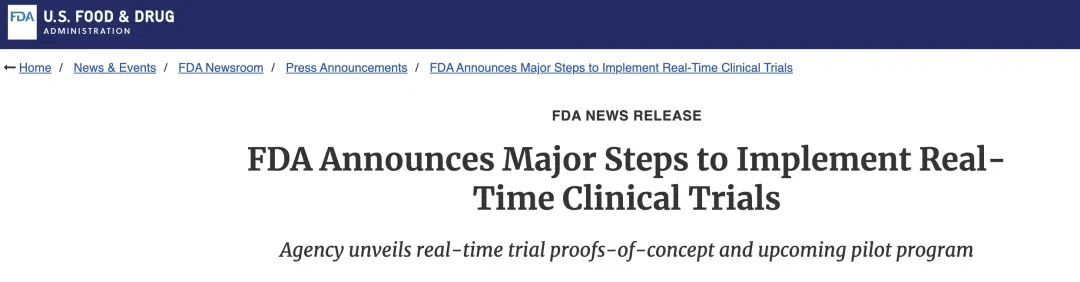
Source: FDA official website
In the traditional model, clinical trial data is often submitted to the FDA only after the trial has ended and the data has been organized.
The concept of real-time clinical trials,It allows the FDA to view preset safety signals and efficacy endpoints in real time during the trial process.
Former FDA Commissioner Marty Makary said, "We are boldly advancing a modern approach that allows FDA scientists to view safety signals and endpoint data in real time as trials progress."
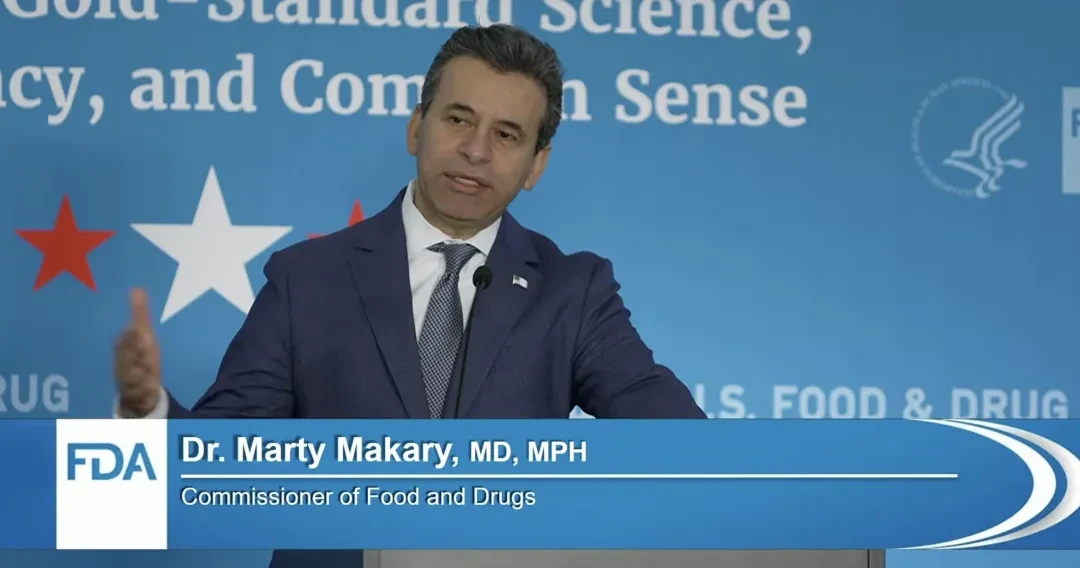
Source: Video screenshot
Currently, AstraZeneca and Amgen have participated in relevant pilots, involving mantle cell lymphoma and small cell lung cancer projects respectively.
Makary also emphasized that this is not a statement of intent, a theoretical framework, or a roundtable discussion, but a "Already up and running, going live at this very moment." Practical Project.
AI Drug Development Enters the "Real Action" Phase
Isomorphic Labs' $2.1 Billion Financing and the FDA's Push for Real-Time Clinical Trials Actually Point to the Same Change,Drug discovery is being reshaped by AI and data infrastructure.
The former occurs upstream in the drug discovery process, aiming to use AI to design candidate drugs more quickly.
The latter occurs during the clinical validation and regulatory stages, aiming to bring key data into the review process more quickly and transparently.
If both ends accelerate simultaneously, the timeline for traditional drug development may be compressed anew.
But this does not mean that AI can bypass the basic rules of drug development.
No matter how powerful the model is, candidate drugs must still undergo experimental validation, toxicology research, human clinical trials, and regulatory review. AI can improve discovery efficiency and reduce some trial-and-error costs, but it cannot replace the ultimate evidence of safety and efficacy.
Therefore, what Isomorphic Labs really needs to prove is not whether it can secure astronomical financing, nor whether its model can outperform AlphaFold 3 in benchmark tests.
The real test is,Can AI-designed molecules be advanced into clinical trials and eventually become real usable drugs?