

Ophthalmic Leader Invests $1B to Expand into Three Key Healthcare Segments
Autek China
Rigid Gas-Permeable Contact Lens Manufacturer
Listed Healthcare Companies Actually Make Investment a Core Business.
VCBeat (WeChat ID: vcbeat) has found that a listed ophthalmic company in China has made investment in new life and health products its main development direction for the next 3-5 years.
This company is Autek China, the market leader in orthokeratology (OK) lenses with a market capitalization exceeding RMB 20 billion. In communications with investors, Autek China has clearly outlined its strategic focus for the next three to five years, centered on three key areas: optometric products, optometric services, and investments in new life-health products.
Since 2021, public data has shown that Autek China has invested over RMB 700 million in more than 20 new product projects, with a strategic focus on three key sectors: ophthalmology, consumer healthcare, and medical devices.After three years of low-profile positioning, Autek China’s investment landscape in life and health is gradually coming to light.
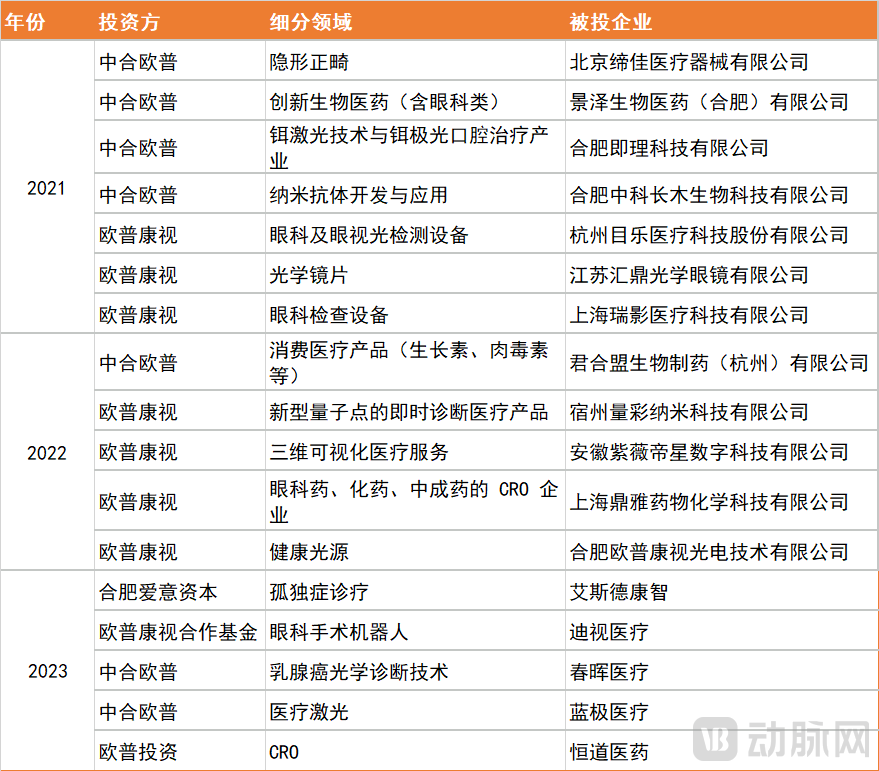
Autek China’s Partially Invested Enterprises. Data Source: Autek China Annual Report and Public Data
Autek China is one of the most active corporate venture capital (CVC) investors during the market downturn. Behind listed companies’ intensified investment efforts lies a significant trend: as leaders in niche sectors hit growth ceilings, investment has become a key strategy for these companies to seek a second growth curve.
Corporate venture capital (CVC) is not uncommon in the healthcare industry. In China, there are several well-known healthcare CVCs, including Lilly Asia Ventures, Taiyu Investment, and BGI Win-Win. In recent years, multiple listed companies, such as Mindray Medical, Porton Pharma Solutions, and Andon Health, have also contributed capital as limited partners (LPs).
Autek China’s investment strategy extends beyond serving as a limited partner (LP). According to industry insiders, Autek China has established an investment matrix comprising the publicly listed company and four funds.
These four funds are Zhonghe Oupu, the cooperative fund between Autek China and Infinity Capital, Hefei Ai Yi Capital, and the cooperative fund between Autek China and Shanlan Capital.
In 2020, Autek China invested RMB 200 million to co-establish the Zhonghe Autek Industrial Fund,Layout in the optometry industry and medical device sector.
On November 2, 2022, Autek China issued an announcement stating that its wholly-owned subsidiary, Autek China Investment Co., Ltd. (hereinafter referred to as “Autek Investment”), would contribute RMB 349 million from its own funds to participate in the establishment of the fund Hefei Infinitus Autek Health Technology Venture Capital Partnership (Limited Partnership). The fund manager is Infinitus Capital.Investment focus is primarily on innovative materials, consumables, devices, and other cutting-edge technologies in the field of ophthalmology; secondarily on new materials, high-value consumables, devices, and other innovative technologies in non-ophthalmic fields.。
On the same day, Autek China also invested RMB 115 million of its own funds to participate in the establishment of Anhui Shanhong Venture Capital Partnership (Limited Partnership) (proposed name), with Shanlan Capital serving as the fund’s manager.The fund primarily invests in high-quality companies in the innovative medical devices, biopharmaceuticals, and healthcare services sectors, with a focus on niche segments of the medical device industry.
In 2023, Autek China intended to participate as a limited partner in the establishment of the Hefei Zhongan Luyang Venture Capital Phase II Fund (Limited Partnership) by contributing RMB 40 million from its own funds.This industrial investment fund is dedicated to investing in new technologies and products, including ophthalmic and optometric products, as well as other life and health products with market potential.
Autek China has established an investment matrix comprising direct investments in listed companies and four funds.
According to FOFWEEKLY’s analysis, the “trinity” model of direct corporate investment + independent subsidiary investment + LP investment enables companies to expand their investment scope, mitigate risks, and enter tracks related to their core business at an earlier stage. Furthermore, by advancing to GP investment and establishing a qualified private equity fund manager, companies can not only strengthen their voice and improve investment efficiency but also achieve more precise positioning within the industrial chain.
Hefei remains a key keyword in Autek China’s investment landscape. State-owned capital from Anhui Province or Hefei City is present in many of Autek China’s funds.
In the cooperation fund between Autek China and Infinity, the Hefei High-Quality Development Guidance Fund contributed RMB 200 million. In the fund established by Autek China and Shanlan Capital, Anhui Provincial Development Investment Co., Ltd. contributed RMB 100 million, and the Hefei Economic and Technological Development Zone Industrial Investment Guidance Fund contributed RMB 50 million.
Many of Autek China’s portfolio companies are also based in Hefei. The fund model adopted by Autek China features a structure combining capital from government guidance funds and investments from industry leaders, with a preference for local projects in its investment strategy.
Autek China has precisely laid out its strategy across the ophthalmology and optometry industry chain by leveraging a tripartite investment model, while also targeting high-potential products in the medical device sector at an early stage.
Autek China’s investment strategy is implemented across specific segments, with a focus on three major tracks: ophthalmology, consumer healthcare, and medical devices.
Along the ophthalmology and optometry industry chain, Autek China’s investments span multiple segments, including prevention and treatment, screening, surgery, and pharmacotherapy, with a focus on products that demonstrate technological advancement and market potential.
Among them, Guangzhou Shiming applies AI technology to develop products such as visual function assessment systems and glasses-free 3D displays; Hefei Xingmou Bio develops gene therapies for macular degeneration, addressing the significant unmet medical needs in ophthalmology, a field where gene therapy has become a prominent focus; Guangzhou Weishibo develops artificial vitreous bodies and retinal reinforcement products, with its flagship product—the foldable artificial vitreous balloon—being an internationally pioneering artificial organ designed to salvage the eyeball by precisely mimicking the structure and function of the human vitreous body.
Hangzhou Mule develops products such as fundus cameras and vision screening devices. Currently, the domestic market is dominated by imported brands, encompassing both traditional optical fundus cameras and the new ultra-widefield laser fundus cameras that have seen rapid volume growth in recent years. Recently, several fundus camera manufacturers have completed financing rounds, which holds promise for reshaping the existing market landscape.
In the field of ophthalmic surgery, Autek China’s cooperative fund has invested in Dishi Medical, a developer of microsurgical robots. Ophthalmic procedures demand exceptionally high operational precision; however, due to their technical complexity, there is currently a shortage of senior ophthalmologists, training cycles are extremely long, and manual micro-manipulation places significant strain on surgeons. Leveraging technological advantages including personalized medical-engineering integration, master-slave control with multiple degrees of freedom, and proprietary flexible structures, Dishi Medical is among the first teams globally to achieve a motion accuracy of up to 3 micrometers for ophthalmic surgical robots. Both its product technology and R&D progress are at the global forefront, with clinical trials imminent.
Another major focus for Autek China is consumer healthcare, where the company has established a presence in sectors such as dentistry, growth hormone therapy, and medical aesthetics.
Among them, the R&D pipeline of Junhemeng, invested by Zhonghe Oupu, is focused on the frontier protein drug fields with broad markets such as metabolism and medical aesthetics. Its leading products are recombinant protein drugs with consumer attributes, such as recombinant botulinum toxin type A and growth hormone. Hefei Jili develops laser dental treatment instruments.
Autek China also focuses on medical devices. According to industry insiders, Autek China prefers leading companies in the medical device sector and has strategically laid out its presence in niche areas such as optical diagnostic platforms for breast cancer and medical lasers.
Why Does the Leader in Ophthalmology Subspecialties Continue to Invest?
Autek China continues to make investments, with the core objective of building a product reserve and breaking away from its reliance on a single-product structure.
Autek China’s core product, OK lenses, is one of the few clinically recognized products included in the National Health Commission’s myopia prevention and control guidelines as an effective intervention for slowing myopia progression. Autek China was the first domestic company to obtain registration certification for OK lenses. According to a research report by Dongguan Securities, Autek China held a 30.8% market share in China’s orthokeratology lens market in 2019.
However, in the first half of this year, the revenue growth rate of Autek China's core product, rigid gas permeable contact lenses, was only 10.88%, a significant decline from the previous growth rate of up to 40%.
OK Lenses Bid Farewell to the Era of High Growth, Partly Due to More Manufacturers Obtaining Certifications and Intensifying Competition.As of 2022, the number of manufacturers that have obtained registration certificates for orthokeratology lenses reached 22.
On the other hand, in stark contrast to the sluggish growth of orthokeratology (OK) lenses, defocus-control spectacle lenses are experiencing robust demand.Although orthokeratology lenses are more effective than defocus soft contact lenses and defocus spectacle lenses in myopia control, defocus spectacle lenses offer lower costs and ease of use. As spectacle lenses are not classified as medical devices and can be prescribed and fitted at optical stores, the penetration rate of defocus spectacle lenses among adolescents with myopia has risen rapidly, surpassing that of orthokeratology (OK) lenses.
Defocus-reducing spectacle lenses have eroded part of the orthokeratology (OK) lens market, resulting in slower-than-expected growth for OK lenses.Orthokeratology lenses once stood out in myopia control, but now more products have emerged, such as low-concentration atropine, defocus-reducing soft contact lenses, defocus-reducing spectacle lenses, and red-light therapy devices. Autek China is also expanding its portfolio of optometry and ophthalmology products.
All products have a life cycle. Autek China is currently undergoing a transformation and upgrade from a single-product model to a comprehensive portfolio of optometry products and services. The company has devised a new product development strategy centered on “independent R&D, collaborative R&D, and equity investment.” Investing in new products within the life and health sector is a strategic move to diversify its product structure and build a pipeline of new offerings for future growth.
In addition to Autek China, several corporate venture capital (CVC) firms in the industry remain active during the market downturn, such as Lilly Asia Ventures, Huimei Capital, and Fosun Health Capital.
What Are the Investment Consensus and Themes Among CVCs?
VCBeat analyzed the 2023 investment data of multiple corporate venture capital (CVC) firms. In terms of investment distribution by funding round, investments in Series A and earlier stages accounted for more than half. CVCs also showed a preference for early-stage projects, even participating in incubation projects at even earlier stages.
Fosun Pharma’s Fuxing Capital New Drug Innovation Fund has incubated three companies: Xingyao Kunze, Xinglian Peptide, and Xingji Biologics. Among them, Xingyao Kunze is developing small nucleic acid drugs for the functional cure of hepatitis B, drawing attention within China’s small nucleic acid drug development landscape; Xinglian Peptide, jointly incubated by Fosun Pharma and WuXi AppTec, focuses on the development of peptide-drug conjugates (PDCs); and Xingji Biologics is engaged in the research and development of large-molecule anti-infective drugs.
Benchmarking against overseas companies to determine incubation tracks, recruiting top domestic scientists, and reducing failure risks by establishing partnerships with traditional Chinese pharmaceutical companies have become the primary model for corporate venture capital (CVC)-incubated R&D enterprises in China.
From a sector perspective, domestic medical CVCs focus on upstream biopharmaceutical processes and consumables, consumer healthcare, surgical robots, ADCs, nucleic acid drugs, and other tracks.
Upstream biopharmaceutical processes and consumables represent a major investment theme for corporate venture capital (CVC) firms. Numerous CVCs, including Huimei Capital, Jianyi Capital, Lilly Asia Ventures, and Kangjun Capital, have invested in high-end scientific research instruments and equipment as well as upstream biopharmaceutical consumables.
In the biopharmaceutical industry chain, the supply of instruments and equipment such as cell line culture systems, single-use bioreactors, and chromatography systems, as well as reagents and consumables including separation and purification membranes and culture media, has historically relied on imported products from foreign enterprises. After several years of development, domestic companies have achieved import substitution in the upstream bioprocessing and consumables sector. These companies have established partnerships with multiple pharmaceutical firms both domestically and internationally, earning high recognition from downstream customers and achieving stable commercialization.
Consumer healthcare is also a major investment theme for CVC, with the industrial chains of medical aesthetics and anti-aging, pet healthcare, dentistry, and ophthalmology drawing significant attention.
In the field of medical devices, surgical robots and single-use endoscopes have garnered the most attention.Laparoscopic surgical robots within the surgical robotics sector have secured substantial financing, as corporate venture capital (CVC) firms increasingly favor market segments with proven commercial viability. Disposable endoscopes, characterized by low hospital entry costs and rapid commercial scaling, hold significant growth potential in overseas markets.
In the biopharmaceutical sector, multiple tracks—including nucleic acid therapeutics, antibody-drug conjugates (ADCs), synthetic biology, and JAK inhibitors—have also attracted the attention of corporate venture capital (CVC).
For publicly listed healthcare companies, the growth ceiling in a single niche market is limited. After becoming a leader in their respective niches, these companies often need to identify a second growth curve, where investment and M&A can help uncover potential opportunities. We look forward to seeing more corporate venture capital (CVC) firms become active forces in industrial investment, connecting mature ecosystem resources with early-stage innovative projects to drive robust industry development.
Reference: Industrial Capital’s “Institutionalization”: Directly Stepping In to Manage Funds — FOFWEEKLY
A Roaming Guide to Ophthalmic Consumables | Yifeng Capital’s Hard-Core Insights – Yifeng Capital