Gebio Therapeutics Announces NMPA Approval of GLB-002, a Novel Molecular Glue Degrader, for Clinical Trials in Hematologic Malignancies

GluBio
Molecular Glue Targeted Protein Degradation Drug Developer
On October 7, GluBio Therapeutics Inc. (hereinafter referred to as “GluBio”) received the “Notice of Approval for Drug Clinical Trials” approved and issued by the National Medical Products Administration (NMPA), approvingThe novel molecular glue degrader GLB-002, independently developed, is undergoing clinical trials in hematologic malignancies such as non-Hodgkin lymphoma (NHL) and multiple myeloma (MM).
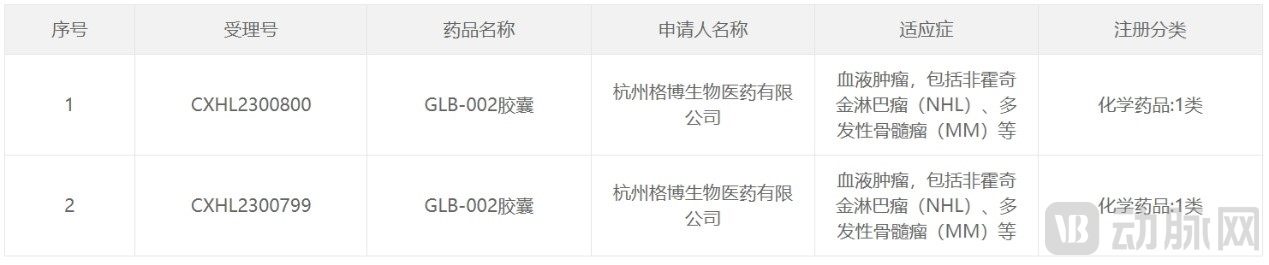
Data Source: CDE Official Website
Molecular glues and PROTAC-based targeted protein degradation (TPD) technologies have garnered significant attention from academia, industry, and the capital markets due to their broad scope of action, ability to target “undruggable” proteins, and potential to overcome drug resistance.
Lenalidomide, a molecular glue drug launched in 2005, once became the best-selling small-molecule drug and orphan drug globally, with sales reaching $12.8 billion in 2021. In 2019, ARV-110, the first PROTAC targeting prostate cancer, entered Phase I clinical trials, sparking a surge in the development of novel PROTAC therapeutics.

Dr. Lu Gang, Founder and CEO of GluBio
Dr. Lu Gang, Founder and CEO of GluBio“GLB-002 is the second molecular glue product independently developed by GluBio to receive approval for clinical trials, and represents a new generation of highly selective IKZF1/3 molecular glue degraders following Iberdomide, Golcadomide, and Mezigdomide. Preclinical data demonstrate that GLB-002 exhibits potent degradation activity, high selectivity, more complete protein degradation, and the ability to overcome acquired resistance to immunomodulatory drugs. We believe that GLB-002 will deliver superior clinical efficacy in patients with various types of hematologic malignancies, with the aim of becoming a best-in-class therapy that better meets the clinical needs of patients with non-Hodgkin lymphoma (NHL), multiple myeloma (MM), and other hematologic cancers.”
Molecular glues have relatively low molecular weights, high membrane permeability, favorable pharmacokinetic properties, and strong developability, making them more attractive than PROTACs in terms of druggability. Taking the CRBN E3 ligase as an example, upon binding to CRBN, a molecular glue can induce an interaction between CRBN and a neosubstrate that lacks native affinity for it, thereby promoting polyubiquitination of the neosubstrate protein and ultimately leading to its degradation by the proteasome.
Unlike the mechanism of action of PROTACs, the degradation of novel substrate proteins by molecular glues does not require any affinity between the molecular glue and the novel substrate protein, thereby significantly increasing the success rate of targeting “undruggable” targets, particularly the majority of transcription factors that lack drug-binding pockets.
GLB-002 is a cereblon (CRBN) E3 ligase modulator (CELMoD) featuring a novel chemical scaffold. By binding to CRBN within the CRL4^CRBN E3 ubiquitin ligase complex, it promotes the ubiquitination and subsequent proteasomal degradation of the transcription factors IKZF1 (Ikaros) and IKZF3 (Aiolos), thereby activating multiple downstream anti-tumor responses and ultimately exerting therapeutic effects against hematologic malignancies such as non-Hodgkin lymphoma (NHL) and multiple myeloma (MM).
As a next-generation molecular glue degrader, GLB-002 demonstrates significant advantages over third- and fourth-generation thalidomide-based molecular glue drugs still in clinical development, including Iberdomide (CC-220), Golcadomide (CC-99282), and Mezigdomide (CC-92480).
Proteomic analysis revealed that GLB-002 exhibits high selectivity for protein degradation, significantly degrading only IKZF1/3 proteins without affecting the degradation of other novel substrates. Preclinical toxicology studies demonstrated that the favorable pharmacokinetic properties and high selectivity of GLB-002 substantially broaden its therapeutic window. Meanwhile, GLB-002 showed significantly superior anti-proliferative activity against drug-resistant non-Hodgkin lymphoma (NHL) and multiple myeloma (MM) cell lines in vitro, outperforming Iberdomide by more than 100-fold, Golcadomide by more than 10-fold, and Mezigdomide by 2–3-fold.
Overall, GLB-002 is expected to address the issues of poor selectivity, off-target toxicity, and drug resistance associated with approved thalidomide-derived immunomodulatory drugs (IMiDs) due to their non-specific degradation of IKZF1/3. Compared with fourth-generation CELMoD degraders currently in clinical trials, such as Golcadomide or Mezigdomide, GLB-002 demonstrates significantly increased binding affinity to CRBN and enhanced selectivity for degrading novel substrate proteins, making it a highly promising potential therapy for hematologic malignancies including non-Hodgkin lymphoma (NHL) and multiple myeloma (MM).
Targeted Protein Degradation (TPD) has limited technological maturity and commercial progress, remaining in the early stages of development. It is primarily applied in oncology, with advances also being made in autoimmune diseases and neurological disorders. PROTACs and molecular glues are relatively mature within the TPD landscape.
PROTACs consist of three components: a ligand targeting the protein of interest, a linker, and an E3 ubiquitin ligase binder. Research on these three modules is currently well-established in the market, and through modular development, they can theoretically be applied to any target. PROTACs offer three major advantages: first, they hold promise for overcoming drug resistance; second, they have the potential to render “undruggable” targets druggable; and third, they are poised to become “best-in-class” therapeutics, making them an ideal approach for anticancer drug development. Consequently, PROTACs are being extensively explored worldwide, with degraders showing potential across a broad range of indications.
“Molecular glues and PROTACs represent the primary focus for future small-molecule drug development. While traditional small-molecule drugs have significant limitations in terms of target coverage, molecular glues and PROTACs can theoretically degrade more than 85% of proteins. The entry of more companies into this field will accelerate the emergence of additional ‘blockbuster’ novel protein-degrading therapeutics. However, a full-scale explosion in this sector will require some more time,” stated Dr. Lu Gang in a previous exclusive interview with VCBeat New Medicine.
While TPD demonstrates significant potential, its exceptionally high technical barriers have deterred many prospective entrants. On one hand, there are few biotech companies globally dedicated to molecular glue therapeutics; on the other, the number of molecular glue drugs that have advanced to clinical stages remains limited. Although PROTAC degraders present slightly lower development barriers, they still face numerous challenges in target selection, candidate molecule optimization, and clinical differentiation design. Consequently, the market valuations of some listed biotech companies in the PROTAC space have been less than satisfactory.
In terms of drug development, PROTAC molecules are relatively large, resulting in poor physicochemical properties and low oral bioavailability, which poses significant challenges to their overall druggability. The design of molecular glues is complex and cannot follow the established methodologies used for PROTACs. The limitations of thalidomide-based drugs urgently need to be overcome; most currently reported molecular glues still share high structural similarity with thalidomide and its derivatives, and there is currently no sufficiently large library of molecular glue compounds available for diverse high-throughput screening.
Nevertheless, the challenges faced by molecular glues and PROTACs are an inevitable stage in the development and application of new technologies. Multinational corporations (MNCs) and investors remain optimistic about the protein degradation sector. In 2022, multiple industry giants, led by Bristol-Myers Squibb (BMS), Sanofi, and Pfizer, continued to increase their investments in protein degradation technology, while numerous domestic and international biotech companies successfully completed financing rounds.
This year, Merck & Co. (MSD) and Incyte each entered into partnerships with biotech companies focused on targeted protein degradation to develop molecular glue protein degraders, with total deal values nearing $3 billion.
About GluBio
GluBio is a biopharmaceutical company dedicated to the research and development of novel targeted protein degradation (TPD) therapeutics, established in March 2021. The founder and core team members have long specialized in the fields of molecular glues and PROTACs, bringing years of experience in new drug R&D and management from major multinational pharmaceutical companies such as Celgene/BMS and J&J.
GluBio has established two major R&D centers in Shanghai Zhangjiang Science City and San Diego, California. Since its inception, GluBio has secured nearly $90 million in financing from prominent investment firms, including Hillhouse Venture Capital, Qiming Venture Partners, Lilly Asia Ventures, Cathay Capital, and Legend Capital.
Within two years, GluBio has established a multi-dimensional protein degradation screening platform, an innovative target validation platform, a rational molecular glue design platform, and a proprietary high-activity compound library. Leveraging its globally leading protein degradation technology platform, the company is dedicated to the discovery and development of novel small-molecule targeted protein degraders with “First-in-class” and “Best-in-class” potential.
Currently, the company has established a pipeline of multiple molecular glue and PROTAC products. In addition to the approval of GLB-002’s clinical trial application in China,In April this year, GLB-001, a novel molecular glue degrader targeting myeloid malignancies, received implicit FDA approval for clinical trials, initiated subject enrollment at U.S. clinical centers, and simultaneously submitted a pre-IND application in China.